

Sabudana khichdi is a gluten-free Indian fasting dish (similar to a pilaf) made with sago/tapioca pearls, tomatoes, potatoes, nuts and minimal spices. This recipe makes perfectly non-sticky sabudana, and is ready in only 30 minutes.
Worried about it not turning right? You're not alone. But don't worry, I've got you covered. In this post, I'll walk you through plenty of helpful tips and tricks to get your sabudana recipe just right, it will turn out fluffy, and delicious, every single time.

We didn't have a lot of variety on fasting days, usually kuttu ke pakode, sama rice pulao or sabudana khichdi. It is the recipe I grew up eating, and the one I still make today.
I used to marvel at my grandmother's perfect sabudana khichdi every time, even in large batches for our joint family. While it does take a little patience and practice to get just right, trust me, it's one of the simplest dishes to make once you understand the technique.
When I first tried making it in my own kitchen years ago, I managed to nail the flavor, but the texture was a different story. Lot of expensive international phone calls to mom and finally I learnt the tips and tricks. Since then, it's been a smooth sailing. No more sticky, clumpy khichdi, and just perfect bowls every time.
About My Recipe
My sabudana khichdi recipe is
- Cooked in ghee. Whether I am making it for fasting or not, I like making sabudana khichdi in ghee, its totally delicious.
- Tomatoes are uncommon but that's how I grew up eating it. Tomatoes add a wonderful moistness to this khichdi.
- This is a north indian style sabudnana khichdi, with a tempering of cumin, ginger and green chillies. No curry leaves (however you can add if you wish).
- I do not add crushed peanuts. My grandmother always ghee roasted whole peanuts in the beginning and so do I. In maharastrian style sabudana khichdi, they crush and add peanuts, and you can certainly do so.
- Personally, I love sabudana khichdi with more potatoes and crunchy peanuts than the sabudana itself. You can adjust the quantity of both these ingredients as per your liking.
Mastering the Perfect Sabudana
- Choose the right size of sabudana. Sabubana comes in many different sizes and the usage depends on what a recipe calls for. For making khichdi, choose medium size sabudana, while for sabudana kheer, it is best to choose small sized sabudana that cooks faster & makes a smoother pudding (less texture).
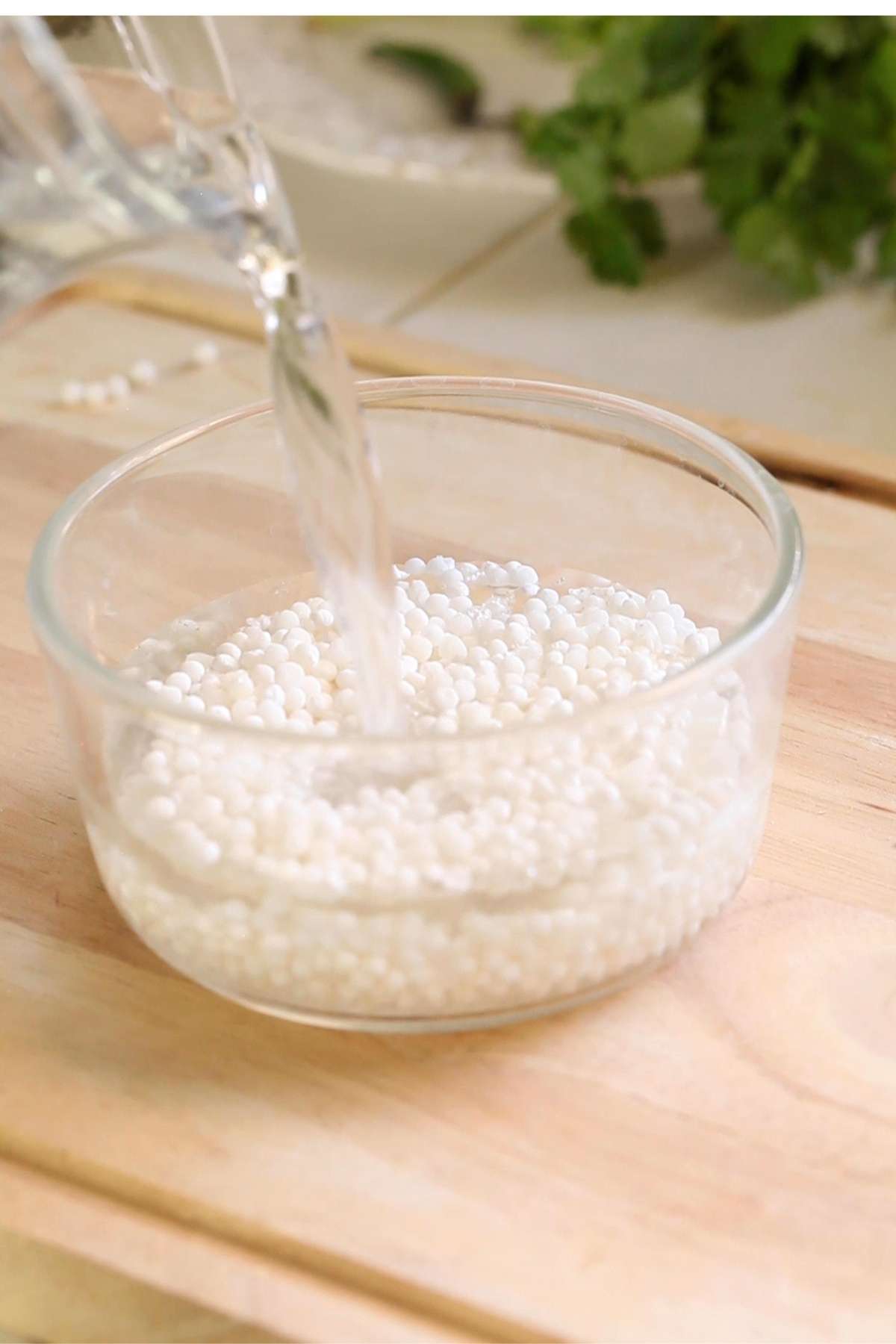
- 1:1 Sabudana to Water ratio. Place the washed sabudana in a clean bowl and cover with equal amount of water. For ½ cup of sabudana you will need ½ cup of water. Right amount of water will make sure that sabudana isnt mushy.
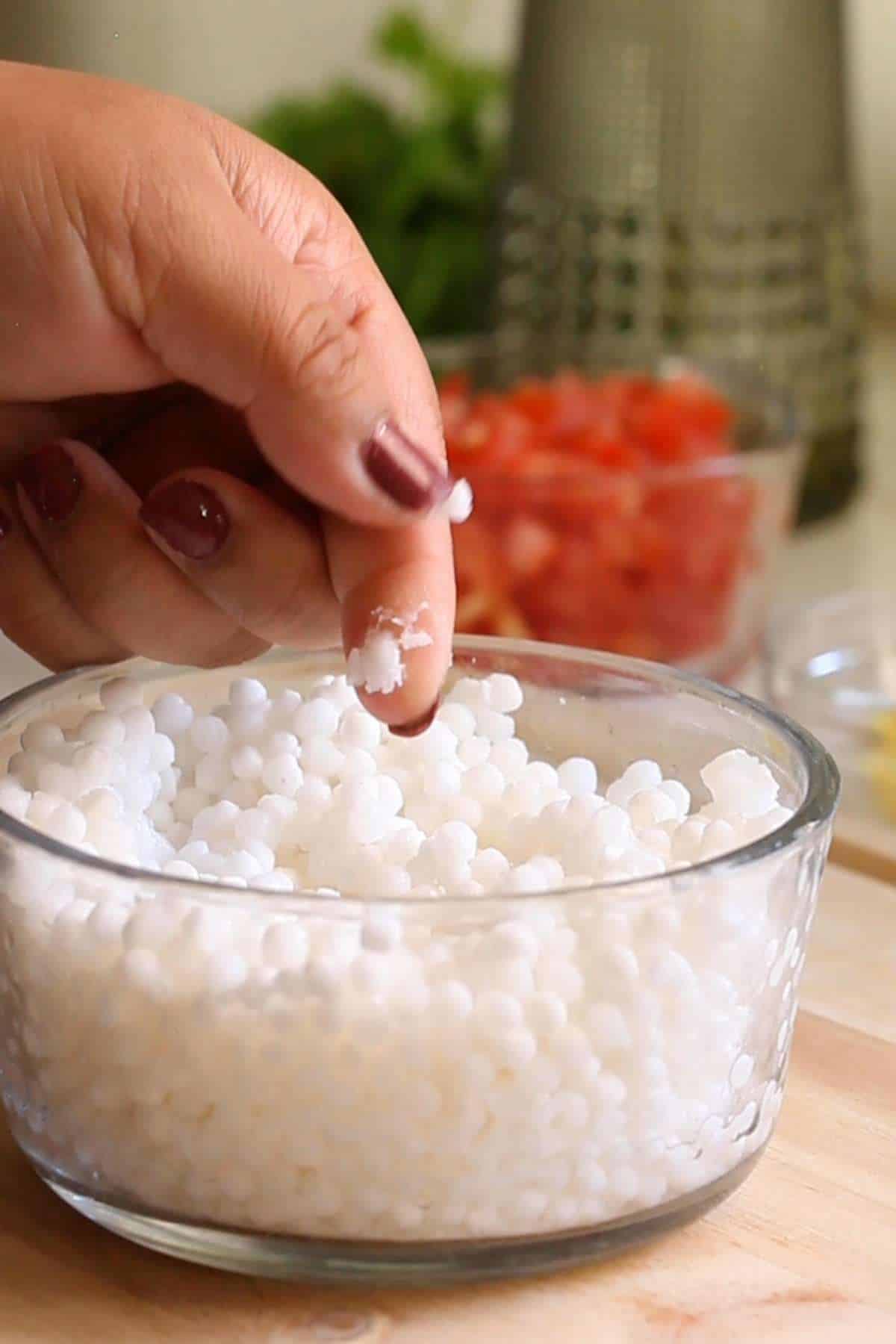
- Soaking Time. Soak sabudana overnight or for at least 8-10 hours. I always saw my grandmother soaking the sabudana a night before. If not soaked enough, the sabudana ends up gummy. To check, squeeze a pearl of soaked sabudana between your finger and thumb, you should be able to mash it easily.
- Strain the soaked sabudana. Simply invert the soaked pearls on a colander and let sit for 5-10 minutes. This additional straining makes sure that any excess water that hasn't been absorbed is discarded.
- Don't overcook. Once you add sabudana to pan, cook only for few minutes and then turn off the heat.I dont cook it for more 2-3 minutes. The residual heat in the pan is enough. Never ever cook on high heat. Excess heat will make the pearls sticky and gummy.
- Don't stir a lot after adding sadudana. Overmixing is a no no. Gently mix and then leave them alone. The more you stir, the higher the chances are of getting clumpy.
Recipe Notes
- While making sabudana khichdi, dont be tempted to use less oil or ghee. It is a starchy ingredient and does need fat (ghee or oil) to taste moist and not dry.
- Since I add tomatoes, I avoid cooking khichdi in cast iron kadai/pan (enameled cast iron is fine). In my opinion, due to acid of the tomatoes, the khichdi tastes a bit metallic.
- Use a heavy pot, this recipe was high starch ingredients like potatoes and sabudana and a pot that conducts heat is always helpful in avoiding khichdi sticking to the bottom.
Ingredients
Please adjust the ingredients per what's allowed in your home for vrat ka khana.
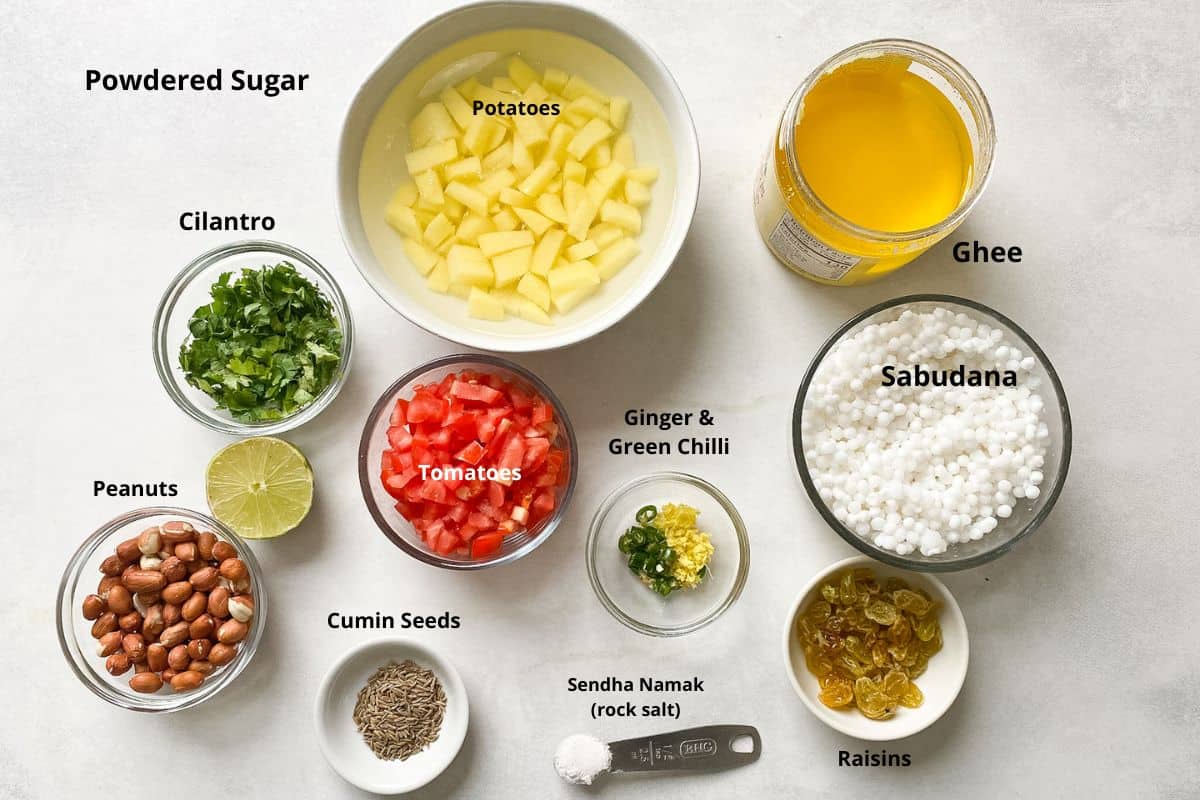
- Sabudana/Tapioca Pearls - These are easily available in indian stores.
- Ghee - Makes the khichdi super flavorful. For a vegan version, simply use any cooking oil instead of ghee.
- Diced Potatoes - Potatoes actually make this khichdi very tasty. If you want, you can make without potatoes, however I won't recommend. My grandmother crisped raw diced raw potatoes in ghee, however you can use boiled potatoes too. .
- Ginger - I like to finely chop it. You can grate if you feel that the ginger is stringy.
See notes/ingredient substitutes in recipe card.
Soaking Sabudana
- Place sabudana in a colander and place the colander over a large bowl. Take the entire thing to your sink and position the sabudana under running water. Using your fingers, gentle move around the pearls and wash thoroughly.
- At first you will see, very milky water collecting in the bowl, keep going, in about 4-6 minutes, the water will start getting clearer. This method not only cleans the sabudana but also removes excess starch coating the tapioca pearls.
- Place the washed sabudana in a bowl and add ¾ cup of water. Cover and let soak overnight or for 8 to 10 hours. To check, squeeze a pearl between your finger and thumb, you should be able to max it quickly and easily, like play dough.
- Simply invert the soaked pearls on a colander and let sit for 8-10 minutes. This additional straining makes sure that any excess water that hasn't been absorbed is discarded. Your sabudana is now ready to cook.
How To Make Sabudana Khichdi (Step Pictures)
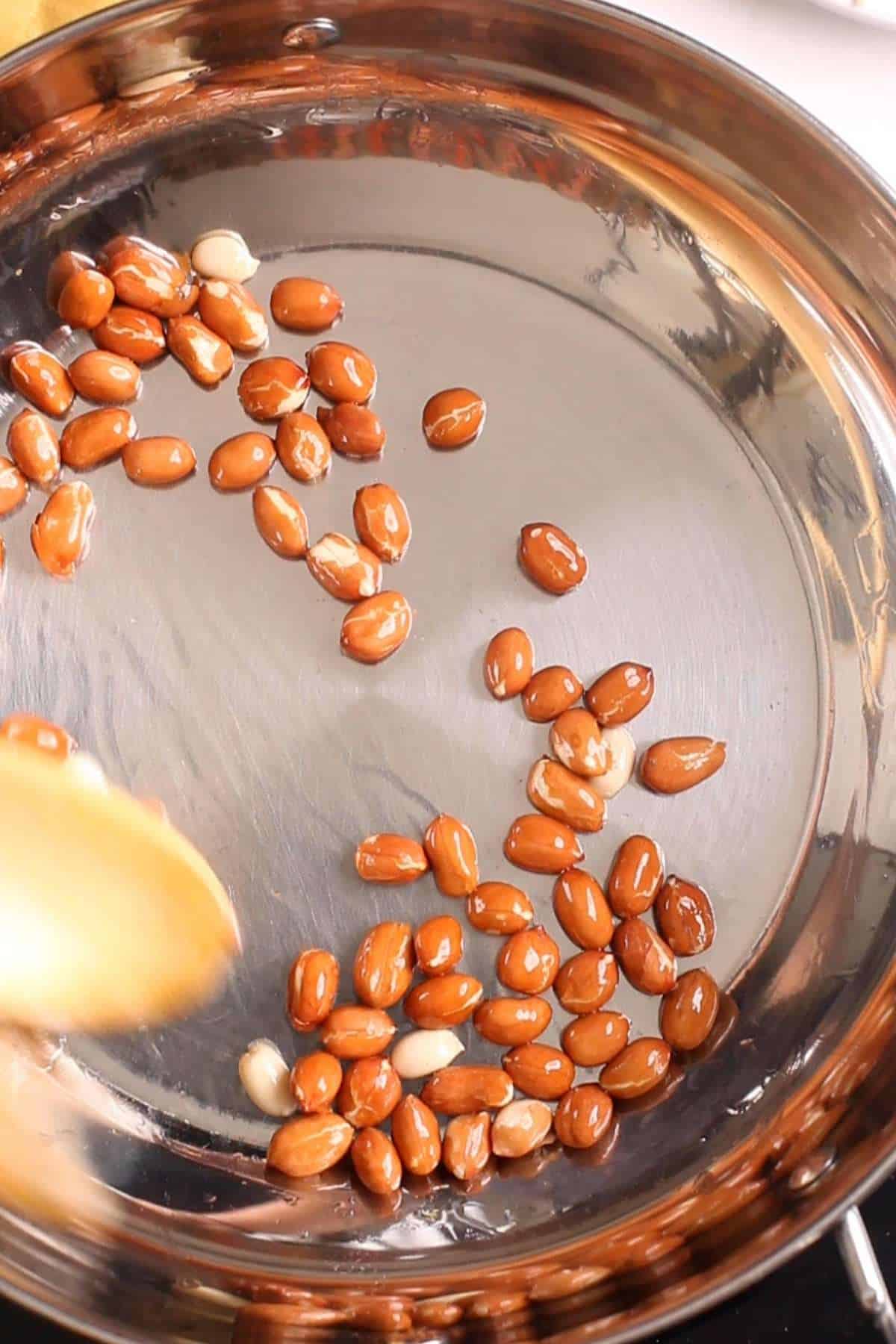
- Add ½ tablespoon ghee to a pan and add the peanuts. Roast on low medium heat stirring constantly till golden brown. You will smell a nice aroma. Take peanuts out in a plate.
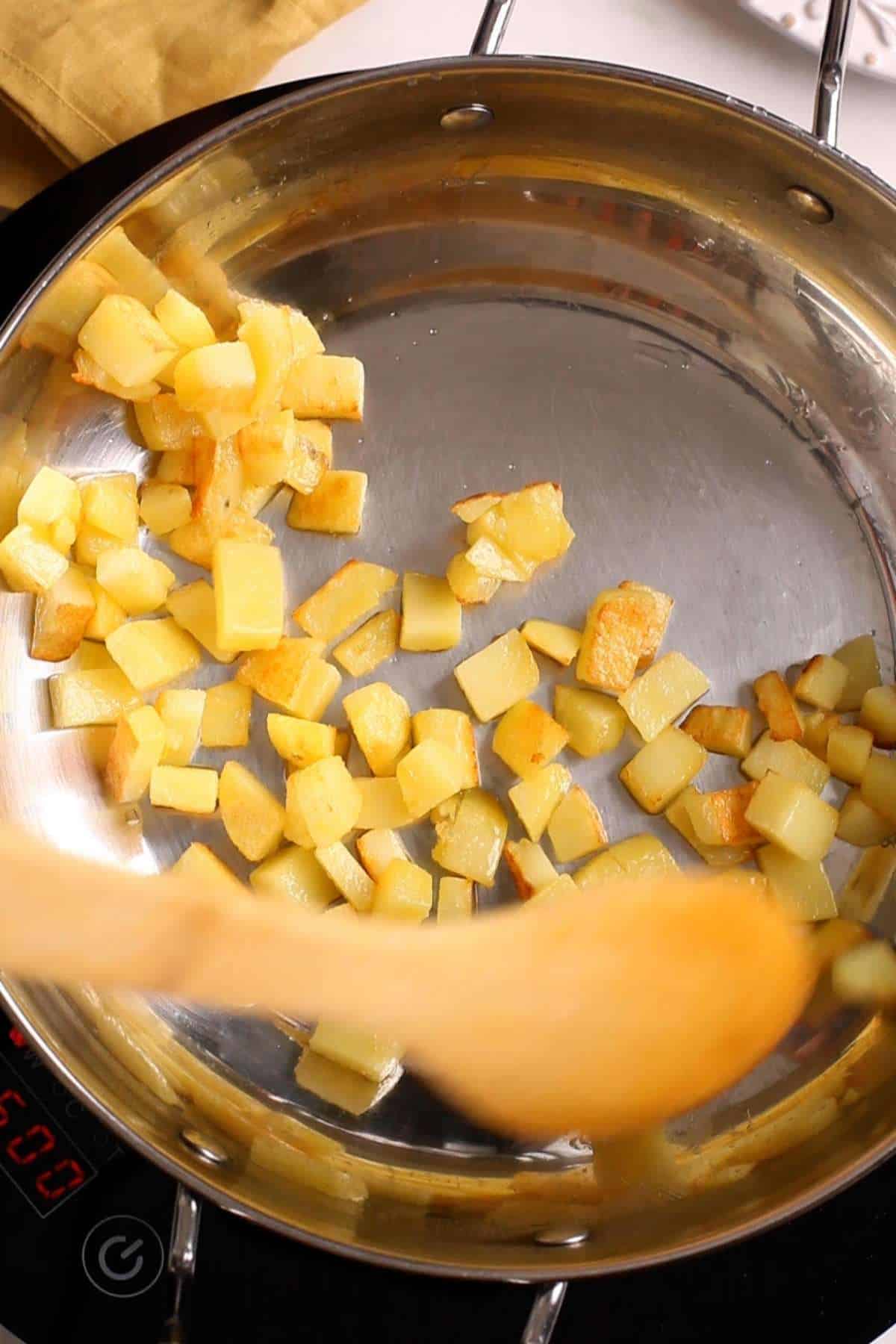
- Add remaining ghee to the pan and add the potatoes. Make sure that the potatoes are fully dry before you add them to the ghee. Sprinkle a little salt. Let potatoes cook through and crisp up on low heat. Takes about 6-8 minutes for the potatoes to get tender.
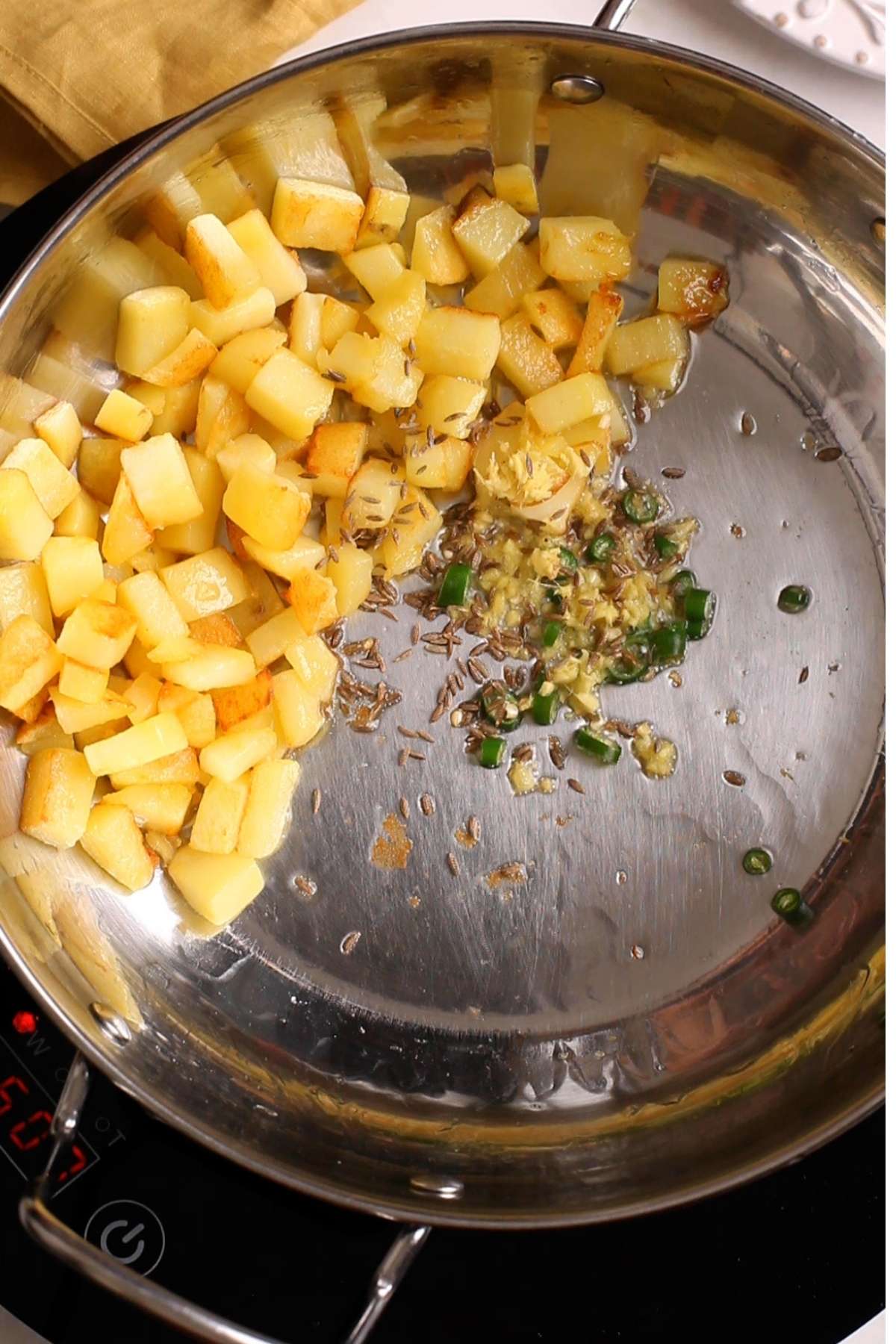
- Next, add the cumin seeds to the pan, once they start crackling, add the ginger and green chillies together. Saute for 10-15 seconds.
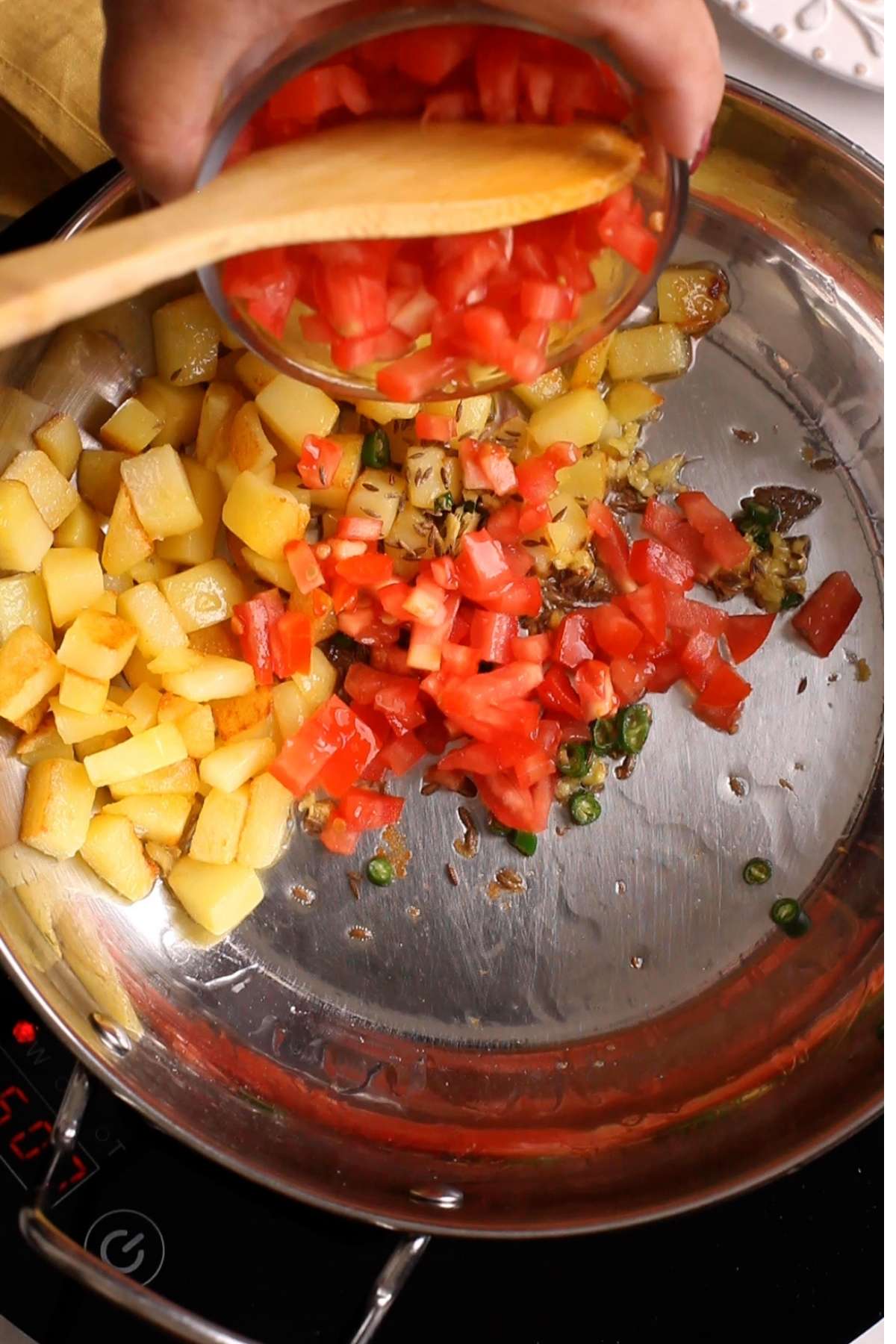
- Add the tomatoes next. Mix and let the tomatoes cook for 5-6 minutes till they start to soften. Don't dry out the tomatoes too much.
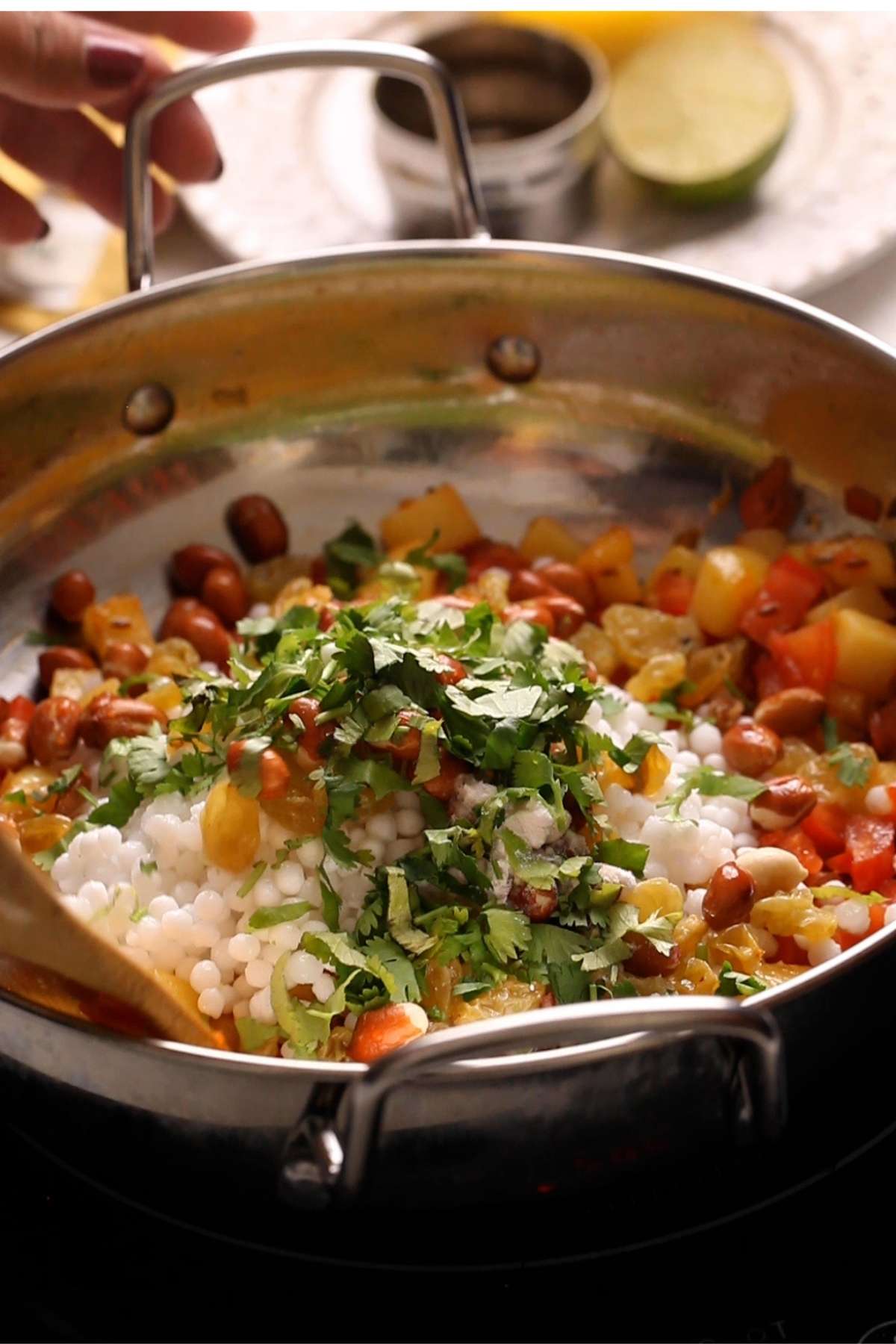
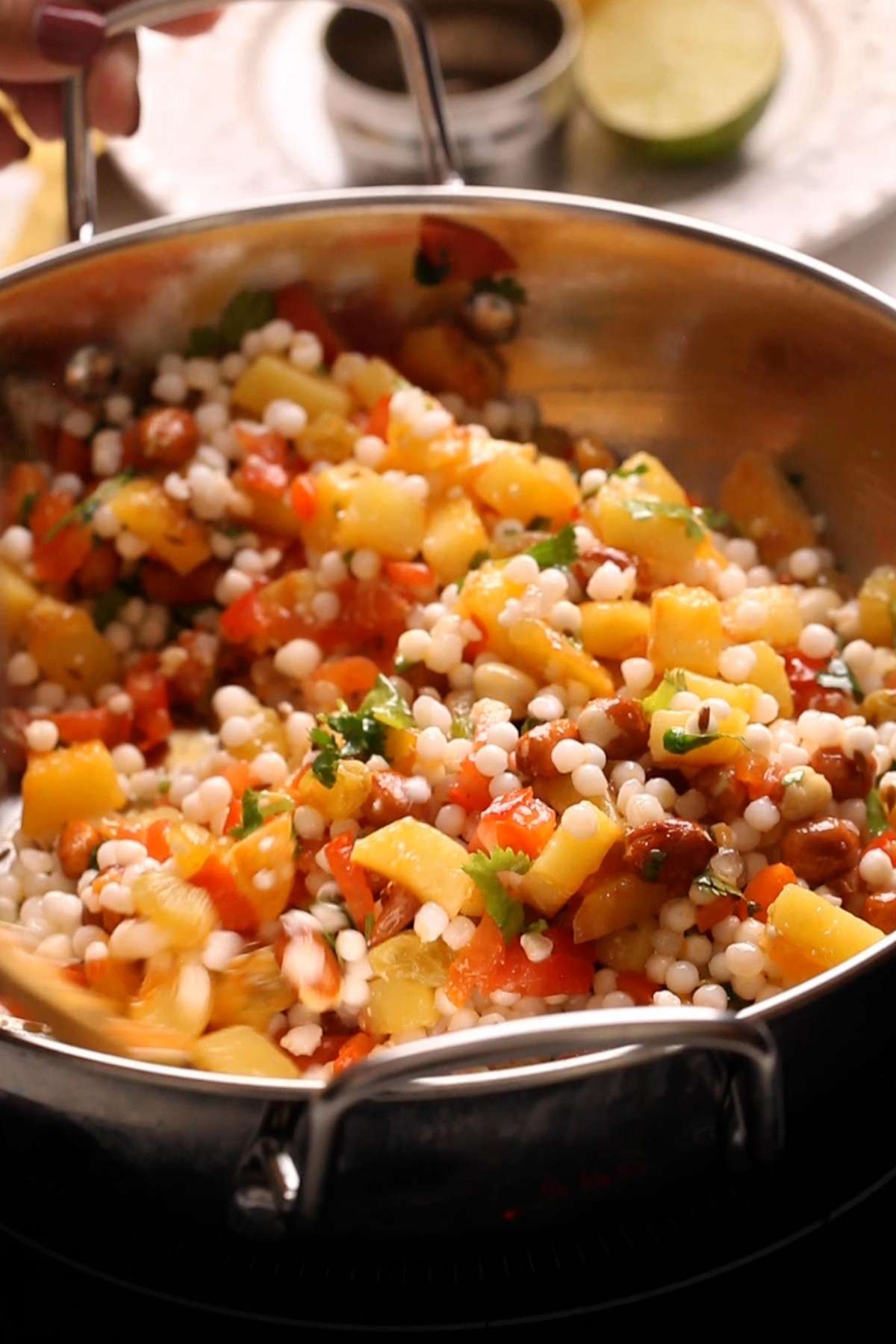
- Next, add the rinsed sabudana, raisins, peanuts, lemon juice and sprinkle salt. Now we won't cook for long. Mix gently to combine sabudana with everything. Let sabudana warm through for 2-4 minutes and switch off the stove. When you switch off the stove, sabudana should start to look transculent.
- Take the pan off the stove and mix in the cilantro. Let sit for 5-7 minutes for the flavors to get absorbed. Serve warm.
How to Fix Sticky Khichdi
Sabudana khicdhi gets sticky mainly due to excess starch and overcooking. Cook it on low heat and don't over cook at all. You can do little once sabudana khichdi is sticky, but here are a few suggestions that you can try to fix it.
- Transfer the khichdi to a clean pan, drizzle a tablespoon of ghee, and gently mix. Warm it on medium heat for a minute, just enough to help fluff up the pearls (but don't overdo the ghee or it may overpower the taste).
- Add crushed peanuts to absorb excess moisture and lightly coat the pearls.
- Let the khichdi cool completely in a bowl; the pearls often separate as the starch settles.
- Still too sticky? Mix with mashed boiled potatoes and turn it into pan-fried tikkis- delicious and zero waste!


Sabudana Khichdi
Ingredients
- ¾ cup sabudana ,sago/tapioca pearls
- ¾ cup water for soaking
- 3 tablespoon ghee
- ½ cup peanuts
- ½ cup potato peeled & diced
- ½ teaspoon cumin seeds
- 2 green chili peppers thai or serrano, adjust to taste.
- ¾ cup tomatoes finely chopped
- 2 tablespoon raisins optional
- ½ teaspoon sendha namak rock salt
- 1.5 tablespoon lime juice
- 2 tablespoon cilantro chopped
Instructions
- Place sabudana in a colander and place the colander over a large bowl. Now take the entire thing to your sink and position the sabudana under running water. Using your fingers, gentle move around the pearls and wash thoroughly. At first you will see, very milky water collecting in the bowl, keep going, in about 4-6 minutes, the water will start getting clearer. This method not only cleans the sabudana but also removes excess starch coating the tapioca pearls.
- Place the washed sabudana in a bowl and add ¾ cup of water. Cover and let soak overnight or for 8 to 10 hours. To check, squeeze a pearl between your finger and thumb, you should be able to max it quickly and easily, like play dough.
- Simply invert the soaked pearls on a colander and let sit for 8-10 minutes. This additional straining makes sure that any excess water that hasn't been absorbed is discarded. Your sabudana is now ready to cook.
Make Sabudana Khichdi
- Add ½ tablespoon ghee to a pan and add the peanuts. Toss around such that the peanuts are coated in ghee. Roast them on low medium heat stirring constantly. You will smell a nice aroma. Take peanuts out in a plate.
- Add remaining remaining ghee to the pan and add the potatoes. Sprinkle a little salt. Let potatoes cook through and crisp up on low heat. Takes about 6-8 minutes for the potatoes to get tender. If you do not want crisp potatoes, cook for 3-5 minutes only. This process is similar to how you would cook potatoes for hash. Tip:- Make sure that the potatoes are fully dry before you add them to the ghee.
- Next, add the cumin seeds to the pan, once they start spluttering, add the ginger and green chillies together. Saute for 30 seconds.
- Add the tomatoes next. Mix and let the tomatoes cook for 5-6 minutes till they start to soften. We dont want to bhuno the tomatoes and make a masala. Dont dry out the tomatoes too much.
- Once the tomatoes soften, add the soaked sabudana, raisins, peanuts, lemon juice and sprinkle salt. Now we wont cook for long. Mix gently (in a light handed fluffing manner) to combine sabudana with everything. Let sabudana warm through for 2-4 minutes and switch off the stove. When you switch off the stove, the sabudana should start to look transculent.
- Take the pan off the stove and mix in the coriander. Let sit for 5-7 minutes for the flavors to get absorbed. Serve warm.
Video
Notes
- Please note that the nutrition facts in this recipe are an estimation only.
- For vegan version, use cooking oil instead of ghee.
- You can add a little black pepper too for flavor.
- Tip # 1 :- Choose the right size of sabudana. These days sabudana comes in 3-4 sizes and for making khichdi, medium size sabudana is the best. Small or large sized tapioca pearls, both have high changes of getting sticky.
- Tip # 2 :- Wash the Sabudana Properly. Place sabudana in a colander and place the colander over a large bowl. Now take the entire thing to your sink and position the sabudana under running water. Using your fingers, gentle move around the pearls and wash thoroughly. At first you will see, very milky water collecting in the bowl, keep going, after about 4-6 minutes, the water will start getting clearer. This method not only cleans the sabudana but also removes excess starch coating on the tapioca pearls.
- Tip # 3 :- Choose a wide and shallow bowl (preferably glass or stainless steel) for soaking the sabudana. The pearls tend to clump together when you soak in a deep bowl.
- Tip # 4 :- 1:1 sabudana to water ratio. Place the washed sabudana in a clean bowl and cover with equal amount of water. for ½ cup of sabudana you will need ½ cup of water. The pearls should be just covered in water.
- Tip # 5 :- Soak overnight or for at least 8-10 hours. Many people say that 4 to 6 hours is enough, however I always saw my grandmother soaking the sabudana for 8-10 hours. The sabudana ends up gummy of not soaked properly. To check, squeeze a pearl between your finger and thumb, you should be able to max it quickly and easily, like play dough.
- Tip # 6 :- Strain the soaked sabudana for at least 15 minutes. Simply invert the soaked pearls on a colander and let sit. This additional straining makes sure that any excess water that hasn't been absorbed is discarded.
- Tip # 7 :- Dont overcook. Once you add sabudana, cook only for few minutes and then turn off the heat. I dont cook it for more 2-3 minutes. Excess heat will make the pearls sticky and gummy.
- Tip # 8:- Dont stir a lot after adding sadudana to a pan. Overmixing is a no no. Gently mix the pearls and the leave them alone. The more you stir, the higher the chances are of getting clumpy.
- While making sabudana khichdi, dont be tempted to use less oil or ghee. It is a starchy ingredient and does need fat (ghee or oil) to taste moist and not dry.
- Since I add tomatoes, I avoid cooking khichdi in cast iron kadai/pan (enameled cast iron is fine). In my opinion, due to acid of the tomatoes, the khichdi tastes a bit metallic.
- Use a heavy pot - this recipe was high starch ingredients like potatoes and sabudana and a pot that conducts heat is always helpful in avoiding khichdi sticking to the bottom.



I'd Love to Hear from You!