

Urad Dal Kachori are deep fried flatbreads stuffed with mashed urad lentils.These stuffed urad dal kachori are crispy on the outside with a soft, spicy lentil filling. Their texture is quite different from the khasta kachoris. Best enjoyed with potato curry and raita! Vegan friendly! Perfect to make on festivals!
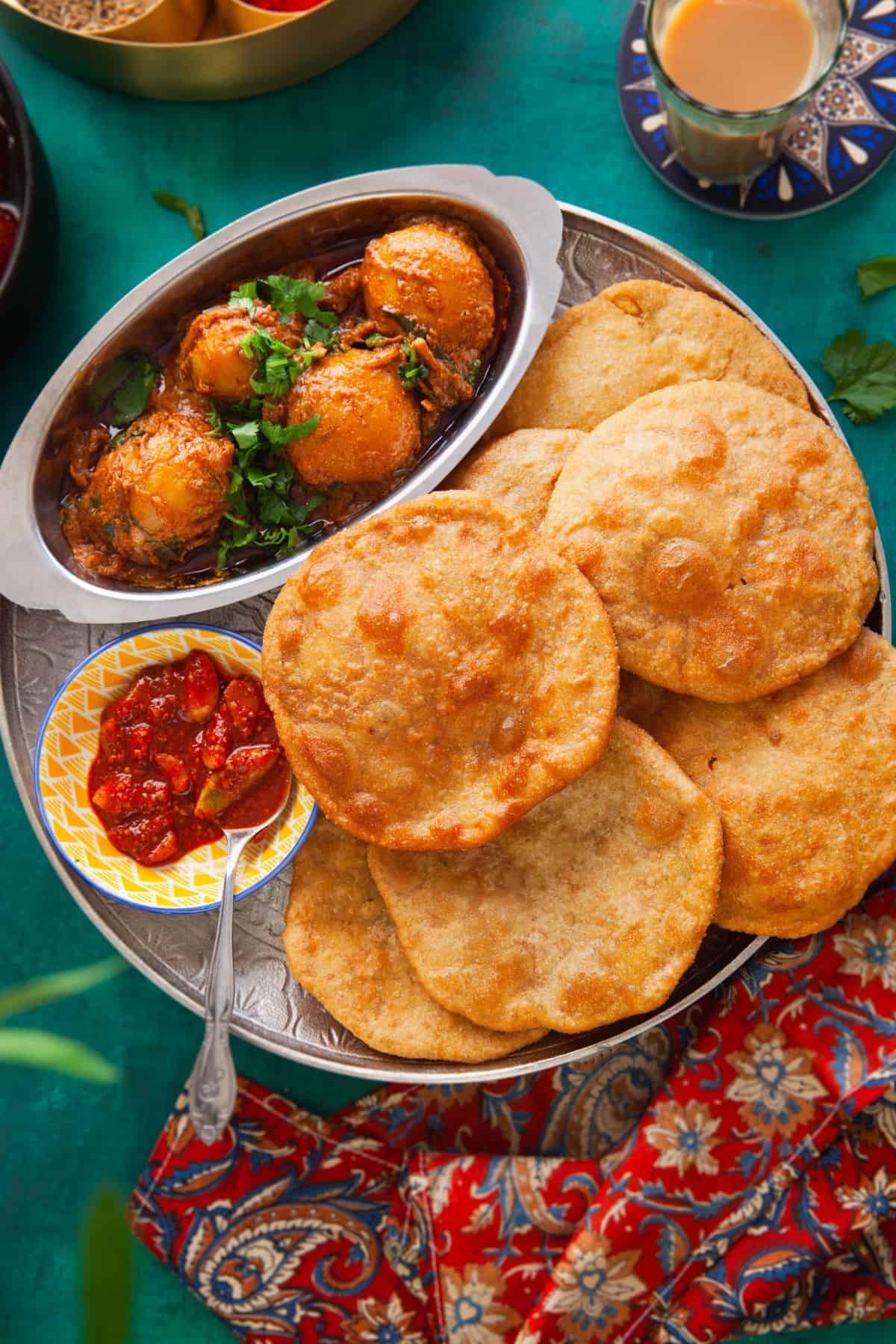
Indian festivals become even more special because of the food traditions that accompany them. On Diwali, deep fried flatbreads like poori or kachori are a must! These urad dal kachoris, also known as pitthi vali kachoris are a festival staple in our home.
In my grandmother's house, my family used to fry them in shorterning (aka Dalda) and the taste was just mind-blowing. We lived in a joint family and countless kachoris were made on Diwali night and we always had leftovers. Which next day, formed a terrific breakfast with masala chai.
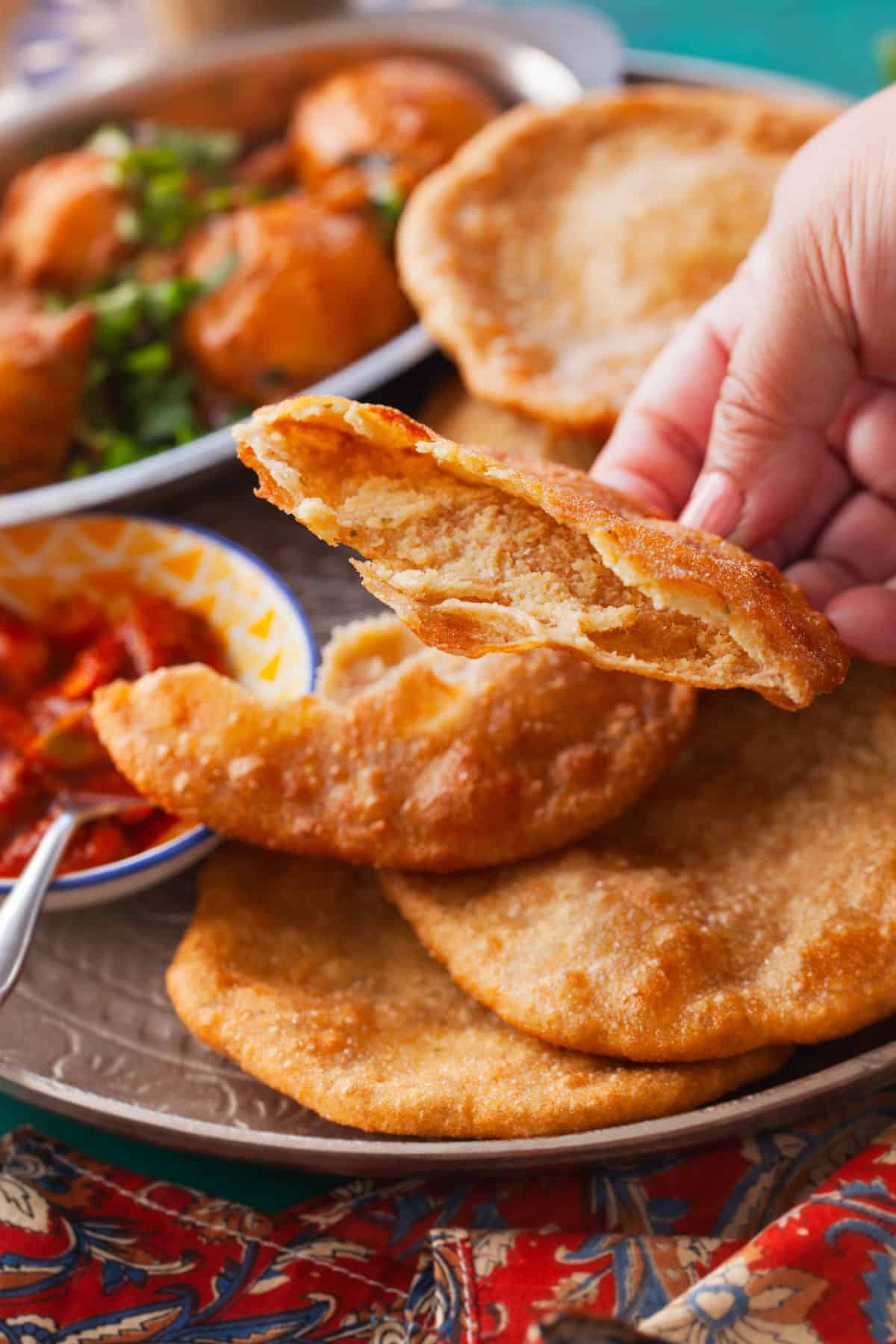
Most of the time, kachoris are considred a snack, but these urad dal kachories are different. They were served as part of main meal, paired with a potato curry- either aloo jhol or dum aloo, a paneer dish, kaddu ki sabzi, boondi raita, and a tangy pickle.
What are Urad Dal Kachori
Kachori = Deep fried stuffed flatbread.
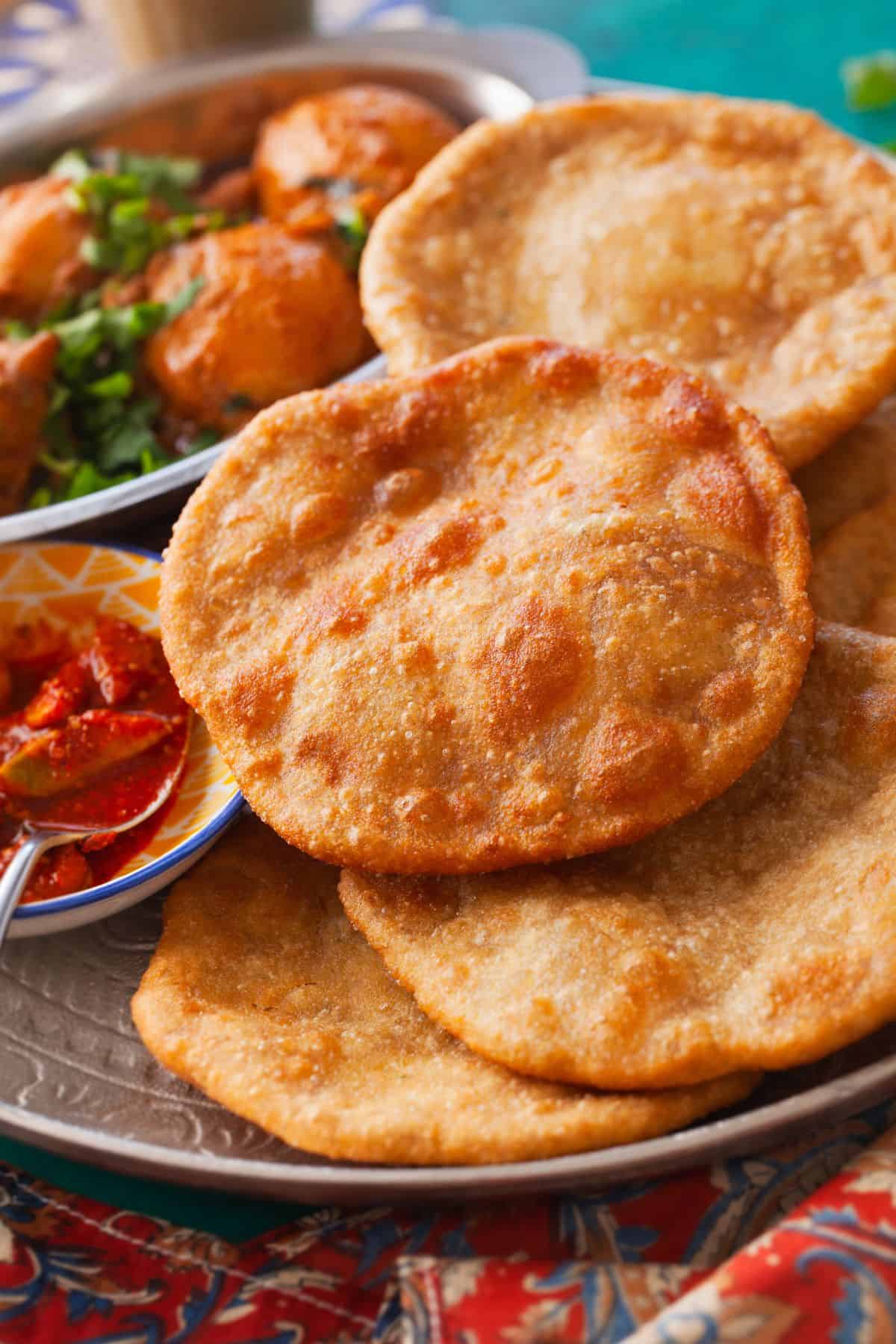
These kachoris are stuffed with spicy urad lentils filling and then fried until golden brown. The texture is way softer as compared to the khasta kachori but they aren't as soft as pooris.
If you have been following me for a while, you would remember the bedmi poori recipe I shared a few years ago. Even though the ingredients of both these flatbreads are exactly the same, bedmi pooris are not stuffed, rather the lentil paste is combined with flour to make a dough.
If you do not want to use urad lentils, you could use yellow moong dal or chana dal, however the taste of kachori will differ depending on the lentils used.
Urad lentils are really sticky and hence quite tricky to work with. The biggest struggle with these flatbreads is to make sure that they are rolled to optimum thickness, else either they will burst open in hot oil during deep frying process or remain raw from inside.
8 tips for making best dal kachoris
- A golden rule of thumb I learned from my grandmother is that the dough consistency is key when making different fried breads. For puris, the dough should be tight and firm, but for kachoris, it needs to be soft and pliable, yet not sticky. This softer dough is easier to roll out without applying too much pressure, which allows better control over the thickness of the kachoris.
- The second tip she passed down was to handle the dough gently. If you apply too much pressure while rolling, the dal filling will get exposed. When this happens, you can't fry the kachoris because the filling will ooze out into the oil, burn, and ruin the batch.
- Make sure that the dough is at room temperature when you start making kachoris. Cold dough will require extra pressure, leading to the same problem.
- Ensure your dal filling is smooth, not coarse. Avoid adding whole or crushed spices, or finely chopped ginger and green chilies. Instead, grind everything into a fine paste. A coarse filling can cause the dough to tear when rolling.
- It's also important to avoid making kachoris too thick.Thick kachoris won't cook evenly and will remain raw and doughy inside.
- However, rolling them too thin isn't ideal either. Through countless attempts, I've learned that thin kachoris are prone to opening up in the oil as they puff up from the steam inside. This, too, will cause the filling to leak out, spoiling the oil.
- We do add salt to the kachori dough but be lighthanded. Salt can make the dough sticky while resting.
- Lastly,if while frying you see a kachori opening up, immediately take it out of oil and keep aside. That way you won't spoil your oil. You can fry up that saved kachori at the very end.
Ingredients
- Atta (Whole Wheat Flour) - I use atta(stone milled whole wheat flour) for kachoris. If you wish, you could use half whole wheat and half all purpose flour (maida).
- Urad Dal - We need skinned split urad lentils (ivory colored dhuli urad) for this recipe. You can find the lentils on amazon or in indian grocery stores.
- Spices - fennel seeds, nigella seeds, red chilli powder and hing (asafoetida).You can add few black peppercorns if you wish.
- Other Ingredients - Ginger, green chilies, salt
Instructions
Preperation
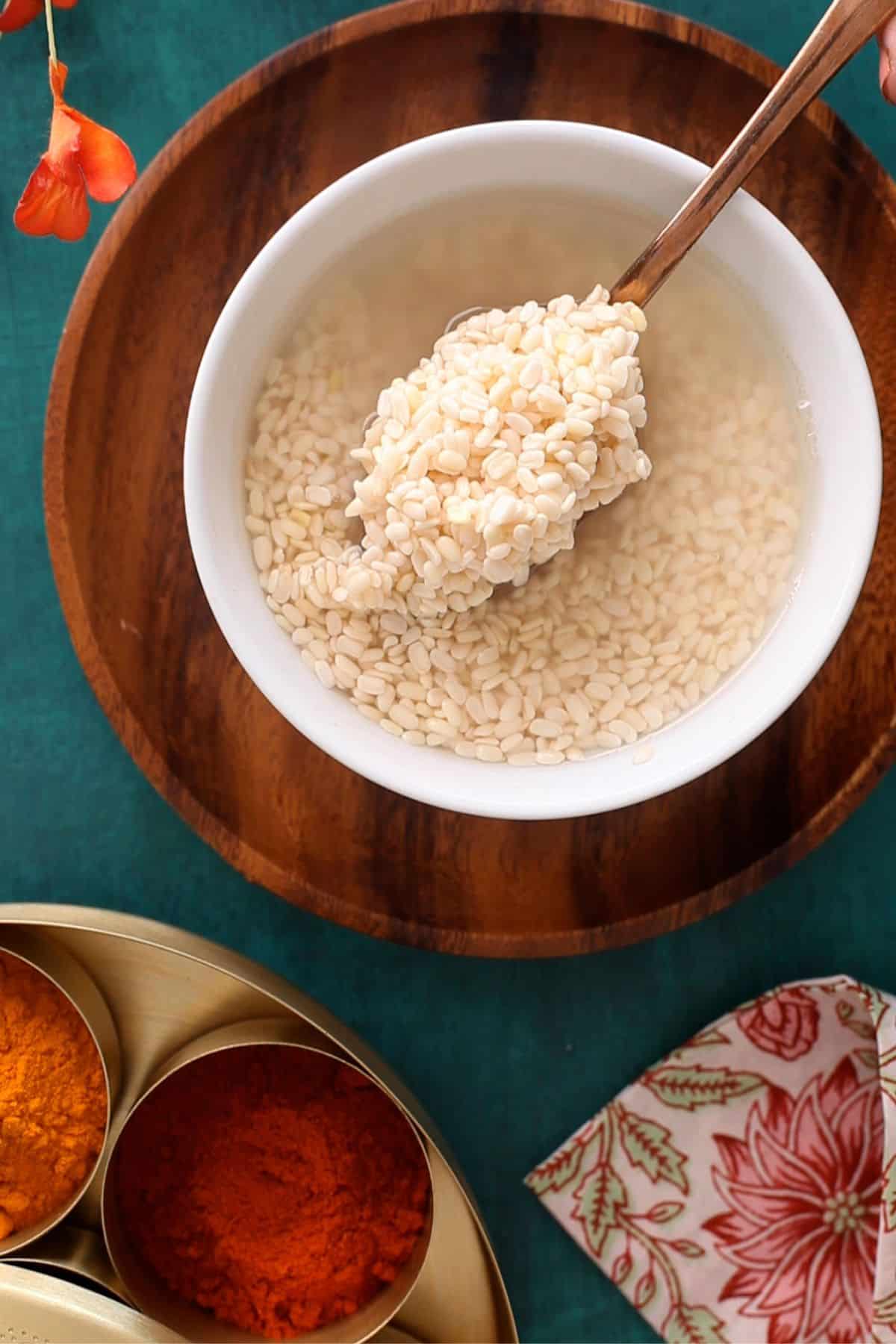
- Add urad dal to a bowl and wash 3-4 times under running water until the water runs clear. Soak the lentils in excess water for 5-7 hours.
Make Kachori Dough
- In a wide, shallow dish or large mixing bowl, combine the atta, salt, and oil (for moyan). Incorporate the oil using your hands or spoon until the flour resembles fine crumbs.
- Gradually add water and mix with your hands to form a soft dough. Knead the dough using your knuckles for 3-5 minutes until smooth.
- Cover the dough and let it rest for 15-20 minutes to rest the gluten & develop elasticity and pliability.
Make The Lentil filling
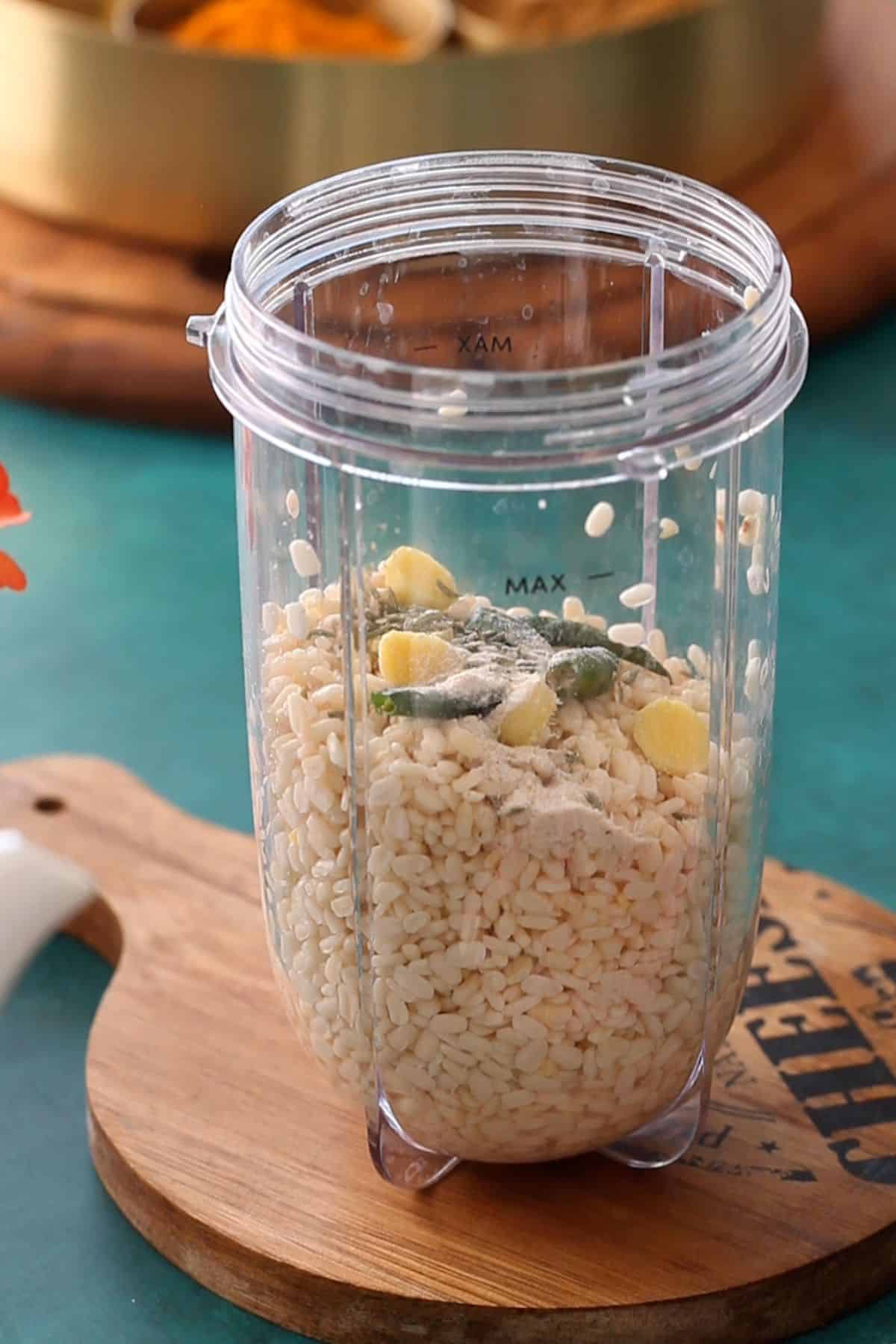
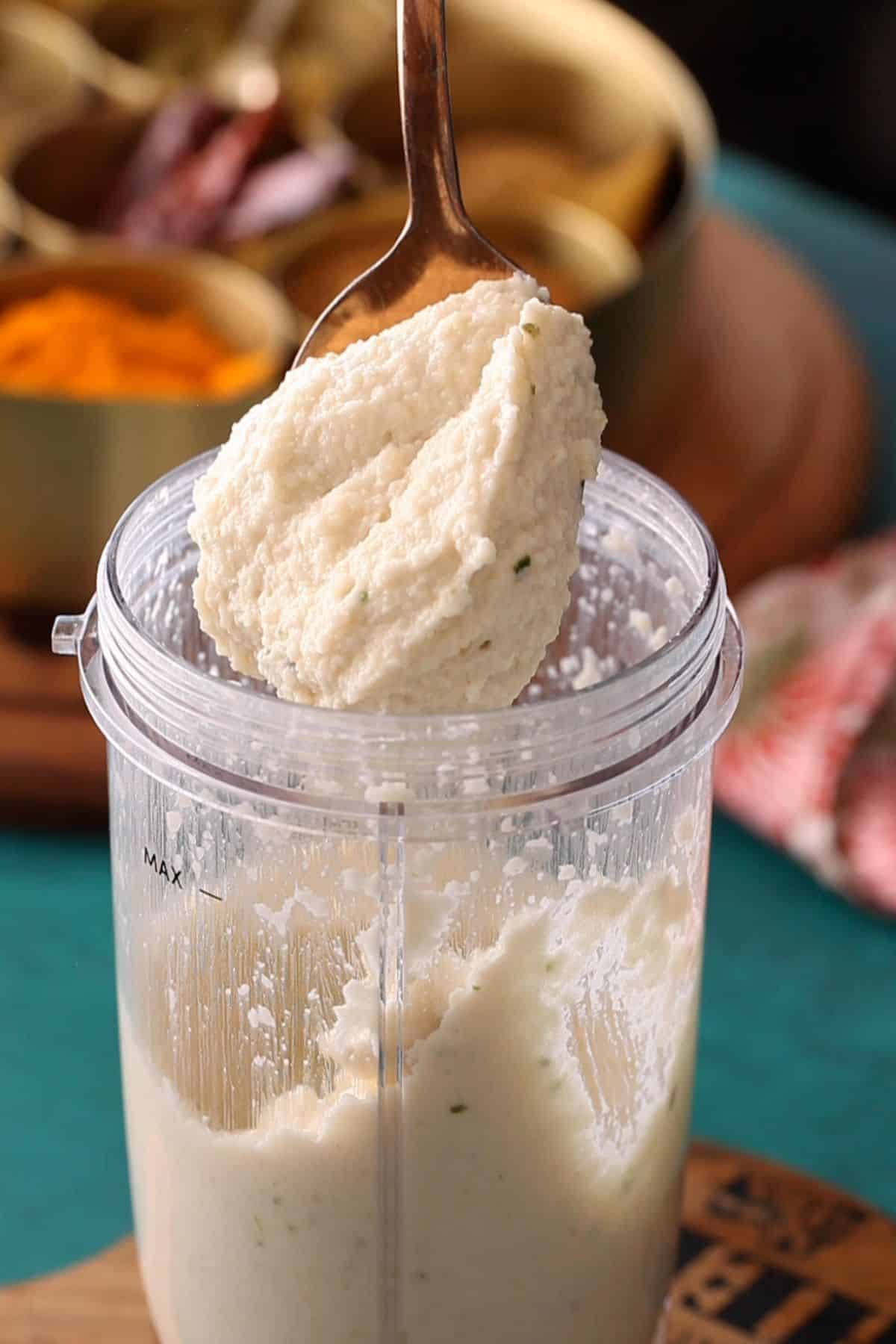
- Meawhile let's make the dal filling. Drain and discard all the water from the soaked urad lentils. Add them to a blender jar.
- Add roughly chopped ginger & green chilies, hing powder and nigella & fennel seeds.
- If needed, add little water and grind to a fine paste. Add as less water as possible.
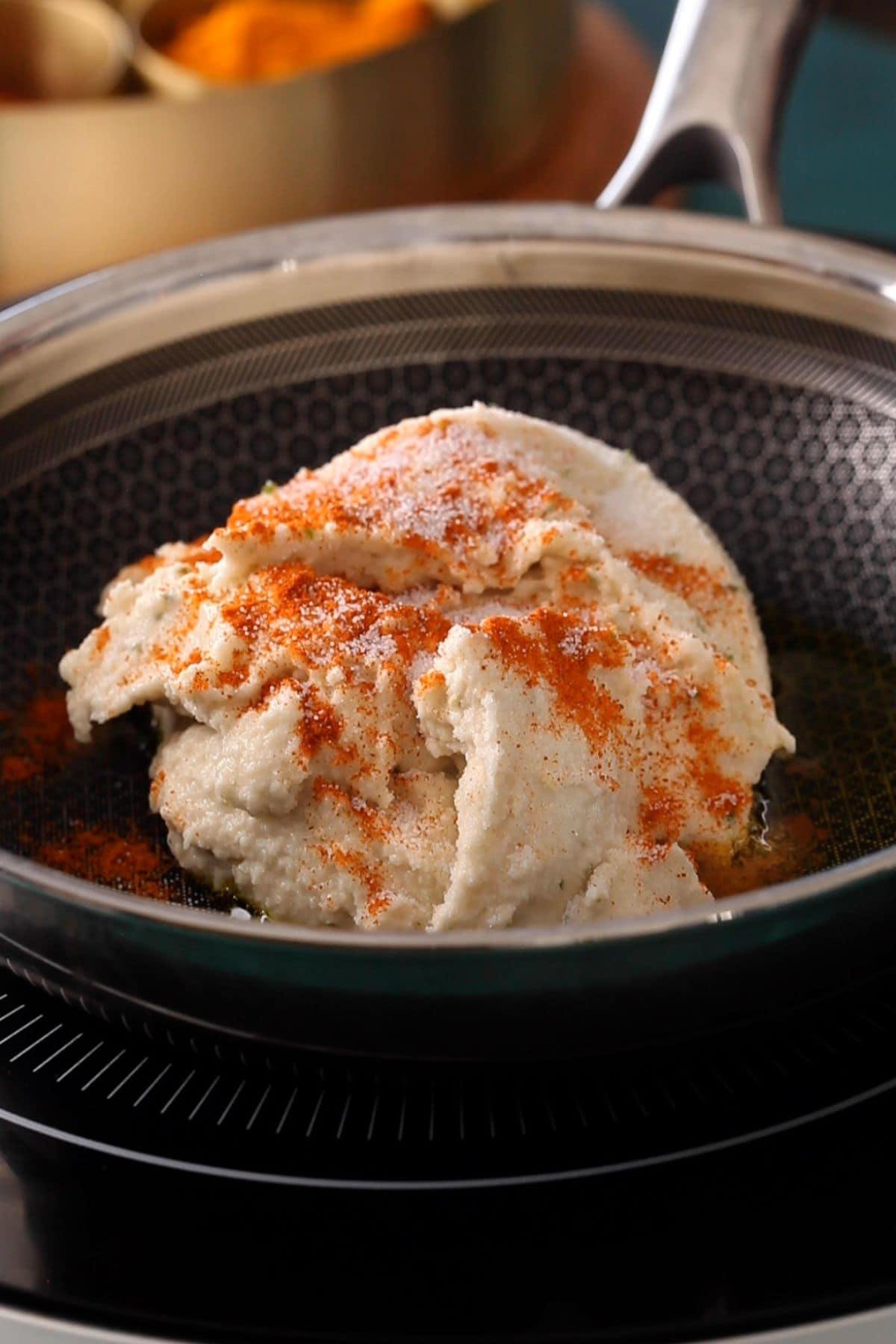
- Heat up oil in a non stick pan or a kadai. To the warm oil, carefully add the lentil paste. Sprinkle salt and red chilli powder.
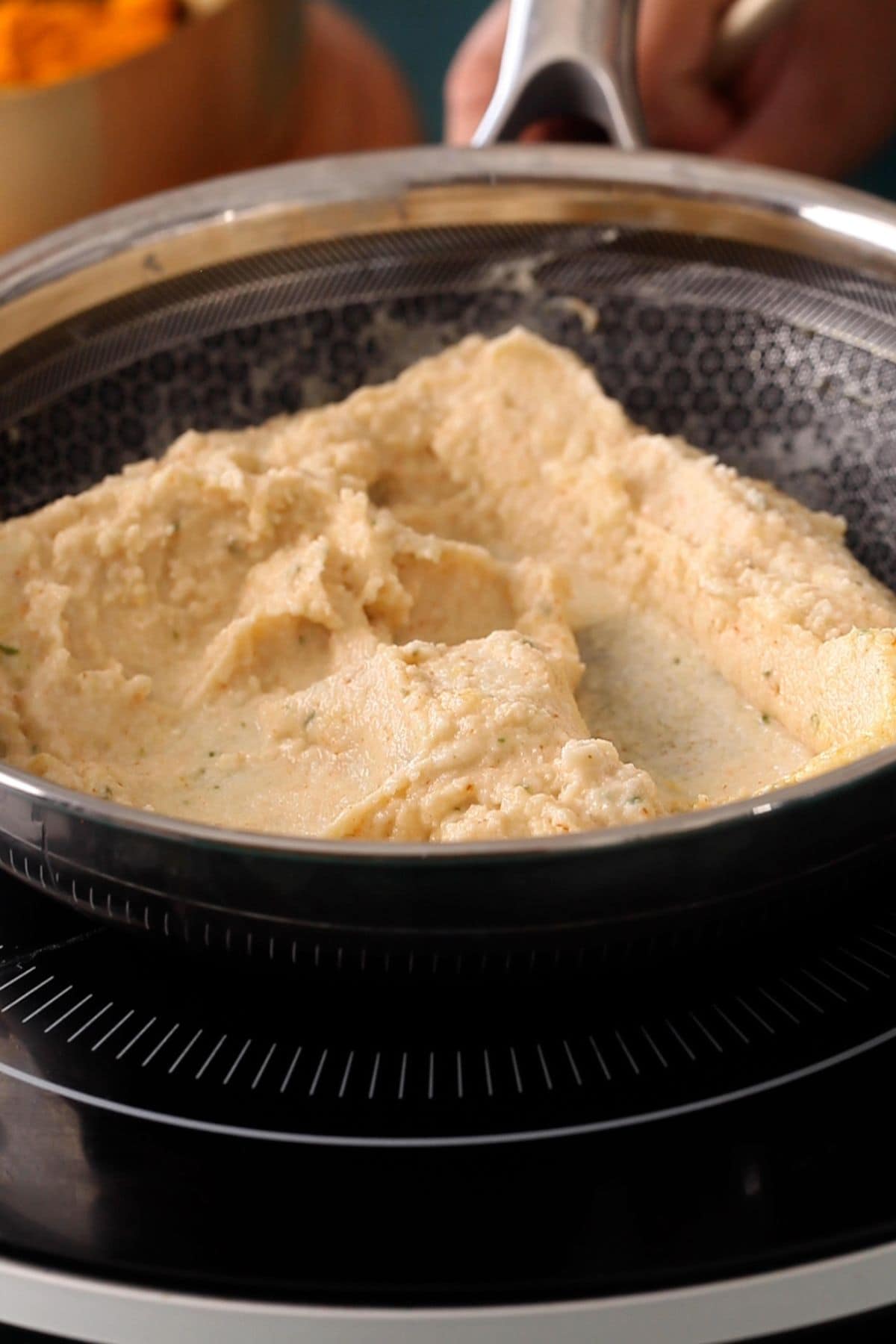
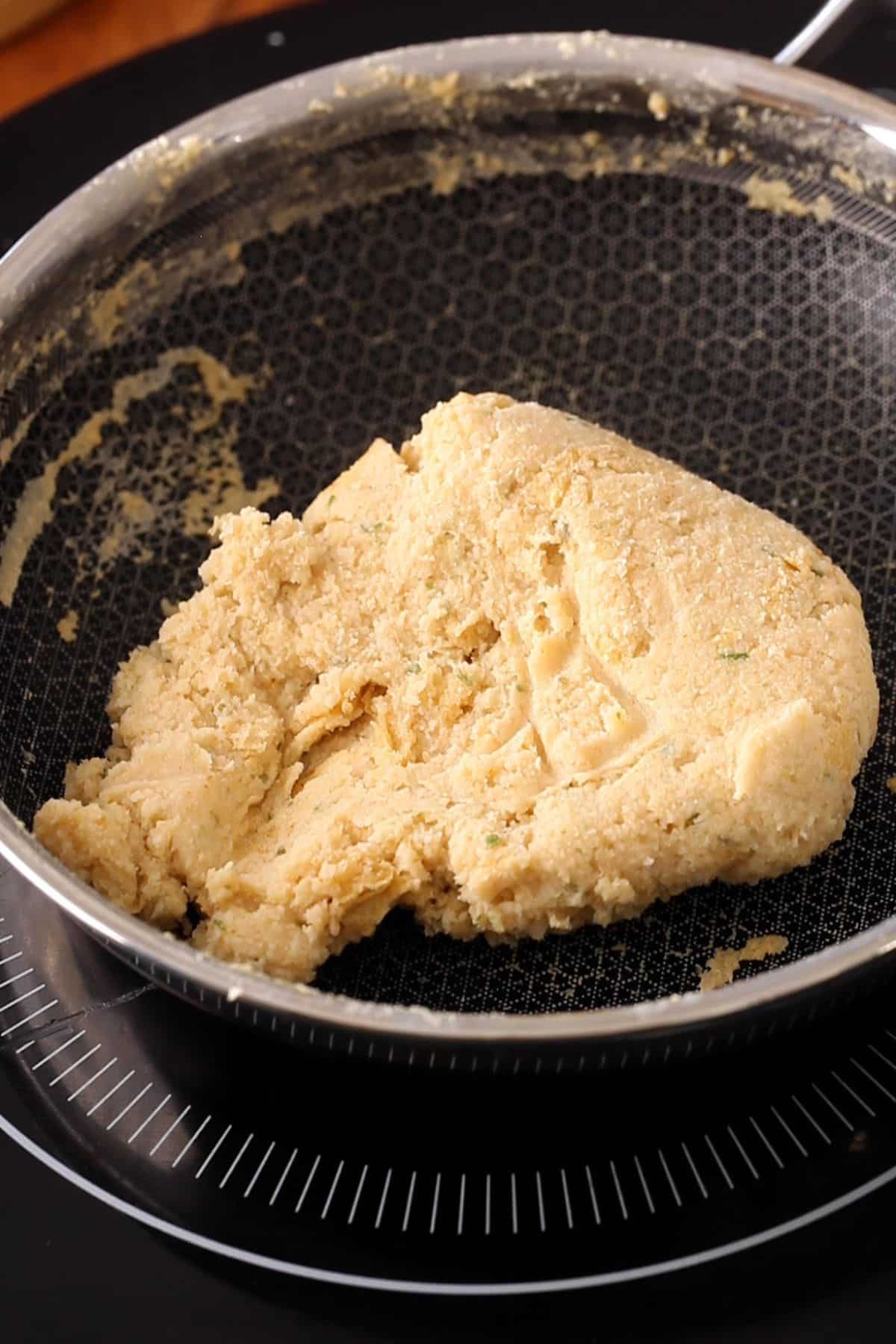
- Bhuno (saute) the lentils on low heat while stirring continously. Keep scraping as you do the bhunai. Initially, they will feel very pasty and sticky but in 5-7 minutes you will see them attaining a soft dough consistency.
- Don't dry out too much. Don't brown the dal mixture. The dal paste should feel soft and not stick to your fingers. Switch off the flame. Take out in a small bowl and let cool. You can make the dal filling a day ahead.
Stuff, Roll and deep fry
- Take small portions of the dough and place them on a rolling surface. Lightly grease the surface with a few drops of oil, then roll each dough ball into a 2.5-inch circle using a rolling pin. Don't dust with dry flour, use little oil as needed.
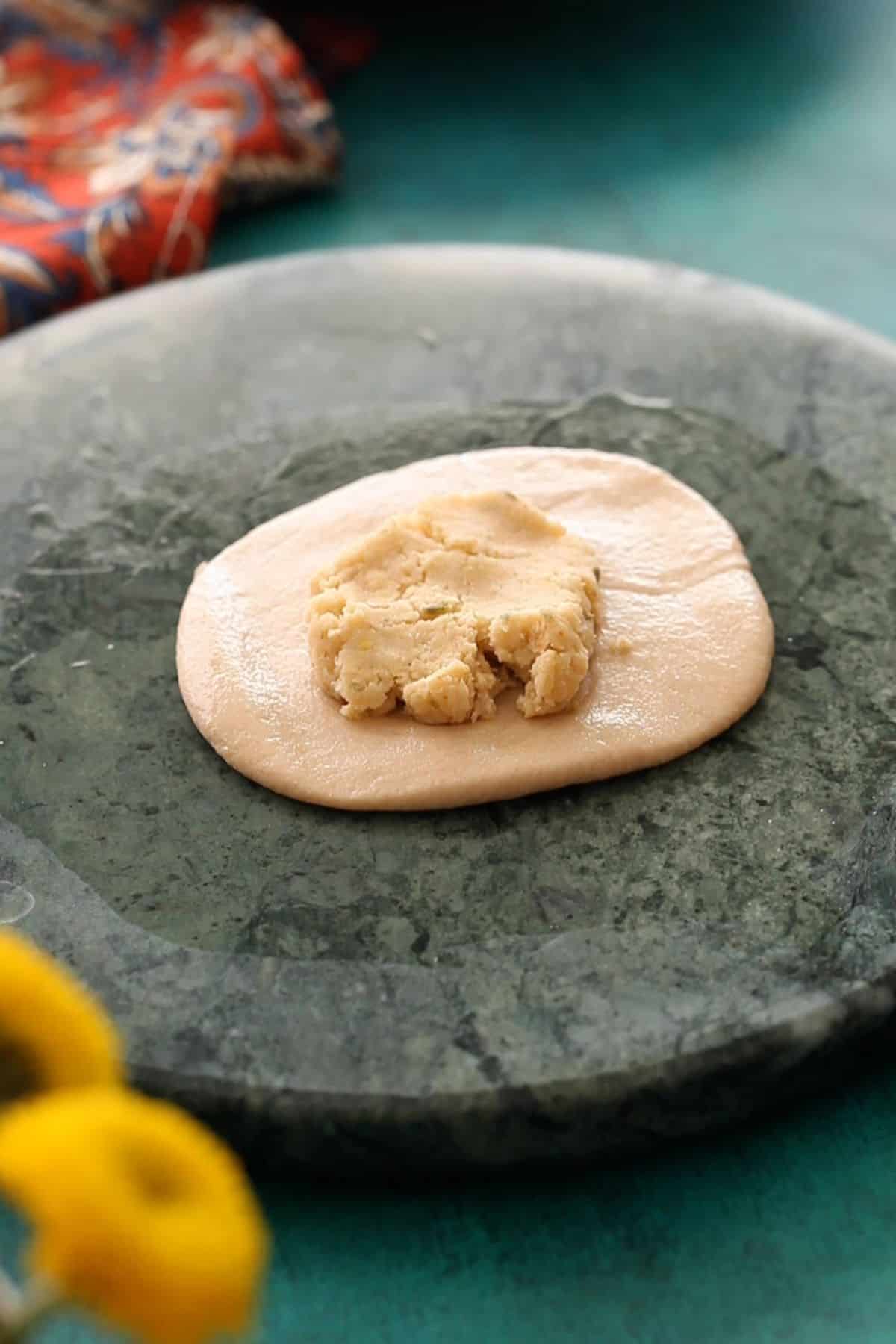
- Add about 1 tablespoon of the dal filling to the center of the dough circle. Gently bring the edges of the dough together, folding them over the dal filling to seal it completely.
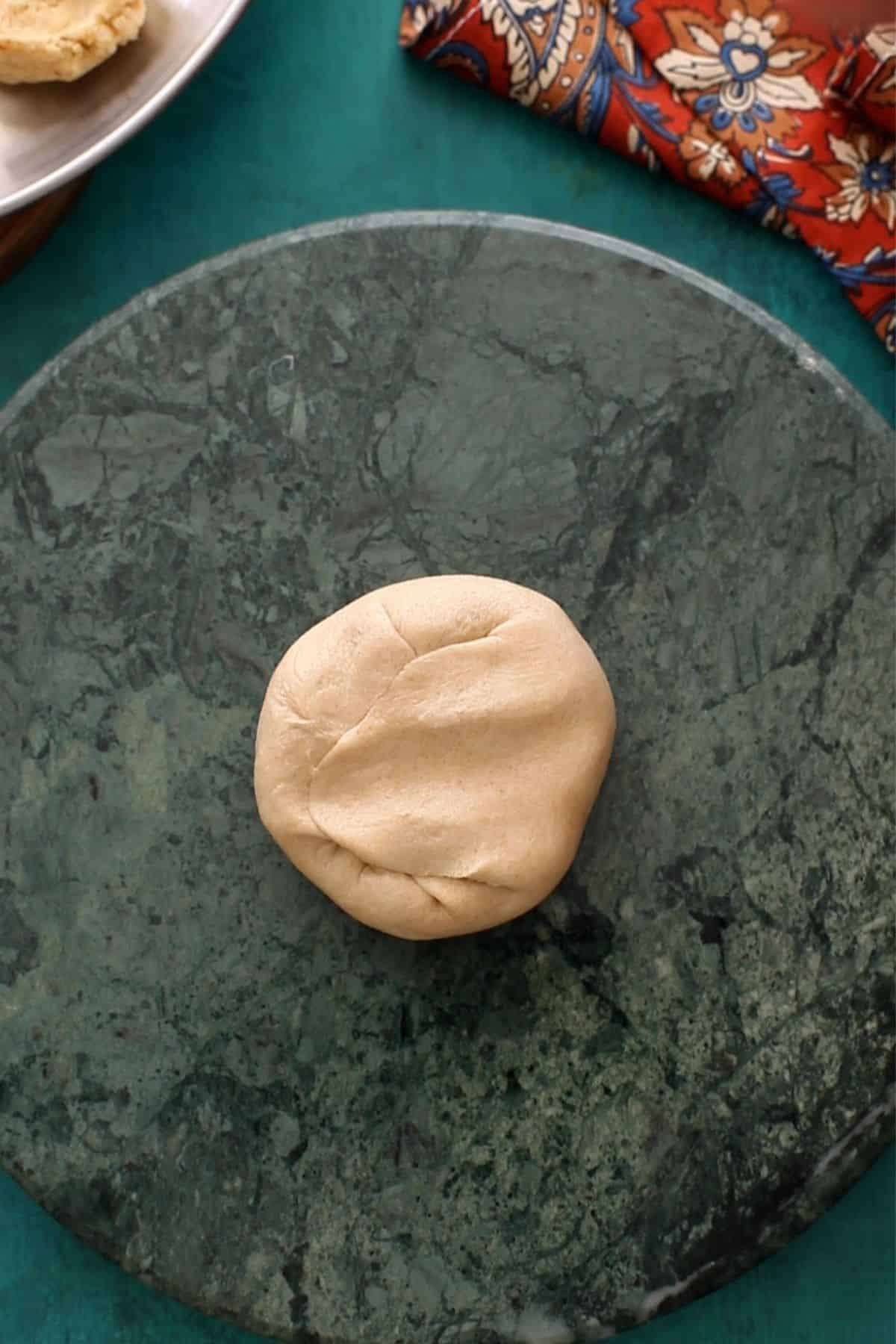
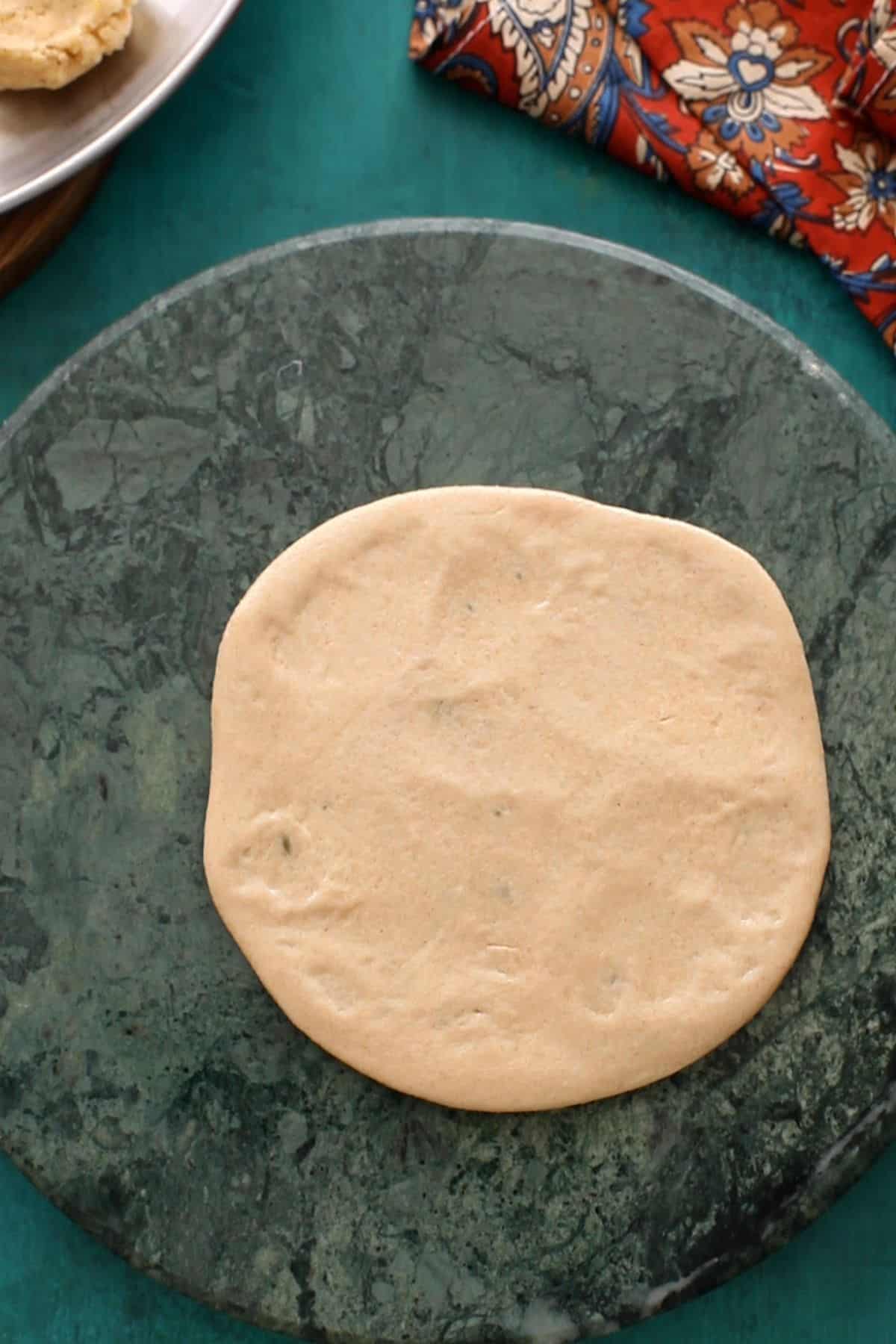
- If needed, apply a few more drops of oil and gently press the filled dough to flatten it into a round shape. Roll gently with the rolling pin to a 3 inch circle taking care not to apply too much pressure. Don't try to roll very thin else dal will start coming out. Repeat this process for all the kachoris, keep the rolled ones covered with a cloth to prevent drying out.
- Heat oil in a deep pot over low-medium heat for frying. Tip:- The oil should be hot but not smoking. To check, drop a small piece of dough into the oil; if it sizzles and rises to top without changing color, the oil is ready for frying.
- Carefully lower the rolled dal kachoris into the hot oil, one at a time. Fry them until they turn golden-brown and crispy, flipping and gently pressing them with a slotted spoon occasionally for even cooking. The heat might cause few kachoris to puff up.All of them will not puff up and that's how they are meant to be.
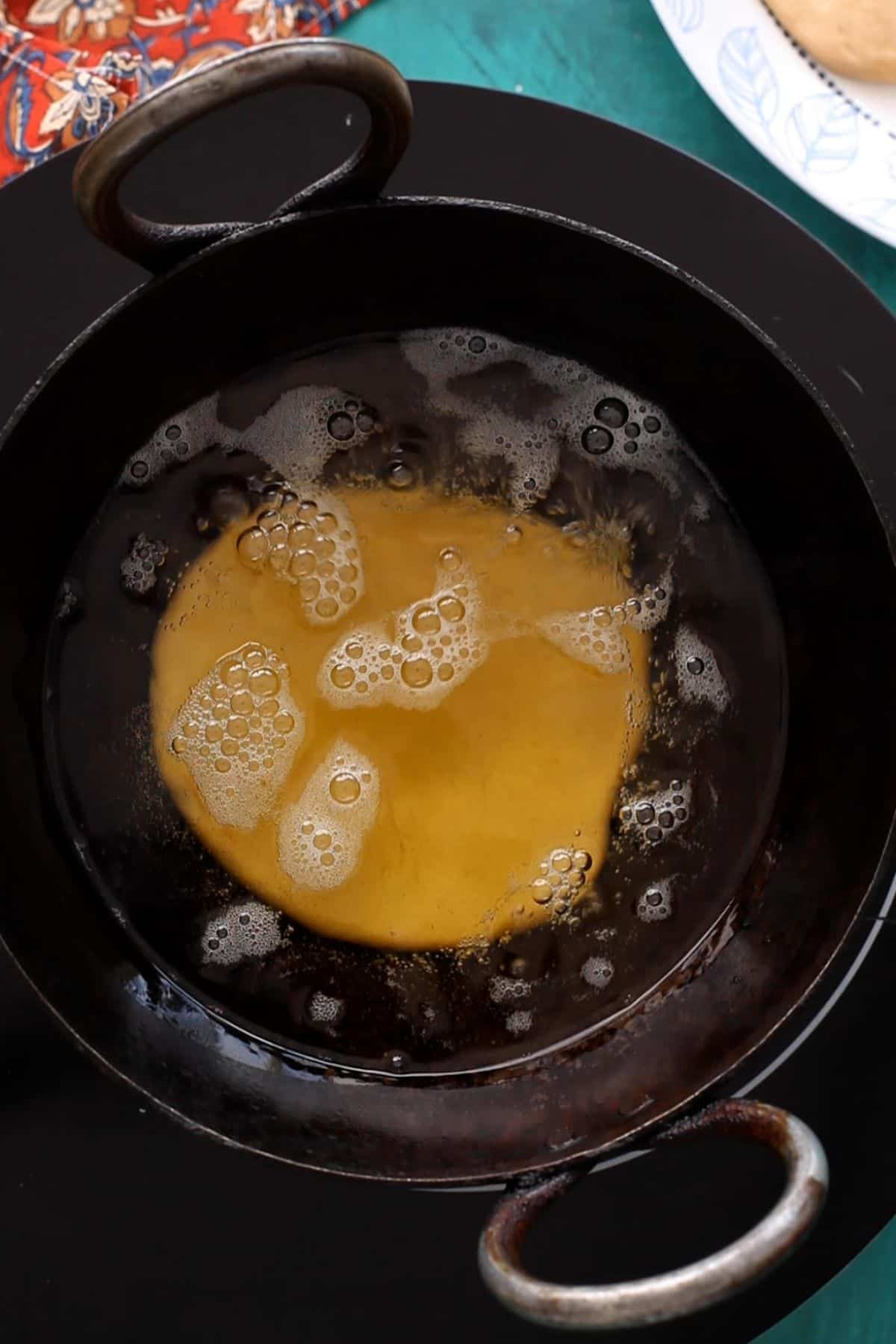
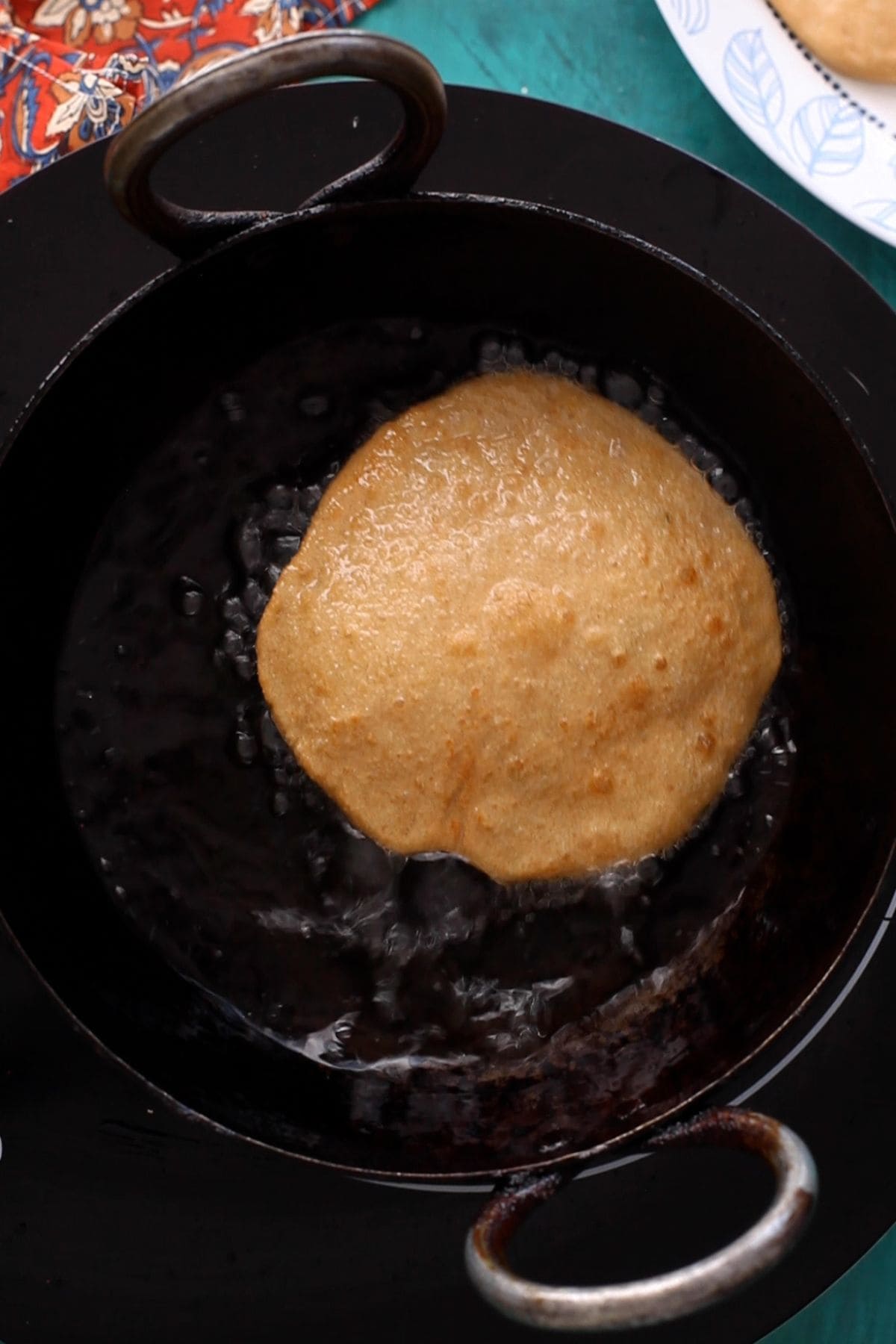
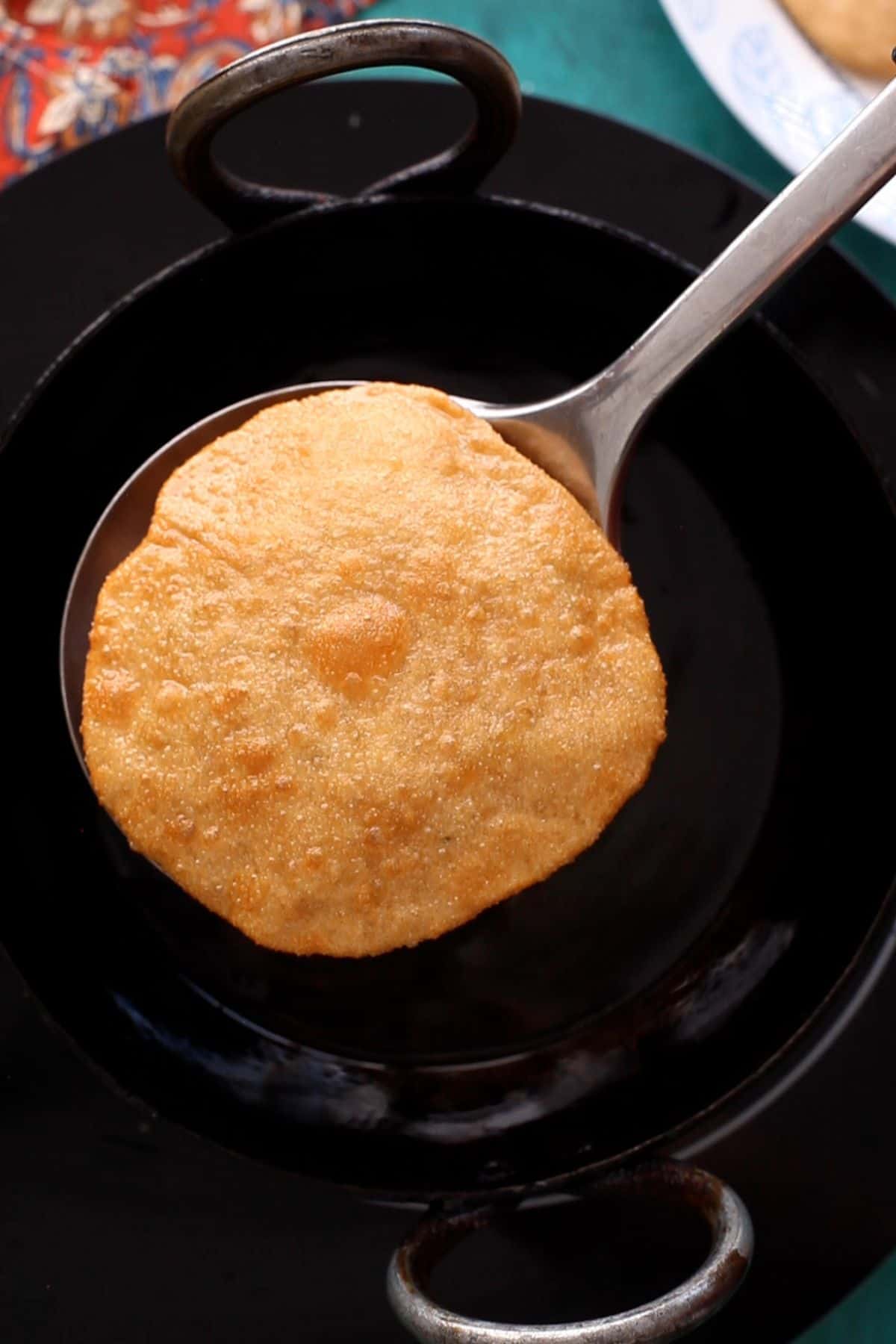
- Once done, use a slotted spoon to lift the kachoris from the oil and drain excess oil. Fry the remaining kachoris in the same way, then transfer them onto paper towels to absorb any extra oil. Serve warm with curry and raita.
Urad Dal Ki Kachori (Whole Wheat)
Ingredients
For Making Kachori Dough
- 1+½ cup atta wholewheat flour
- 2 tablespoon oil
- ¼ teaspoon salt
- ⅓-1/2 cup room temperature water or as needed
For The Spicy Dal Filling
- ½ cup urad dal split urad lentils (dhuli urad dal)
- ½ teaspoon fennel seeds
- 2 indian green chilies (hot), adjust to taste, roughly chopped
- ½ inch fresh ginger roughly chopped
- 1 pinch hing asafoetida
- 1 pinch nigella seeds kalonji
- 1 tablespoon mustard oil or use any cooking oil
- 3 tablespoon water for grinding the dal
- ½ teaspoon red chili powder (hot), adjust to taste
- ¾ teaspoon salt adjust to taste
Other Ingredients
- Oil for deep frying
Instructions
SOAK THE URAD LENTILS
- Add urad dal to a medium bowl and wash 3-4 times under running water until the water runs clear. Soak the lentils in excess water for 5-7 hours.
MAKE KACHORI DOUGH
- In a wide, shallow dish or large mixing bowl, combine the atta, oil and salt.
- Incorporate the oil using your hands or spoon until the flour resembles fine crumbs.
- Gradually add water and mix with your hands to form a soft dough. Knead the dough using your knuckles for 3-5 minutes until smooth.
- Cover the dough and let it rest for 15-20 minutes to rest the gluten & develop elasticity and pliability.
MAKE THE LENTIL FILLING
- Meawhile lets make the dal filling. Drain and discard all the water from the soaked urad lentils. Add them to a blender jar.
- Add roughly chopped ginger & green chilies, hing powder and fennel seeds.
- Add 3 tablespoon water and grind to a fine paste. If needed, add 1 tablespoon water. Dont add too much water.
- Heat up oil in a non stick pan or a kadai. To the warm oil, carefully add the lentil paste. Sprinkle salt and red chilli powder.
- Bhuno (saute) the lentils on low heat while stirring continously. Keep scraping as you do the bhunai. Initially, they will feel very pasty and sticky but in 5-7 minutes you will see them attaining a soft dough consistency.
- Don't dry out too much. Don't brown the dal mixture. The dal paste should feel soft and not stick to your fingers. Switch off the flame. Take out in a small bowl and let cool. You can make the dal filling a day ahead.
STUFF, ROLL AND DEEP FRY KACHORIS
- Take small portions of the dough and place them on a rolling surface. Lightly grease the surface with a few drops of oil, then roll each dough ball into a 2.5-inch circle using a rolling pin. Don't dust with dry flour, use little oil as needed.
- Add about 1 tablespoon of the dal filling to the center of the dough circle. Gently bring the edges of the dough together, folding them over the dal filling to seal it completely.
- If needed, apply a few more drops of oil and gently press the filled dough to flatten it into a round shape. Roll gently with the pin to a 3 inch circle taking care not to apply too much pressure. Don't try to roll very thin else dal will start coming out. Repeat this process for all the kachoris, keep the rolled ones covered with a cloth to prevent drying out.
- Heat oil in a deep pot over low-medium heat for frying. Tip:- The oil should be hot but not smoking. To check, drop a small piece of dough into the oil; if it sizzles and rises to top without changing color, the oil is ready for frying.
- Carefully lower the rolled dal kachoris into the hot oil, one at a time. Fry them until they turn golden-brown and crispy, flipping and gently pressing them with a slotted spoon occasionally for even cooking. The heat might cause few kachoris to puff up. All of them will not puff up and that's how they are meant to be.
- Once done, use a slotted spoon to lift the kachoris from the oil and drain excess oil. Fry the remaining kachoris in the same way, then transfer them onto paper towels to absorb any extra oil. Serve warm with curry and raita.
Notes
- A golden rule of thumb I learned from my grandmother is that the dough consistency is key when making different fried breads. For puris, the dough should be tight and firm, but for kachoris, it needs to be soft and pliable, yet not sticky. Since kachoris are stuffed, this softer dough is easier to roll out without applying too much pressure, which allows better control over the thickness of the kachoris.
- The second tip she passed down was to handle the dough gently. If you apply too much pressure while rolling, the dal filling will get exposed. When this happens, you can't fry the kachoris because the filling will ooze out into the oil, burn, and ruin the batch.
- Make sure that the dough is at room temperature when you start making kachoris. Cold dough will require extra pressure, leading to the same problem.
- It's also important to avoid making kachoris too thick. Since we don't add any oil (moyan) to the dough, thick kachoris won't cook evenly and will remain raw and doughy inside.
- Ensure your dal filling is smooth, not coarse. Avoid adding whole or crushed spices, or finely chopped ginger and green chilies. Instead, grind everything into a fine paste. A coarse filling can cause the dough to tear when rolling.
- However, rolling them too thin isn't ideal either. Through countless attempts, I've learned that thin kachoris are prone to opening up in the oil as they puff up from the steam inside. This, too, will cause the filling to leak out, spoiling the oil.
- We do add salt to the kachori dough but be lighthanded. Salt can make the dough sticky while resting.
- Lastly,If while frying you see a kachori opening up, immediately take it out of oil and keep aside. This will not spoil your oil. You can fry up that kachori at the very last.

I'd Love to Hear from You!