

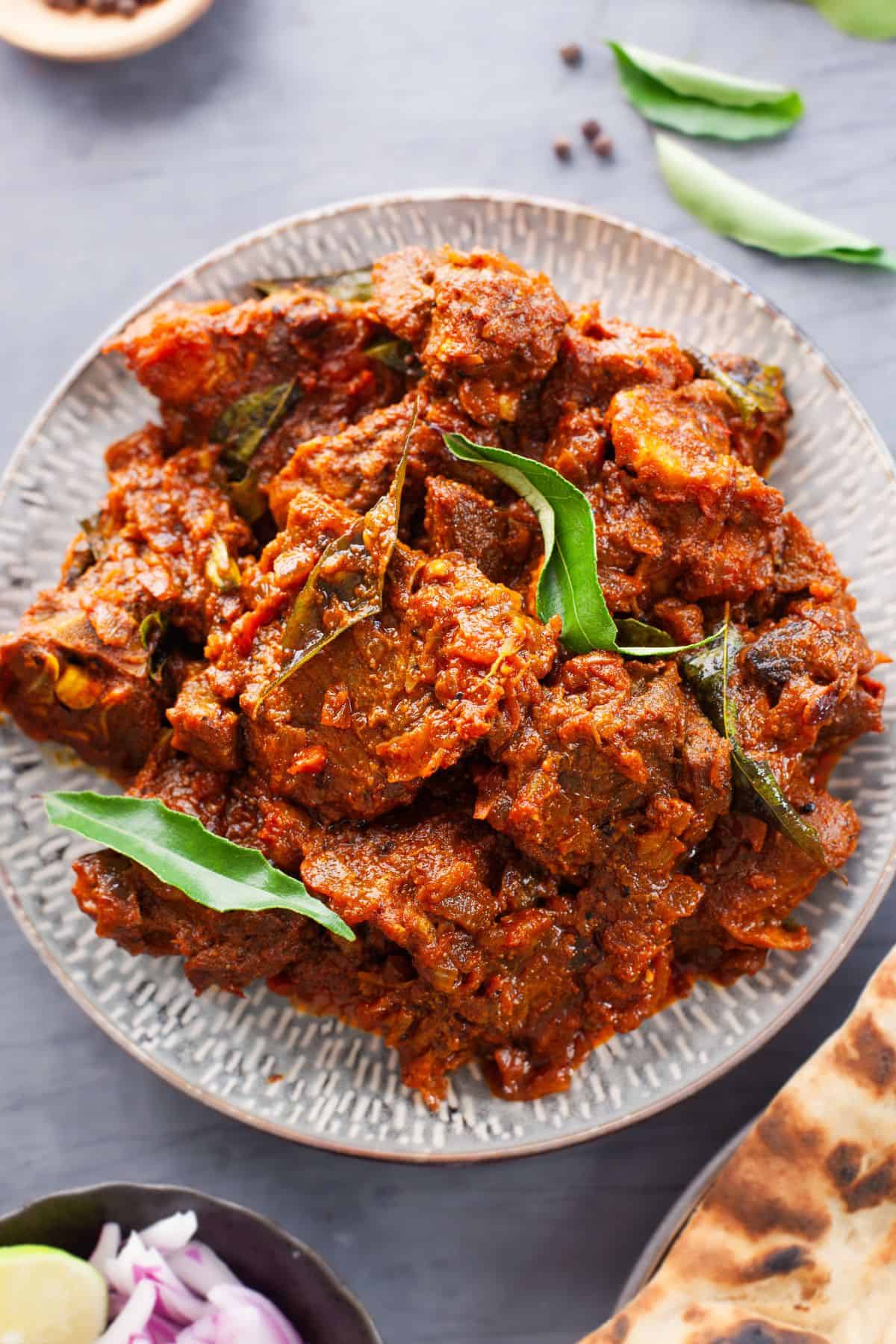
This mutton pepper fry recipe is hot & spicy with tender pieces of mutton coated in an intensely peppery masala. With restaurant like flavors and glossy dark brown color, it is perfect to serve as side dish with flatbreads or steamed rice. A word of caution-it's incredibly addictive!
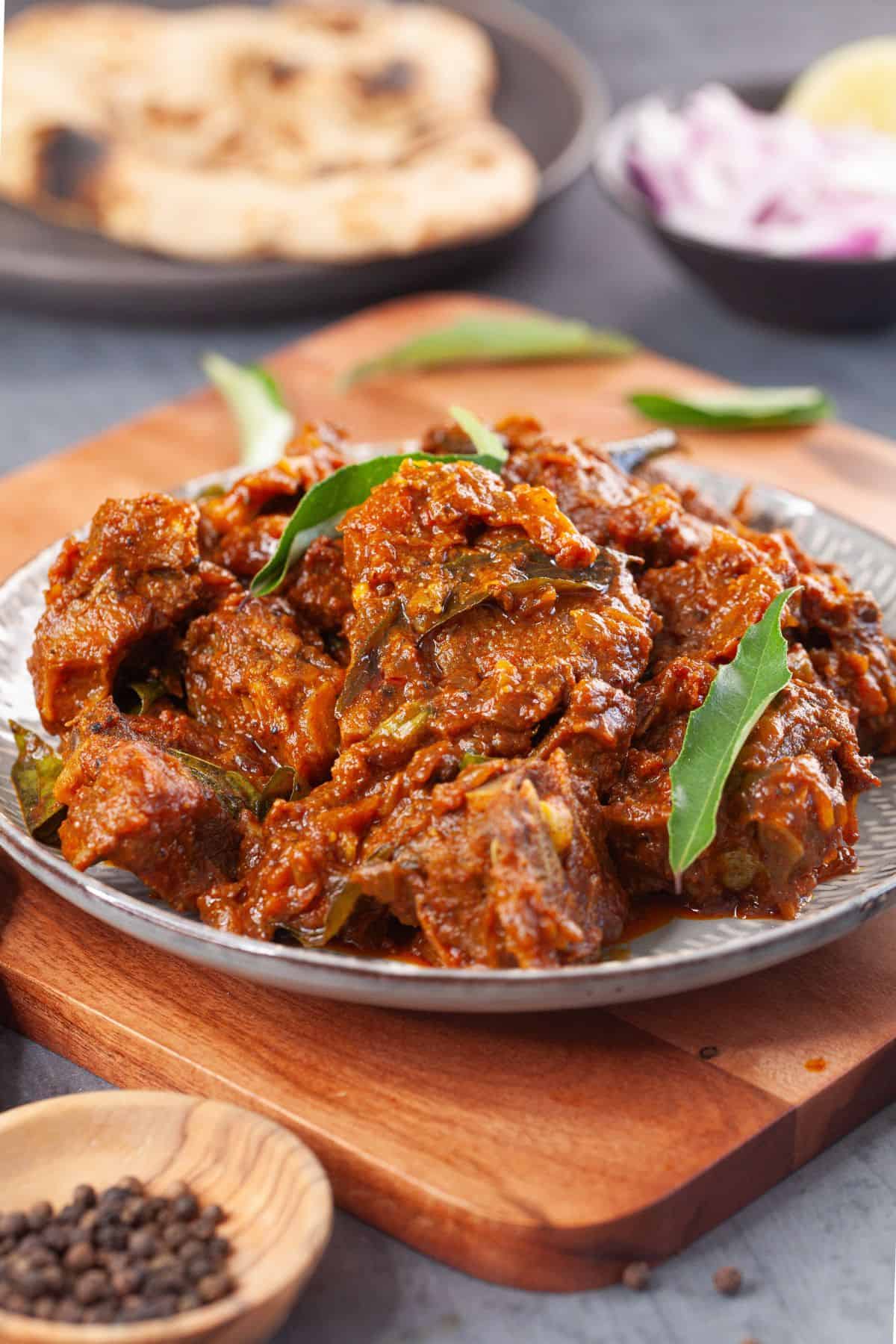
When it comes to meat dishes, I usually make them with plenty of gravy to soak up with indian flatbreads or spoon over rice. But this mutton pepper fry is a bit different. It features a thick, fiery masala made with freshly ground black pepper that coats the meat. So while traditionally it is served with parotta (layered flatbread), we love it as an appetizer or alongside drinks too.
I've been cooking Indian food forever, and the way spices and chilies transform dishes never ceases to amaze me. As I was writing this, I couldn't help but think of other fiery curries I've shared, like lamb vindaloo or the fiery laal maas(red mutton curry) in which the heat comes from a fresh red chili paste. In contrast, in this mutton pepper fry, it's the black peppercorns that take center stage, bringing a whole different level of intensity.
What is Mutton Pepper Fry
Also known as mutton sukka or simply, mutton fry, mutton pepper fry is a spicy mutton recipe from south india. While researching for this post, I figured that there are few different versions down south, however at the root level it is a mutton preperation with layer upon layer of flavor from bold, warming spices.
The "fry" part is where most of the complex flavors and the aroma builds. In Indian cooking, "fry" or "bhunai" refers to sautéing ingredients-like onions, spices, or masalas-on high heat until they are cooked thoroughly and develop deep, complex flavors. It's not frying in the Western sense (deep frying); rather, it's about constantly stirring and cooking over high or medium-high heat, often until the oil begins to separate from the masala. Cue- try my north indian style bhuna gosht.
In mutton fry, the boiled mutton pieces are fried with the onions, curry leaves and touch of tomatoes. The meat is seared, the high heat brings the smokiness and the semi-dry consistency is achieved.
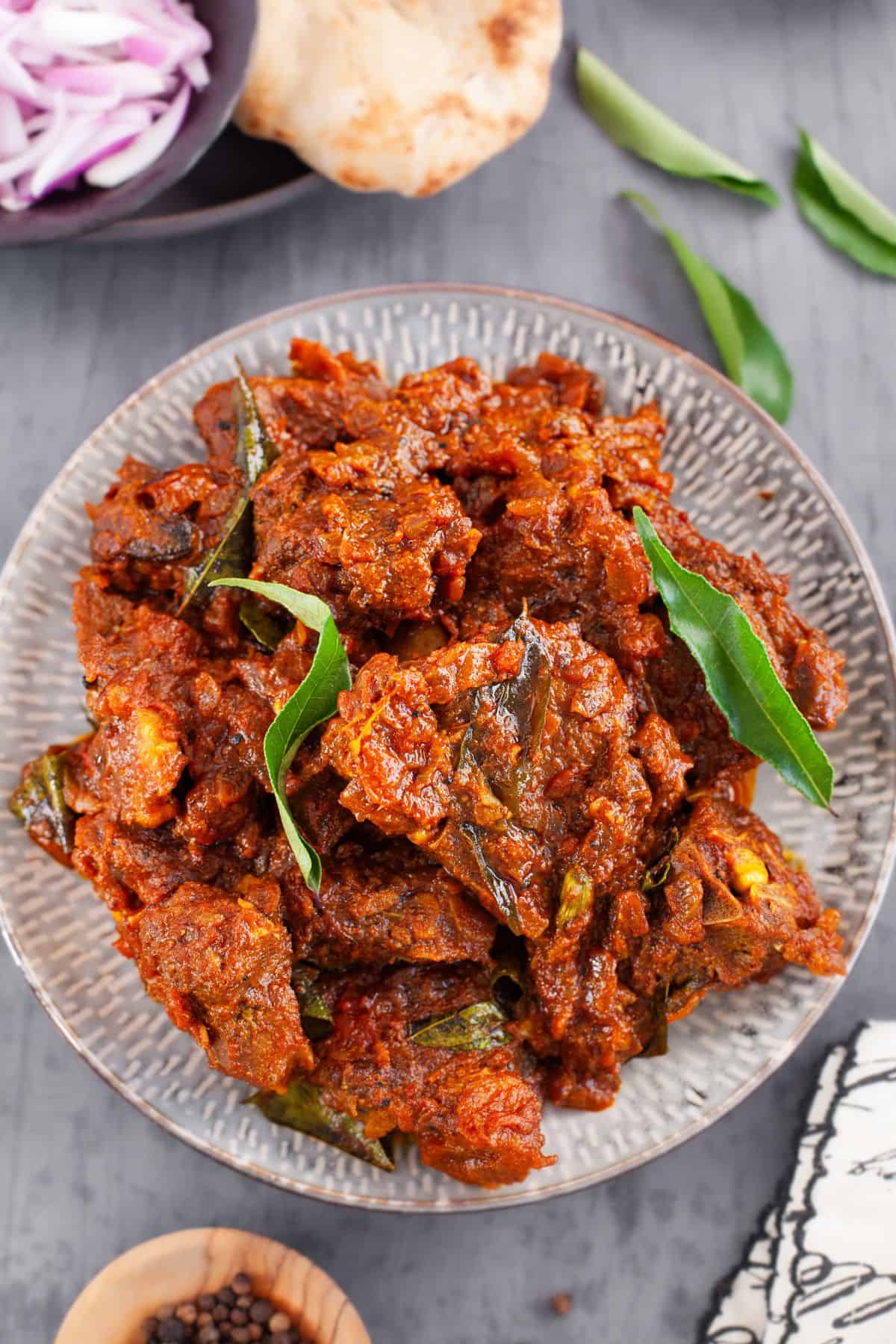
My Recipe Development
My husband often orders lamb pepper fry from indian restaurants but at home I prefer to make with mutton (in my case, goat meat). The restaurant version is quite oily and has a complex flavor that I feel is a bit catchy to build at home. For me, the biggest challenge during recipe development was about balancing the black pepper level. Here's what I learnt.
- The biggest flavor booster in mutton fry is - fresh milled black peppercorns. Use a spice grinder or mortar pestle and grind coarsely. Ready to use ground black pepper will not do justice to this dish, please avoid.
- I figured that adding black pepper at every stage of cooking brings about its true essence in the masala. In few attempts, I added black pepper only at the very end while stir frying the meat. However, if we also add it while boiling the meat and tempering the oil, the meat gets a chance to truly absorb its flavor.
- Also, I realized that me and my family's tolerance for fresh ground black pepper is not too high. Not just the intensity, but also it's aroma can get unappetizing easily. Not going to lie, I added way too much in my first attempt and the dish was unpalatable. So please add the ground pepper with caution, I would say ½ teaspoon at a time and keep tasting as you go.
- I enjoy the goat version more than the lamb version. Since goat meat is sweeter in taste as compared to lamb, I prefer it because it is a good contrast to the kick of black pepper.
- Lastly, you do need a sweet element to balance out the pepperiness. In this case, it comes from the onions that we have to brown to a deep shade (caramalize) low and slow. For 550g of mutton I used 220g onions and though you will taste an undercurrent of mild sweet flavor in every bite, it's the pepper taste that is very much at the forefront!
Ingredients
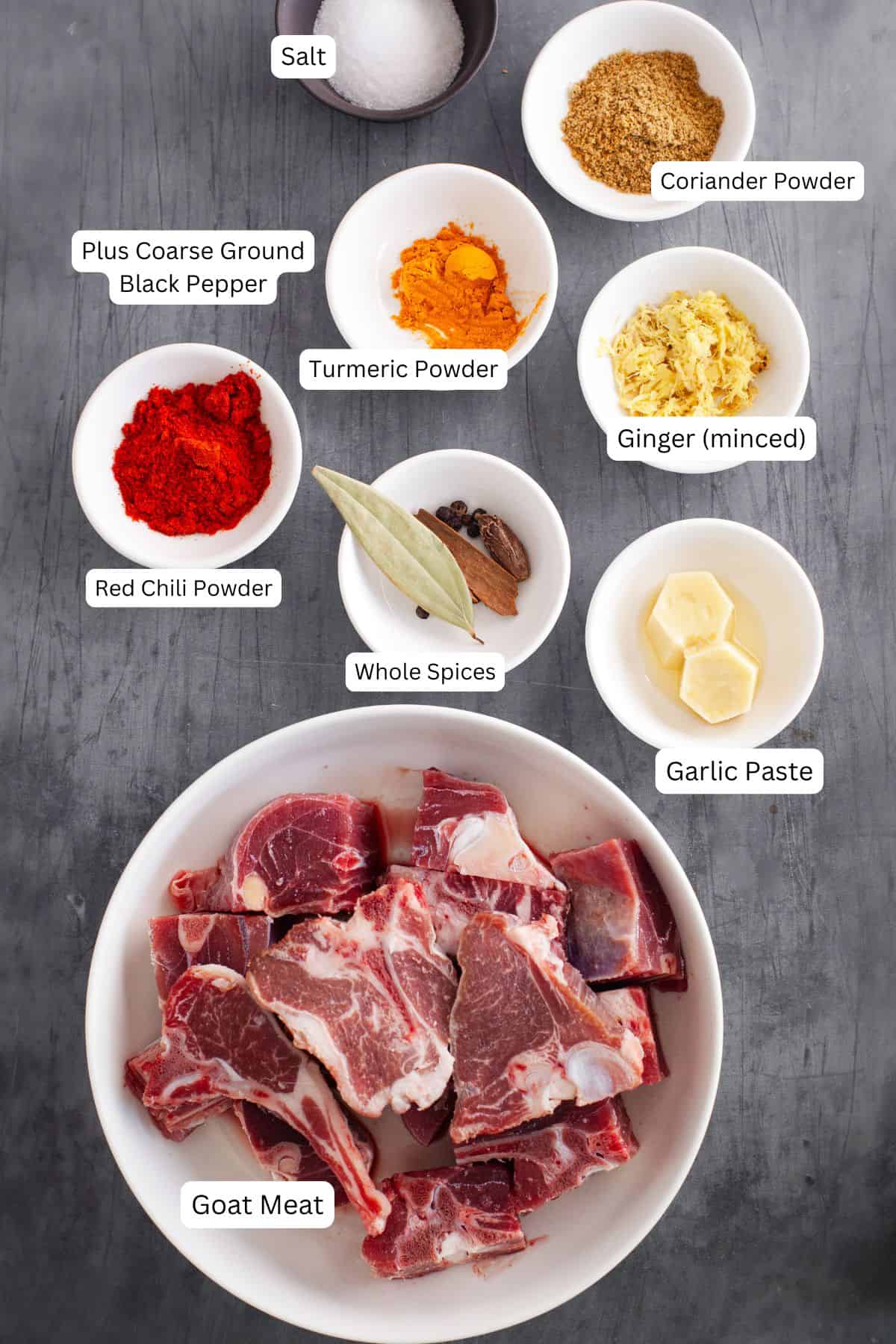
- Goat Meat - I purchase goat meat mix from my butcher and it is a mixture of meat from ribs, leg and shoulder. Make sure that the meat is cut slightly big - 2 inch to 2.5 inches. Reason being that we are going to fry the cooked mutton on high heat and we don't want it to fall apart. If you want to use lamb meat, boneless lamb shoulder works good- it cooks out to tender.
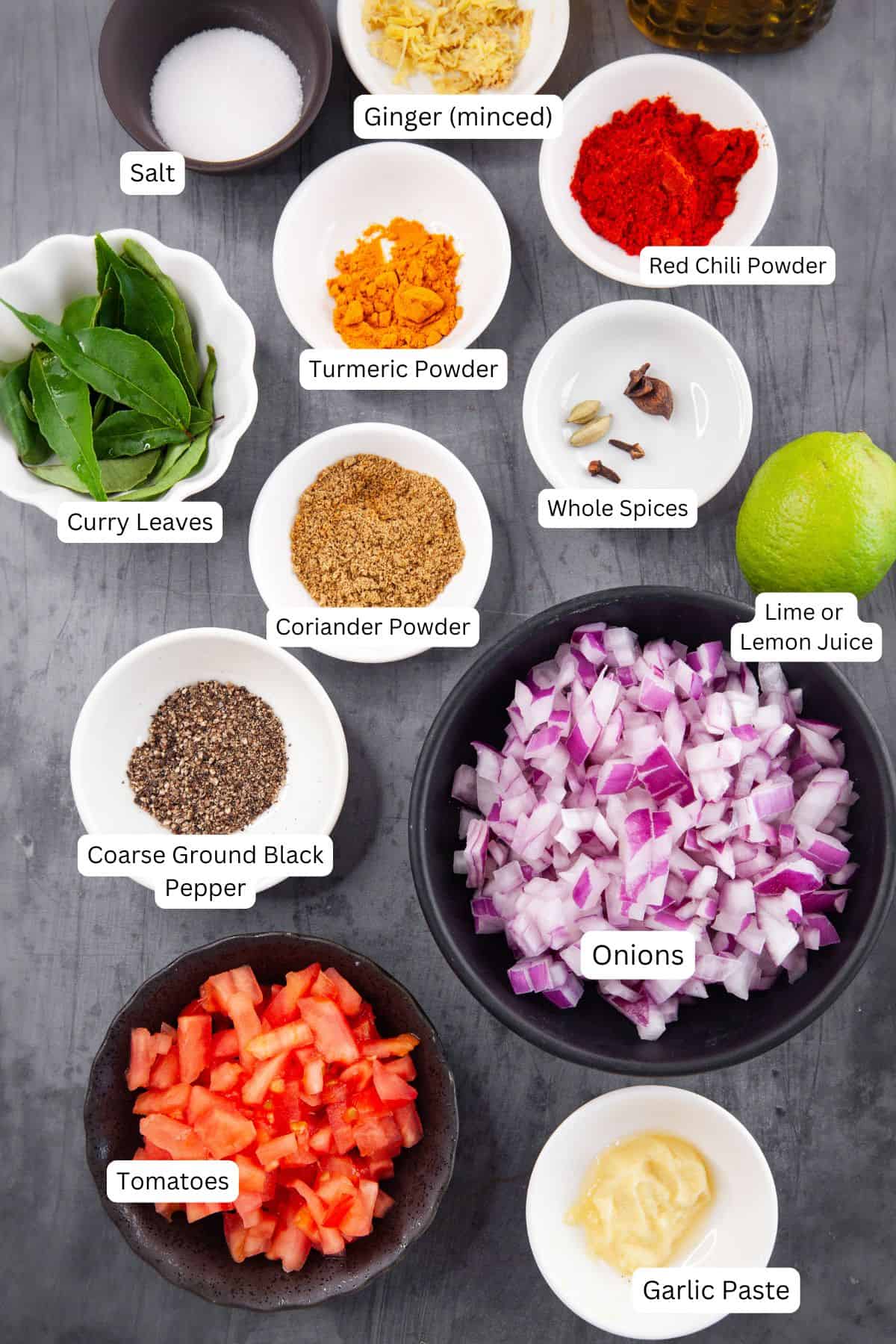
- Onions - I use red onions. When I am lazy, I simply chop them, but sliced onions work beautifully in this recipe. The onions brown and their sweet caramalized flavor is what brings umami balance to this dish. If you use sliced onions, they add somewhat of a lacey texture to the masala.
- Cooking Oil - I use a combination of ghee & avocado oil, though traditionally they use coconut oil. I did not want a hint of coconut. You could also use 100% ghee - becomes a bit heavy.
- Fresh Tomatoes - We don't need a lot but we do need them for the tang. Some recipes use yogurt, however I prefer the taste and texture that chopped tomatoes add. I use fresh roma tomatoes, when they are not in season, use canned whole tomatoes(chopped up).
- Ginger & Garlic - If you are around here often, you would have noticed that I don't like to use ginger paste- but here it is necessary for warmth in the masala. I usually stock ginger and garlic paste separately but you can use store bought ginger garlic paste.
- Curry Leaves - While these citrus smelling herb is optional, if you can get your hands on it, don't hold back and use it. It truly makes the mutton pepper fry aromatic and they wonderful to bite into.
- Spices - All the spices I have used are pretty easy to source and if you cook with spices often, you should have them in your pantry. The only uncommon spices is black cardamom. Black cardamom has a woody, camphor like aroma and is just divine in meat dishes. If you don't have it skip it.
Instructions
Pressure Cook The Meat
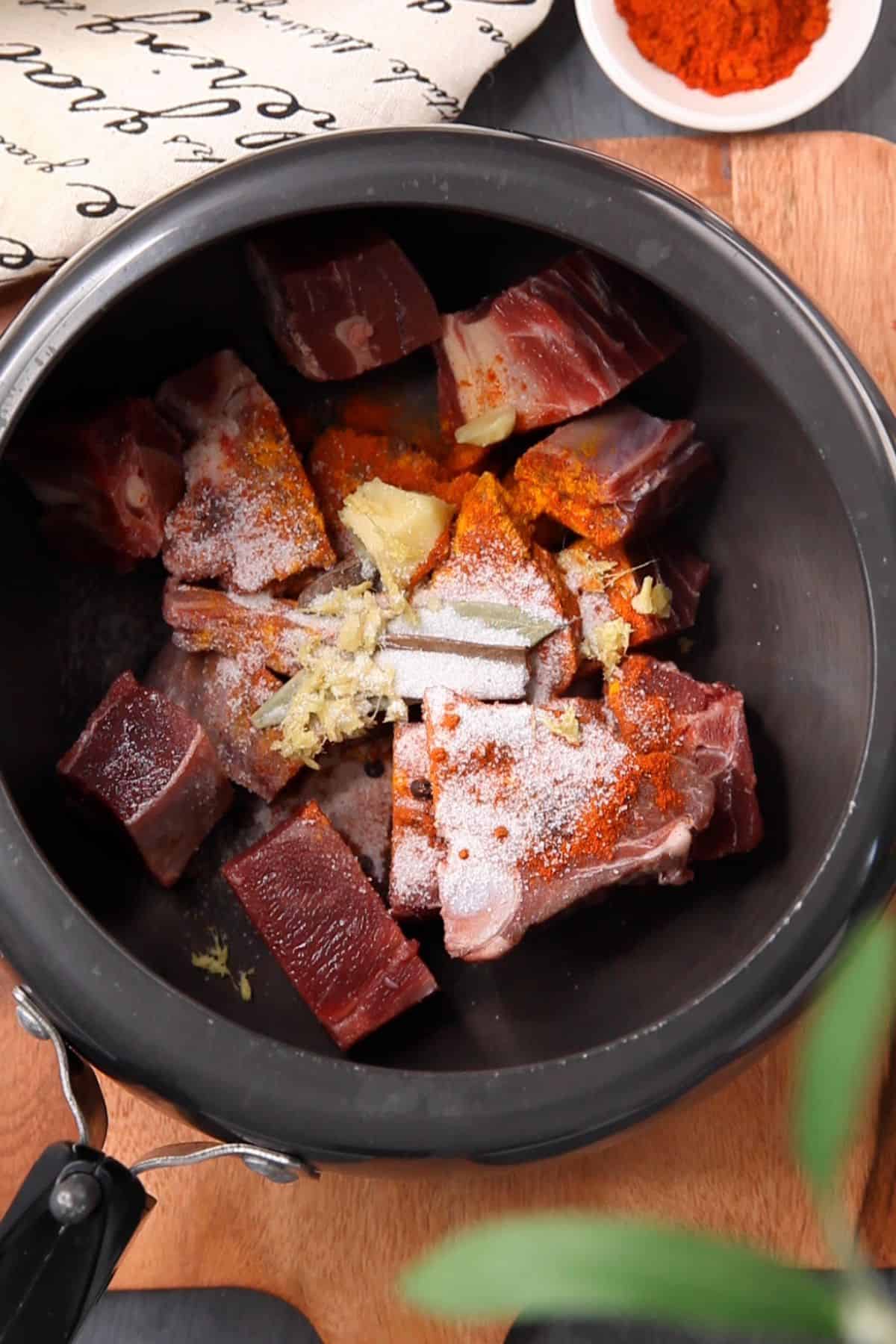
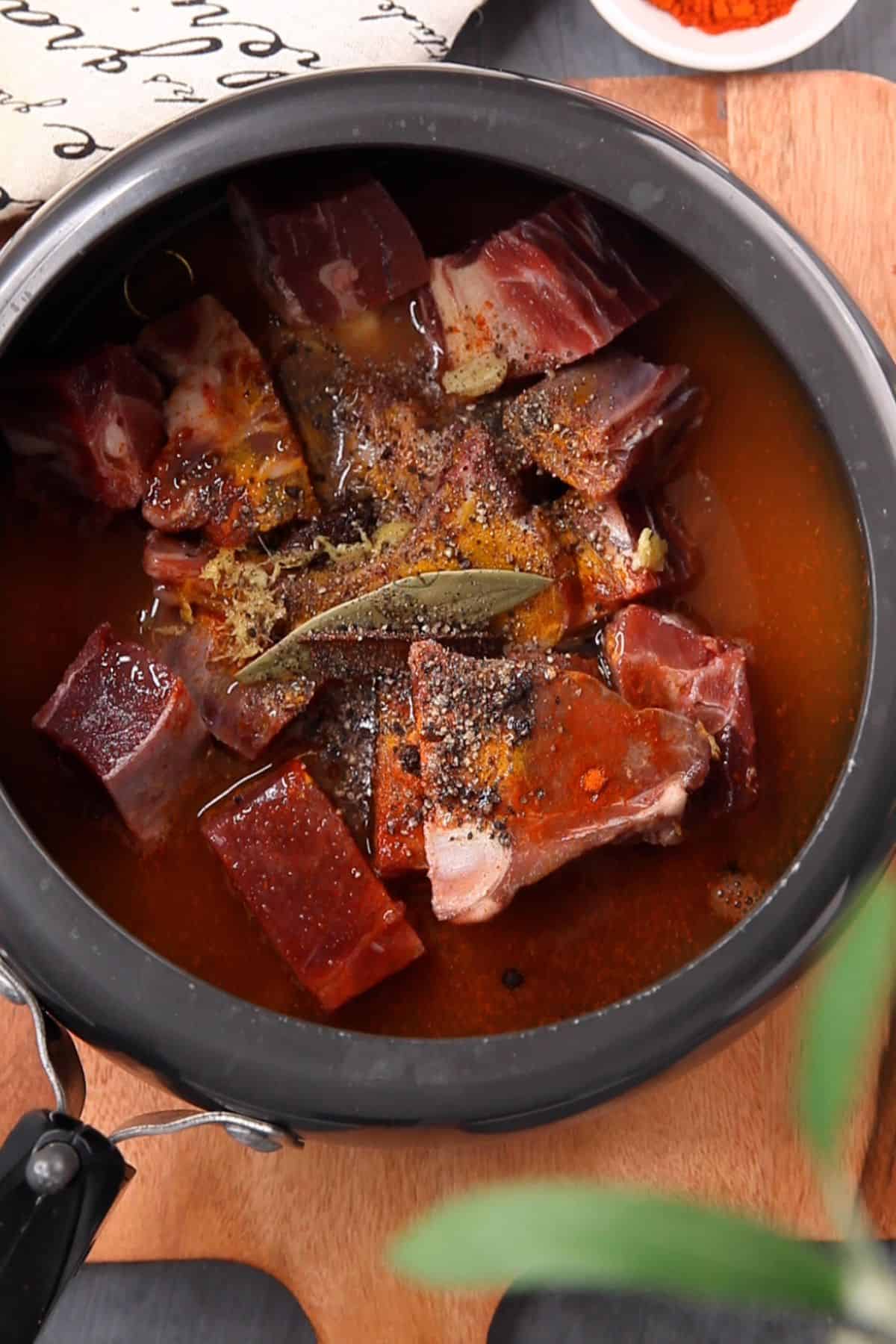
- Add meat to a pressure cooker or steel insert of Instant Pot(I use 3qt IP). Sprinkle the turmeric powder, coarsely ground pepper, coriander powder, red chilli powder and salt. Add whole spices - black peppercorns, bay leaf, cinnamon stick and black cardamom. Add ¾ cup and 1.5 tablespoon oil. If you are doubling this recipe, add just ½ cup water since the large quantity of meat will release a lot of its water.
- Put the lid on and place the pressure cooker on medium stove. Let pressure cook for 5-7 whistles or until meat is 98% cooked. Keep in mind that during the frying later, we are only going to build flavors. So cook the meat to doneness during pressure cooking. If using IP, pressure cook on high for 8-10 minutes with seal in vent position. Release the pressure manually after 6-7 minutes. Adjust cooking times as needed.
- Open the lid and check for doneness. The meat pieces should be cooked to soft but firm and hold shape. We will use all of the meat stock during the frying process.
Make the Mutton Fry
- Place a large pan(10 inch or larger) on stove. I use an enamaled cast iron pan, non stick pan or kadai will work too.
- Add ghee and avocado oil and let heat up on low flame.
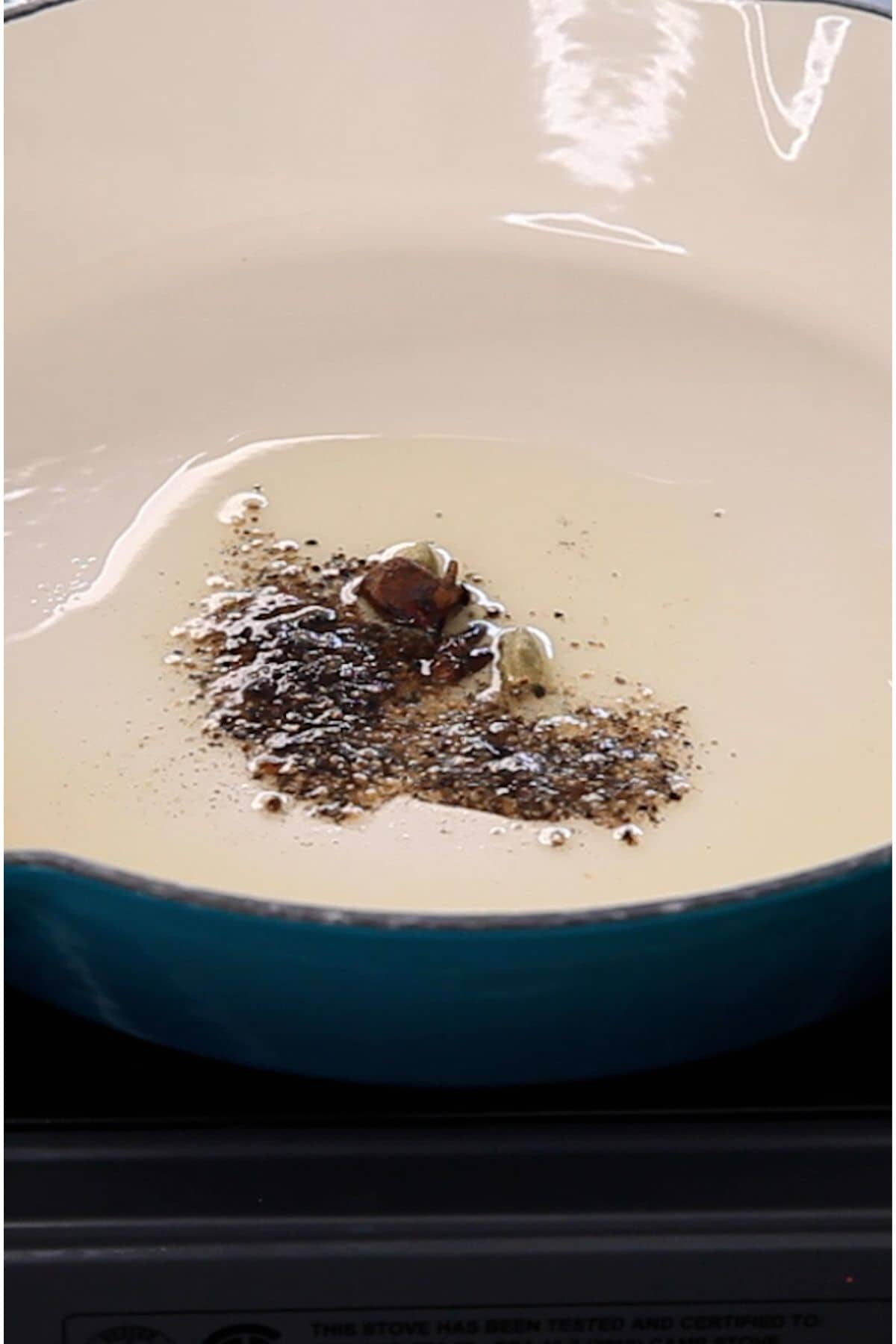
- Temper the oil with whole spices - cloves, star anise and green cardamom. Sprinkle ½ teaspoon of coarsely ground black pepper powder. Fry the spices on low heat for 8-10 seconds taking care not to burn them.
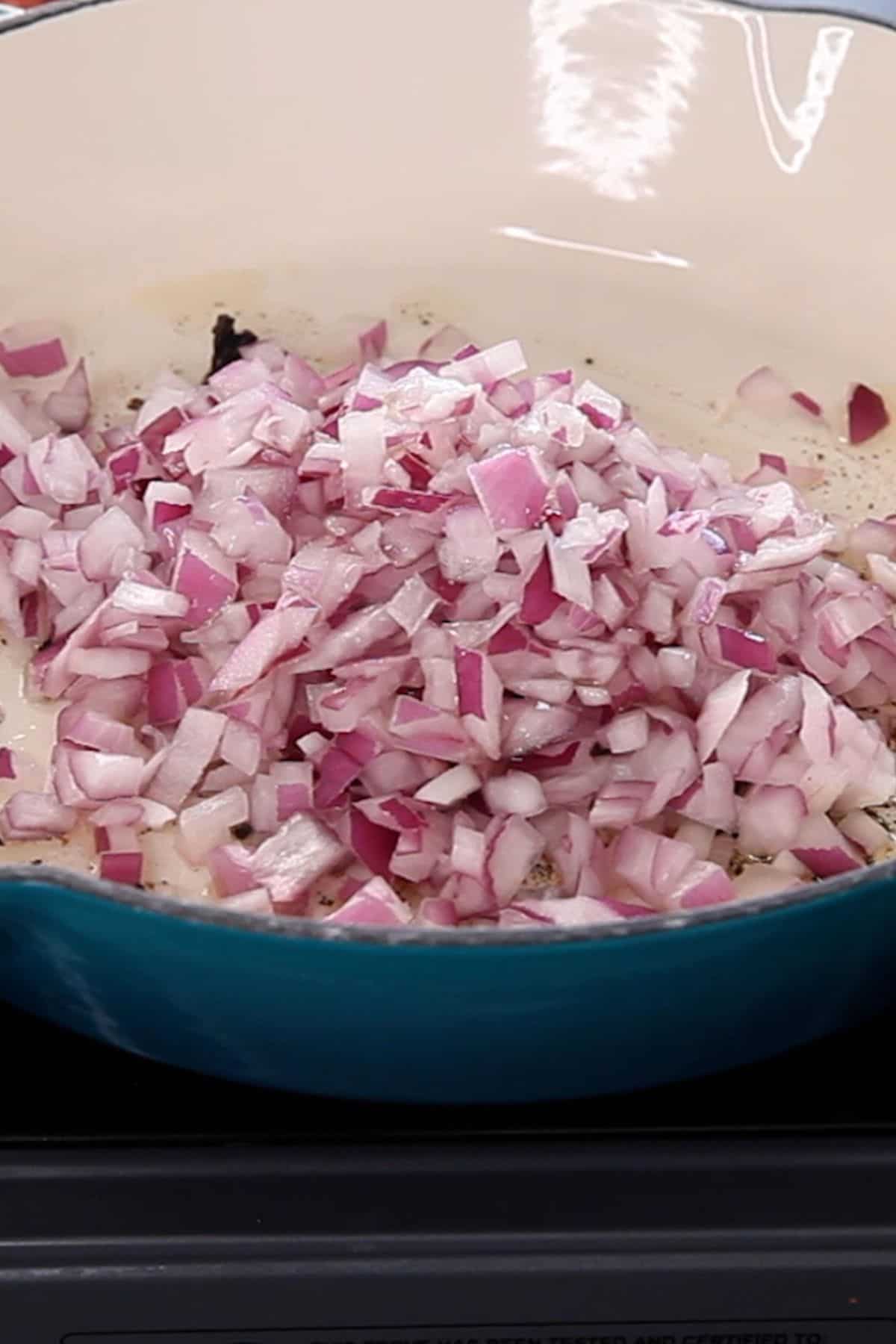
- Add the chopped onions next. Fry on medium flame until they turn golden brown. This will take about 6-8 minutes.
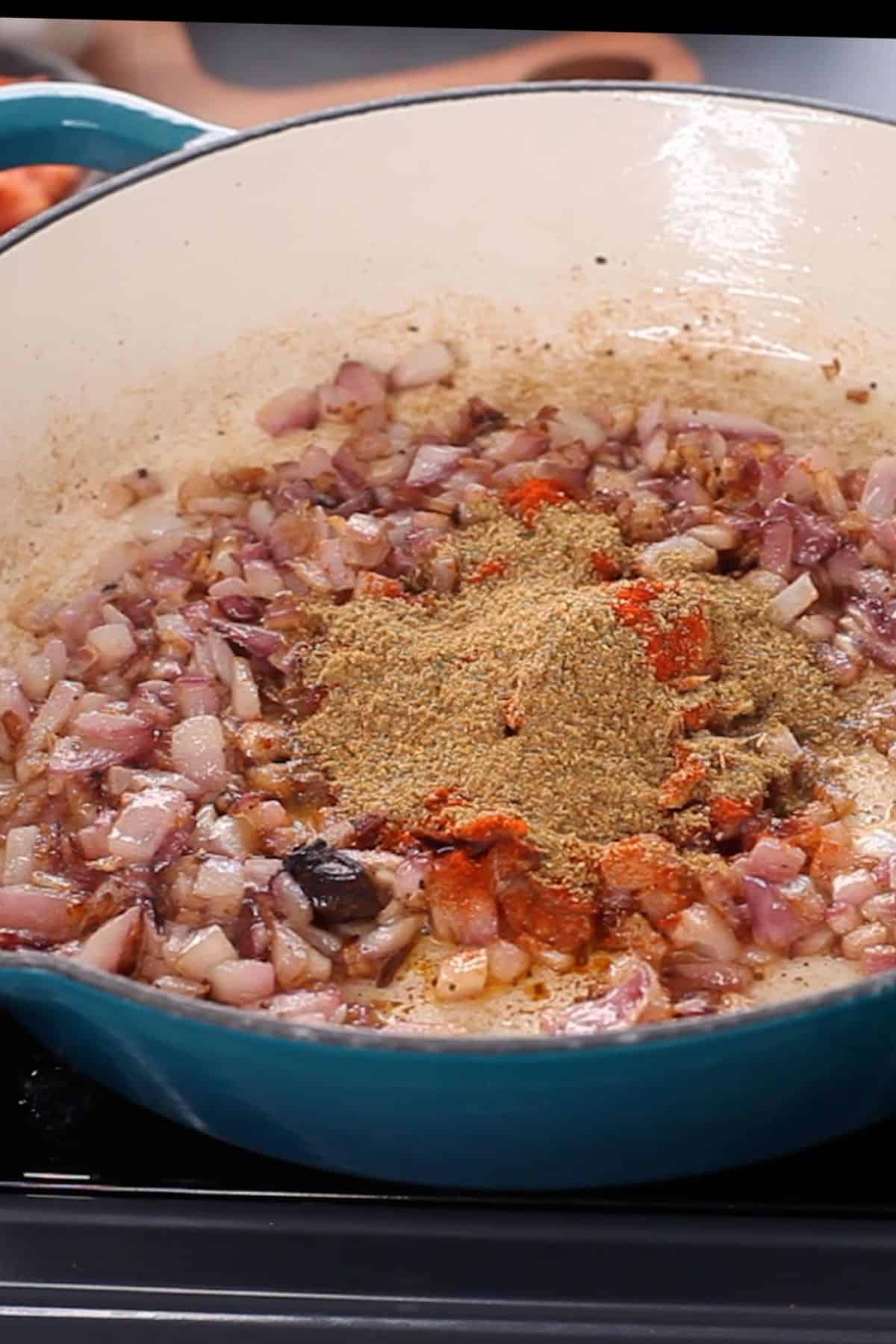
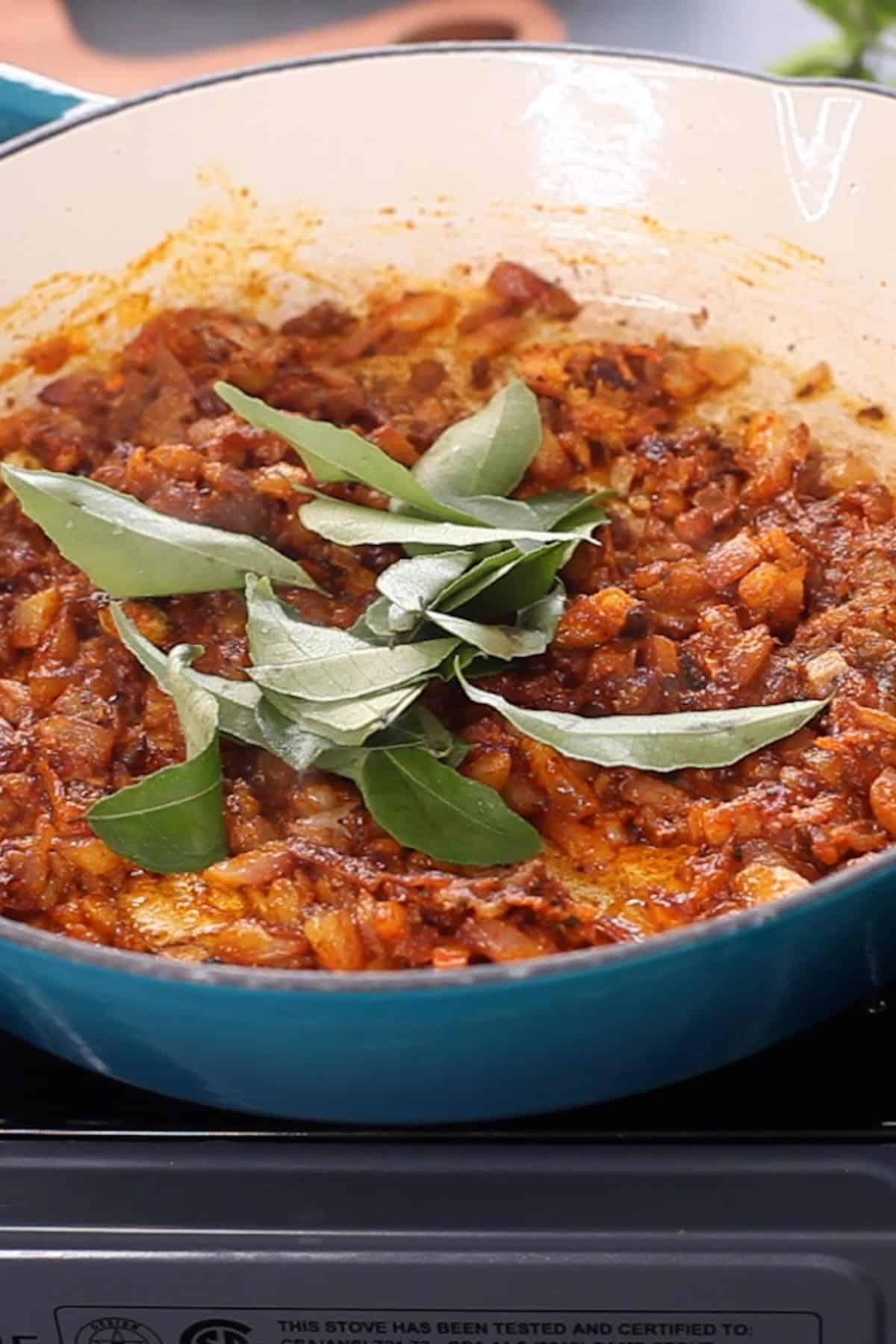
- Next, add the ginger & garlic pastes and sprinkle the ground spices (coriander powder, turmeric powder and red chili powder). Also add the fresh curry leaves to the pan. If you wish you can add few green chillies at this stage.
- Immediately, add 2-4 tablespoon(or as needed) of the meat stock to prevent the spices from burning. Mix together and cook for 1-2 minutes until the raw smell disappears.
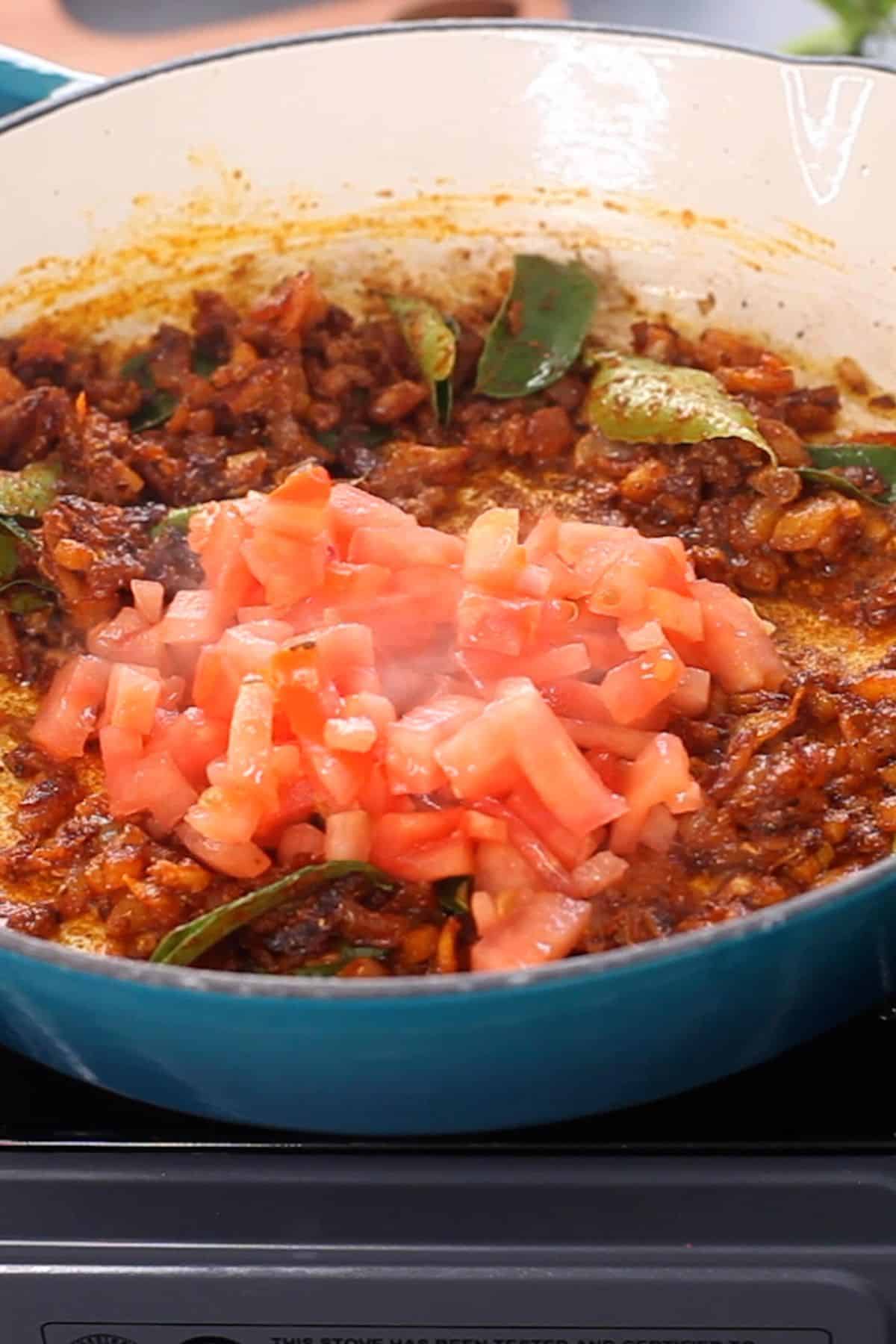
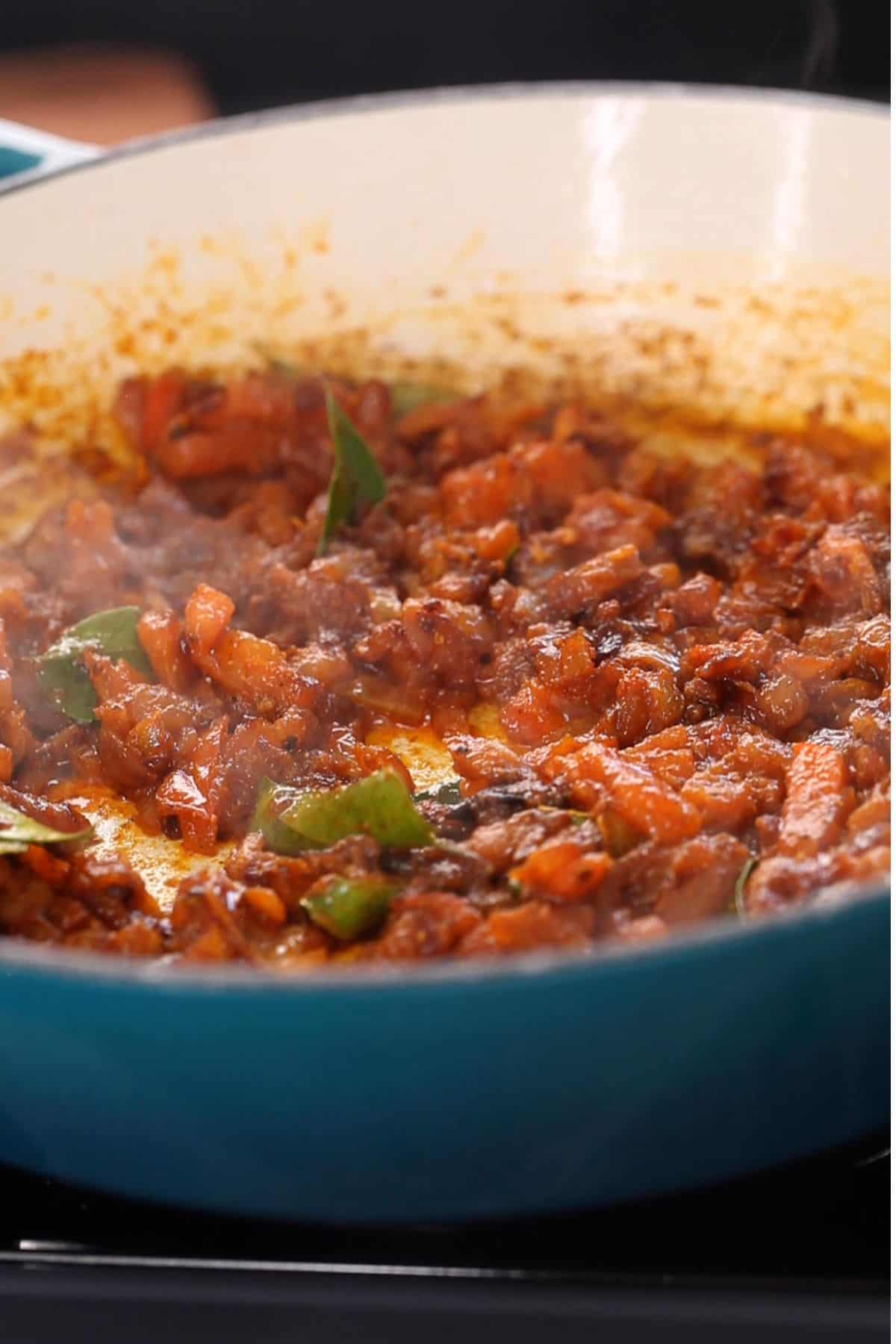
- Then add the chopped tomatoes and cook for 4-5 minutes until the tomatoes become soft and the oil begins to separate from the masala. Don't dry out the tomatoes too much.
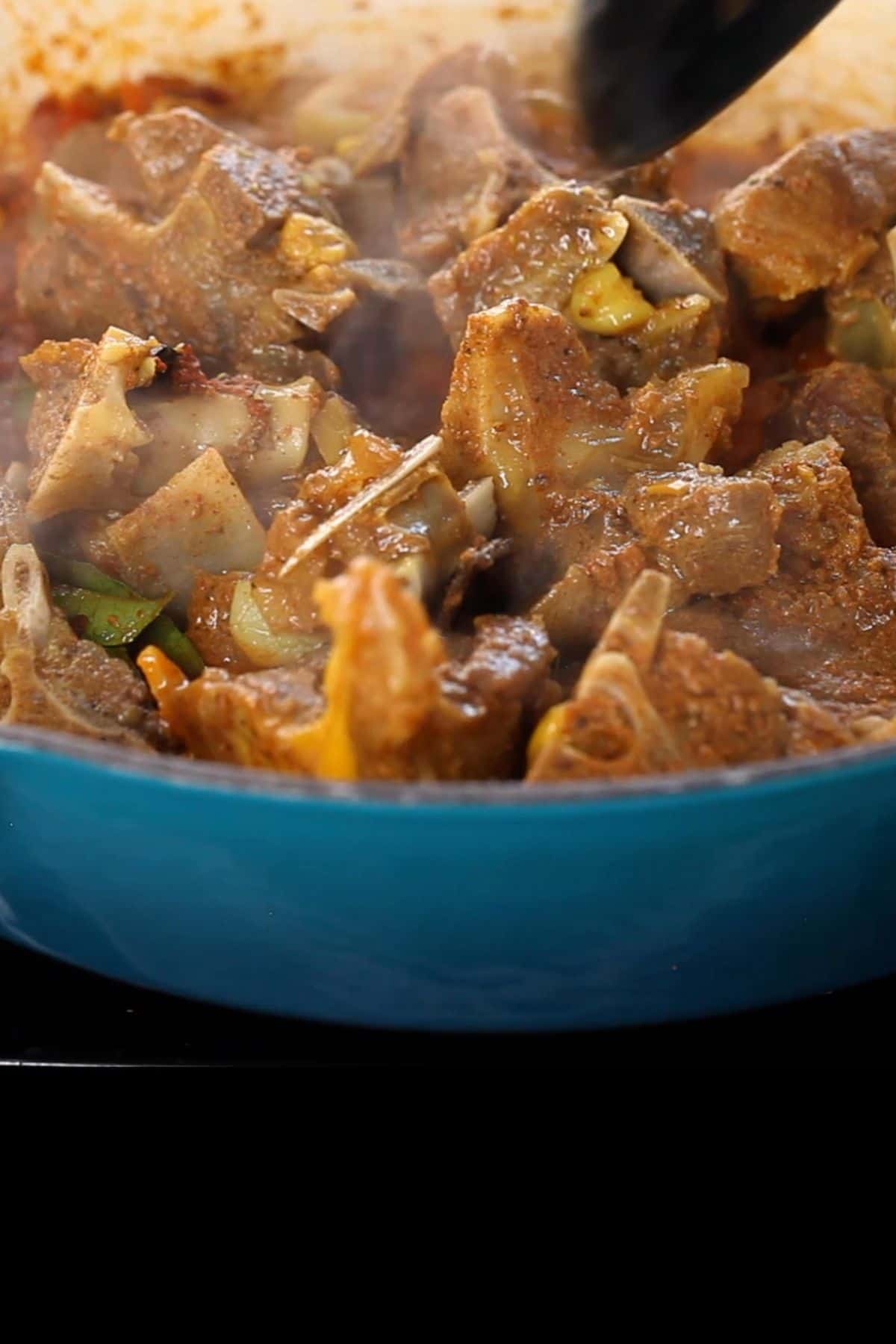
- Now we beging the "fry" part of the recipe. Bump the heat to medium high and add the cooked meat pieces to the pan. Combine well so that the masala coats the meat.
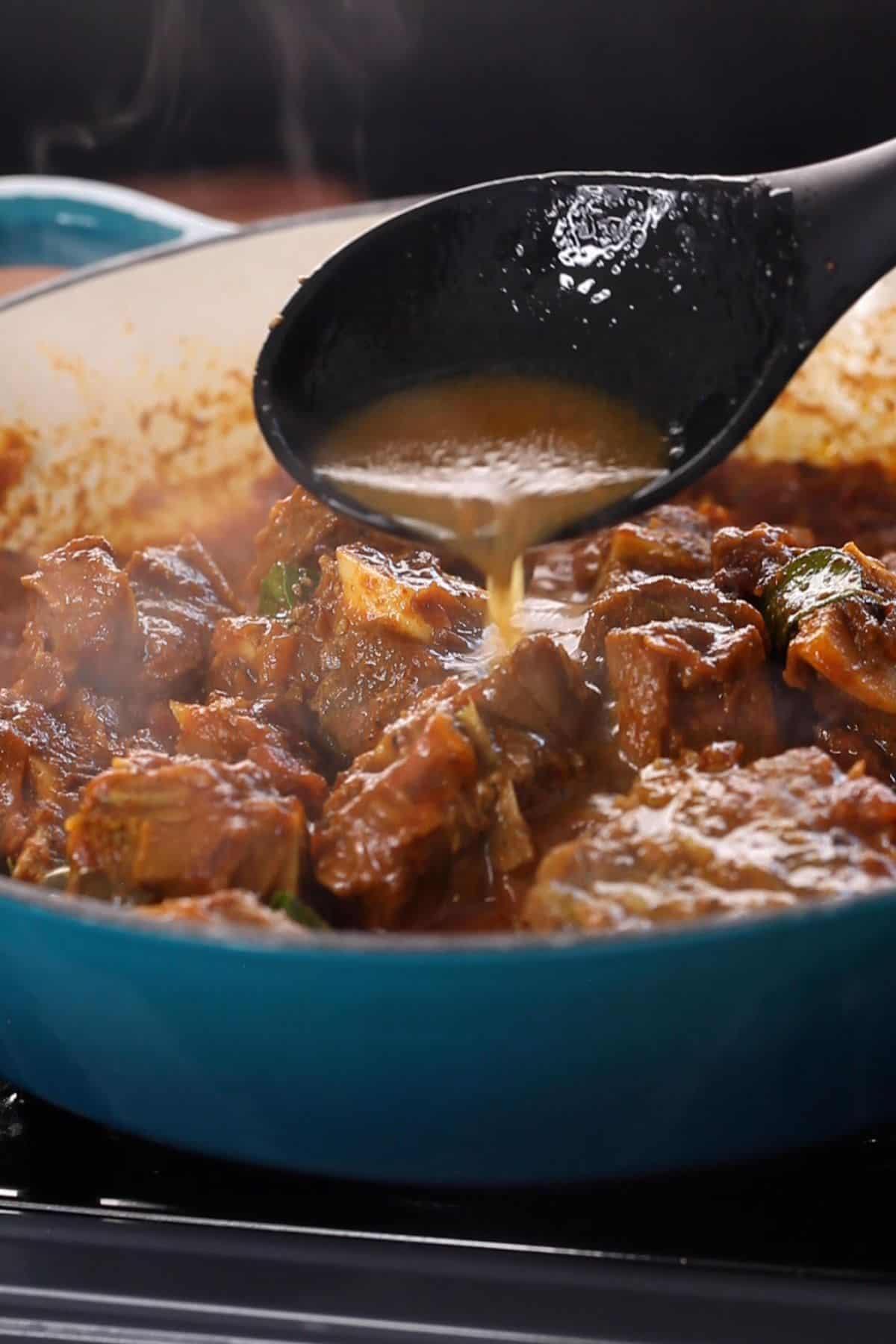
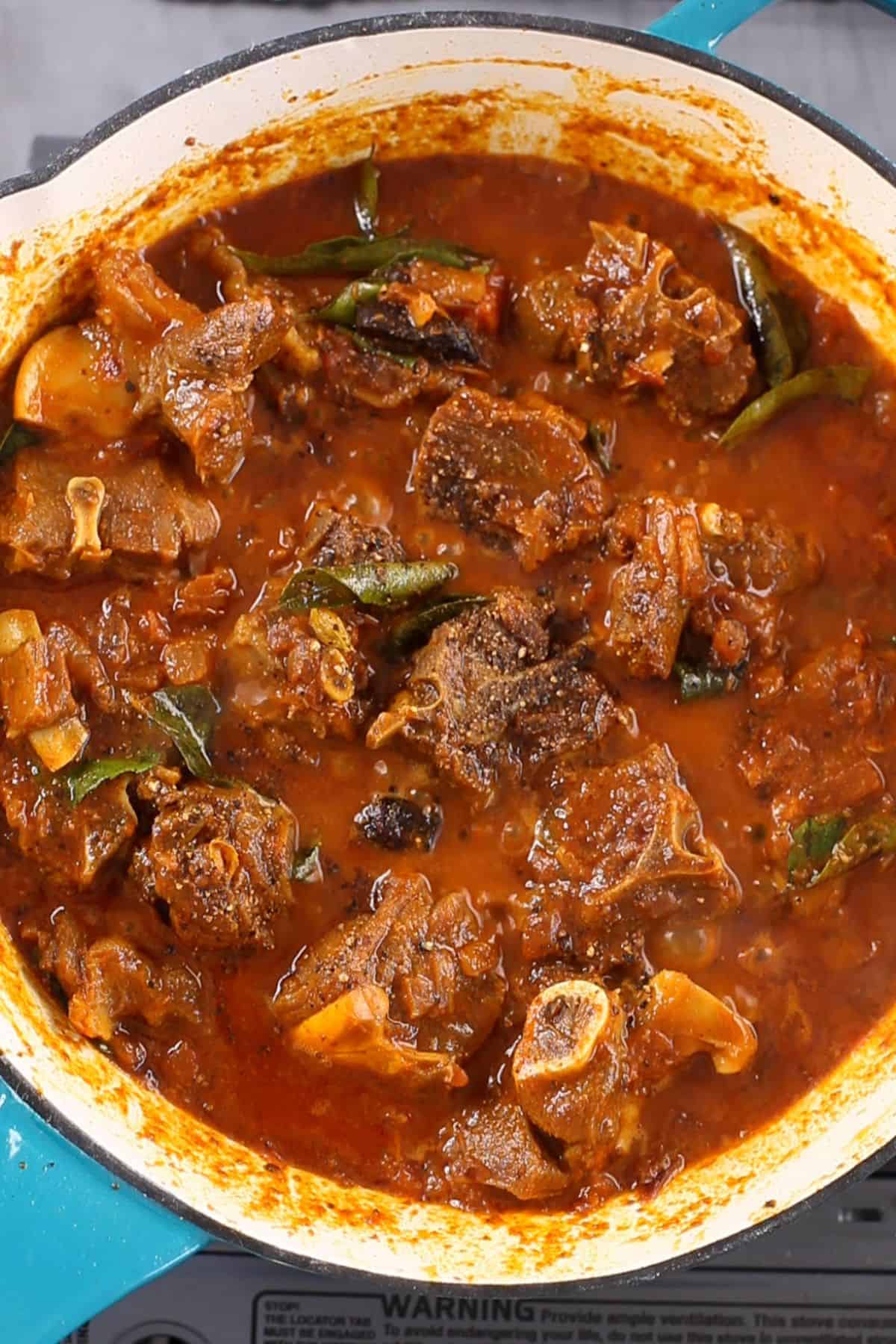
- For the next few minutes, stir-fry the meat while stirring regularly. Add meat stock in parts and continue to fry until the mutton absorbs the flavors and the masala turns thick and the oil starts separating. This should take around 10-12 minutes.
- Towards the last 3-4 minutes of frying, sprinkle the final round of freshly ground black pepper and lemon juice over the meat and continue to fry. Do not dry out the masala completely as it will continue to thicken as the meat cools down.
- You could garnish with chopped cilantro if desired. Serve hot with steamed basmati rice, parotta, or roti.
Recipe Tips
- Use thawed goat meat for best results. Thawed meat cooks more evenly and is less likely to become chewy during pressure cooking. Reason being that if ice-cold meat is exposed to sudden boiling inside the pressure cooker, it can tighten up due to temperature difference and become tough!
- If you prefer not to pressure cook the meat, you can slow-cook goat meat on low heat in a Dutch oven. Keep in mind that this method takes 2-3 hours.Though I'm a big fan of slow-cooking, I skip it for this recipe because the key flavors are mostly developed during the stir-frying process.
- Don't skimp on oil while stir frying especially if you are using goat meat. Goat meat is leaner as compared to lamb- not using enough oil can result in a dish that lacks richness and depth of flavor.
- Sometimes, restaurants add chunks on colorful bell pepper and onion petals cut in 1 inch size) during stir frying. You can try it too.
- Lastly, the more black pepper you add, the darker the color. Alternatively, reduce the quantity of red chili powder during boiling the mutton.
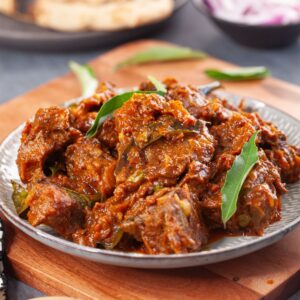
Mutton Pepper Fry (Restaurant Style)
Ingredients
For Pressure Cooking the Mutton
- 550 g goat meat cut into 2"-2.5 inch pieces, or use lamb
- ½ teaspoon red chili powder (medium heat), I use degi mirch, adjust quantity to taste
- ⅛ teaspoon turmeric powder
- ½ teaspoon coriander powder
- 1 teaspoon garlic paste
- ½ teaspoon ginger minced
- ½ teaspoon ground black pepper fresh milled, corasely ground
- ½ teaspoon salt
- 1.5 tablespoon cooking oil I use avocado oil
- ¾ cup water
For Mutton Pepper Fry
- 2 tablespoon cooking oil I use avocado oil
- 1 tablespoon ghee
- ½ teaspoon corasely ground black pepper
- 220 g onion chopped
- 1 teaspoon garlic paste
- 1 teaspoon ginger minced
- 2 teaspoon coriander powder
- 1 teaspoon red chili powder (hot), adjust quantity to taste
- 90 g tomato chopped
- 10-12 curry leaves
- ¾ teaspoon salt adjust quantity to taste
- 1 teaspoon corasely ground black pepper adjust quantity to taste
- 1 tablespoon lemon juice adjust quantity to taste
Whole Spices
- 1 black cardamom
- 10 black peppercorns
- 1 bay leaf
- ½ inch cinnamon stick
- ¼ piece star anise
- 2-3 green cardamom
- 2-3 cloves
Instructions
- Start by coarsely grinding about 2 tablespoon of black peppercorns to be used in various stages of this recipe. You might not use up the entire amount.
PRESSURE COOK THE MEAT
- Add meat to a pressure cooker or steel insert of Instant Pot(I use 3qt IP). Sprinkle the turmeric powder, coriander powder, coarsely ground pepper, red chilli powder and salt. Add whole spices - black peppercorns, bay leaf, cinnamon stick and black cardamom. Add ¾ cup and 1.5 tablespoon oil. Note - If you are doubling this recipe, add just ½ cup water since the large quantity of meat will release a lot of its water.
- Put the lid on and place the pressure cooker on medium stove. Let pressure cook for 5-7 whistles or until meat is 98% cooked. Keep in mind that during the frying later, we are only going to build flavors. So cook the meat to doneness during pressure cooking. If using IP, pressure cook on high for 8-10 minutes with seal in vent position. Release the pressure manually after 6-7 minutes. Adjust cooking times as needed.
- Open the lid and check mutton for doneness. The meat pieces should be cooked to soft but firm and hold shape. We will use all of the meat stock during the frying process.
MAKE THE MUTTON FRY
- Place a large pan(10 inch or larger) on stove. I use an enamaled cast iron pan, non stick pan or kadai will work too. Add ghee and avocado oil and let heat up on low flame.
- Temper the oil with whole spices - cloves, star anise and green cardamom. Sprinkle ½ teaspoon of coarsely ground black pepper powder. Fry the spices on low heat for 8-10 seconds taking care not to burn them.
- Add the chopped onions next. Fry on medium flame until they turn golden brown. This will take about 6-8 minutes.
- Next, add the ginger & garlic pastes and sprinkle the ground spices (coriander powder, turmeric powder and red chili powder). Also add the fresh curry leaves to the pan. If you wish you can add few green chillies at this stage.
- Immediately, add 2-4 tablespoon(or as needed) of the meat stock to prevent the spices from burning. Mix together and cook for 1-2 minutes until the raw smell disappears.
- Then add the chopped tomatoes and cook for 4-5 minutes until the tomatoes become soft and the oil begins to separate from the masala. Don't dry out the tomatoes too much.
- Now we beging the "fry" part of the recipe. Bump the heat to medium high and add the cooked meat pieces to the pan. Combine well so that the masala coats the meat.
- For the next few minutes, stir-fry the meat while stirring regularly. Add meat stock in parts and continue to fry until the mutton absorbs the flavors and the masala turns thick and the oil starts separating. This should take around 10-12 minutes.
- Towards the last 3-4 minutes of frying, sprinkle the final round of freshly ground black pepper and lemon juice over the meat and continue to fry. Do not dry out the masala completely as it will continue to thicken as the meat cools down.
- You could garnish with chopped cilantro if desired. Serve hot with steamed rice, parotta, or roti.
Notes
- Read my written blog post for notes on ingredients and my recipe development process.
- Use thawed goat meat for best results. Thawed meat cooks more evenly and is less likely to become chewy during pressure cooking. Reason being that if ice-cold meat is exposed to sudden boiling inside the pressure cooker, it can tighten up due to temperature difference and become tough!
- If you prefer not to pressure cook the meat, you can slow-cook goat meat on low heat in a Dutch oven. Keep in mind that this method takes 2-3 hours.Though I'm a big fan of slow-cooking, I skip it for this recipe because the key flavors are mostly developed during the stir-frying process.
- Don't skimp on oil while stir frying especially if you are using goat meat. Goat meat is leaner as compared to lamb- not using enough oil can result in a dish that lacks richness and depth of flavor.
- Sometimes, restaurants add chunks on colorful bell pepper and onion petals cut in 1 inch size) during stir frying. You can try it too.
- Lastly, the more black pepper you add, the darker the color. Alternatively, reduce the quantity of red chili powder during boiling the mutton.
I'd Love to Hear from You!