

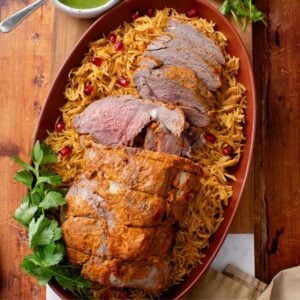
This indian style roasted boneless leg of lamb is a true show stopper! The outside of meat is deeply bronzed, while the inside stays tender and fragrant with warm spices. It's my streamlined take on traditional Indian raan, adapted so you can make it easily with a boneless leg of lamb. It's the kind of dish you won't find in restaurants, yet it's simple enough to pull off at home and absolutely worth your time and effort.
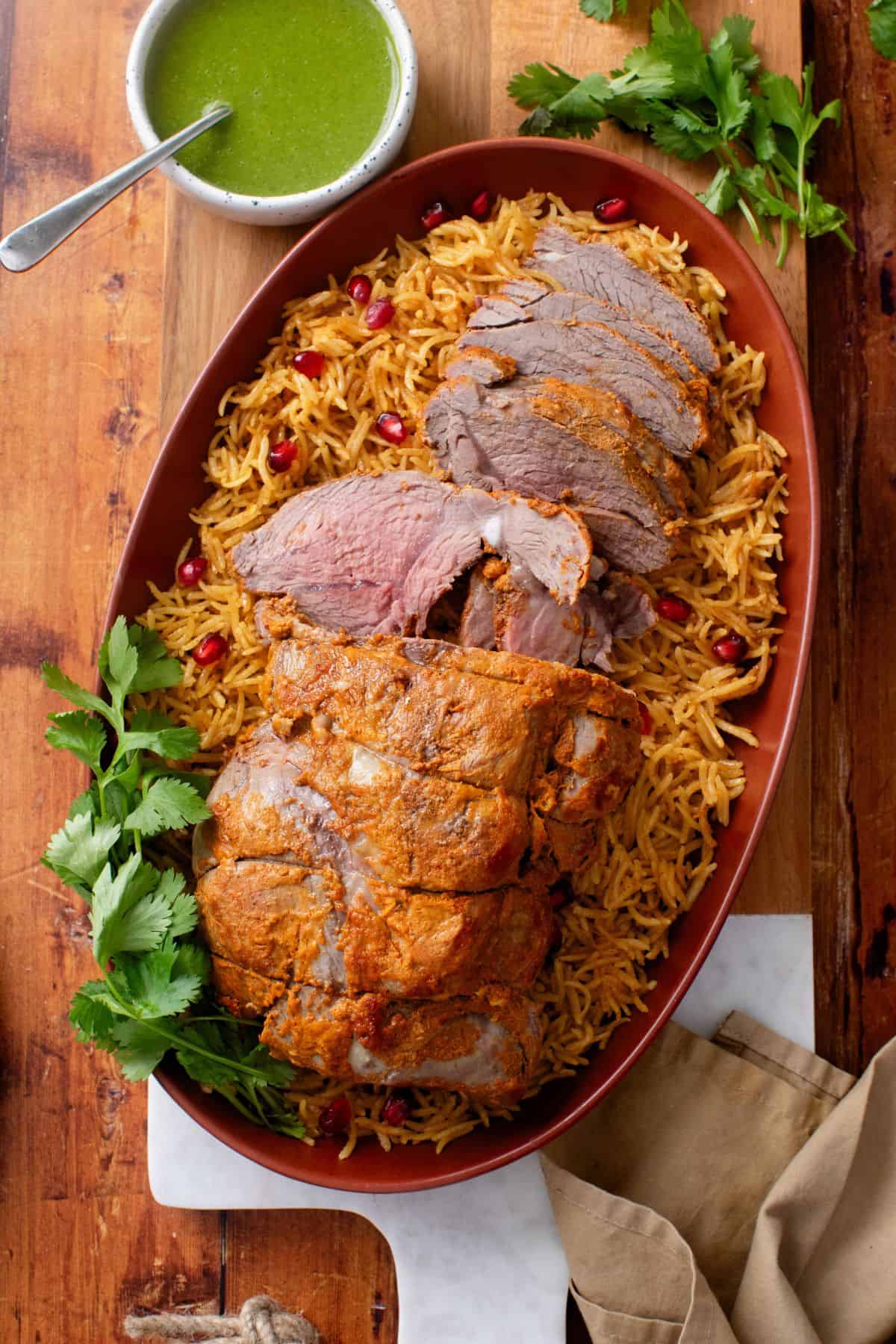
All you need is a flavor packed, yogurt based marinade packed with indian spices. Let the lamb soak it in overnight, then roast low and slow until it's juicy perfection. Serve over basmati rice that we will cook right in those savory drippings. Slice the meat, and pair with drizzle of green chutney or raita(spinach raita works amazing!) and watch everyone go quiet after the first bite. You can serve with spiced potatoes too!
My family loves lamb so it's one thing that's always part of our celebrations or a cozy weekend meals. Over the years, I've shared plenty of lamb recipes.
I didn't grow up with mom making roasts, but I started them in my kitchen. I usually keep things pretty classic with salt, pepper and, garlic, few green herbs. You know simple and delicious! Then one fine day I thought why not make it indian style. That's how this boneless lamb raan came to life.
Traditional, raan is made with a whole bone-in leg of mutton or goat. It is steamed via slow cooking until it's fall-apart and full of rich aroma and flavor. I go the boneless lamb leg route, because first of all it is easy to find in most American stores. Secondly, it is easier for me to handle. It cooks to deeply flavorful with a melt-in-your-mouth texture that's great for carving or shredding.
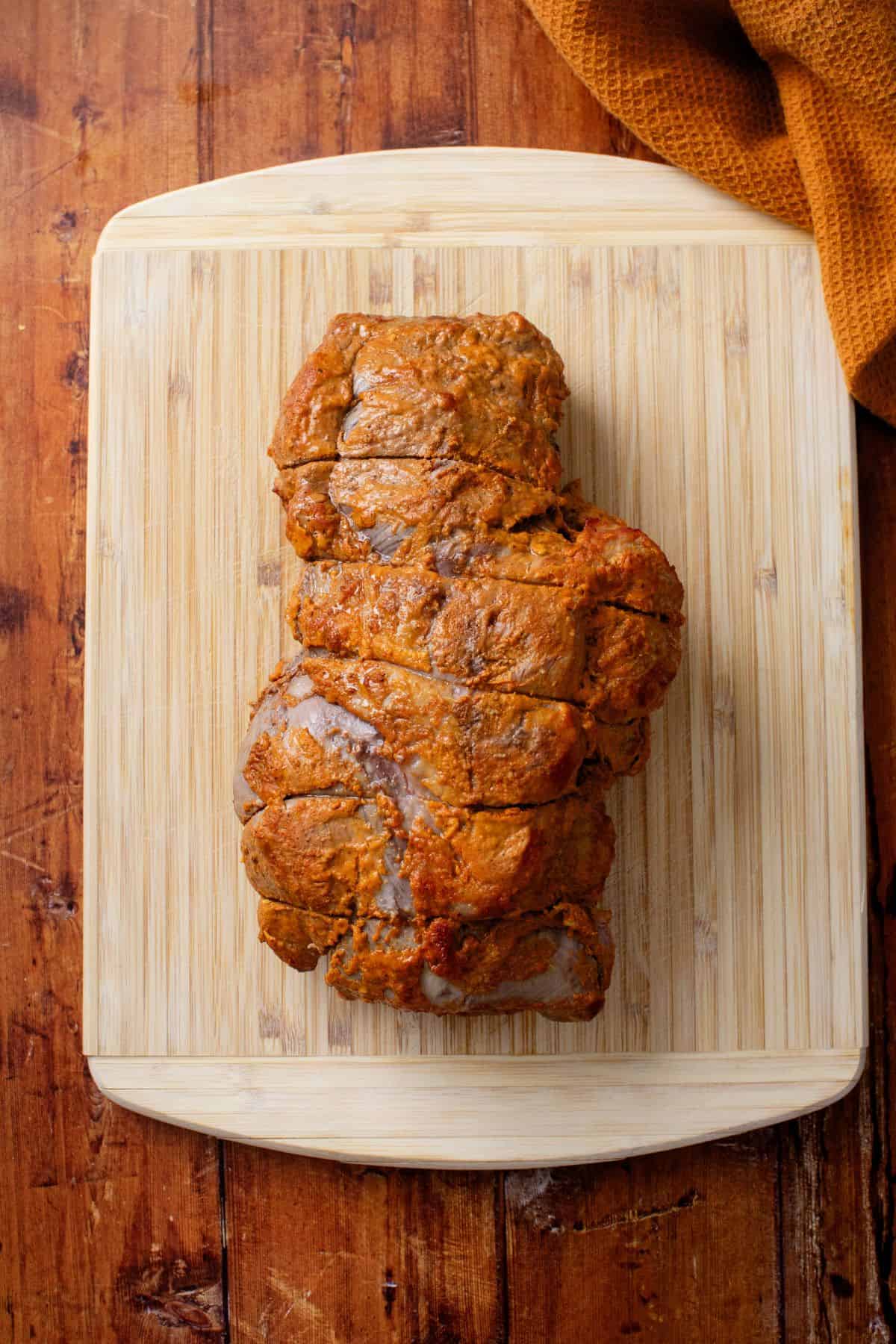
A Note About Preparing Boneless Lamb Leg for Roast
Here are a few notes about selecting the meat and my observations working with it.
- I tested this recipe with boneless lamb leg weighing between 3 and 4 pounds. Costco's bonless lamb leg is really popular, and definitely cost worthy, but the pieces are much larger. I rarely find anything under 6 or 7 pounds there. Back in India, usually raan sizes range from 1.5 to 3 kg, and I have noticed that if the cut gets too big, it can taste gamey and the masalas don't shine much.
- So where do I buy leg of lamb? In US, stores like Trader Joe's, Alberstons or Sprouts, stock smaller, lighter pieces and that's what I use. My recipe test range was 3 to 4 pounds which (after trimming) serves 4-5 people (I go by approximately ½ pound of meat per person).
- Once the bone is removed, the meat is butterflied, which opens it up and makes it easier to work with. One advantage that I love about using boneless leg is being able to rub the marinade on all sides of the meat.
- I also trim the fat from the meat, because we find it gamey. But that part is totally optional! Though, do not remove a lot of fat since we do need it for flavor.
- Usually, store-bought lamb leg comes wrapped in a red elastic net which helps the meat hold neatly in shape. I personally don't like to cook with the netting on, so I carefully remove it before marinating.
- After that, I tie the meat with kitchen twine. You can skip it but I feel that it helps the meat hold its shape as it roasts. The meat shrinks considerably as juices flow out and without support it can look uneven.
An Absolute Must Tool!
One thing you absolutely need for a lamb roast is a meat thermometer. It is a must, trust me on this one! You're spending good money on a beautiful cut, and ending up with overcooked or undercooked meat is just heartbreaking. The thermometer takes away all the guessing and stress.
Now, I learnt it the hard way. I was coming from a place (which might sound controversial), but in India, we cook our meats well-cooked. No pink centers for us. So when I tried making a roast that way, it was a complete disaster. Well done lamb(170F) might taste good, but it won't stay juicy- it will be tough and rubbery!
Now I cook mine to medium well because medium rare still doesn't sit right with me. With roasts, you have room for customization, so cook it to your liking.
For lamb raan, I pull it out of the oven at an internal temperature of 140°F to 145°F. That's the sweet spot for medium well doneness. After resting for about 15-18 minutes, the internal temperature rises to around 150F-155F and that works perfect for us. You might wonder, why does the temperature climbs after taking it out of the oven? That's the carryover heat at work. The lamb keeps cooking as it rests, and that tiny bit of physics can make or break your roast.
Ingredients
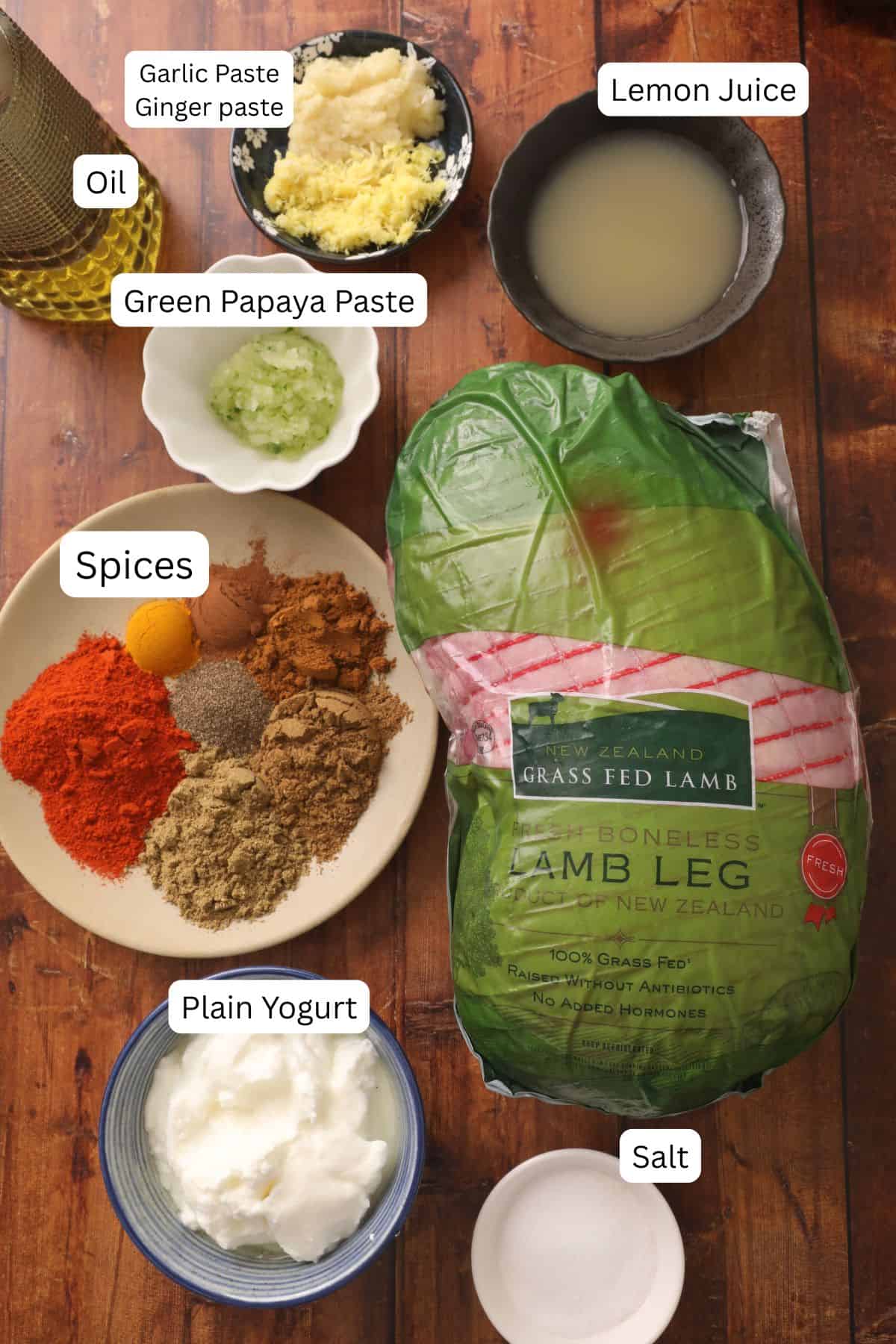
- Green Papaya Paste - Green papaya paste made with few pieces of skin on green papaya paste is a classic tenderizer used in indian non vegetarian dishes. I like using it because it gives the roast that traditional soft texture, but its fully optional. You can swap it with store bough meat tenderizer(see recipe card for quantity). Letting the meat marinate for a little longer(15-18 hours) in absence of tenderizer still works beautifully.
More Tips
- My next big tip is that start checking the meat at around the 40 minute mark especailly if your roast is ~3lb. I can't stress this enough! Boneless lamb cooks much faster than a bone-in leg, and it's so easy to overshoot that doneness if you're not careful. Keep a close eye, check the temperature early, and you'll be rewarded with a perfectly cooked roast every time. For reference, my 3lb boneless lamb leg, took about 55 minutes.
- I highly recommend roasting the meat by placing it on a rack, rather than while sitting in its own juices. This ensures good air flow and the roast is much even.
- For the first 15-20 minutes, cook the lamb leg at high temperature (450F) to form a lovely crust and "lock in" in the juices.
- Then, turn the heat down, tent the meat and cook low and slow.
- Lastly, we do not need a ton of marinade. Spices are good and flavorful but too much marinade can steal the taste of meat.
Instructions
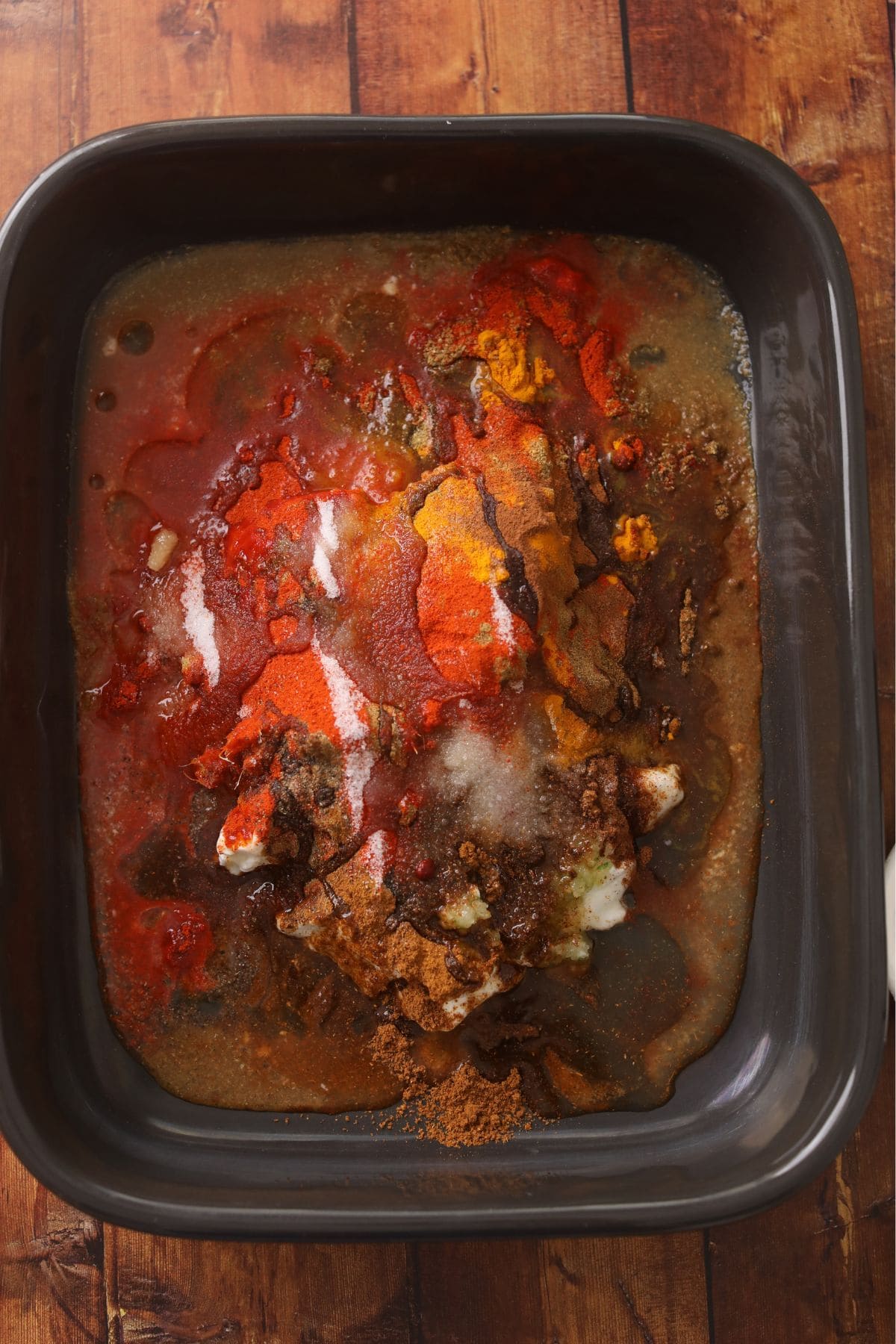
- Add all the marinade ingredients to a bowl.
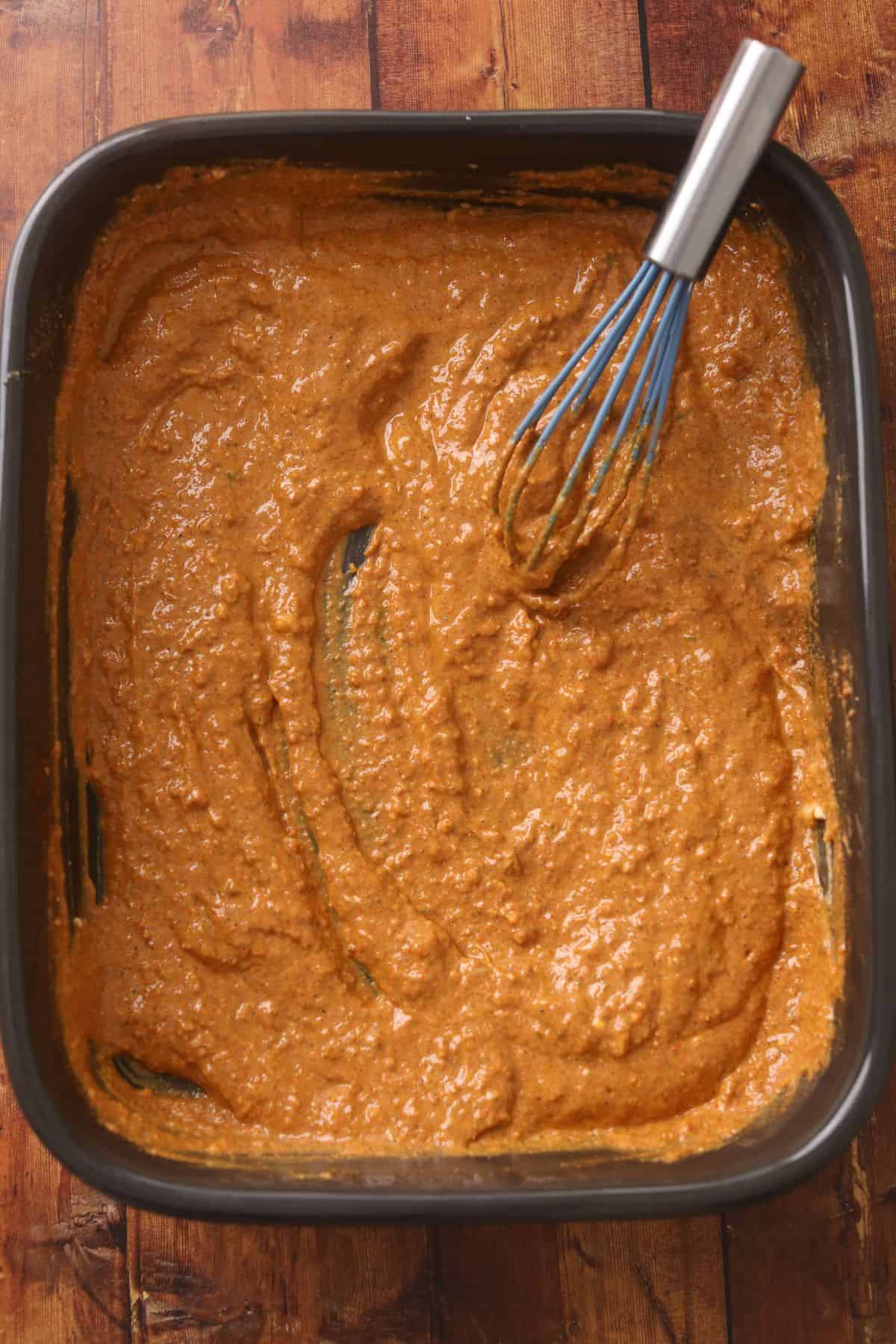
- Mix well using a whisk until you get a smooth and lumpfree marinade. Taste and adjust seasonings. It should taste sharp salty and intense!
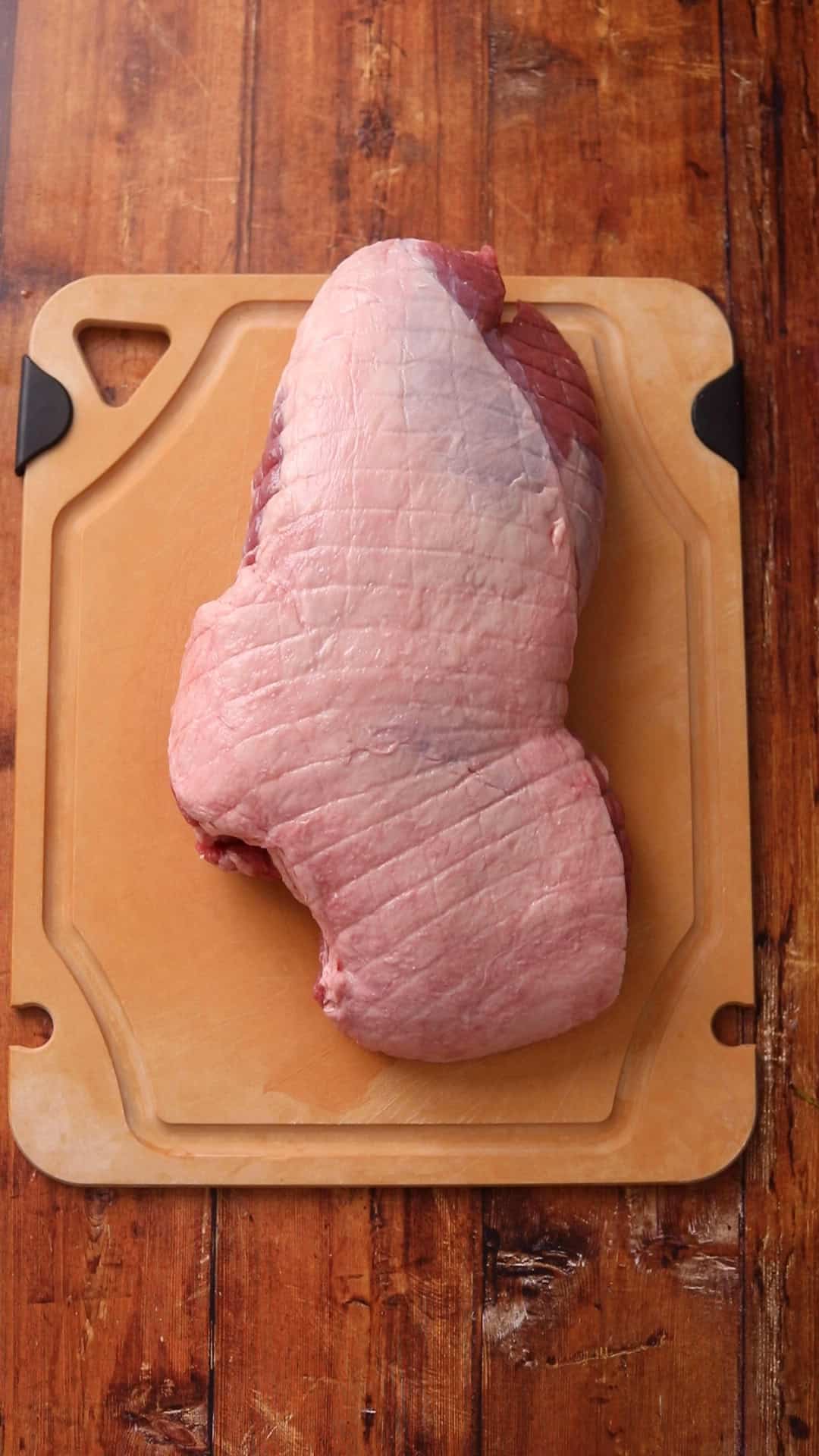
- Remove the netting from the lamb leg and pat both sides dry using paper towels. Dry lamb means, the marinade wont slip off
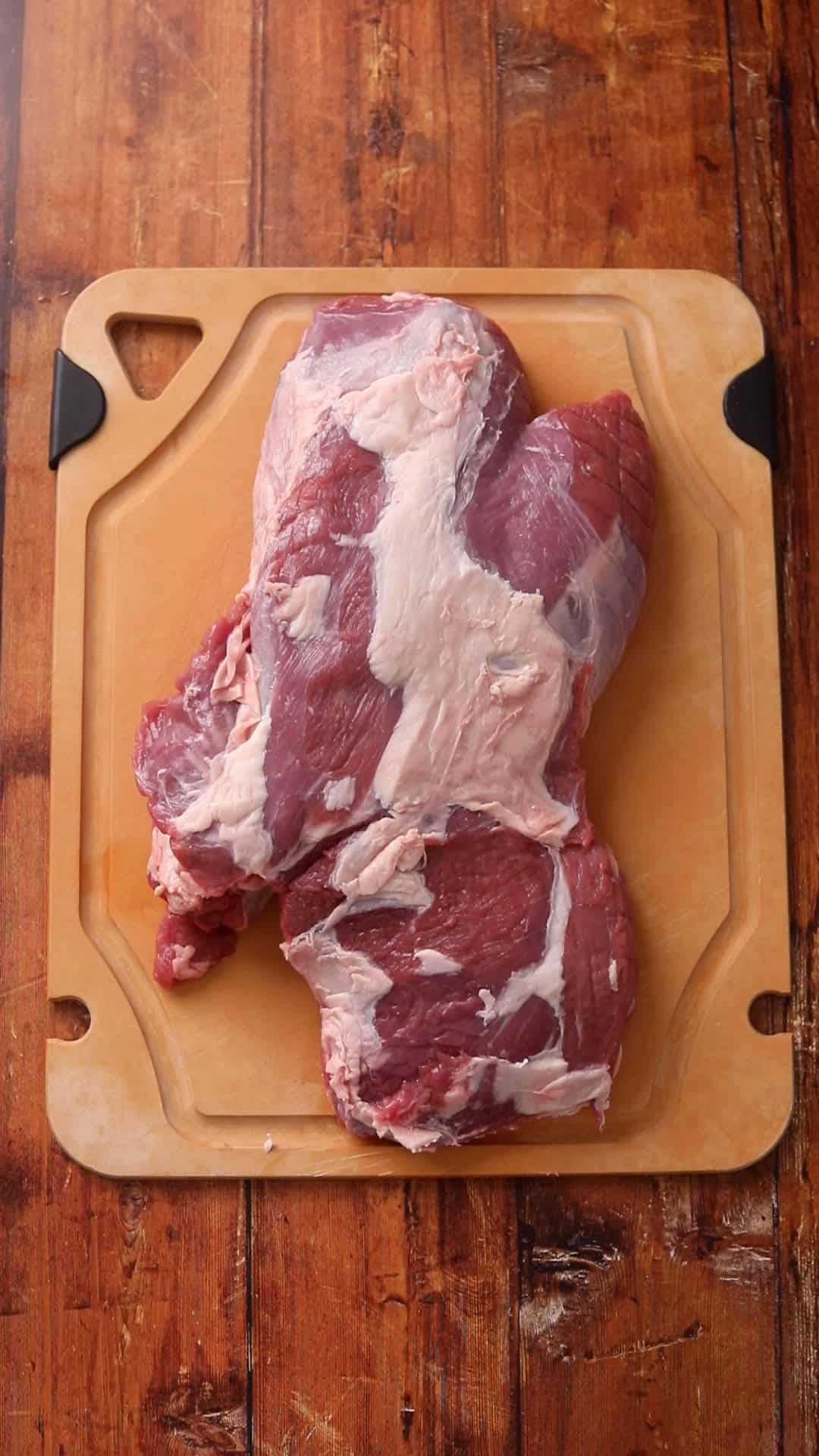
- Unflold the leg and trim fat using a sharp knife (optional step).You can get it trimmed from your butcher too.
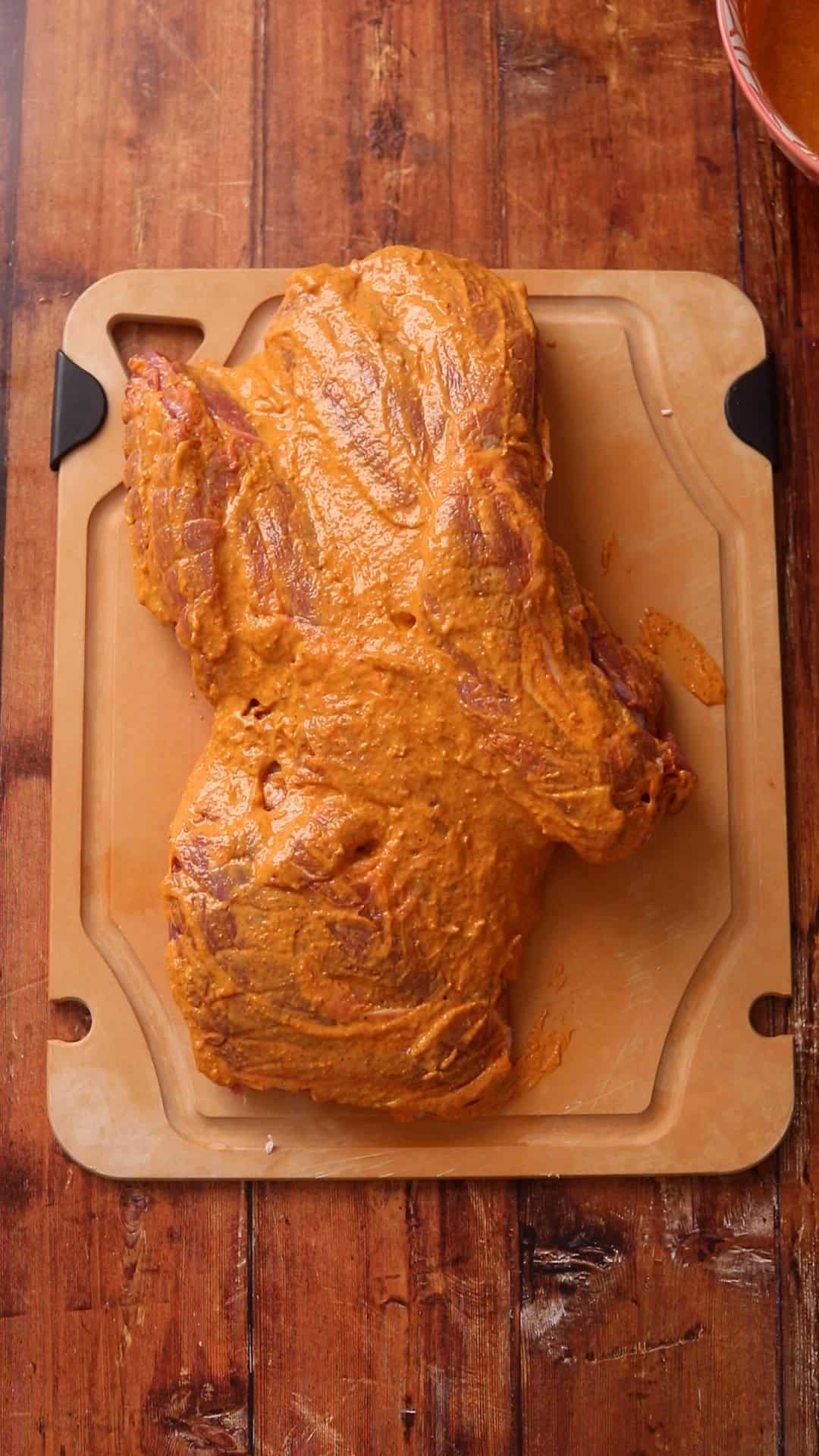
5. Brush or spread half of the marinade that we prepared earlier on the inside of the leg.Get the marinade into crevices of meat.
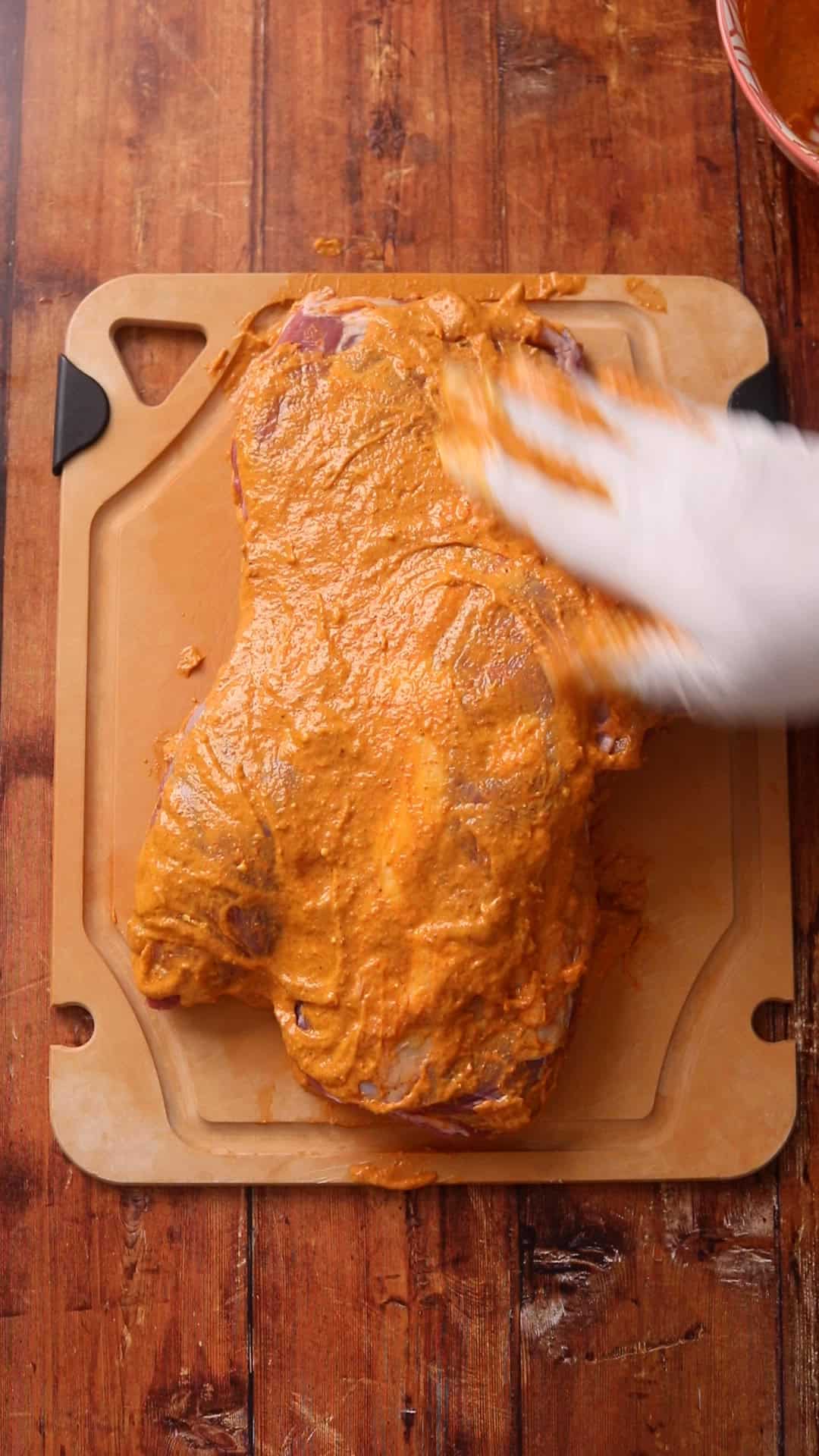
6. Flip and brush the rest of the marinade on the top of meat, making sure that you apply the marinade in all the nooks and crannies. Marinate the meat overnight (atleast 10 hours).
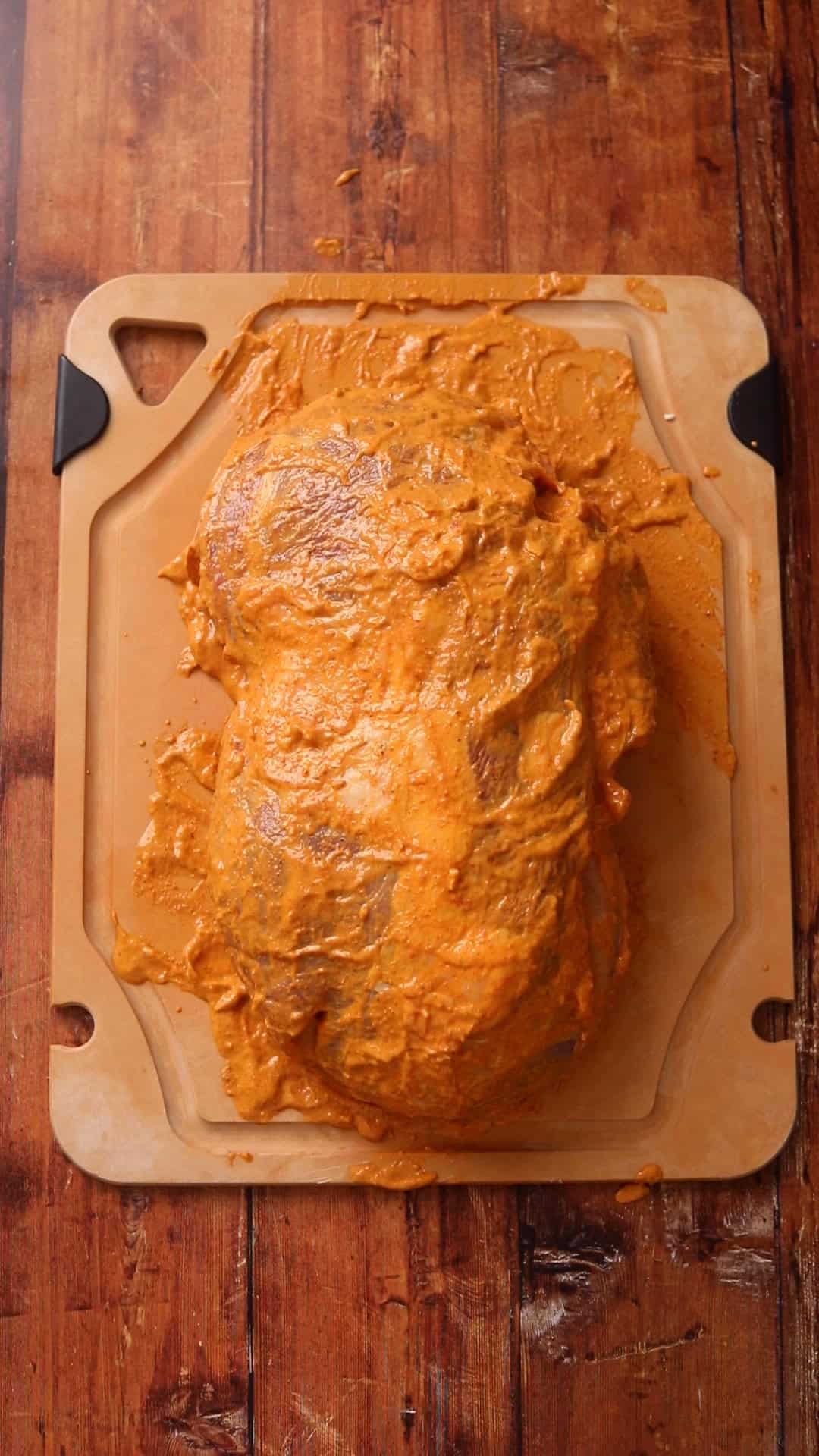
7. Next morning, take out the meat from the fridge prior to roasting and let rest for 1 to 1.5 hour at room temperature. You can roll up the meat now to create a firm, unform log or tuck it in from all sides in to form a thick, even shape(I do the latter). This is to ensure that the meat roasts evenly.
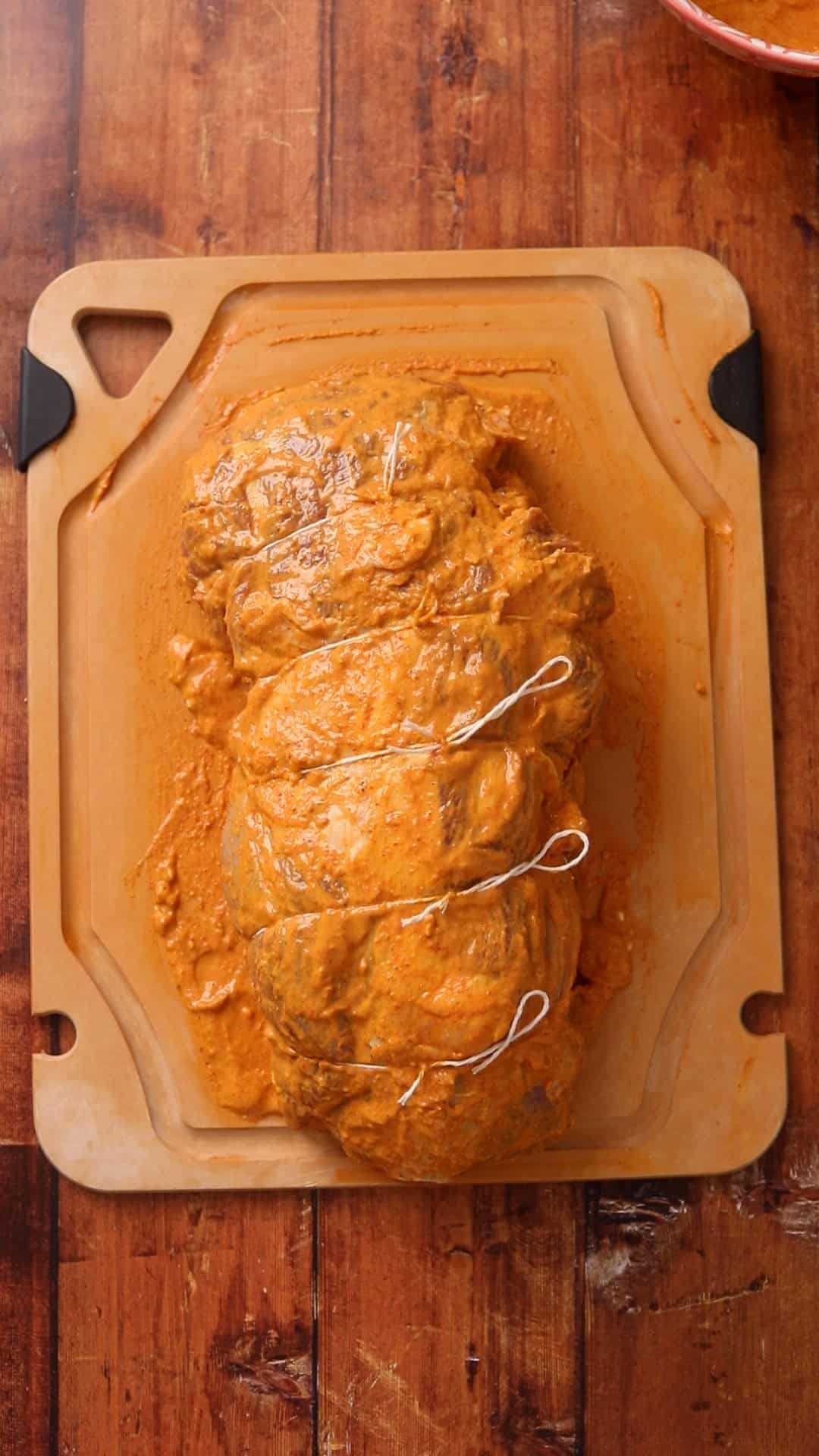
8. Tie the meat using butcher's twine. I am not fancy so I simply cut 5-6 long pieces of twine. Slide each twine one by one under the meat, bring the ends up, and tie a firm knot on top. Cut off the excess twine from every knot.
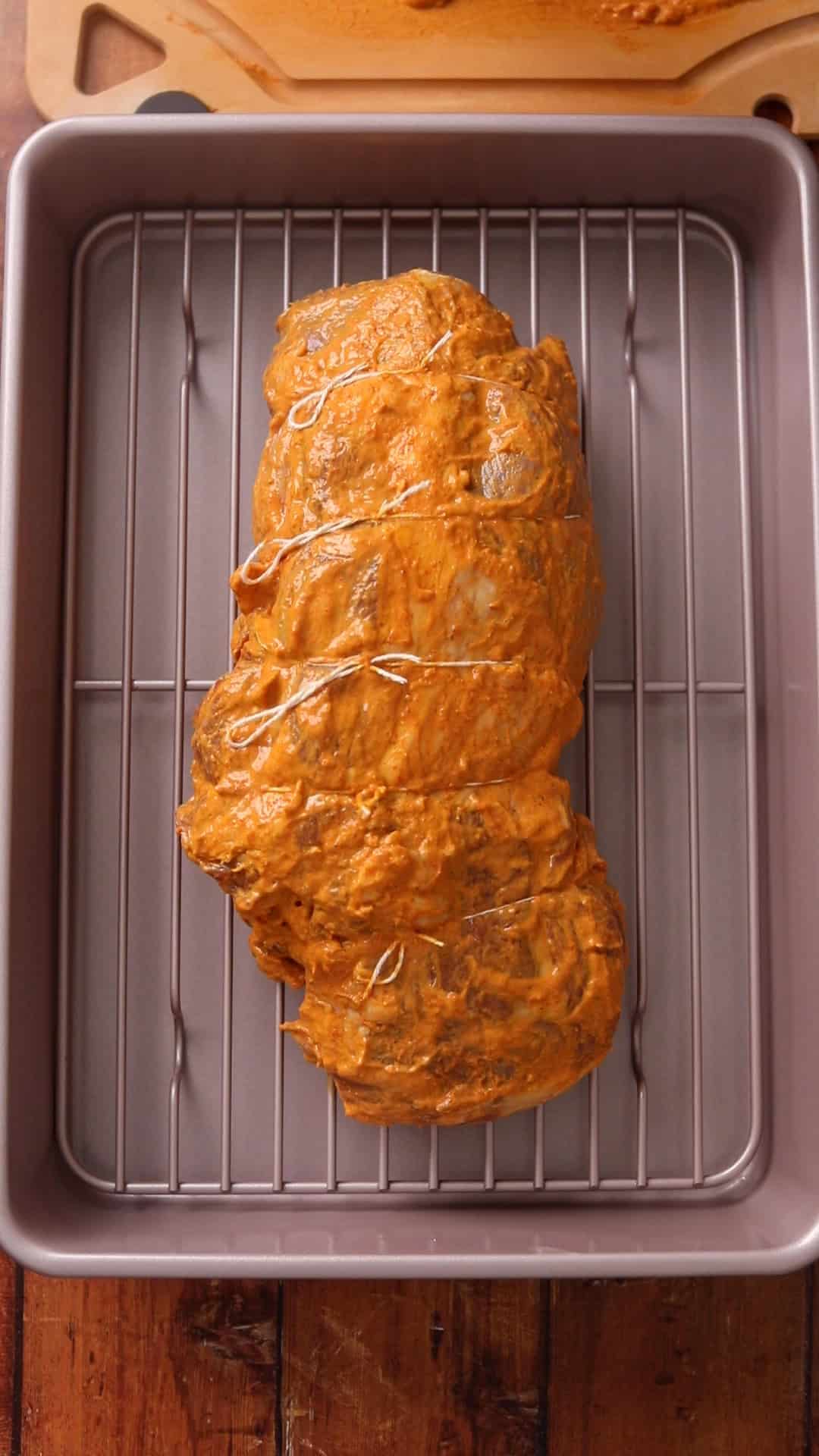
9. Take you baking pan with rack. I use a 9 by 13 inch baking pan. Spray the rack with oil. Place the marinated, tied lamb leg over the rack.
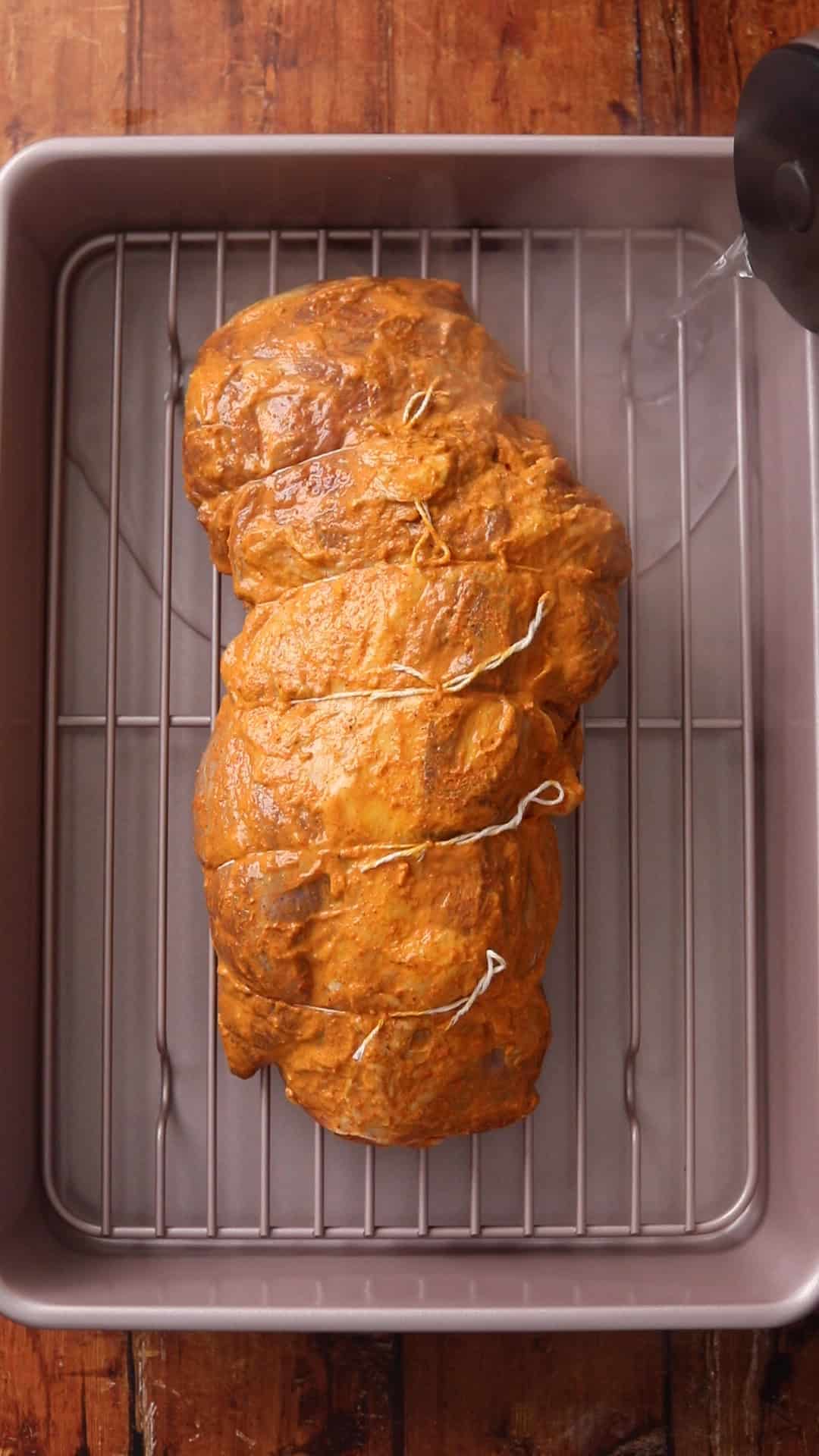
10. Pour 1 cup warm water in the baking pan while making sure it doesn't touch the bottom of lamb. This keeps the lamb moist while roasting.
Roasting Instructions
- Wash rice 2-4 times under running water and soak in excess water before you begin roasting. This way, by the time the lamb broth is ready, your rice will be ready for oven cooking.
- Place the lamb in a 425F(220C) oven for 15-20 minutes to achieve nice browning and to seal in the juices.
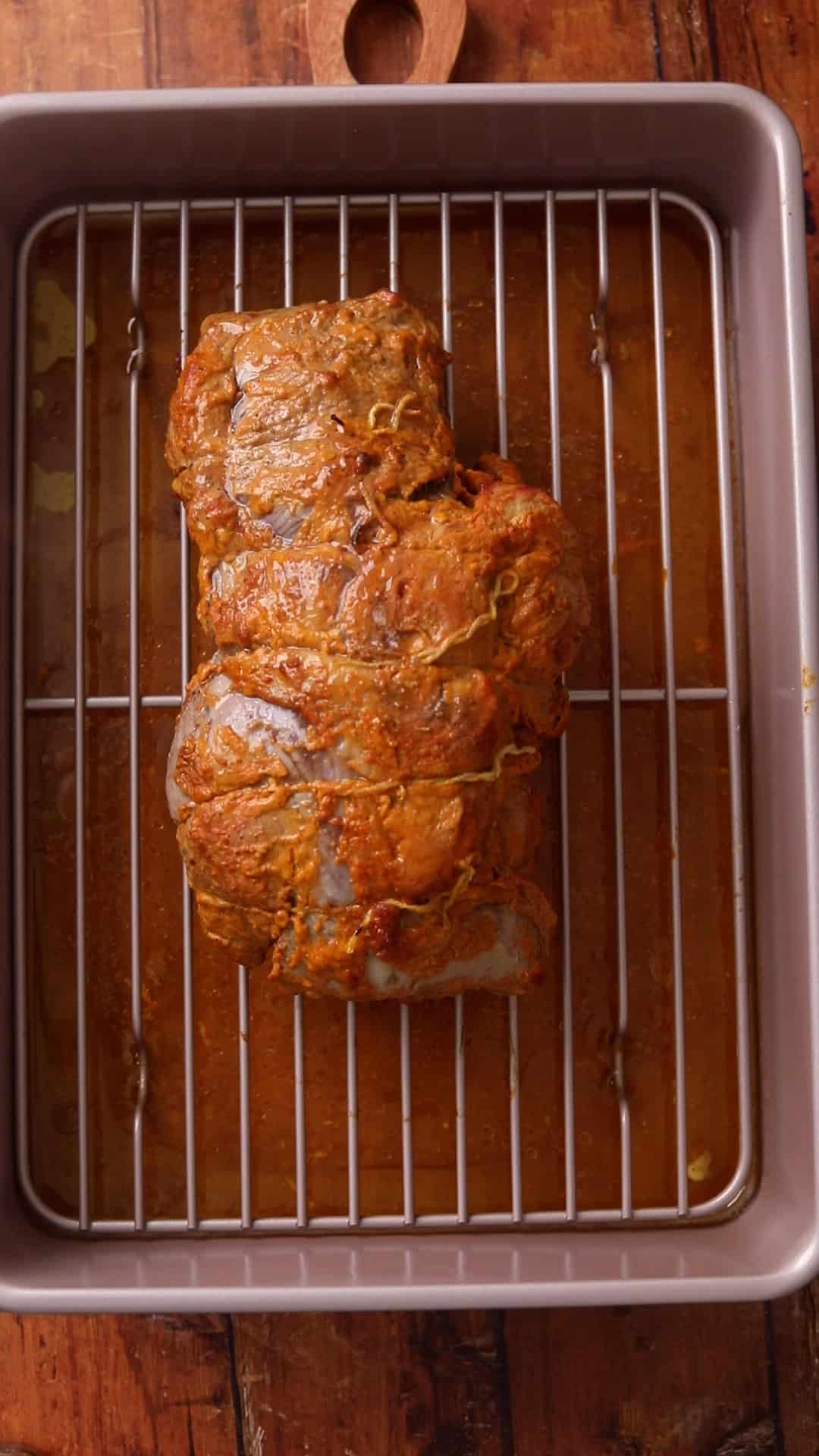
- Turn down the oven to 375F(190C), tent the lamb with aluminum foil and let roast for 40-50 minutes. Start checking the temperature after 35 minutes. I follow a thumb rule of 15-20 minutes for every pound of meat. For roasting a 3 lb lamb leg, it took me close to 50 minutes. An accurate way to checking is by using a meat thermometer until the lamb reaches a temperature of 145F-150F in the thickest part of the meat for medium well done.
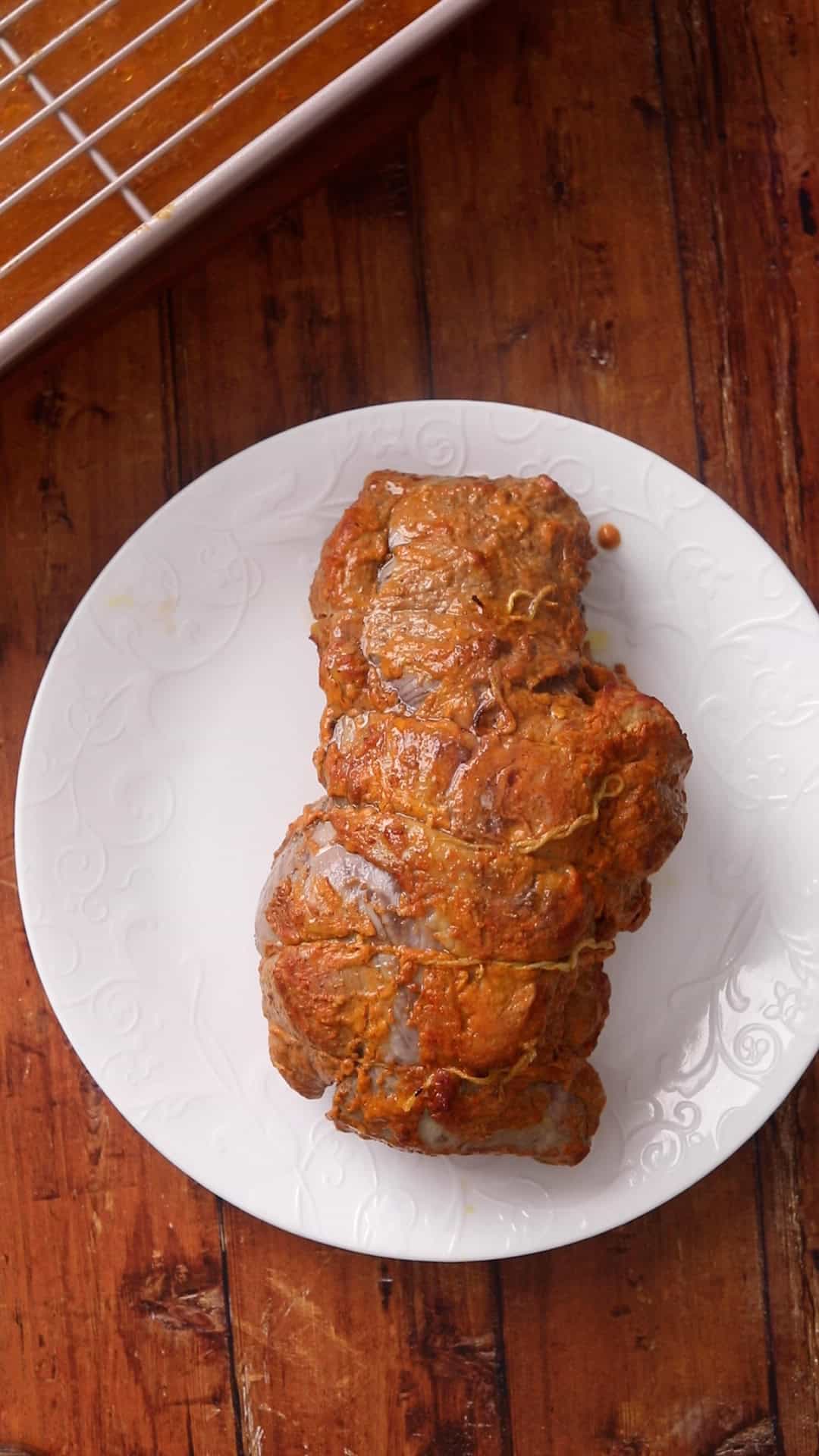
- Once done, remove from the oven and let rest tented for 15-20 minutes to allow juices to re distribute. The internal temperature after resting is 155-160F. Please refer to the internal temperature guide by american lamb to adjust cooking time & intended temperature to your preferences.
Make The Rice
- Remove the rack from the baking pan and cover with foil. While meat rests, make rice. Pour the broth at the bottom of the baking pan into a measuring cup. If you see too much fat in the mesauring cup, careful spoon it and discard else the rice will become too oily and heavy.
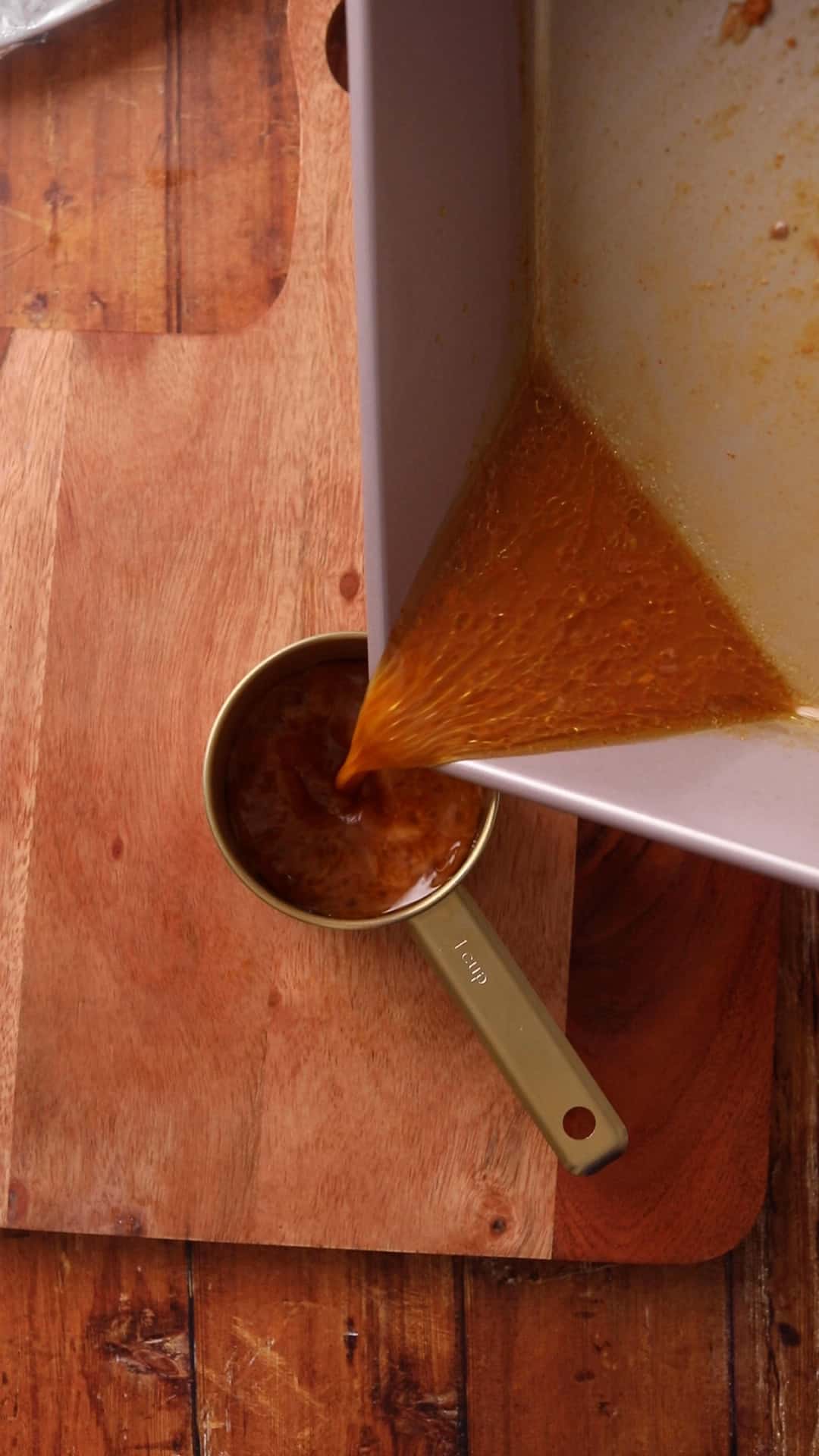
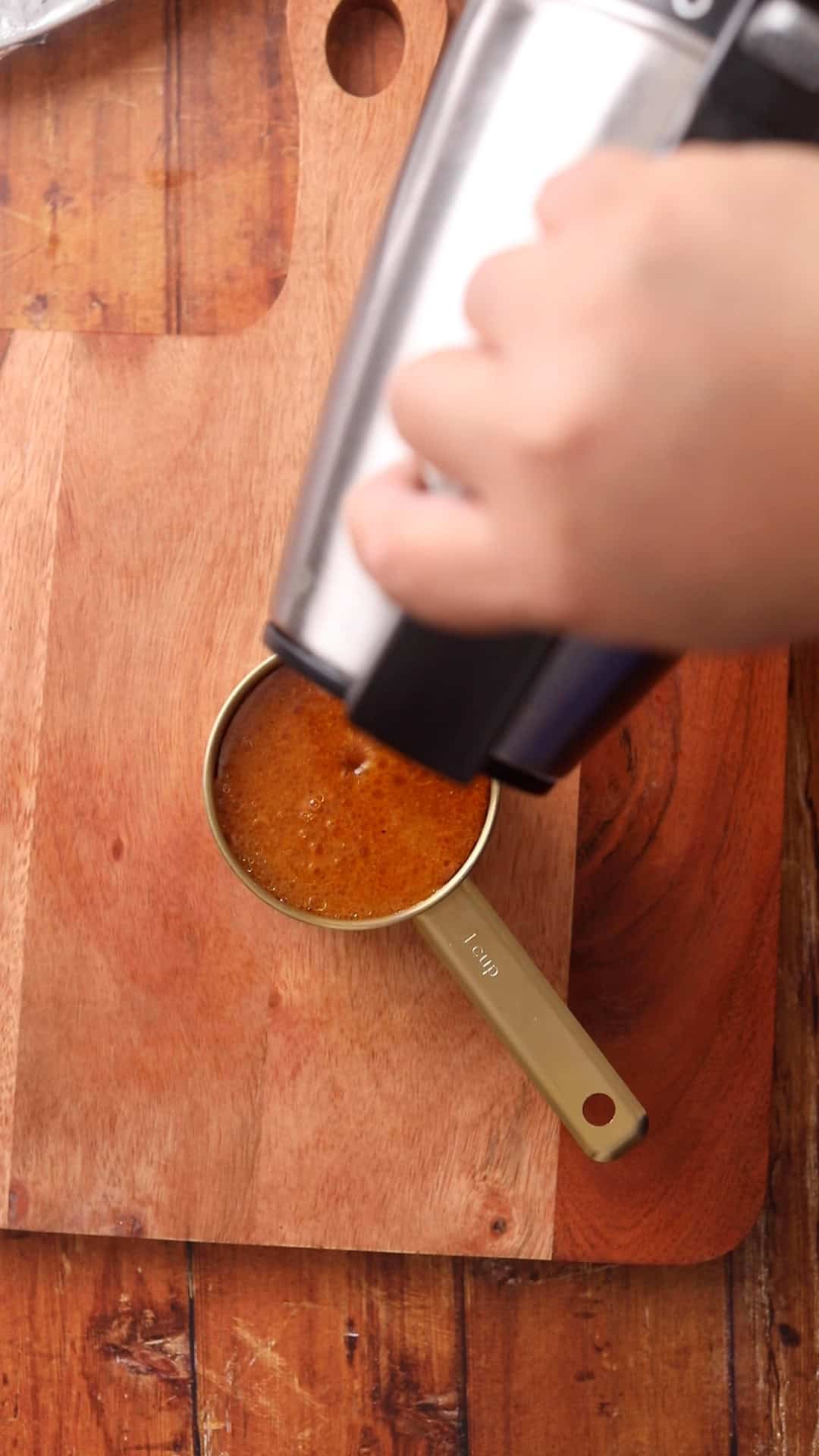
- For cooking (well soaked) basmati rice, we need double the quantity of liquid than rice. If needed, top the broth with water.
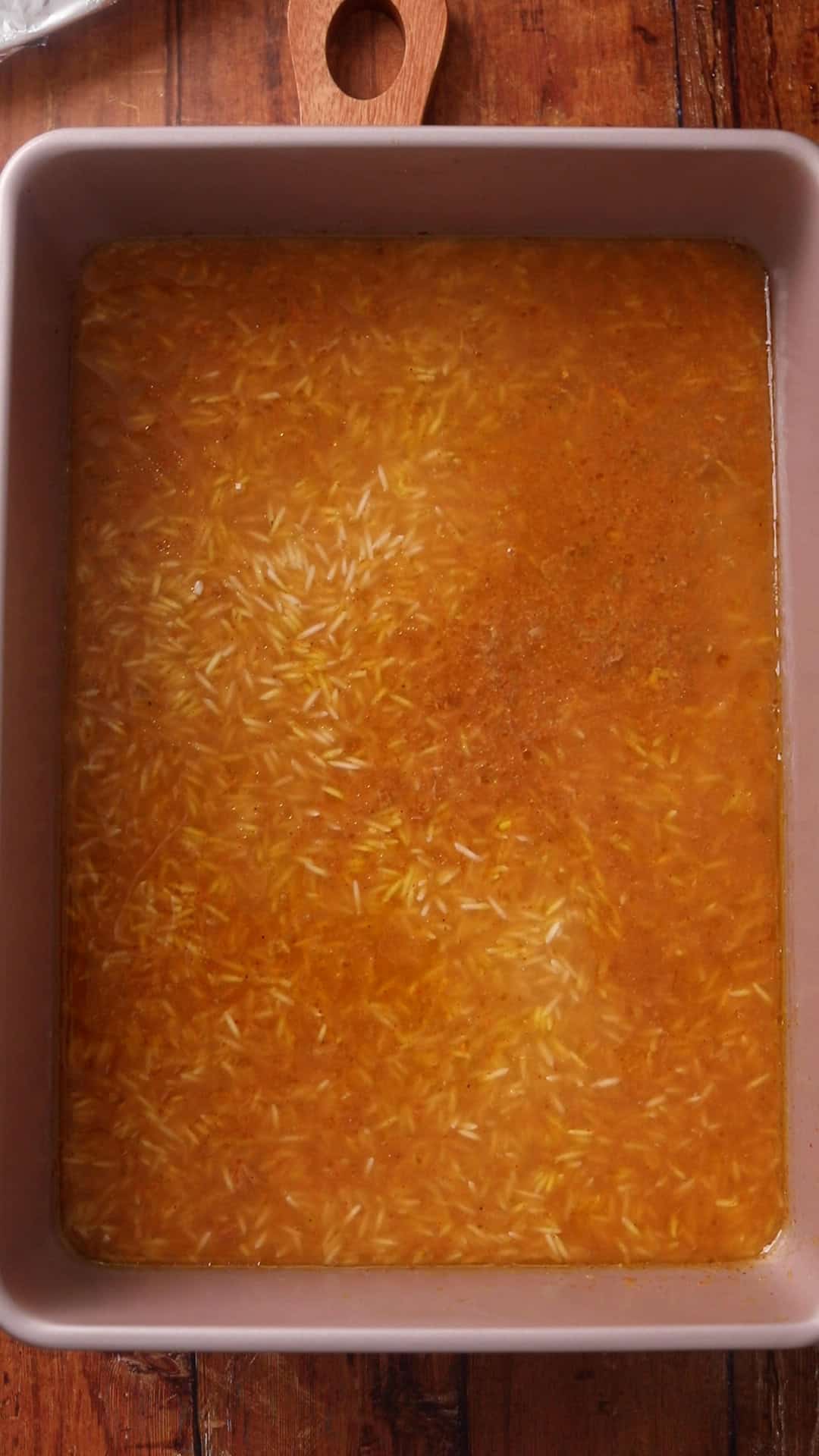
- Add 1 cup soaked rice to the baking pan. Pour 2 cups broth and ½ teaspoon salt. Stir lightly. Cover the pan very well with foil.
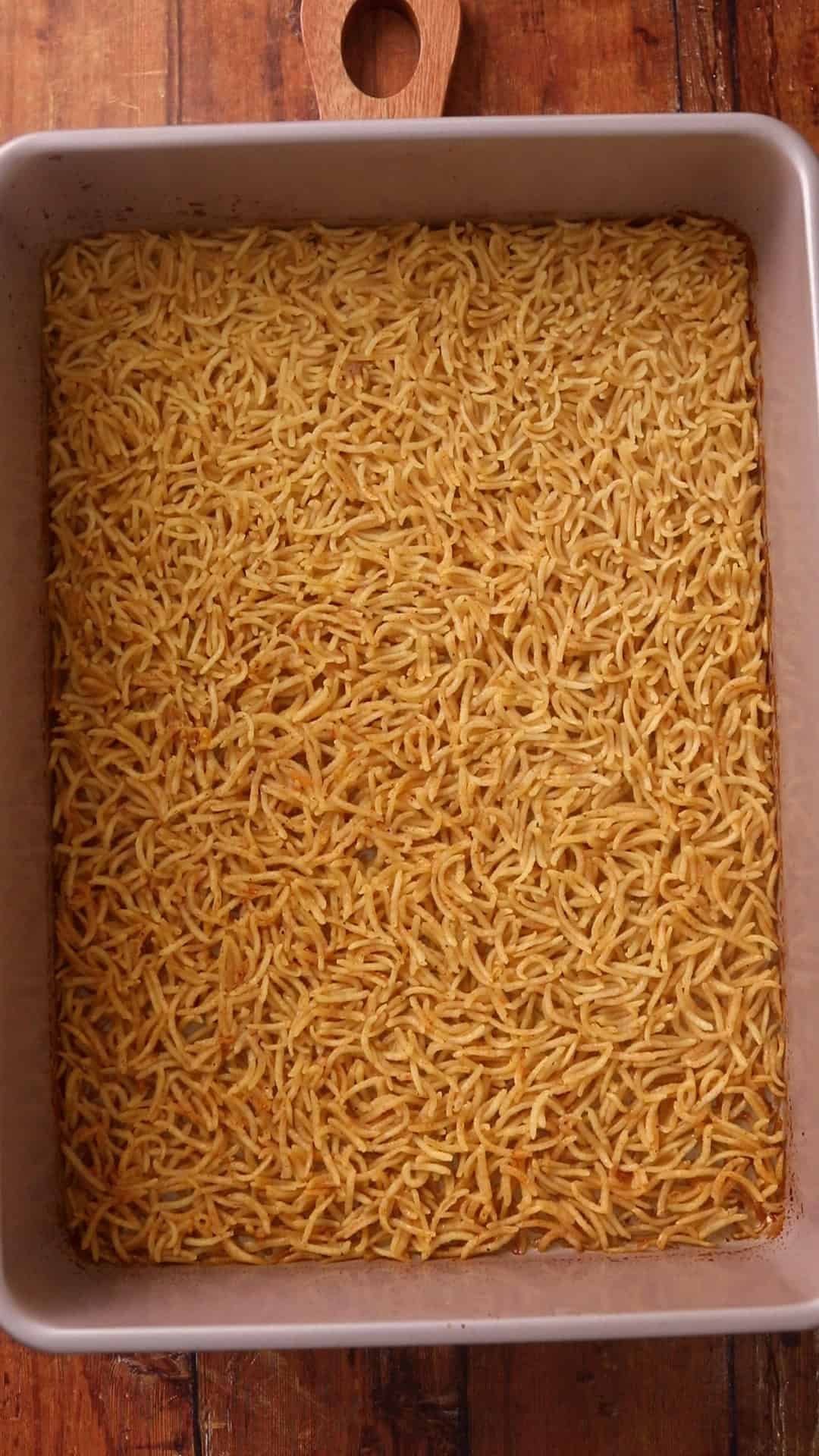
- Return the baking pan to 375F oven and let cook for 18-22 minutes until the rice are soft and all the broth is absorbed. Let the baking pan sit covered for 4-5 minutes after taking out from the oven to firm up (else they will break).
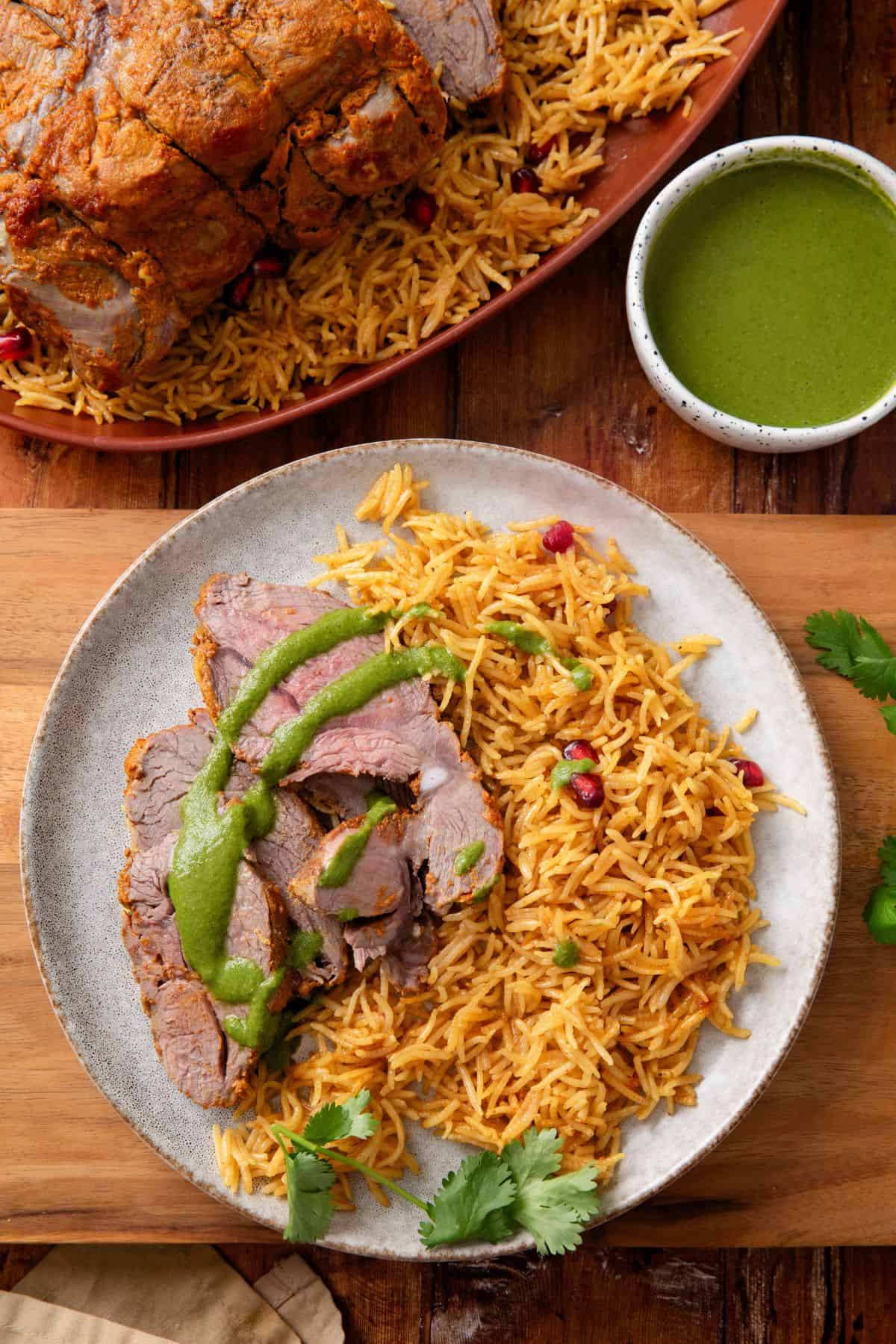
Serving - You may shred the lamb or slice it. Pair with green chutney, salad and raita. You can also add roasted vegetables of choice.
Indian Spiced Boneless Lamb Leg Roast (Raan Recipe)
Ingredients
- 3-4 lb boneless leg of lamb if using bone in leg of lamb, use 5-6 lb
- 1 cup basmati rice
Marinade (Makes extra marinade)
- 180 g (~⅔ cup) thick plain yogurt
- 1.5 tablespoon lemon juice
- 1.5 tablespoon garlic paste
- ½ tablespoon ginger paste
- ½ tablespoon green papaya paste or use ½ teaspoon meat tenderizer (to skip the tenderizer, see notes)
- 2 tablespoon oil
- ½ tablespoon +1 teaspoon salt add as per taste
Spices for Marinade
- 1 tablespoon red chilli powder (medium hot), I use degi mirch or use ½ tablespoon kashmiri chilli powder and ½ tablespoon cayenne pepper powder (adjust to taste)
- ½ tablespoon coriander powder
- 1 teaspoon cumin powder
- ¾ teaspoon garam masala powder
- ½ teaspoon turmeric powder
- ¼ teaspoon ground cinnamon
- ¼ teaspoon black pepper powder
- ⅛ teaspoon nutmeg powder freshly grated, preferably
Instructions
- Add all the marinade ingredients to a bowl and whisk until smooth and lump free. Taste and adjust as needed. The marinade should be sharp, salty and intense. Let stand while you prepare the lamb leg.
- Place lamb leg on a plastic board and remove the netting. Pat it dry on both sides. Dry meat helps the marinade cling better. Unfold the leg and trim any excess fat on both top and bottom if you prefer, or have your butcher do it for you.
- Spread half of the marinade over the bottom of the lamb leg and work it into every crease. Flip the leg and coat the other side with the remaining marinade, making sure you reach all the nooks and crannies. Cover and marinate overnight, refrigerated (at least 8-10 hours).
- The next morning, bring the lamb out of the fridge and let it rest at room temperature for 1 to 1.5 hours. Shape the meat into a firm, even log or simply tuck in the edges to create a thick, uniform piece. This helps it roast evenly. See pictures in the post above to get an idea.
- Tie the lamb with butcher's twine. I keep it simple by sliding 5 to 6 pieces of twine underneath, and then knotting them firmly on top. Trim the excess twine from each knot.
- Rinse your basmati rice 2 to 4 times and soak it before you put the lamb in the oven. By the time the pan juices are ready, the rice will be perfect for cooking in the oven.
- Preheat your oven to 425F(220C). Set a baking rack over a 9 by 13 inch pan and lightly oil the rack. Place the lamb on top. Pour 1.5 cup of warm water into the pan making sure it doesn't touch the meat. This creates gentle steam and keeps the lamb moist while it roasts.
- Roast the lamb at 425°F (220°C) for 15 to 20 minutes to brown the outside and seal in the juices. Lower the oven temperature to 375°F (190°C), tent the lamb with aluminium foil and roast for another 40 to 50 minutes. Start checking the internal temperature around the 35 minute mark. A general rule is 15 to 20 minutes per pound. My 3 pound lamb leg took close to 50-55 minutes.
- Use a meat thermometer for accuracy. For medium well, pull the lamb at 145°F to 150°F in the thickest part. Let it rest, still tented, for 15 to 20 minutes so the juices redistribute. The temperature will rise to about 155°F to 160°F during resting.
- Once roasted, remove the rack from the baking pan on to a plate or board and cover the lamb with foil to rest.
- While it rests, prepare the rice. Pour the juices collected at the bottom of the pan into a measuring cup. If there's too much fat on top, gently spoon it off and discard it, otherwise the rice will turn oily and heavy. For soaked basmati rice, you'll need twice as much liquid as rice, so top up the broth with water if needed.
- Add 1 cup of well-soaked rice to the baking pan. Pour in 2 cups of the broth and add about ½ teaspoon of salt. Give it a gentle stir. Cover the pan tightly with foil.
- Return the pan to a 375°F oven and bake for 18 to 22 minutes, until the rice is tender and the liquid is fully absorbed. Once done, leave the pan covered for another 4 to 5 minutes so the rice can firm up. This keeps the grains from breaking.
- Fluff the rice and slice the lamb roast. Serve with green chutney and raita.
I'd Love to Hear from You!