

Ever dream of fluffy, aromatic basmati rice every time? Look no further! This recipe is your guide to perfect basmati rice on the stovetop, made with just 2 ingredients and ready in about 20 minutes(active time). Learn my secrets to achieve separate, fluffy grains that will elevate any meal, be it indian curries or dals(lentils)!
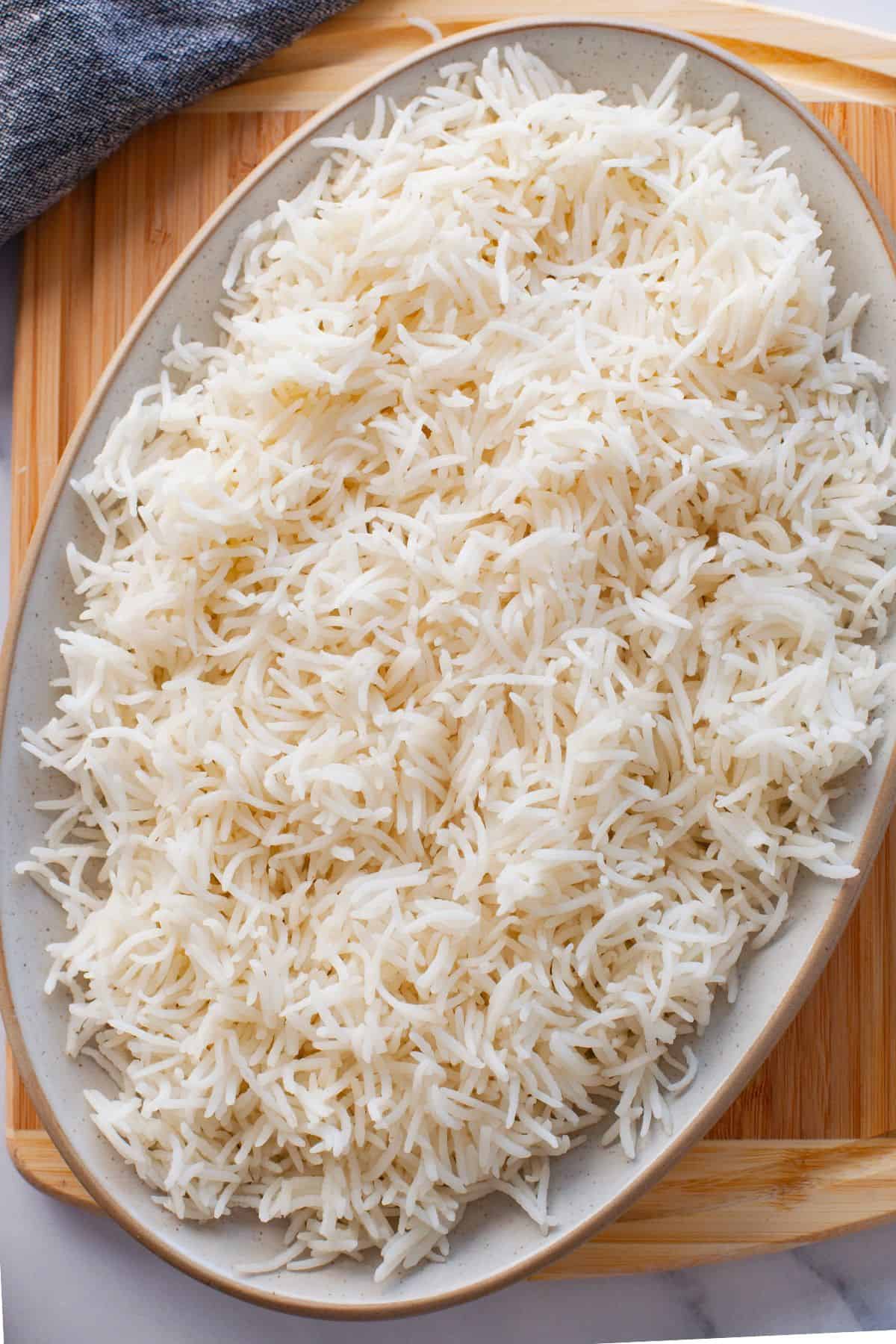
I cook plain basmati rice every single day! No to overstress, however it is something that I could cook in my sleep! In indian restaurants, jeera rice or rice dishes (like biryani) are more common, but in our homes, steamed basmati rice is an everyday affair.
Though I hail from North India, where flatbreads reign supreme, steamed basmati rice holds an equally cherished place on our table. The simple elegance of white basmati rice makes it the perfect accompaniment to an array of dishes from comforting dal and vibrant vegetarian curries to rich non vegetarian specialties.
As a little girl, I was mesmerized by my grandmother's rice & water measuring ritual. Unlike the fuss of measuring cups, her approach was graceful and efficient. With a single, practiced motion, she'd dip her index finger into the pot containing rice & water, the first knuckle acting as a magical marker. Then she would gently poured more until it reached that precise point. It seemed like alchemy - a simple touch dictating the perfect water ratio.
But, in this post, we'll break down the rice-to-water ratios for various types of basmati rice and discuss the proper tools to use(don't worry no measuring with knuckles happening here).
What is Basmati Rice
Basmati rice is a long-grained, aromatic rice variety known for its delicate buttery flavor and fluffy texture after cooking. It is primarily cultivated in India and Pakistan in the foothills of the Himalayas. It is different from white rice in taste, aroma and of course, size of grains.
My favorite brand of basmati rice is Royal basmati rice. It is easily available in most ethnic grocery stores, in most american supermarkets or on amazon. Whenever your are purchasing a bag of basmati rice, make sure that its labeled as aged and cultivated in India(or indian subcontinent).
Why use Aged Basmati Rice
My grandmother always insisted on using aged rice for fine dishes such as biryani, pulao or zarda (sweet saffron rice) where beauty of rice grains adds to visual appeal of the dish. However, she said that new or ungaed rice is fine for making rice kheer or phirni, where the length of the grain is not as important.
Aging basmati rice enhances its flavor, making it deeper and more complex as starches change over time. The moisture content decreases, making the rice light, fluffy, and less likely to clump, resulting in a delightful, non-sticky texture that elevates any dish.
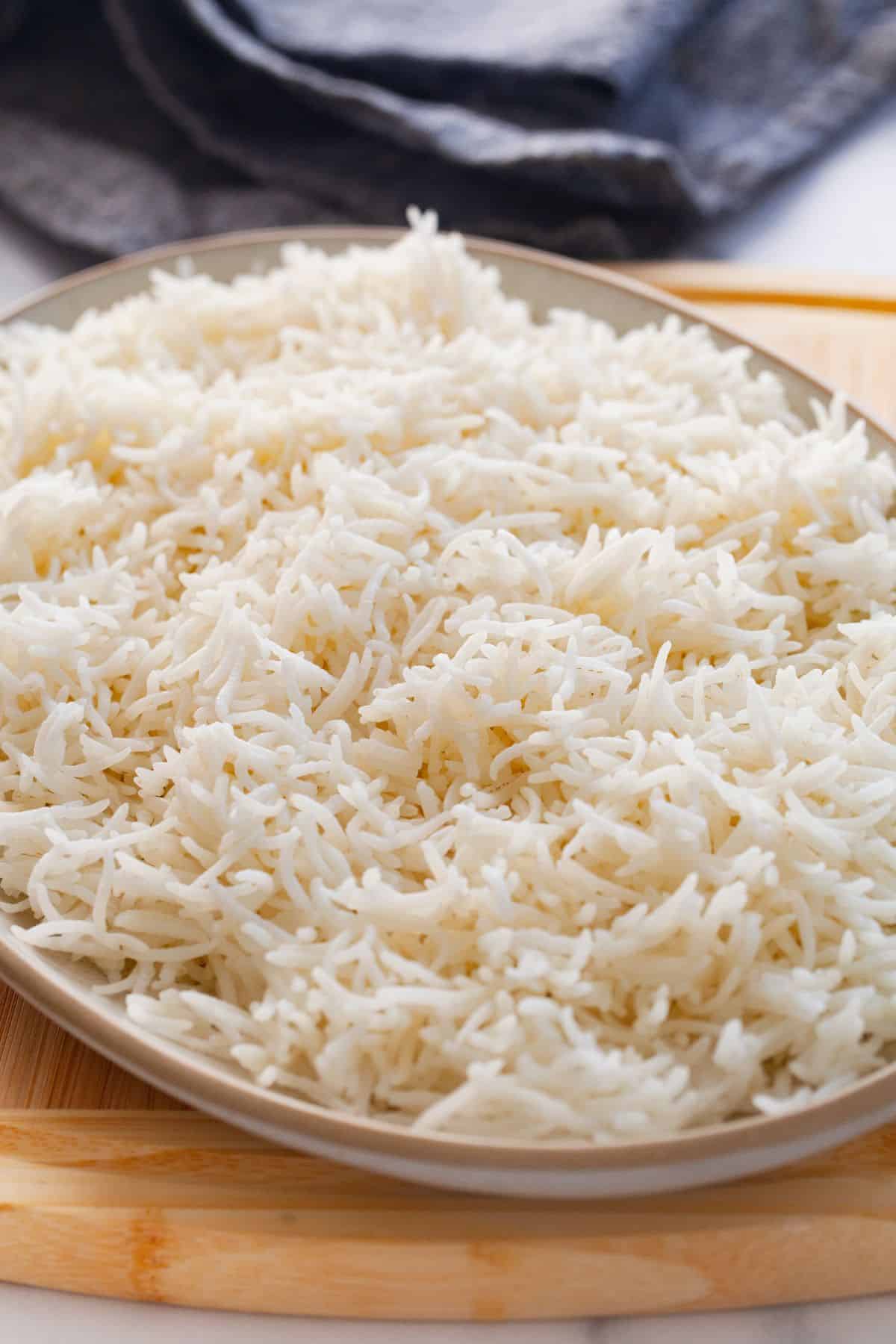
5 Tips for Perfect Basmati Rice
I highly trust the preperation, water ratio and cooking instrictions written behind rice packgaes and I recommned you do stick to the cooking time, especially. Here are few of my tips for perfectly fluffy rice.
- Don't skip rinsing your rice - Basmati rice naturally contains starch, especially white rice with the bran layer removed. When cooked, this starch thickens the water around the rice, potentially making it sticky or mushy. Rinsing removes the excess starch, resulting in enhanced flavor, fluffiness, and better texture. So, take that extra step and rinse your rice.
- Soak the rice - Soaking rice softens the grains, resulting in two benefits: - faster cooking and a tender, buttery texture without gumminess.
- Use a heavy bottomed, wide mouthed, shallow pot- For cooking 1 cup or less of rice, a small pot (1.5 to 2 quarts) works fine. For over 1 cup of rice, use a wide, shallow pot. A wide pot gives the grains space to swell & spread without breaking, while a shallow pot ensures the rice layer post cooking isn't too thick, reducing the chances of breakage when scooping.
- Don't peek while the rice cooks - Once you cover the rice pot, don't open it. The rice will come to a rolling boil, then simmer as the water is absorbed. Lifting the lid disturbs the temperature and can cause uneven cooking. Avoid stirring the rice while it's boiling since it can break the long basmati grains.
- Let rest long enough after cooking - After turning off the stove, let the rice sit undisturbed for at least 10-15 minutes before fluffing it. Cooked rice is very soft, and stirring it too soon can break the grains and make it mushy.
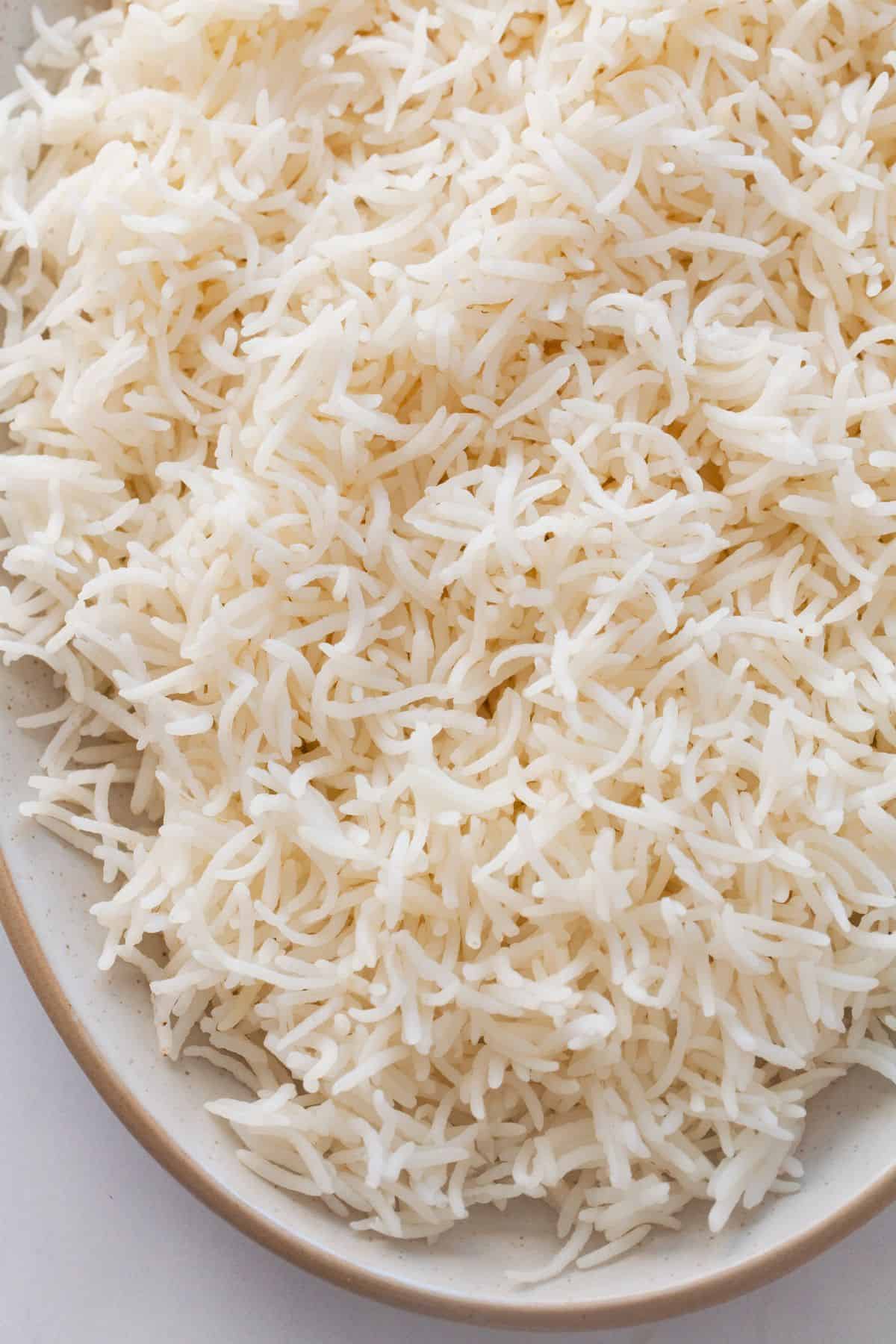
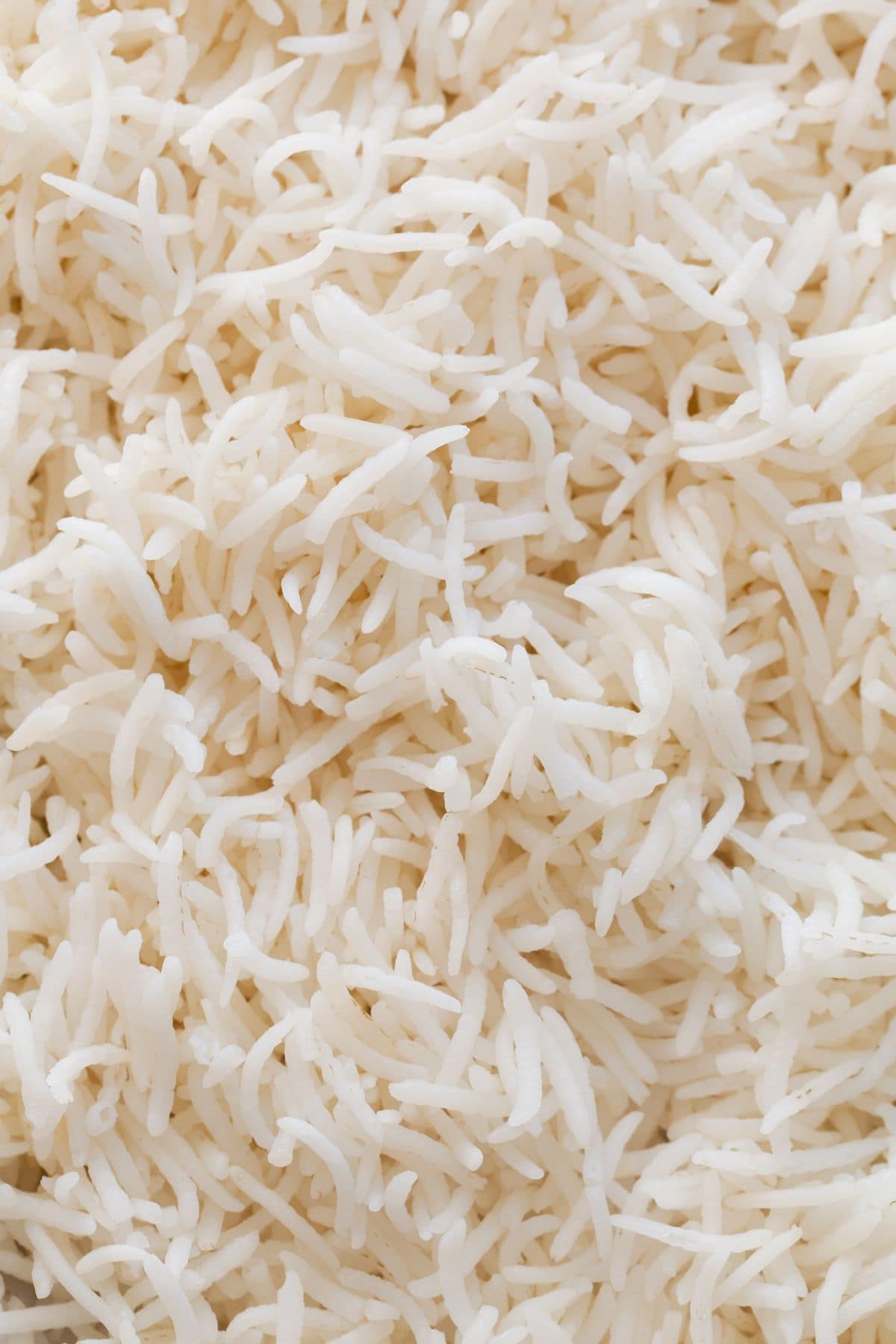
How To Cook Fluffy Basmati Rice
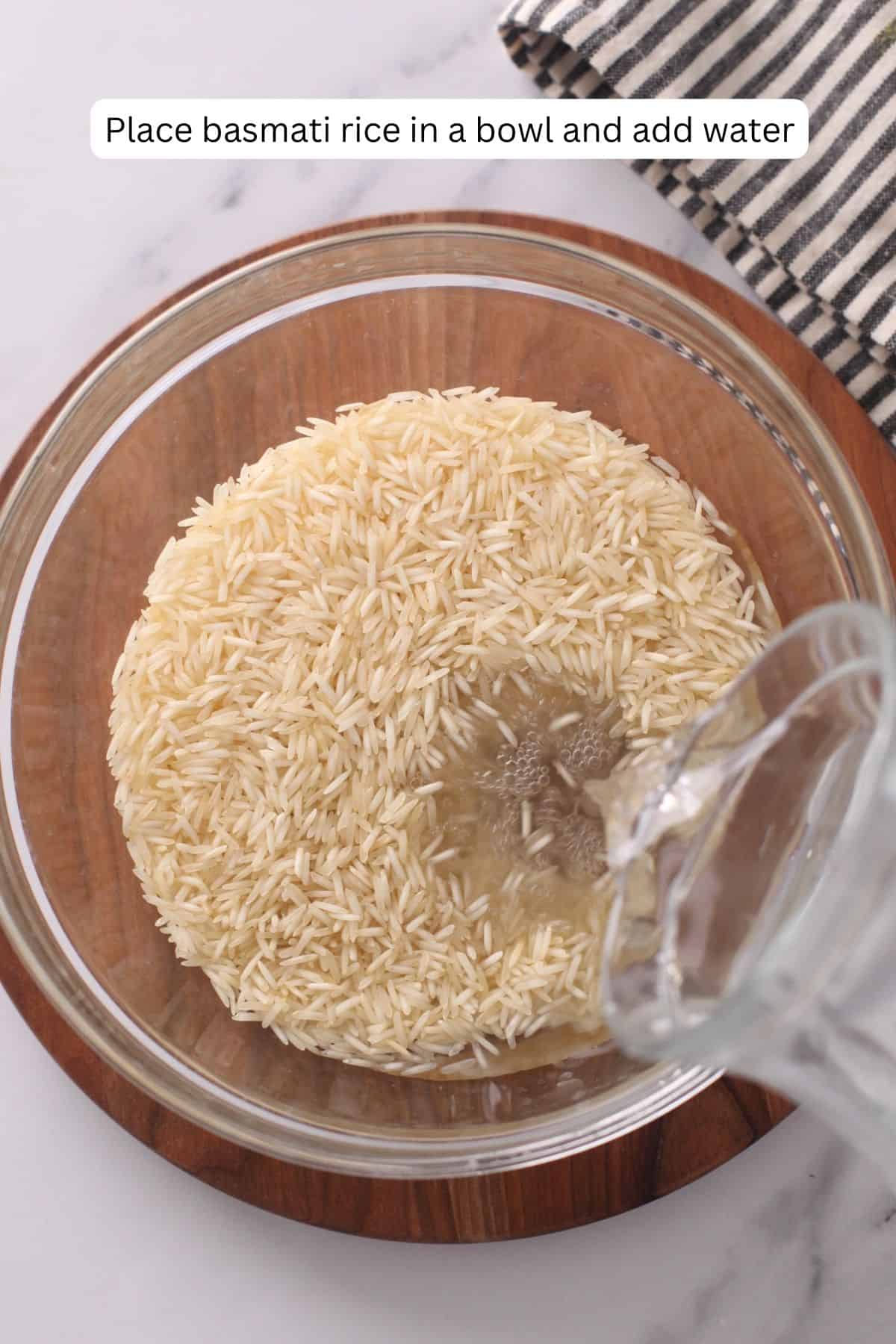
- Measure the rice and place it in a large bowl. Take the bowl to kitchen sink under tap water or pour cool water over the rice until it's completely submerged.
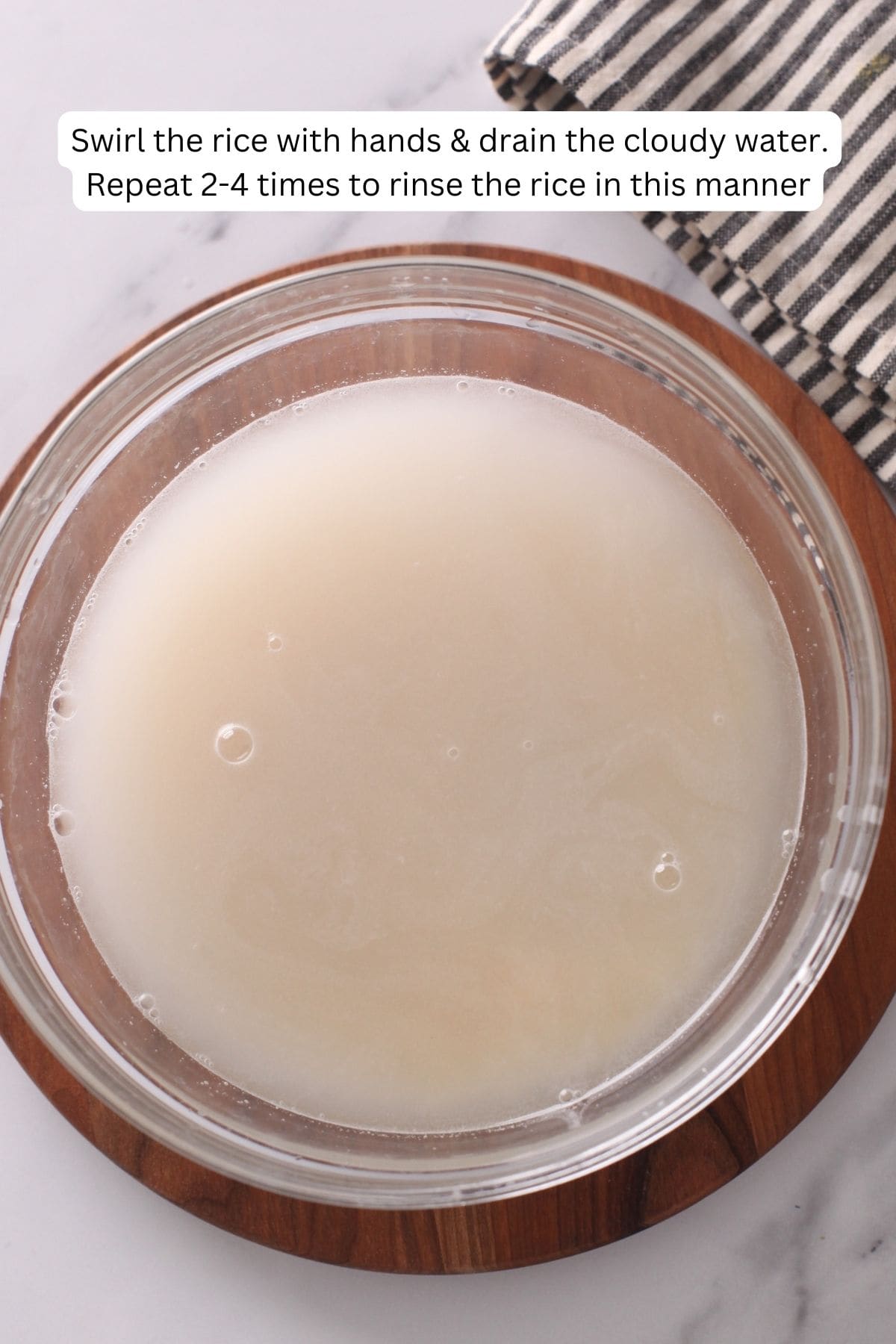
- Swirl the rice gently with your hand for a few seconds, then drain the cloudy water by carefully titling the bowl or use a fine mesh sieve.
- Repeat steps 2 and 3 until the rinsing water runs mostly clear. This usually takes about 3-4 rinses, but you can go up to 6 or 7 times if the water still looks very cloudy.
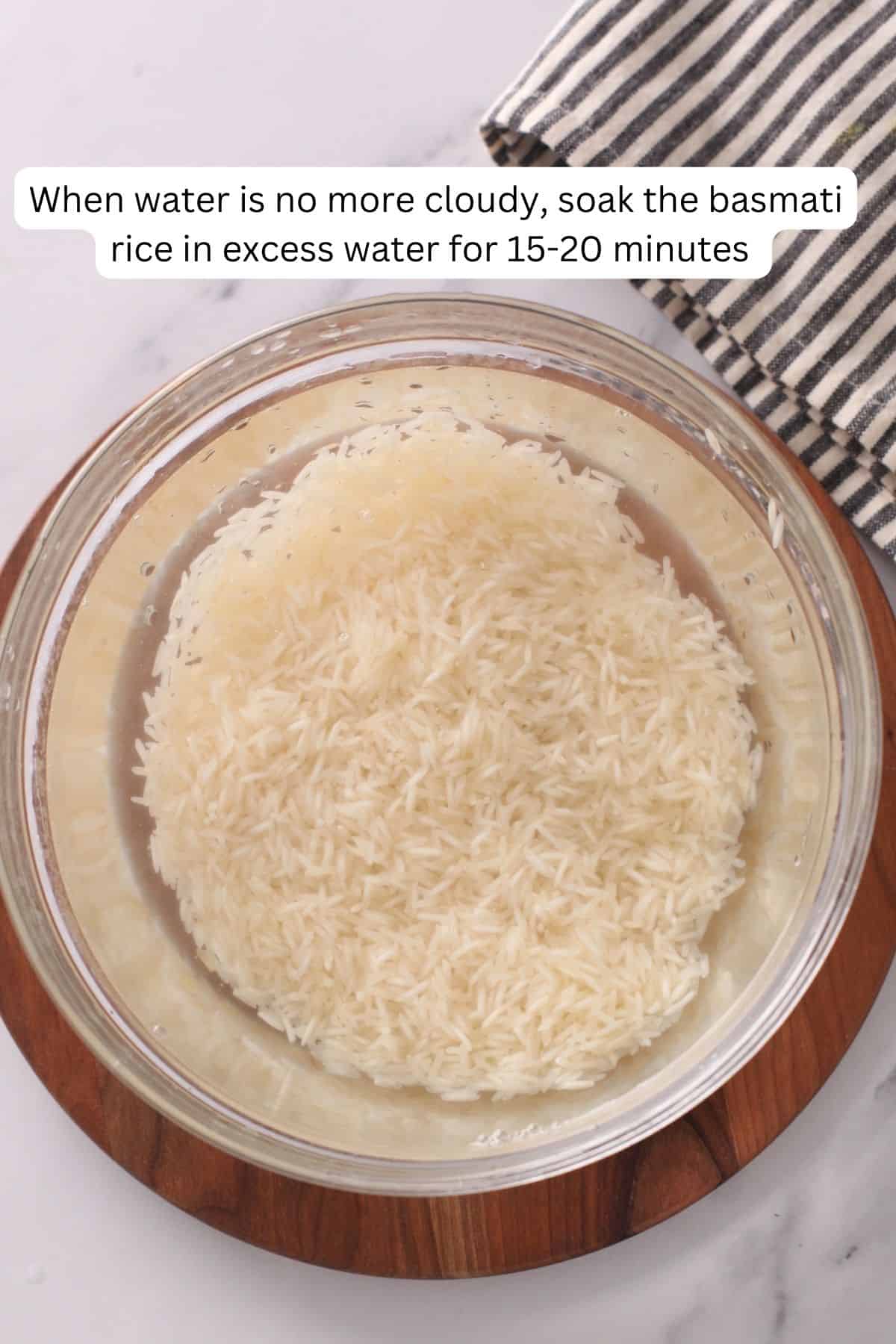
- Once the water isn't cloudy anymore, soak the washed rice in excess water for 15-20 minutes.
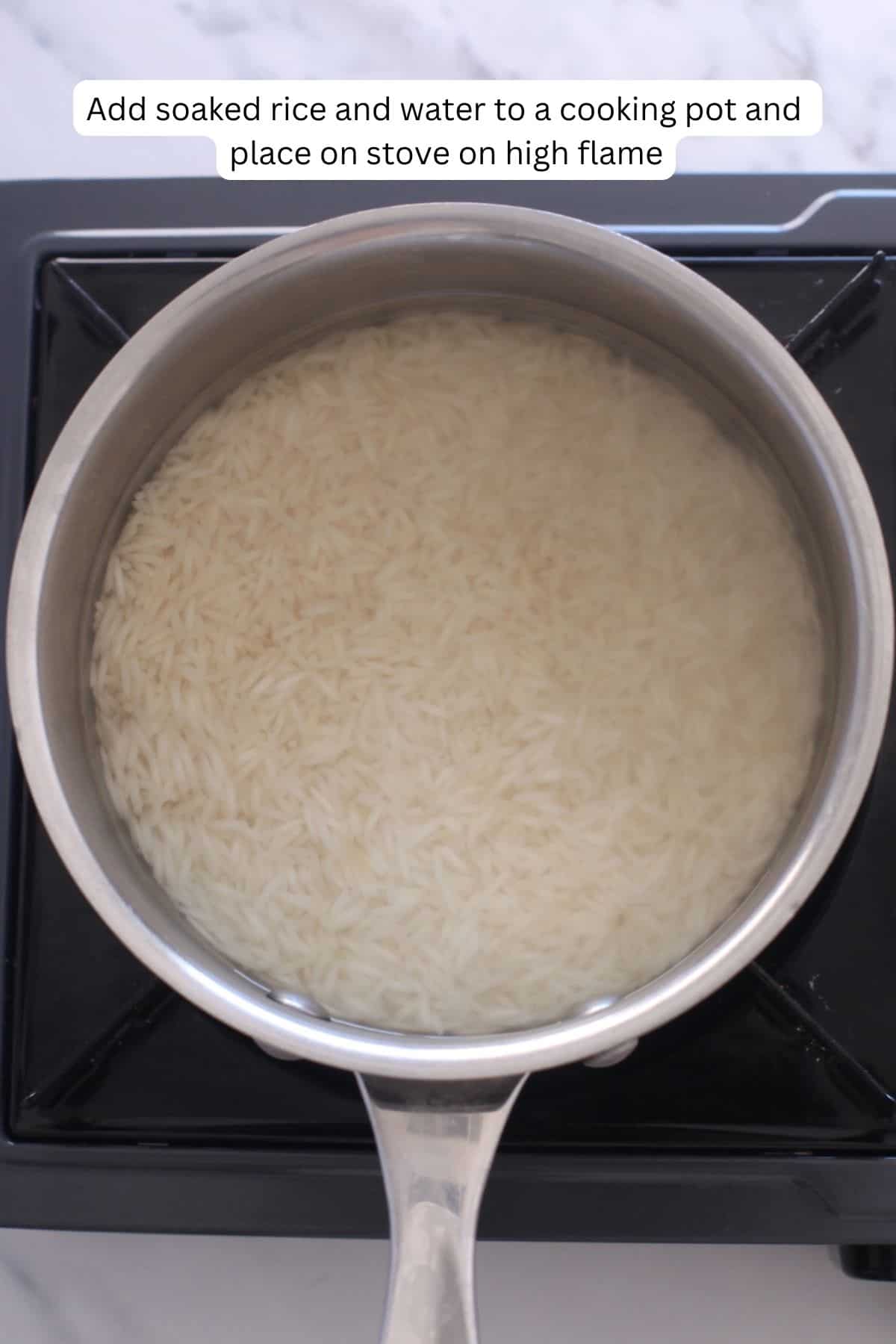
- Drain the soaking water and carefully add soaked rice to a cooking pot. For 1 cup rice, I use 1.5 quart stainless steel cooking pot.
- Pour water for cooking. For 1 cup basmati rice, I use 1.75 cup water. Check your rice package and use the water quantity mentioned there. See my notes on water to rice ratios for different varities of basmati rice in the section below. You may add a little butter or oil (½ tablespoon or so) and ¼ teaspoon of salt to flavor basmati rice at this point.
- Place the cooking pot on high flame on stove top. Let come to a rolling boil. You will see lot of bubbles in the pot.
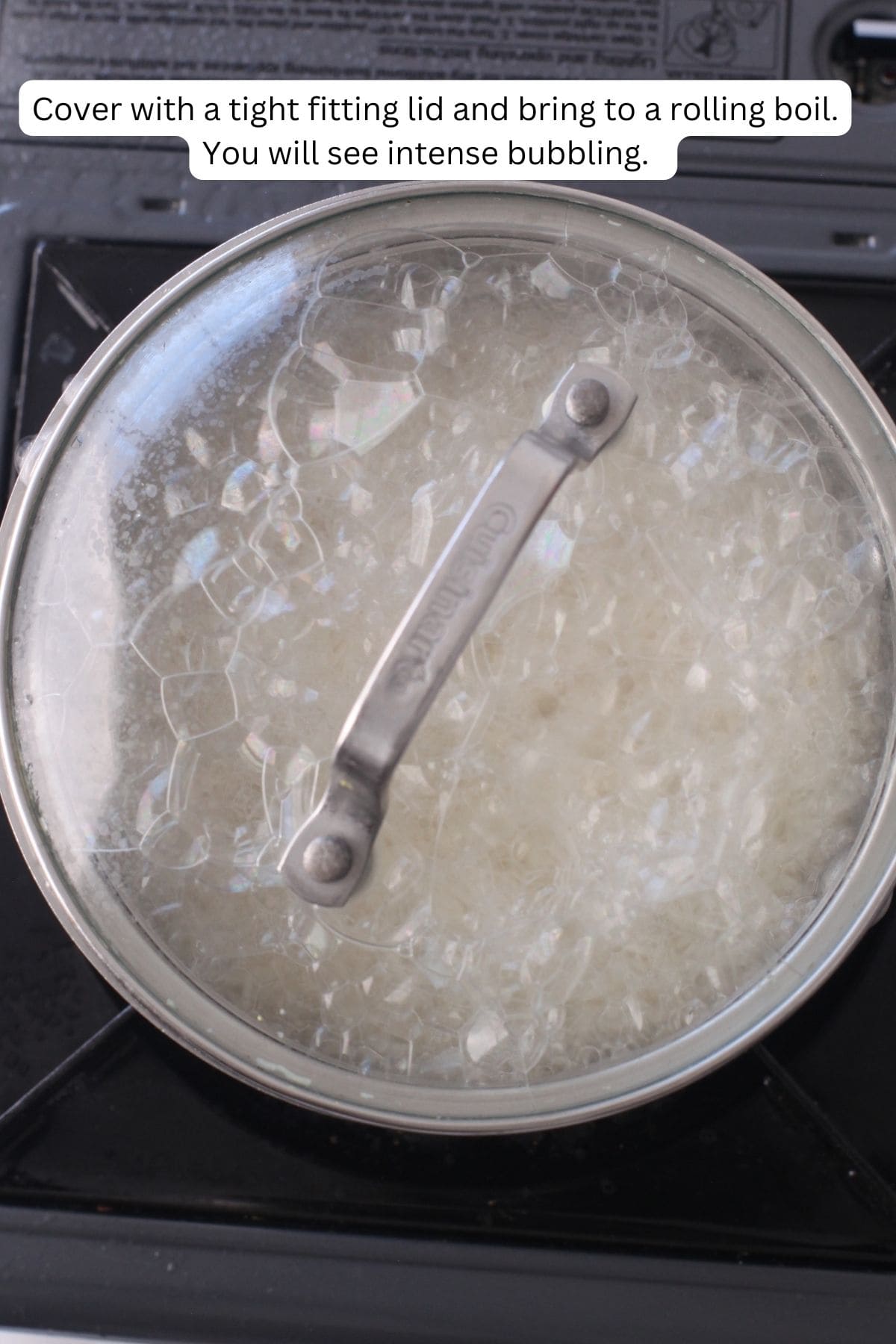
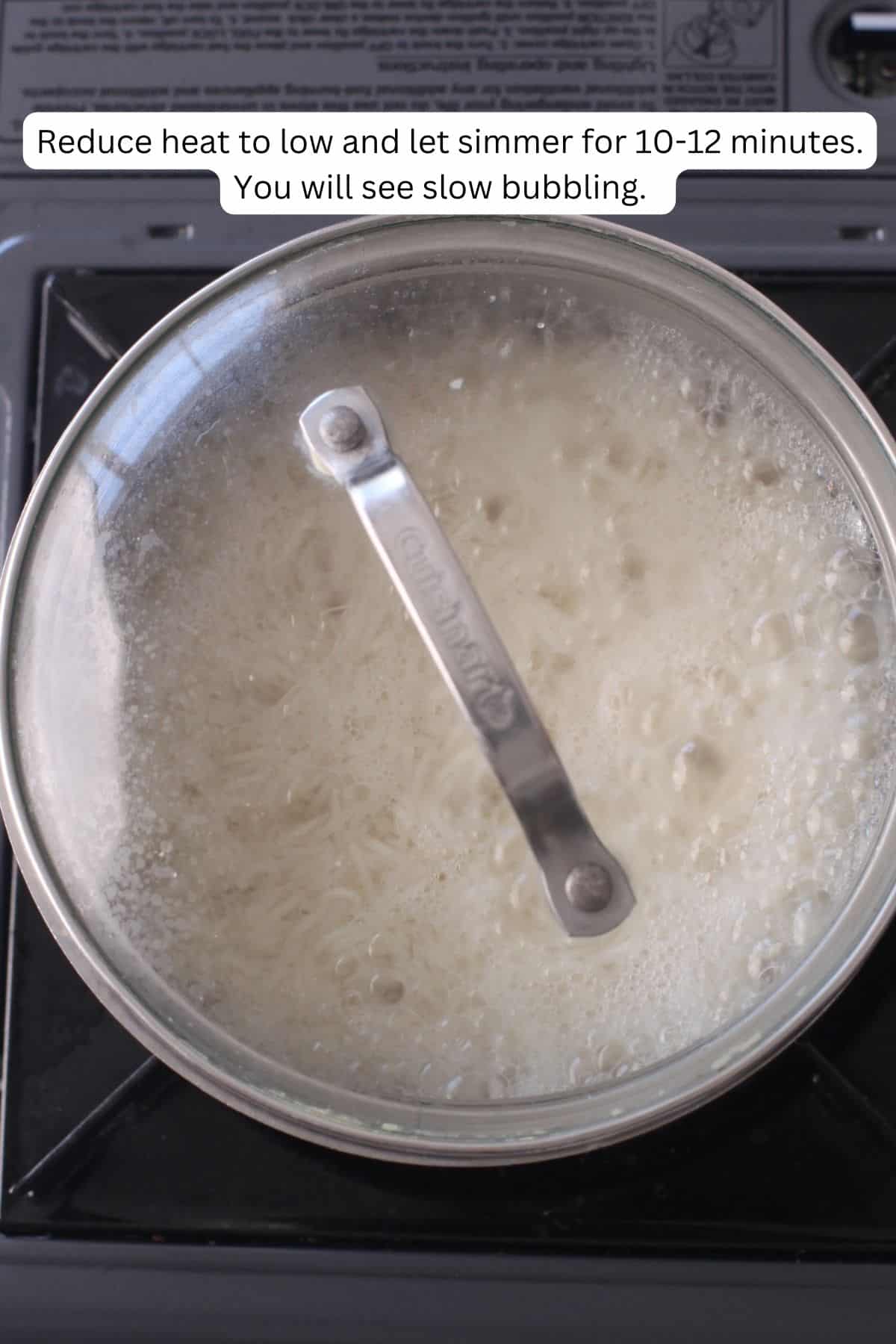
- Immediately, reduce the heat to low. Let simmer for 10-12 minutes. While it simmers, you will see slow bubbling.
- Continue to simmer until all the water is absorbed, then, you will stop seeing the bubbling.
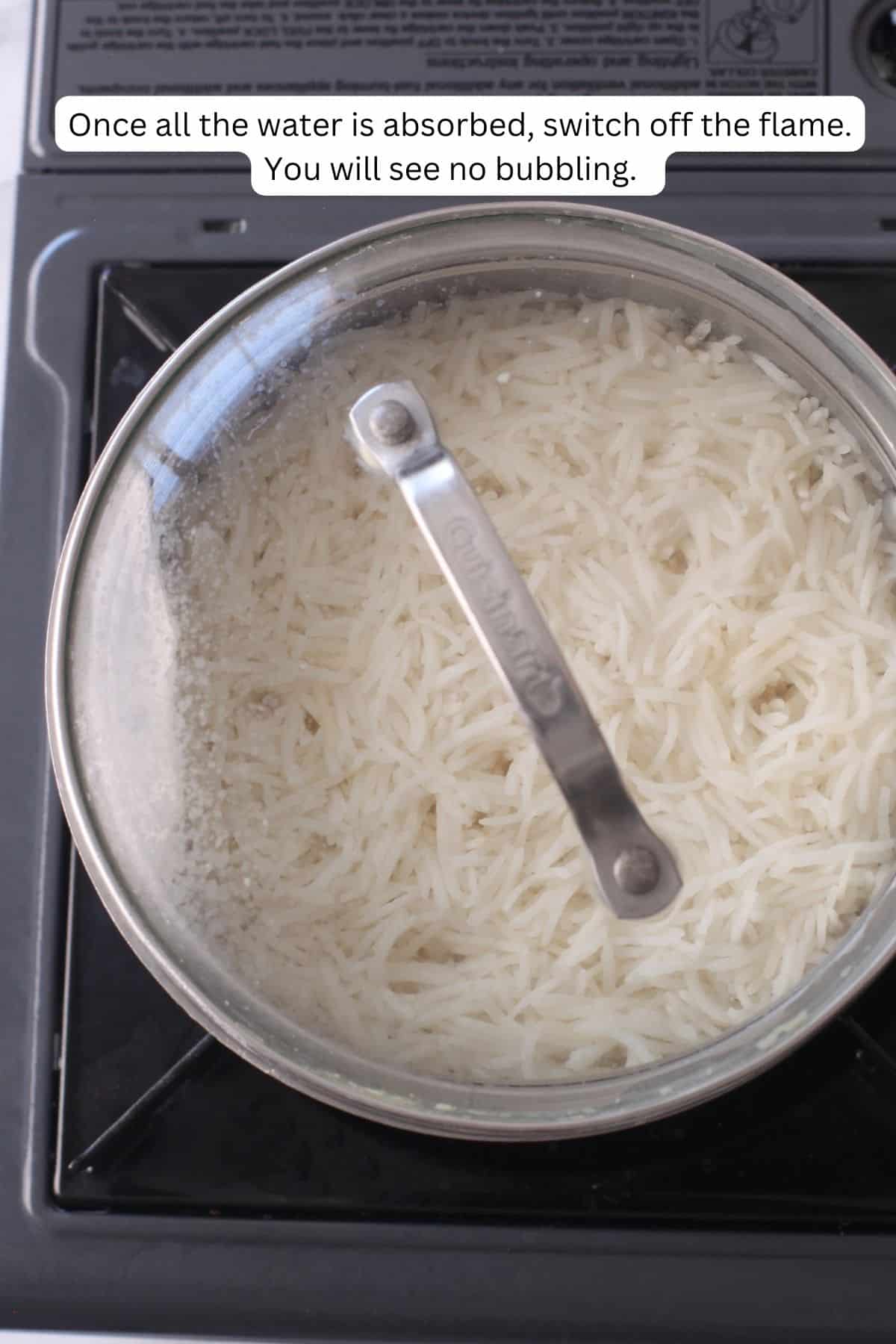
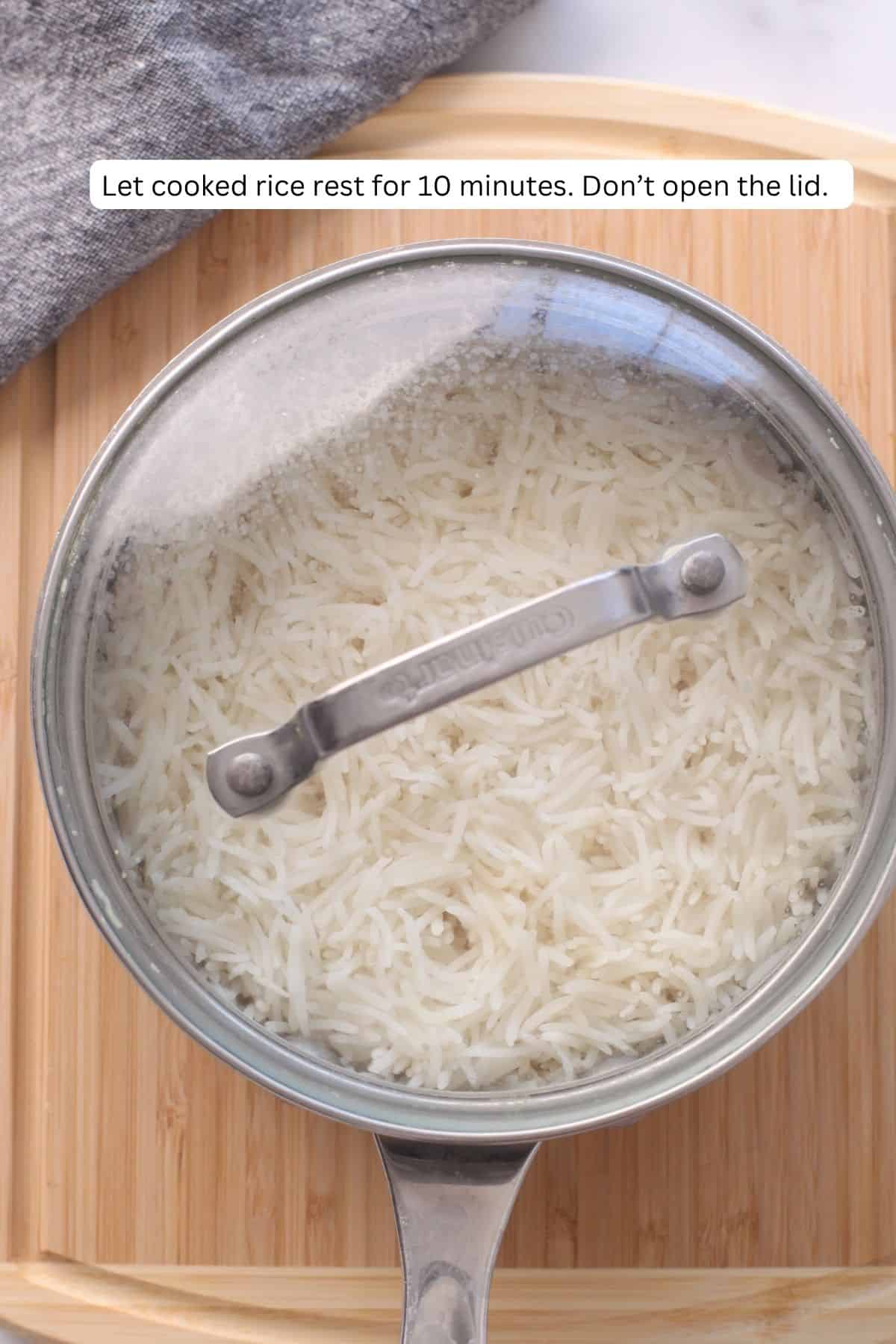
- Switch off the stove but let the cooking pot continue to sit on the stove for 10 -12 minutes. Don't open the lid. The residual heat will cook the rice fully and as the temperature drops, the rice grains will firm up.
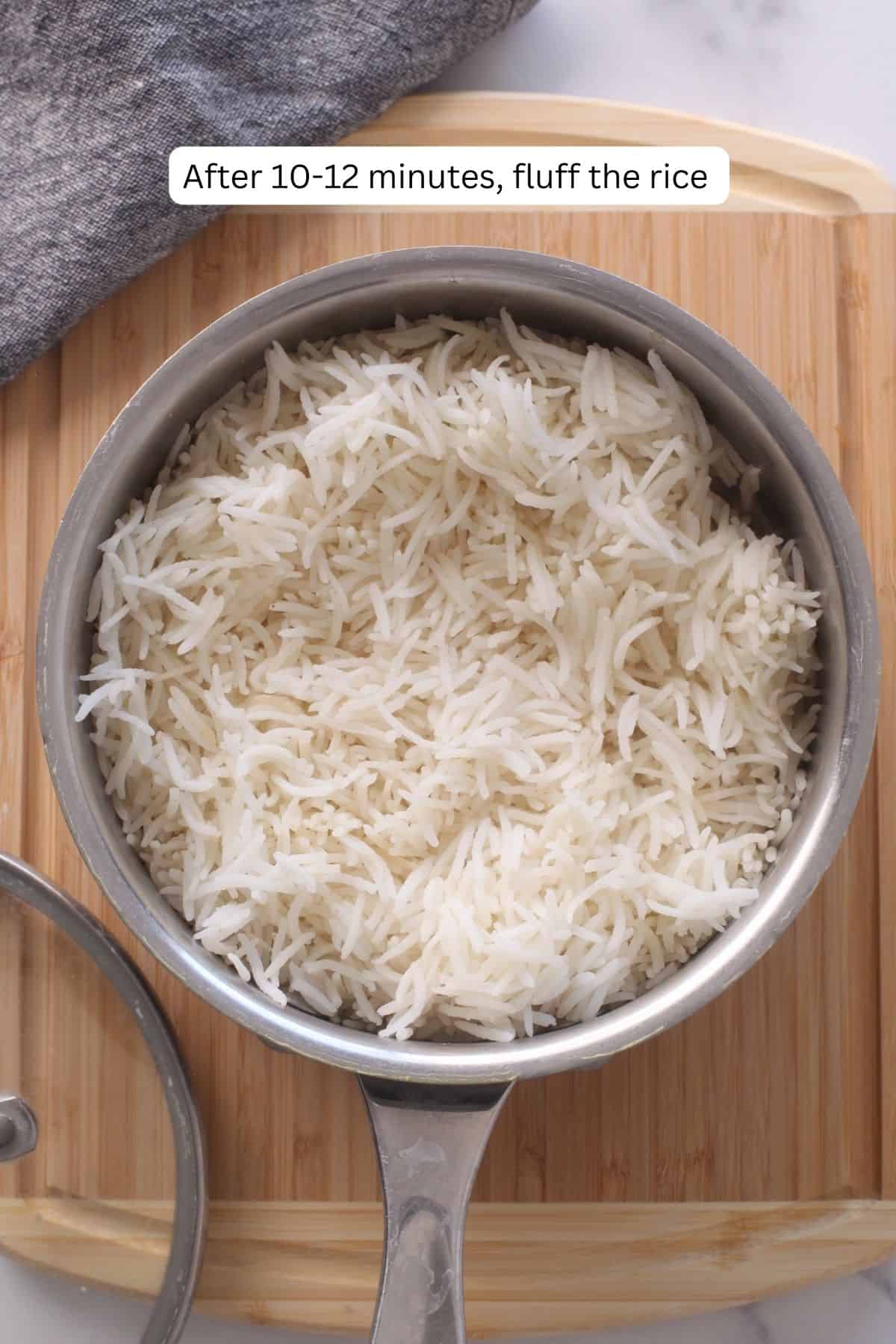
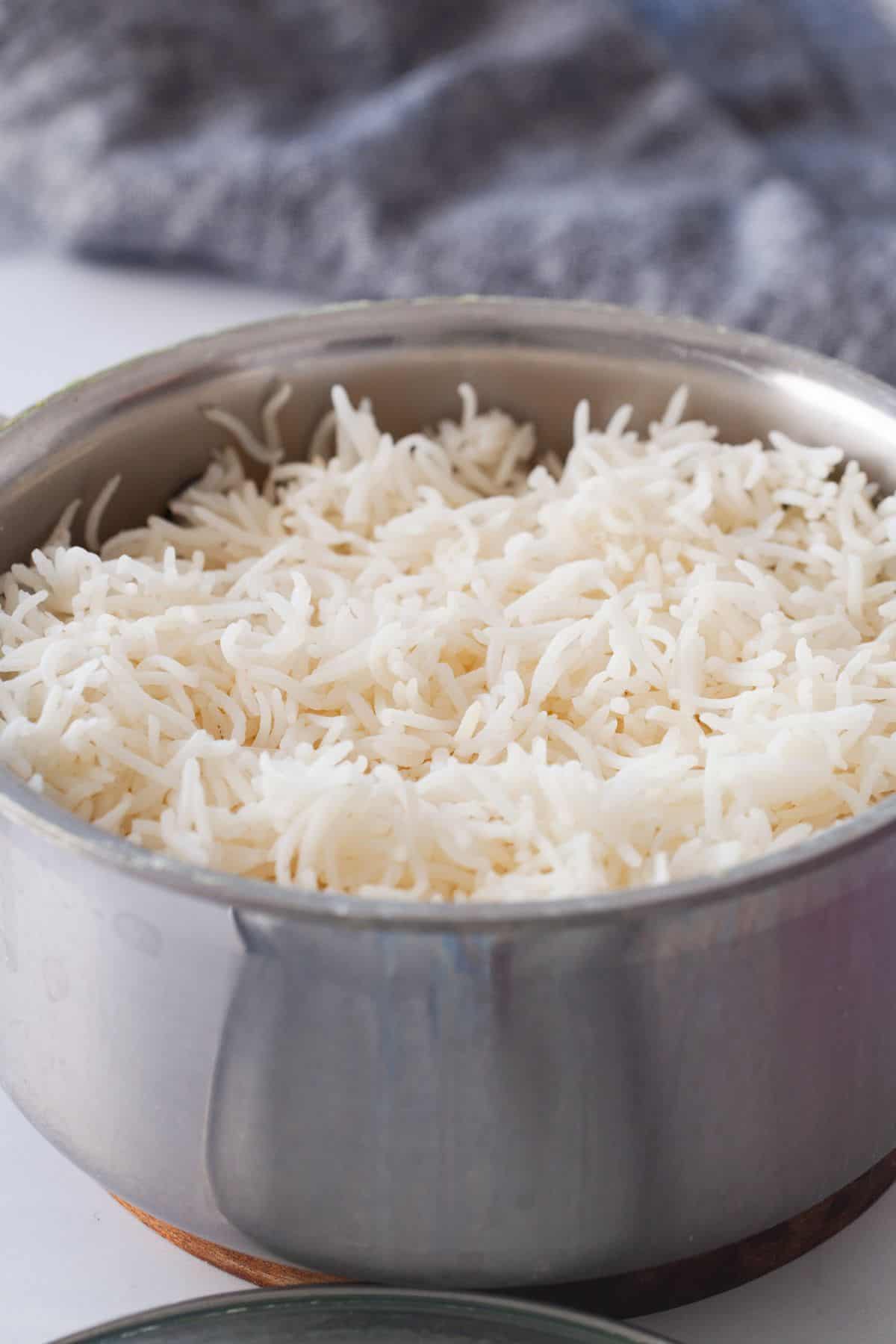
- Lift the lid and using a fork or soft spatula(my favorite tool), fullf the rice gently beginning from the sides of the pot inwards. Never scoop the rice from the center of the pot, the grains tend to break.
Rice To Water Ratio
I tested four brands of rice available in American and ethnic grocery stores for this post. I purchased long-grain basmati rice from the bulk sections of Whole Foods, and a pack each from Walmart & Trader Joe's. From indian grocery store, I also purchased Royal brand extra long grain basmati rice. Please note that extra long grain basmati rice is different from sela basmati rice.
Below is the estimated rice-to-water ratio I determined after cooking each type of rice. Many people prefer firm rice and some prefer a softer, buttery texture. It all boils down to water quantity that you add while cooking. Please keep in mind that I soaked the rice for 20 minutes before cooking in all cases.
| Rice Variety | Desired Rice Texture | Water Quantity |
| Long Grain Basmati Rice , 1 cup | Firm | 1.5 cup water |
| Long Grain Basmati Rice, 1 cup | Soft | 1.75 cup water |
| Extra Long Grain Basmati Rice, 1 cup | Soft | 2 cup water |
Commom Problems
| Problem | Possible Reason |
| Unevenly cooked rice | 1)cooking pot is not heavy enough or small 2) flame is too high |
| Gummy rice | stove flame is too high hence the water evaporates quickly leaving less time/liquid for the grains to absorb & soften |
| Foam/ starches dripping down the cooking pot | 1) lid of cooking pot is not tight fitting 2) the cooking pot is small. Example - 1 cup of raw rice = 3 cups of cooked rice, keep the quantity in mind while selecting the cooking pot(opt for 1.5 quart pot or larger) |
| Mushy Rice | 1) if rice is not rinsed at the beginning 2) also, happens if too much water is added |
Storing & Freezing
Store cooked basmati rice in an air tight container for 1-3 days. Spread just cooked rice on a cookie sheet and let cool down fully (takes about 25-30 minutes for 3 cups of cooked rice). For food safety purposes, immediately transfer to an air tight container and place in the refrigerator to avoid possibility of mold formation.
To freeze, transfer the cooled basmati rice into quart size ziplock bags. I usually freeze 1 cup cooked rice per bag. Close the ziplock bags and then flatten gently. Stack in the freezer.
To reheat, take out the entire block of rice(don't break it) and place on a microwave safe bowl or plate. Cover the plate with a microwave safe lid. Microwave for 2-3 minutes(depends on power of your microwave) to reheat. If it feels a bit dry, splash some water and reheat for another minute.
Serving Suggestions
- Dal Chawal - Ladle dal (lentils) over steamed basmati rice and add a dollop of ghee on top - classic indian comfort food.
- Vegetarian Curries - Such a baingan aloo or indan pumpkin curry.
- Non Vegetarian Curries - Such a goat curry, lamb curry or coconut chicken curry.
How To Cook White Basmati Rice (Fluffy, Seperate Grains)
Ingredients
- 1 cup white basmati rice
- 1.75 cup water tap water
Instructions
- Read my written blog post for all the tips and tricks to help you perfectly cook basmati rice.
- Measure the rice and place it in a large bowl. Take the bowl to kitchen sink under tap water or pour cool water over the rice until it's completely submerged.
- Swirl the rice gently with your hand for a few seconds, then drain the cloudy water by carefully titling the bowl or use a fine mesh sieve.
- Repeat steps 2 and 3 until the rinsing water runs mostly clear. It usually takes about 3-4 rinses, but you can go up to 6 or 7 times if the water still looks cloudy.
- Once the water isn't cloudy anymore, soak the washed rice in excess water for 15-20 minutes.
- Drain the soaking water and carefully add soaked rice to a cooking pot. Add 1.75 cup water. For cooking 1 cup rice, I use 1.5 quart stainless steel cooking pot.Check your rice package and use the water quantity mentioned there. See my notes on water to rice ratios for different varities of basmati rice in the blog post above. You may add butter or oil (½ tablespoon or so) and ¼ teaspoon of salt to flavor basmati rice at this point.
- Place the cooking pot on high flame on stove top. Let come to a rolling boil. You will see lot of bubbles in the pot.
- Immediately, reduce the heat to low. Let simmer for 10-12 minutes. While it simmers, you will see slow bubbling.
- Continue to simmer until all the water is absorbed, then, you will stop seeing the bubbling.
- Switch off the stove but let the cooking pot sit on the stove for 10-12 minutes. Don't open the lid. The residual heat will cook the rice fully and as the temperature drops, the rice will firm up.
- Lift the lid and using a fork or soft spatula(my favorite tool), fullf the rice gently beginning from the sides of the pot inwards. Never scoop the rice from the center of the pot, the grains tend to break.
Notes
- Don't skip rinsing your rice - Basmati rice naturally contains starch, especially white rice with the bran layer removed. When cooked, this starch thickens the water around the rice, potentially making it sticky or mushy. Rinsing removes the excess starch, resulting in enhanced flavor, fluffiness, and better texture. So, take that extra step and rinse your rice.
- Soak the rice - Soaking rice softens the grains, resulting in two benefits: faster cooking and a tender, buttery texture without gumminess.
- Use a heavy bottomed, wide mouthed, shallow pot- For cooking 1 cup or less of rice, a small pot (1.5 to 2 quarts) works fine. For over 1 cup of rice, use a wide, shallow pot. A wide pot gives the grains space to swell, while a shallow pot ensures the rice layer isn't too thick, reducing the chances of breakage when scooping.
- Don't peek while the rice cooks - Once you cover the rice pot, don't open it. The rice will come to a rolling boil, then simmer as the water is absorbed. Lifting the lid disturbs the temperature and can cause uneven cooking. Avoid stirring the rice while it's boiling since it can break the long basmati grains.
- Let rest long enough after cooking - After turning off the stove, let the rice sit undisturbed for at least 10-15 minutes before fluffing it. Cooked rice is very soft, and touching it too soon can break the grains and make it mushy.
- Dal Chawal - Ladle dal (lentils) over steamed basmati rice and add a dollop of ghee on top - classic indian comfort food.
- Vegetarian Curries - Such a baingan aloo or indan pumpkin curry.
- Non Vegetarian Curries - Such a goat curry, lamb curry or coconut chicken curry.
I'd Love to Hear from You!