

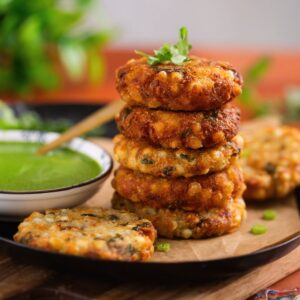
Golden, crispy, and irresistibly tasty, sabudana vada (or sabudana tikki, as we call them too) is a much-loved Indian tea time snack made from sago pearls, potatoes, and roasted peanuts. In this recipe, I share both the traditional deep-fried method with that classic crunch and an easy air-fried version that's lighter yet just as delicious.
You will learn my tested tips to make sure that the tikki hold their shape perfectly, never spread or turn soggy whether they are sizzling in oil or crisping up in the air fryer.
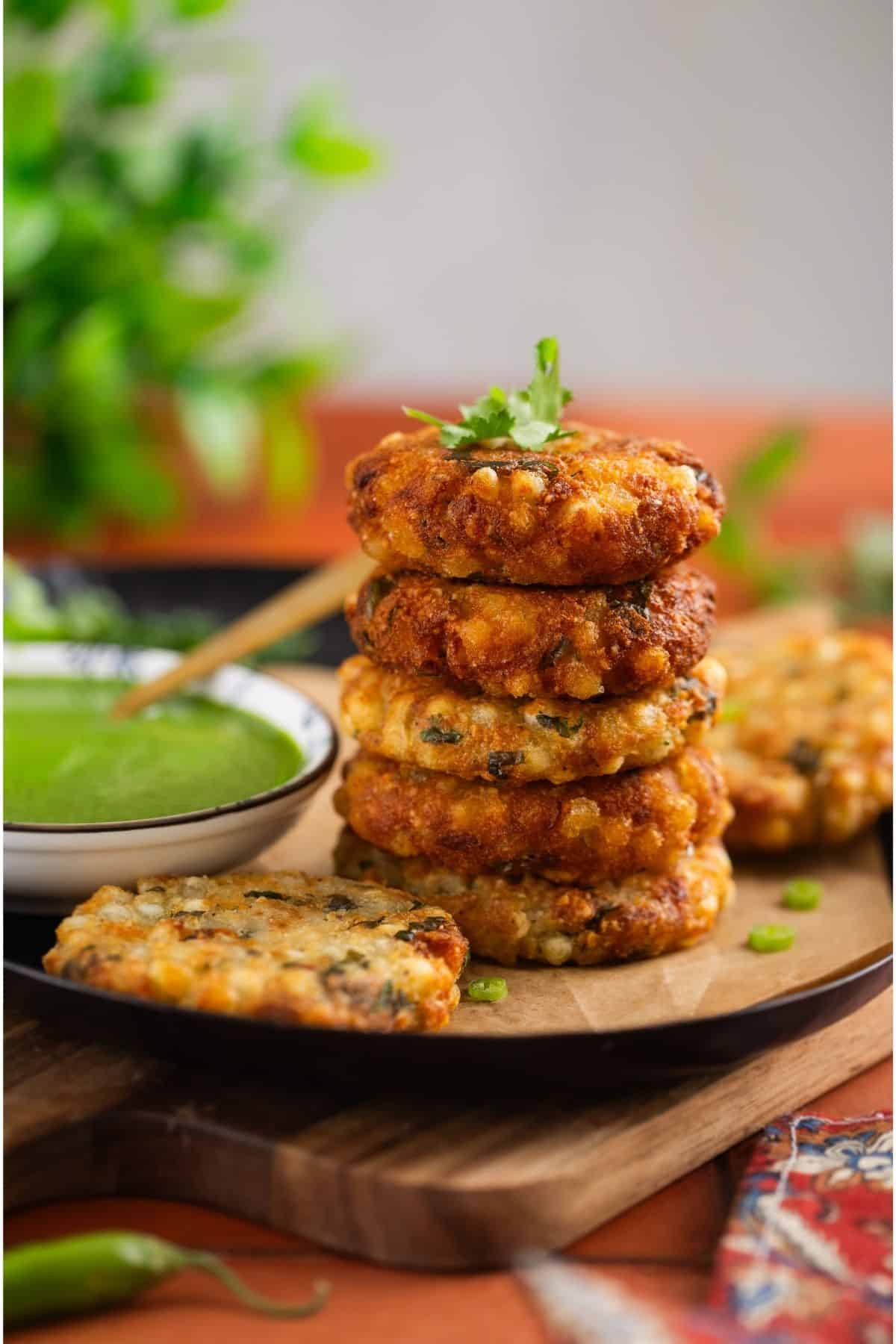
Sabudana is made from starch of cassava root. It is highly processed and in my home, we do not consume it frequently. I make it 2-3 times a year mainly when we are craving it becasue yes, it's delicious!
That was not the case growing up. I grew up eating sabudana tikki not just as vrat ka khana, rather as a full blown breakfast over the weekend, when mom paired them with green chutney and masala chai. During nine days of navratri, in my gradmother's home, there used to be sabudana vada one day and kutte ke pakode the next, alternating between the two.
These vadas have a lovely texture with soft, chewy centers and a crisp outside. They are gluten free, vegan-friendly and, just like sabudana khichdi or sabudana kheer, they are perfect for Hindu fasting days.
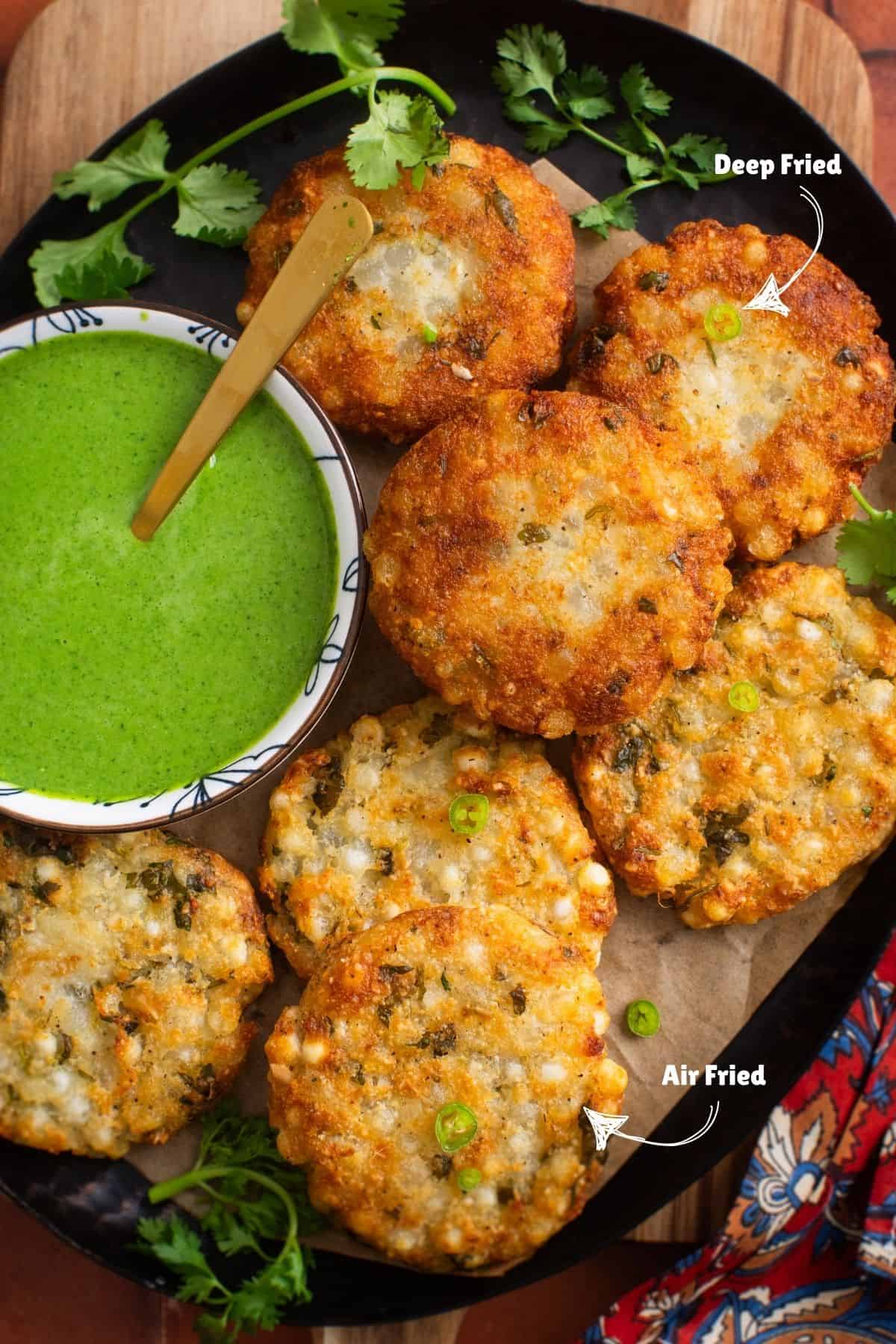
Deep Fried Vada Vs Air Fried
You may hear that they are similar but during my recipe trials, I felt that both versions are quite different in terms of taste and texture and here were my findings.
| Fried Sabudana Vada | Air Fryer Sabudana Vada | |
| Texture & Appearance | Tasted super crispy on outside and chewy inside. Richer and heavy (in comparison). Perfectly golden on the outside. | These were lighter, and crispy on the outside but less crunchy on the inside. They were lighter in color as you can also tell from pictures. |
| Cooking Times | Deep frying the vada was faster, about 5-7 minutes. | Air fried vada took much longer to crisp up, almost double the time. |
| Thickness | The vada turned out bit flufflier than how thick I shaped them to begin with. | I noticed that the air fried vada turned out “thinner” after air frying. |
| Convenience | Definitely much better option for large batches | My 5.5 qt air fryer basket fits 5 vada at a time. Good option if you making a small batch |
Ingredients
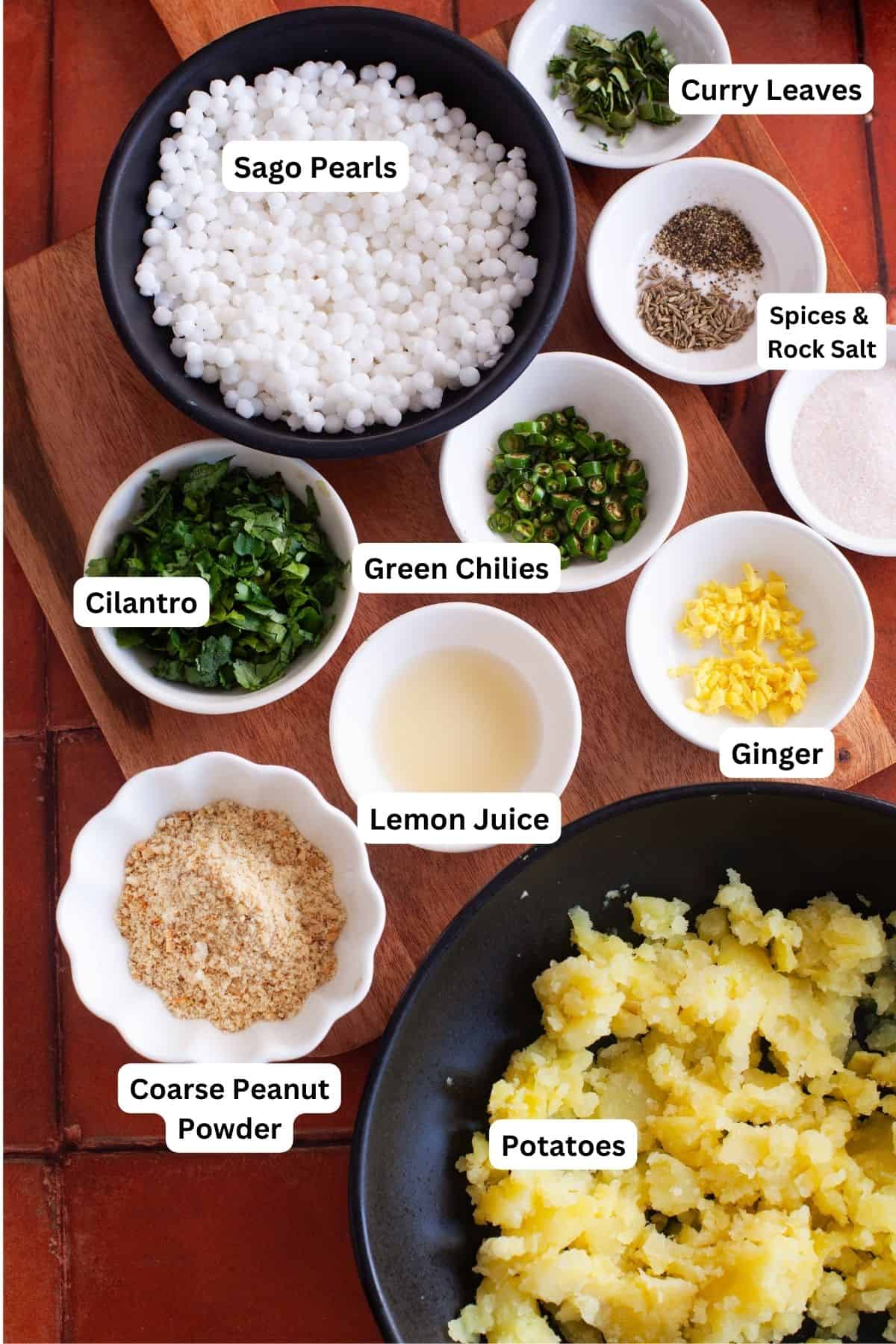
The Golden Ratio for Sabudana Vada - That my grandmother taught me! Always use a ratio of 1 : 2 : 0.5 of sago pearls, potatoes(after mashing) and peanuts for the sabudana vada mixture. That means for every ½ cup of sago pearls, use 1 cup potatoes and ¼ cup peanuts. This is a easiest way to scale this recipe and makes sure that the vadas turn out perfect!
How To Make Sabudana Vada
Preperation
- Start a night before or 6-8 hours ahead. Add dry sabudana to a bowl and take it to your kitchen sink. Wash the sabudana 2-3 times under running water. While you wash them, rub a little and rinse(similar to how we wash rice).
- Add sabudana to a wide bowl and cover with equal amount of water (1:1 ratio of sabudana to water).
- Leave to soak for at least 6 hours or I prefer overnight. These days, I have seen a few sabudana varieties that soak in 2-3 hours, so please adjust the time as per the quality of sabudana.
- After soaking, you will see that almost 95% of the water is absorbed by the grains. Check for softness by pressing the soaked sabudana between your thumb and index finger, it should be completely soft. Once you are satisfied with the soaked sabudana softness, invert the bowl over a colander and let stand for 10-15 minutes to get rid of any excess water. Your sabudana is ready for making vadas.
- Boil the potatoes, peel and let cool down fully. Mash them resembling a fine crumble.
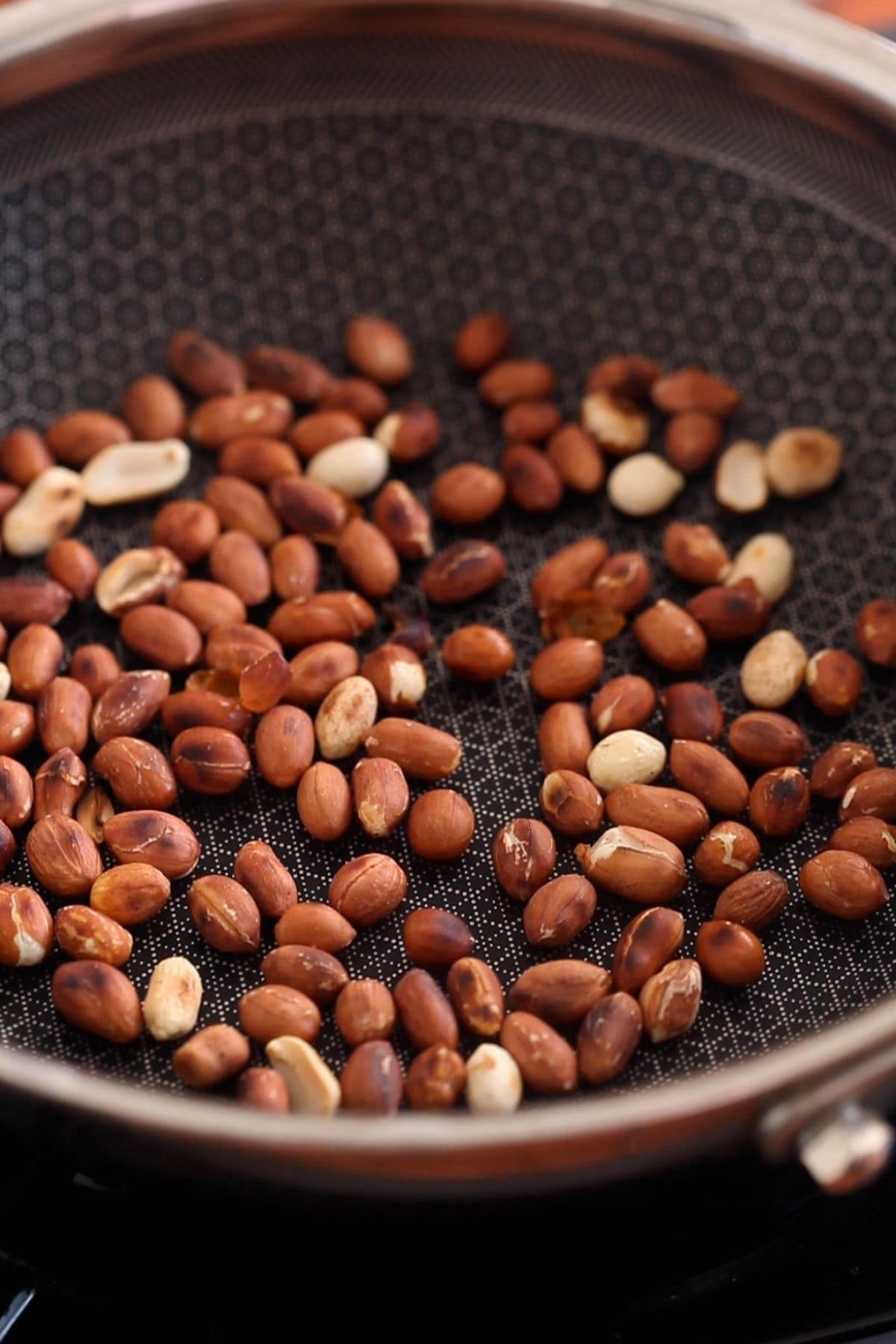
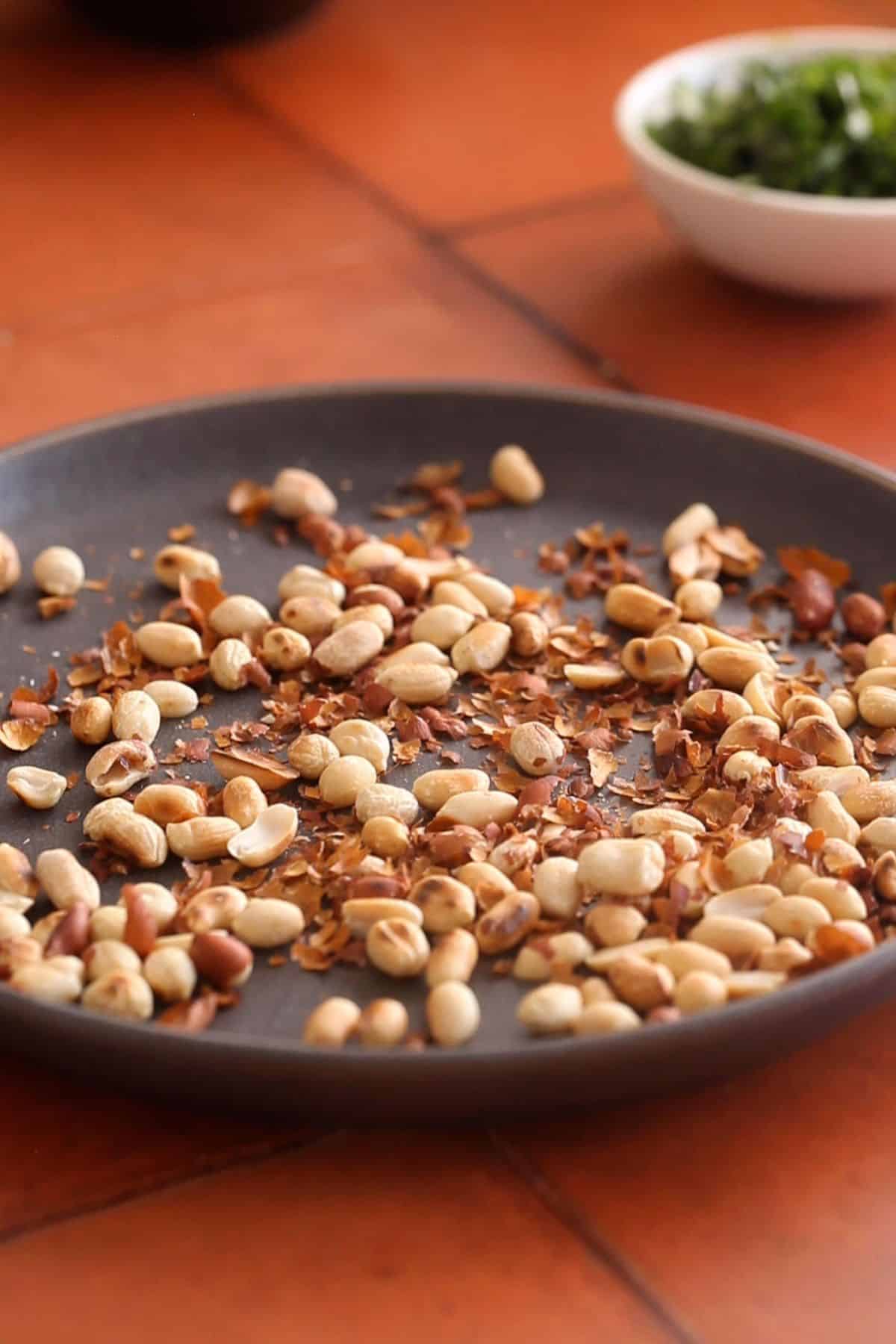
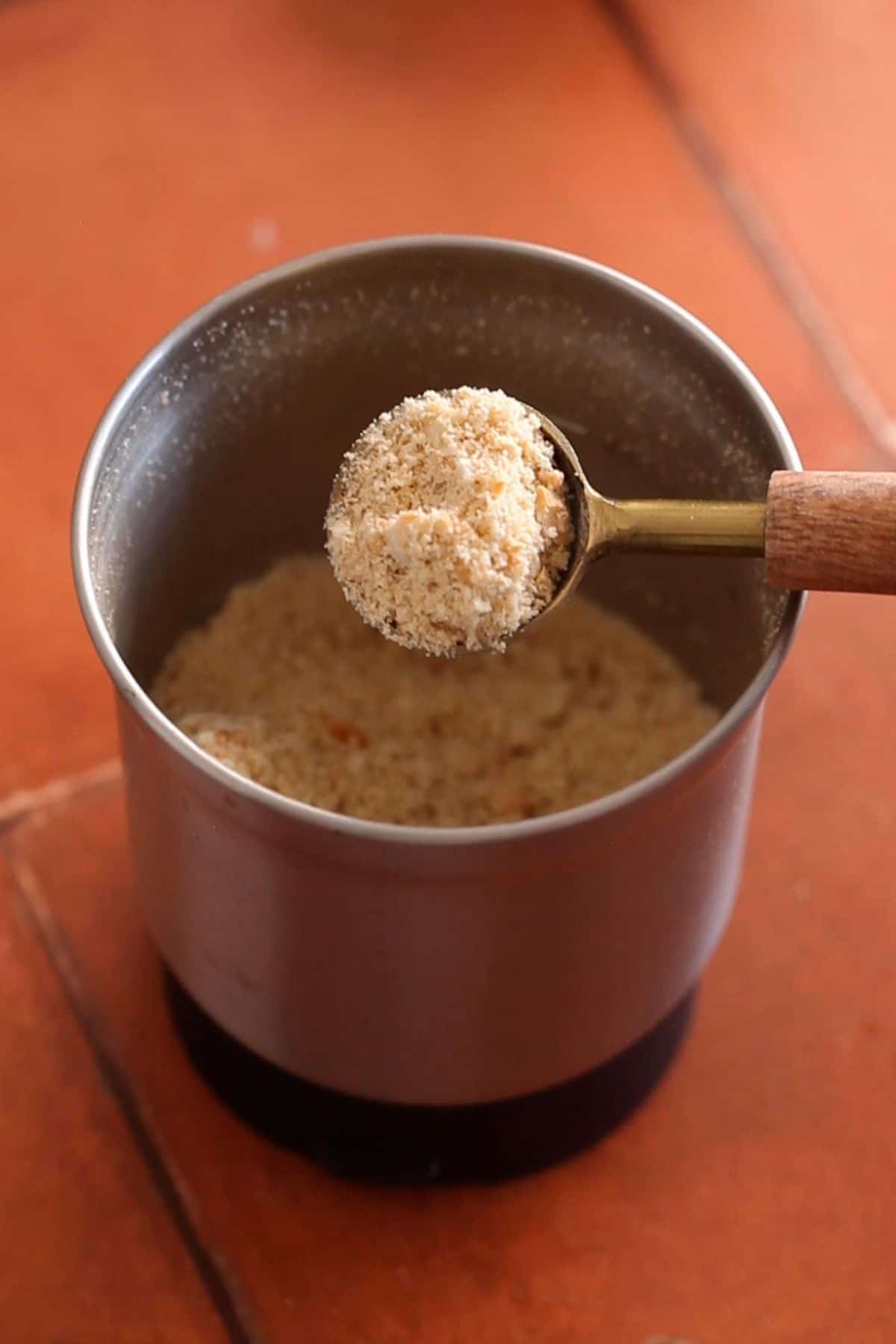
- Dry roast the raw peanuts in a skillet. Their skins loosen as they roast.Once cool to touch, rub them and the skins will peel off gently. Make a coarse peanut powder by blending them.
Make The Dough & Shape
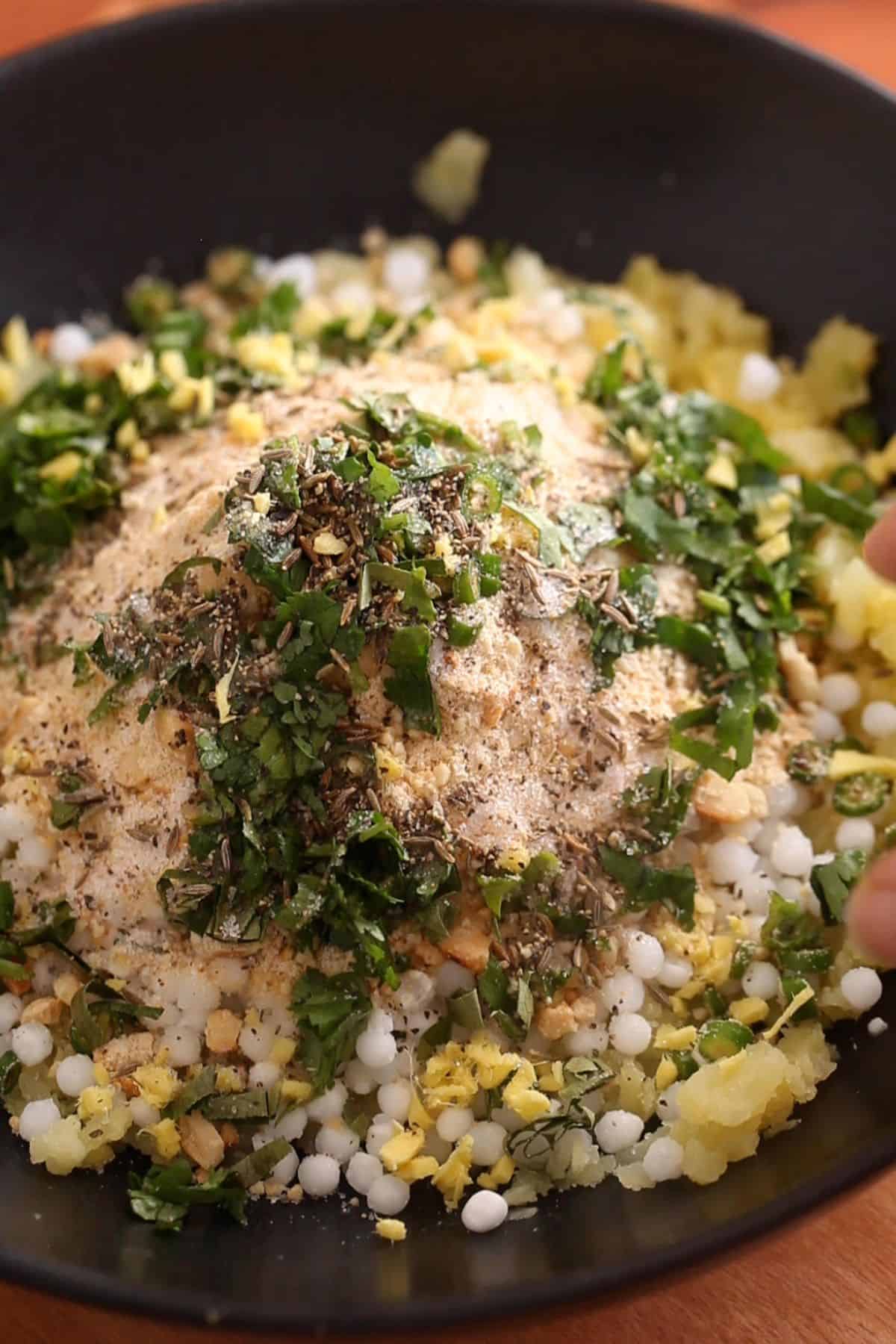
- In a large wide bowl, add the sabudana, potatoes, chopped green chillies, cilantro and curry leaves(if using). Add the cumin seeds, black pepper and salt.
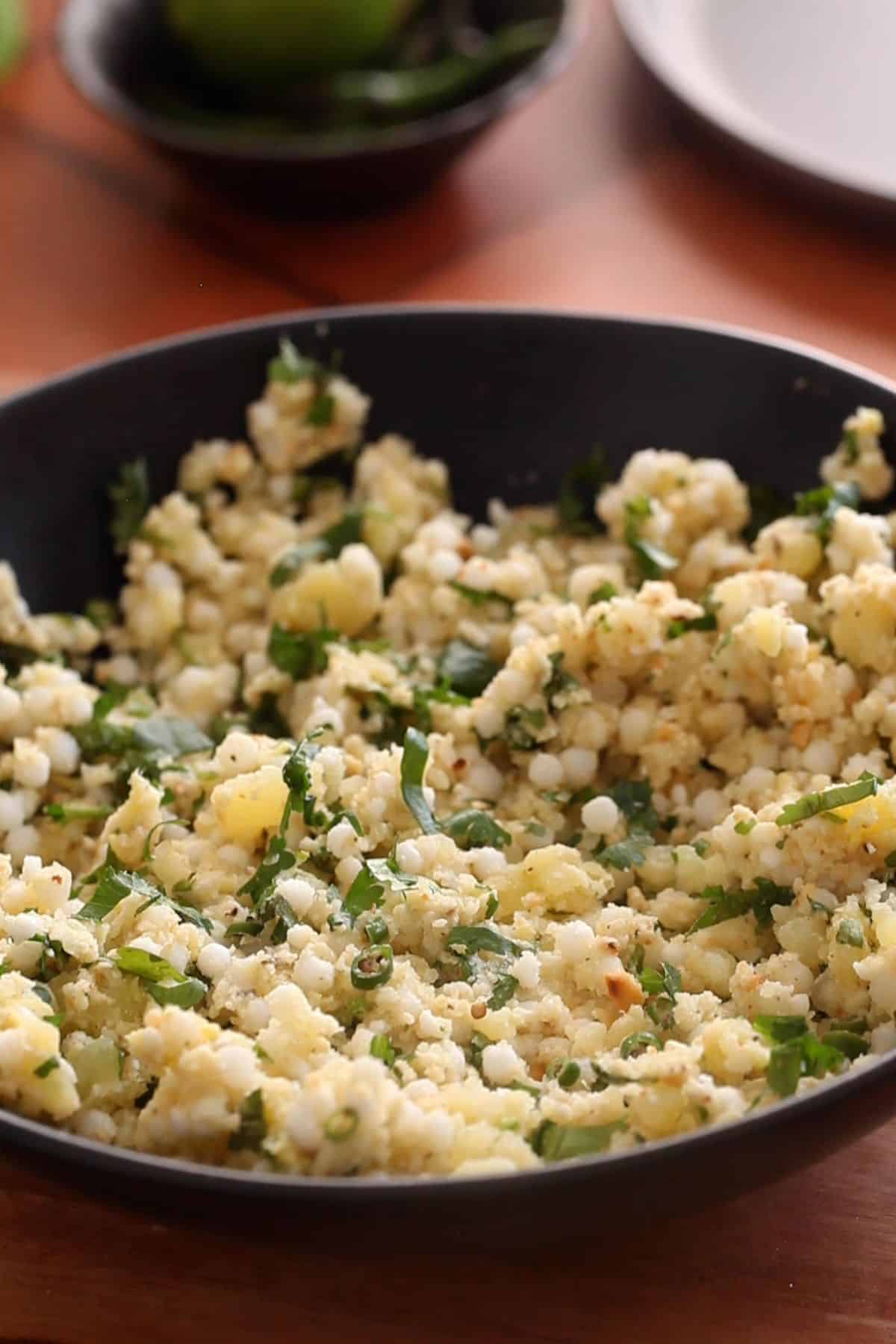
- Gently combine everything to make a soft dough. Avoid squishing or kneading else the vada dough will become dense.
- Divide the dough in 18-20 equal portions. I usually go for 50 gm portions using a food scale.
- Set aside a tablespoon of the dough(to use for testing) and shape the rest. Oil your hands and shape each portion into small patties. Don't press too much and make sure that the edges are as smooth as possible.
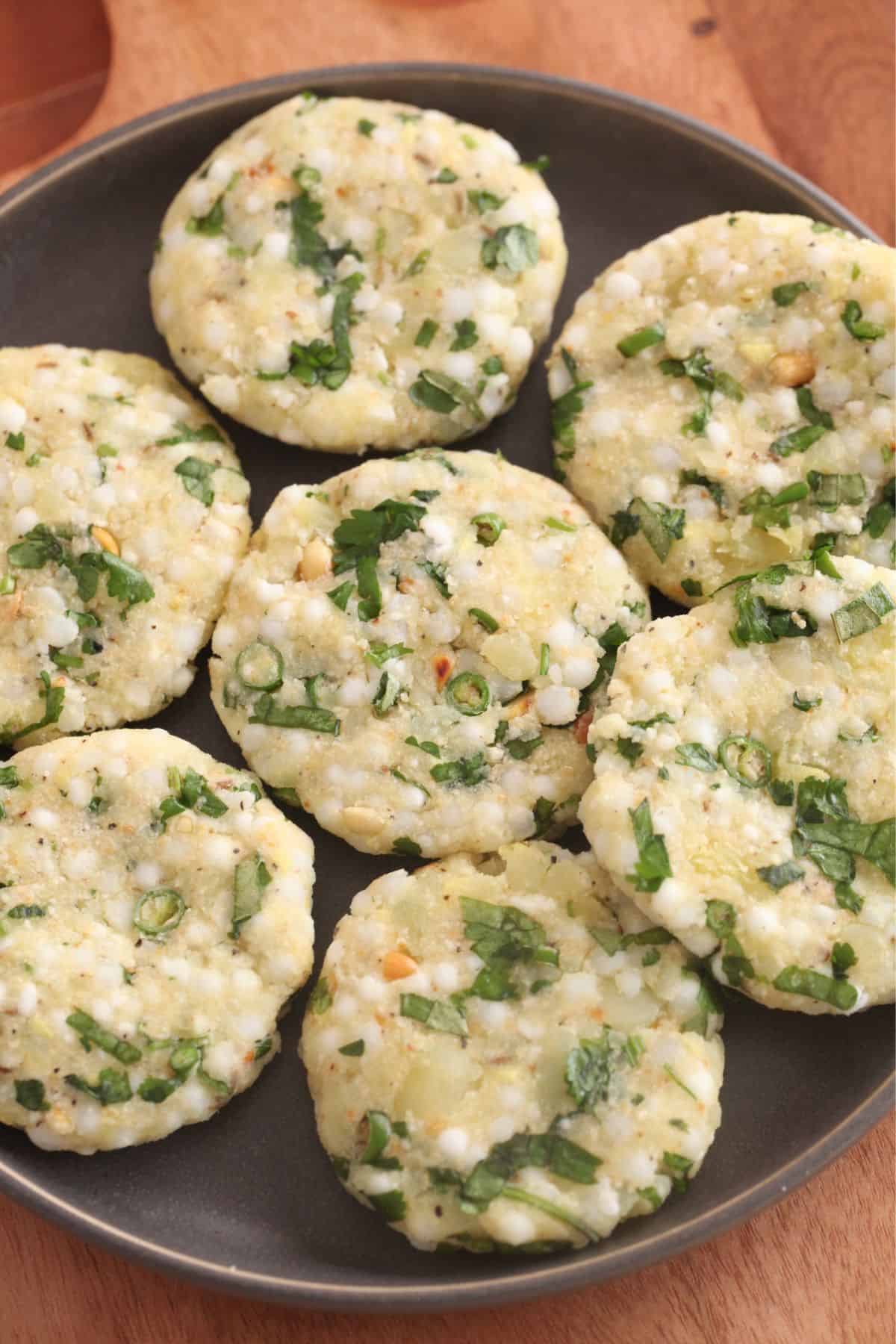
- Place the sabudana patties on a plate and next we are going to cook them using one of the methods below.
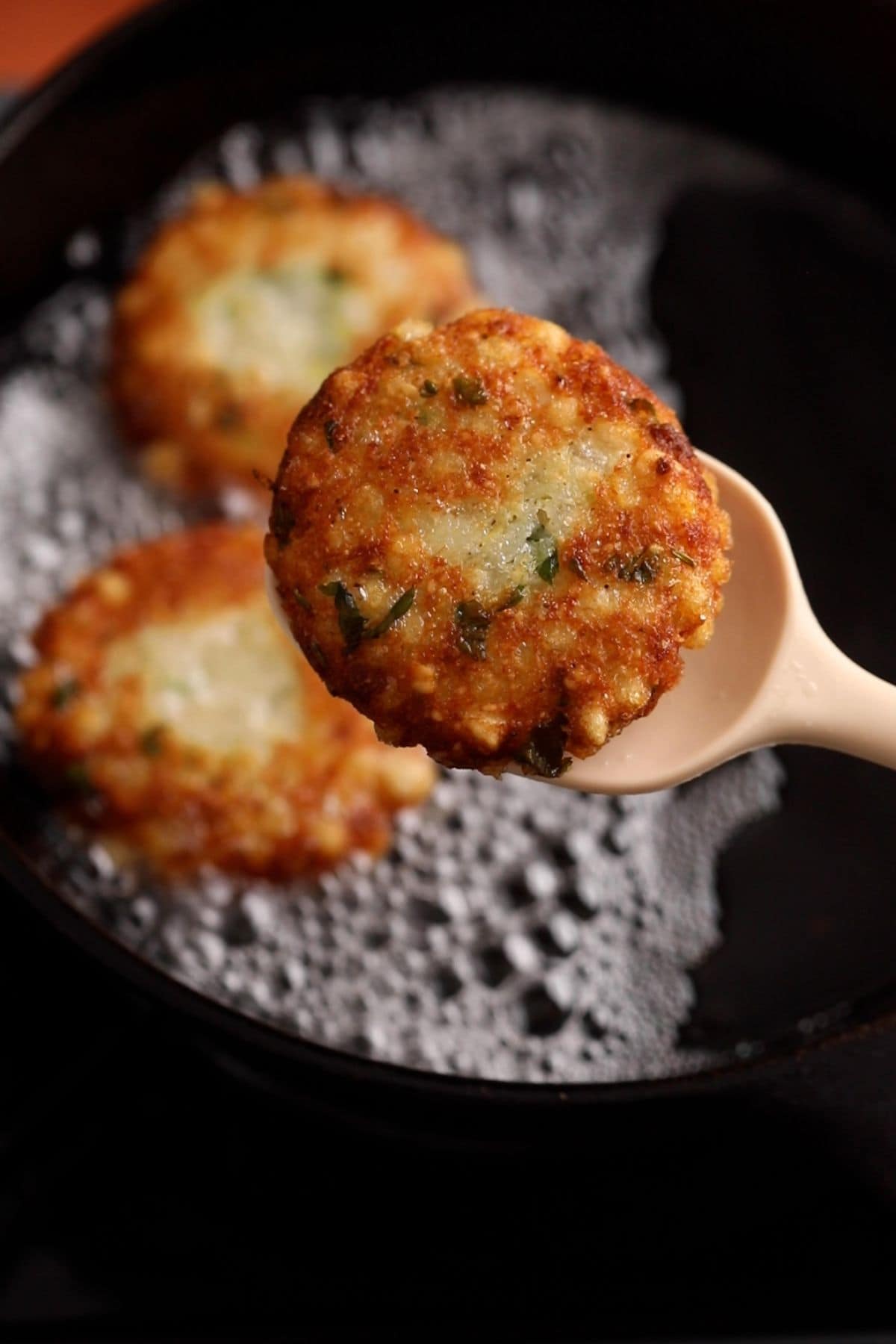
Deep Frying Method
- Heat 2-3 inches of oil for frying in a skillet or kadhai on medium-high heat. If using candy thermometer, the oil should be at 170-180°C (340-355°F).
- To check both the oil temperature and the dough consistency, first fry the small test portion you set aside earlier. If it holds shape and doesn't spread in the oil, your dough is just right. If it spreads, add a little more mashed potato to the dough to bind it better.The vada should not sink heavily to the bottom or sizzle too aggressively in the oil.
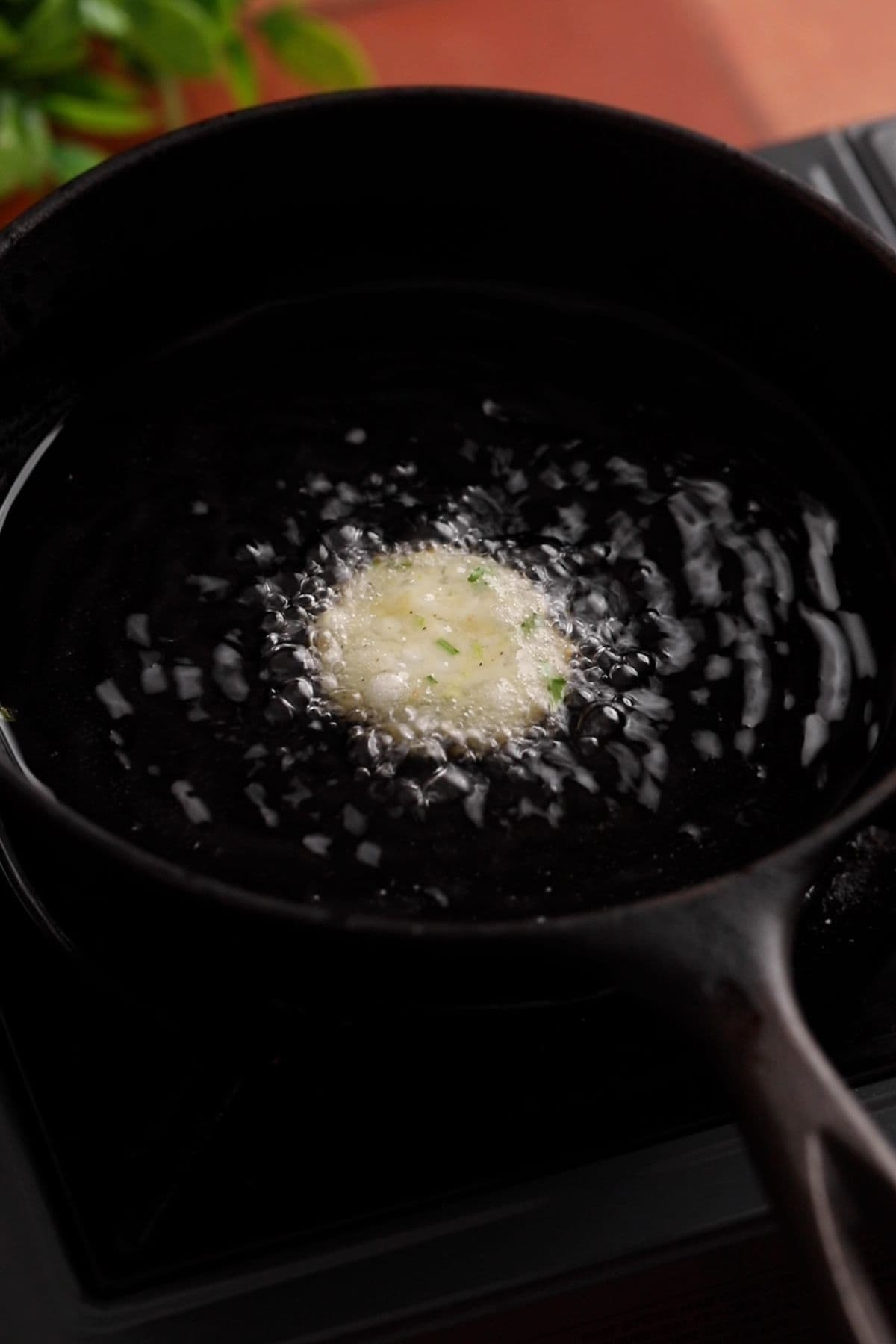
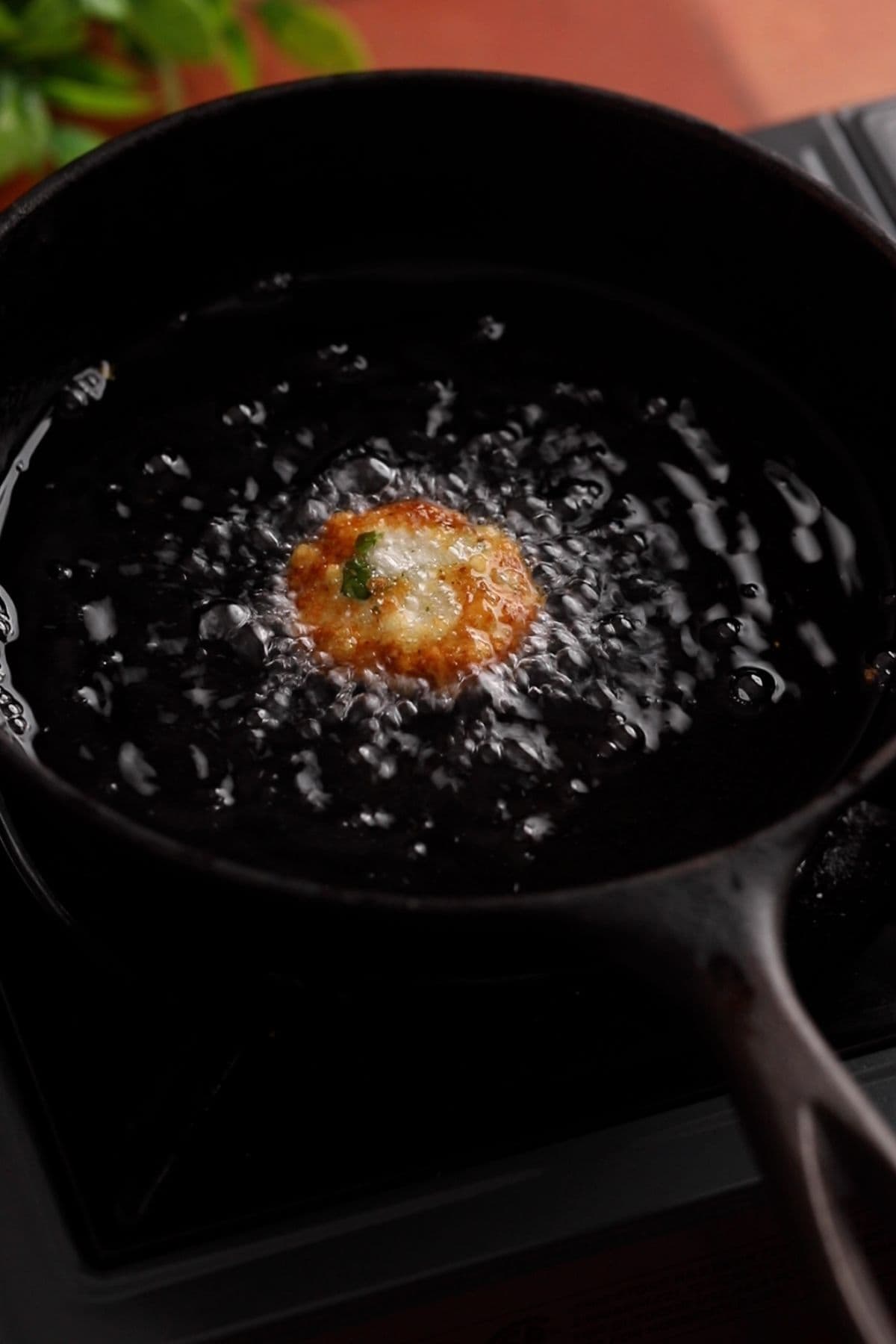
The technique to make crispy sabudana vada is that you basically put the vada in hot oil, and then you reduce the flame to medium so that they get cooked well inside and then you increase the flame and let them crisp on outside.
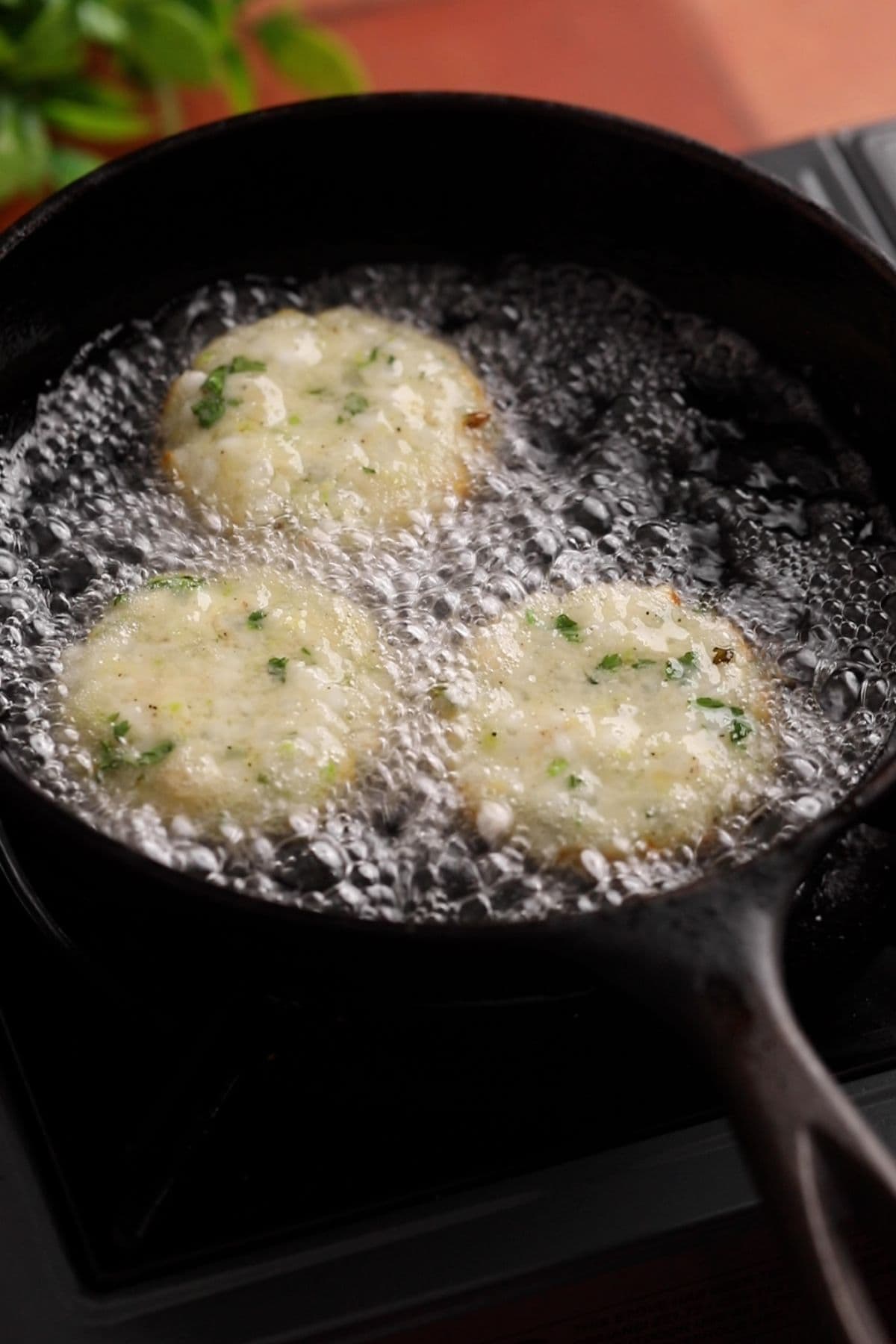
- Slide in 3-4 shaped vadas at a time, do not overcrowd. Fry until golden brown and crispy, about 4-6 minutes. Do not move around the vadas too much especially at the beginning because they might start spreading or sticking.
- Remove with a slotted spoon and drain on paper towels.
Air Fryer Method
Preheat your fryer to 190°C (375°F) for 5 minutes. Brush or spray the shaped vadas on both sides with oil. Place them in a single layer, without touching each other (for a good air flow on all sides) in the air fryer basket. For reference, I use a 5.5 qt airfryer and it fits 5 vada at a time.
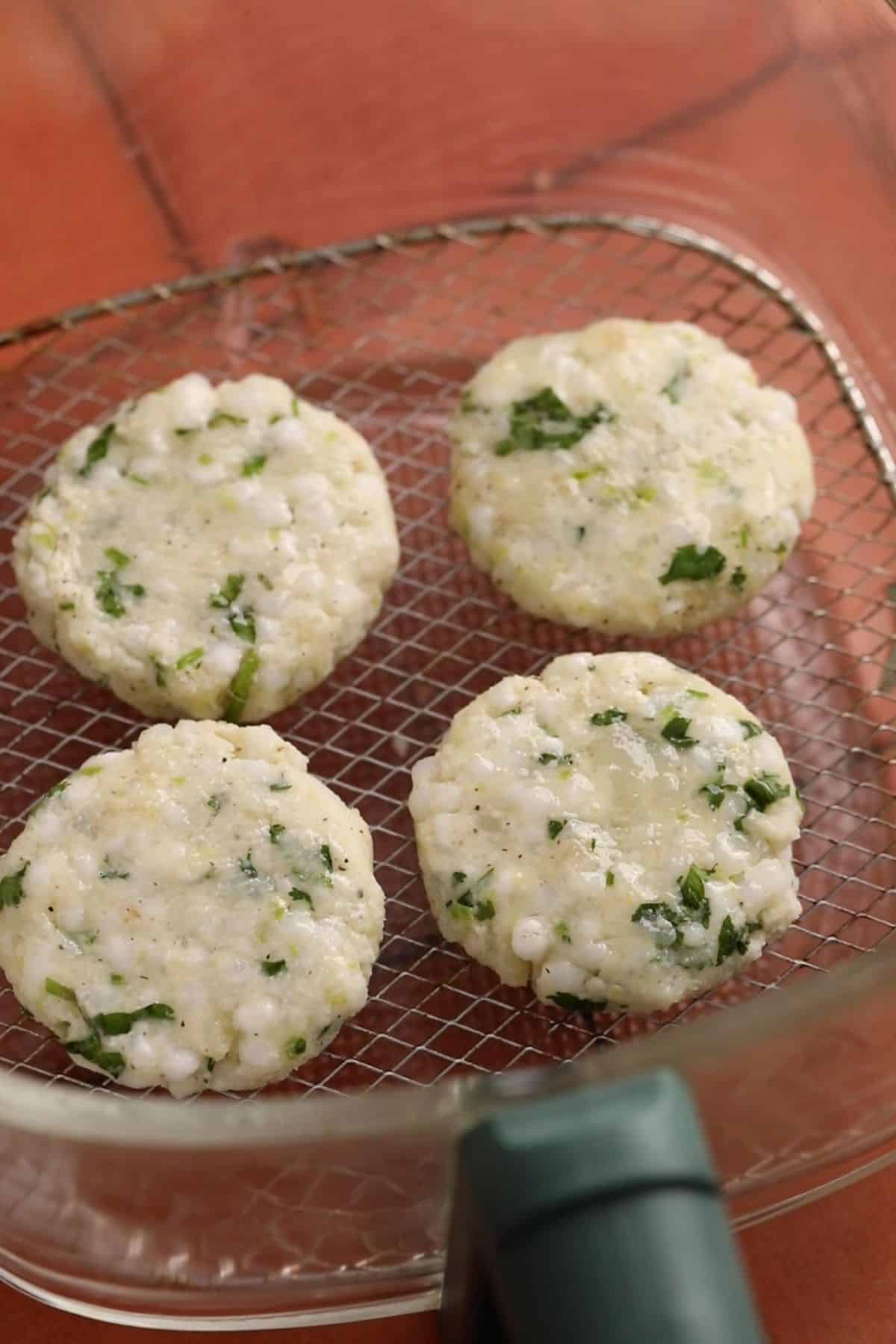
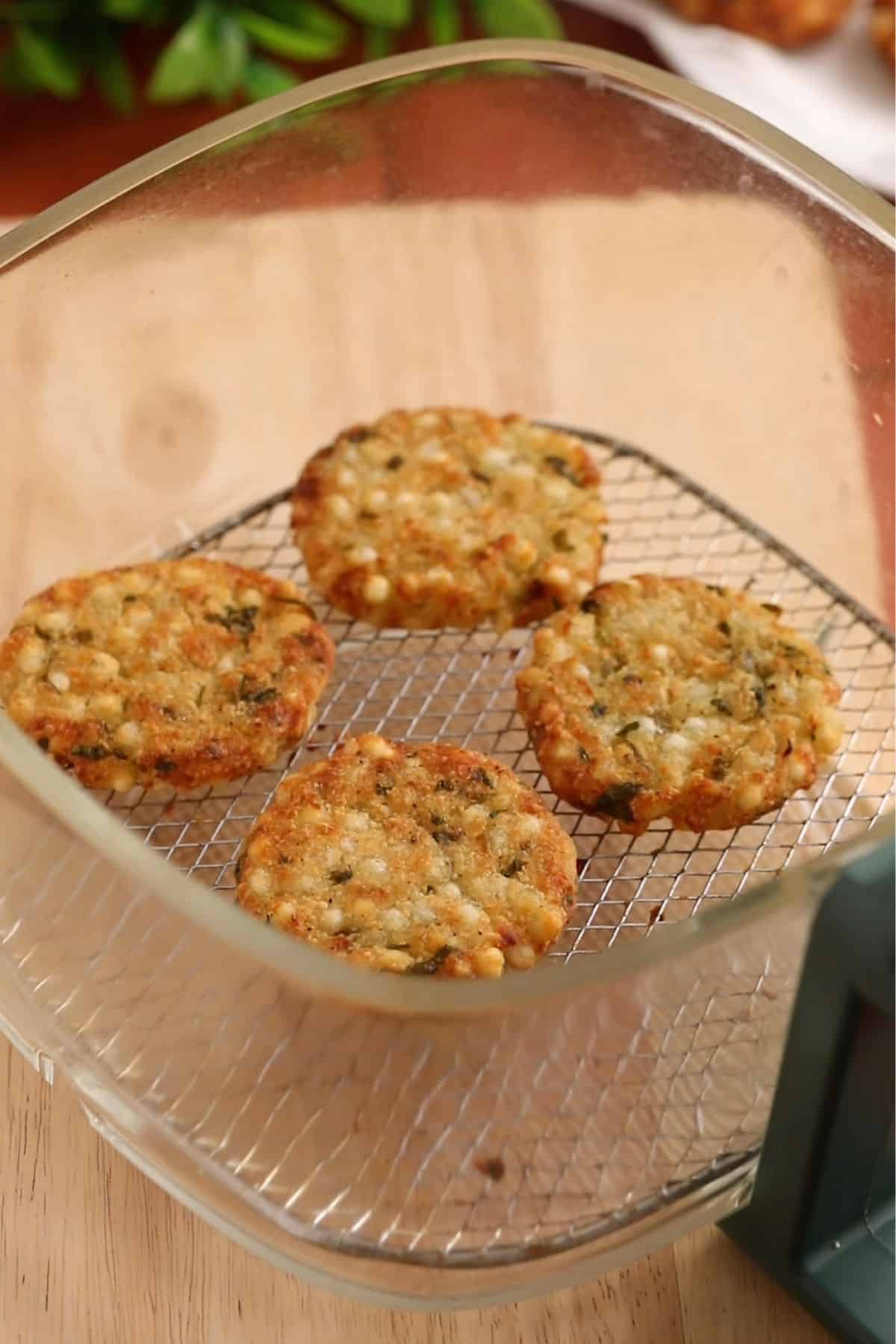
Air fry for 12-15 minutes, flipping halfway and brushing with a little more oil for even crispiness.Cook until golden and crisp. Remove using a spatula.Serve!
My Tips & Recipe Testing Learnings
- Soak the sabudana until super soft - I use 1:1 ratio of sabudana to water and soak it overnight. Press the soaked grains between your thumb and finger. If it's fully soft but not mushy, it's ready. If not, the grains may pop in hot oil, which is dangerous and can make the vada fall apart.
- Avoid over cooked or chunky potatoes -Potatoes are the main binder. If your potatoes are too mushy, they will soak up lot of oil while frying. Just boil them until fork tender but not too soft. In a few trials, I didnt pay attention while mashing/crumbling the potatoes and they remained a bit chunky. Few of the tikkis spread while frying as a result.
- Don't fry on low heat- This can make the vada absorb too much oil (since it's starch heavy). Low heat frying can also make the vada spread in oil.
Homemade Sabudana Vada (Deep Fried & Air Fryer Method)
Ingredients
- 1 cup sabudana sago pearls(I use Deep brand from indian stores)
- 2 cup potatoes(boiled, peeled and mashed) measure after mashing (I use russet potatoes)
- ½ cup raw peanuts
- 1 teaspoon ginger finely chopped
- 8-10 curry leaves finely chopped
- 2 tablespoon fresh cilantro finely chopped
- 4-6 green chillies(hot!) finely chopped, adjust quantity to taste (I use indian chilies, sub with thai bird chilies or serraro peppers)
- 1.5 teaspoon rock salt sendha namak
- ½ tablespoon fresh lemon juice
Spices
- ¾ teaspoon cumin seeds
- ½ teaspoon ground black pepper
Instructions
Preparing The Sabudana
- Start the process at least 6-8 hours ahead, or preferably the night before you want to make the vadas.
- Take the dry sabudana in a bowl and bring it to your kitchen sink. Wash them 2-3 times under running water. While washing, gently rub the grains between your fingers, similar to how we wash rice. This helps remove excess starch and prevents them from sticking later.
- After washing, place the sabudana in a wide bowl. Add water in a 1:1 ratio (equal amounts of sabudana and water). For example, if you use 1 cup sabudana, add 1 cup water. Leave the bowl covered to soak for at least 6 hours or overnight.
- After soaking, you will notice that most of the water is absorbed and the sabudana looks plump. Check for doneness by pressing a pearl between your thumb and index finger and it should feel completely soft without any hard center.
- Invert the soaked sabudana in a colander and let it rest for 10-15 minutes so that any extra water drains away. Now the sabudana is ready to use.
Preparing Potatoes and Peanuts:
- Boil the potatoes until fork tender but not overly soft. Peel the skin and let them cool completely. Cooling is important so the potatoes don't release moisture while mixing. Once cooled, mash them into a fine, crumbly texture without any big lumps.
- In a skillet or pan, dry roast the raw peanuts on medium heat. Roast until their skins loosen and they give off a nutty aroma. Allow them to cool to the touch.Once cooled, rub the peanuts between your palms to remove the skins.
- Transfer the roasted peanuts to a blender or food processor and pulse them into a coarse powder. Do not grind too fine; a coarse texture adds crunch to the vadas.
Mixing the Dough and Shaping the Vadas
- In a large wide bowl, add the soaked and drained sabudana, mashed potatoes, chopped green chilies, chopped ginegr & cilantro,lemon juice and curry leaves (if using). Sprinkle in the cumin seeds, freshly ground black pepper, and salt to taste.
- Gently mix everything together using your hands or a spoon. Combine just enough to bring it all together into a soft dough. Avoid squishing or kneading the mixture too hard, otherwise the vadas will turn dense and heavy.
- Keep aside about one tablespoon of the mixture. We will use this for testing before frying the full batch.
- Divide the dough into 18-20 equal portions. If you prefer, you can measure about 50 grams per portion using a kitchen scale.
- To shape the vadas, lightly oil your palms. Take one portion of dough and roll it into a ball, then gently flatten it into a small patty. Do not press too hard. Dont made too thick or too thin patties. Keep the edges smooth so they don't break while frying.
- Shape all the portions in the same way and place them on a plate, ready for cooking.
Deep Frying Method
- Heat 2-3 inches of oil in a deep skillet or kadhai over medium heat. If you are using a candy thermometer, the oil should reach 170-180°C (340-355°F).
- To check both the oil temperature and the dough consistency, first fry the small test portion we set aside earlier. If it holds shape and doesn't spread in the oil, your dough is just right. If it spreads, add a little more mashed potato to the dough to bind it better. Also, the vada should not sink heavily to the bottom or sizzle too aggressively in the oil.
- Once the oil is ready, carefully slide in 3-4 shaped vadas at a time. Do not overcrowd the pan.
- The right technique to make crispy sabudana vada is that you basically put the vada in hot oil, and then you reduce the flame to medium so that they get cooked well inside and then you increase the flame and let them crisp on outside. Fry them undisturbed at first, then cook until golden brown and crispy, about 4-6 minutes.
- Avoid flipping in the beginning. They will start floating on their own when they are ready. This helps prevent them from sticking or breaking apart.
- When done, remove the vadas using a slotted spoon and place them on paper towels to drain excess oil. Serve warm.
Air Fryer Method
- Preheat the air fryer to 190°C (375°F) for 5 minutes.
- Lightly brush or spray oil on both sides of the shaped vadas.
- Arrange them in a single layer in the basket, making sure they don't touch each other so hot air can circulate evenly. (In my 5.5 qt air fryer, about 5 vadas fit at a time.)
- Air fry for 12-15 minutes, flipping halfway through and brushing with a little more oil to help crisp them evenly.
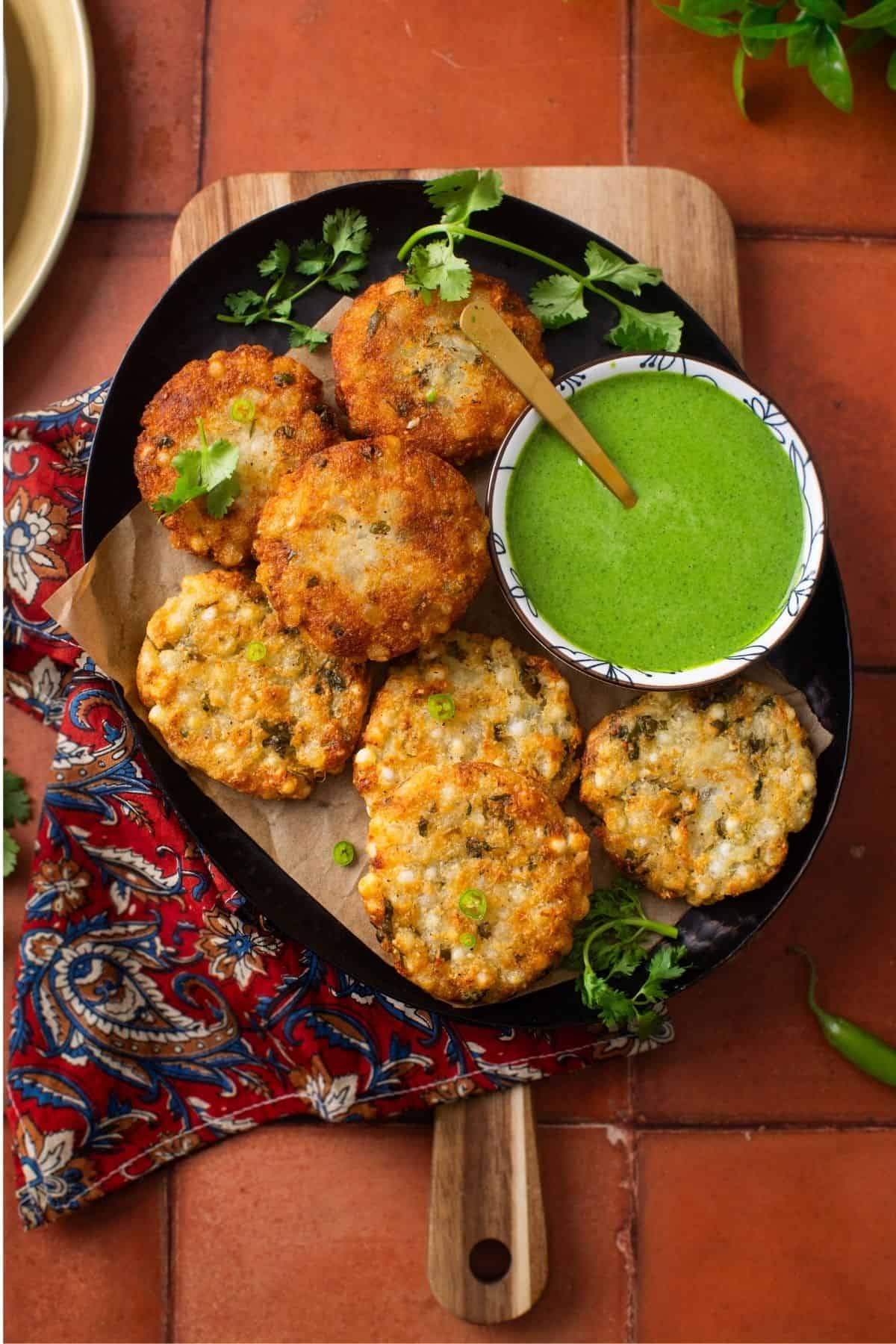
- Cook until golden brown and crispy. Remove carefully using a spatula.Serve warm with green chutney and chai.


I'd Love to Hear from You!