

Make soft & spongy gulab jamun at home with just a few simple ingredients like milk powder, flour, ghee, and sugar. I created this recipe more than ten years ago, and every time I make a batch, it fills me with pride. Over the years, I've certainly made tweaks, but the result is always delicious!
You don't need a special occasion to enjoy gulab jamun. They're perfect for festivals like Diwali, Holi, or Dussehra, as well as for family gatherings and celebrations. Juicy, sweet, and irresistible, these little treats are pure joy in every bite! They make for a wonderful edible gift!
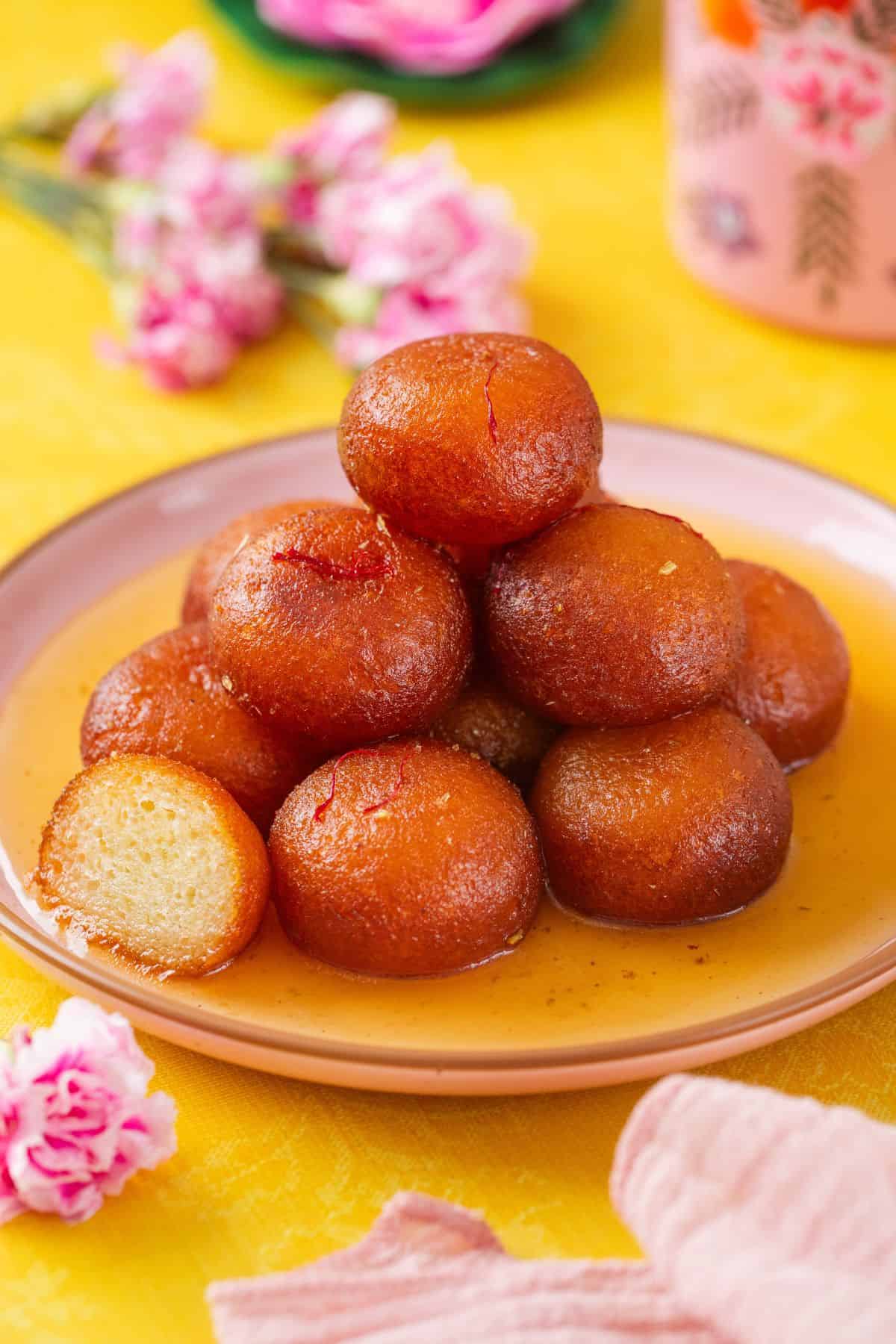
Gulab Jamun is one of the most iconic indian mithai. In fact, it feels impossible to discuss Indian cuisine without mentioning this popular sweet. A similar sweet is kala jamun, which looks like gulab jamun but has a much darker, almost black color.
Making gulab jamun takes patience and practice. It is not the kind of mithai that you can truly master in one go. It takes a while to understand when the dough feels right and consistency of sugar syrup. That is why so many people find it little intimidating.
But, once you get a hang of it, the taste, texture and fresshness of homemade gulab jamun are way superior to any thing that comes from a can, frozen box or an instant mix. Please do ask away questions that you have in the comments section or share your feedback about how this recipe fared in your kitchen.
Why Milk Powder?
Traditionally, gulab jamun are made with khoya or mawa. Khoya are milk solids that remain after reducing whole milk for long time until the moisture of milk has evaporated.
You may wonder why I use milk powder in my recipe. That's becasue when I first developed this recipe over 10 years ago, good quality khoya was not that easy to find in Indian grocery stores in the United States. So I used whole milk powder instead. The results were so good that I continued with it.
Nowadays, there are certainly some good khoya brands available, but I find there's quite a bit of inconsistency in both fat content and moisture levels from brand to brand. Few brands have silky smooth khoya, while others have a more grainy texture.
This doesn't pose much of an issue when making mithai like burfi or ladoo, but it can become tricky in the case of gulab jamun, since the dough needs to hold up during deep frying.
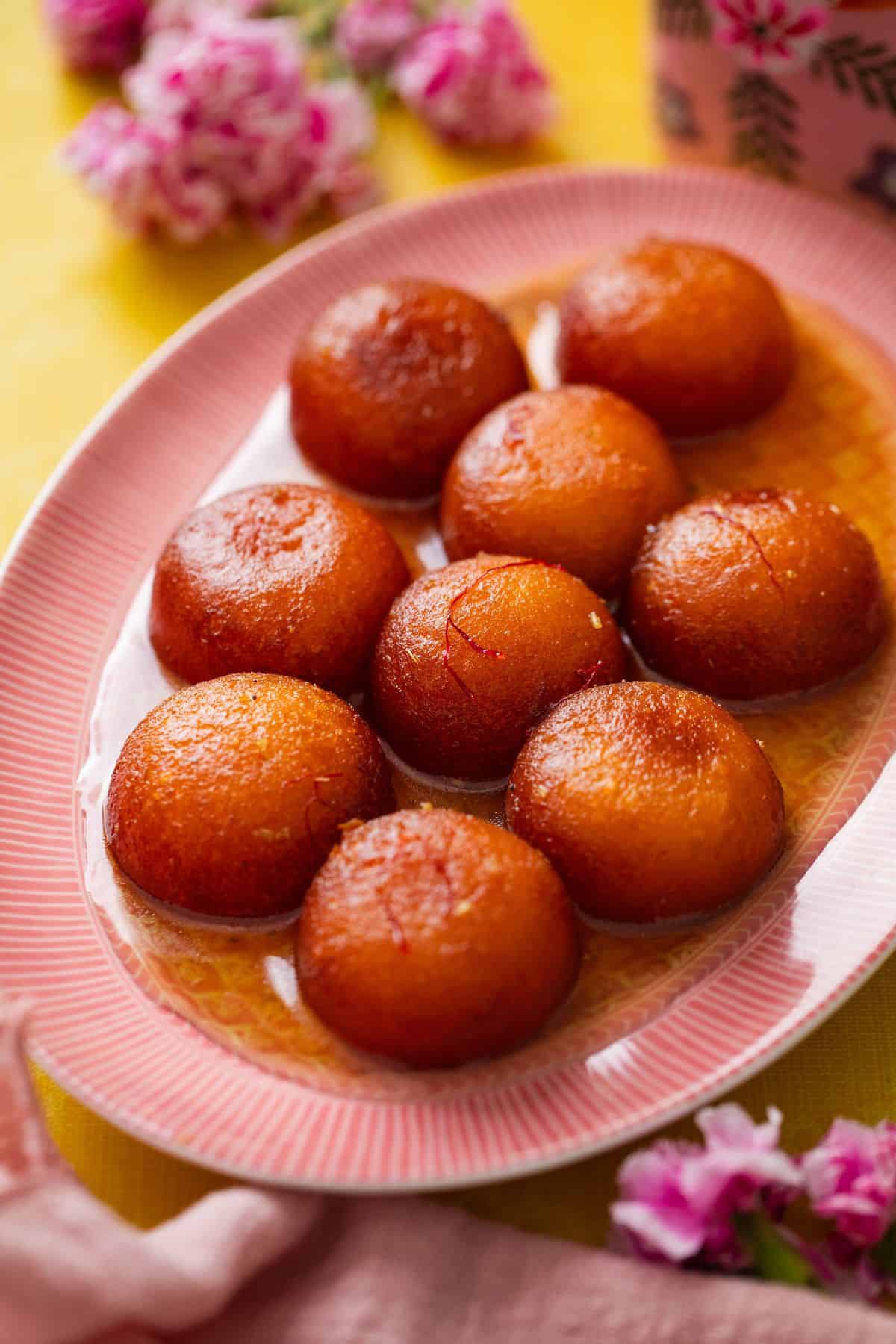
Shelf life is another factor. Fresh khoya spoils quickly, which means it isn't always practical to keep on hand. Milk powder, on the other hand, stores beautifully for months and hence it is far more convenient. I don't have to run to the store every time I feel like making gulab jamun.Let's be honest, those late-night gulab jamun cravings don't exactly wait for grocery runs! Right?
Choosing The Right Milk Powder
The key to recipe success is choosing milk powder with a high-fat content. I use and recommend Nido brand (it has about 28% fat content). Make sure that the package reads "dry whole milk powder". It is available both in Indian grocery store in US as well as online.
You may also choose other brands (Laxmi & Deep Mawa powder are my favorite too) for making these. Always make sure that it's not non-fat milk powder or dairy whitener that's used as a creamer for tea or coffee.
Lastly, before starting to cook, taste and sniff the milk powder. Make sure that it's not smelly, freshness matters since it's the main ingredient.
Ingredients
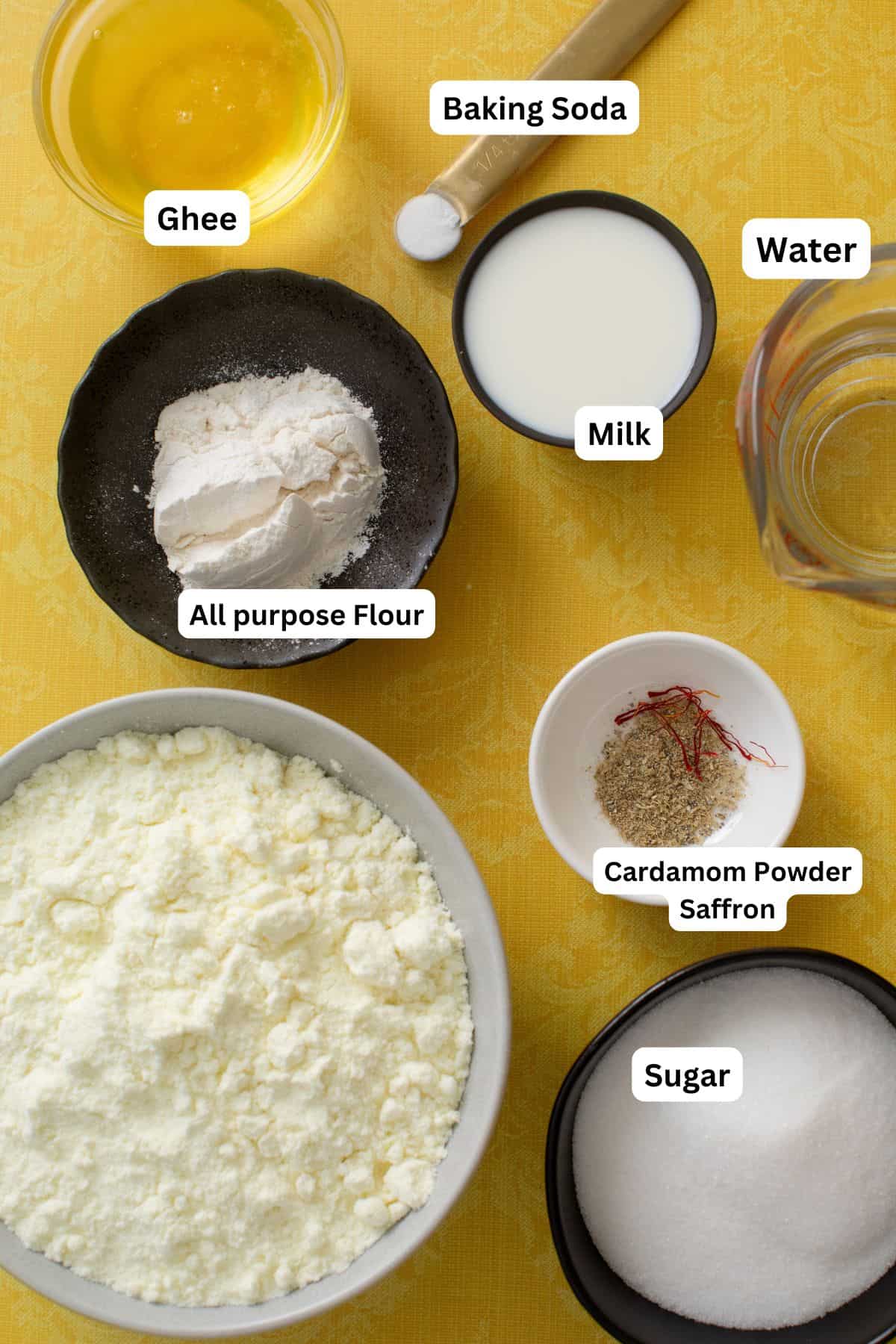
For Gulab Jamun Balls
- All purpose Flour - You need flour to bind the ingredients together and give structure. Flour helps hold the milk powder and ghee in place so the dough balls don't break while frying.
- Milk - Whole milk is the best. Use room temperature milk. Milk rehydrates the milk powder.
- Ghee - Measure the ghee after melting for accuracy. Ghee is added to the dough for softness and aroma. Ideally, the gulab jamun are fried in ghee but I find them too heavy so I fry them in oil with ½ cup ghee added for aroma. The only thing to keep in mind is to strain the oil very well before you add them to syrup.
- Green Cardamom Powder - There is nothing more balmy than freshly ground green cardamom powder. Simply crack the green cardamom pods open and pound the black seeds using a mortar and pestle.
- Baking soda - Helps the dough balls become light and airy instead of dense. When you fry the gulab jamun, baking soda creates tiny air pockets that make them soft and spongy.
For Sugar Syrup
Always use 1:1 ratio of water and sugar. I use granulated sugar. A few drops of fresh lemon juice prevent crystallization in homemade sugar syrup(so do not skip).
How To Make Gulab Jamun At Home
Make the Gulab Jamun dough
- Sift all the dry ingredients (milk powder, flour & baking soda) in a large mixing bowl. Pour in the melted ghee.
- Gently, using your fingers, mix the flour mixture until it resembles damp sand texture.
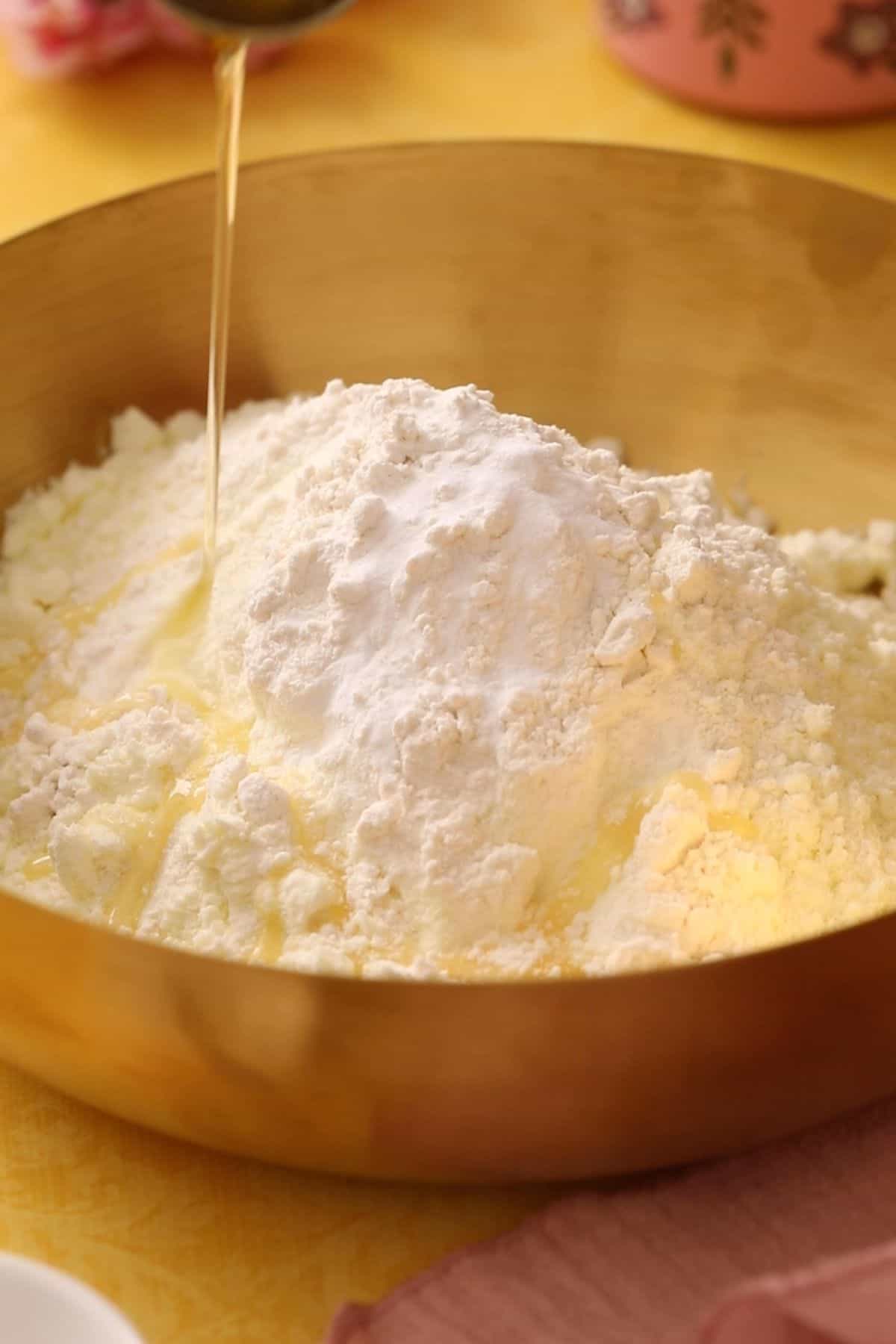
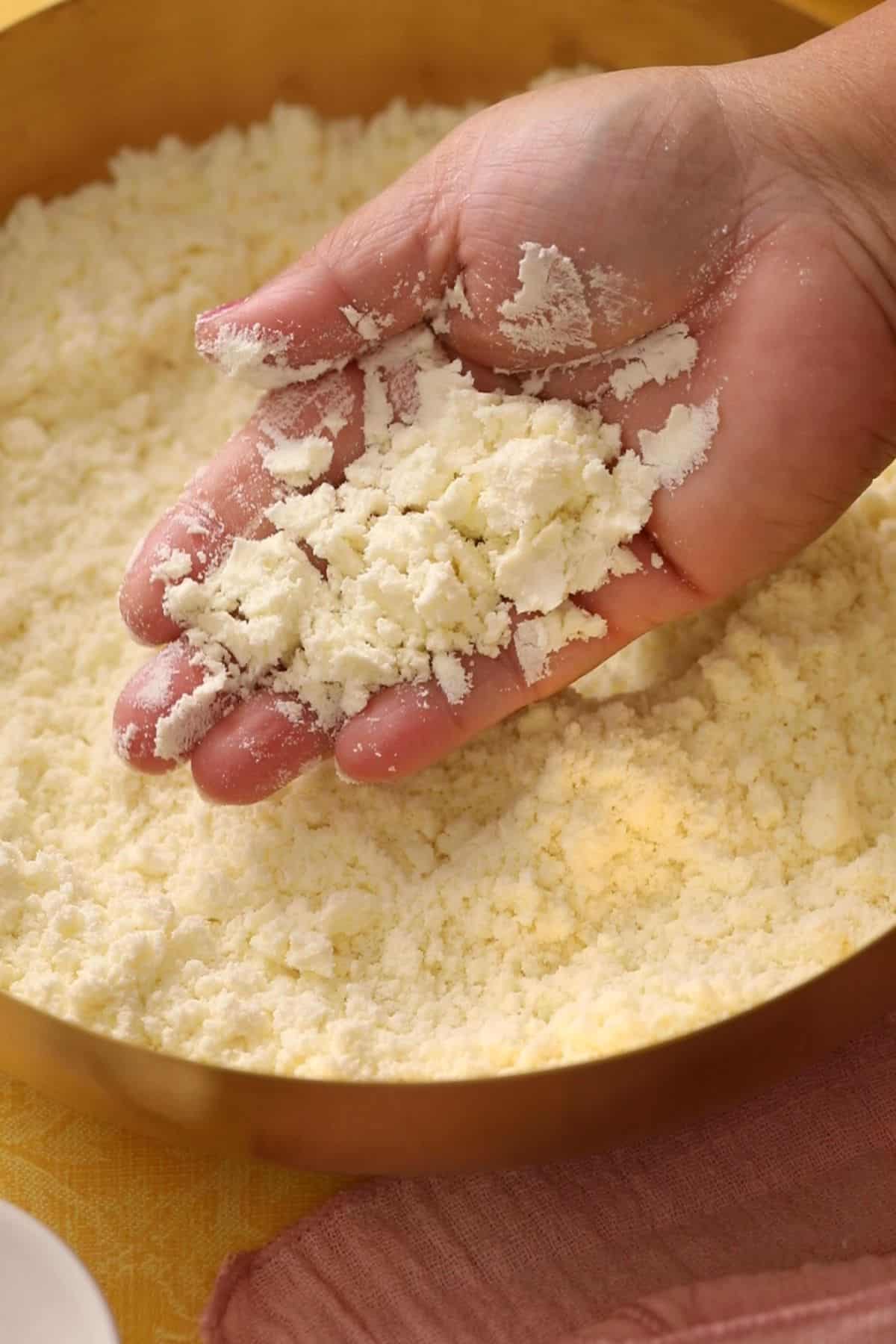
- Start adding little milk at a time (about 1-2 tablespoon) and using your fingers, bring together to form into a soft and smooth dough. I use little over ½ cup of milk for the milk powder + flour quantity mentioned in recipe card. You may need less or more (depends on quality of milk powder).
- Don't over-knead or squish the dough. The dough should be non sticky and should not have cracks else gulab jamun will fall apart. It should not be dry. There is no need to shape the dough by kneading. We don't want the gluten to form. If over kneaded, the jamun will not absorb syrup and will remain hard inside.
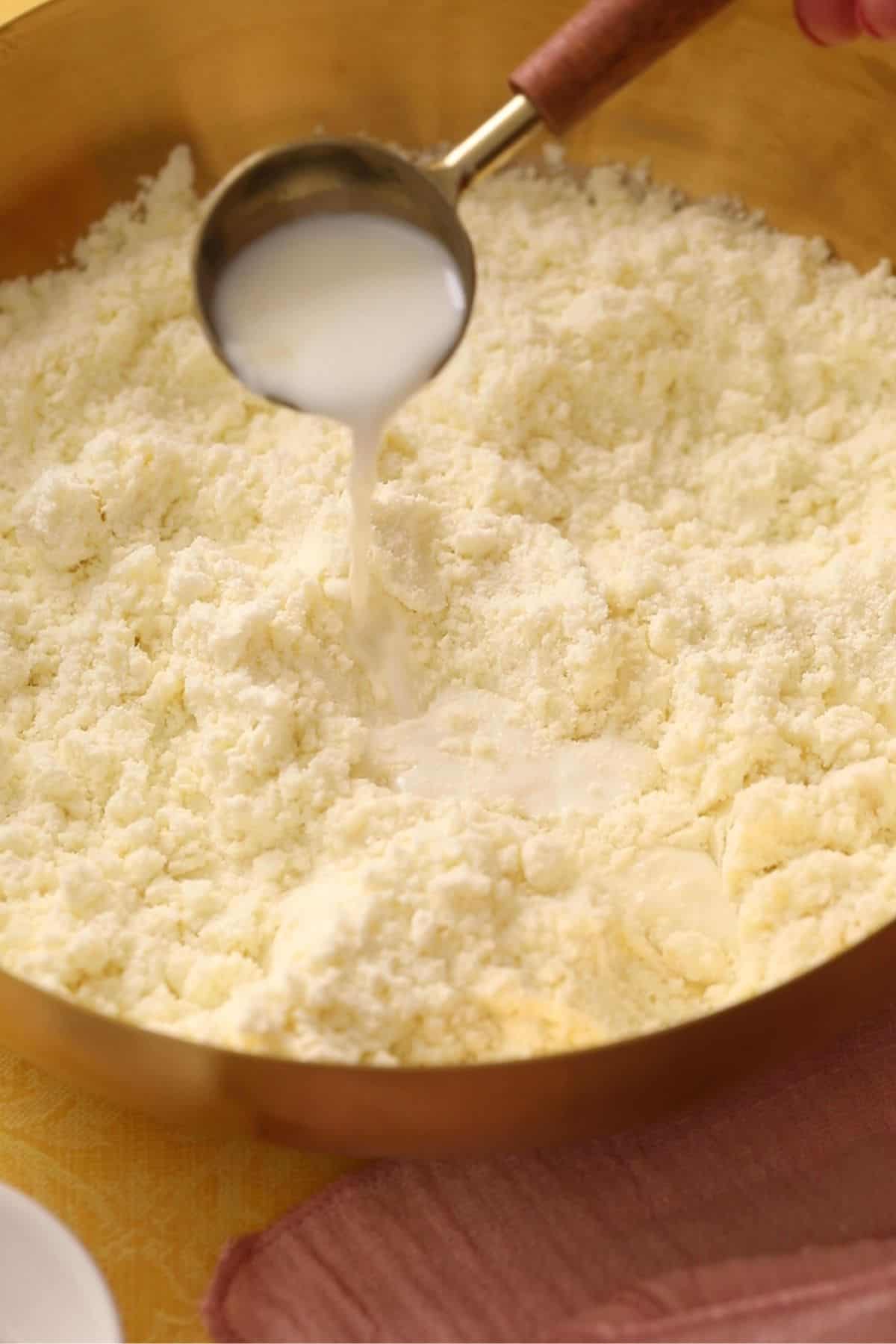
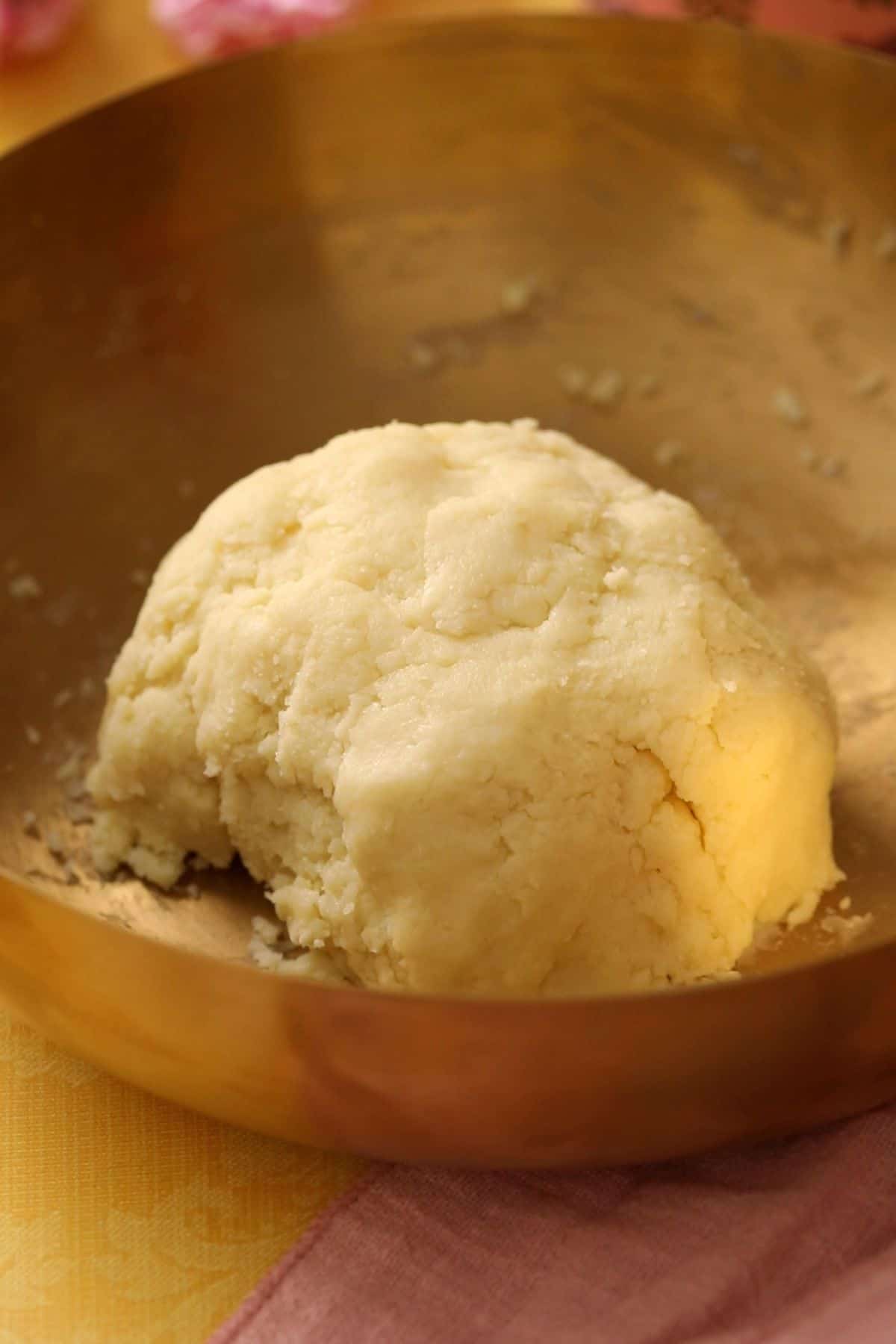
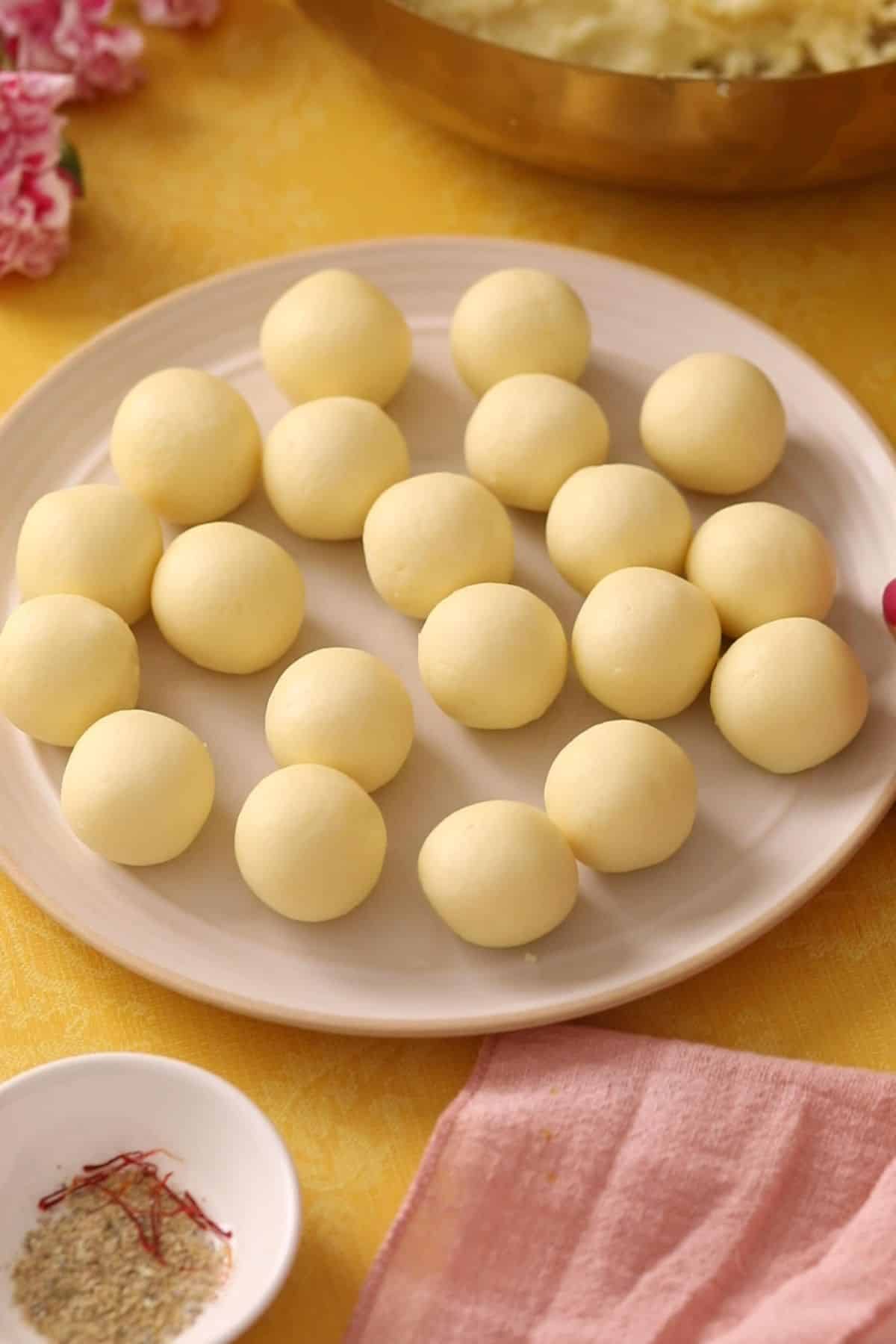
- Spread ½ teaspoon ghee on your hands and pinch 22-25 equal portions from the dough. For similar size, weigh the dough portions using a food scale.
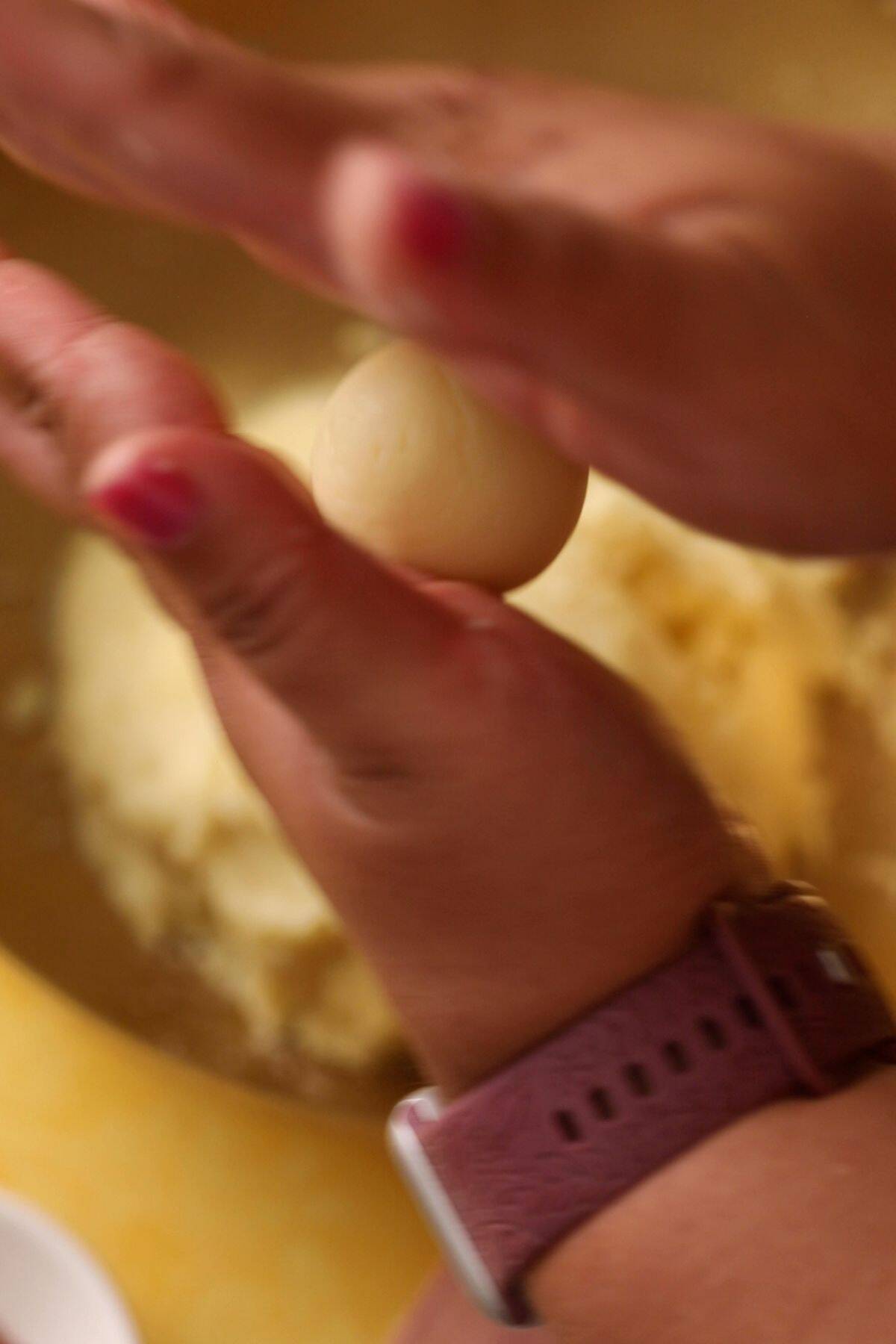
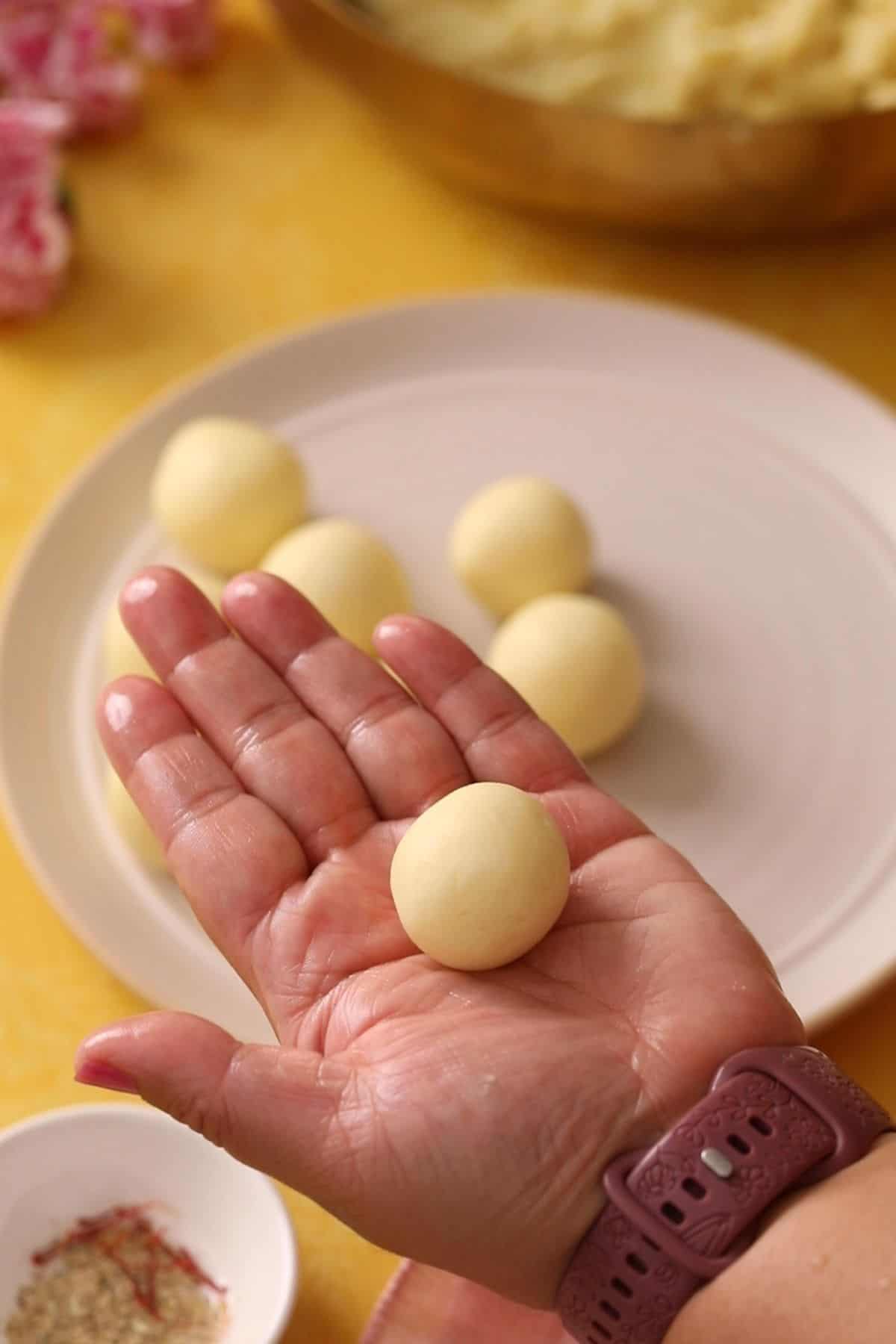
- Roll the dough portions into small balls with no cracks. If your dough balls have cracks, they will spread during frying. Line the balls on a plate & keep covered with a cling film to avoid them from drying.
Make the Sugar Syrup
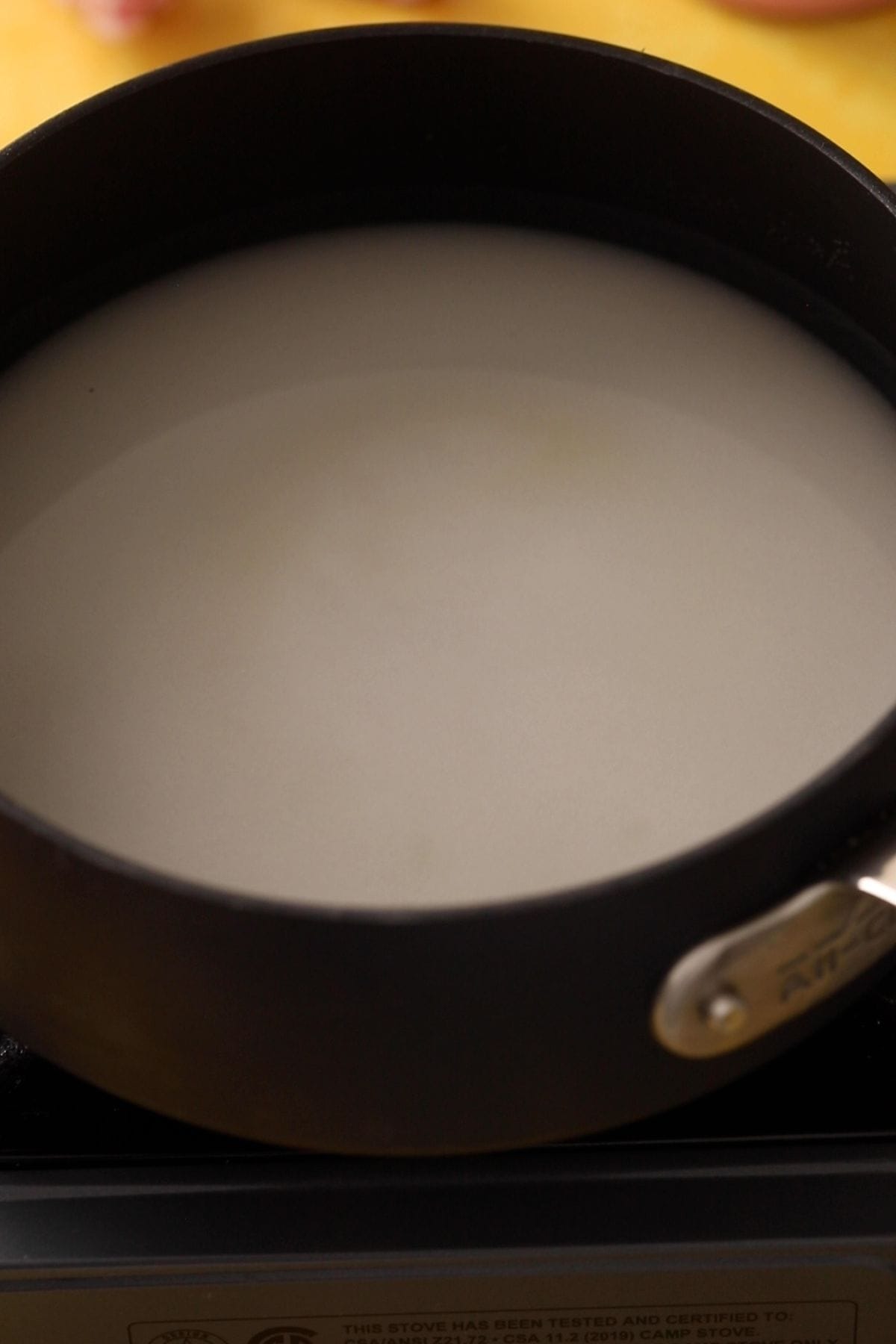
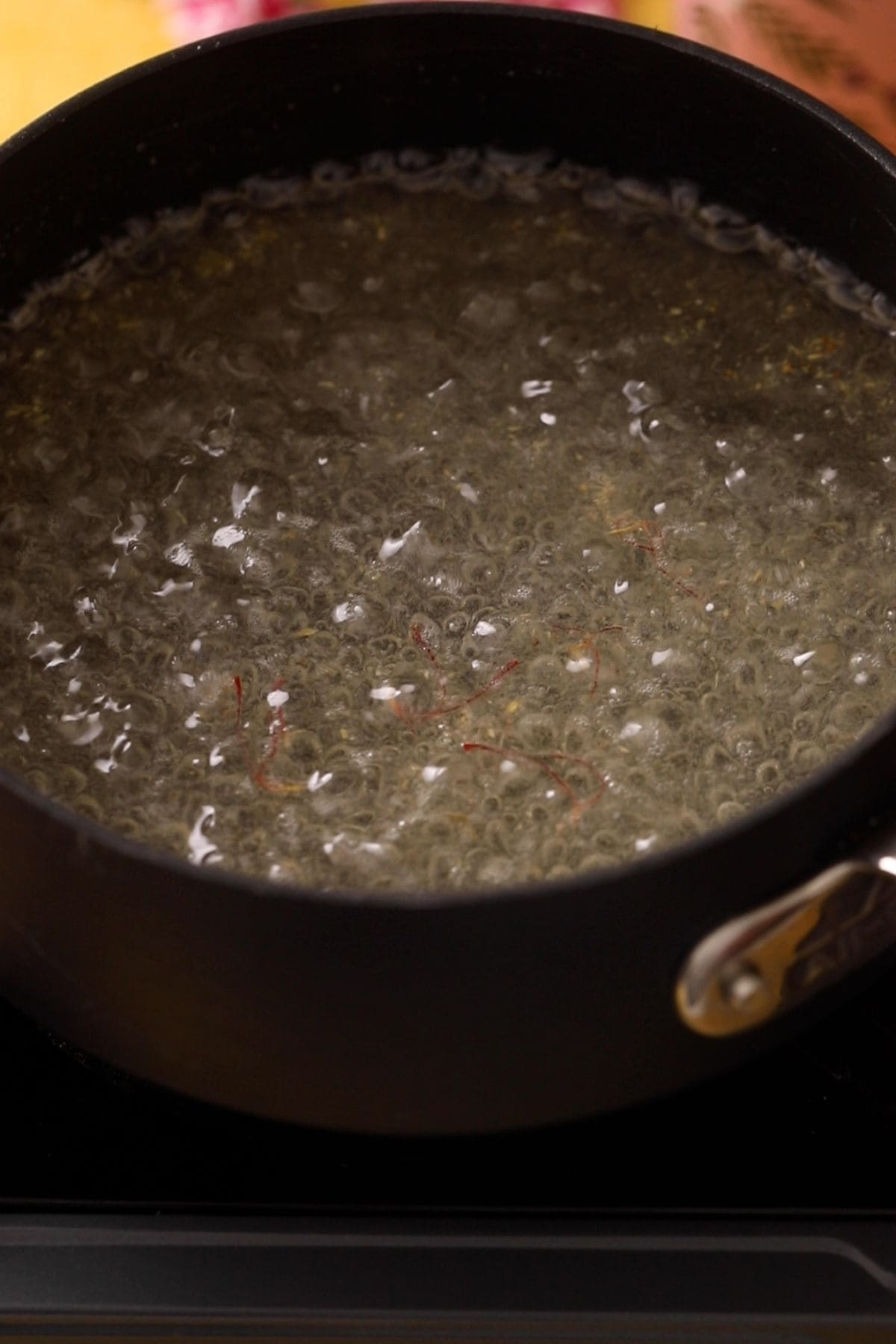
- In a large and wide heavy bottom pot, add water and sugar/
- On low-medium heat, bring the syrup to a boil. Once all the sugar is dissolved, let the syrup simmer for a minute or two and then switch off the stove. We are not looking for any thread consistency here. It takes about 6-8 minutes on medium heat. If you see scum on top, remove it with a spoon. Read my tips below.
- Switch off the stove. Sprinkle the green cardamom powder, lemon juice, rose water, saffron strands and mix. Keep warm.
Sugar Syrup Tips
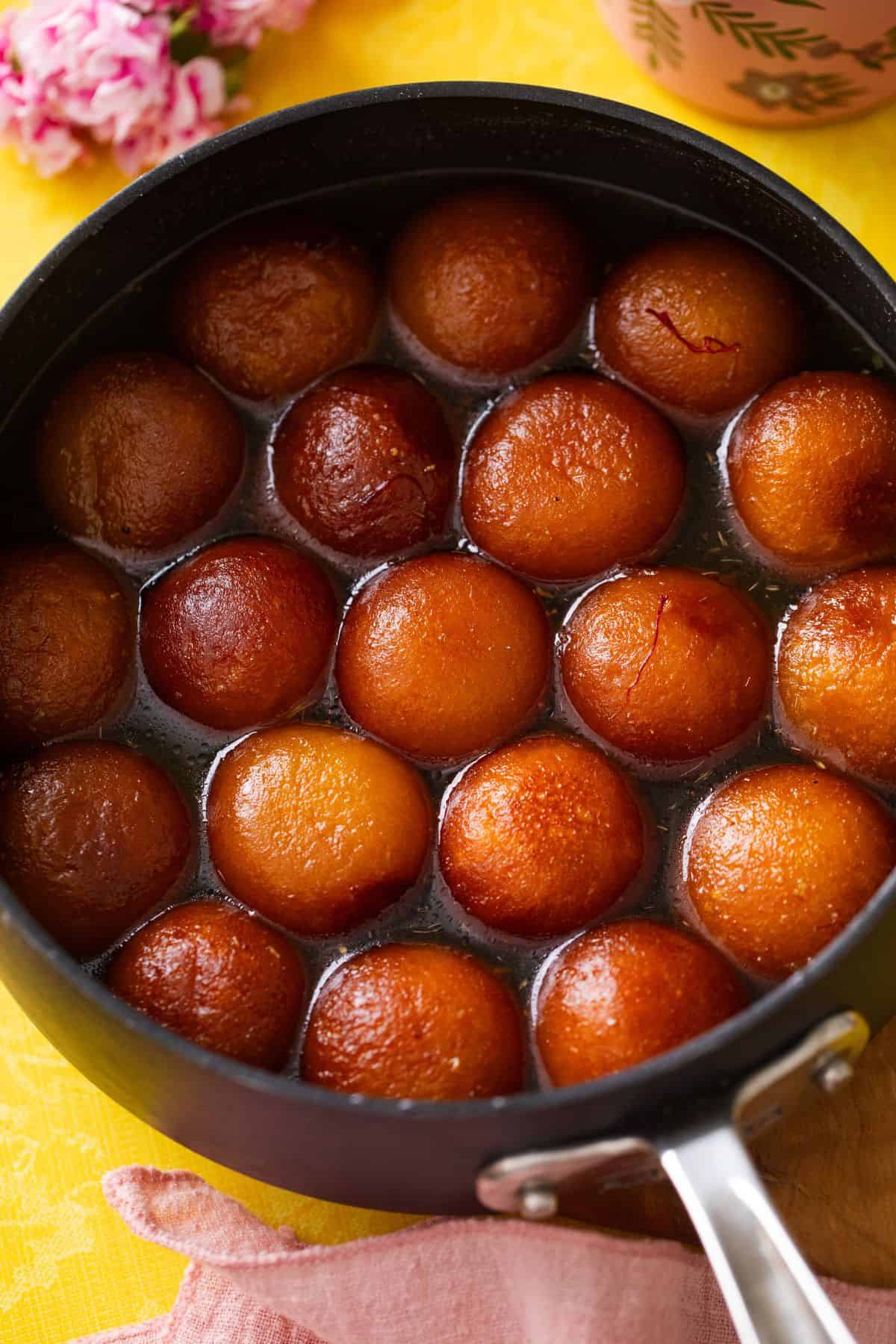
- Use a wide pot to prepare sugar syrup so that once you add the fried gulab jamun, they soak in a single layer. The gulab jamun will slightly grow in size as they soak in syrup and we want enough space for that process.
- Do not use cast iron or dutch oven pots for making sugar syrup. When you switch off the stove, the syrup continues to cook and will get thick.
- Make sure that your sugar syrup is not thick or too watery. If it's watery, jamuns will become soggy. If its thick, they won't be able to absorb it due to its viscosity.
- A good indicator is to touch the syrup between fingers. Take a few drops on a spoon, let cool and touch it. It should feel sticky. Sticky stage is reached before single thread consistency.
Deep Fry & Soak gulab jamun in Syrup
- Set oil or ghee for deep frying on low-medium heat. Make sure that the oil quantity is enough so that the gulab jamuns remain fully submerged while deep frying.
- Once the oil is heated up, to check the oil temperature, add a small piece of dough to the hot oil. It should rise up slowly without sizzling and not change color much. If the dough is sizzling, that means it quite hot and you reduce the flame and wait for oil temperature to come down.
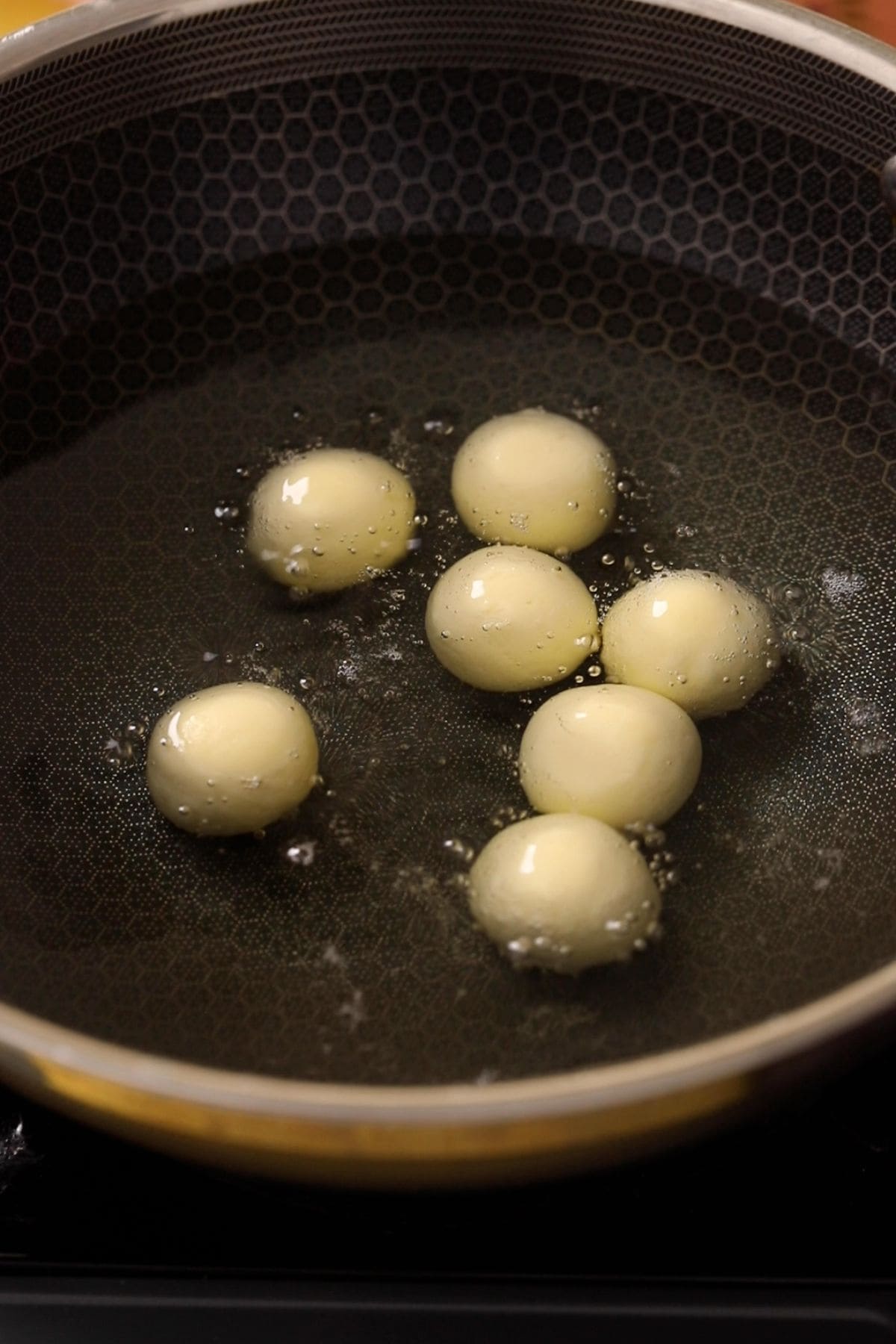
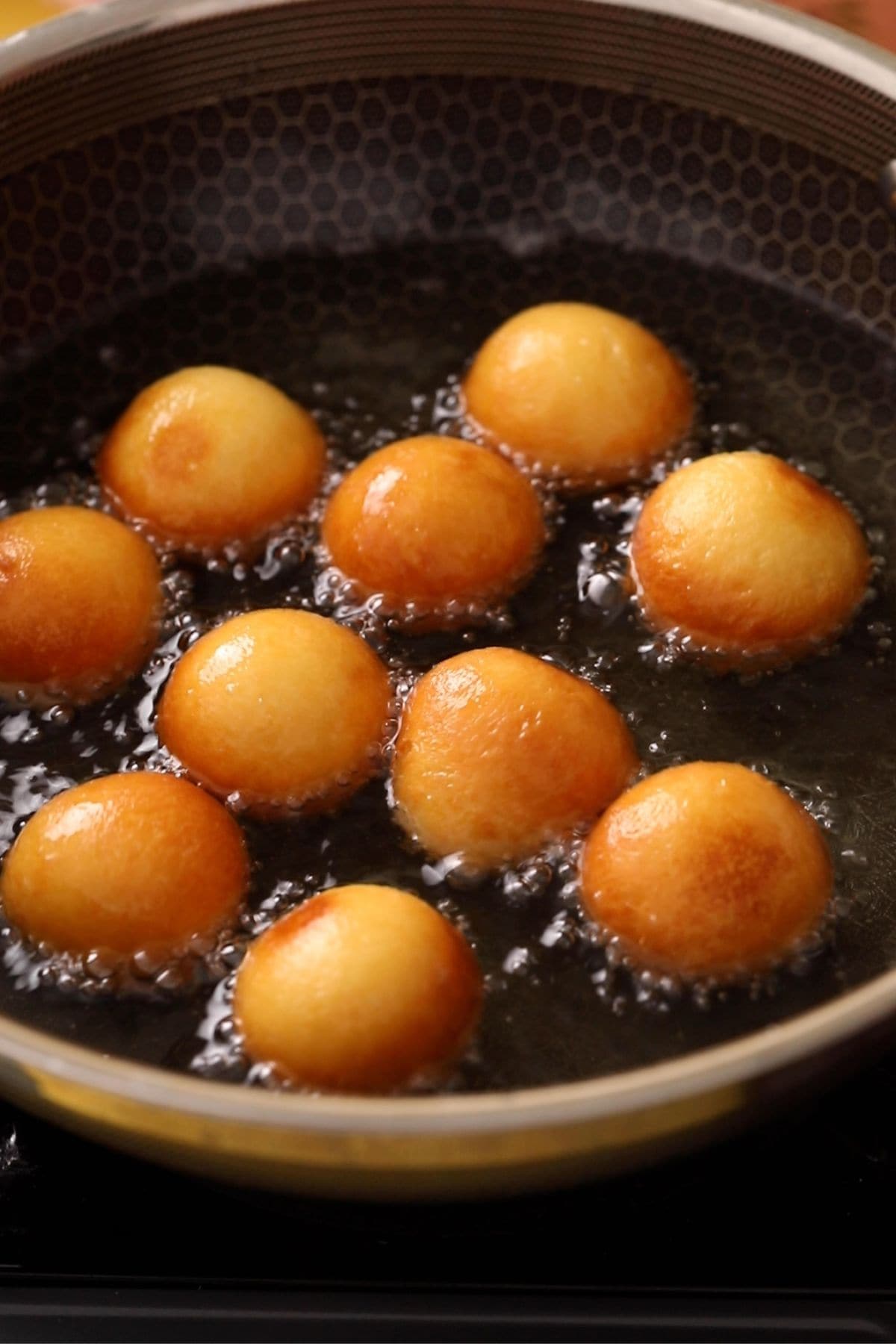
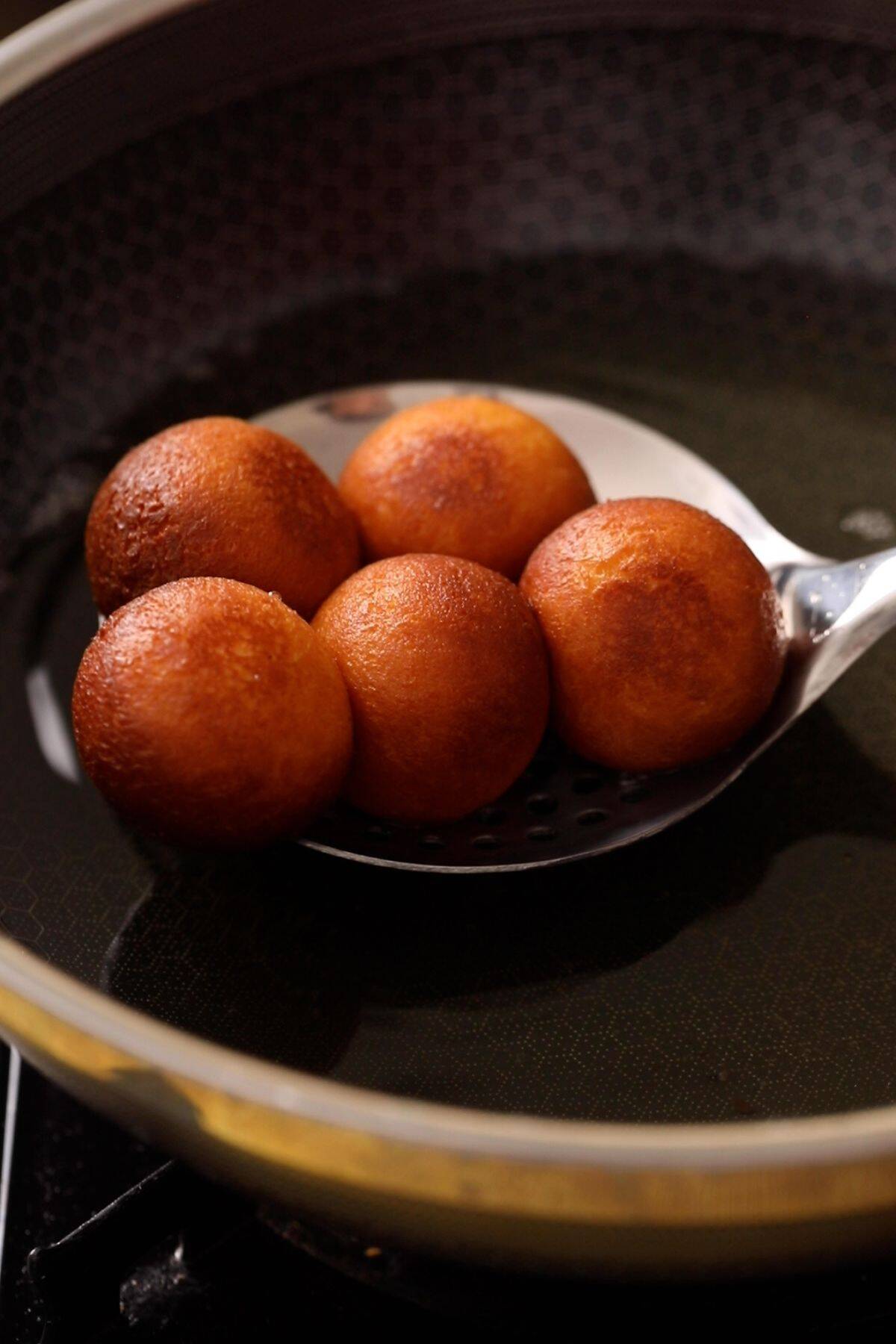
- Gently slide a few gulab jamun balls (6-8) into the hot oil. Make sure not to overcrowd the pan. As they fry, the baking soda will expand them and they will turn airy inside. This is the first stage where the gulab jamun start increasing in size. You may even notice some of the balls flipping over on their own. This is a wonderful sign that air pockets are forming, which means your gulab jamun will turn out soft and spongy.
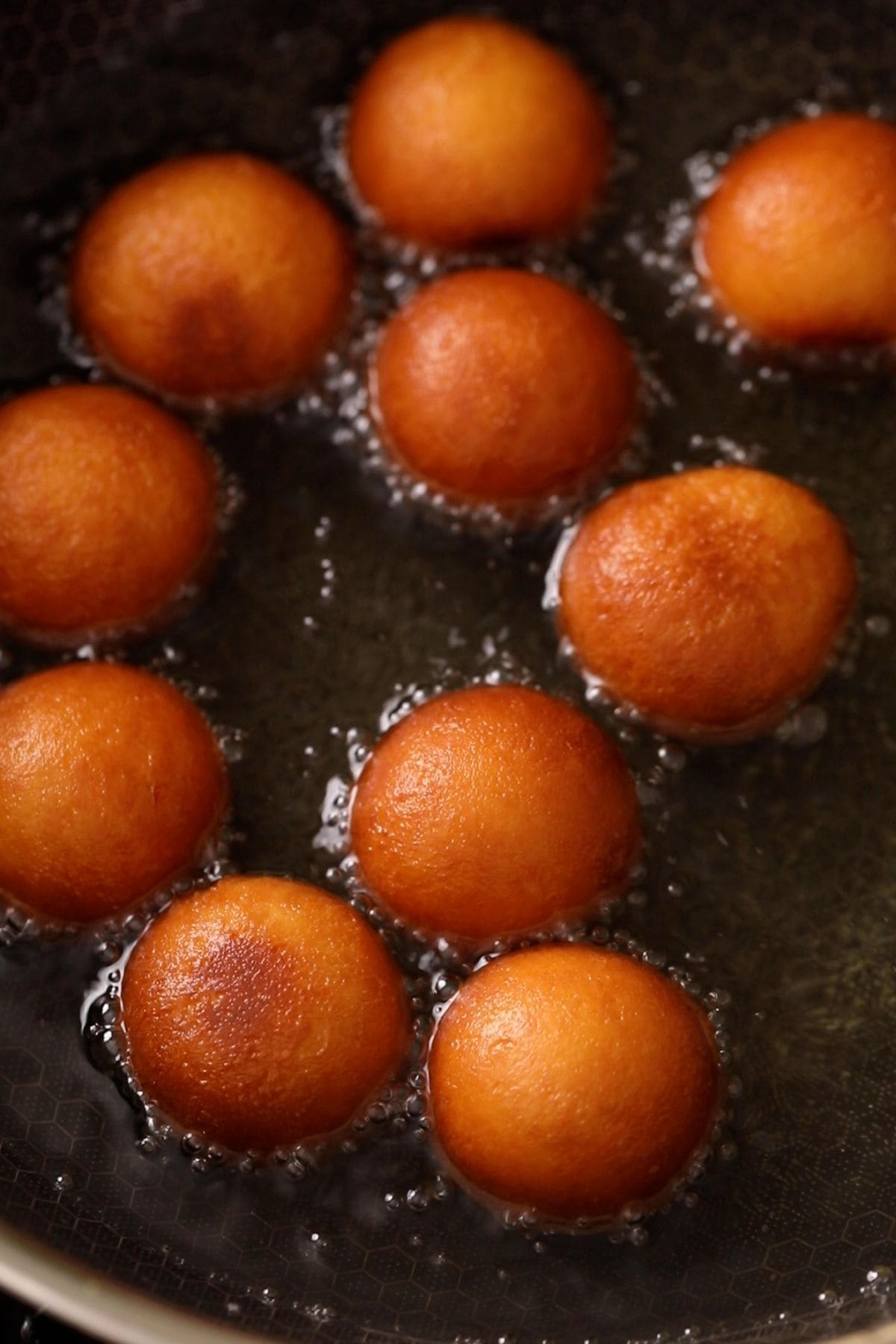
- While frying, maintain a consistent oil temperature and gently stir around the jamuns to ensure even cooking. It should take about 5-7 minutes per batch. You might see some foaming in oil due to baking soda.
- Once evenly browned on all sides,using a slotted spoon to drain all the excess oil and place the fried balls on paper towels for 5-8 seconds.
Soak in Syrup
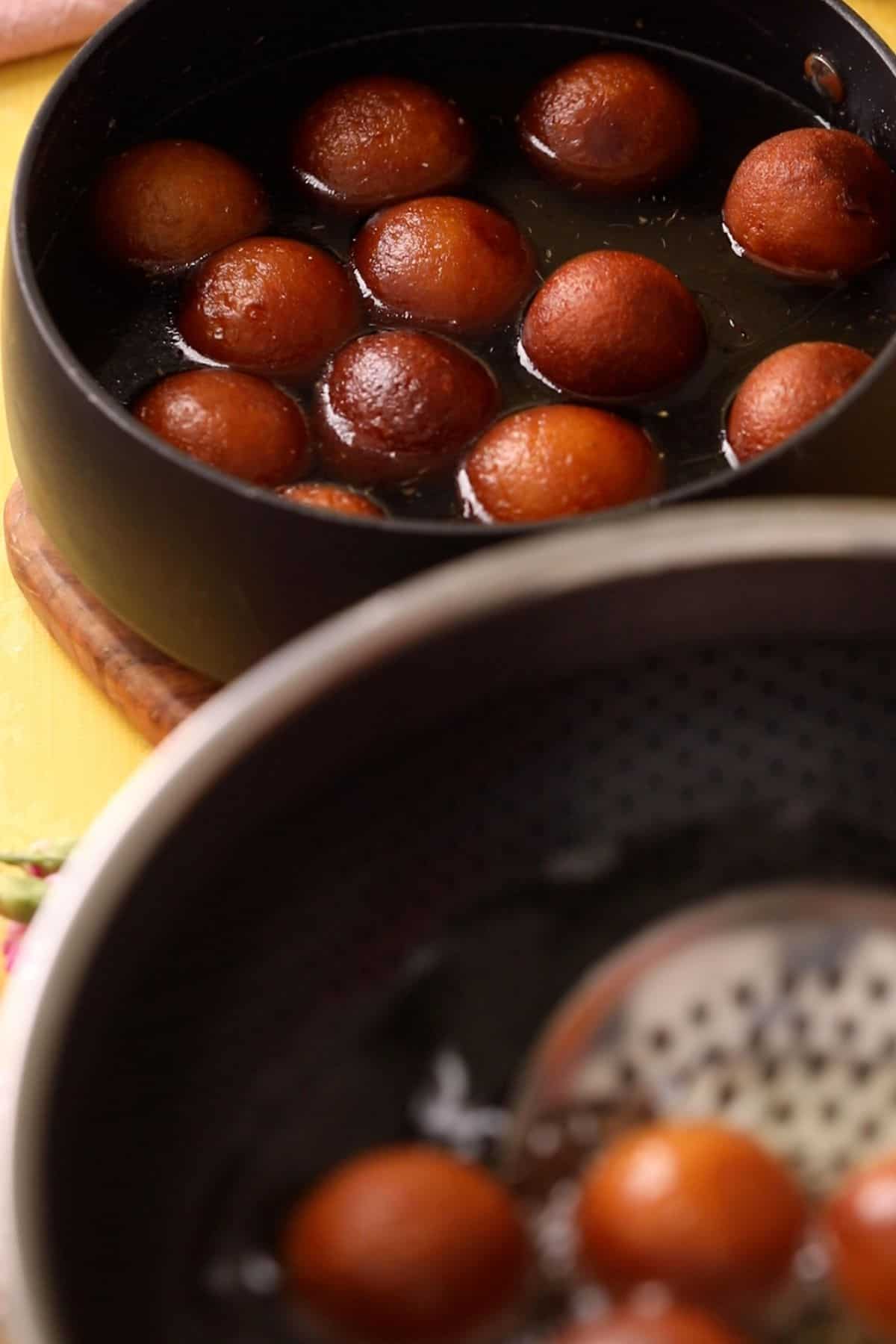
- While they are still warm, add the fried gulab jamun to the hot sugar syrup. The syrup should not be super hot.
- Finish deep frying all gulab jamun and soak in syrup immediately.
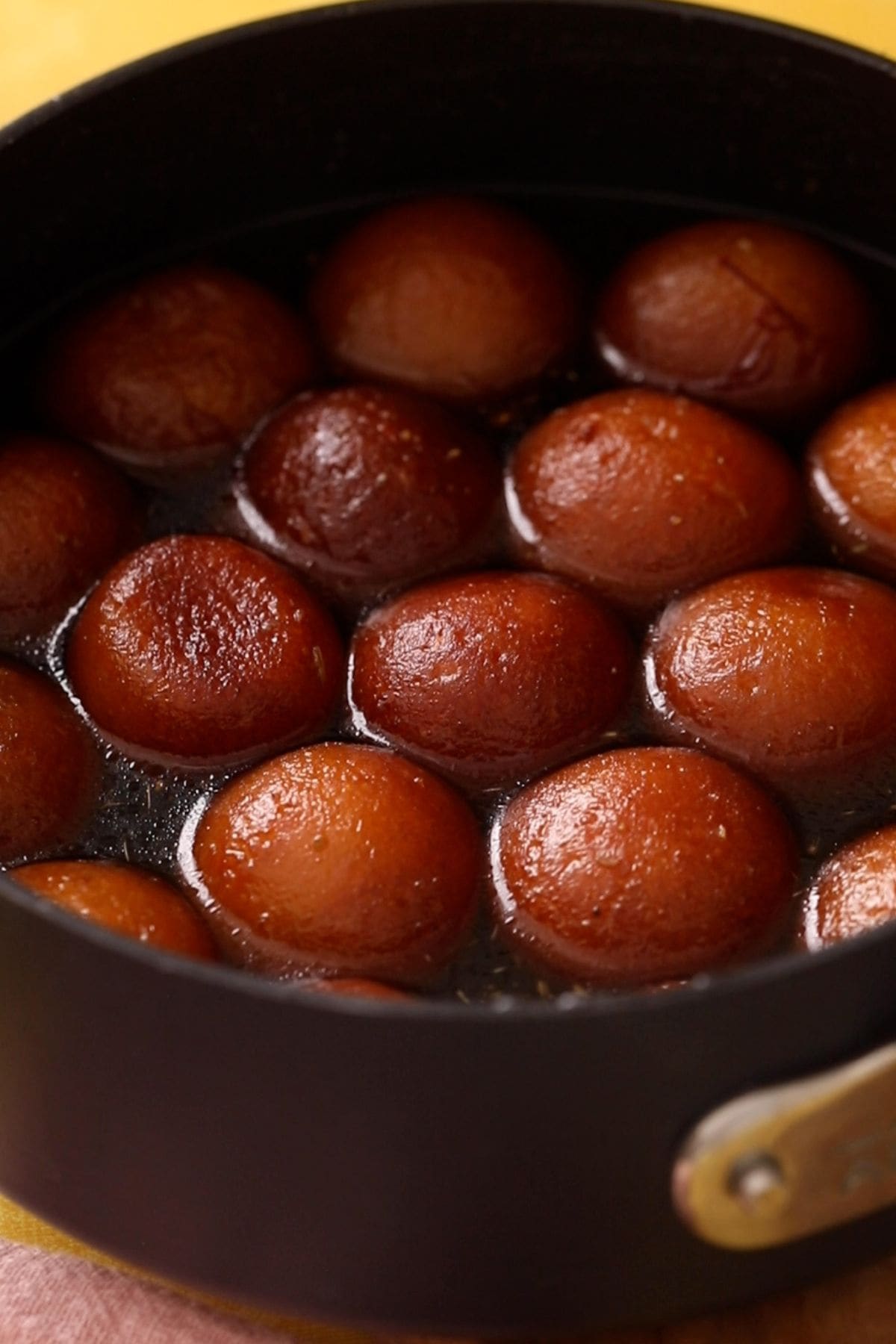
- Once you've added all the gulab jamun to the syrup, place the pot on a low flame for a minute. This step is not mandatory but may be needed if your syrup temperature has fallen quite a bit. Warming the syrup helps in better soaking. Take care not to let boil, else gulab jamuns will break apart.
- Cover the pot and let the gulab jamun soak undisturbed for at least 4-5 hours.
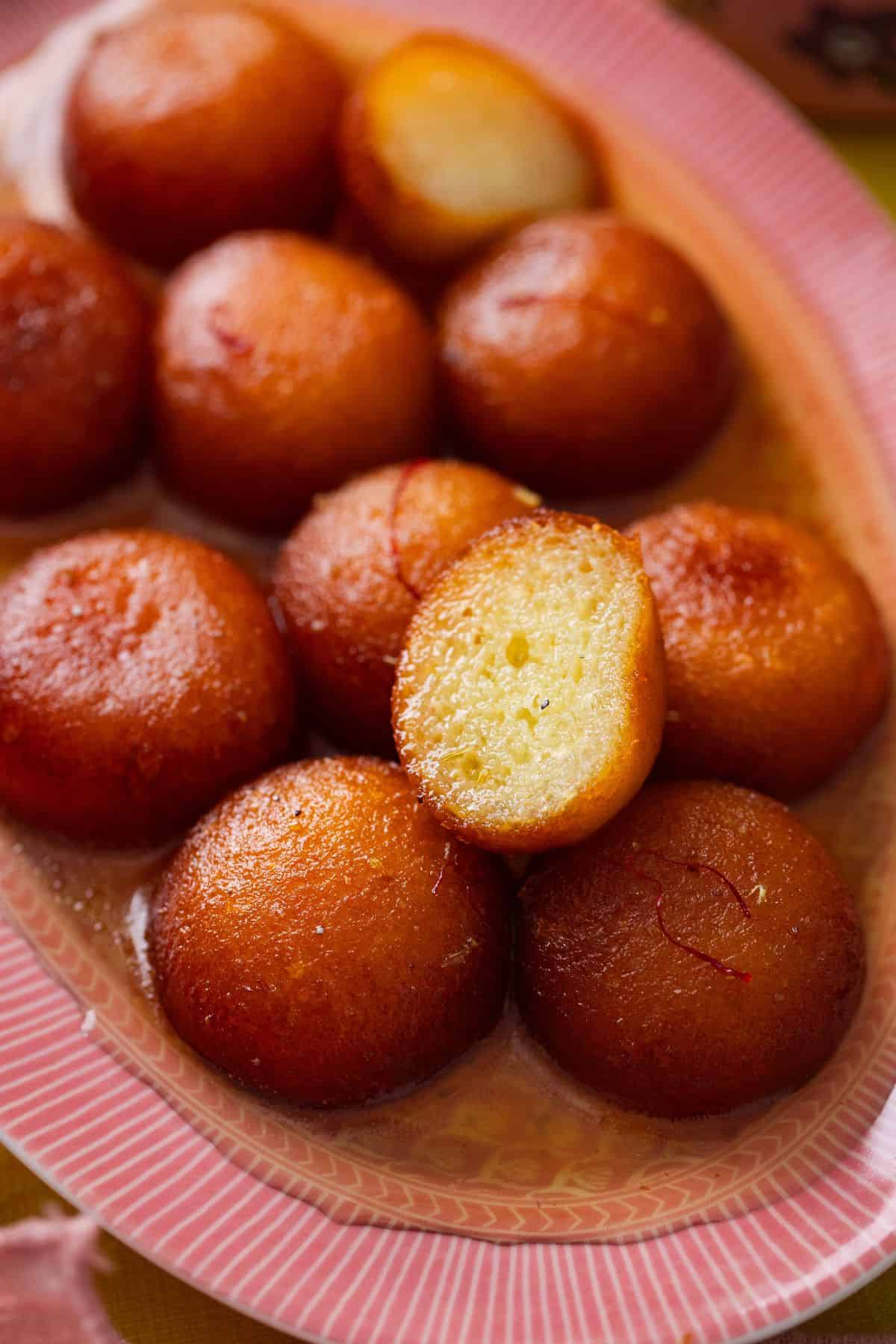
Serve gulab jamun warm or at room temperature in a bowl with few tablespoons of syrup & chopped nuts or dessicated coconut garnish. Read more ideas in recipe card.
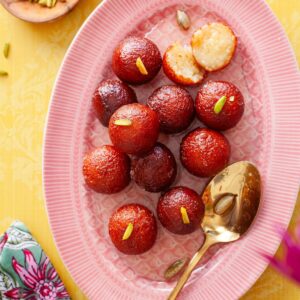
Soft Gulab Jamun (With Milk Powder)
Ingredients
For Gulab Jamun
- 250 g milk powder I use Nido brand, use high fat milk powder suited for making mithai
- 2 tablespoon (25g) all purpose flour maida
- ¼ teaspoon baking soda make sure to level the spoon when you measure
- 2 tablespoon ghee measure melted ghee
- ½ cup +3 tablespoon whole milk or as needed, add gradually a tablespoon at a time
- Ghee or Oil for deep frying, I use oil to which I add ⅓ cup ghee for aroma and flavor
For Sugar Syrup
- 500 g granulated sugar
- 500 ml water
- 1 teaspoon lemon juice
- 10-12 saffron strands
- ¼ teaspoon green cardamom powder see note 1
- 1 tablespoon rose water
Instructions
- Please read a ton of tips, tricks and notes in the blog post above. They will help you immensely in successfully making gulab jamun at home.
Make The Dough
- Sift milk powder, flour, and baking soda into a large mixing bowl.
- Pour in the melted ghee. Use your fingers to gently mix until it feels like damp sand.
- Add milk a little at a time (1-2 tablespoons) and bring the mixture together into a soft, smooth dough. This dough can get wet pretty easily. Towards the end, as dough starts coming together, add 1 tablespoon milk only. I needed a little more than ½ cup milk, but you may need less or more depending on the milk powder.
- Do not knead hard. The dough should be smooth, not sticky, not dry, and without cracks. If you knead too much, that will activate the gluten and the gulab jamun will not soak syrup and will turn hard.
- Grease your hands with ½ teaspoon ghee. Divide the dough into 22-25 equal parts. Do not make big dough balls as the Gulab Jamun expand in size during frying and soaking. For even size, you can weigh the portions. If you want smaller Gulab Jamun, you roll about 28-30 pieces from the dough.
- With greased palms, roll each piece into a smooth ball with no cracks. Place on a plate and cover with cling film so they don't dry out.
Prepare The Chashni (Sugar Syrup)
- In a large and wide mouthed pot, add water and sugar. Heat on low-medium until the sugar completely dissolves. If you see scum on top, remove it with a spoon.Tip #1 - It is important to use a wide enough pot to make sugar syrup so that once you add the fried dough balls, they are in a single layer. The gulab jamun will slightly grow in size as they soak in syrup and we want enough space for that process.
- Once sugar is dissolved, let the syrup simmer 4-6 minutes and then switch off the stove. Don't thicken the syrup. We are not looking for any thread consistency.
- Add cardamom powder, lemon juice, rose water, and saffron. Stir and keep the syrup warm.Tip #2 - Make sure that your sugar syrup is not thick to begin with, else the jamuns won't be able to absorb it due to its viscosity. If the syrup is watery, the gulan jamun will be soggy. It should feel sticky between thumb & finger but not thin or thick.
Deep Fry and Soak The Gulab Jamun
- Set oil or ghee for deep frying to heat up in a deep cooking pot. Make sure that the oil quantity is enough (about 3 inches) so that the gulab jamuns remain fully submerged while deep frying. Heat oil + ghee for frying on low-medium. The oil should be deep enough to fully cover the gulab jamuns.
- Test the oil with a small piece of dough. It should rise slowly without sizzling or turning brown. If it sizzles too much, reduce the heat and let the oil cool slightly.
- Gently add 6-8 dough balls at a time into the oil. Do not crowd the pan. Initially they will sit at bottom but slowly they will rise up. They will increase in size as they fry and air pockets form. Some may even flip over by themselves, which is a good sign.
- Fry for 5-7 minutes per batch, stirring gently until evenly golden brown on all sides. Keep the heat steady. Some foam in the oil is normal.
- Once golden brown, lift the fried gulab jamun balls out with a slotted spoon, drain on paper towels for 4-7 seconds, then add them while still warm to the sugar syrup. The syrup should be hot but not boiling.
- Fry the rest of the balls and add them to the syrup right away.
- f the syrup has cooled down too much, place the pot back on very low heat for about a minute. Do not let it boil, or the jamuns may break.
- Cover the pot and let the gulab jamun soak in the syrup for at least 4-5 hours before serving.
Video
Notes
- To Make Green Cardamom Powder - Crack open the pods and use your mortar & pestle to grind the seeds into a fine powder. Freshly ground cardamom is balmy and divine. This is how green cardamom is commonly used in Indian homes.
- Traditionally, gulab jamuns are fried in pure ghee. I fry them in oil and add ⅓ cup of ghee to the oil to add the rich aroma.
- Make sure that the milk powder isn't smelly, freshness matters since its one of the main ingredient.
- Correct temperature of oil is key in the recipe. Do not fry the gulab jamuns on very high heat.If oil is too hot, and they will brown quickly on the outside & harden but remain raw inside. In cold oil, they may absorb excess oil. Do not fry on low heat either, they will start spreading in oil.
- Gulab Jamun keep well in the fridge for up to 18-20 days.Whenver you want to serve, just heat up for 8-10 seconds. They can be frozen for 3-5 months.
- Serve warm gulab jamun in bowl with few tablespoons of syrup & chopped nuts or dessicated coconut garnish. I like them slightly warm. Add a dollop of vanilla ice cream for a hot & cold dessert experience.
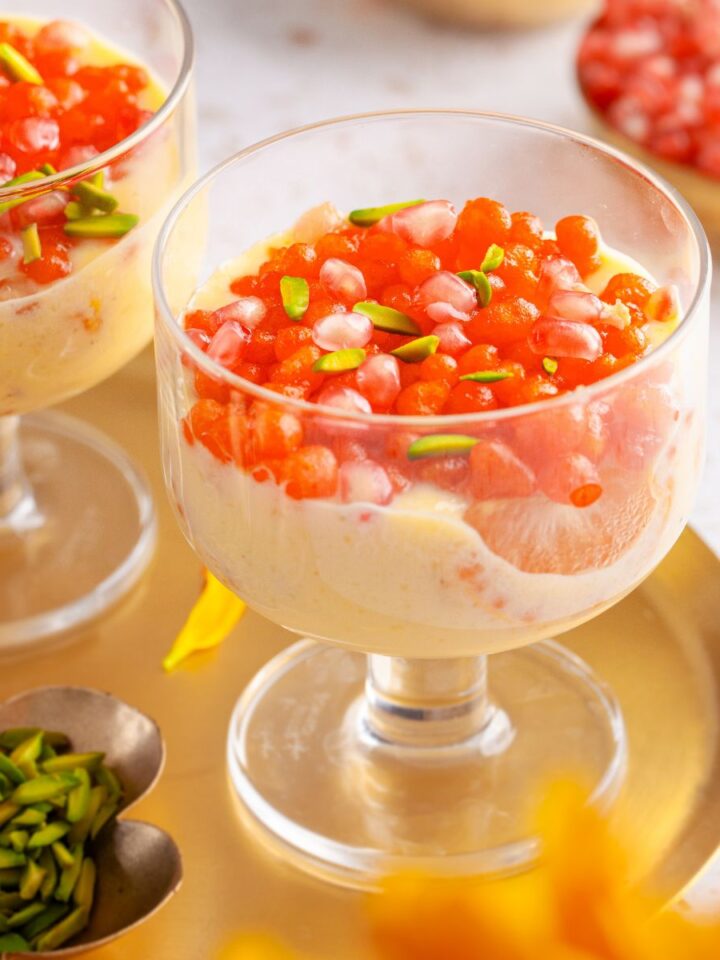
- Rabdi Gulab Jamun is a wonderful combination. You could make small dessert jars by layering instant rabdi and gulab jamun balls. I would skip the syrup for these else these become cloying.
- Serve gulab jamun with rasmalai boba drink for a festive dessert duo.
- Try kesar kulfi and gulab jamun together, its delicious!
Priya says
Hi Tanvi! I am planning to make these jamuns for diwali. But I am not able to find organic valley milk powder.can I use either Nestle instant nonfat dry milk or the mava powder I find in Indian grocery? since I really want to make sure it comes out right it would be great if you could help.Thanks!
Priya says
Thanks for the immediate reply on the milk powder! I made them for diwali and it was rich and delicious.Like the previous comment I too had my doubts about the yogurt amount.thankfully I added only 3/4 cup yogurt.the dough was too sticky but I managed to make the jamuns out of it.Inside was soft but outer layer was bit tough and chewy.I was excited and encouraged with soft insides since I dint have success with that before.Thank you for a wonderful recipe.I shall make them again!