

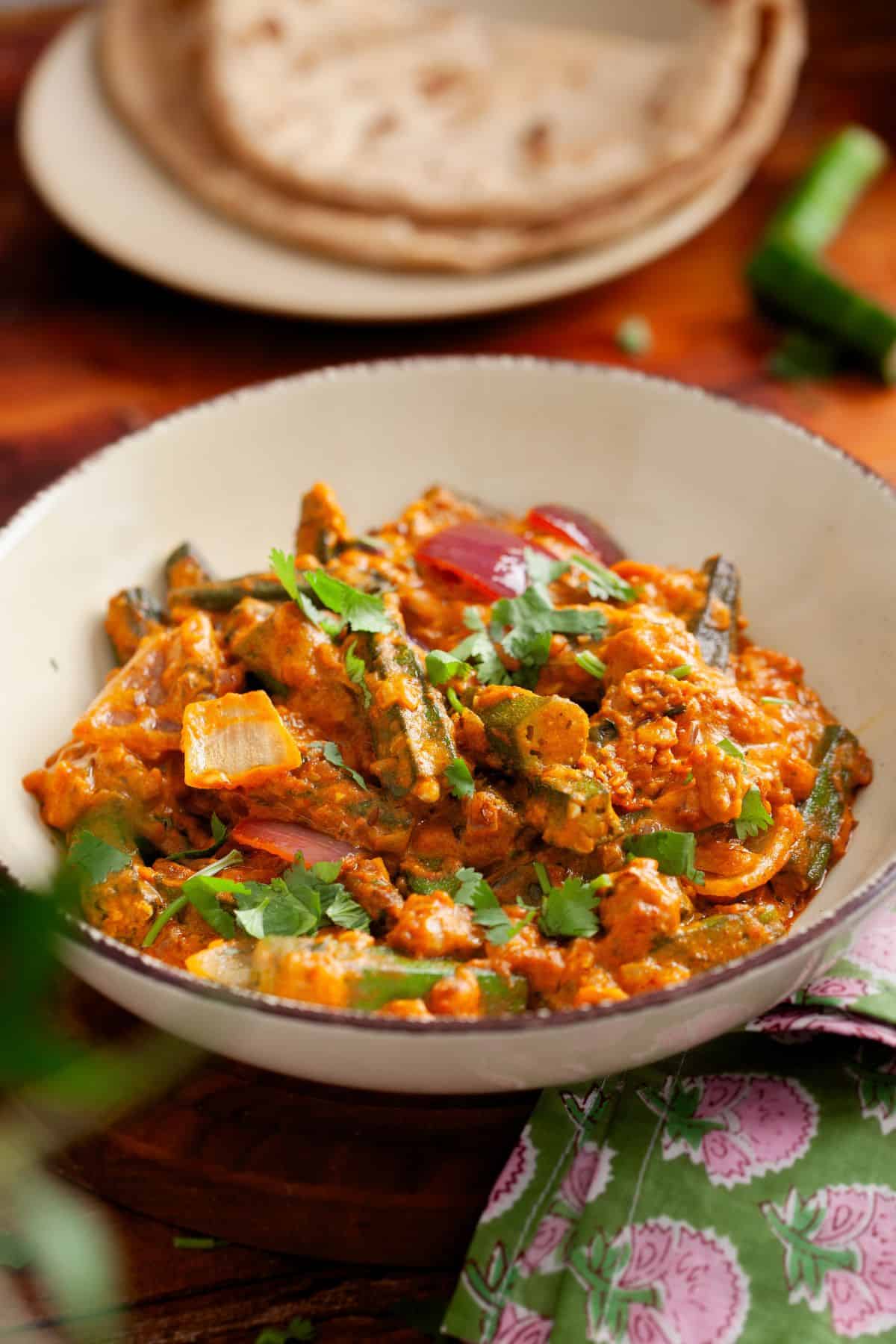
This delicious dhaba-style bhindi masala just hits differently! It's a notch above your everyday homestyle bhindi sabzi. The bhindi stays tender yet slightly crisp and is coated in a thick, spicy, nutty masala. Not the soggy, slimy kind you sometimes dread - but the good stuff! The kind you would eagerly want to scoop up with hot, flaky tandoori rotis on the side.
The best part? It's an easy recipe with no shortcuts and no cutting corners. All you need is good technique, a little patience, and you'll have a bhindi masala that tastes straight out of a roadside dhaba.

I grew up eating this bhindi masala on our road trips, when we'd pull over at a dusty little dhaba and order a simple meal that somehow tasted better than anything fancy. The okra were, spicy, a little oily (because dhaba food should be unapologetically rich!) and with a sweetness of onions packed in every bite. Today, we're recreating that magic right in our kitchen.
My Recipe
- Like my dhaba style paneer bhurji, one of the key ingredients in the masala for bhindi is besan (gram flour). Besides making the masala nutty, stay thick and clingy instead of becoming watery or slippery, besan also absorbs the natural sliminess of okra to give you the perfect texture that we often associate with dhaba style dishes.
- Unlike besan bhindi, where gram flour takes center stage, in this recipe the besan quietly blends into the masala. You won't really taste it-it just adds that subtle, earthy sondha flavor we all love
- For this recipe, it's best to cut the bhindi lengthwise. If the bhindi are too long, I halve them. This not only helps retain its structure during cooking but also gives the final dish a classic, appealing presentation.
- North indian love to add onion petals to their sabzis so I like to add chunks of onion to my bhindi masala because the combination of soft, slightly sweet onions with tender bhindi is absolutely terrific. You may skip them.
Say Goodbye to Slimy Bhindi!
I've shared many tips for achieving non-slimy okra in my previous bhindi recipe pots. Here's are the ones I swear by:-
- You've gotta wash the bhindi ahead of time and let it dry completely before chopping. I usually just wash it a few hours ahead, or even the day before, and leave it out to air dry. Trust me, it's a total game changer.
- Another little trick. Quickly frying the bhindi in oil before adding it to the masala helps it stay nice and green, keeps a good bite, and seriously cuts down on the sliminess too.
- Don't skimp on the oil whenever you cook bhindi. It avoids the steaming of vegetables which it turn not only locks the vibrant color of the vegetable, rather keeps the texture crisp and bright.
- Lastly, try not to stir the bhindi too much while it's cooking. I know it's tempting, but the more you stir, the more it can turn mushy and release that sliminess

Let's Make Dhaba Bhindi Masala At Home
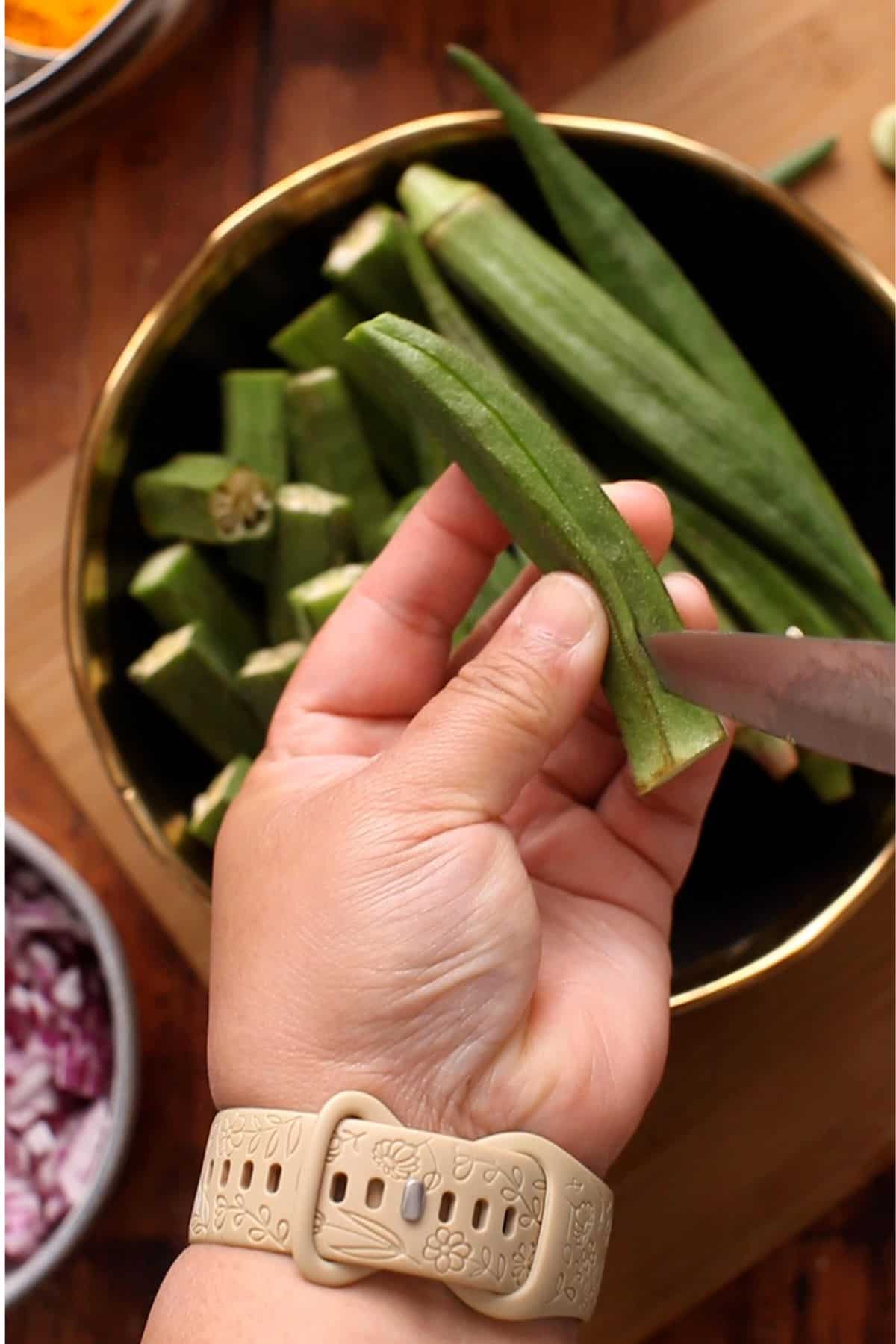
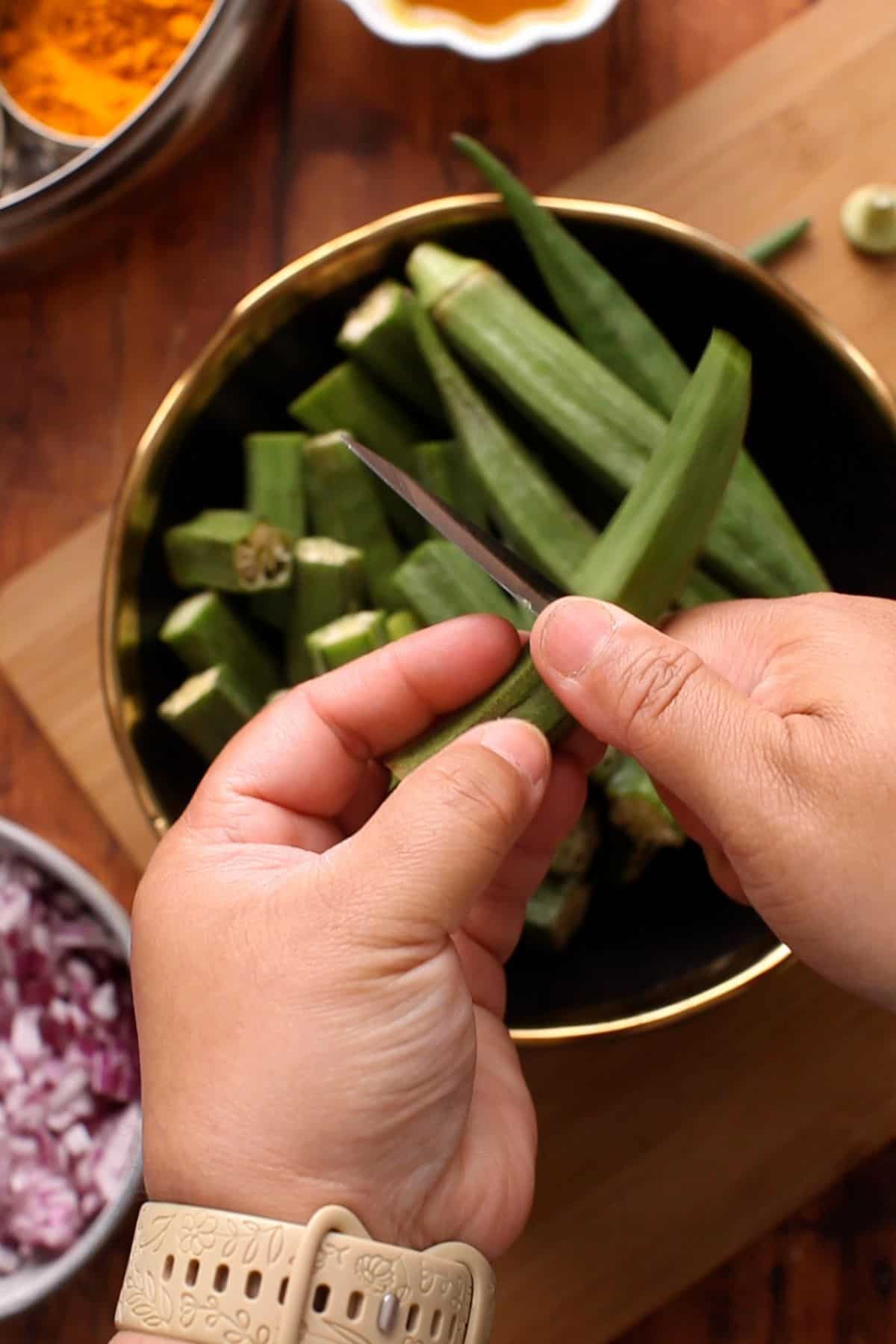
- Wash, dry thoroughly, and chop off the ends of bhindi. Using a sharp knife, make a slit in the center of each bhindi. Cut into 1.5 inch pieces.
- In a pan, heat up the 2 tablespoon of mustard oil over medium heat.
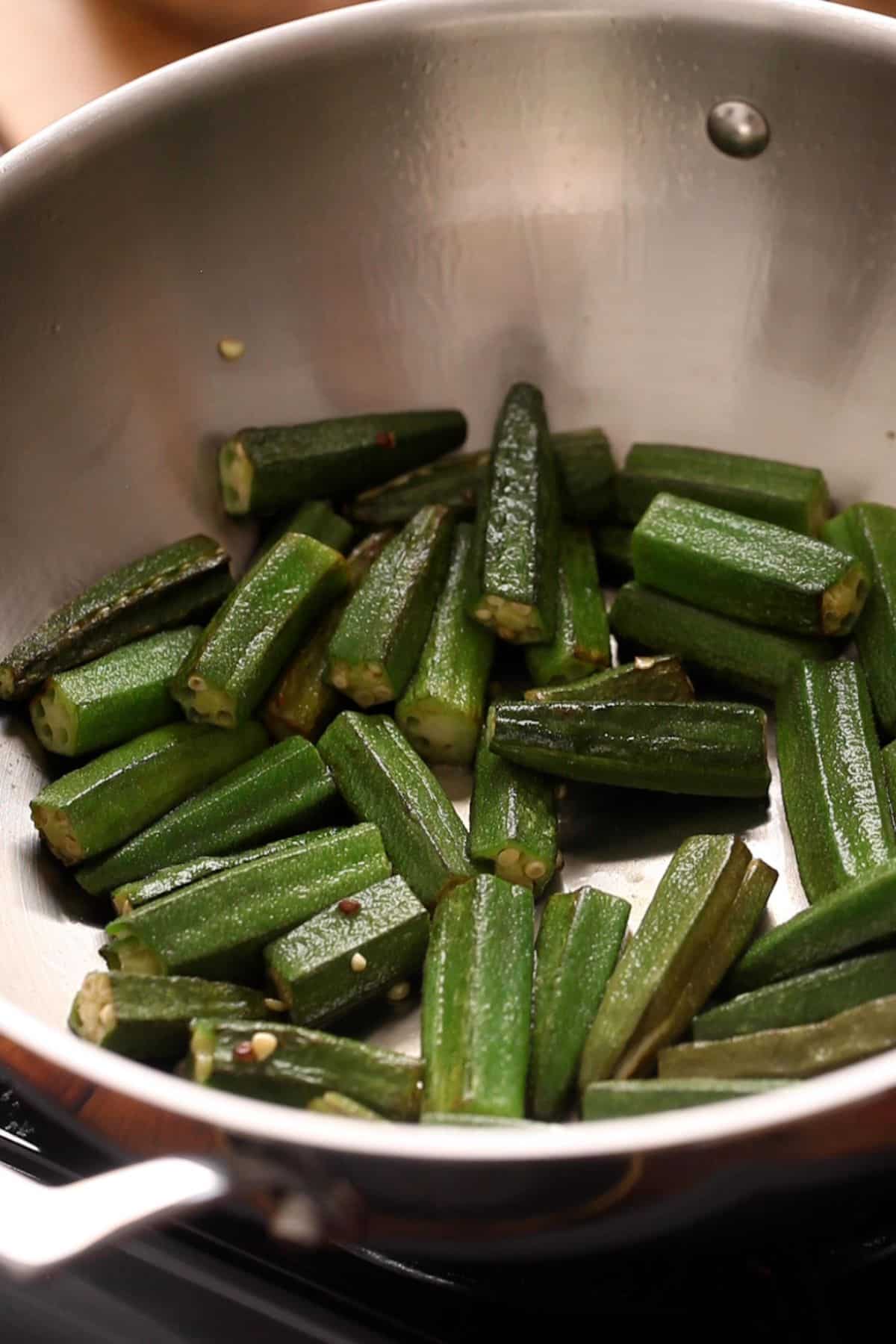
- Add the bhindi to the pan.Sprinkle ½ teaspoon salt. Fry until slightly crispy. Take out in a plate and set aside.
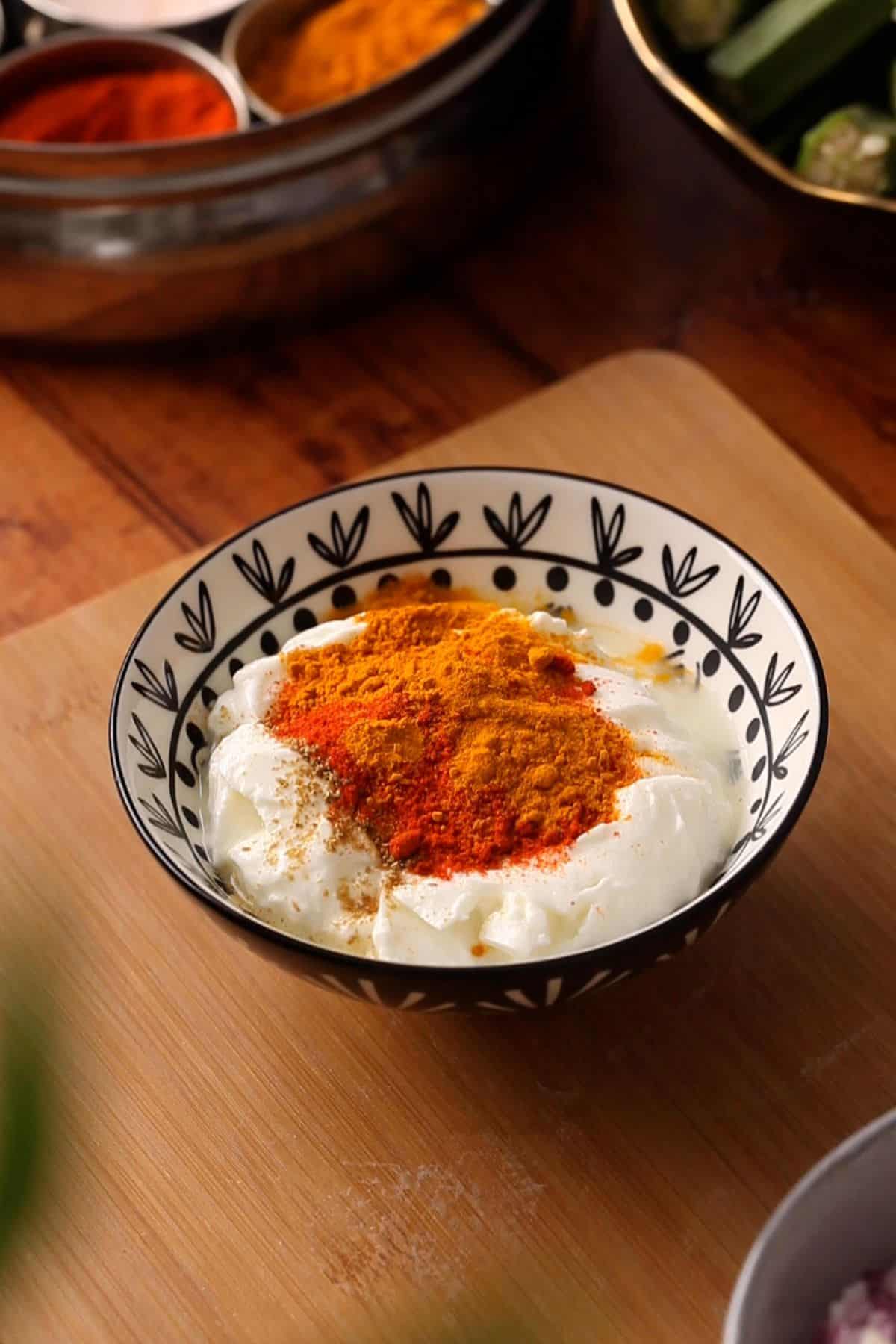
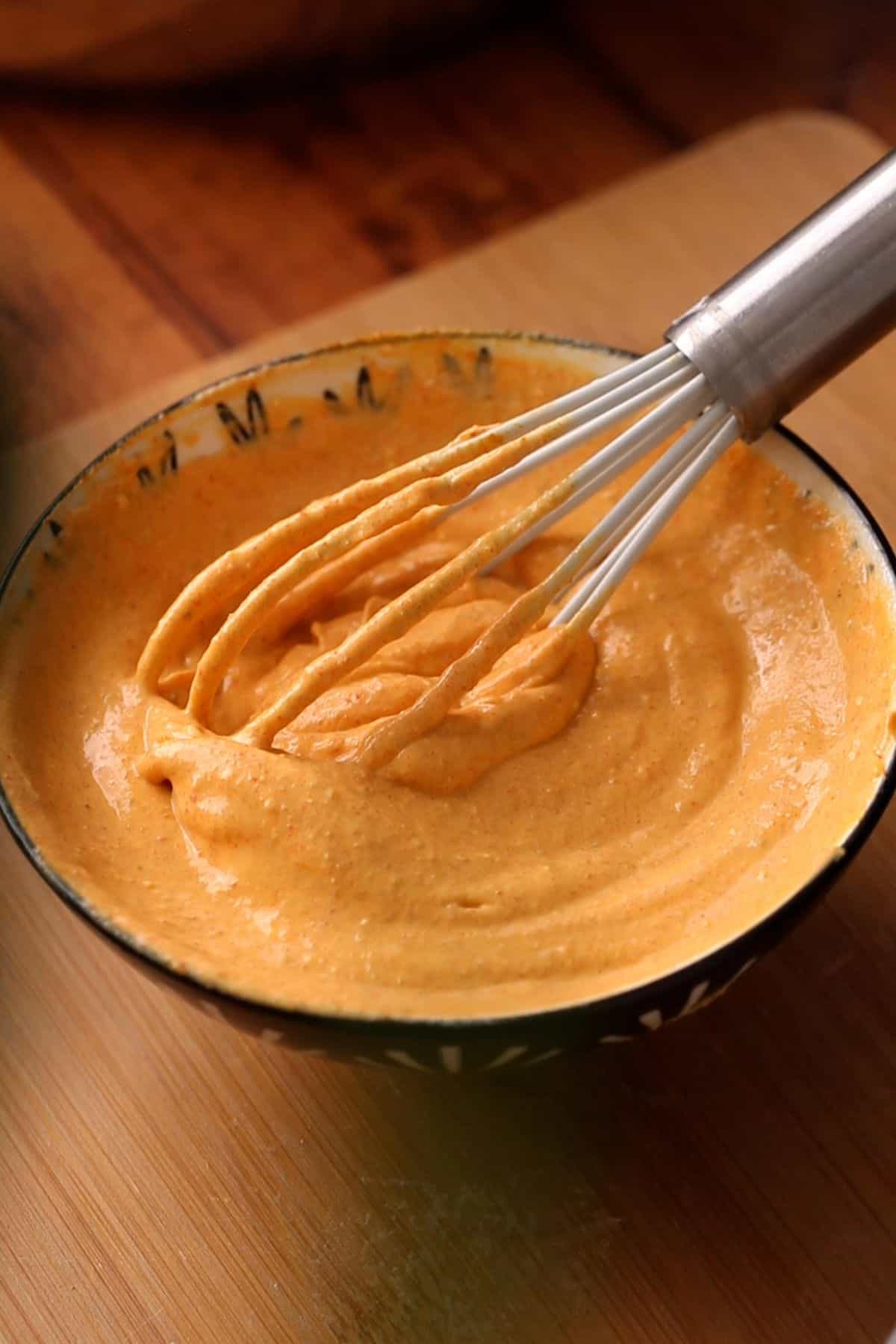
- In a bowl, add room temperature(preferably) yogurt and all the ground spices except garam masala powder. Using a whisk, mix until smooth.Let stand
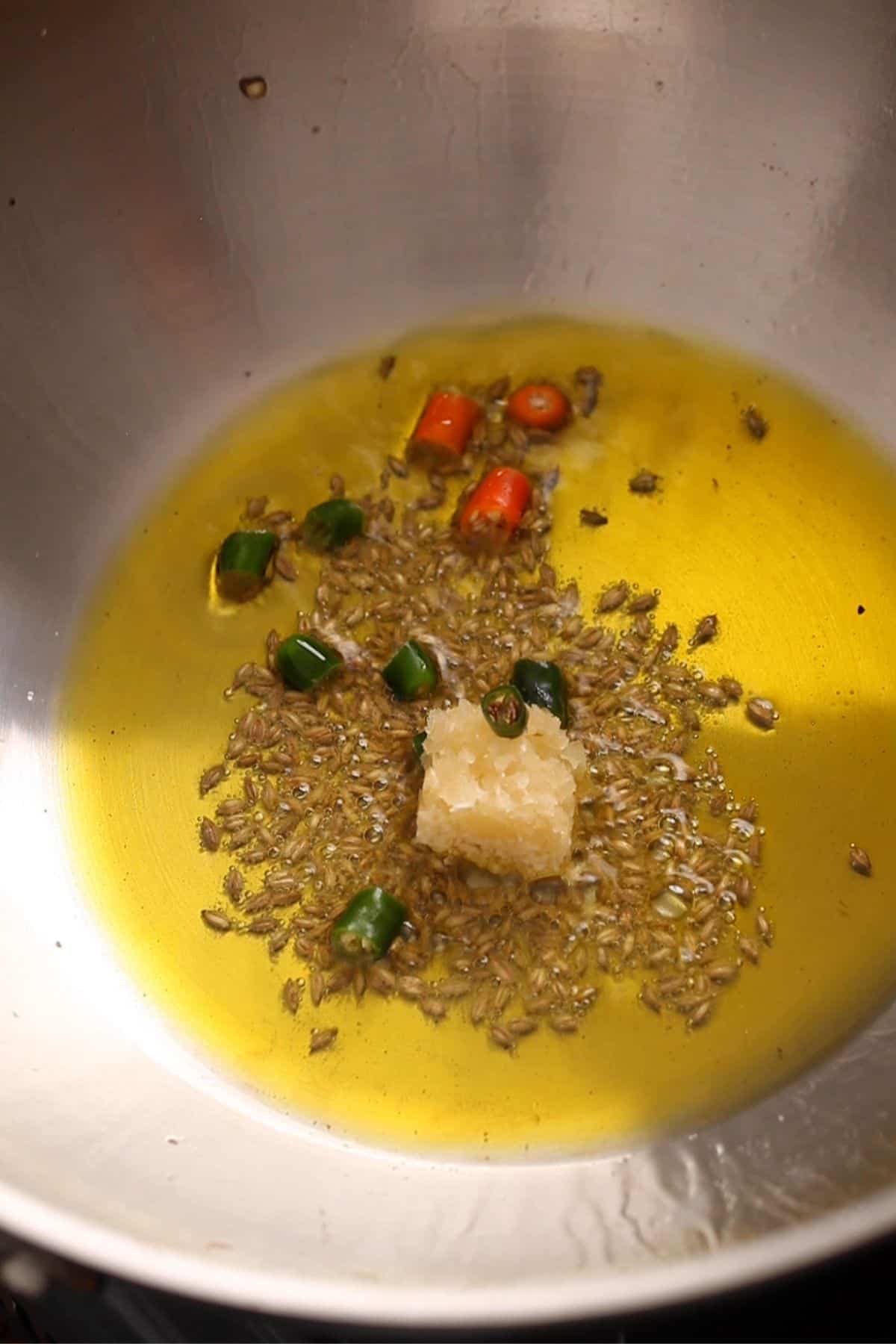
- In the same heat up remaining oil. Temper with cumin seeds, garlic paste and chopped green chillies(if using).
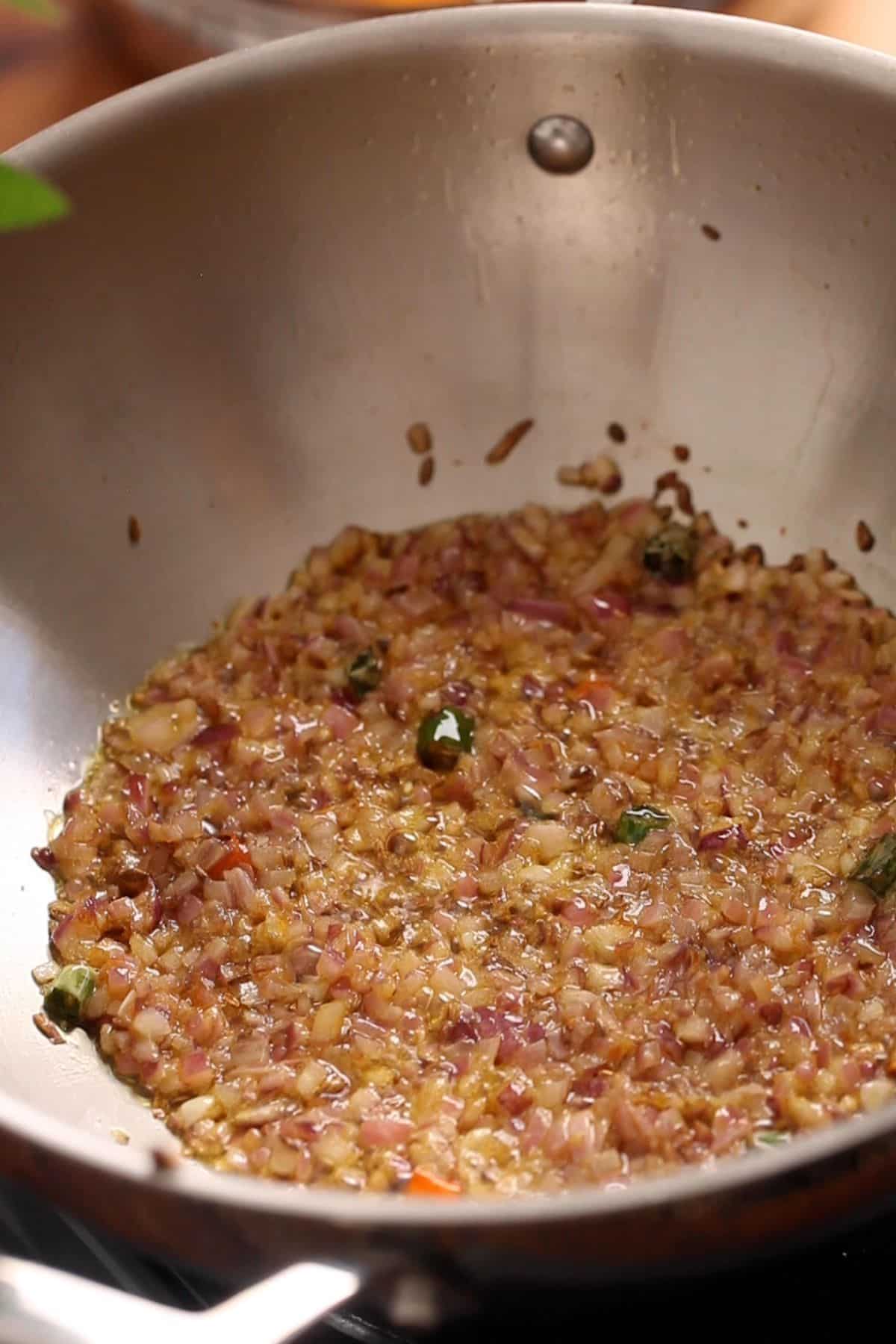
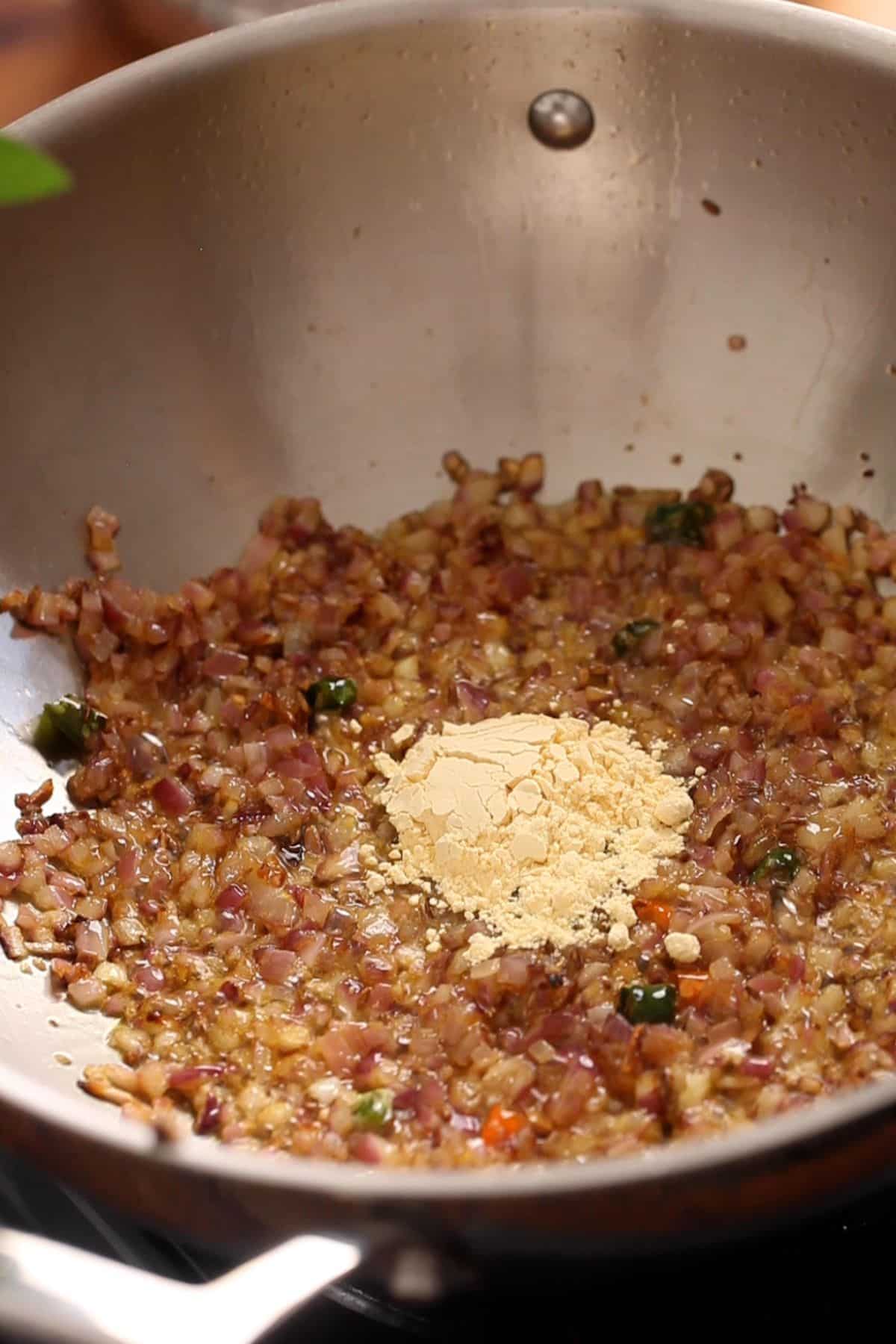
- Add the chopped onions and sauté until golden brown. To the browned onion, add besan and fry for 2-3 minutes on low heat to do away the raw aroma.
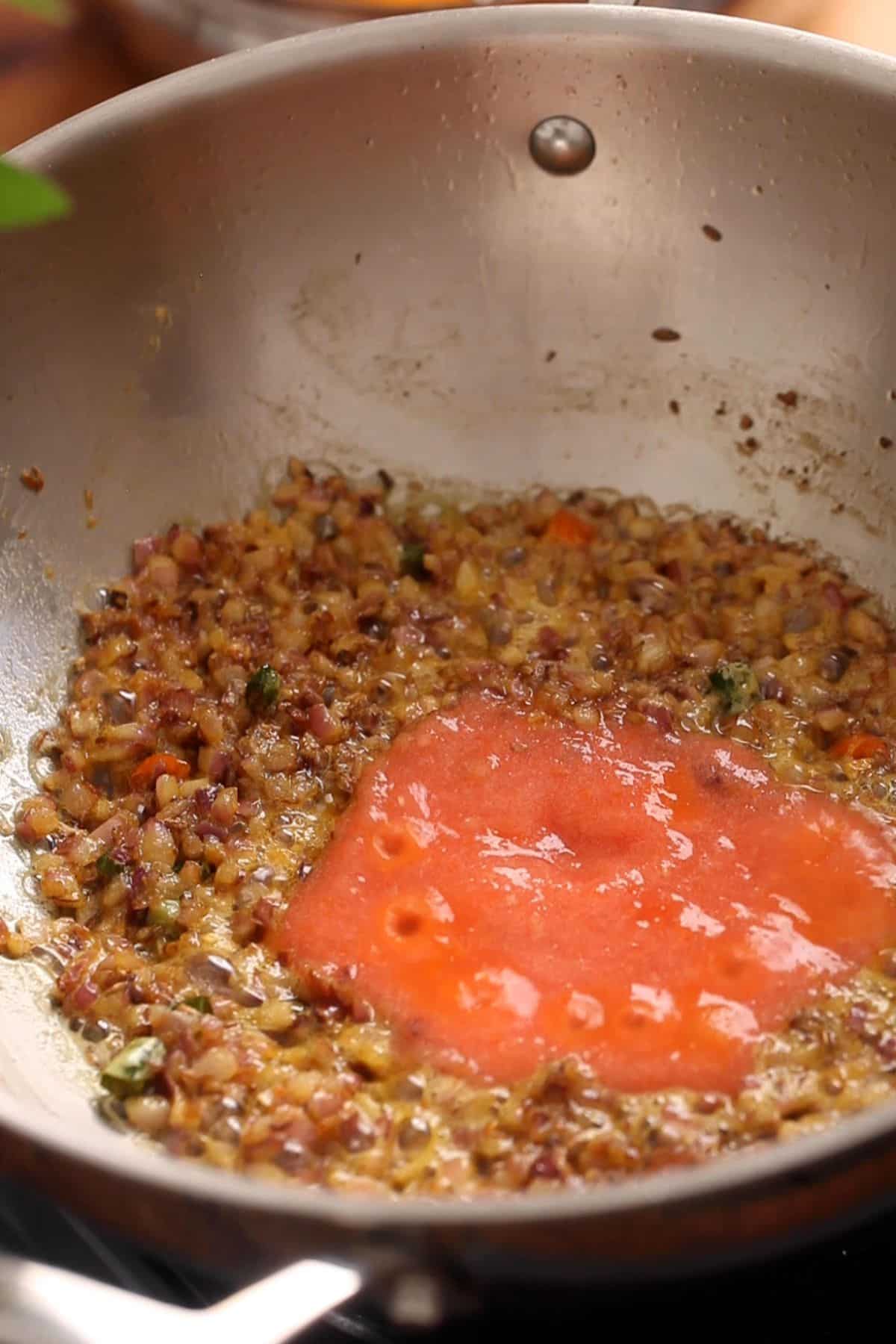
- Next, add the chopped tomatoes and cook until you start to see oil seperating.
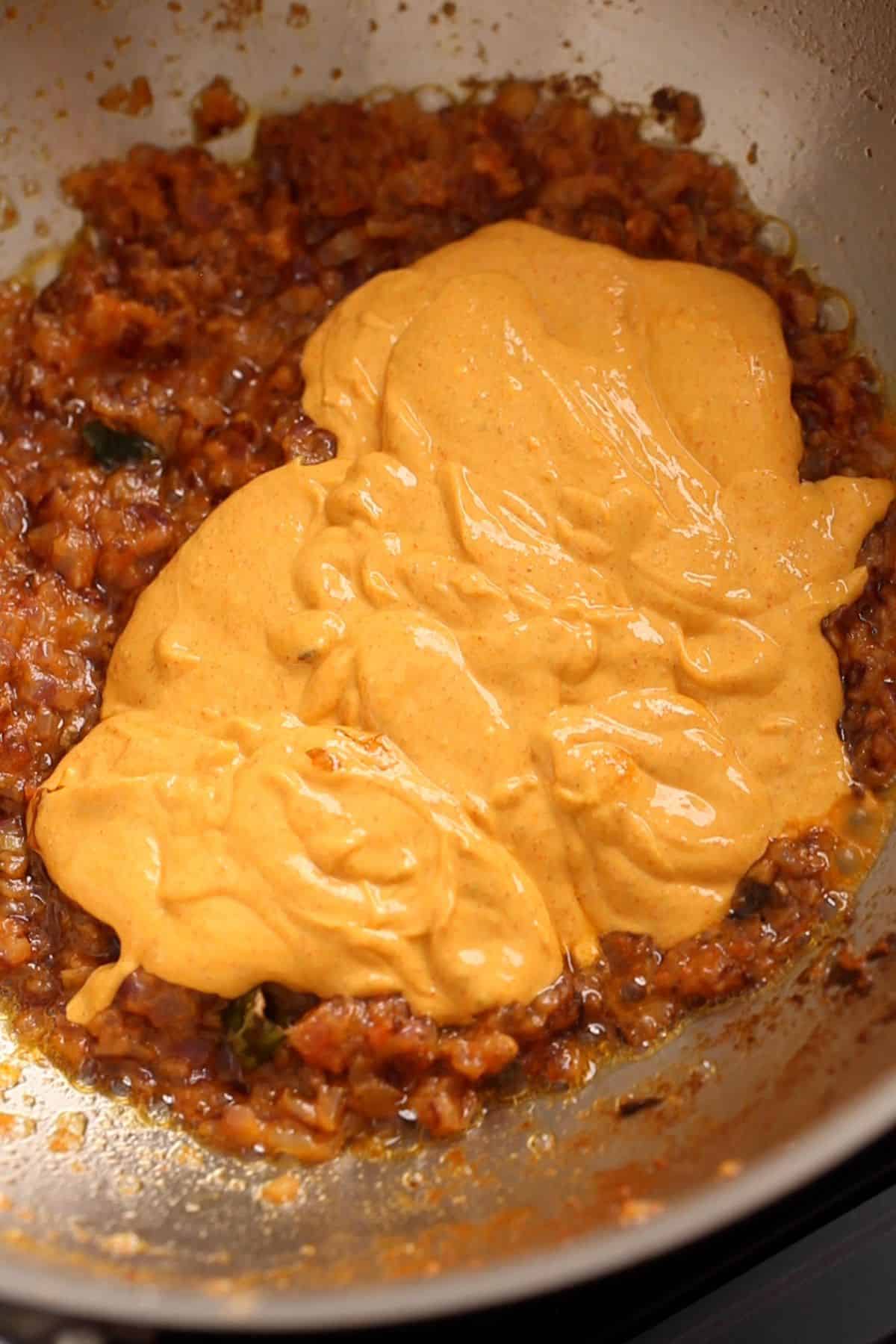
- Reduce the heat to low, then add the yogurt mixture. Stir continuously and cook until the yogurt thickens and you see oil bubbles rising to the surface.
- Add salt along with 2-3 tablespoons of water to thin out the masala and then add the onion petals if using. Let the onion soften slightly.
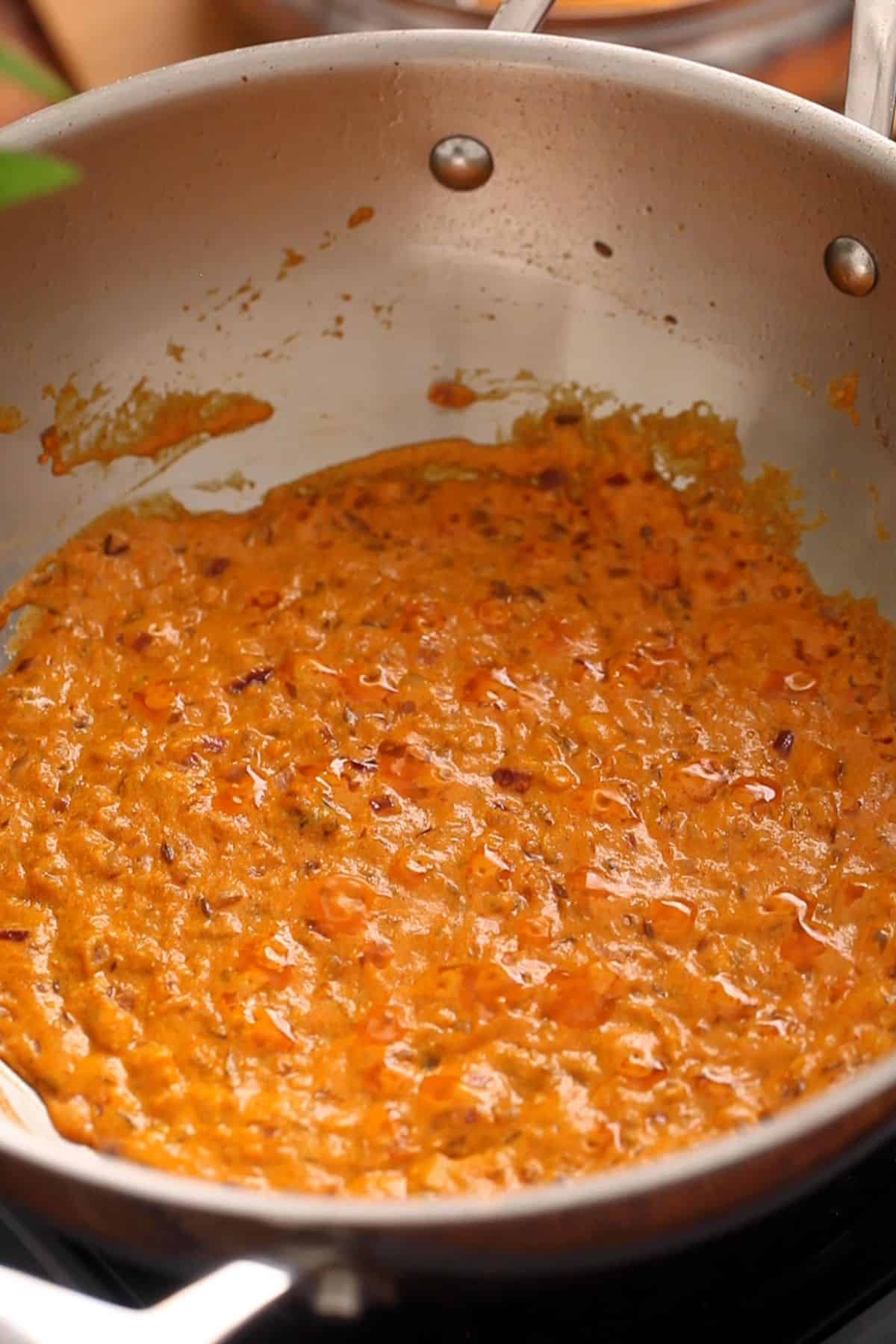
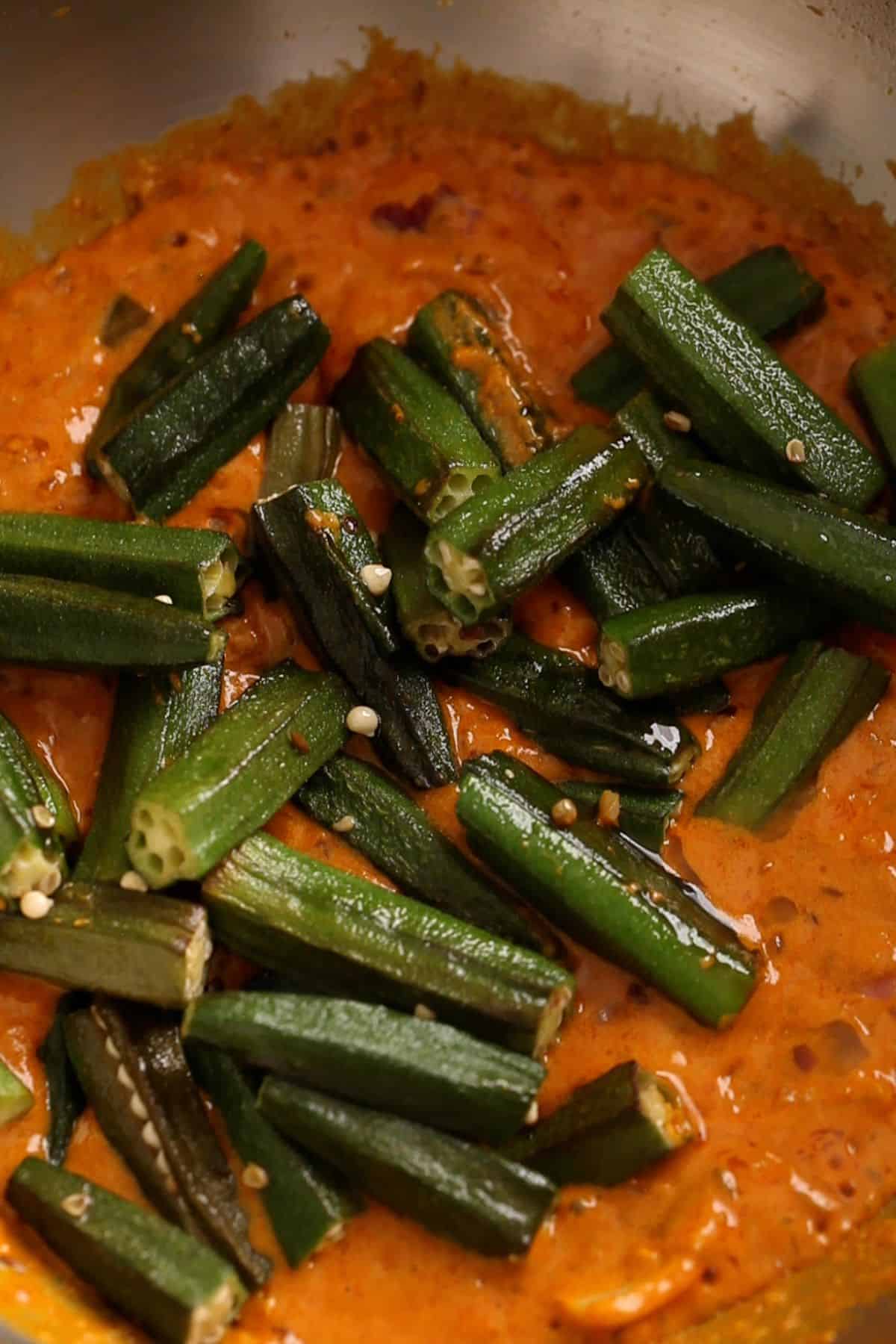
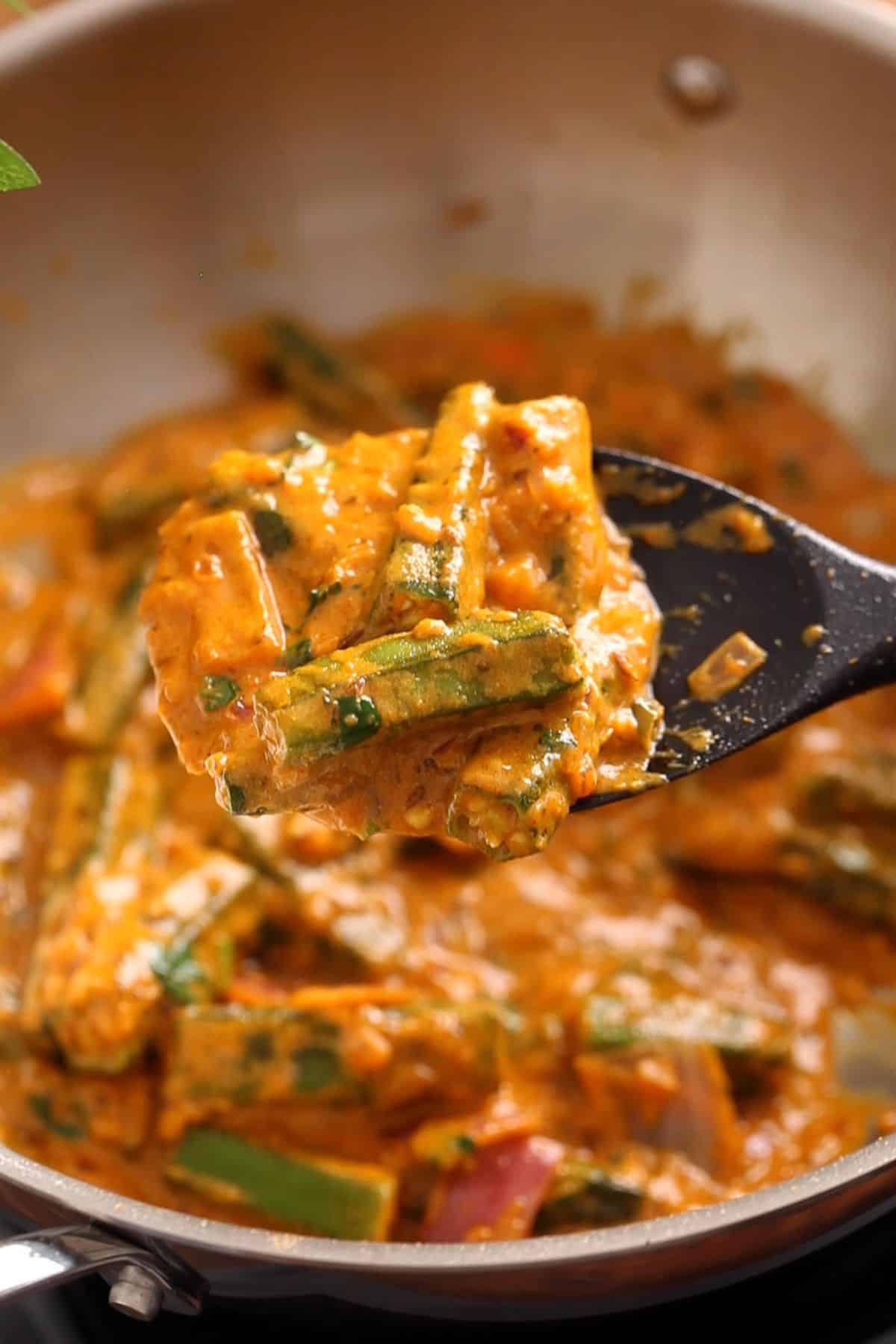
- Return the fried bhindi to the pan and mix well with the masala.If the masala becomes too thick, add a little water.
- Check salt and adjust if needed. Cook for a few more minutes.
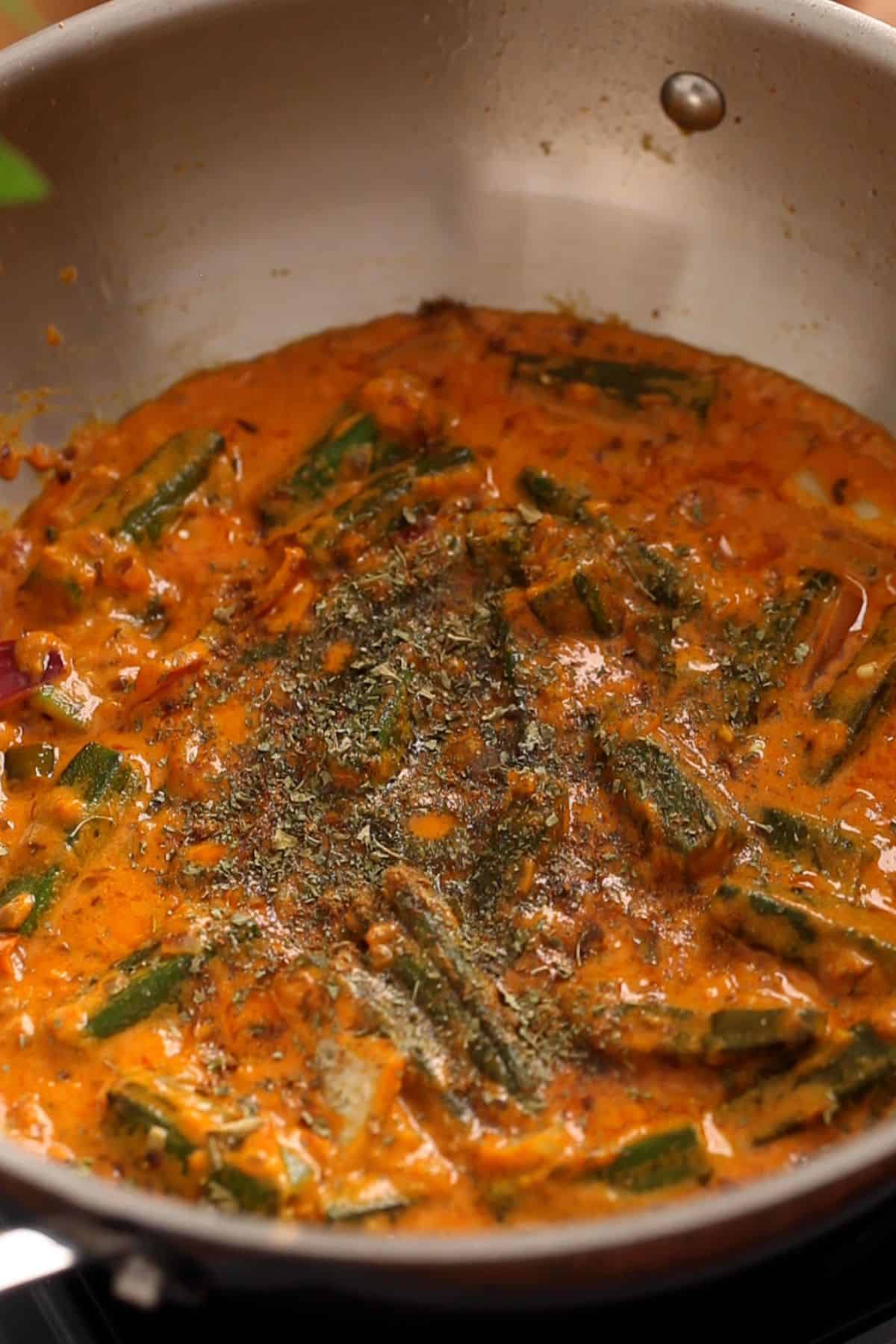
- Finish bhindi masala with garam masala powder, crushed kasuri methi and garnish with fresh cilantro before serving.
Recipe Tips
- Be careful while adding water to the masala. Add slowly just to adjust the consistency slightly. The masala should be on the thickish side.
- Serve bhindi masala with flatbreads. It also goes well with plain rice and dal tadka.

Dhaba Style Bhindi Masala Recipe
Ingredients
- 300 g bhindi
- 4-5 tablespoon mustard oil
- 1 teaspoon garlic paste
- 1-2 green chilli (hot) chopped, adjust quantity to taste
- 130 g onion finely chopped
- ½ tablespoon besan gram flour
- 60 g tomatoes crushed
- 140 g plain yogurt thick curd, not too sour
- ⅓ cup hot water or as needed
- ½ cup onion petals optional
- 1 teaspoon kasuri methi
Spices
- ½ teaspoon cumin seeds
- 1 teaspoon kashmiri red chili powder (medium hot), I use deggi mirch, adjust quantity to taste
- ½ teaspoon red chili powder (hot!), adjust quantity to taste
- 1+¼ teaspoon coriander powder
- ½ teaspoon turmeric powder
- ½ teaspoon garam masala powder
Instructions
- Wash the okra thoroughly and pat completely dry using a kitchen towel. Trim the ends and make a slit lengthwise(not all the way through) in each bhindi using a sharp knife. Cut each into 1.5-inch pieces.
- Heat 2 tablespoons of mustard oil in a pan over medium heat. Add the bhindi and sprinkle with ½ teaspoon salt. Sauté until lightly crispy and golden. Remove to a plate and set aside.
- In a bowl, whisk room temperature yogurt with all the ground spices except garam masala powder. Mix until smooth and lump-free. Let this sit while you prepare the rest.
- In the same pan, heat up the remaining oil. Add cumin seeds and let them crackle. Stir in garlic paste and chopped green chilies (if using).
- Add chopped onions and fry for 5-7 minutes on low medium heat until deep golden brown. This builds the savory base typical of dhaba-style dishes.
- Sprinkle in the besan (gram flour) and sauté on low heat for 2-3 minutes to eliminate any raw taste. It adds nuttiness and helps thicken the masala.
- Mix in the crushed tomatoes and cook until the oil begins to separate from the sides.
- Lower the heat and add the whisked yogurt-spice blend. Stir continuously while cooking until the yogurt thickens and oil starts to release. This helps prevent curdling of yogurt and gives the dish its signature creamy tang.
- Add salt to taste once yogurt has cooked off and ¼ cup of hot water if needed to adjust consistency. If using, stir in onion petals and let them soften slightly.
- Add the fried bhindi back to the pan and mix well. If the masala feels too thick, loosen it slightly with a splash of water. Cover and let cook for 3-5 minutes or until bhindi is fully cooked.
- Sprinkle in garam masala, crushed kasuri methi, and freshly chopped cilantro. Serve hot with rotis, parathas, or dal-chawal.
Video
Notes
-
- Be careful while adding water to the masala. Add slowly just to adjust the consistency slightly. The masala should be on the thickish side.
- Don't skimp on the oil whenever you cook bhindi. It avoids the steaming of vegetables which it turn not only locks the vibrant color of the vegetable, rather keeps the texture crisp and bright.
- Lastly, try not to stir the bhindi too much while it's cooking. I know it's tempting, but the more you stir, the more it can turn mushy and release that sliminess

Naina says
Everyone in my family loved this style of bhindi. Lightly crisped, just enough to keep a bite, then drenched in that creamy, tangy masala that clings to every ridge of the bhindi. Needless to say, there were no leftovers.
Tanvi Srivastava says
Hi Naina,
Thank you so much for your feedback. I am so glad to know that you enjoyed the recipe.