

Your search for the perfectly crispy & flaky punjabi samosa recipe ends here! Make these golden, street-style aloo samosas stuffed with an onion & garlic free spiced potato filling that packs just the right punch! I've shared plenty of tips, my learnings from rigorous recipe testing, and detailed step-by-step photos to guide you all the way.
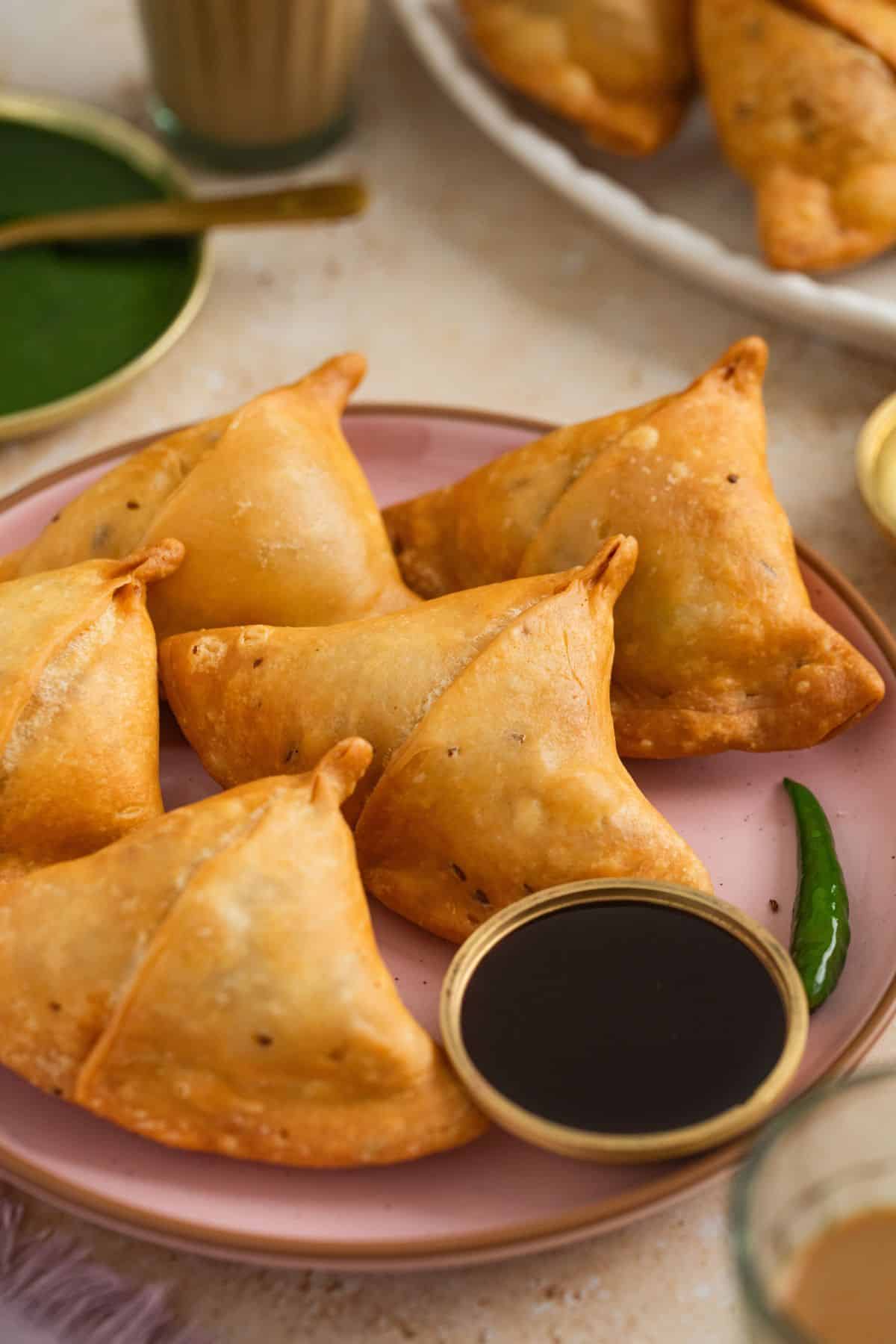
Samosas have been a loved snack in South Asia for ages. In fact, chai samosa is a ritual so deeply loved that it feels woven into Indian culture itself. In college canteen or office lunchroom, nothing quite matched the unbeatable duo!
I grew up enjoying countless homemade samosas during festivals. I won't say making samosas is quick or easy. It's an elaborate process with several steps like preparing the filling, making the dough, shaping the pastry, and then patiently deep-frying them.
But if you choose a slow day, the process itself becomes enjoyable. And the result? Absolutely worth it! When they come straight out of the hot oil with that steamy potato filling..wow, it's nothing short of a bite of heaven!
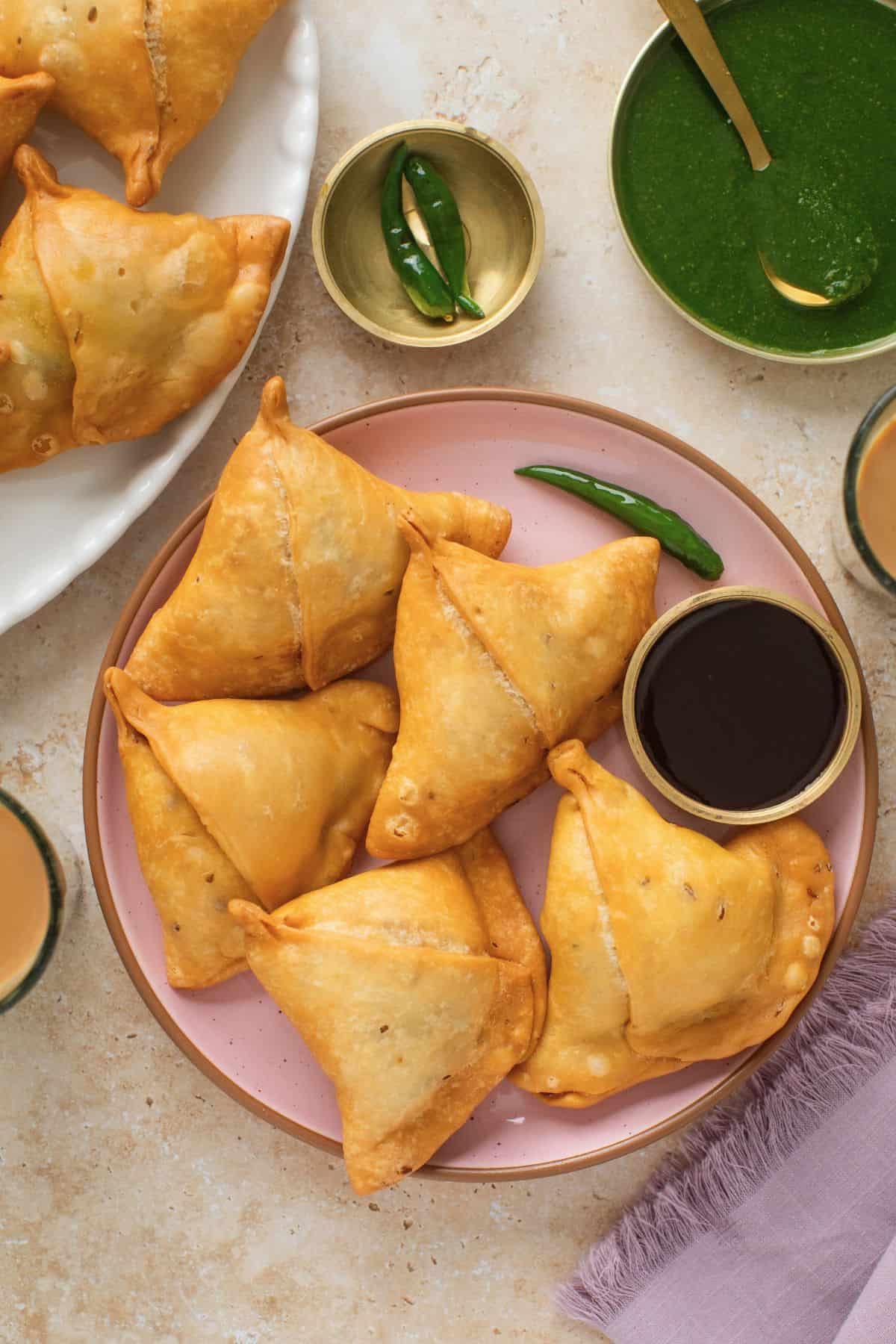
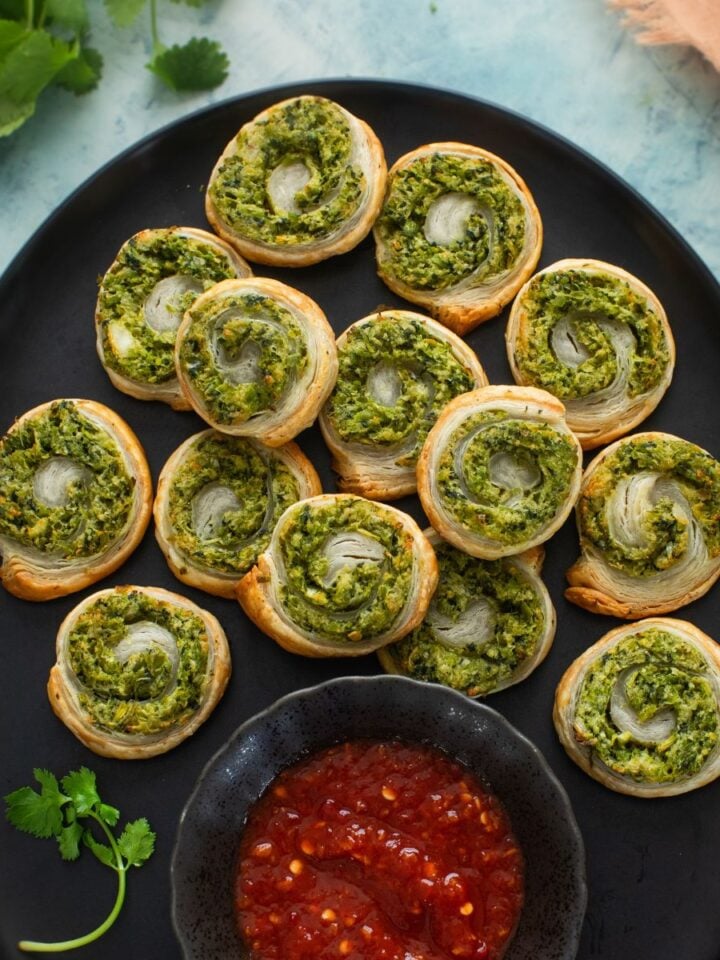
I love serving samosa with cilantro chutney and sweet tamarind chutney. Somedays I turn them into samosa chaat. In recent years, I've even used the samosa filling for fun indian fusion recipes like samosa pinwheels, samosa tart, and samosa pie sticks.
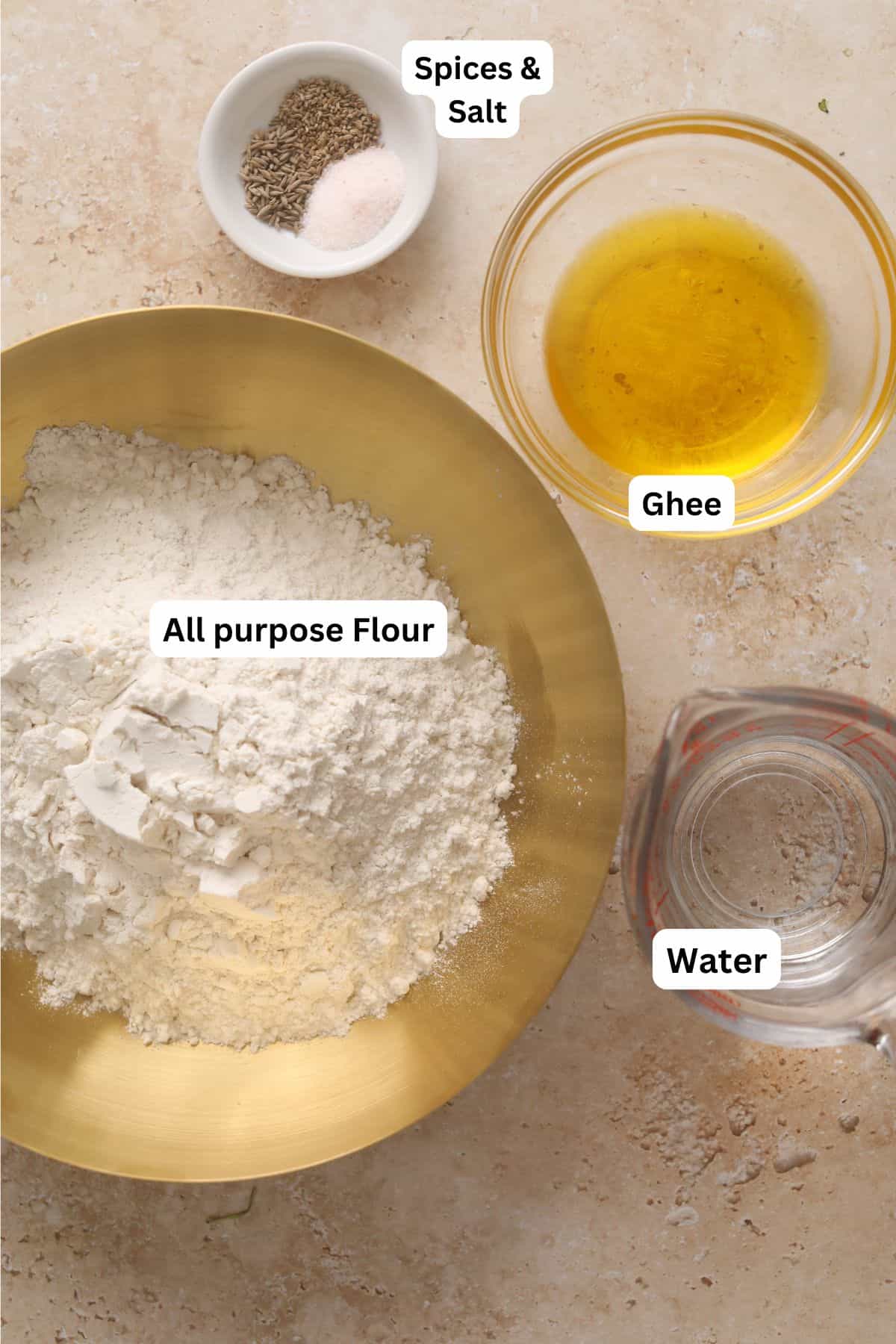
Dough Ingredients
You are going to need basic ingredients such as all purpose flour(maida), ghee(or use oil for vegan), salt and water. I highly recommend that you add ajwain (carrom seeds) and cumin seeds to the dough. These two spices don't look mighty but after deep frying, their flavor makes the crust of samosa taste absolutely fragrant and similar to how samosa from street vendors and halwa(sweet shops) taste.
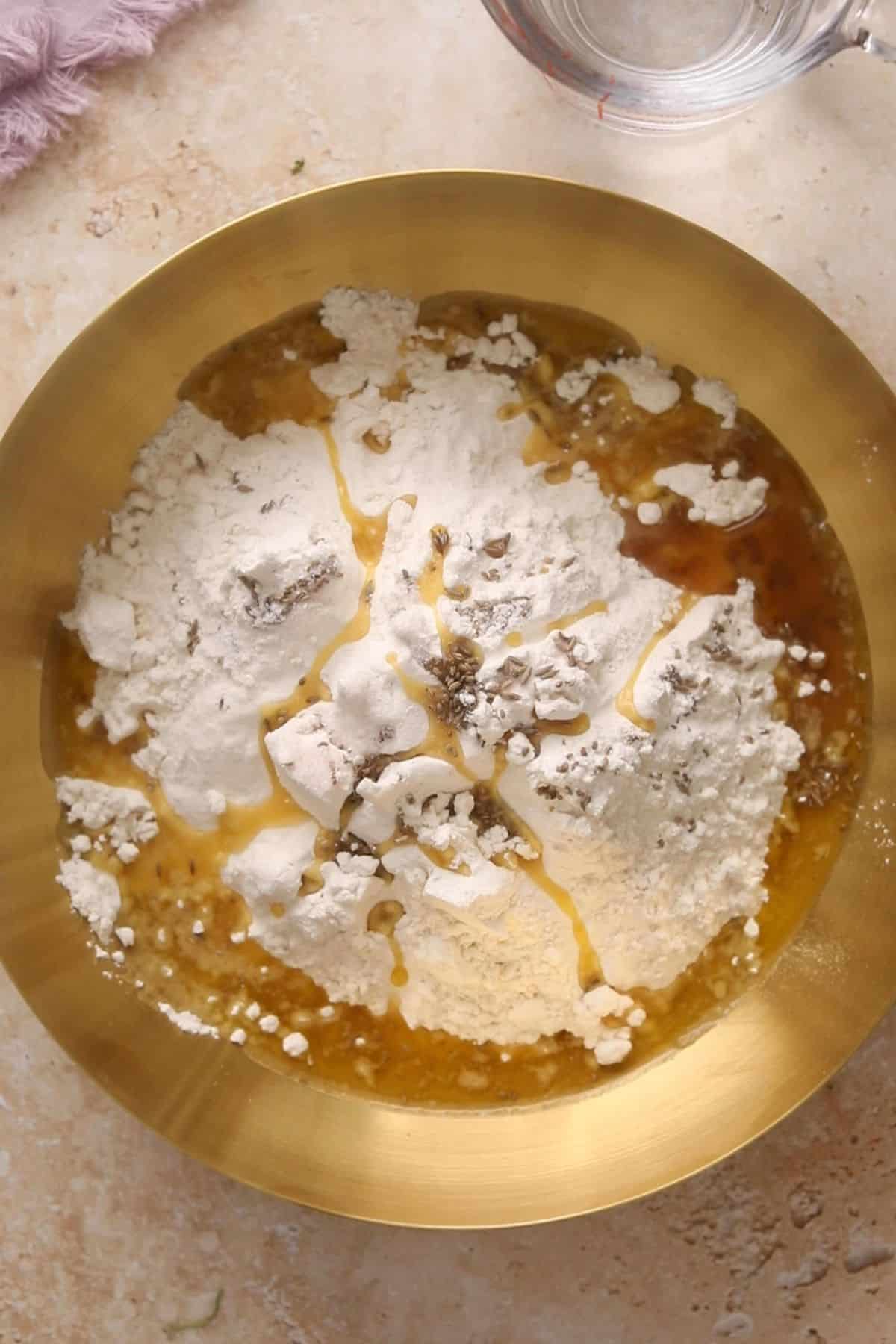
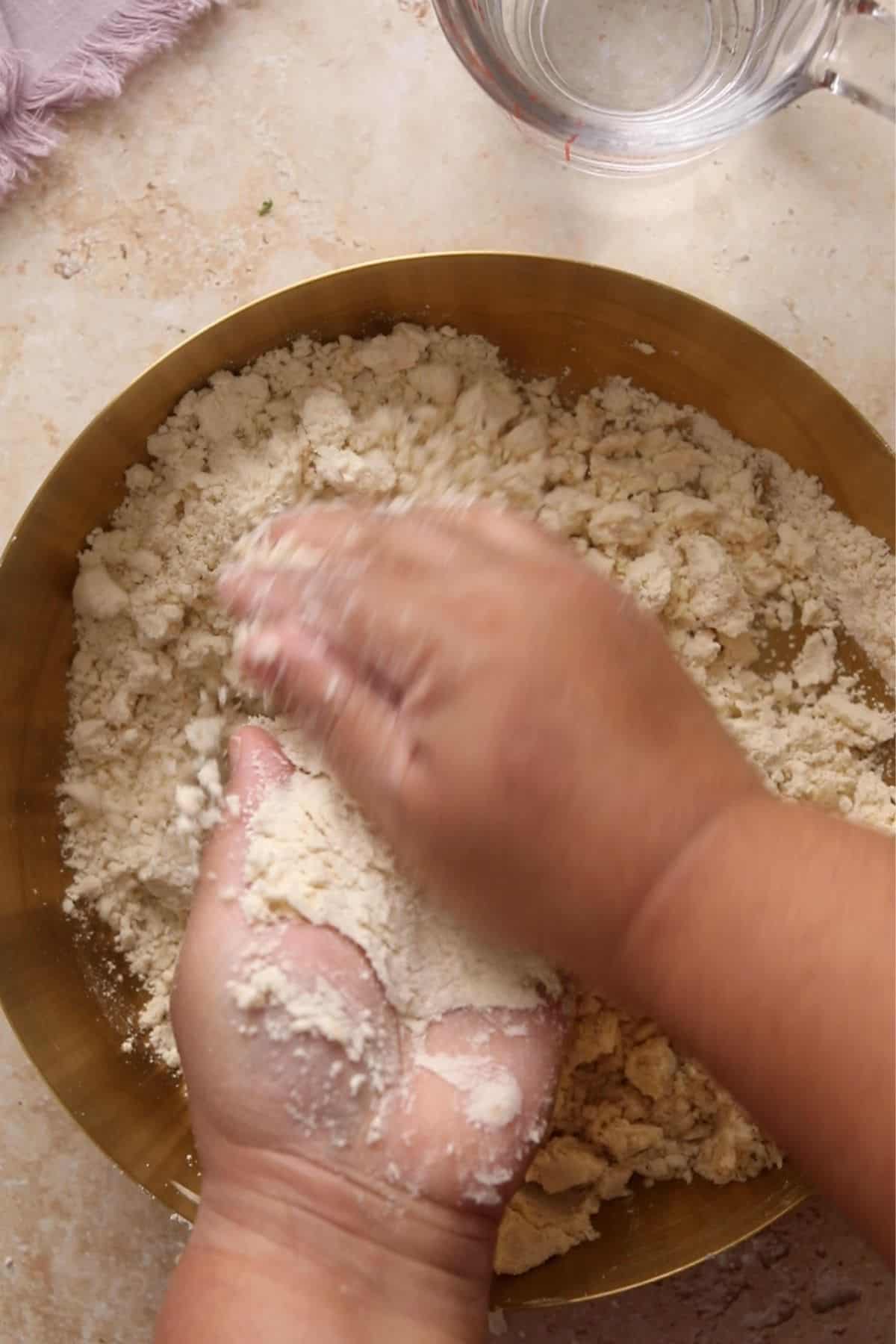
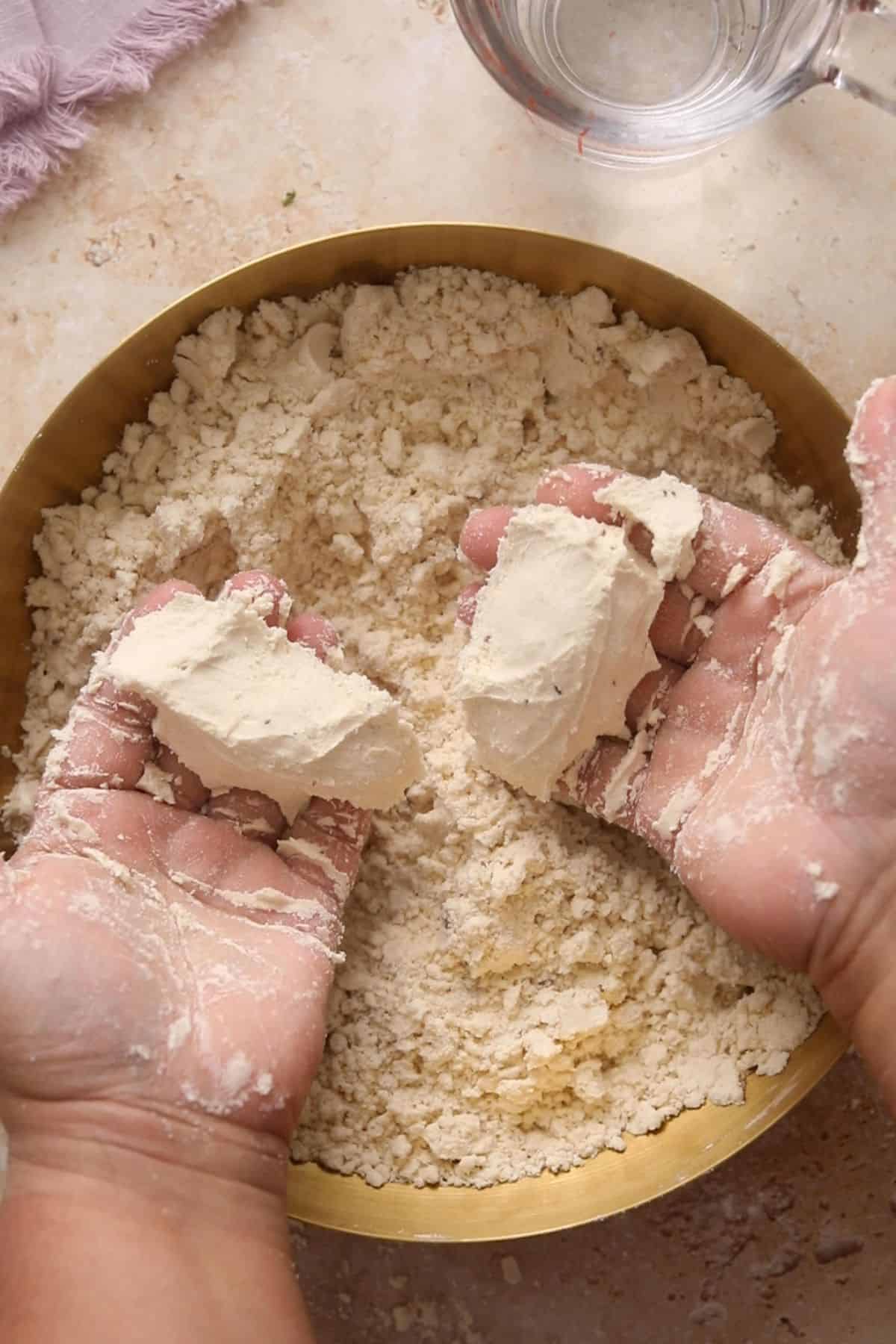
- Add moyan (ghee) to the flour and rub with both hands to moisten the flour very well with ghee . You should be able to make a shape of dough when you press it between hands. This is grandma's way to making sure that the ghee/oil quantity is proper. It is a process similar to making pastry in western cooking.
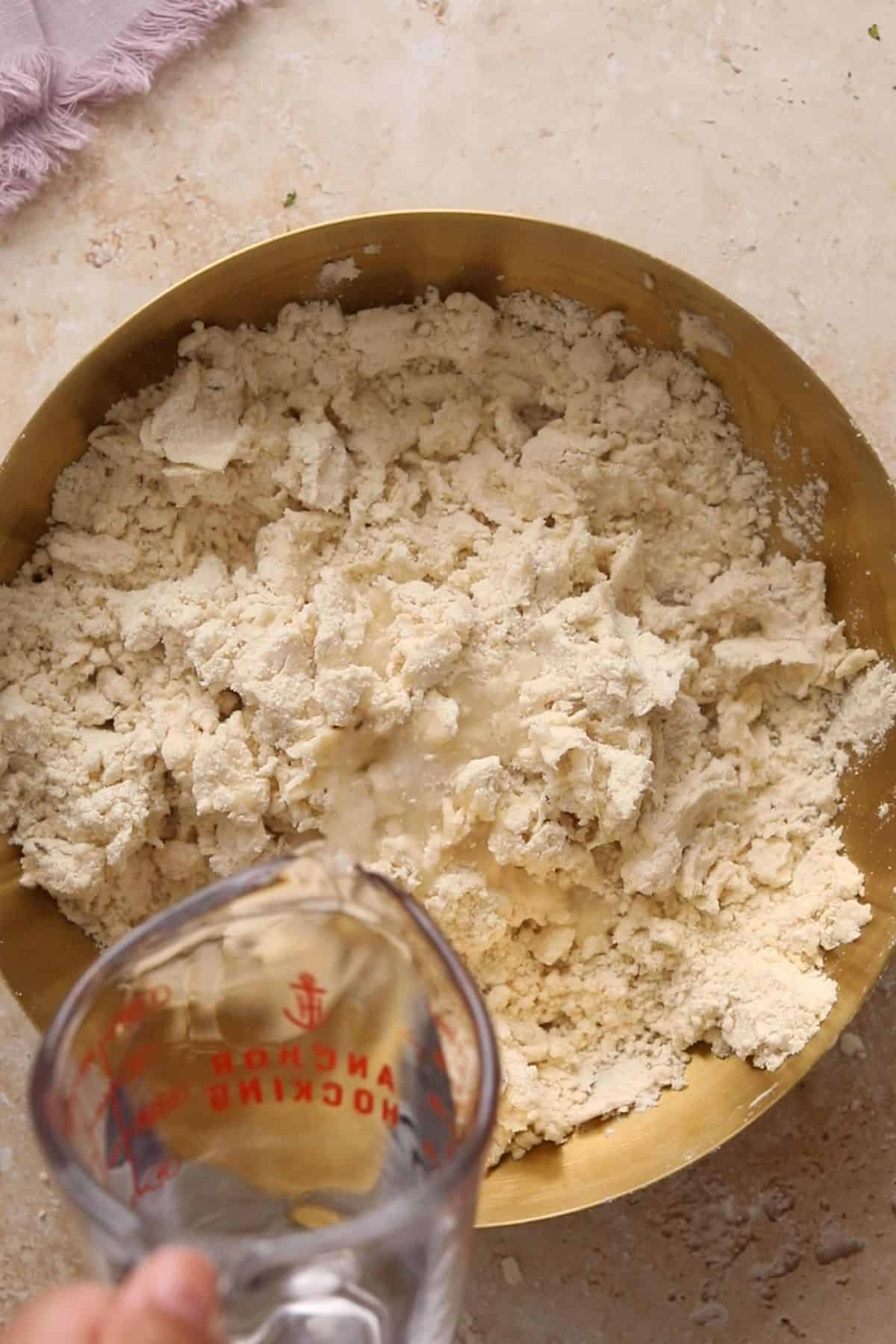
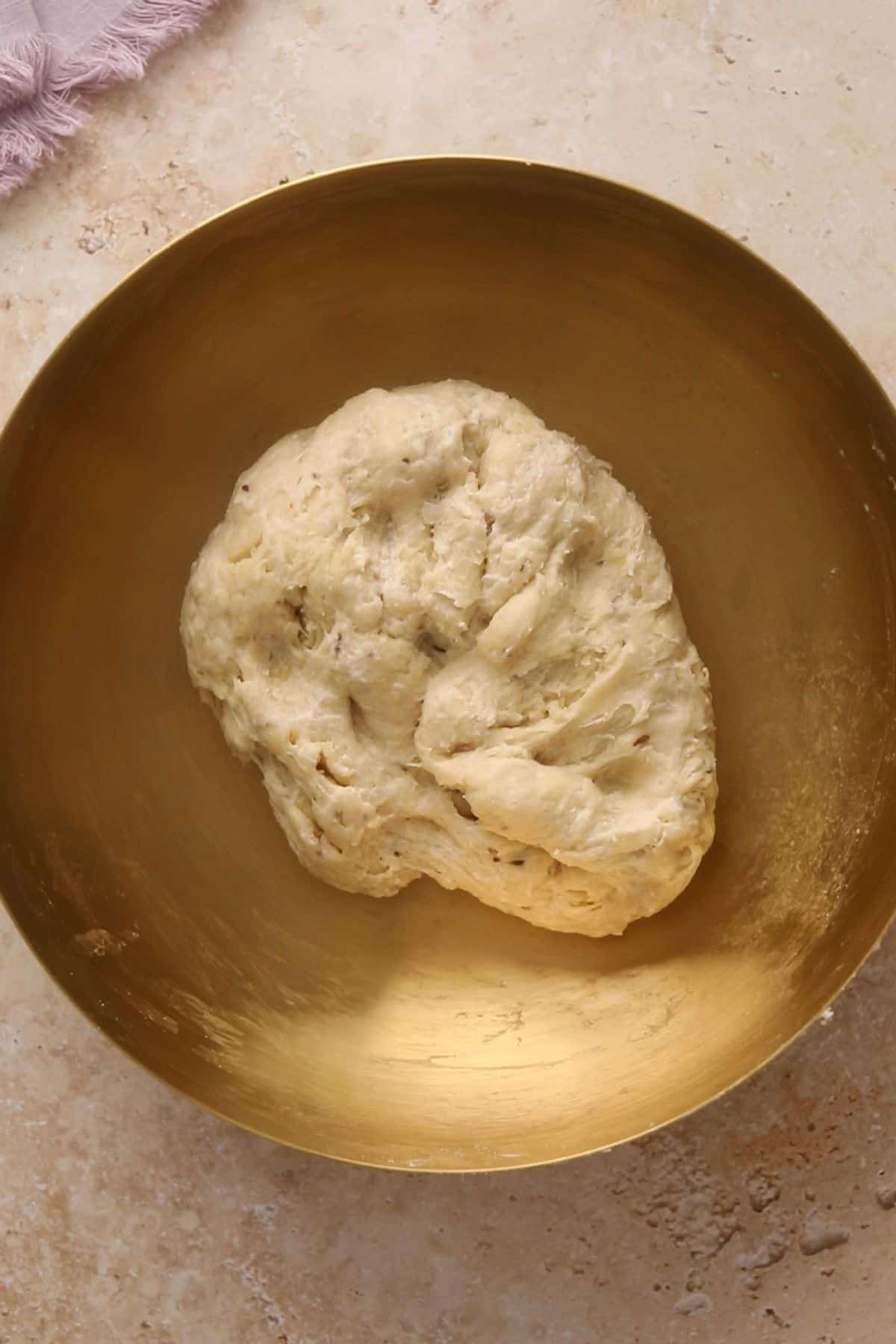
- Add water till it just comes together. Don't mix/work the dough too much. It will look rough & cracked. Don't worry about smoothing it out by over kneading. Dough should be stiff. We don't want to work up the gluten else samosa crust will taste hard instead of crispy.
- Rest the dough for about 30 minutes. This is very important. First the spices get a chance to start their magic by flavoring the dough and secondly, it makes the dough elastic and hence easier to roll and shape. You can decide your work flow but I find its best to prepare the samosa filling while the dough rests.
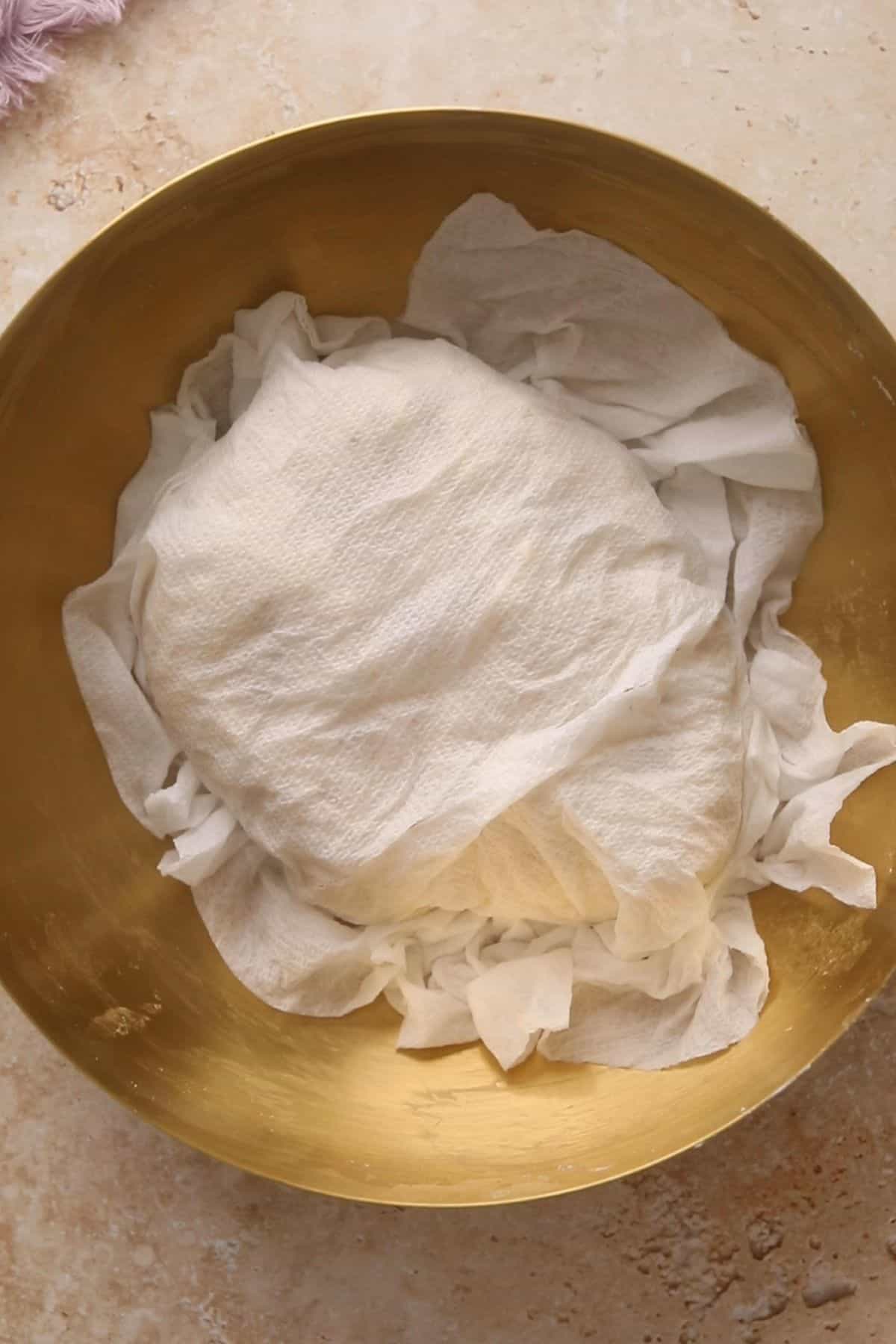
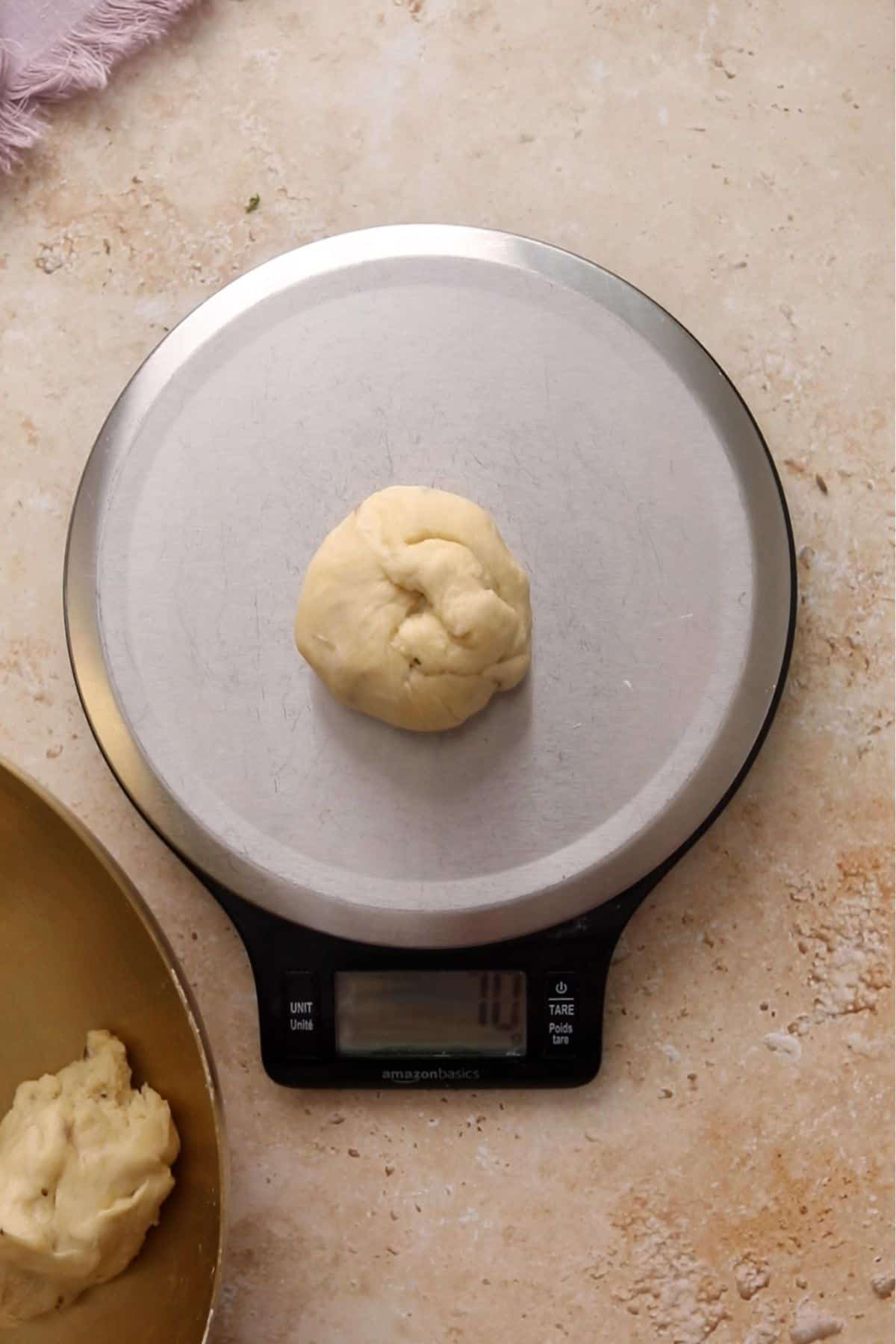
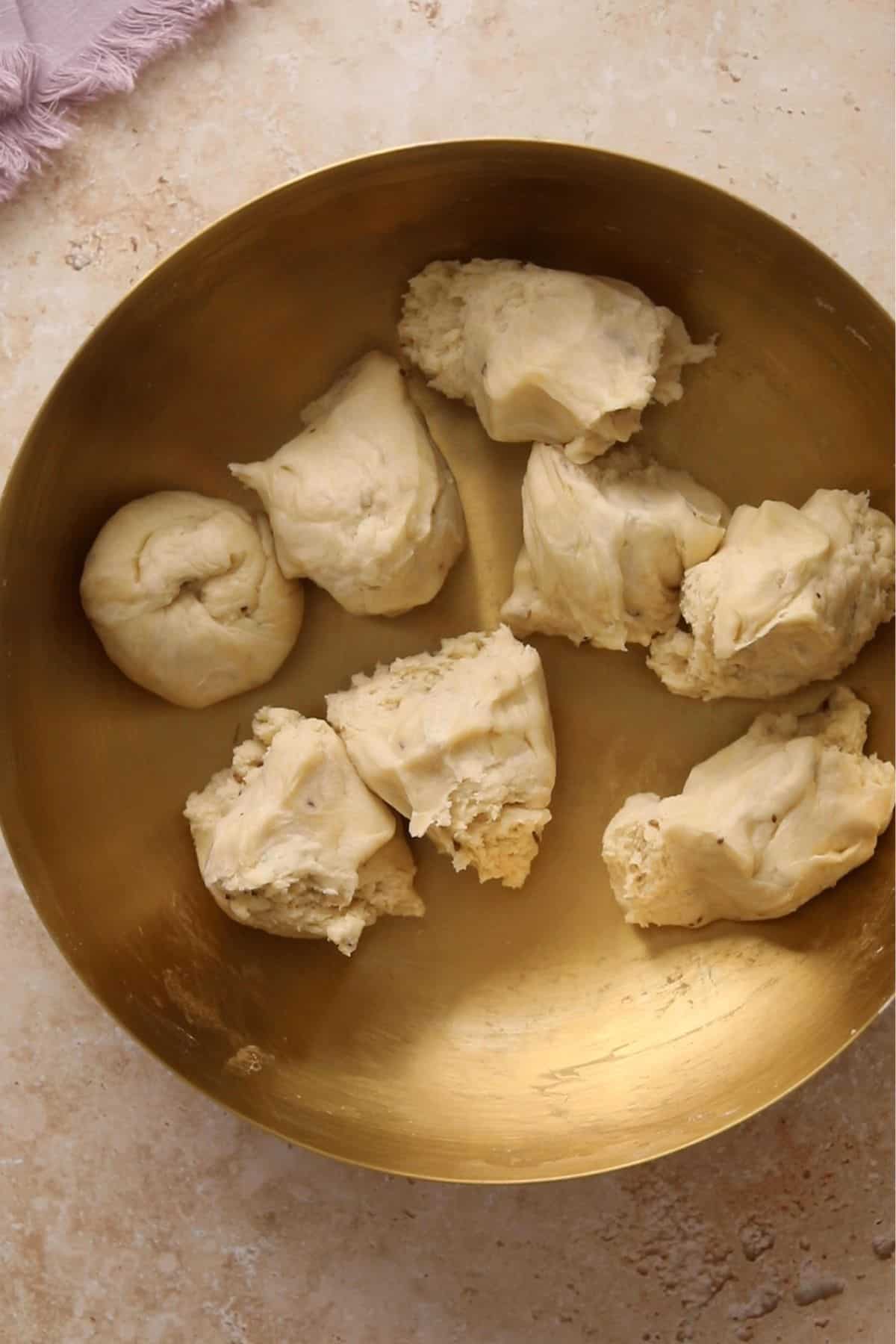
- Save a small portion of dough (to test the oil temperature, more on that below). Divide the remaining dough into equal portions. I like to weigh them for uniformity, though it's not strictly necessary. In my first few trials, I used about 70 g of dough per piece, but I found the samosa crust a bit too thick. I recommend weighing each portion at around 55-60 g instead. You should get 8-10 portions. Keep the dough covered with a damp cloth at all times because you don't want it to dry out.
Spicy Potato Filling Ingredients
I love to make the classic punjabi aloo samosa filling. The combination of the spices in the pastry and in the filling is the what makes punjabi samosa taste amazing ! The samosa filling is full of flavor from hing (asafetida), cumin, coarsely crushed coriander seeds and plenty of green chilies(a must!). Finely chopped ginger and a touch of garam masala add warmth. You do need some heat in the filling so request you to not fully skip the chillies.
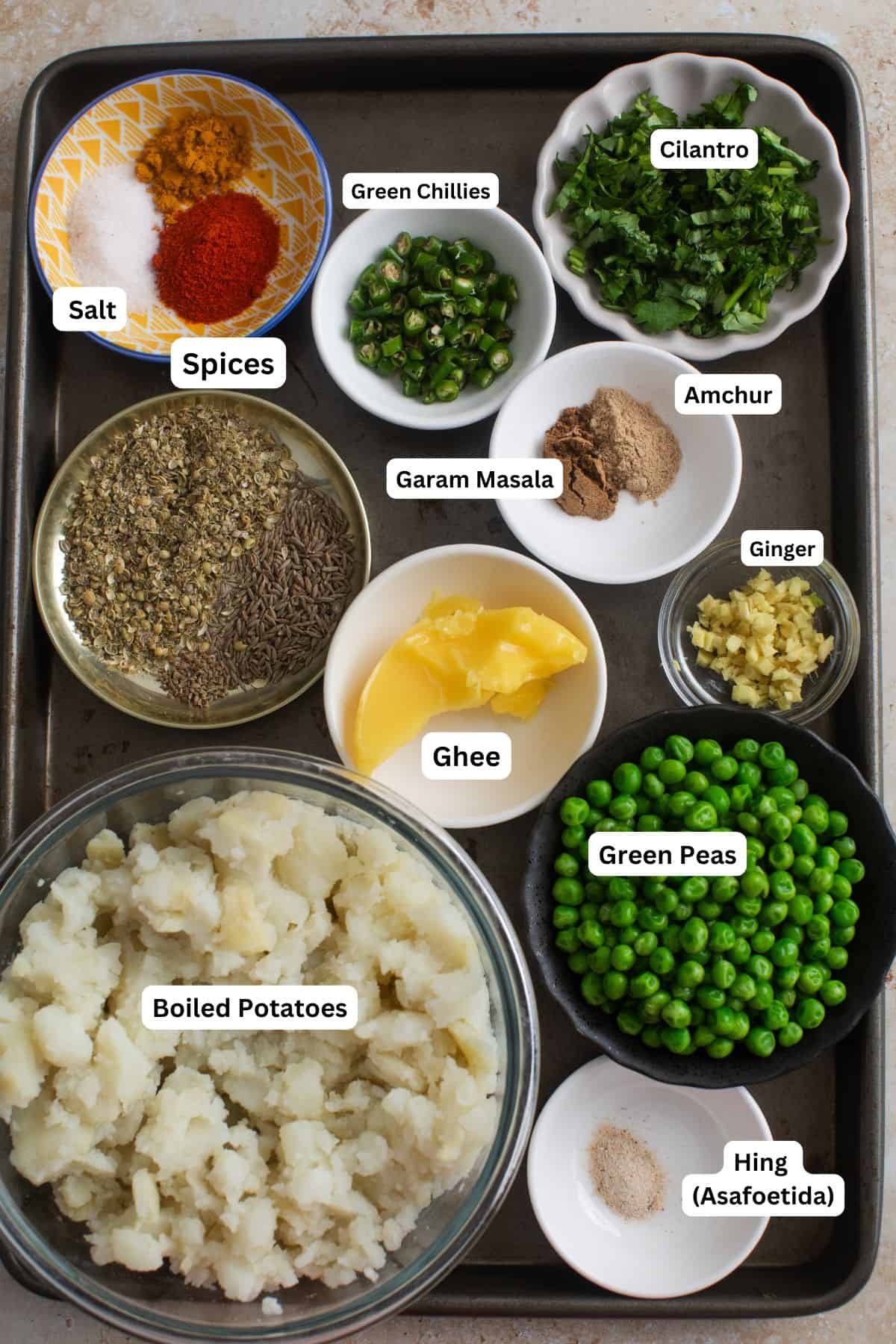
Green peas are usually used by halwai(sweet shops) in indian during the winter when it's peas season. You may skip if desired. Another common ingredient is cashew pieces in the samosa pieces. I wished a nut free version, but you can certainly add.
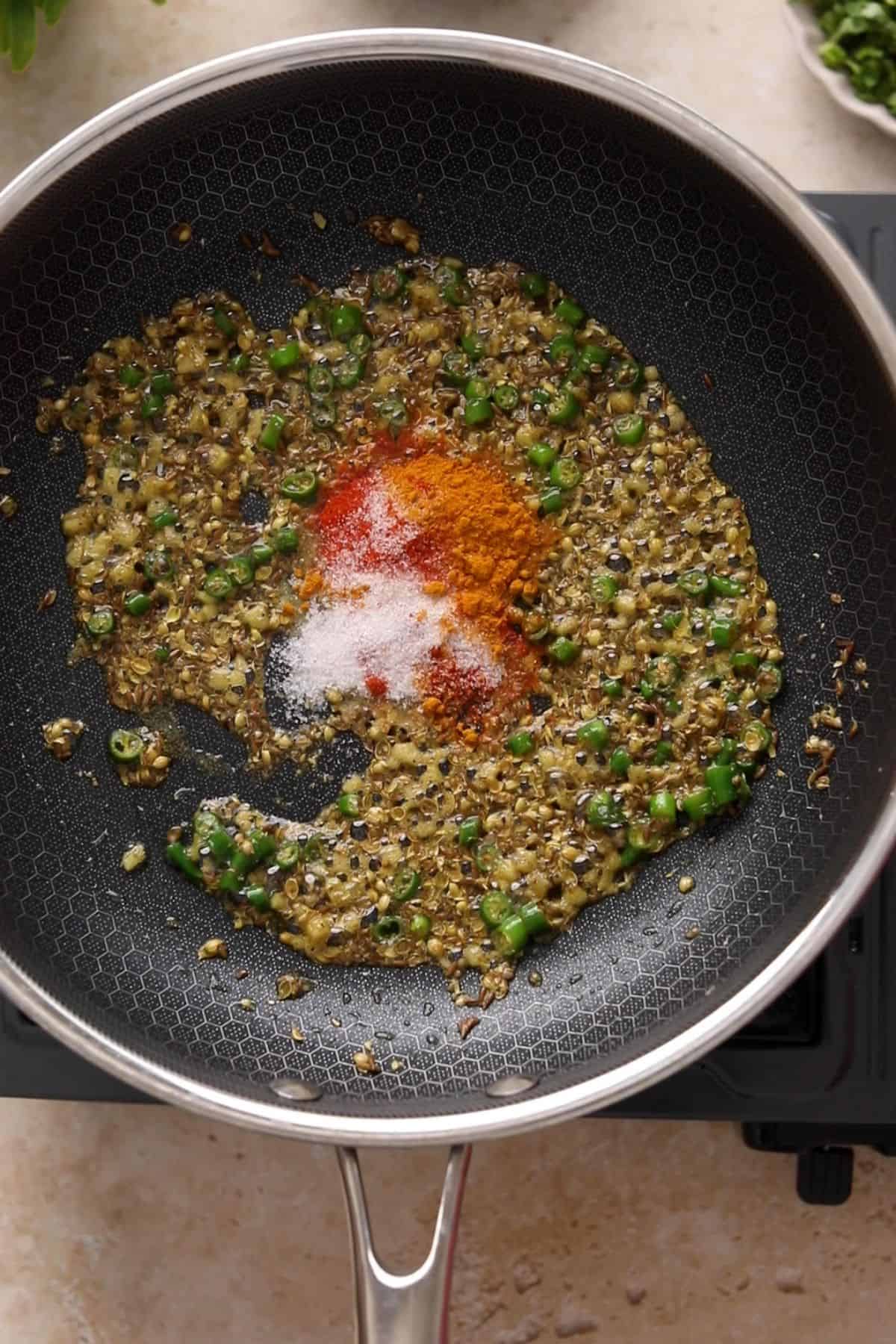
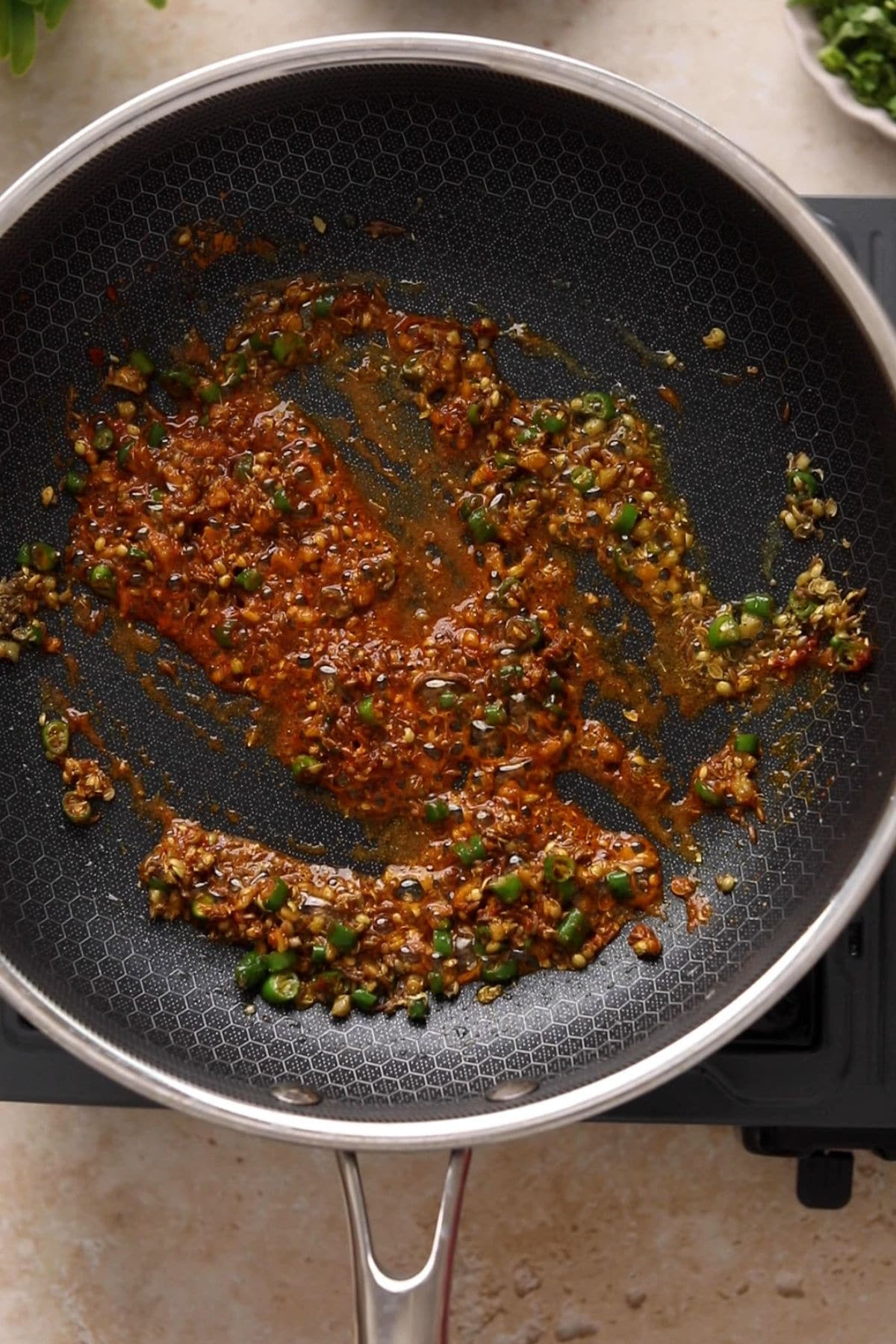
I usually cook mine in ghee but oil works just as well. The key is to keep the boiled potatoes in small crumbles, not mashed or grated, so the filling stays light and textured rather than gooey. Most sweet shops in Delhi also add cashew bits to the samosa filling but I keep my version nut free.
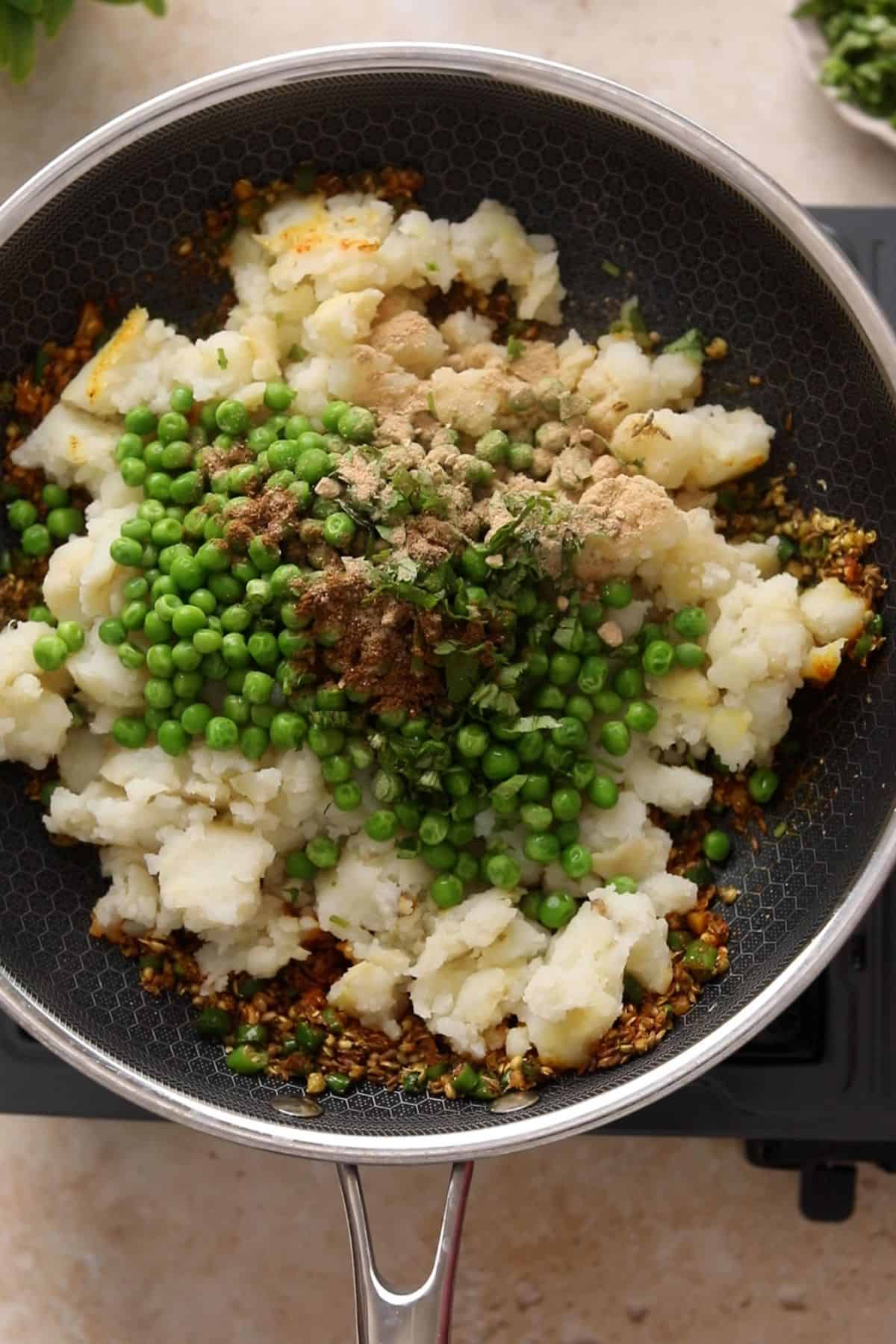
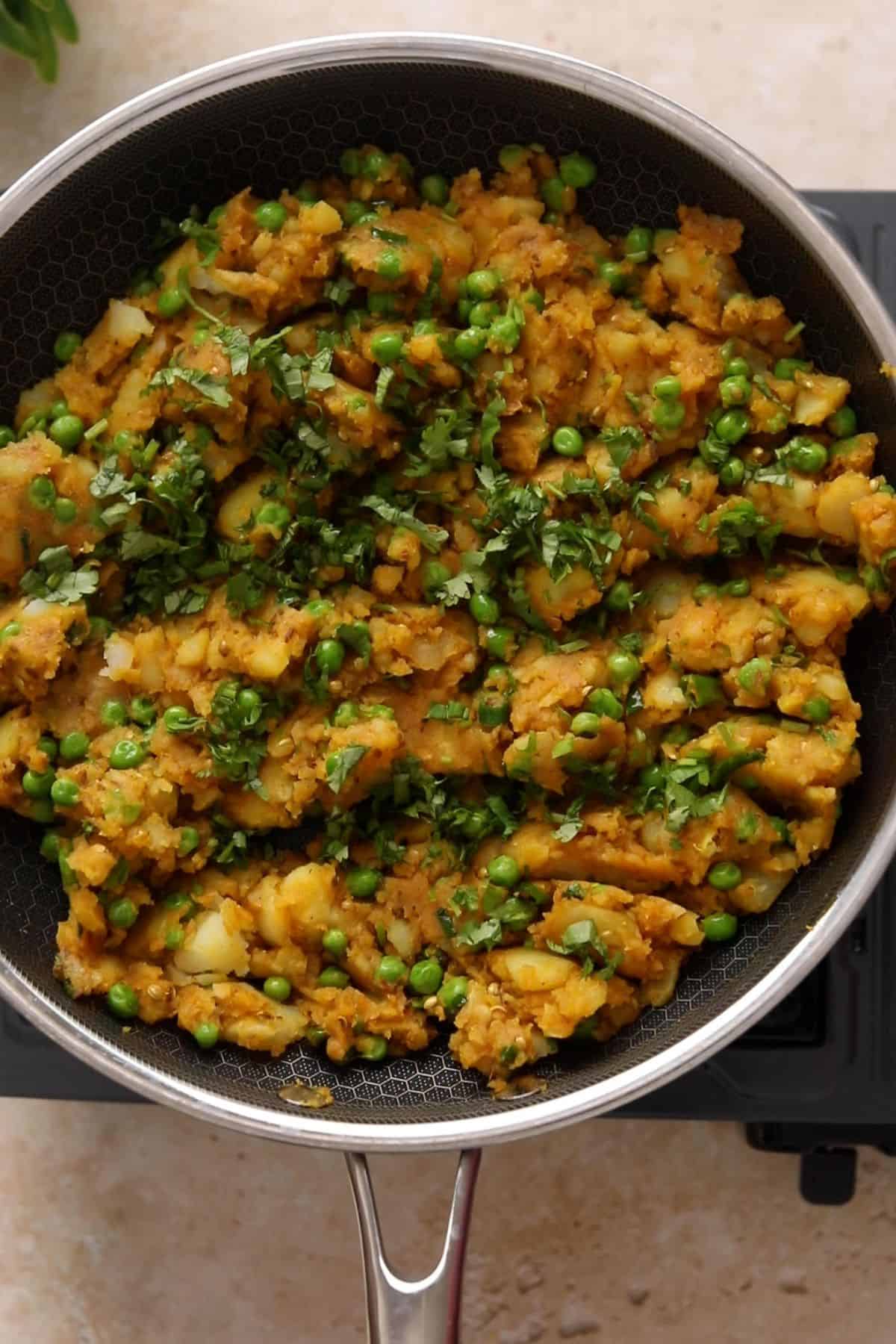
See detailed instructions for making the samosa filling in the recipe card.
How To Shape Samosa
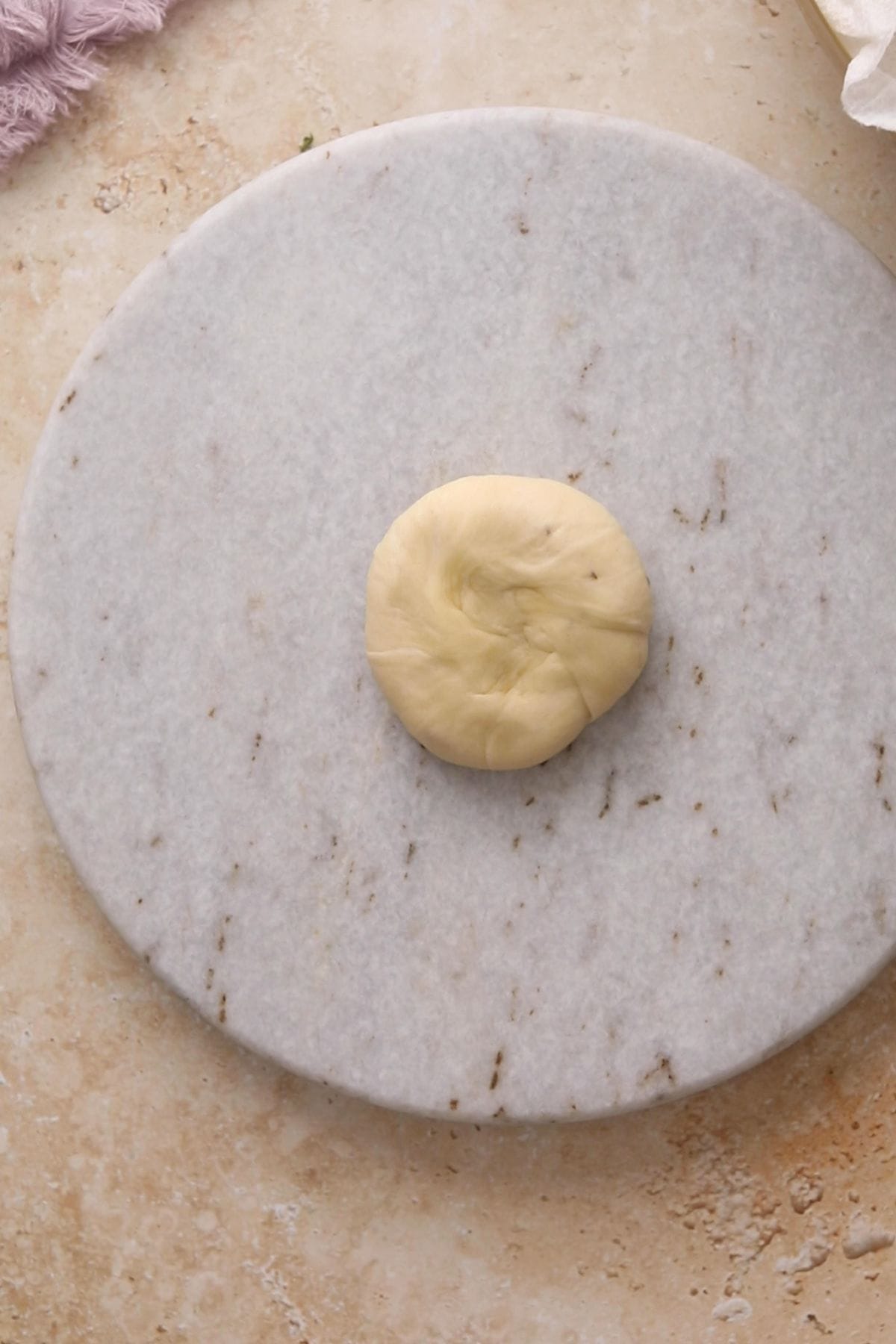
- Flatten a dough ball on a rolling surface. Do not use any flour. Since this is a high fat dough, you should not need anything while rolling it. However, if needed, use ghee or oil to moisten the dough.
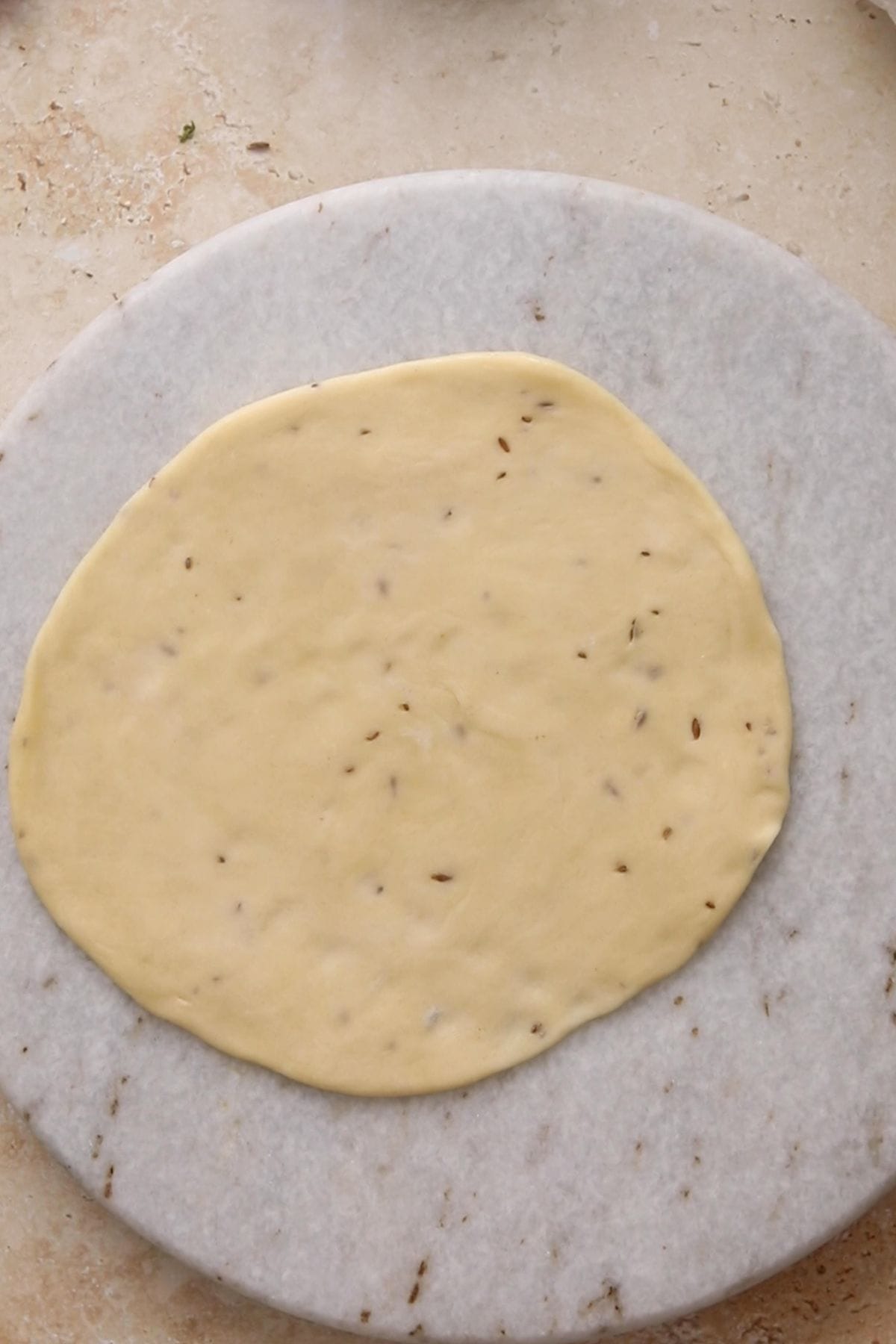
- Using a rolling pin, roll the dough into a circle. We need about 6 inch circle. It should not be too thick or too thin. But the important thing to keep in mind is uniform thickeness all over the rolled dough.
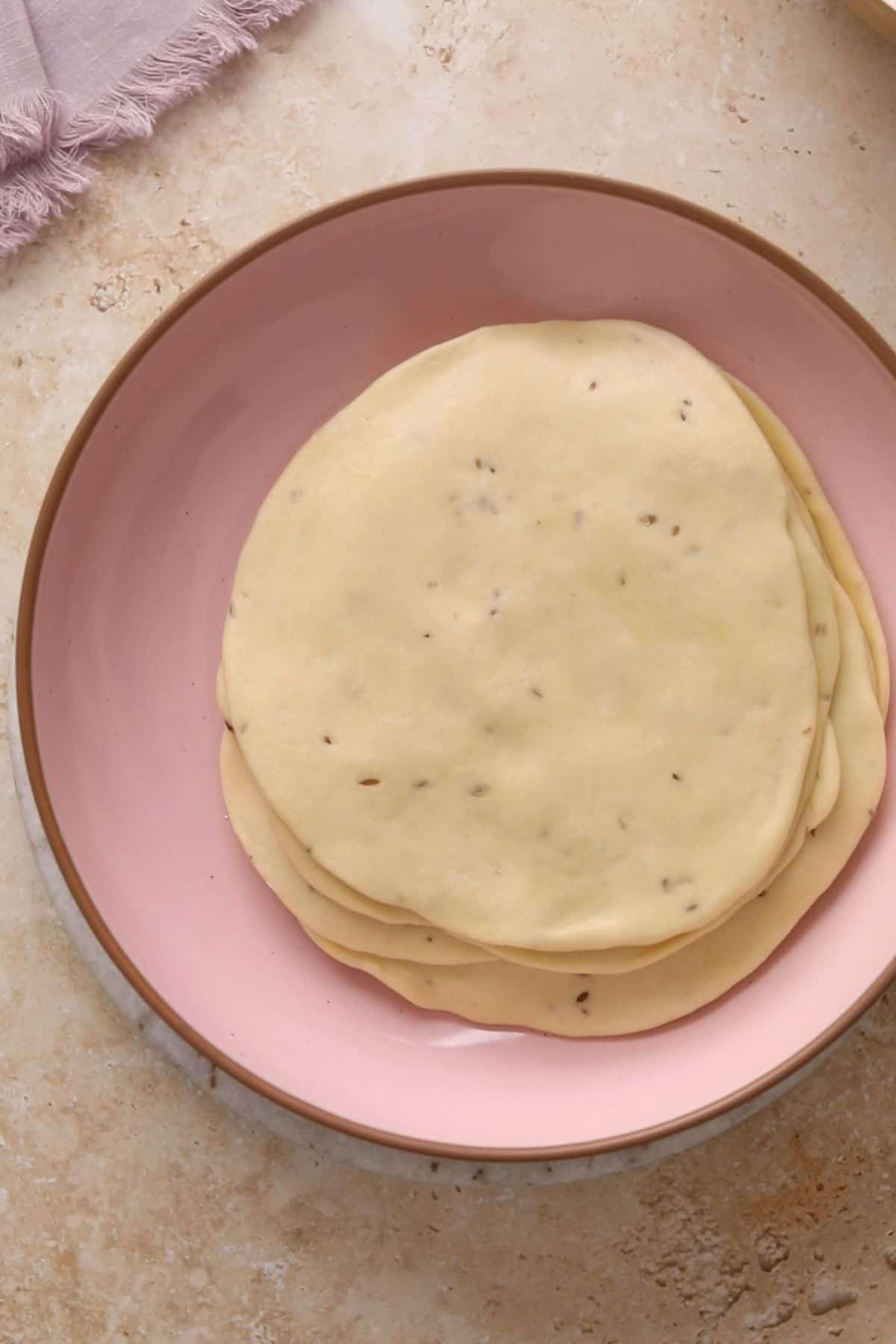
- I prefer to roll out all the dough portions before I start stuffing & shaping the samosas. Again, keep the rolled dough covered with a damp cloth.
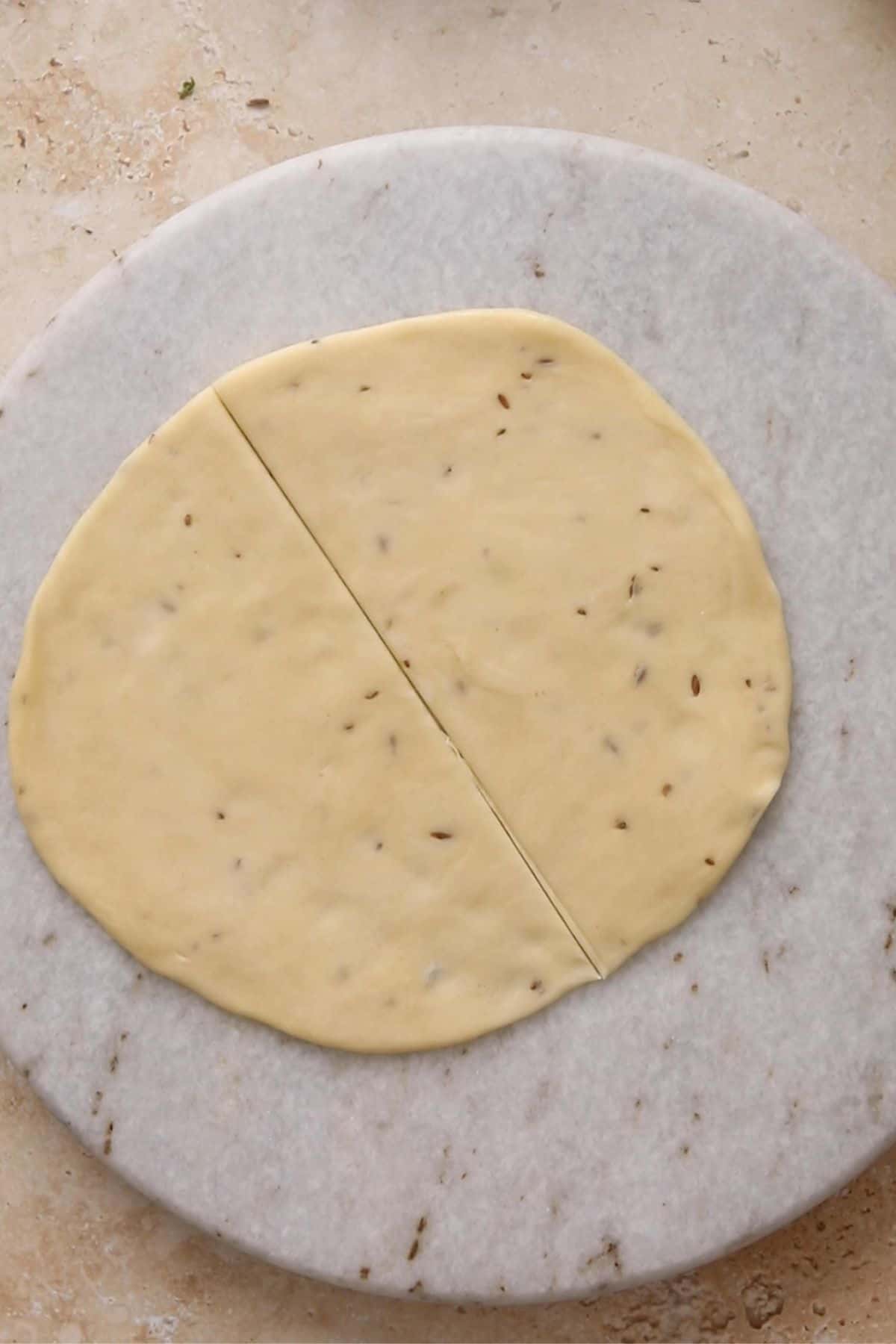
- Using a sharp knife, cut the circle into half to get two semicircles. Each semicircle will form a samosa. All purpose dough tends to shrink as it rests, so you can slight roll the semi circles if needed before stuffing.
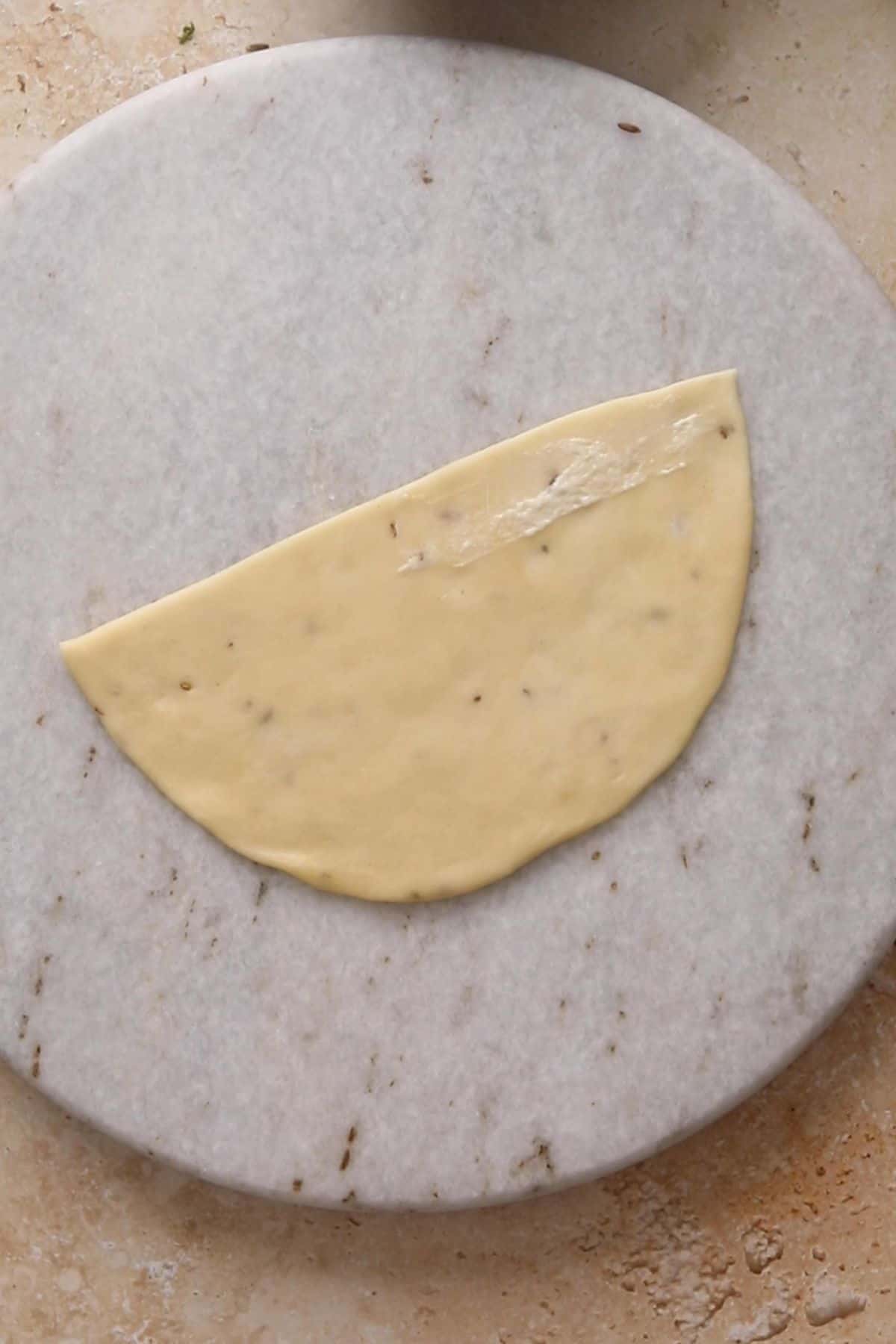
5. Spread flour slurry on right half of the straight edge of one semi circle. Keep the other semi circle covered with damp cloth.
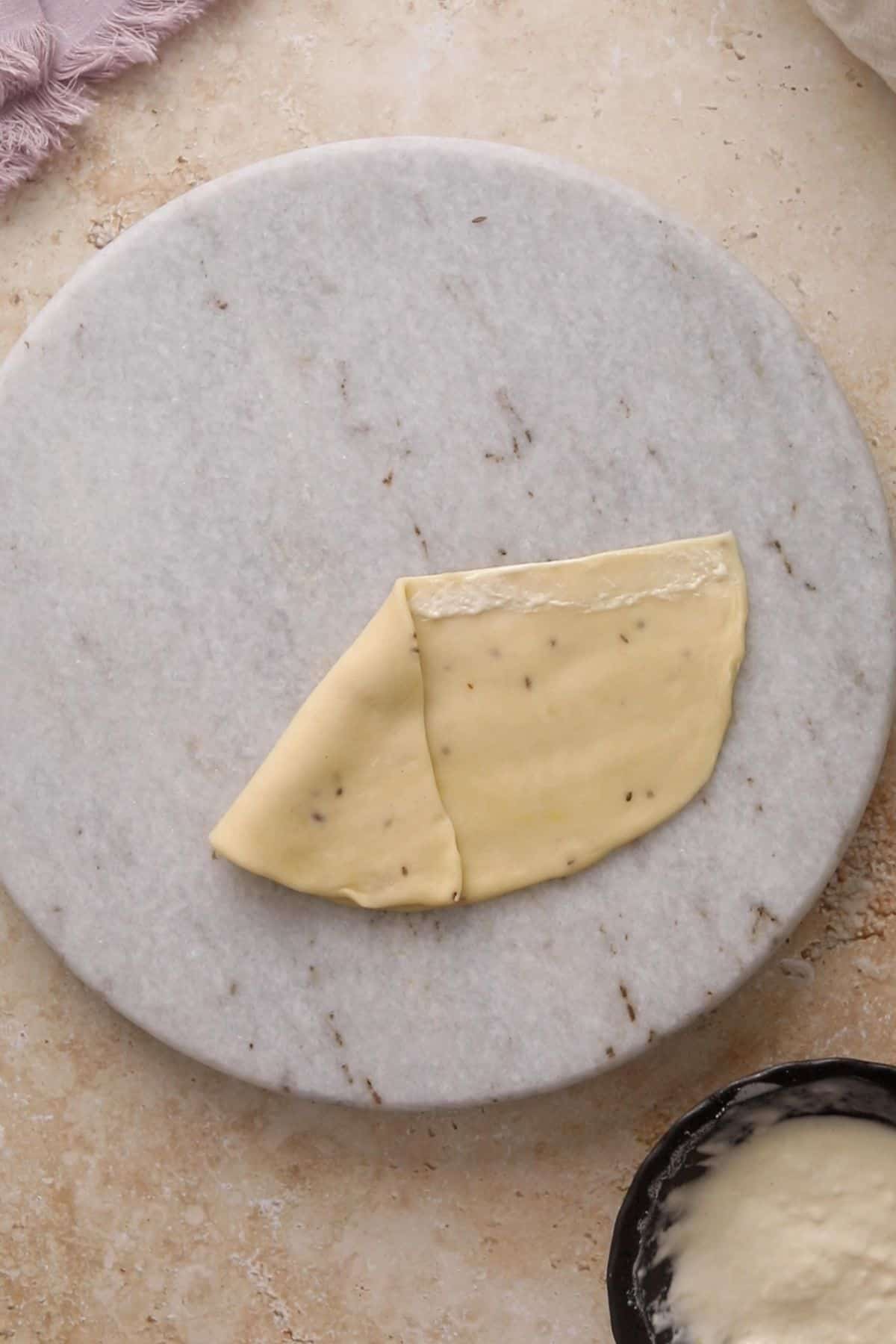
6. Now bring the left half of the straight edge and fold it perpendicular to meet the round edge.
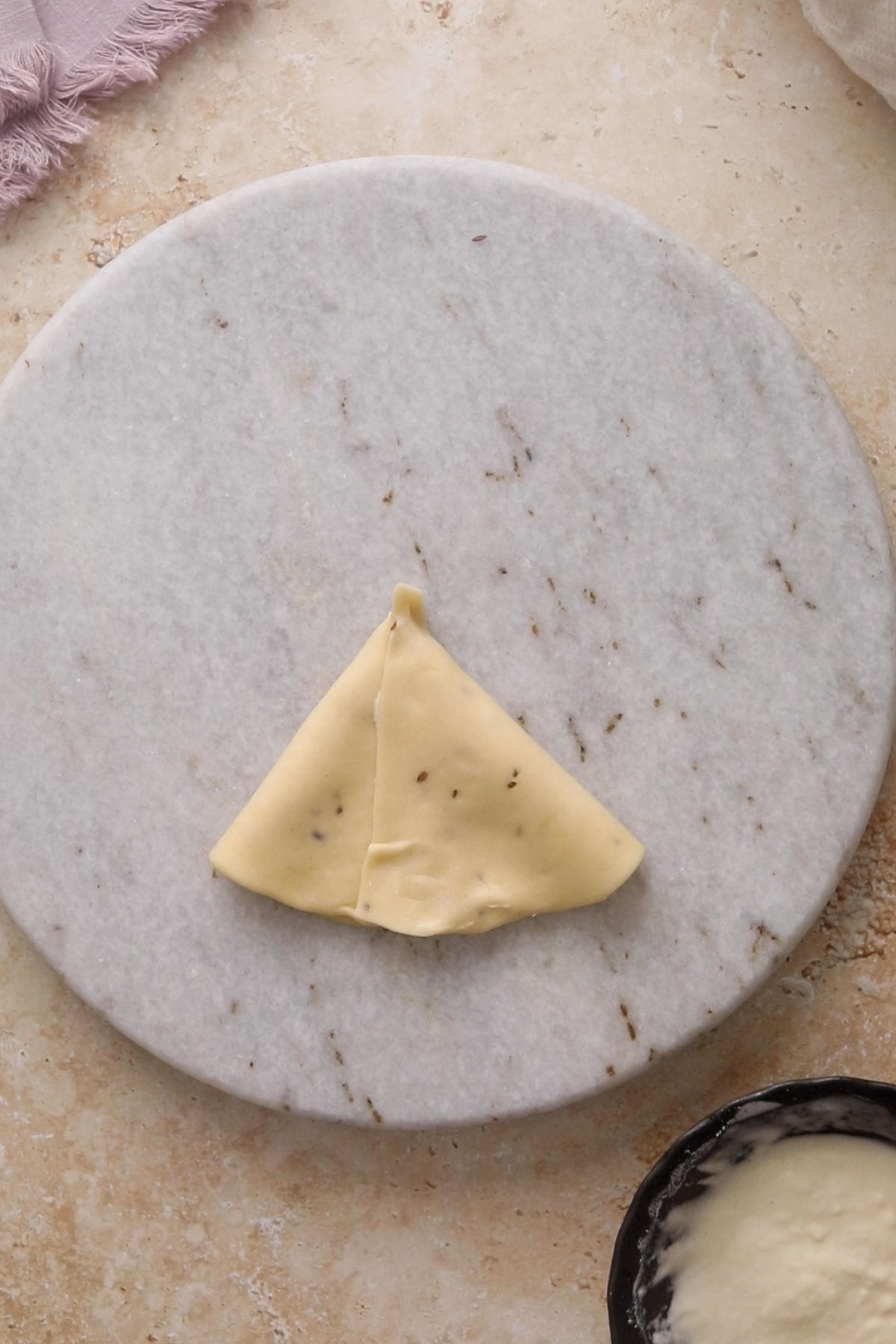
7. Then fold the right half and overlap over the left half and press gentle to stick.You will get a cone shape/
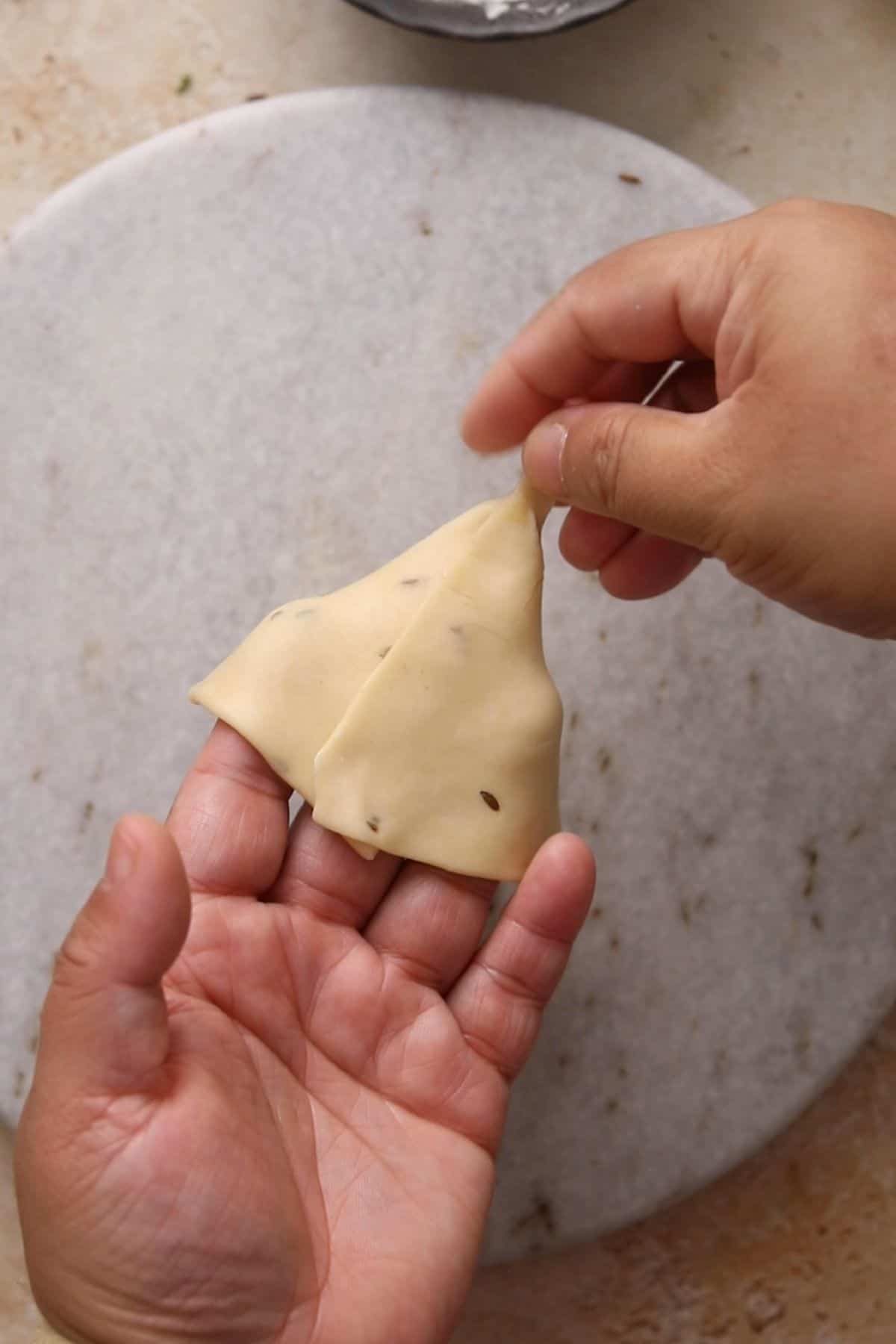
8. Pinch the pointed tip of the cone tightly. This step is important to ensure the filling doesn't spill out during frying.
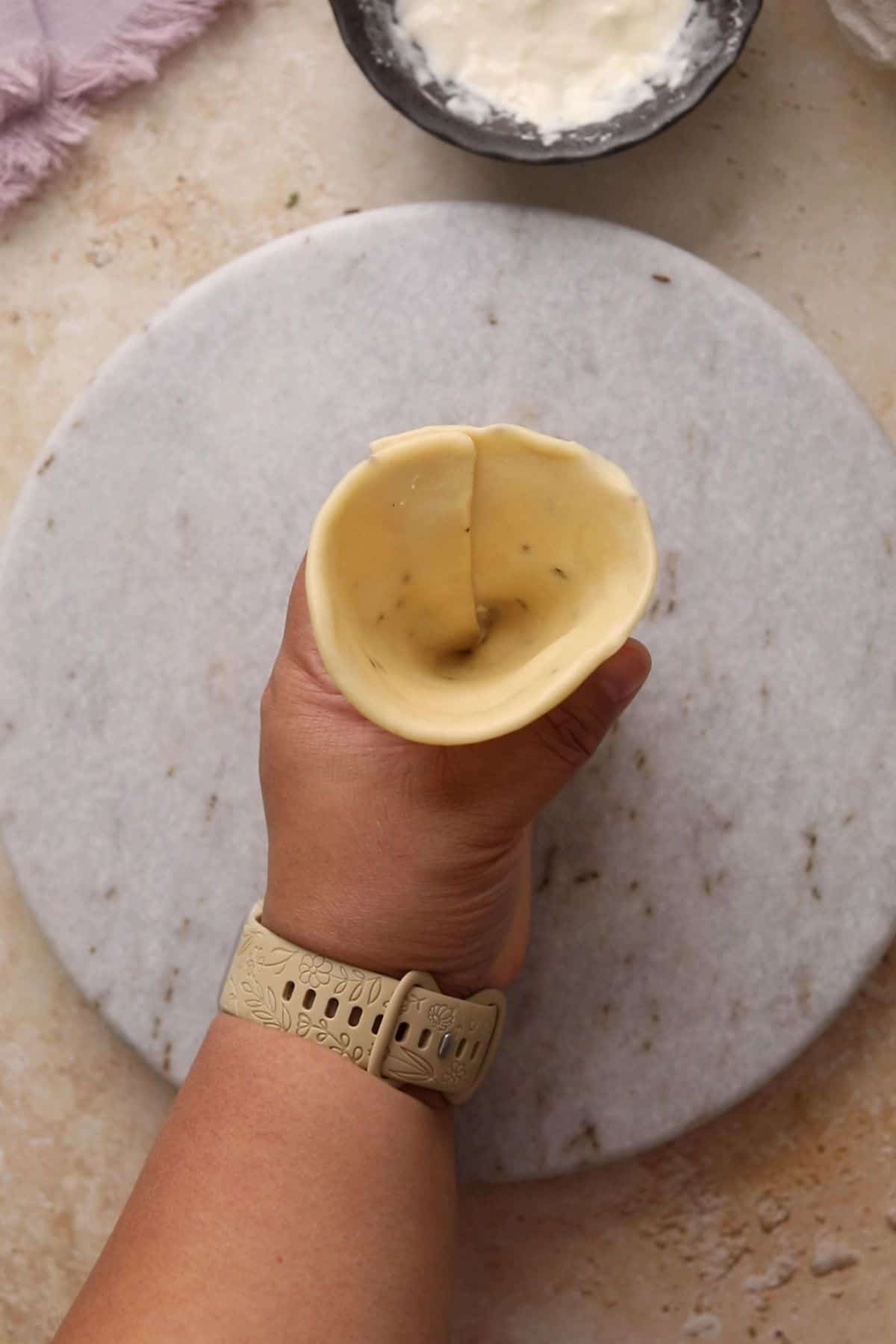
9. Your samosa pocket is ready for the potato filling.
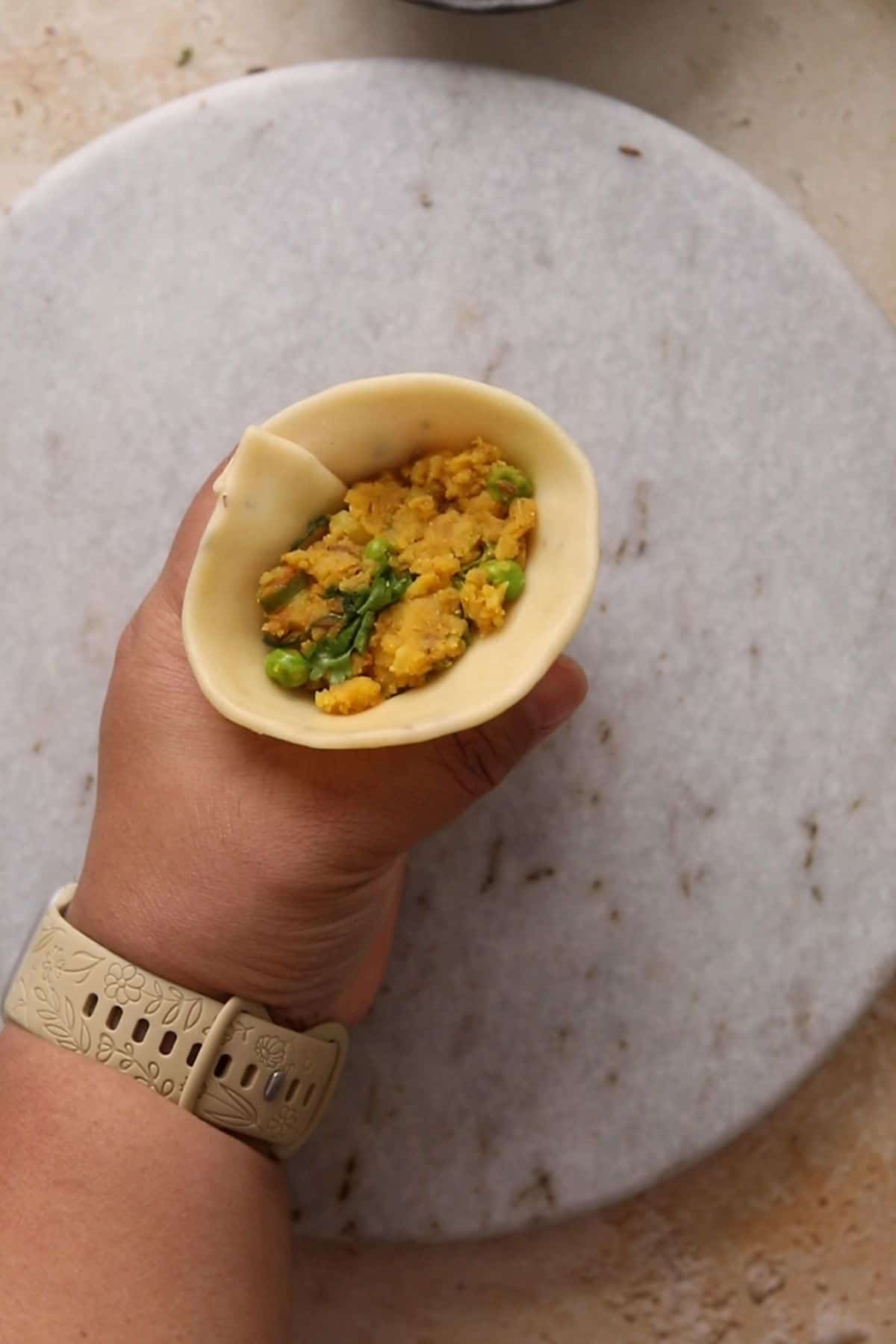
10. Add about 1.5 tablespoon of filling inside the cone. Don't put too much and leave some space at the top.
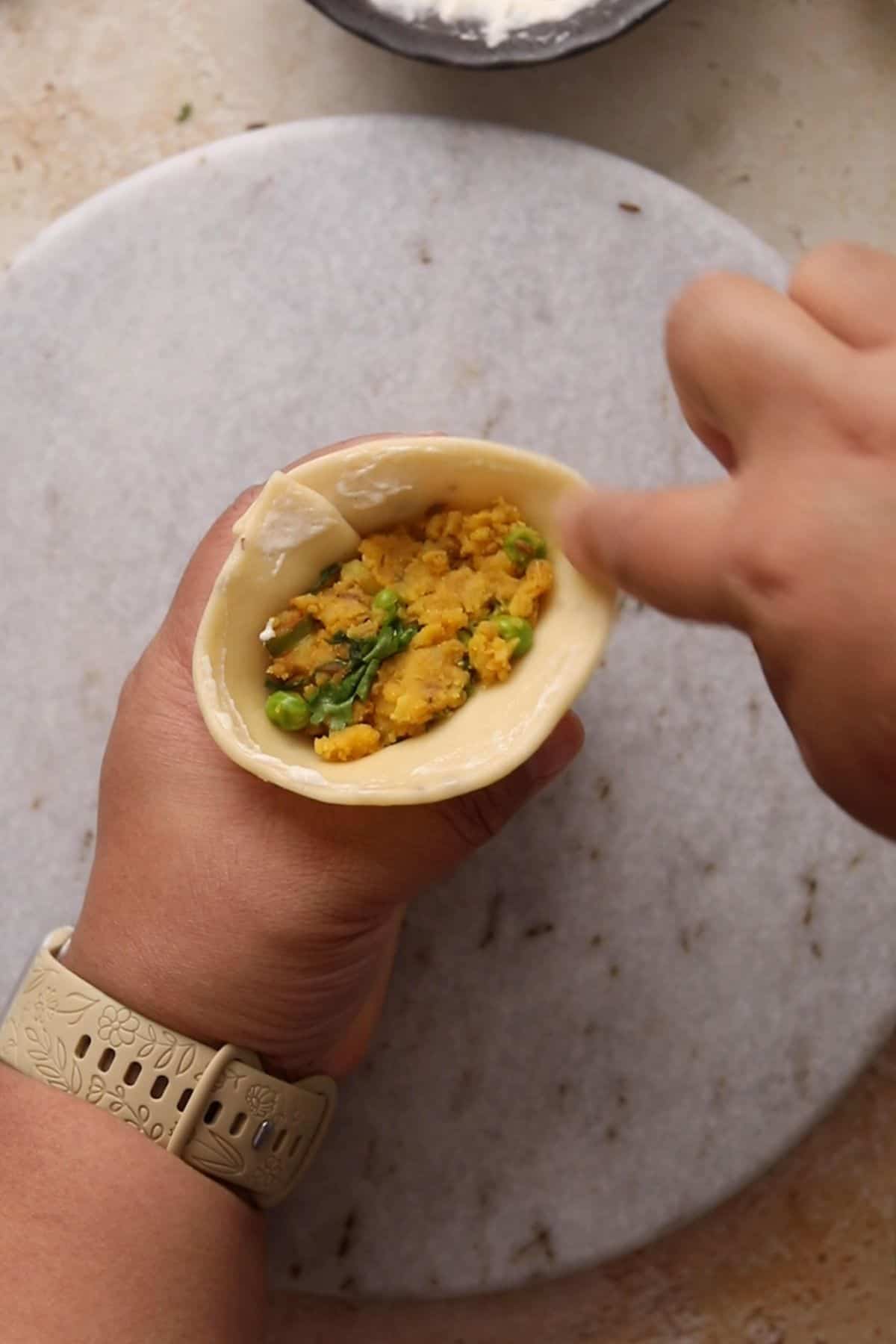
11. Apply flour slurry along the open edge at the top.
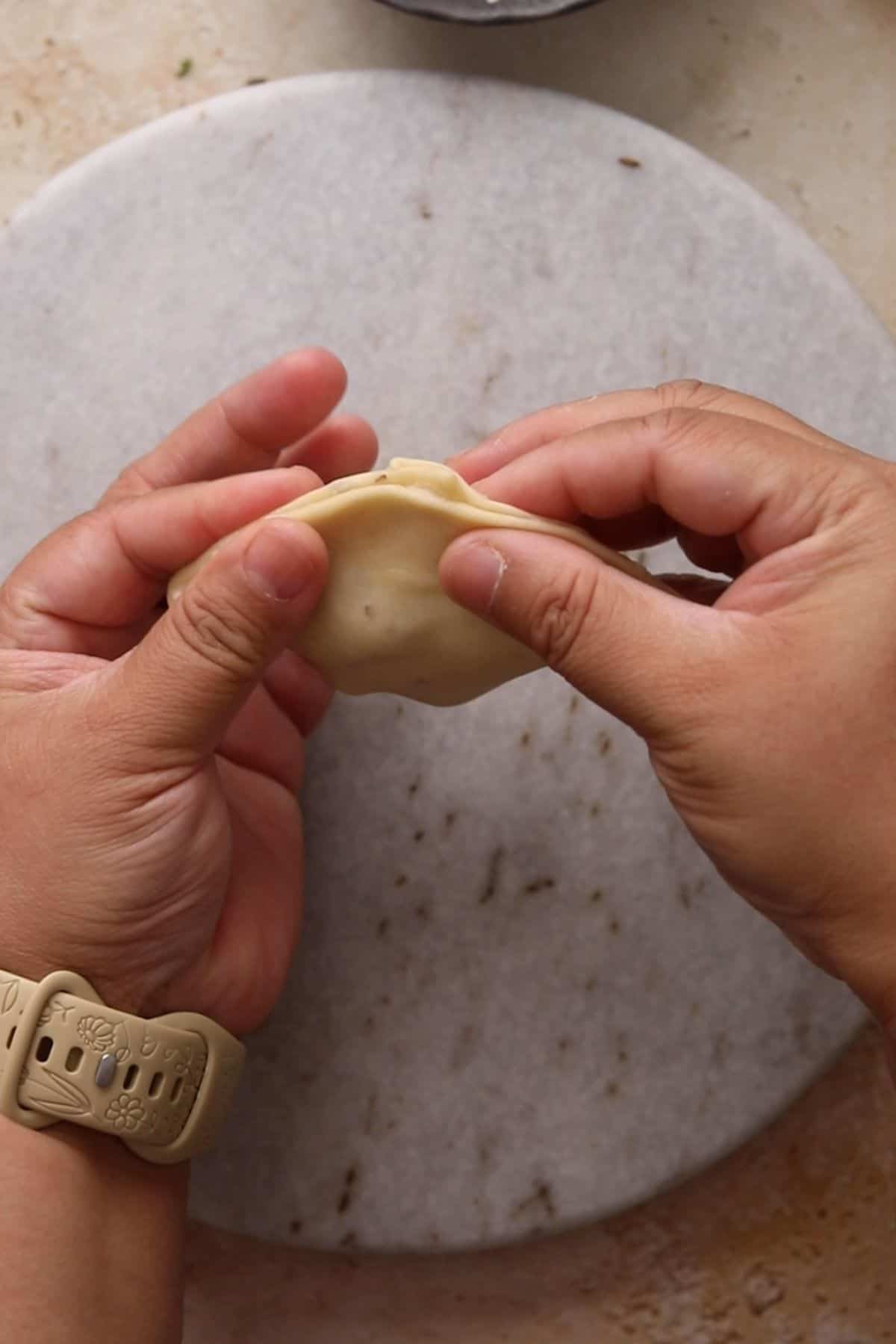
12. Pinch and press to seal the open edge.
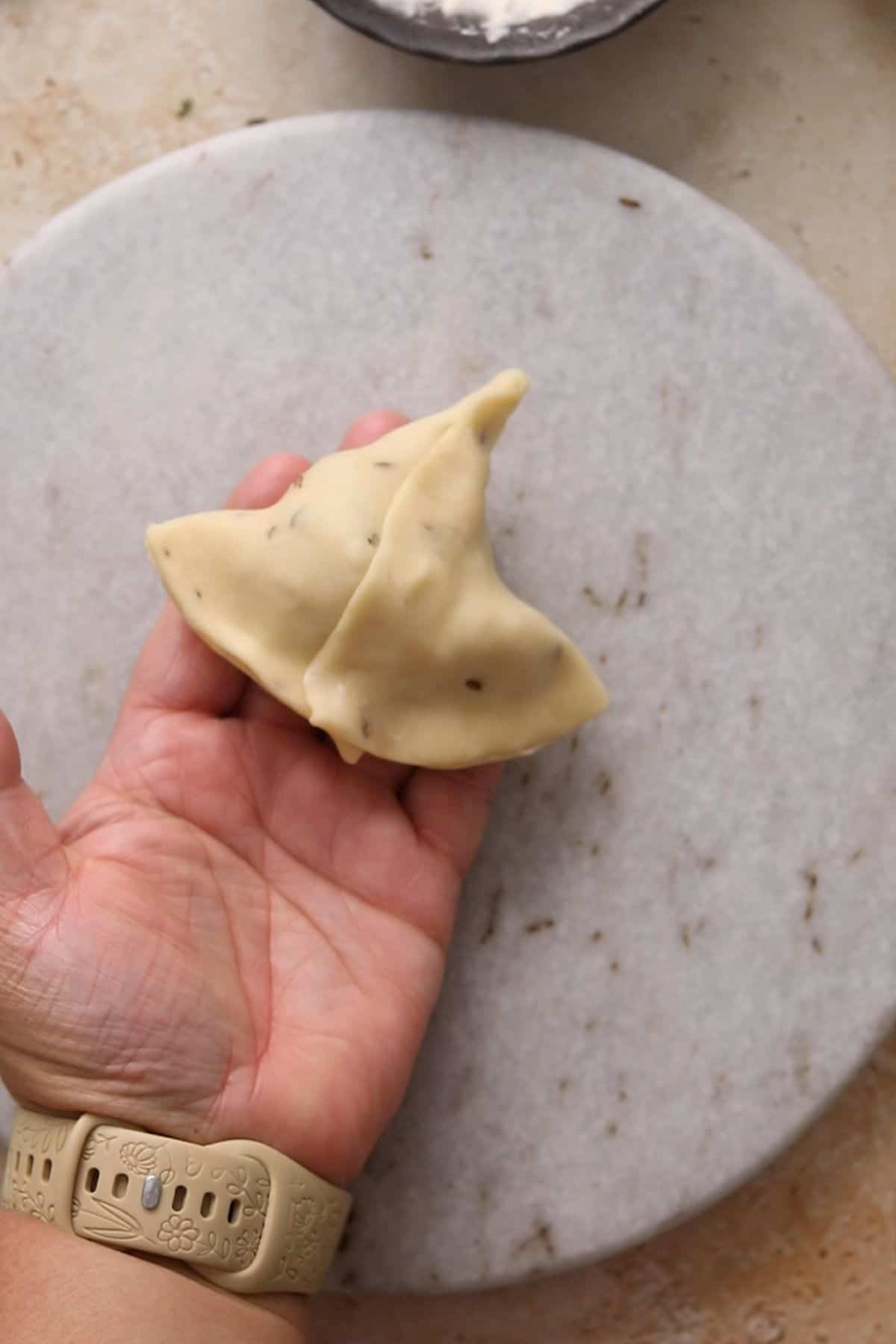
13. Now samosa looks like a neat triangle (see video to get an idea).
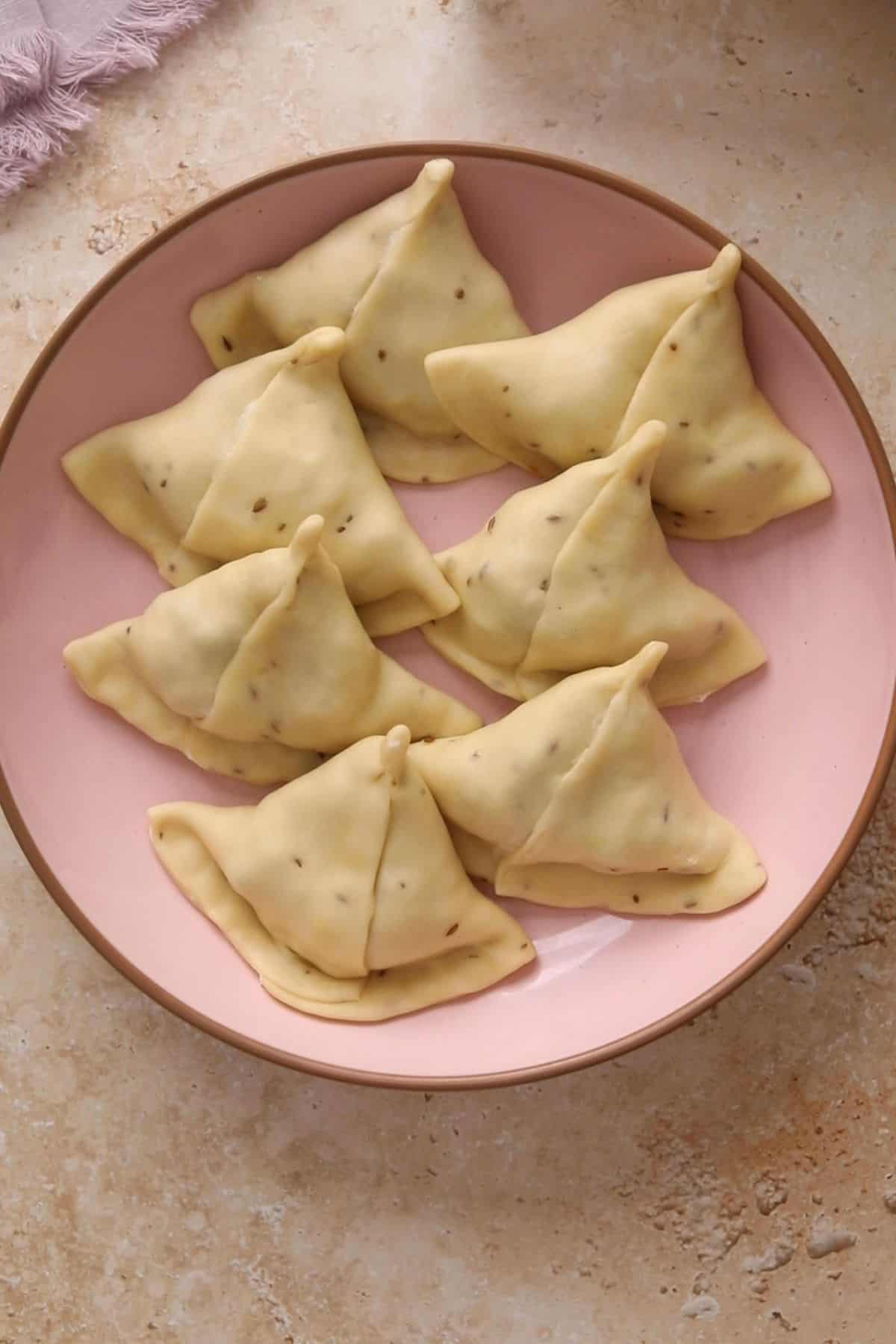
14. Shape all samosa and keep them covered with a damp cloth under your are ready to fry.
Deep Frying Tips
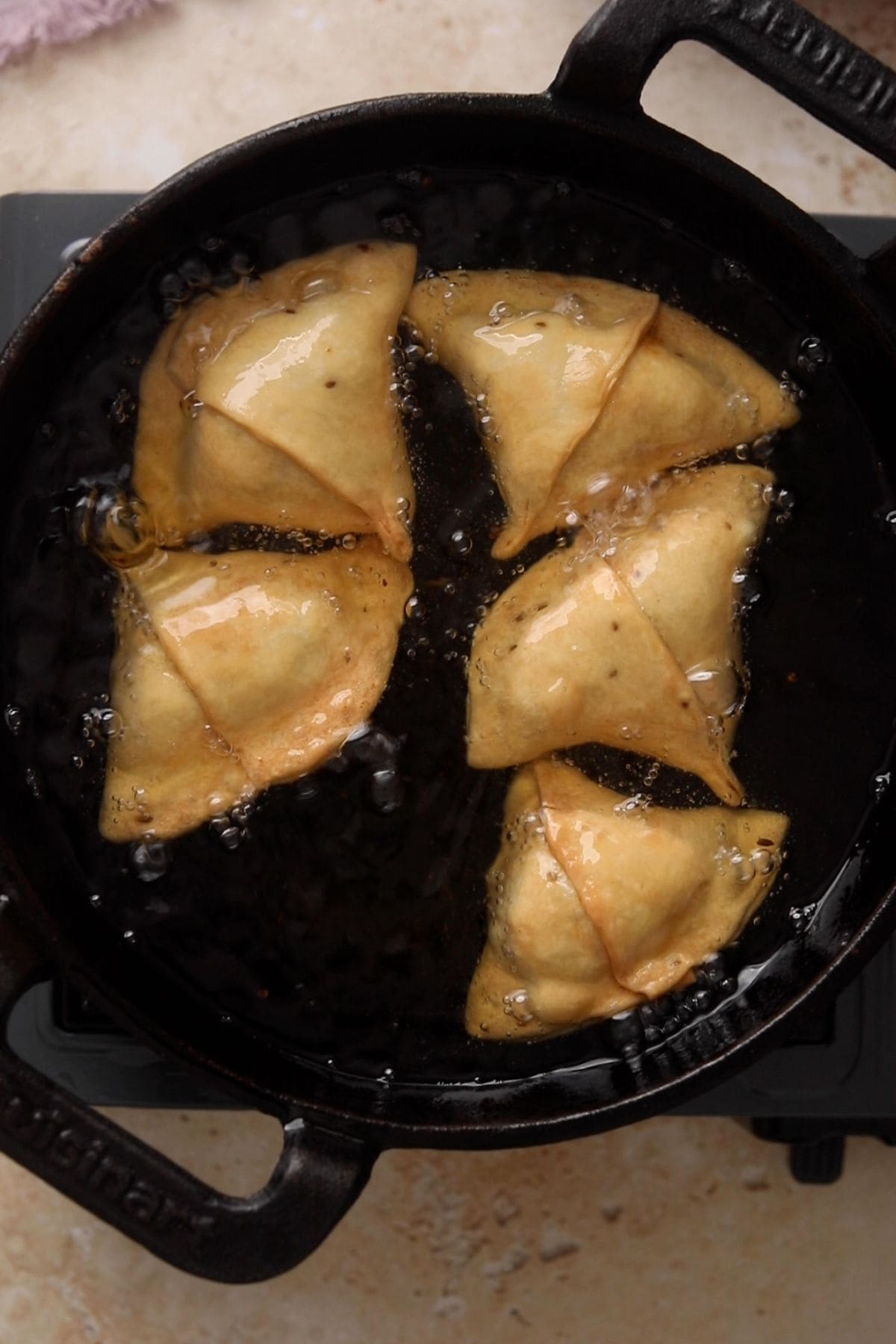
- I find that a heavy utensil such as a cast iron kadai or dutch oven are the best to deep fry samosa(or any deep-fried snack) for they conduct and retain heat evenly and the oil temperature is maintained (no sudden drops when you add samosas).
- Fill with enough oil so that samosas float while frying. They should be about 70-80% submerged in oil at all times else the sides of samosa won't brown(telling you from experience). Heat oil on low medium heat at the beginning.
How to test Oil Temperature Without thermometer
My grandmother never used a candy thermometer(they are rare in indian kitchens!) and she taught me the visual cues to test the right temperature of oil. Look for things below.
- Drop a tiny piece of dough into the hot oil.
- The dough should sink and you will see small bubbles around it(no sizzling). The dough should not rise up to surface of oil (thats meat its too hot).
- If it rises too fast and browns immediately that means oil is too hot.
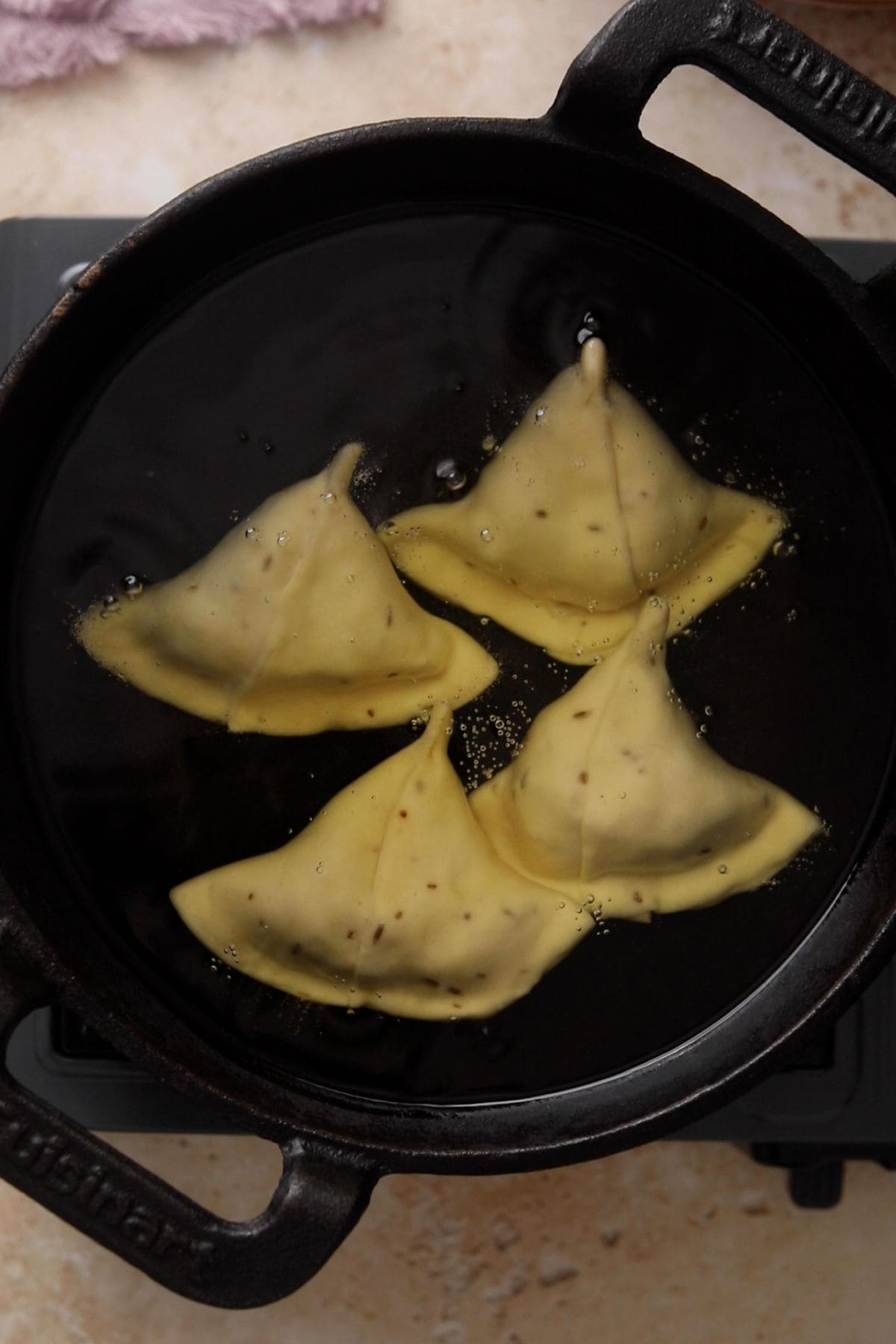
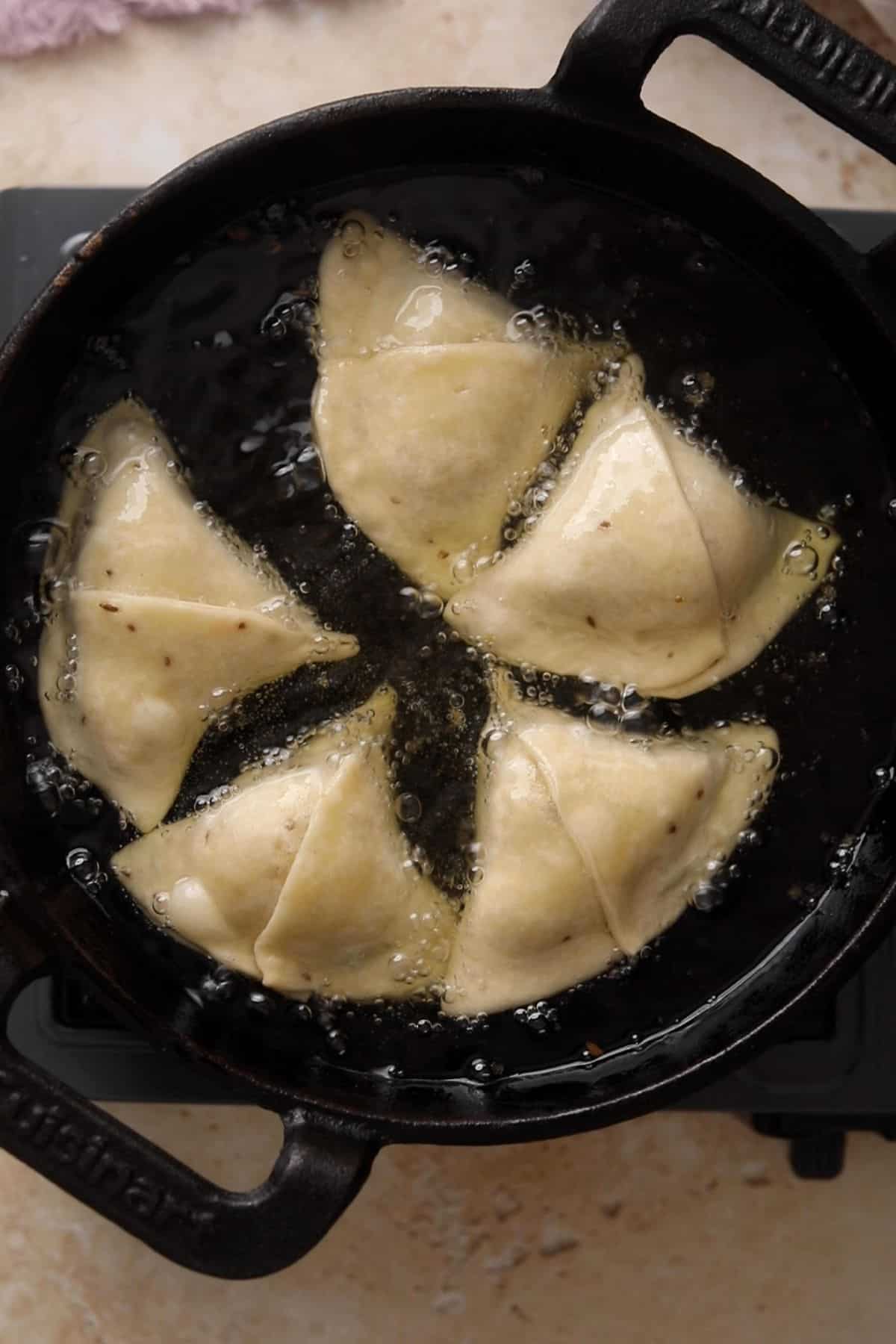
Street Vendor Style Slow-Fry method
For flaky, crispy samosas, fry them in a batch of 3-6 at a time and always fry on low heat for first 10 minutes. This makes the pastry crispy and cooks it from inside. This low and slow deep frying technique tenchique prevents oily pastry and is used in many kinds of fried indian snacks(such as papris or gujiyas).
The most important thing is that low heat prevents bubbles/blisters from forming on the samosa skin. If the oil is too hot, the dough suddenly expands and this creates bubbles which may pop in oil spoiling the look of your samosa.
After 11-12 minutes, bump the heat to achieve golden color on the crust. They samosa will continue to brown in residual heat for few minutes after you take them out of oil.
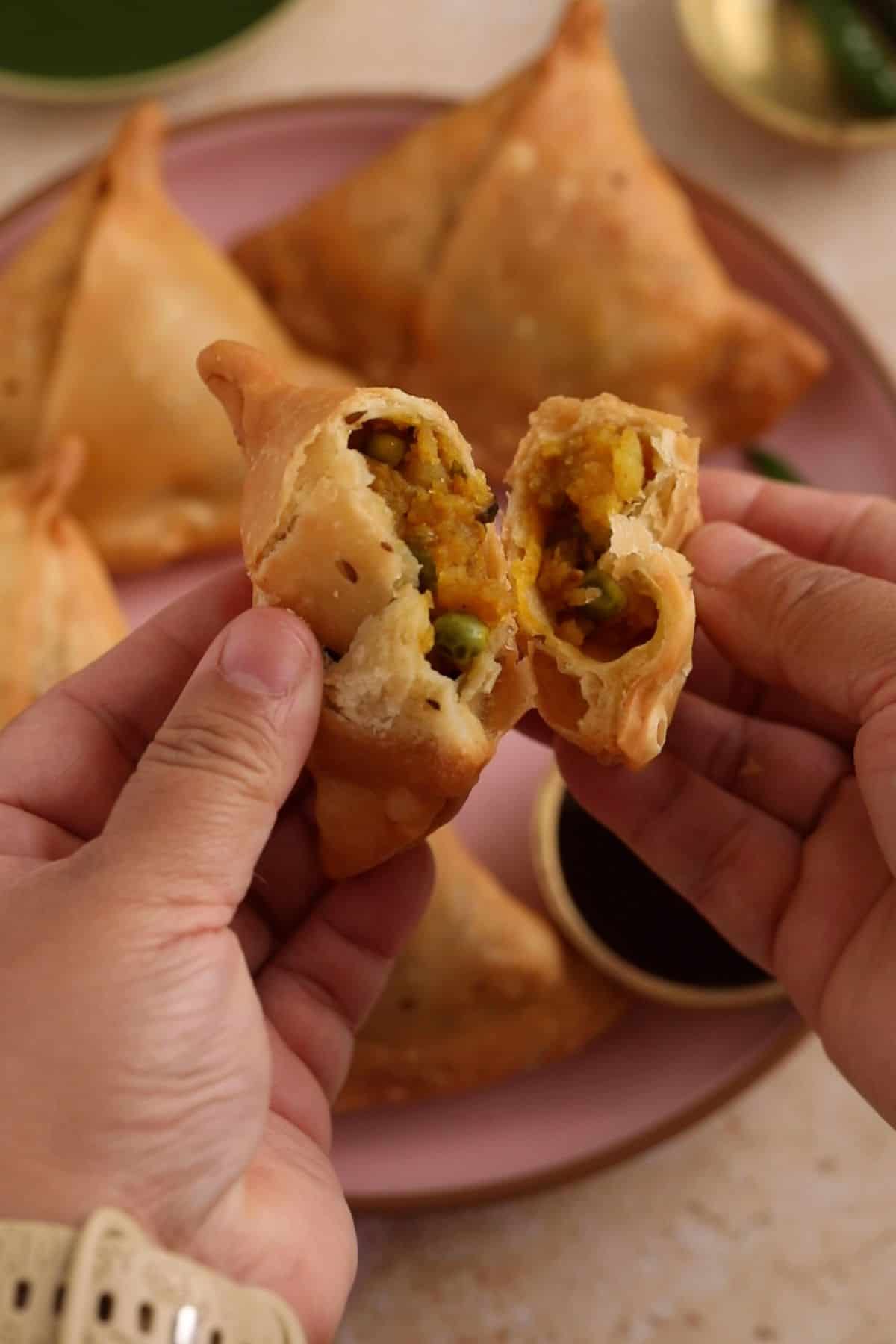
- Before you start frying the next batch, lower the heat and wait for 5 minutes to bring oil temperature down and then add the next set of samosas.Place on a colander or wire rack to cool slightly. Serve samosas with chutneys and a cup of homemade masala chai.
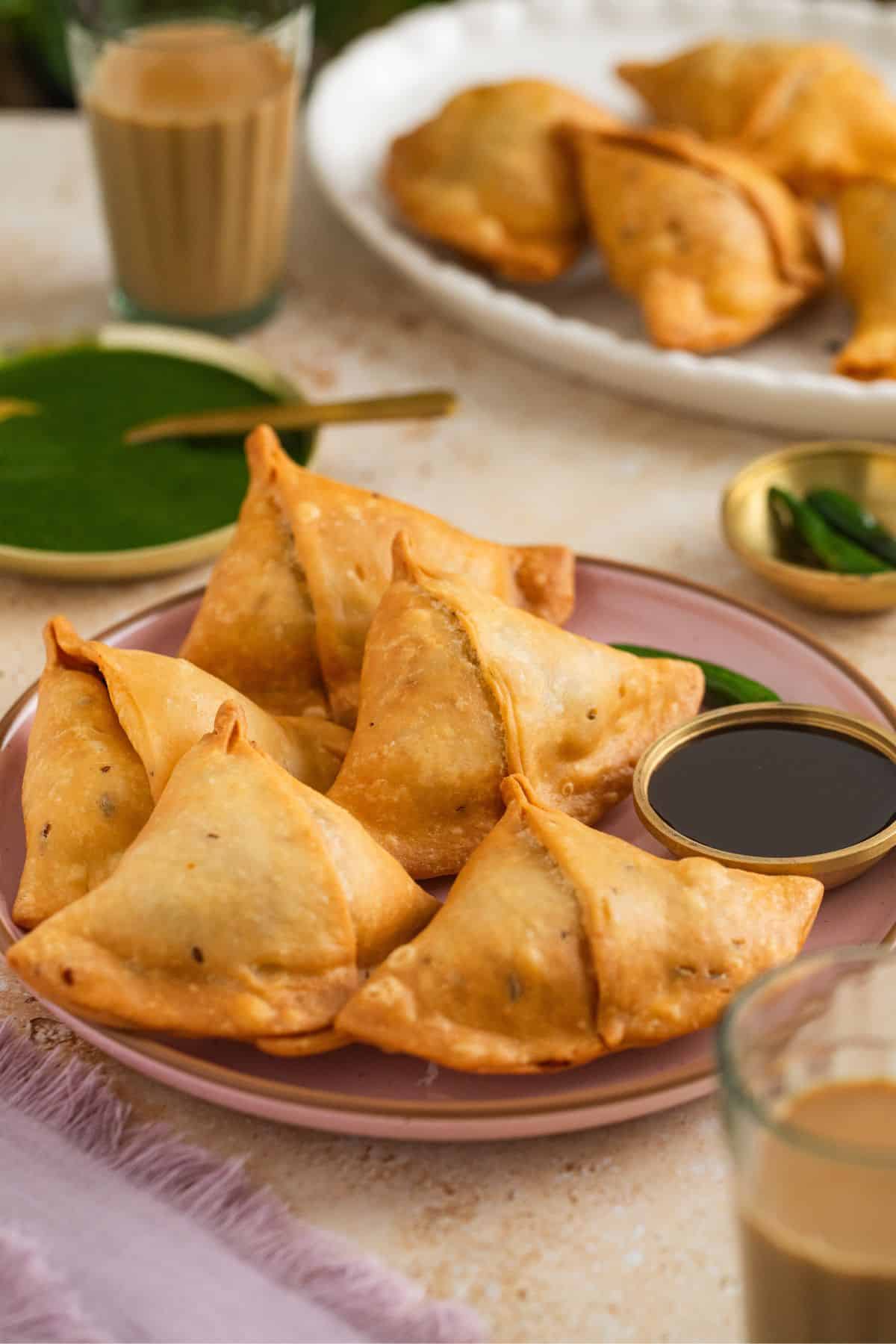
Classic Punjabi Samosa Recipe (Crispy & Flaky)
Ingredients
For Samosa Pastry Dough
- ½ cup ghee melted
- 4 cup all purpose flour
- ½ teaspoon ajwain carrom seeds
- ½ teaspoon cumin seeds
- 1 teaspoon salt
- ½ cup water plus 2-4 tablespoon as needed (dough should not become wet)
- Oil for deep frying ~3-4 cup oil
For Samosa Filling
- 2 lb potatoes boiled and peeled (I use russet potatoes)
- ¾ cup green peas fresh or frozen, if using fresh, blanch the peas, thaw if using frozen
- 4 tablespoon ghee
- 1.5 tablespoon ginger finely chopped
- 5-6 green chillies (hot), finely chopped, adjust to taste
- ⅓ cup fresh cilantro leaves chopped
- 1.5 teaspoon salt adjust to taste
Spices for Samosa Filling
- 1.5 teaspoon cumin seeds
- ¼ teaspoon ajwain seeds carrom seeds
- 1 tablespoon coriander seeds coarsely crushed in a mortar pestle
- ½ teaspoon hing asafoetida, use ¼ teaspoon if your hing is too strong
- 1 teaspoon red chilli powder (hot), adjust to taste
- ¼ teaspoon turmeric powder
- 1 teaspoon amchur powder dry mango powder, adjust to taste (substitute with lemon juice)
- 1 teaspoon garam masala powder adjust quantity depending on how strong your garam masala is
For Flour Slurry Needed While Shaping Samosa
- 2 tablespoon flour
- 3-5 tablespoon water
Instructions
Prepare The Samosa Pastry Dough
- In a large mixing bowl or parat, add the flour, spices, salt and ghee.
- Begin by working ghee into the flour. Using both hands, gently rub the ghee through the flour until every grain feels lightly moistened and coated. You'll know the ratio is just right when you can press a handful of the mixture between your palms and it holds its shape. This age-old trick is a simple way to ensure the dough will fry up with the perfect flaky crust. See images in blog post to get a better idea.
- Next, pour in ½ cup water for the dough to just come together. Resist the urge to knead too much. Instead, let the dough remain a bit rough and cracked. Overworking the dough will activate the gluten and your samosa crust will be tough instead of crisp. What we want is a stiff, rustic dough.
- Cover the dough and let it rest for 30 minutes. During this time, the flavors of the ghee and spices begin to seep into the flour, and the dough becomes more pliable and easier to roll. While the dough is resting, it's the perfect moment to prepare the filling.
Make The Spiced Potato & Pea Filling
- Crumble the boiled potatoes into small pieces with your hands. Avoid using a masher. We're after a bit of texture, not a paste. Set aside.
- Heat ghee in a medium pan over medium heat. When warm, temper it with cumin seeds, hing (asafoetida), and crushed coriander seeds. The aroma that rises at this stage is the very foundation of the filling.
- Add finely chopped ginger and green chillies and fry them briefly for just 10-15 seconds. Be careful not to let the spices burn. If needed, simply lift the pan off the heat for a moment.
- Sprinkle in red chilli powder and turmeric powder and cook them for a few seconds to banish their raw flavor. Then, add the crumbled potatoes and green peas.
- Stir gently so the spices coat everything evenly. Season with salt, garam masala, amchur (dried mango powder), and 1 tablespoon of freshly chopped cilantro.
- Turn the heat down to low and cook for 3-5 minutes. The goal here is not to brown the filling, but to let the potatoes warm through and soak up the spices. You should have soft, aromatic mixture that will nestle perfectly inside the pastry dough. If the filling feels a little dry, add in a touch more ghee.
- Finish with rest of chopped of cilantro, then taste and adjust seasoning. Once ready, transfer the aloo filling to a bowl and allow it to cool completely before stuffing the samosas. The filling can even be prepared a day in advance.
Shaping The Samosas
- Once your dough has rested, uncover it and gently knead 2-3 times (only).Before dividing, pinch off a small piece to save for testing oil temperature later.
- Then portion out the rest. Though you can eyeball it, weighing each piece helps with uniformity. I recommend 55-60 grams per piece, this is enough for a well-sized samosa without making the crust too thick. You should have about 8-10 portions. Each portion makes 2 samosa so this recipe will yield 16-20 samosas. Always keep the dough covered with a damp cloth so it doesn't dry out while you work.
- Roll each ball into a smooth round and then gently flatten it. Cover with a damp cloth and rest the shaped dough balls again for 10-15 minutes.
- In the meantime, in a bowl, make the flour slurry by mixing together 2 tablespoon flour with 3-5 tablespoon water.
- Place one dough ball on your rolling surface and flatten it slightly. Since this is a rich, high-fat dough, you usually won't need any extra flour for rolling. If the dough feels sticky, lightly brush it with a bit of ghee or oil to help it spread smoothly.Don't use dry flour.
- Using a rolling pin, roll the dough into a circle about 6 inches wide. The circle shouldn't be too thick or too thin. What matters most is keeping the thickness even all over.
- I find it easiest to roll out all the dough portions first before starting the stuffing and shaping. As you work, always keep the rolled circles covered with a damp cloth so they don't dry out.
- With a sharp knife, cut each circle in half to form two semicircles. Each semicircle will make one samosa. Since all-purpose flour dough can shrink a little as it rests, you may need to roll the semicircles gently again before filling.
- Take one semicircle and apread flour slurry along the right side of its straight edge. Keep the other semicircle covered until you're ready to use it.
- Now, bring the left half of the straight edge up so it meets the curved edge, forming the first fold. Then fold the right half over it, slightly overlapping the left fold.
- Press gently to seal. You should now have a cone shape. Pinch the pointed tip of the cone tightly; this seal is important so the filling doesn't leak out during frying.
Stuffing the Samosa
- Spoon about 1½ tablespoons of potato filling into the cone. Don't overfill. Leave a little space at the top so you can close it properly. Spread some flour slurry along the open edge, then press and pinch to seal it shut.
- Your samosa should now look like a neat triangle ready for frying. Continue shaping the rest in the same way, keeping all the prepared samosas covered with a damp cloth until it's time to fry.
Deep Fry The Samosas
- When it's time to fry, pour enough oil into a deep pan so the samosas will float comfortably, with about 70-80% of their surface submerged. If the oil level is too low, the sides won't brown evenly.
- Heat oil in a deep, heavy-bottomed pan over low heat. Test the temperature with the small piece of dough you saved earlier: if it rises slowly to the surface with gentle bubbles, the oil is ready. If it sizzles too aggressively or browns quickly, the oil is too hot. Lower the flame and wait.
- Carefully slide in 4-5 samosas at a time, making sure not to overcrowd the pan. Fry them patiently for about 10-11 minutes on low to medium heat. This slow cooking is key as it allows the crust to turn a beautiful golden brown while becoming crisp and flaky all the way through. Rushing with high heat will only leave you with a hard crust and raw insides.
- At 12 minutes or so, slightly bump the heat for browning. Turn the samosas occasionally to ensure even browning. Once they are golden and crisp, lift them out with a slotted spoon and drain on a colander or wire rack.
- Before you add the next batch of samosas, lower the heat and let the oil temperature drop again. Continue frying the remaining samosas in batches, adjusting the heat as mentioned above to maintain a steady temperature.
Serving & Storing
- Samosas are at their best when served hot, the crust shattering with each bite to reveal the soft, spiced potato filling inside. Pair them with chutneys, or a simple cup of hot masala chai for a truly comforting experience.If you wish to freeze, cool down the samosa completely and layer them in a single layer on a tray and let freeze until they harden. Transfer to a ziplock bag and store frozen for 1-2 months. Air fry or deep fry (thaw them if frying) before serving.
I'd Love to Hear from You!