

There are few dishes as comforting as a bowl of homemade Punjabi Kadhi Pakora. It's the kind of dish that wraps you up in warmth and nostalgia. At its core, kadhi is a spiced yogurt-based curry thickened with gram flour (besan) and paired with crispy pakoras that soak up all that tangy, savory richness. This recipe has been passed down in my family, and while I've added a few gentle updates over time, the heart of it remains unchanged.
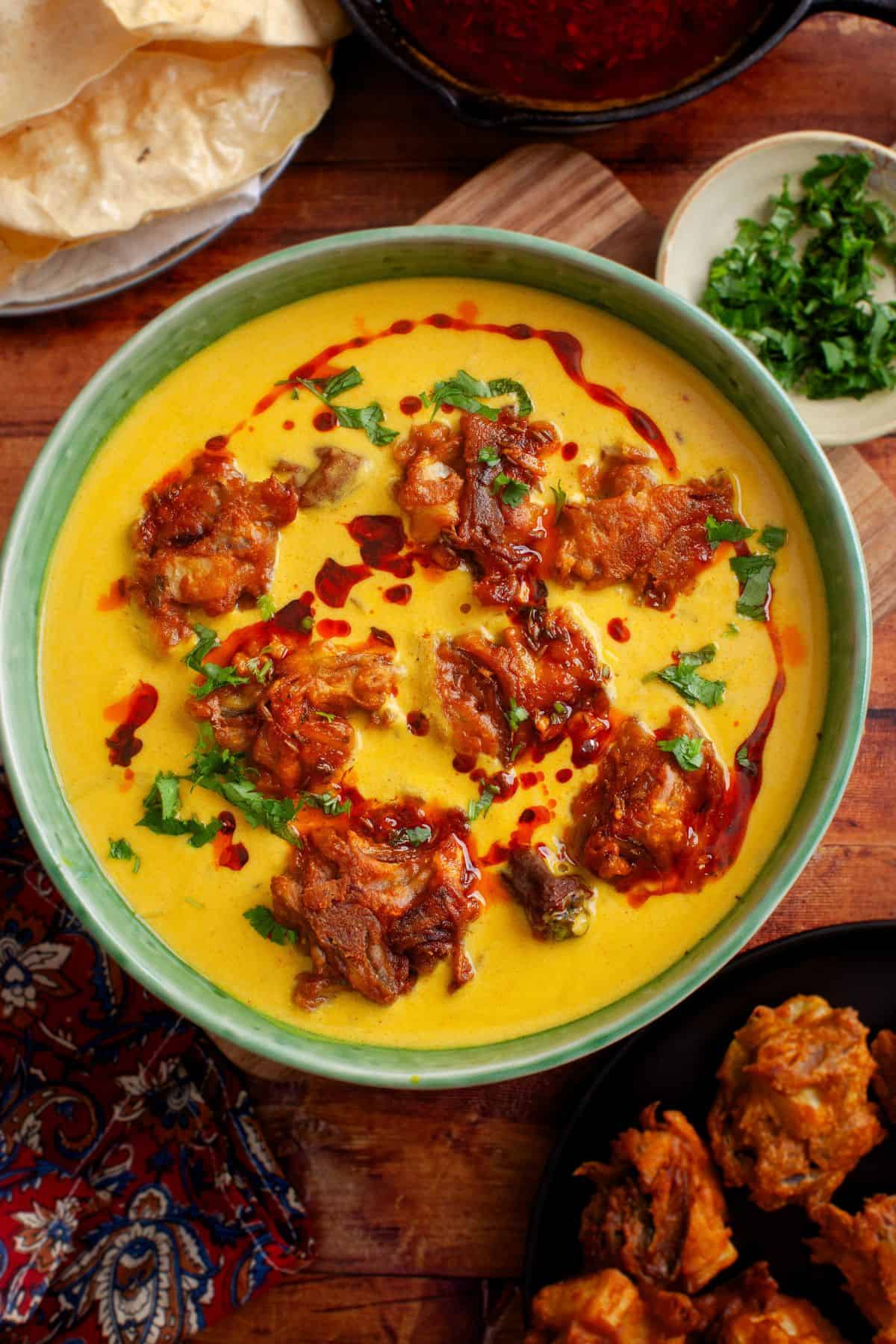
Whether you've been eating kadhi pakora your whole life or you're making it for the first time, this recipe will walk you through the process in a way that's easy to follow. I'm sharing all my go-to tips and techniques to help you avoid curdled yogurt, overly thick curry sauce, or soggy fritters. With the right steps, you'll end up with a beautifully balanced kadhi that's smooth, homely and deeply satisfying.
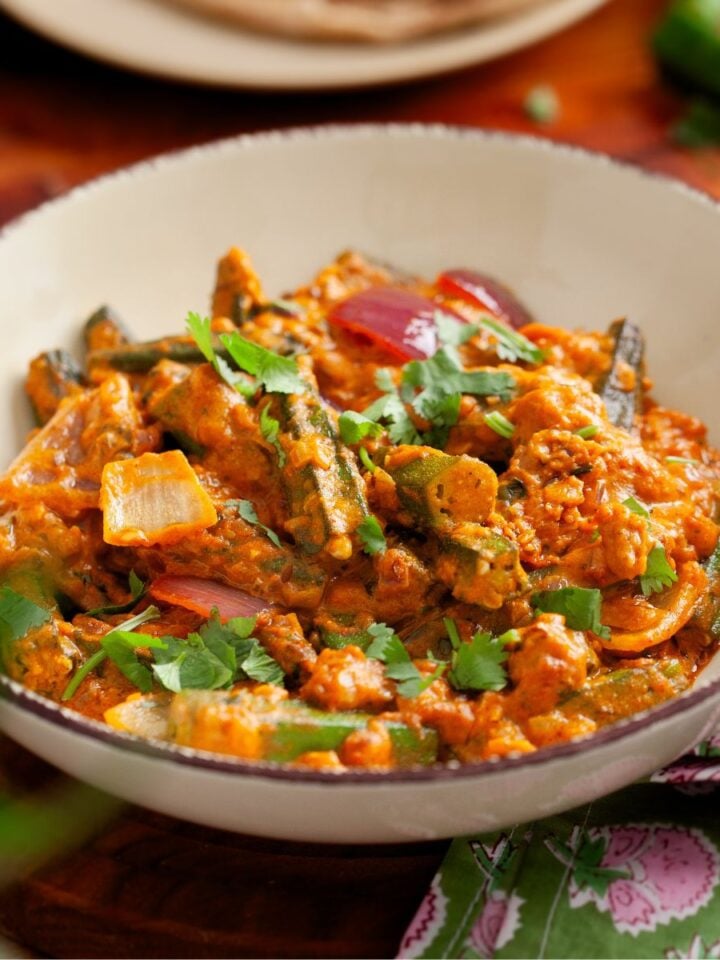
I grew up eating kadhi almost every single week. It was one of those staples that never felt repetitive. My grandmother's version, rooted in her UP (Uttar Pradesh) style of cooking, had simple pakoras made with spiced besan, nothing fancy. Sometimes there were no pakoras at all, rather vegetables were added to the yogurt base(cue my bhindi kadhi recipe)
But over time, living in Delhi meant our food started reflecting a beautiful blend of North Indian influences. And hence, slowly, our kadhi pakora evolved too. Garlic and onions made their way into the yogurt curry, it became spicier, tangier, and more assertive.
The pakoras got a makeover too, with sliced onions, green chillies, and potatoes added for extra texture and bite. That's the version I fell in love with and continue to make today.
My Tested Tips That Guarantee Success
Kadhi begins with two humble ingredients: dahi (yogurt) and besan (gram flour). From there, it's all about building flavor. A bit of heat, the right level of tanginess, and a gentle simmer turn it into something truly comforting.
It's not a complicated dish, but it does benefit from a few thoughtful techniques. Once you get the feel for it, making kadhi becomes almost intuitive. Below are the tips I rely on for a version that's consistently delicious.
To Avoid Yogurt from Curdling
- If your yogurt is tasty, your kadhi will be tasty - Start with good quality whole milk yogurt. Traditional Punjabi recipes use chaas(indian buttermilk), but plain yogurt works very well. Indian store dahi is ideal, but if you are buying from non-Indian stores, make sure there is no gelatin or additives.
- Use Room Temperature Dahi(Very important!) - Yogurt curdles due to sudden temperature changes. I usually put the dahi out of the fridge for 4-6 hours before I start cooking to bring it closer to room temperature. This one step will drastically reduce the risk of splitting.
- Best to Use Slightly Sour Yogurt - My grandmother would always taste the yogurt first. If it wasn't tangy enough, she'd let it sit in a warm spot for a few hours or wait another day to let it sour a bit more. Kadhi doesn't taste quite right if the dahi is sweetish or mildly tangy, it's best made with yogurt that's pleasantly sour, but not overly so.
- Whisk Your Yogurt & Sift Besan Over it- This simple step makes a big difference. Whisk the yogurt until smooth, then sift the besan (gram flour) over it to avoid lumps. If your besan is clumpy or the yogurt isn't fully smooth, you'll end up with grainy bits in your kadhi and chances of yogurt particles curdling around those lumps of besan are high.
- Don't add salt in the begining- We don't add salt to kadhi in the beginning of cooking because of how it affects the curd and besan mixture during the cooking process. Salt can cause the yogurt to split and also slows down the cooking of besan.
To Level Up Taste of Your Kadhi Pakora
- Use mustard oil and go heavy handed on spices -If you want that truly authentic punjabi kadhi taste, mustard oil is essential. Its piquant, slightly sharp flavor brings depth and character that neutral oils just can't match. When combined with the heat and aroma of spices in the tadka, mustard oil becomes the key to flavor.
- Give It Time - Seriously! Kadhi gets its name from the Hindi word "kadhana," which means to cook slowly over low heat. And that's exactly what it needs-time and patience for the taste to develop. You'll want to set aside at least an hour. That includes prepping ingredients, simmering the yogurt-besan mixture until it thickens and deepens in flavor, frying up the pakoras, and finishing it all off with a fragrant tadka. Trust the process, it's worth it.
- Besan To Yogurt Ratio - Some people prefer thick kadhi, but my mom always made it with a consistency which is neither too thick nor too thin. I follow a 3:1 ratio of yogurt to besan, which gives it a perfectly pourable texture. More importantly, the kadhi doesn't turn custard-like after a couple of days, rather it thickens naturally over time without becoming overly dense.
- Water Quantity & Salt - Kadhi does need a good amount of water. As an approximate base ratio, for every 1 cup of yogurt, use 2 to 3 cups of water depending on how thick or thin you like your kadhi. It is better to start slightly thinner. You can always simmer it longer to thicken. Also, since kadhi will reduce as it simmers, go light handed on salt at beginning then adjust right at the end.
Ingredients
- Besan - Is gram flour. It is made by grinding chana dal/kala chana (brown chickpeas, which are nuttier as compared to white chickpeas). You can use chickpea flour(which is ground up white chickpeas/garbanzo beans) if you cannot find gram flour.
- Hing or Asafetida yeah, it's kind of infamous for being one of those "stinky" spices. But, the moment it hits hot oil, it completely transforms. It's sharp smell softens and turns into this beautiful, savory, almost garlicky aroma. It's used in tons of Indian dishes, to give that deep, allium-like flavor. Think of it as earthy, funky, and full of umami. Just a tiny pinch goes a long way. Easily available at indian grocery stores. If you cannot find, skip it
- Methi Dana & Kasuri Methi - We use methi or fenugreek two ways in kadhi. I use the methi seeds in the first tempering, and as the kadhi cooks, the seeds soften and attain a sweet, mellow bite. Kasuri methi or dry fenugreek leaves is to bring in a smoky final aroma via the tadka that goes at the very end of kadhi.
Let's Make Kadhi Pakora
Prepare The Yogurt & Besan Mixture
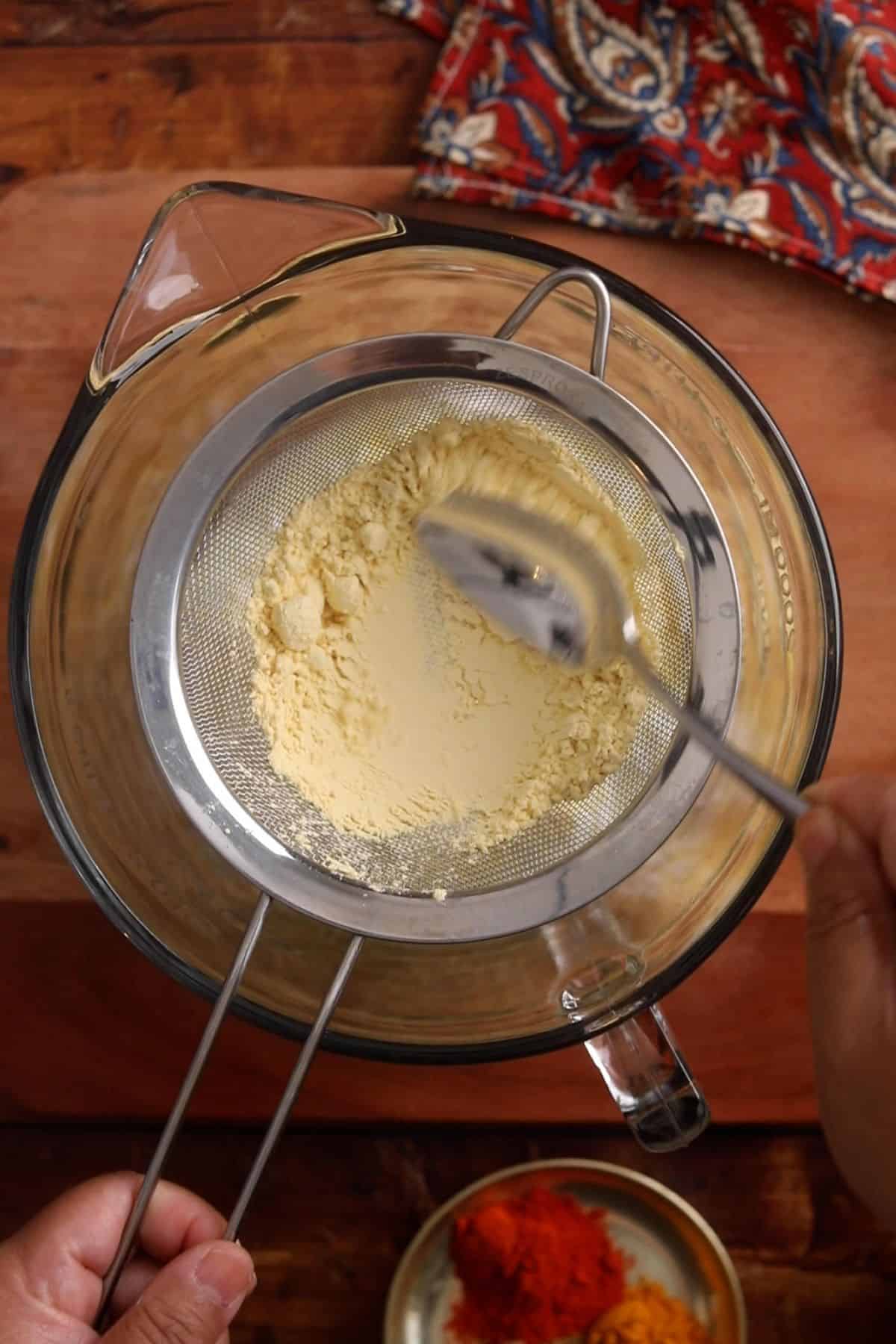
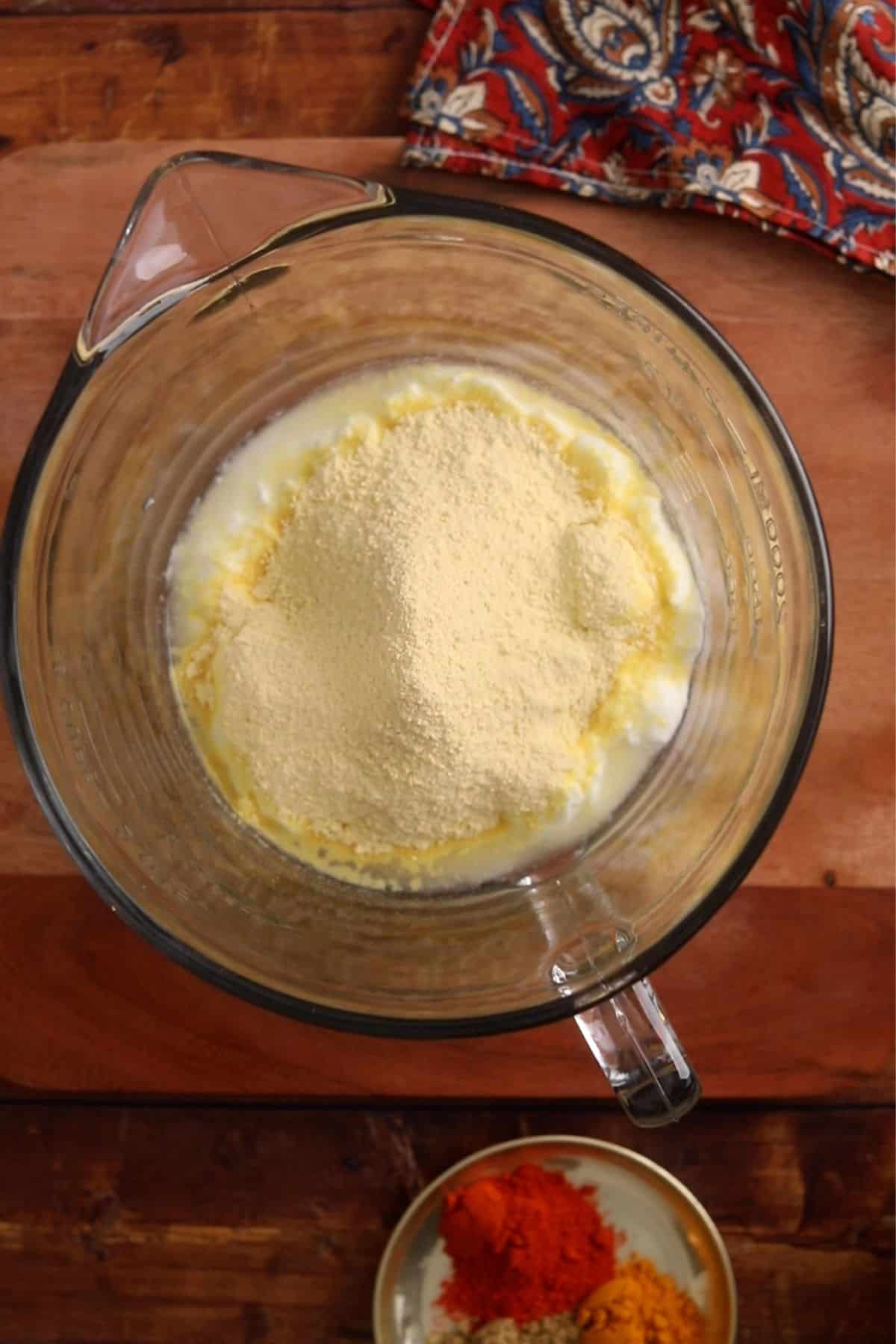
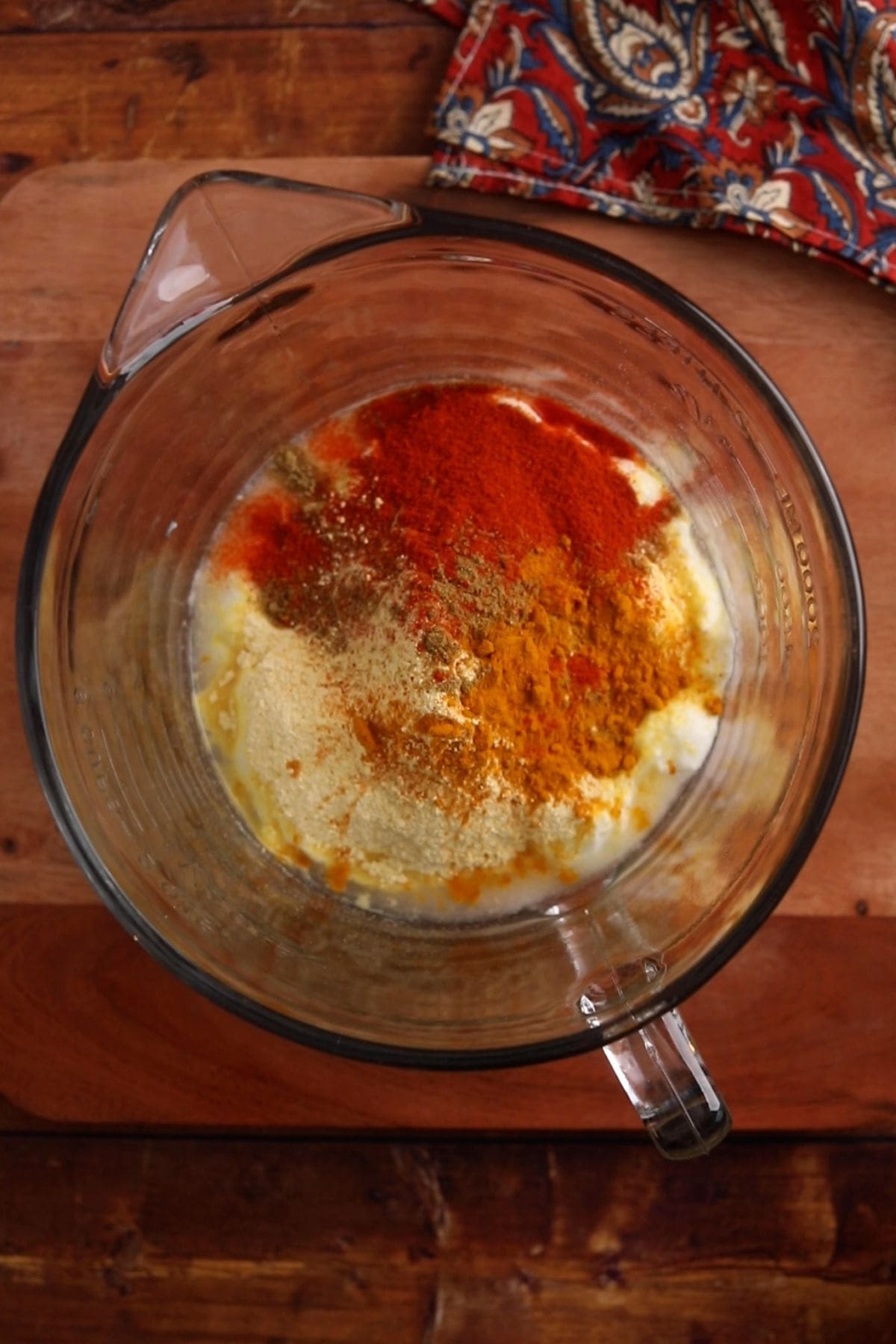
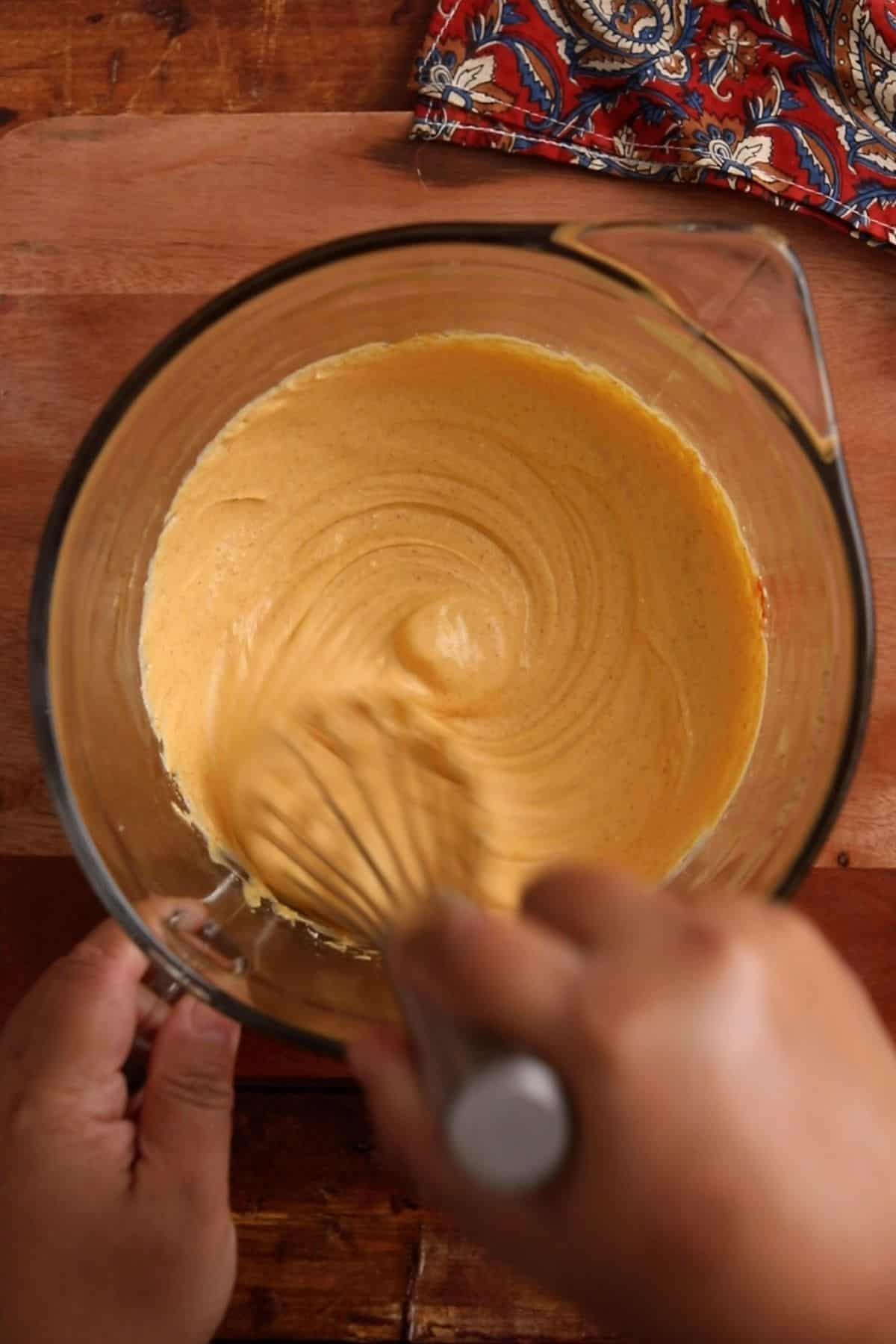
- In a large mixing bowl, whisk yogurt until smooth. Sift in the besan, then add all the ground spices (except salt). Whisk again until combined.
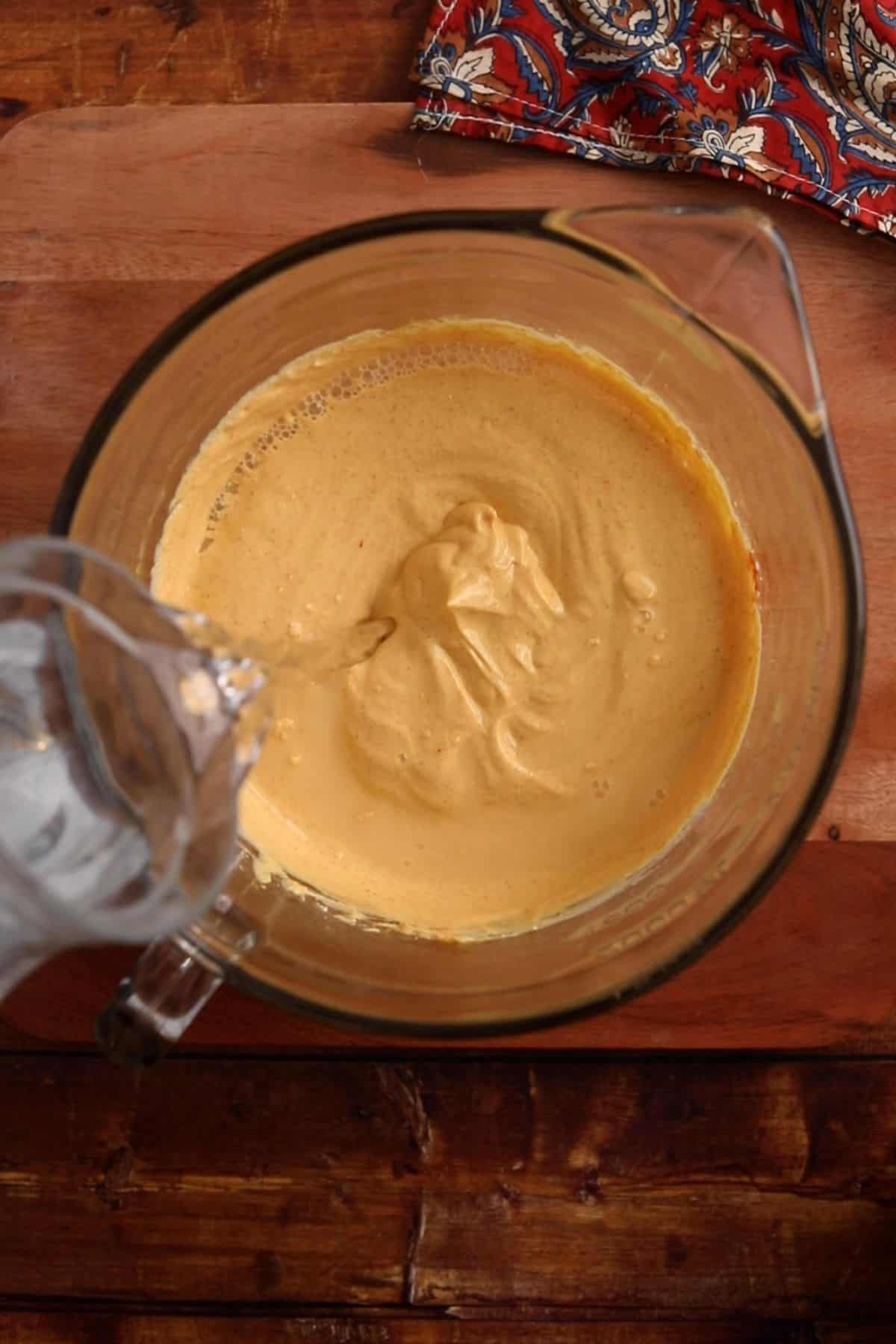
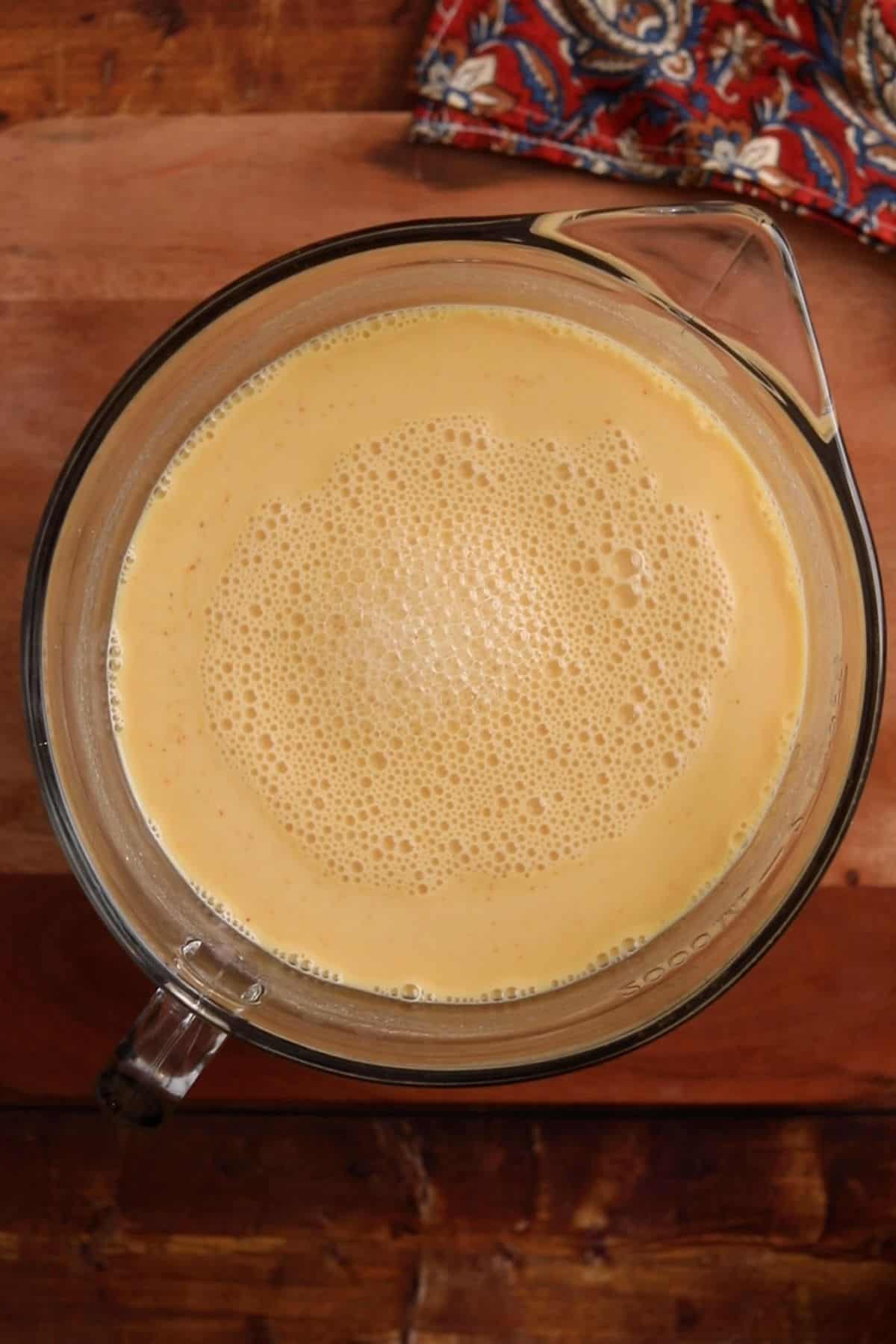
- Gradually whisk in 6 cups room temperature water (important) to form a thin, milk like consistency. Add 1-2 cup water as needed while slow cooking, as kadhi will simmer for 30-35 minutes.
Temper & Slow Cook Kadhi
- In a deep pot (4qt or larger) or a large kadai, heat mustard oil over medium heat untill lightly smoky with visible ripples. Don't overheat, or it will lose its aroma.
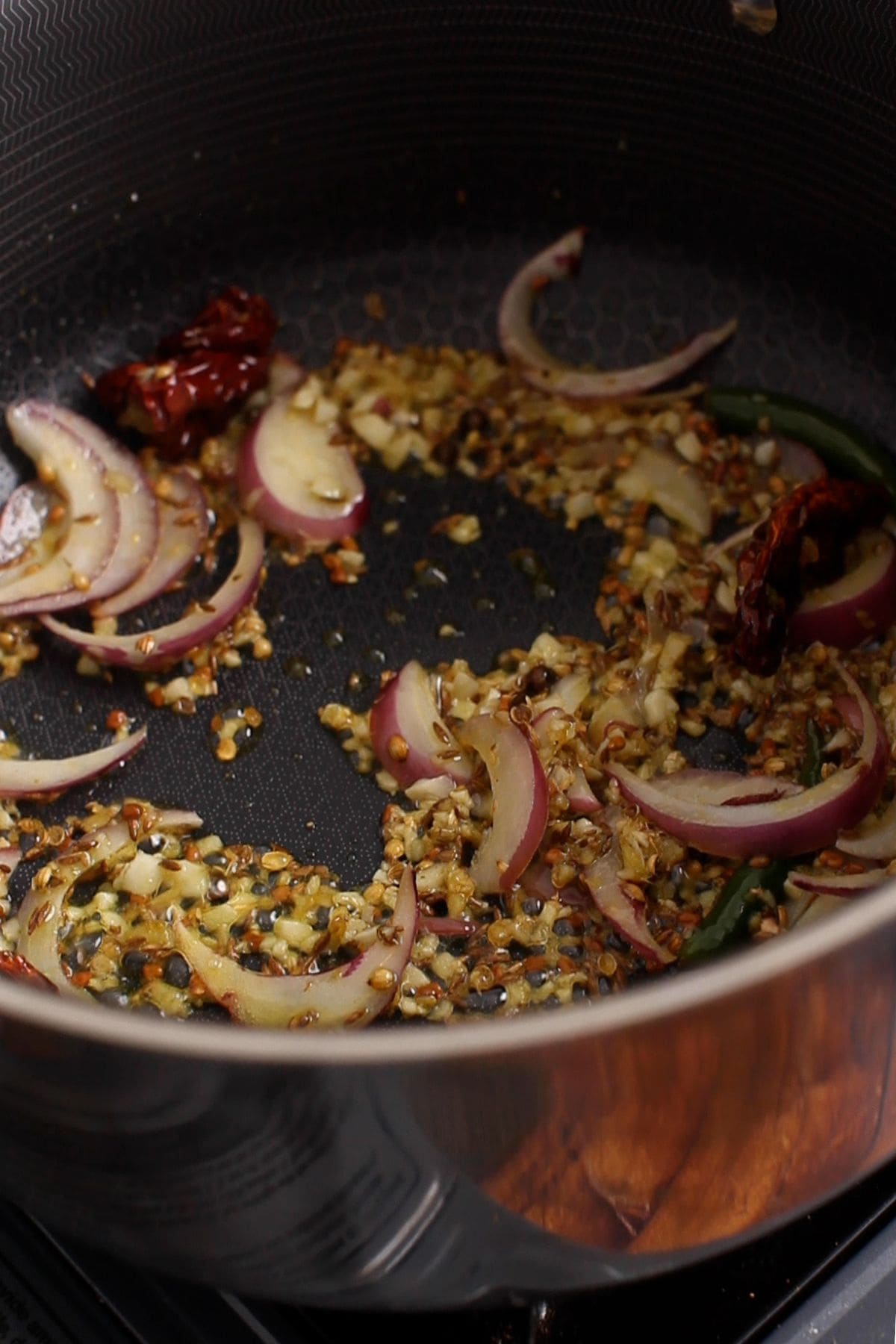
- Reduce heat to low medium. Add whole spices, broken dried red chilies, and asafoetida. Stir in chopped ginger, green chillies, garlic and sliced onions. Saute for 15-20 seconds or until aromatic(don't let brown).
If you enjoy the flavor of fresh curry leaves, feel free to add them at this stage. Just know that traditional Punjabi kadhi typically skips curry leaves and black mustard seeds. The signature flavor comes instead from a trio of spices-cumin seeds,(heavy dose of) whole coriander, and ajwain (carom seeds).
- Turn heat to the lowest setting. Slowly pour in the yogurt-besan mixture. Stir constantly for next 10-12 minutes. After 5 minutes, once the yogurt is warmed through, return the heat to low medium and keep stirring until the kadhi gently boils. This step prevents curdling.
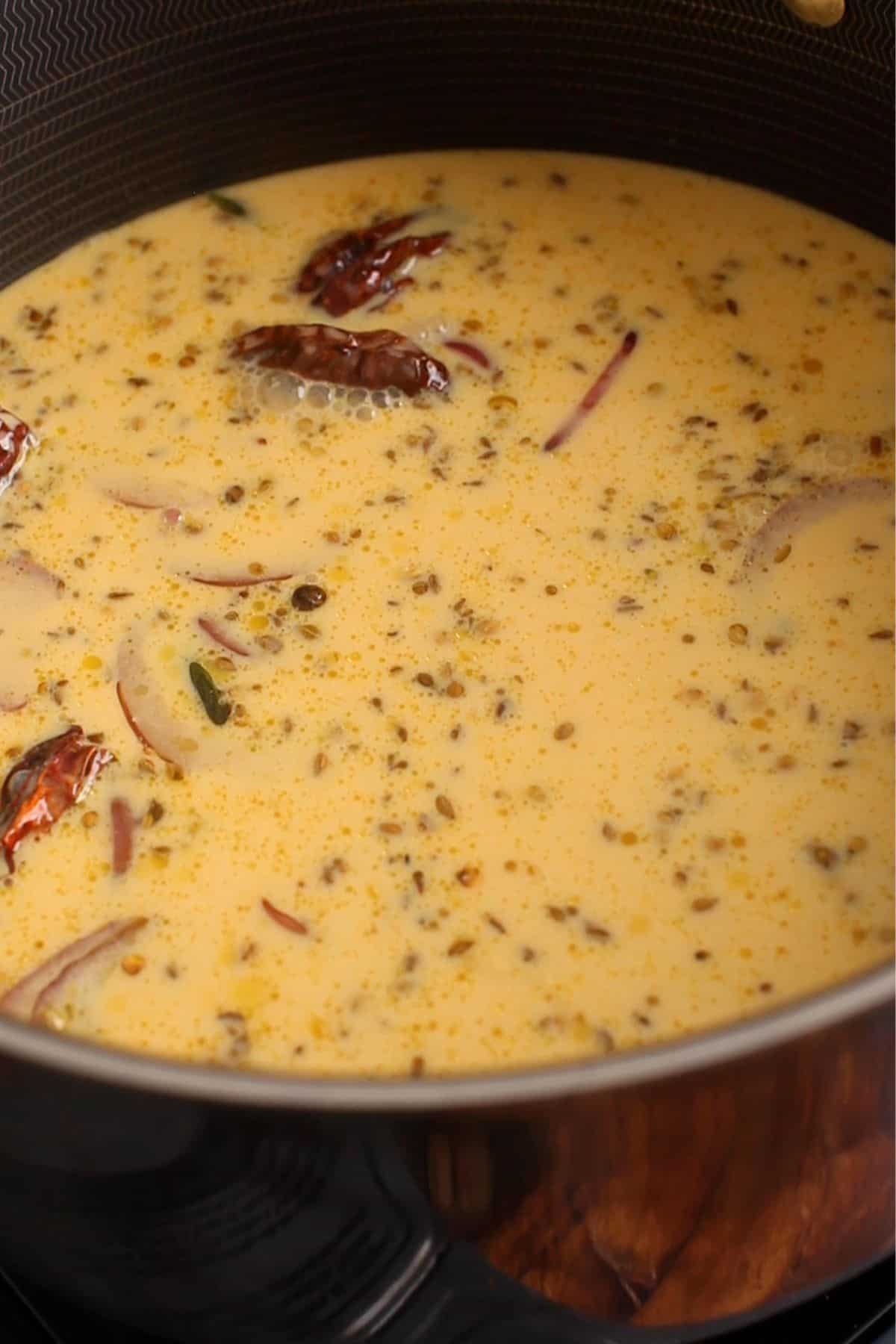
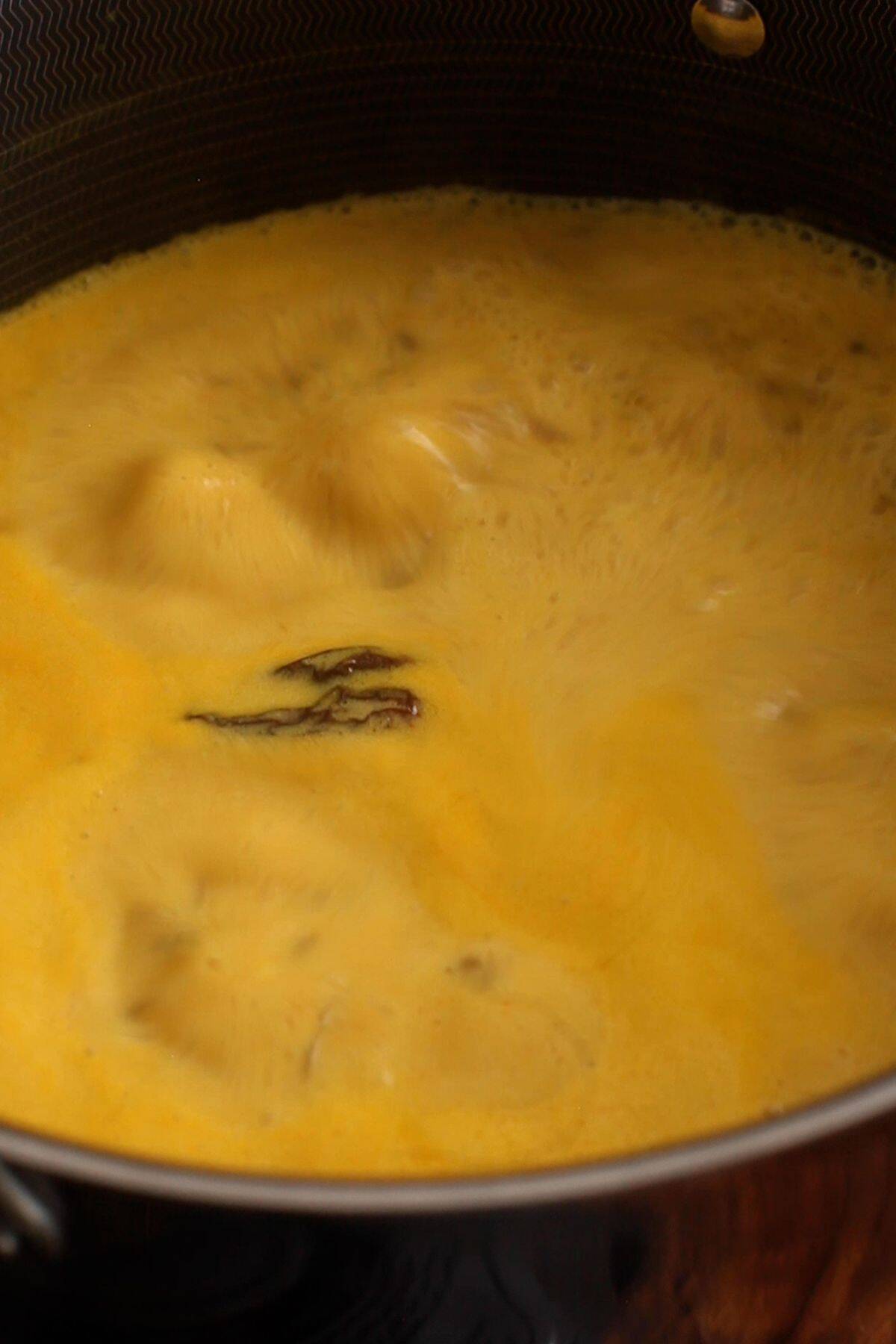
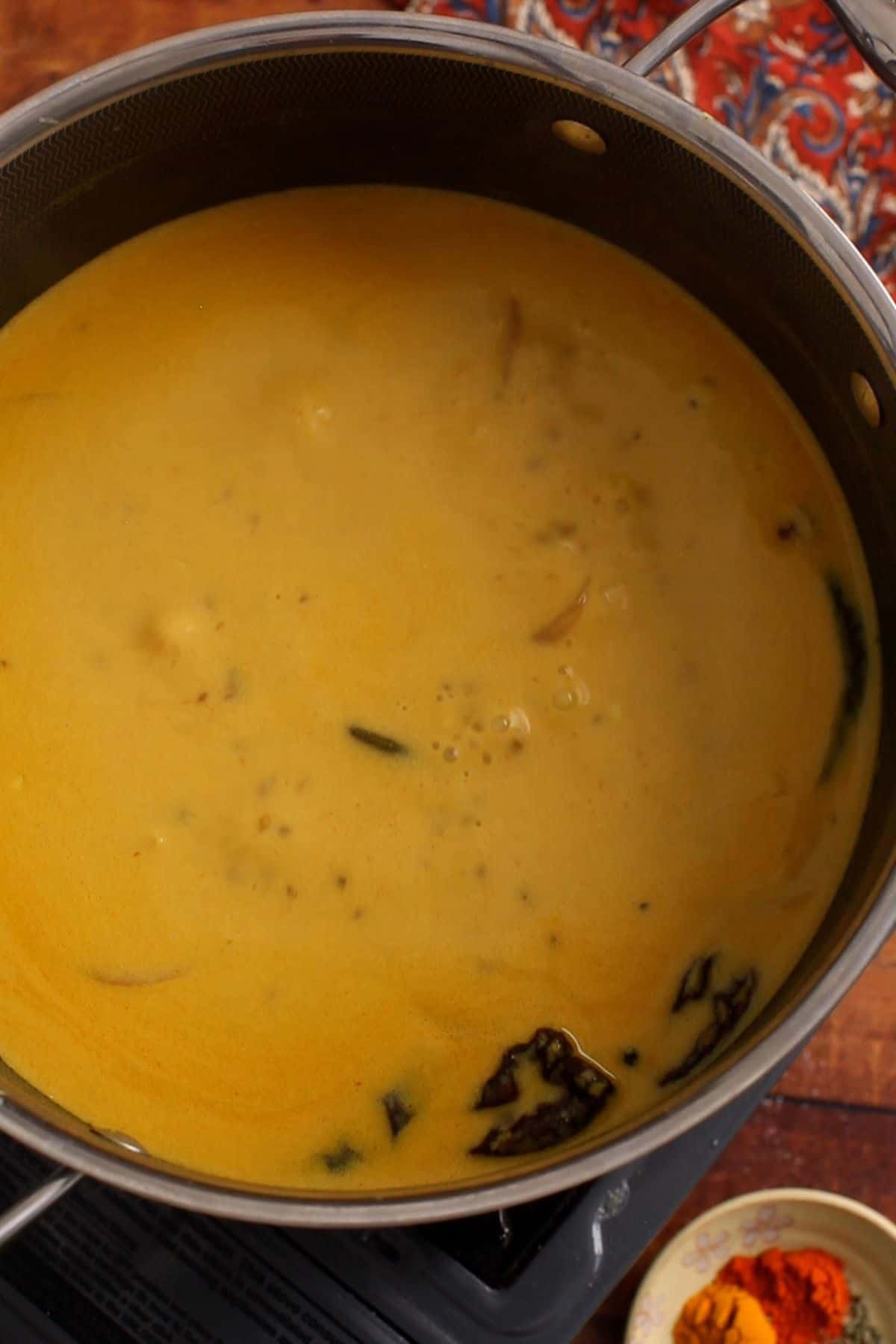
- Once it boils, reduce the heat to low and for a slow simmer,. Add the salt, mix and let simmer uncovered for 30-40 minutes. Stir occasionally to prevent sticking. Kadhi will thicken and turn deep golden yellow with a fragrant, tangy flavor.
Prepare Pakoras
- While the kadhi is boiling, start the pakoras. Making them fresh keeps them crispy. In a separate large bowl, sift besan. Add salt, spices, chopped green chilies, baking soda, and mix in the diced potatoes and sliced onions.
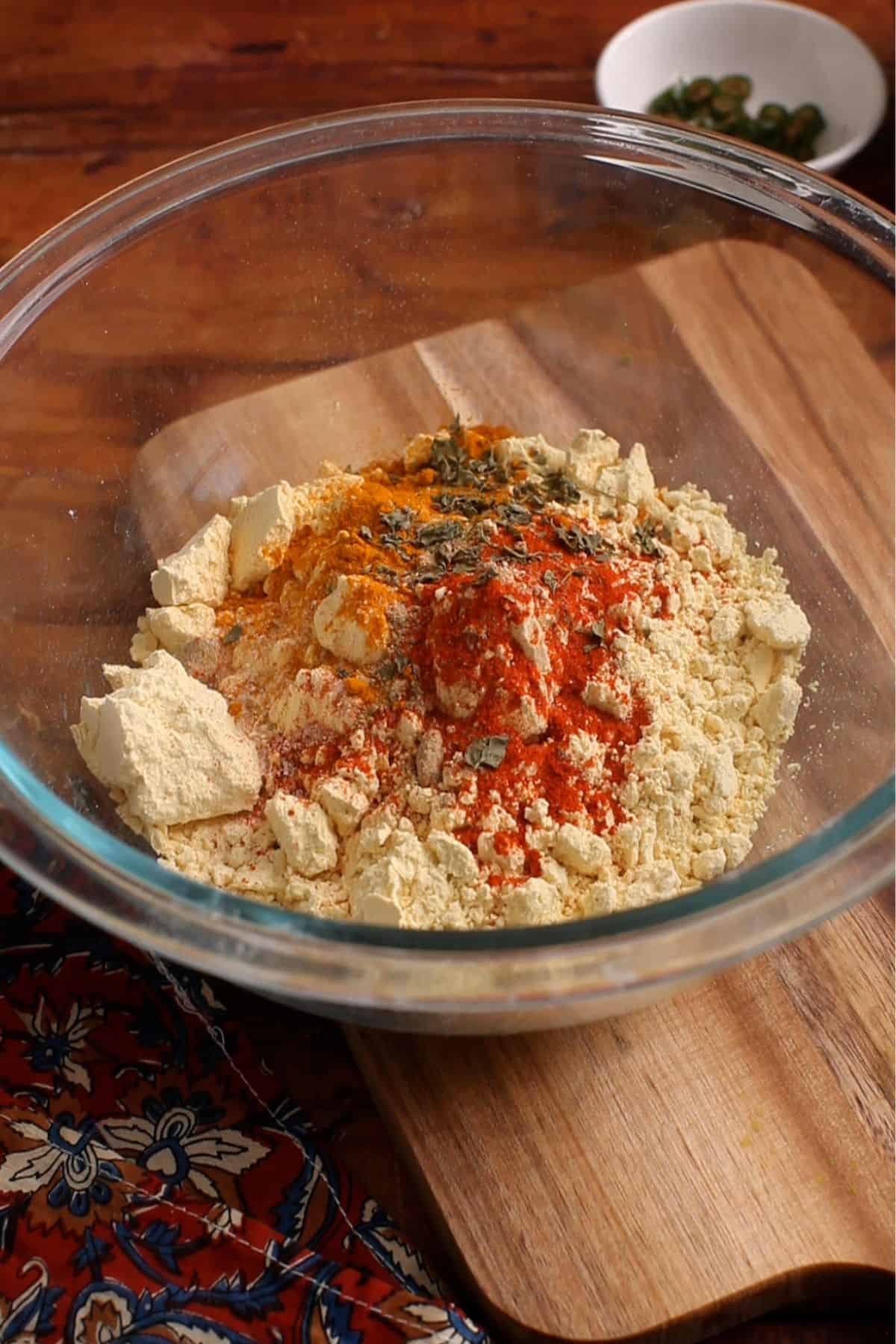
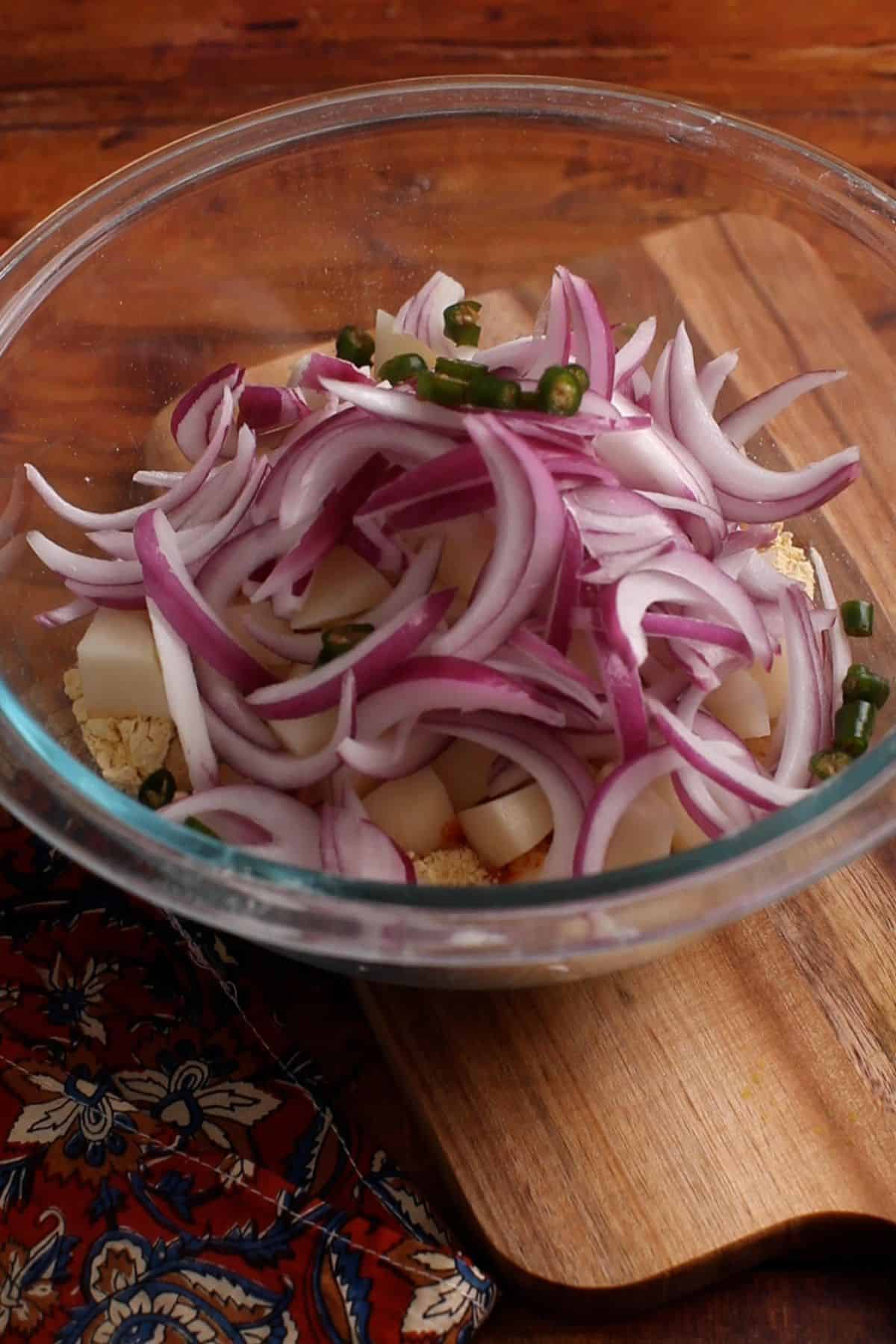
- At first, mix everything (while gently squishing) without adding water as salt will draw out moisture from onions. The goal isnt a batter, rather a thick mixture which should not feel tight or too soft. Add a tiny splashes of water as needed to adjust consistency.
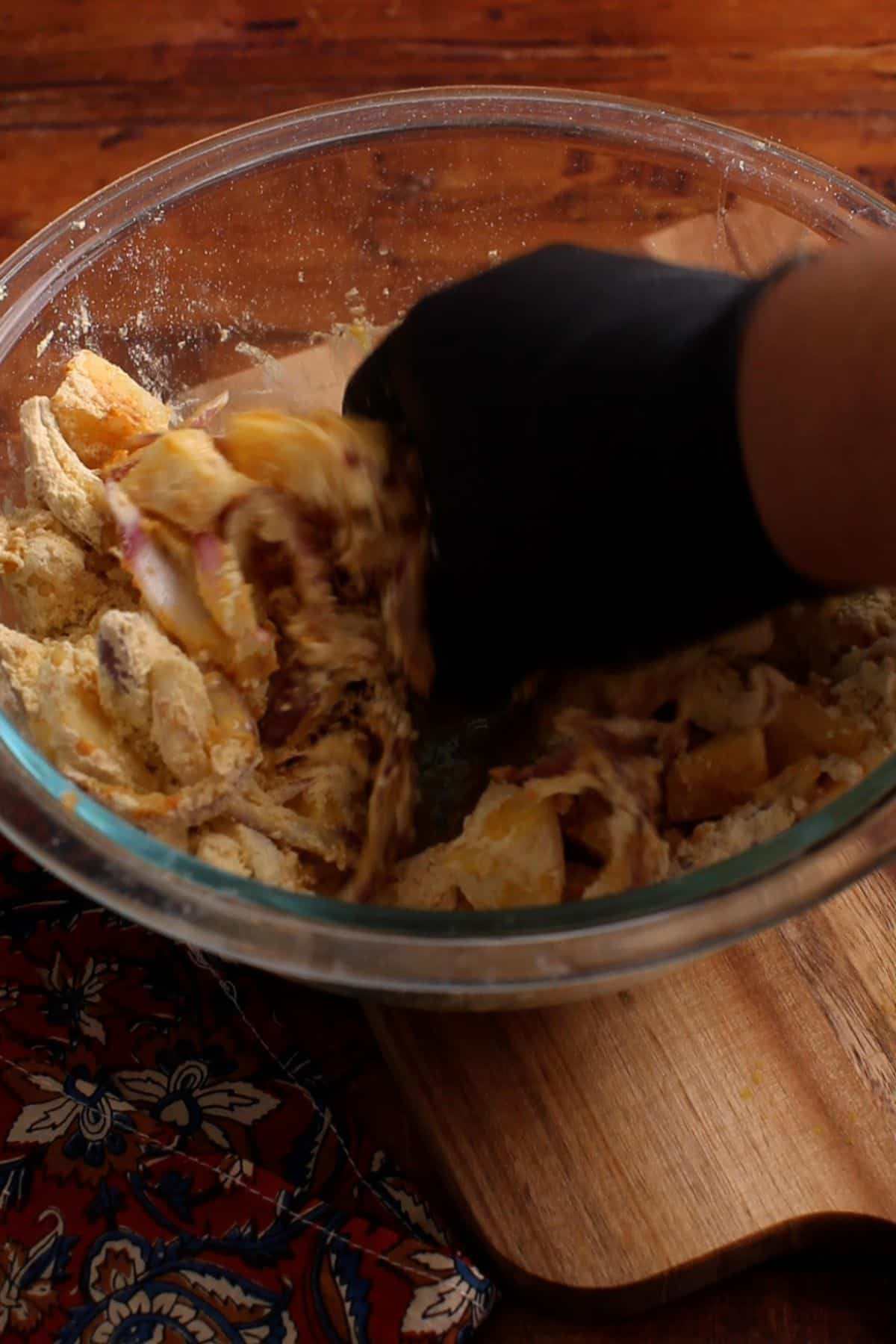
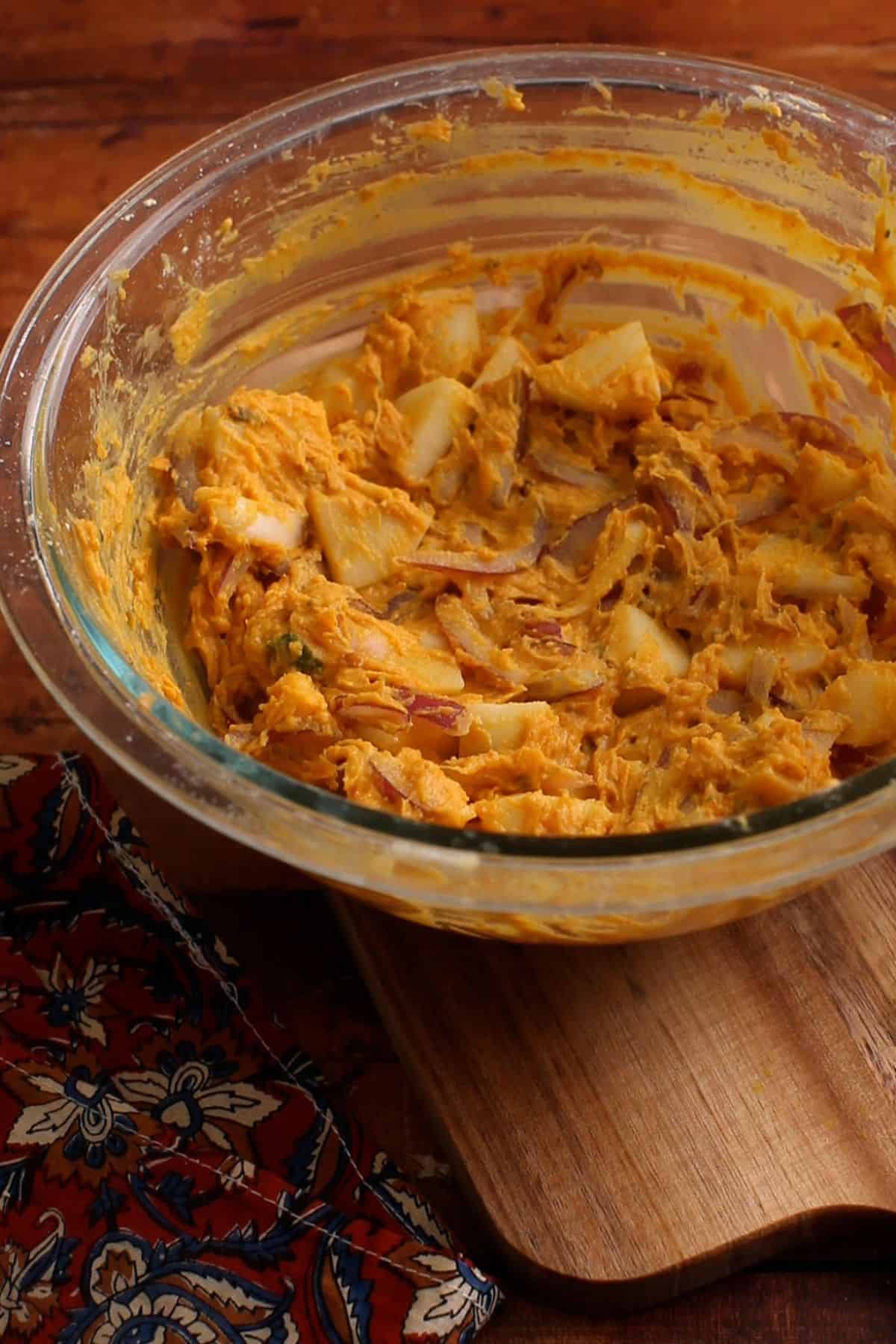
- No resting necessary, fry the pakoras rightaway. Heat 2-3 inches of oil for deep frying. Test with a small portion of batter-it should sizzle and rise. Ideal temperature is between 360F -370F to make sure that the pakoras cook through without burning.
- Carefully drop 1 to 1.5 tablespoon of pakora mixture into the hot oil. Smaller pakoras, they turn out crispier. A cookie scoop works, I simply use my hands(scoop with four fingers, slide with thumb). Let them fry undisturbed for few minutes and then flip to fry on other side.
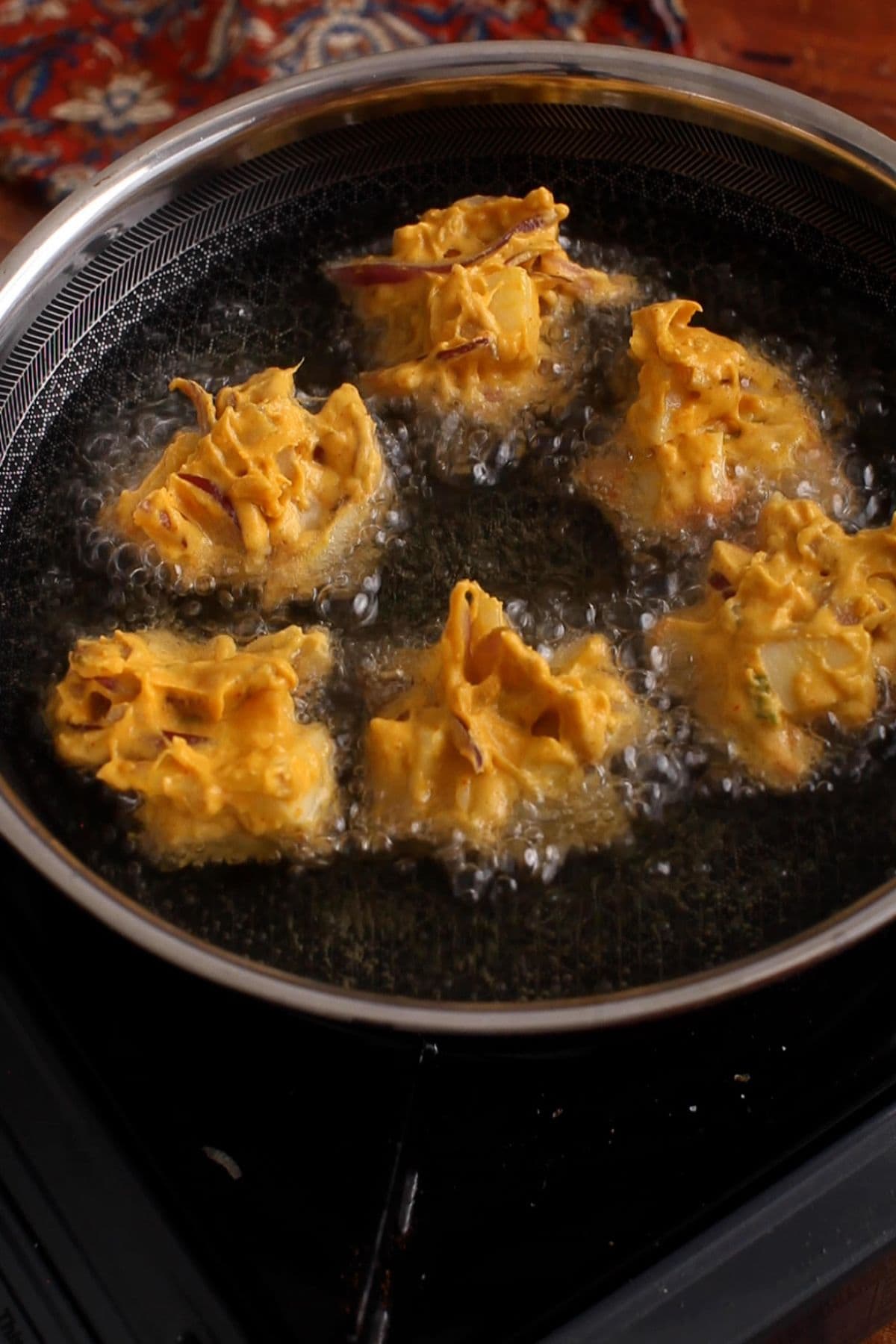
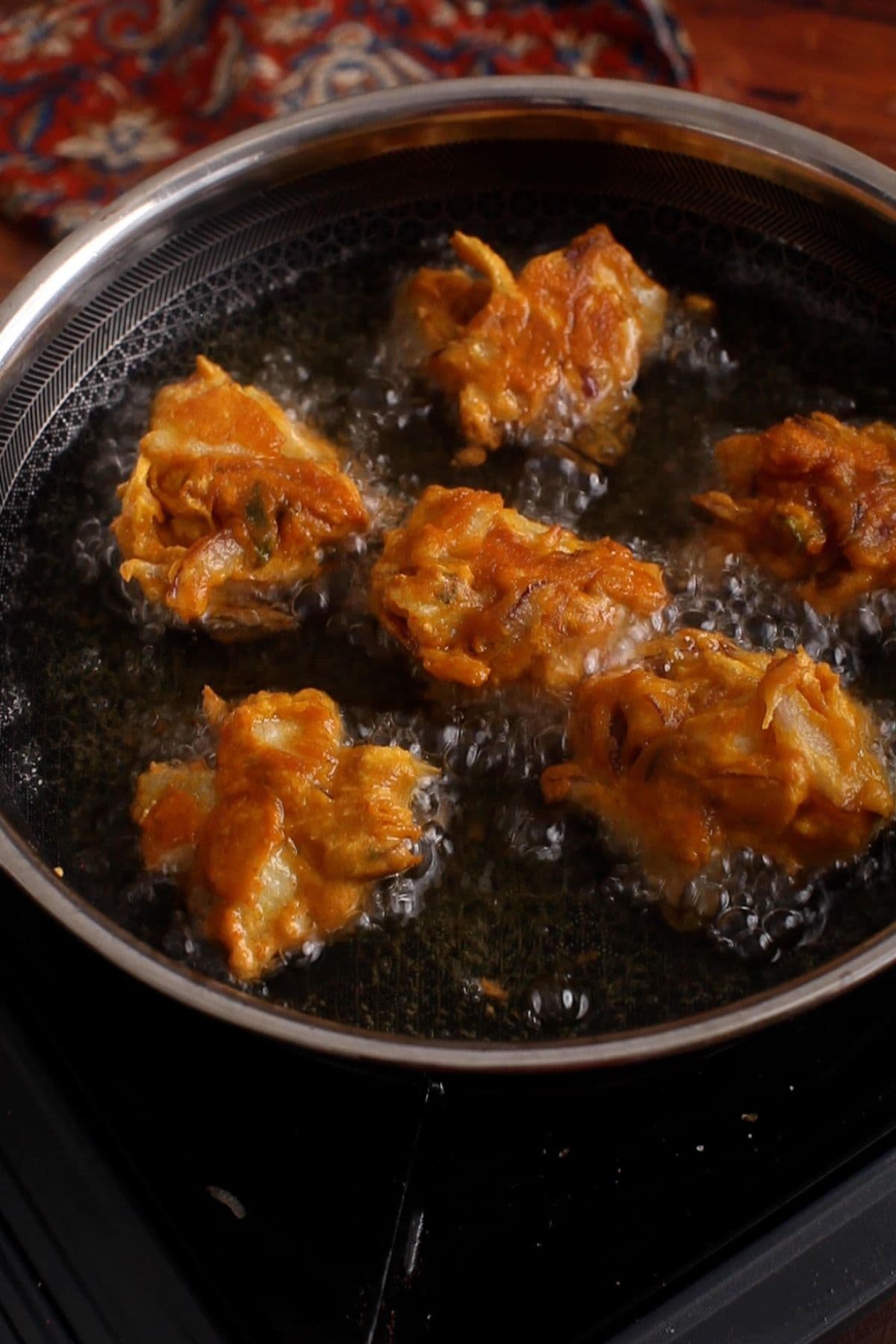
- Fry pakoras in batches, turning occasionally, until golden brown and crisp. I prefer mustard oil for its deep flavor (just like my mom), but any frying oil owrks. Remove with a slotted spoon and place on a cookie rack or colander to keep crispy.
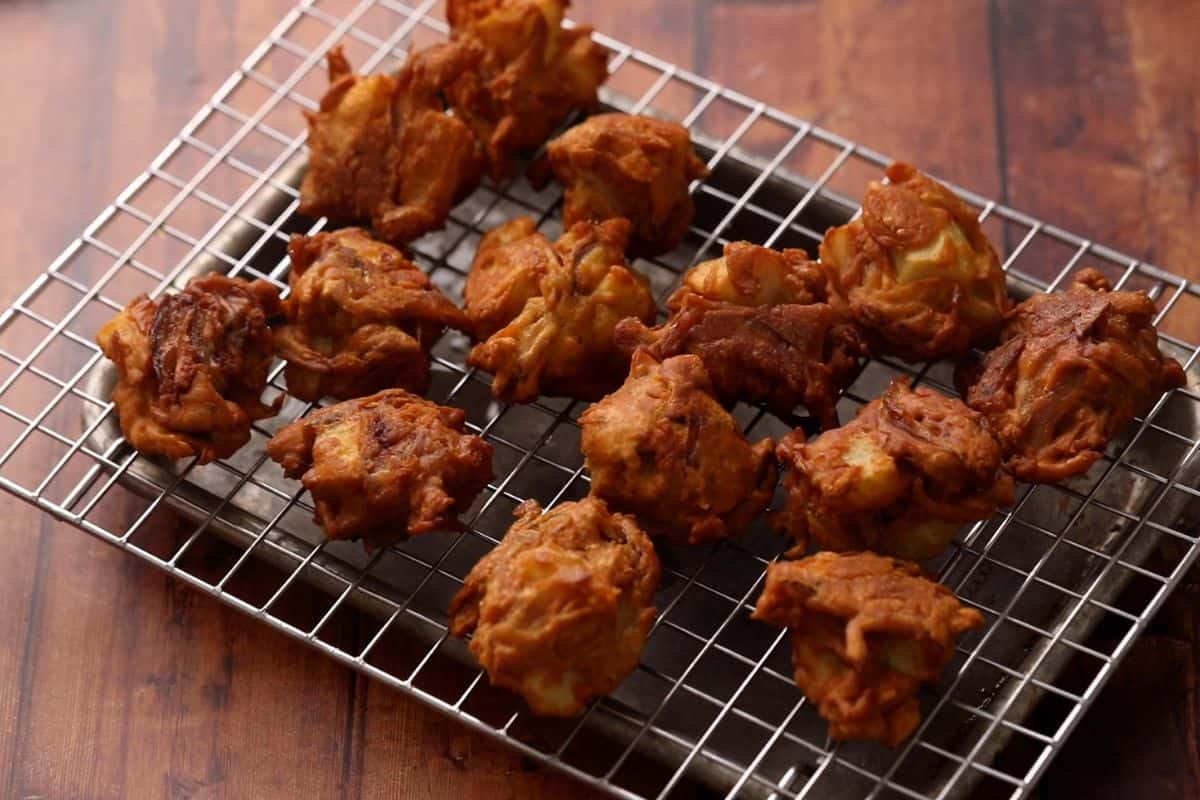
Put It Together & Finish With Tadka
- By now, your kadhi should be fully cooked. Adjust with water if too thick.
- Save a few to serve on top and add the rest to the boiled kadhi. Transfer the kadhi pakora to the serving bowl. As soon as you add pakoras to kadhi, they will soften. If serving later, store the pakoras seperately.
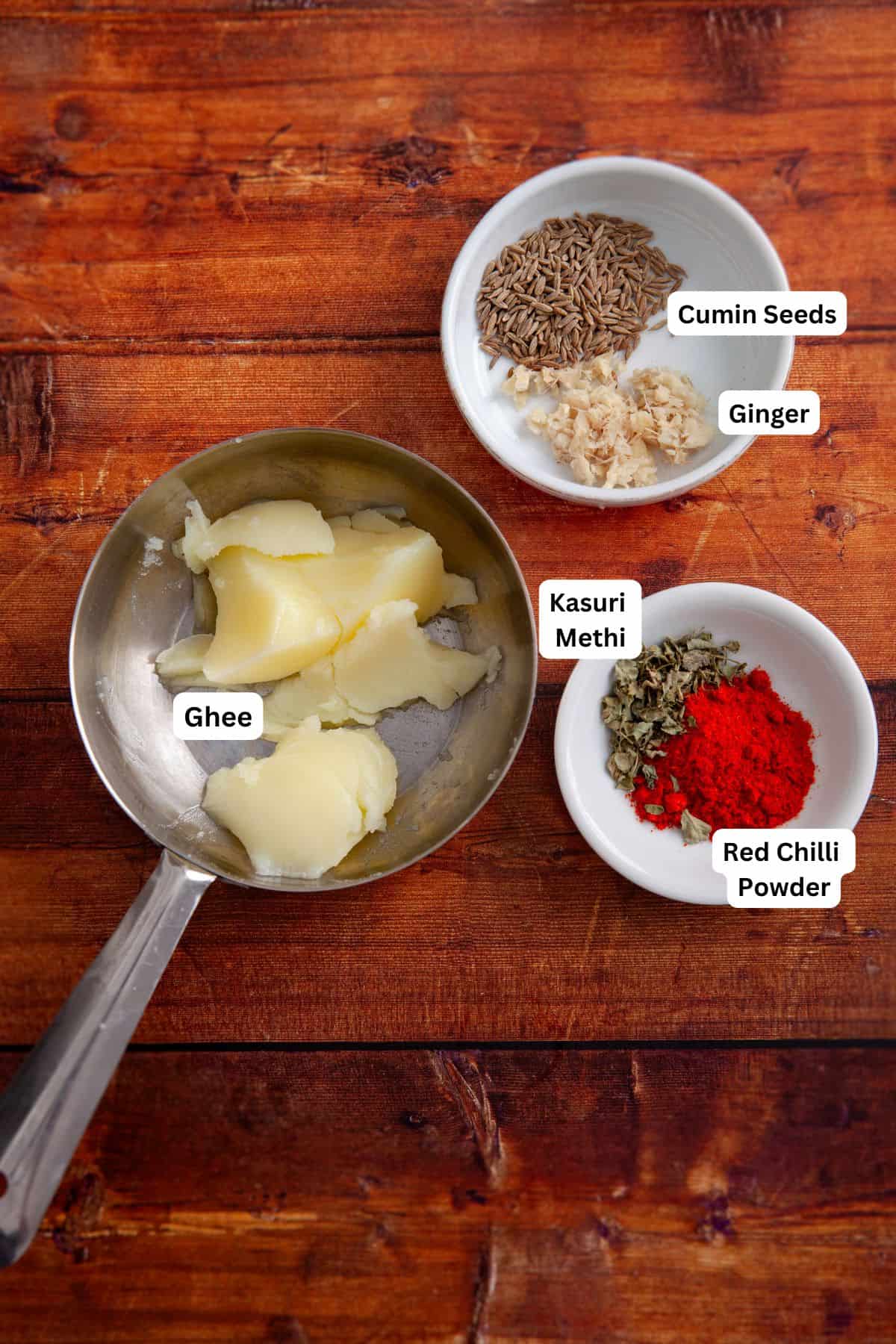
- Gor tadka, heat up ghee in a small pan. Add the cumin seeds and chopped ginger. Let cumin seeds sizzle(not burn). Remove from heat, then mix in the red chilli powder and kasuri methi.
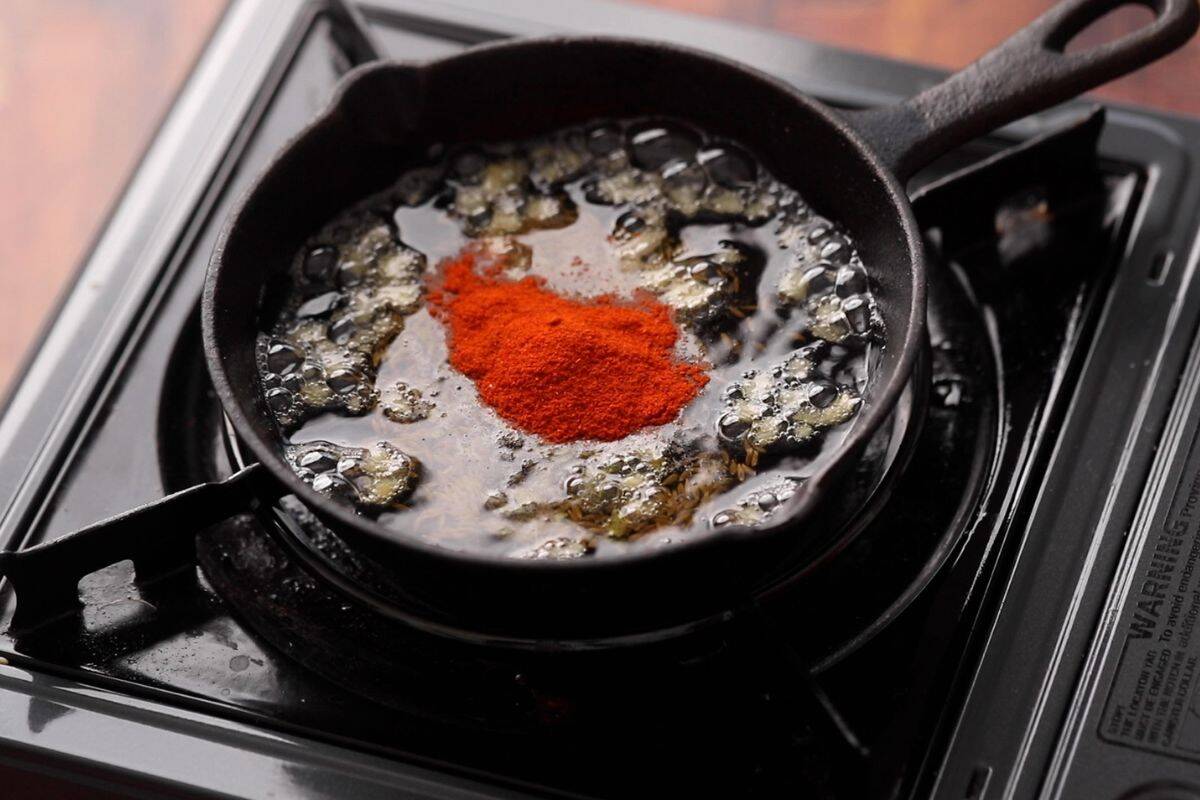
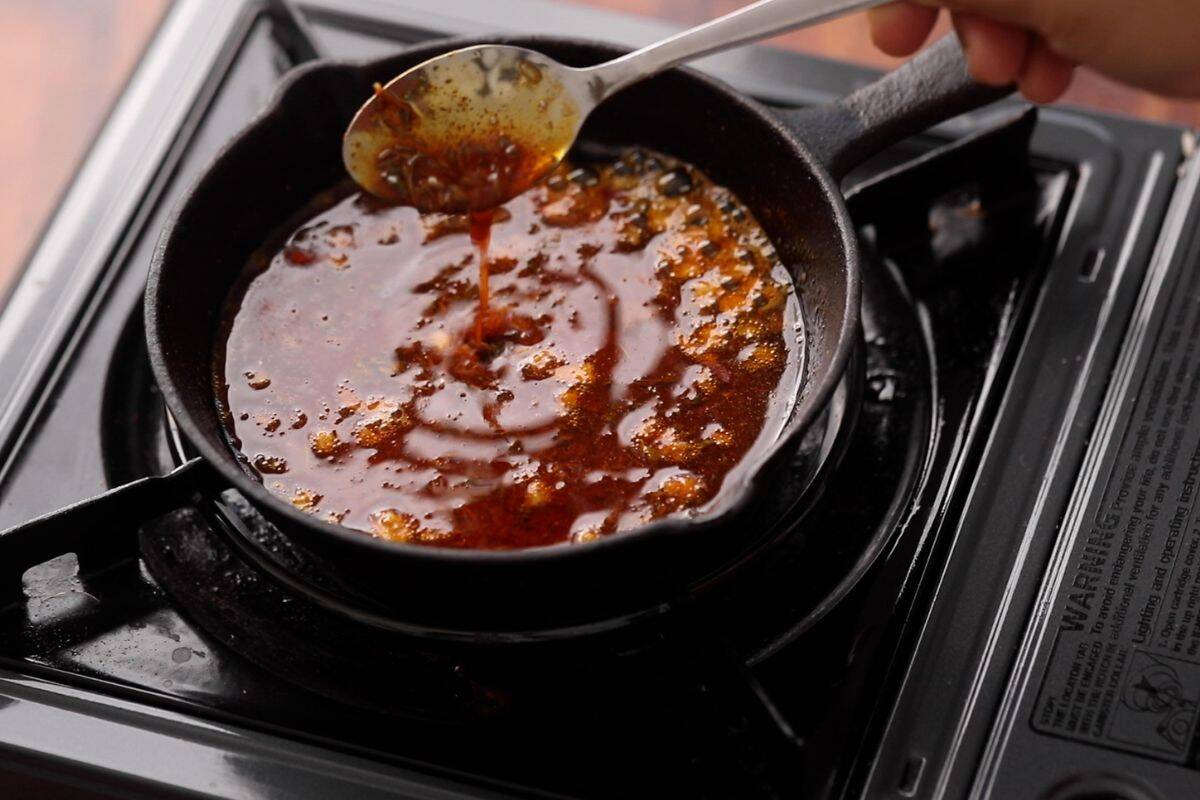
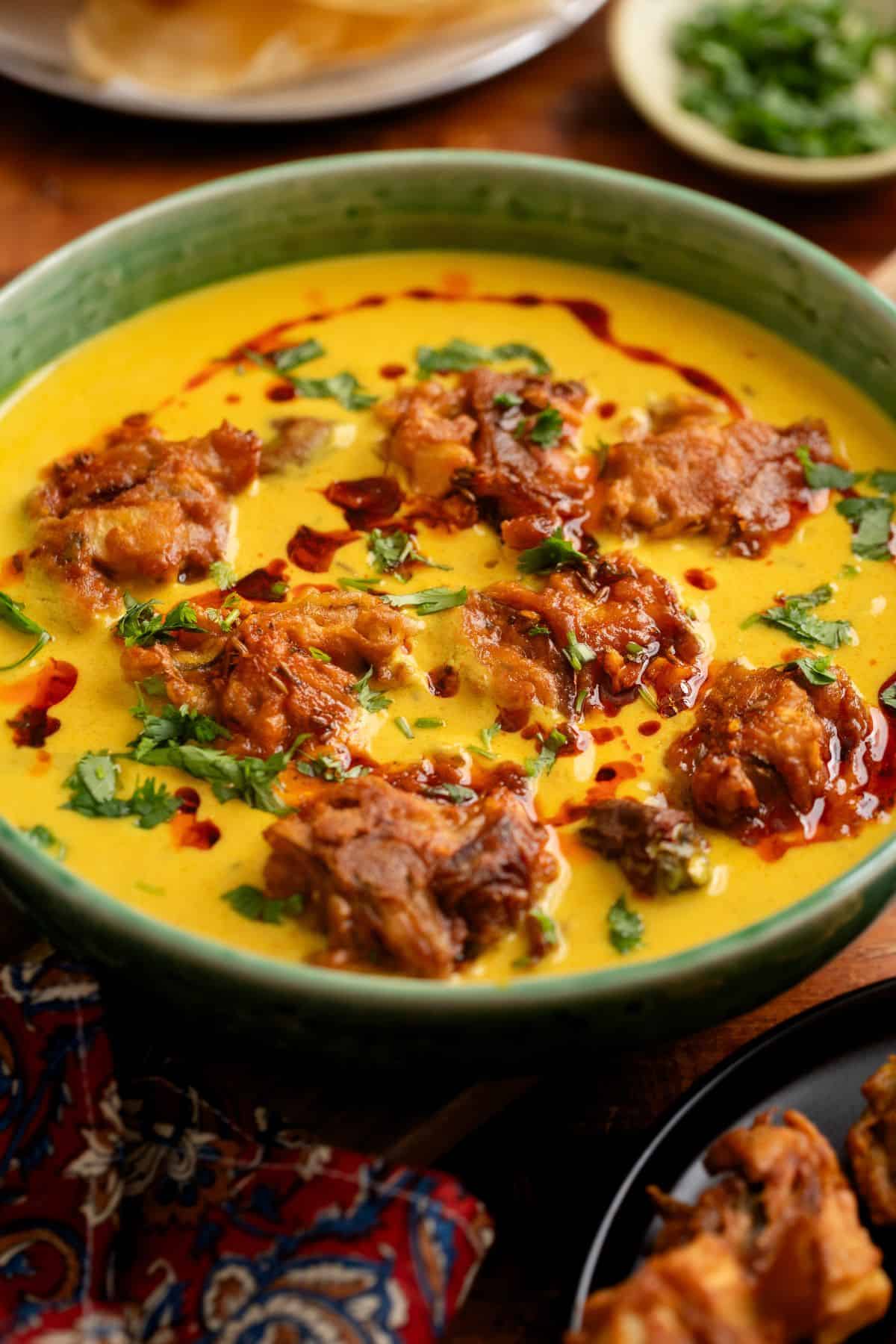
- Pour the tadka on top of kadhi pakora. Scatter the chopped cilantro leaves and serve!
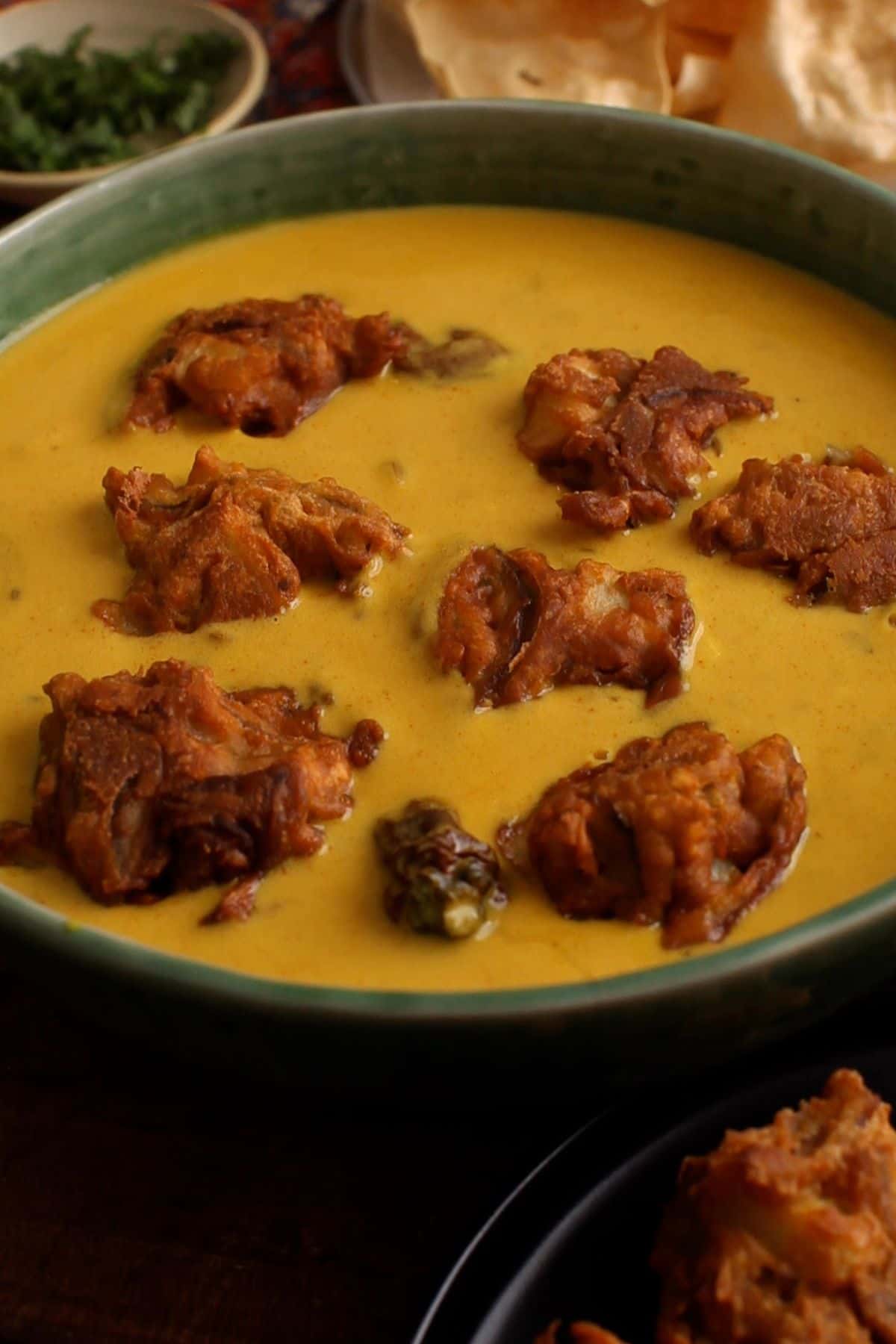
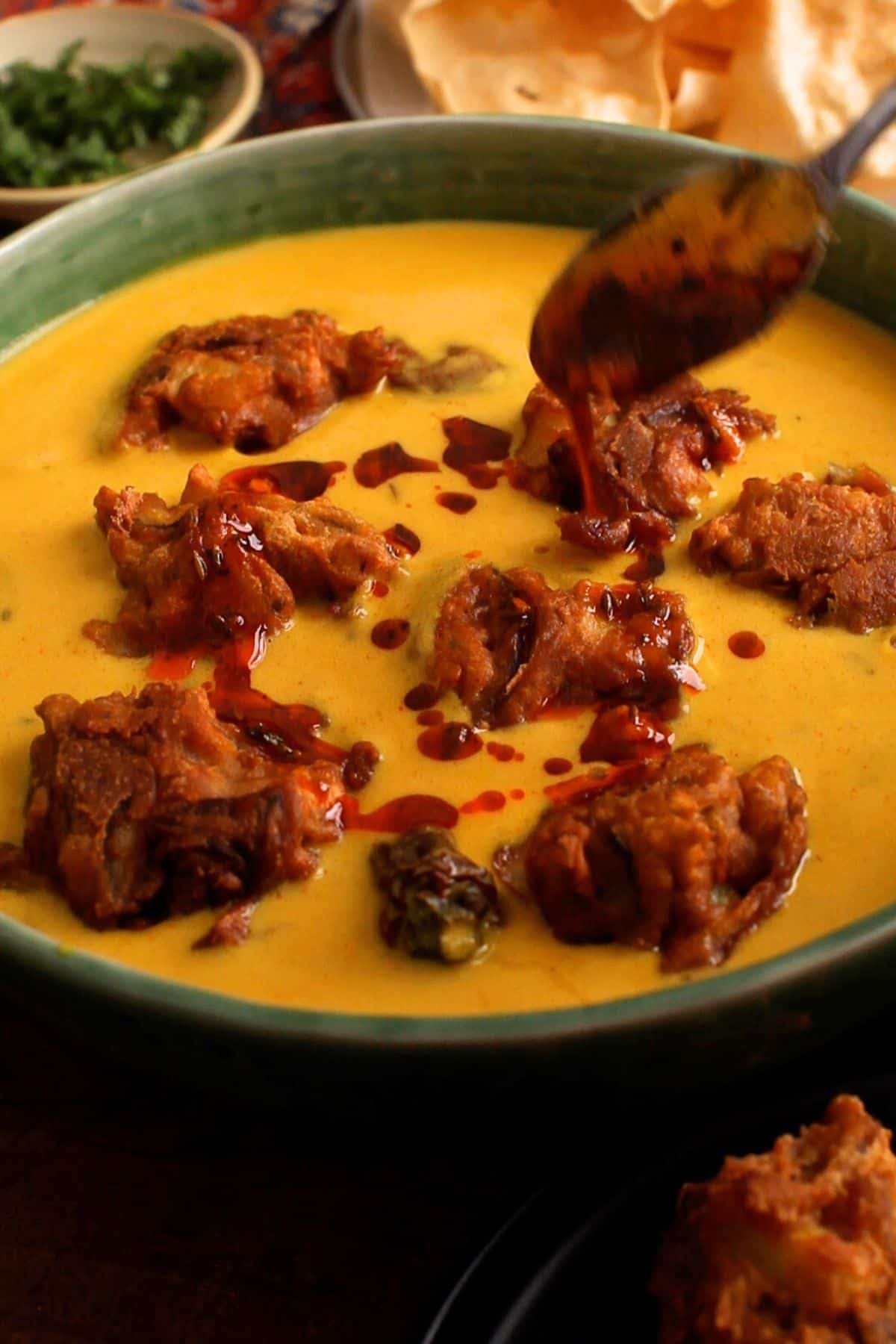
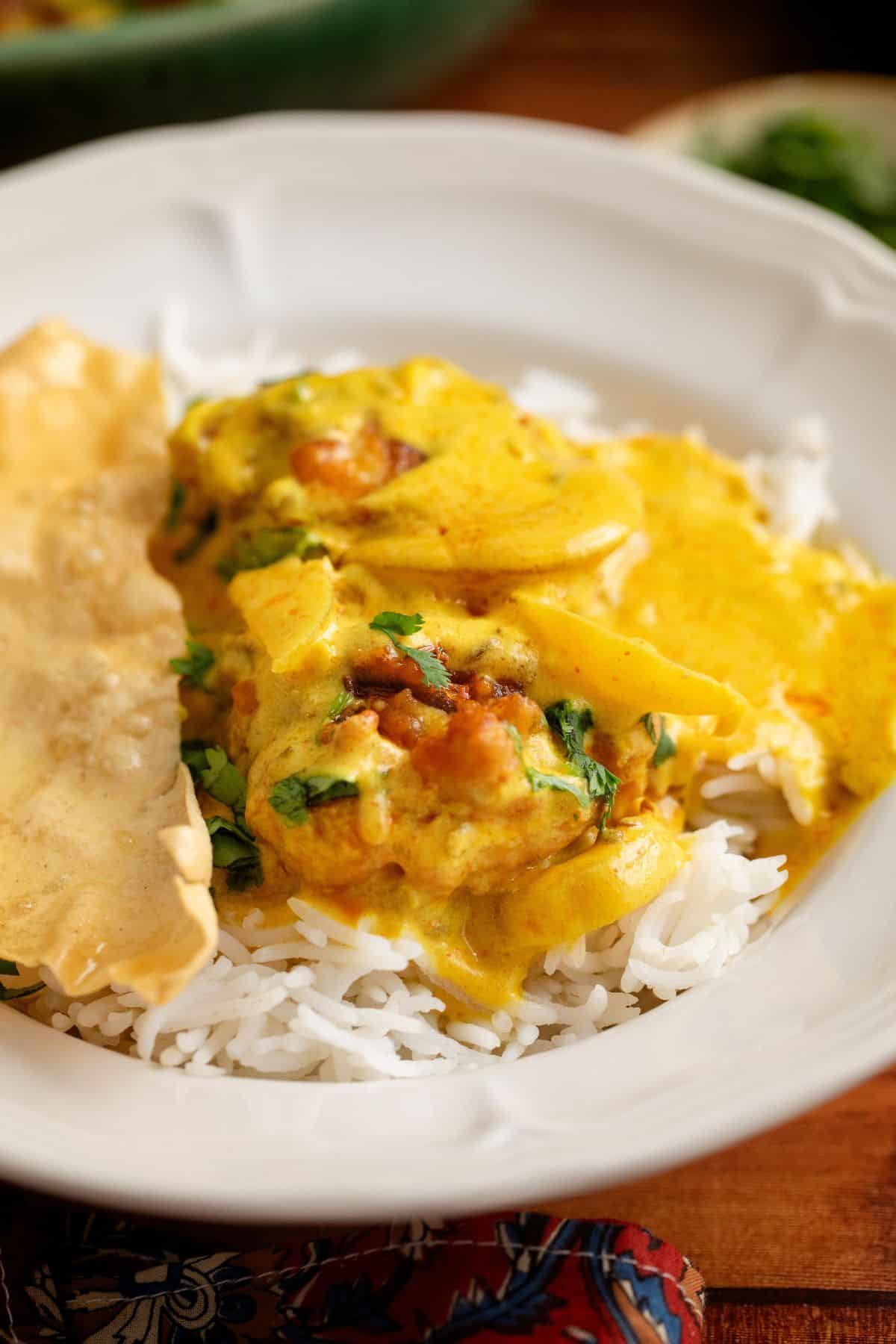
Kadhi Pakora is served with plain basmati rice or jeera rice in indian homes. I like it with tawa roti too. A crunchy side such as fried pappadam or fresh kachumber salad pair very well with it!
Classic Punjabi Kadhi Pakora Recipe
Ingredients
For Yogurt Mixture
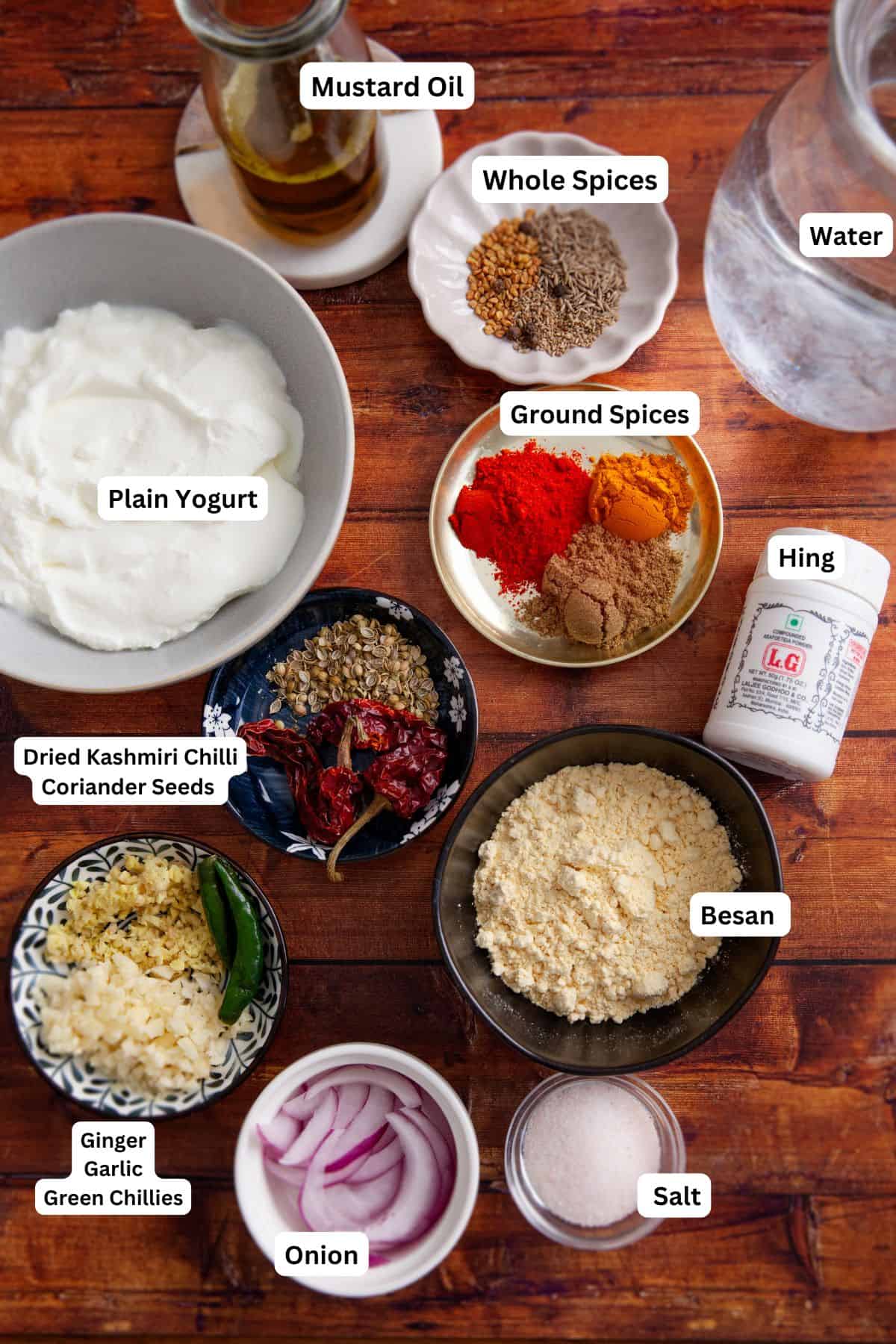
- 2 cup(408g) plain yogurt dahi
- ⅓ cup(41g) besan gram flour
- 1 teaspoon turmeric powder
- ½ teaspoon red chilli powder (hot), adjust to taste
- 1.5 teaspoon coriander powder
- 6-8 cup water room temperature (or as needed)
For Kadhi
- 3 tablespoon mustard oil
- ½ teaspoon hing asafoetida
- 1 tablespoon garlic finely chopped
- ¾ tablespoon ginger finely chopped
- 1 small onion sliced
- 2 green chillies slit (hot), adjust to taste
- 1+¼ teaspoon salt adjust to taste
- 1-2 tablespoon fresh cilantro leaves garnish
Whole Spices for Tempering Kadhi
- 2-3 dry kashmiri chillies broken, stems removed
- ½ teaspoon fenugreek seeds methi dana
- 1 teaspoon cumin seeds
- 3-4 black peppercorn
- 1+¼ teaspoon coriander seeds coarsely crushed
- ⅛ teaspoon ajwain seeds carrom seeds
For Pakoras
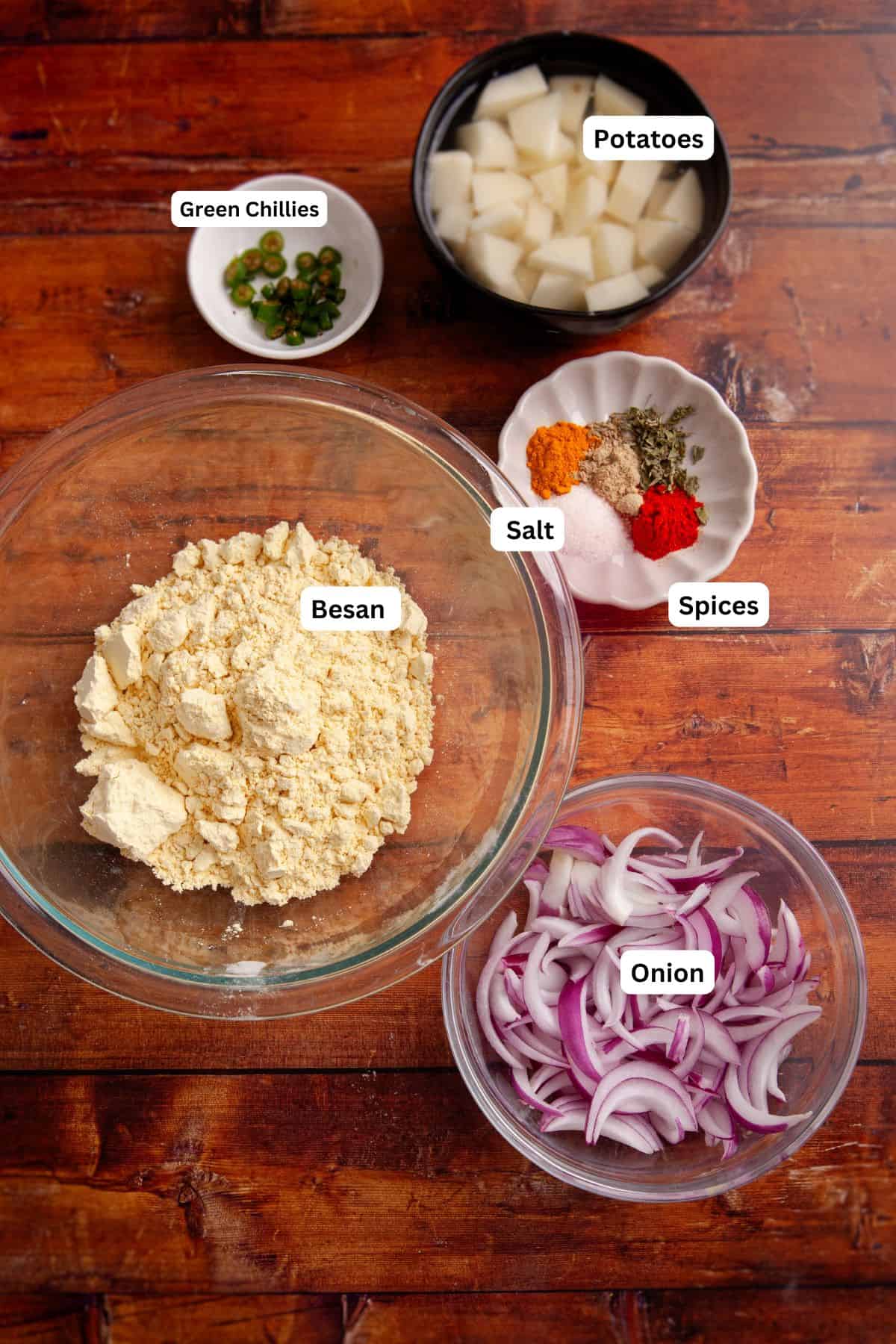
- 1 cup (100g) besan
- 1 teaspoon red chilli powder (medium hot), I use deggi mirch
- ¼ teaspoon turmeric powder
- ¼ teaspoon chaat masala powder
- ¼ teaspoon baking soda
- 1 teaspoon kasuri methi dry fenugreek leaves, crushed between palms
- ¾ teaspoon salt
- 1 small (110g) onion medium sliced
- 1 small (110g) potato peeled, small diced
- 2-3 green chillies (hot!) chopped, adjust to taste
- ¼ cup water or as needed
- Mustard Oil for deep frying or any frying oil
Final Tempering
- 2 tablespoon ghee
- 1 teaspoon cumin seeds
- ½ tablespoon ginger finely chopped
- 1 teaspoon kasuri methi dry fenugreek leaves, crushed between palms
- 1 teaspoon kashmiri chili powder
Instructions
Make the yogurt and besan mixture
- In a large mixing bowl, add the yogurt and using a metal whisk, mix it until smooth. Sieve the gram flour (besan) over the whisked yogurt. Add all the ground spices. Do not add salt. Whisk until smooth.
- Then, gradually add 6 cups of room temperature(important) water while whisking to create a thin, pourable mixture. The consistency should be similar to milk. Add 1-2 cup water as needed while simmering, as kadhi will slow cook for 30-35 minutes.
Make The Kadhi
- In a deep pot (4qt or larger) or a large kadai, heat up mustard oil over medium heat till it's lightly smoky with visible see ripples on surface. Don't overheat else it will lose its aroma.
- Reduce stove to low medium. Add whole spices, dried red chilies(broken), and asafoetida (hing). Also add the chopped ginger, green chillies, garlic and sliced onions. Stir and fry the spices and aromatics in hot oil for 15-20 seconds or until aromatic(don't let brown).Note - If you enjoy the flavor of fresh curry leaves, feel free to add them at this stage. You can also add mustard seeds if desired.
- Turn heat to the lowest setting and let temperature drop slightly. Slowly pour in the yogurt-besan mixture while stirring constantly. You can also remove the pot briefly from stove and return after kadhi mixture has been added. Now, prepare for bit of arm workout because we will continously stir for first 10-12 minutes or until the kadhi comes to a boil. Once the yogurt is warmed through, you can turn the heat up to low medium. Keep stirring until the kadhi comes to a gentle boil. This step is super important to prevent yogurt from curdling.
- After first boil reduce the stove to low and now set the kadhi to slow boil (a process called kadhana). Add 1 teaspoon salt, mix well and let the kadhi simmer uncovered for 30-40 minutes. Stir occasionally to avoid sticking, and allow the kadhi to thicken and to develop its tangy flavor. At the end you will see that the kadhi is deep golden yellow in color.
Make Aloo Pyaz Pakoras
- While the kadhi is boiling, it's the perfect time to start preparing the pakoras. Making them fresh keeps them crispy. In a separate large bowl, sift in the besan. Add salt, spices, kasuri methi, baking soda, and mix in the diced potatoes, green chillies and sliced onions.
- At first, mix everything (while gently squishing) without adding water as salt will draw out moisture from onions. The goal isnt a wet batter, rather a thick mixture which should not feel tight or too soft(please see images in post). Add tiny splashes of water as needed to adjust consistency.
- No resting necessary, fry the pakoras immediately. Heat up about 2-3 inches of oil for deep frying pakoras. Once the oil is hot, test it by dropping a small bit of batter-it should sizzle and rise to the surface. On candy thermometer,right temperature should be between 360F -370F to make sure that the pakoras neither burn nor remain raw inside.
- Carefully drop 1 to 1.5 tablespoon of pakora mixture into the hot oil. Smaller pakoras, they turn out crispier. A cookie scoop works, I simply use my hands(scoop with four fingers, slide with thumb). Let them fry undisturbed for few minutes and then flip to fry on other side.
- Fry pakoras in batches, turning occasionally, until golden brown and crisp on all sides. I prefer frying in mustard oil because my mom does the same(try it!). The flavor is deep! But you can use any oil that you use for frying in your home. Remove with a slotted spoon and place on a cookie rack or a colander(makes them stay crisp).
Final Tadka and Assembly
- By now, your kadhi should have fully cooked. Check the consistency and if it feels thick to you, add water. Also, taste and adjust salt level.
- Save a few(to add on top while serving) and add rest of the pakoras to the boiled kadhi. Transfer the kadhi pakora to the serving bowl. As soon as you add pakoras to kadhi, they will soften. If you want to serve kadhi later, store the pakoras seperately.
- In a small pan, make the tadka. Heat up ghee. To the hot ghee, add the cumin seeds and chopped ginger. Let cumin seeds crisp up(should not burn). Take off the stove, wait for 10-20 seconds and then mix in the red chilli powder and kasuri methi.
- Pour the tadka on top of kadhi pakora. Scatter the chopped cilantro leaves and serve with plain rice or rotis.
I'd Love to Hear from You!