

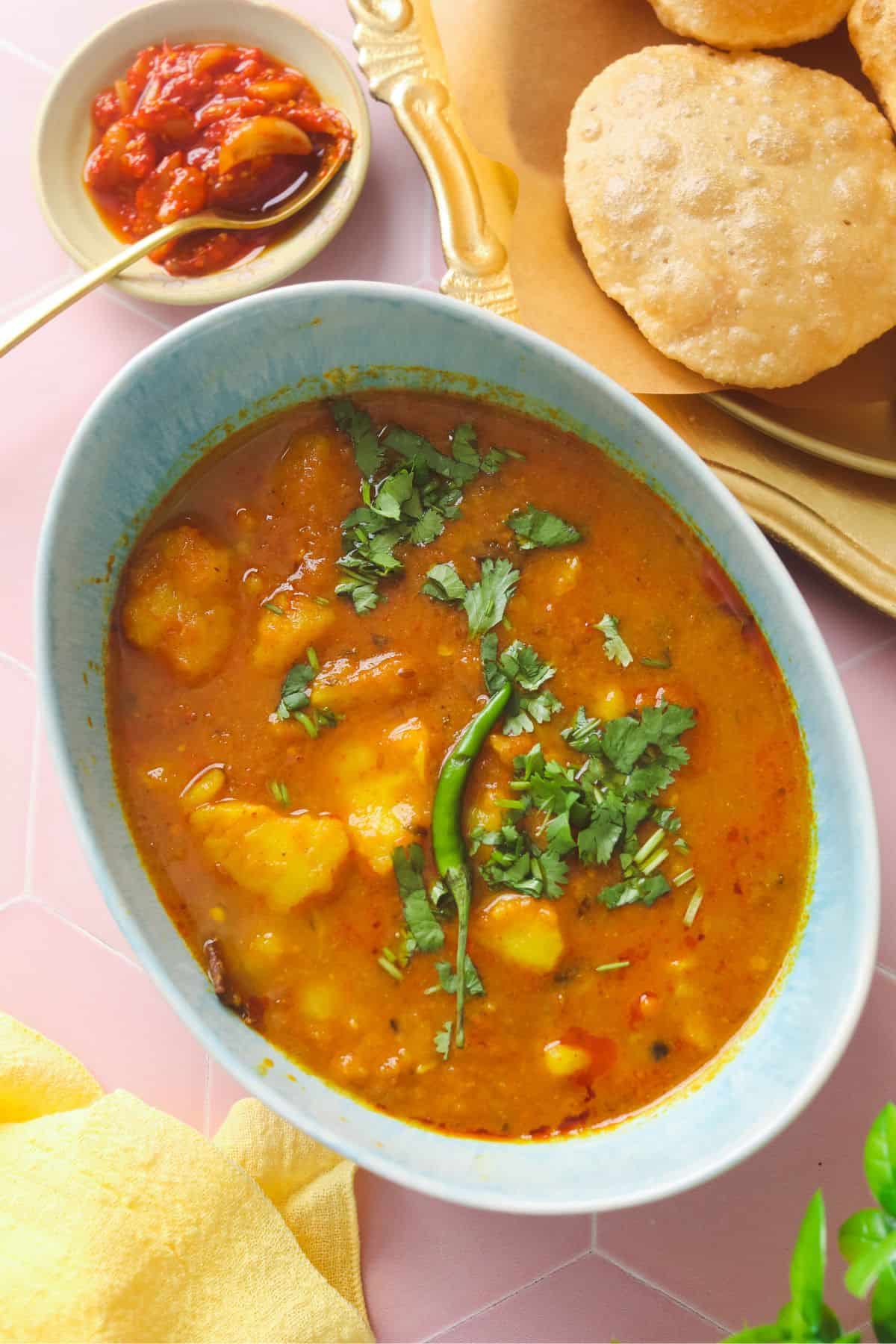
Hearty, flavorful and indulgent, aloo poori is the perfect comfort food for any occasion. It is a timeless North Indian favorite, a comforting pairing of spicy potato (aloo) curry with crispy golden puffed pooris. In this post I am sharing my family's no onion, no garlic recipe for aloo ki sabji, which is cooked in the traditional style and tastes similar to shops in India.
We love serving it with namak ajwain pooris for leisurely weekend breakfasts or as part of festive spreads during Navratri or Diwali. Pair it with khatta meetha kaddu (pumpkin curry), boondi ka raita & spicy achar (pickle). Serve suji halwa as a sweet side and enjoy the most iconic meal!
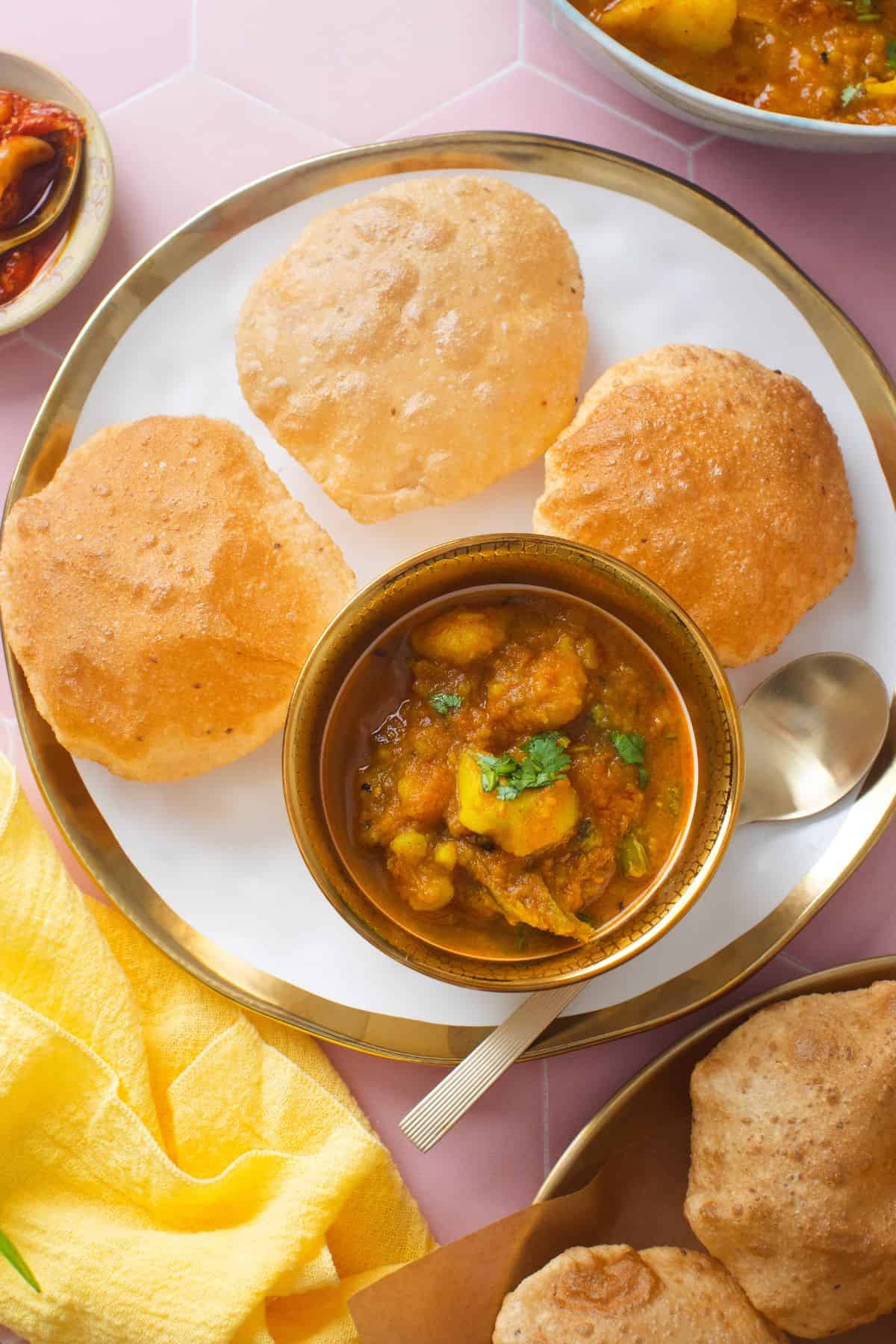
At mom's house, homemade aloo and poori were our typical weekend breakfast, especially in the winter. A hot cup of masala chai made the meal complete. On the streets of Delhi, you'll often find a similar aloo sabzi served with bedmi poori.
Aloo sabzi is made countless ways in indian homes and I have a few ways too. But with pooris, I usually like this variation. You need few ingredients - ghee, boiled potatoes, spices and tomatoes. Some people add onion and garlic, while others use raw potatoes and let them cook directly in the curry. There's no right or wrong, it's simply different methods.
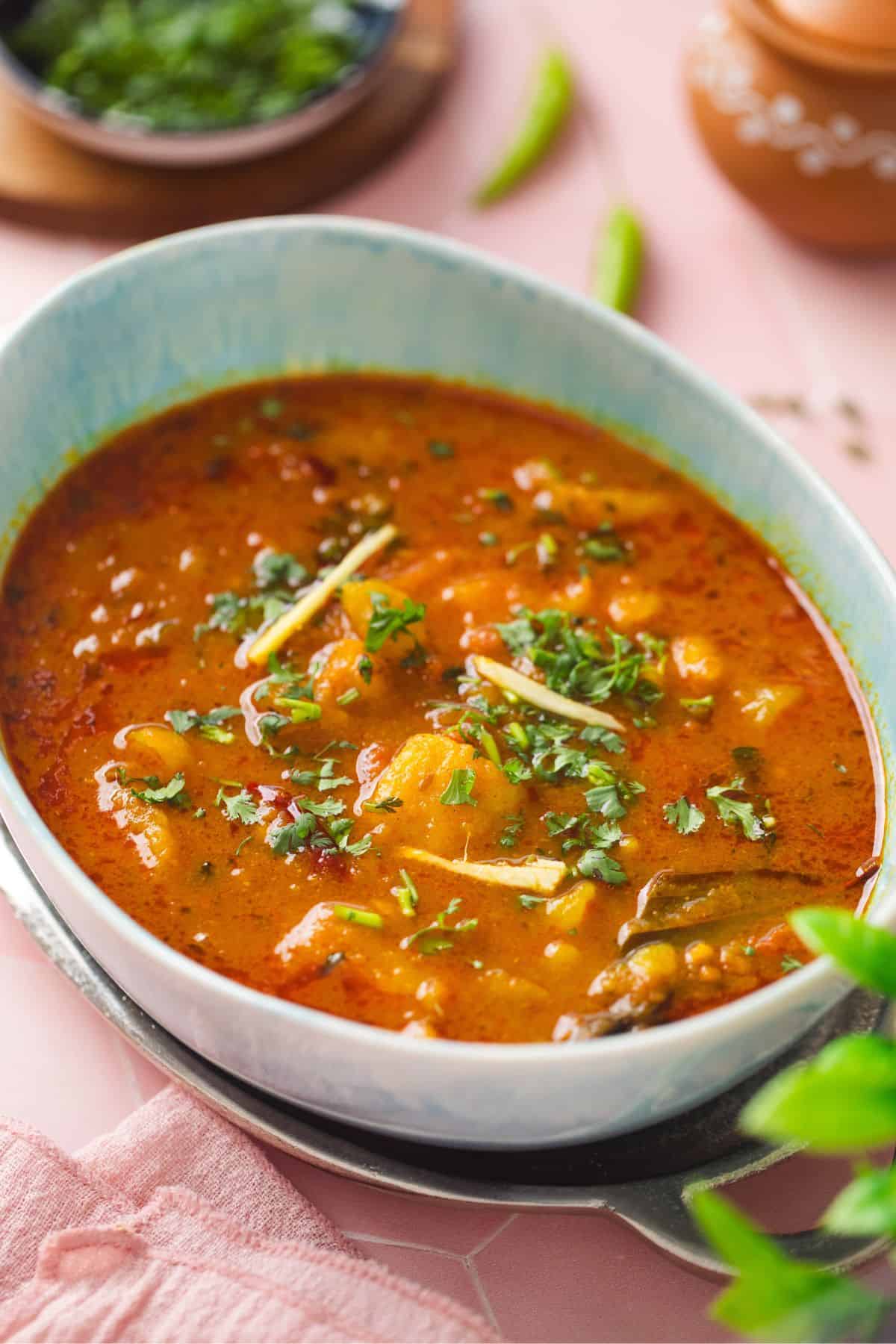
Aloo Curry Tips
- Always use completely cooled, boiled potatoes. If they're warm, they'll break apart and turn mushy in the hot masala.
- Don't mash the potatoes too much; a mix of crumbled bits and chunky pieces gives the sabzi the best texture.
- Don't make a mild aloo curry. This aloo curry is supposed to be spicy and will taste bland if you tame down the heat.
- I highly recommend cooking the curry in ghee. Give the curry a LOT of flavor. You are welcome!
- Ghee + whole spices lend a strong aromatic base to the curry. Start by slow frying to infuse the sabzi with a deep flavor.
- Finally, make sure to bhuno (sauté) the potatoes and tomato masala together for 2-4 minutes before adding water. This step helps potatoes absorb the flavors.
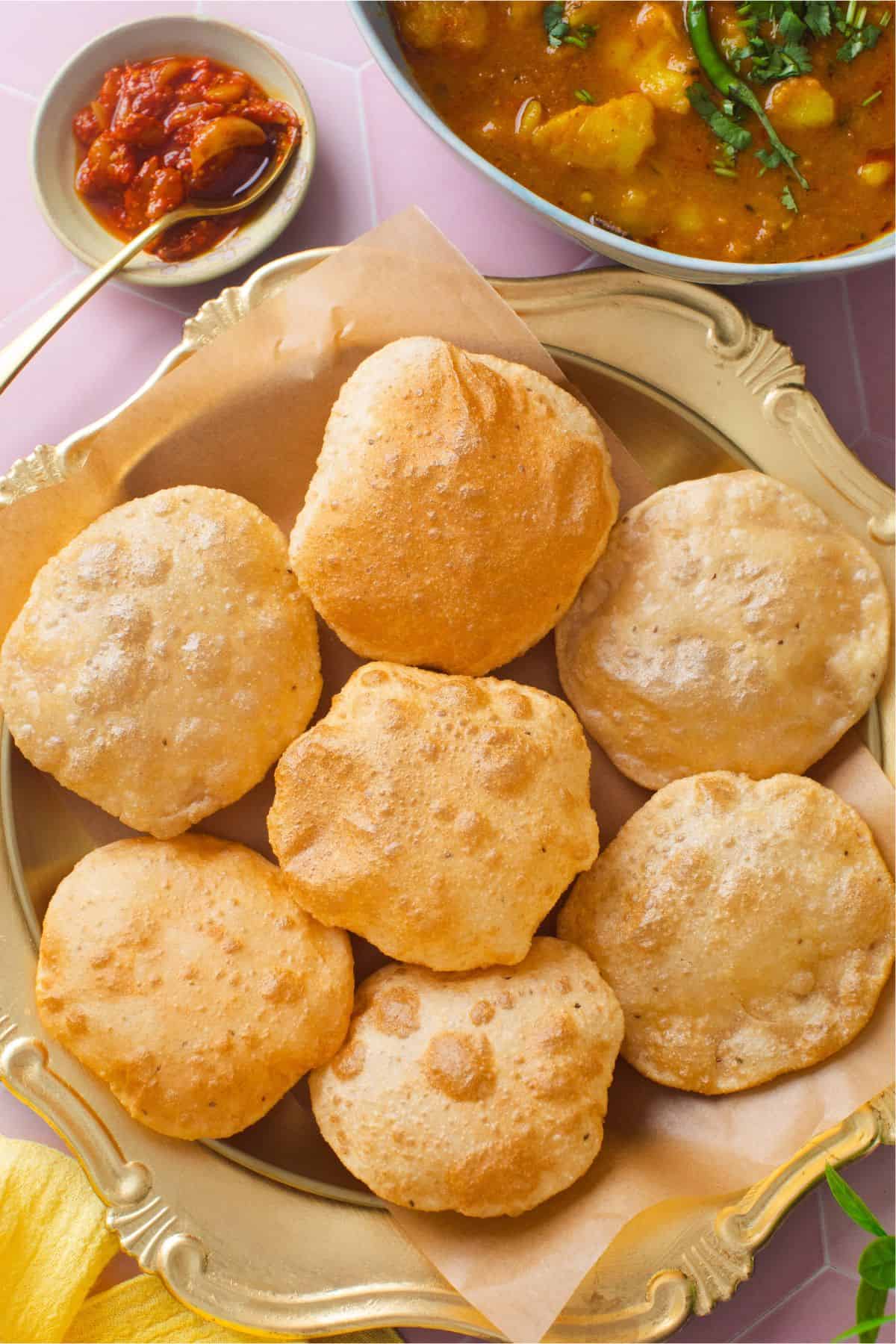
Poori (Puffed Flatbreads)
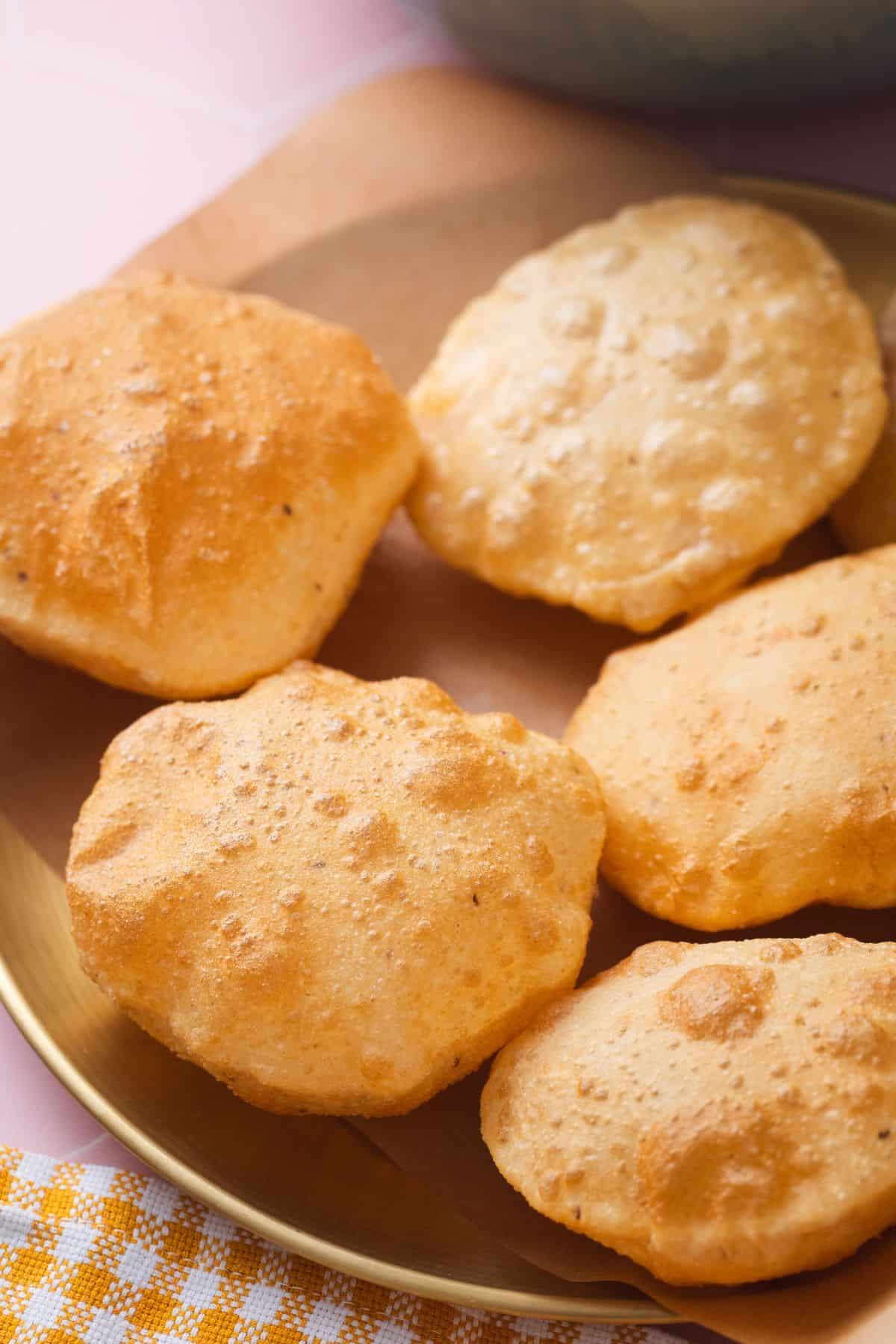
Most often, the basic dough for plain poori is made simply with whole wheat flour(atta) and water, much like roti or plain paratha. There is no leavening or fermentation involved. At home, we usually prepare ajwain (carrom seed) flavored pooris, and I also like to add a little semolina to the dough for extra crispiness. It is best to use indian atta for making poori as it fine milled. You can easily purchase atta online or in ethnic grocery stores.
Poori Dough & Deep Frying Tips
- Make sure the dough for poori is smooth and firm. If it is too soft, the pooris will lose their shape during frying and will not turn out as crisp.
- Allow the dough to rest for about 5 minutes only. Else pooris turn out soft and not crispy.
- Keep the dough covered at all times to prevent it from drying. A skin forms on uncovered dough dur to air drying. Dried dough skin will give your pooris uneven texture.
- Don't use dry flour while rolling pooris as it will seperate while deep frying and your pooris will have black specks. If needed, use oil while rolling.
- Getting the oil temperature right takes some practice. So don't worry too much. The first few pooris may not puff up, but by the third or fourth one you will have a better sense of the heat level that you need to continue on.
- If oil temperature it is too low, the pooris will turn out greasy and soggy. If it is too hot, they may not puff up properly.
- You can adjust the frying time depending on whether you like the pooris soft and light color or crispier with deep golden spots.
- Lastly, after frying 5-6 pooris, the oil becomes quite hot so in that case, reduce the heat and wait for a few minutes before frying the next batches.
How To Make Poori Aloo Curry
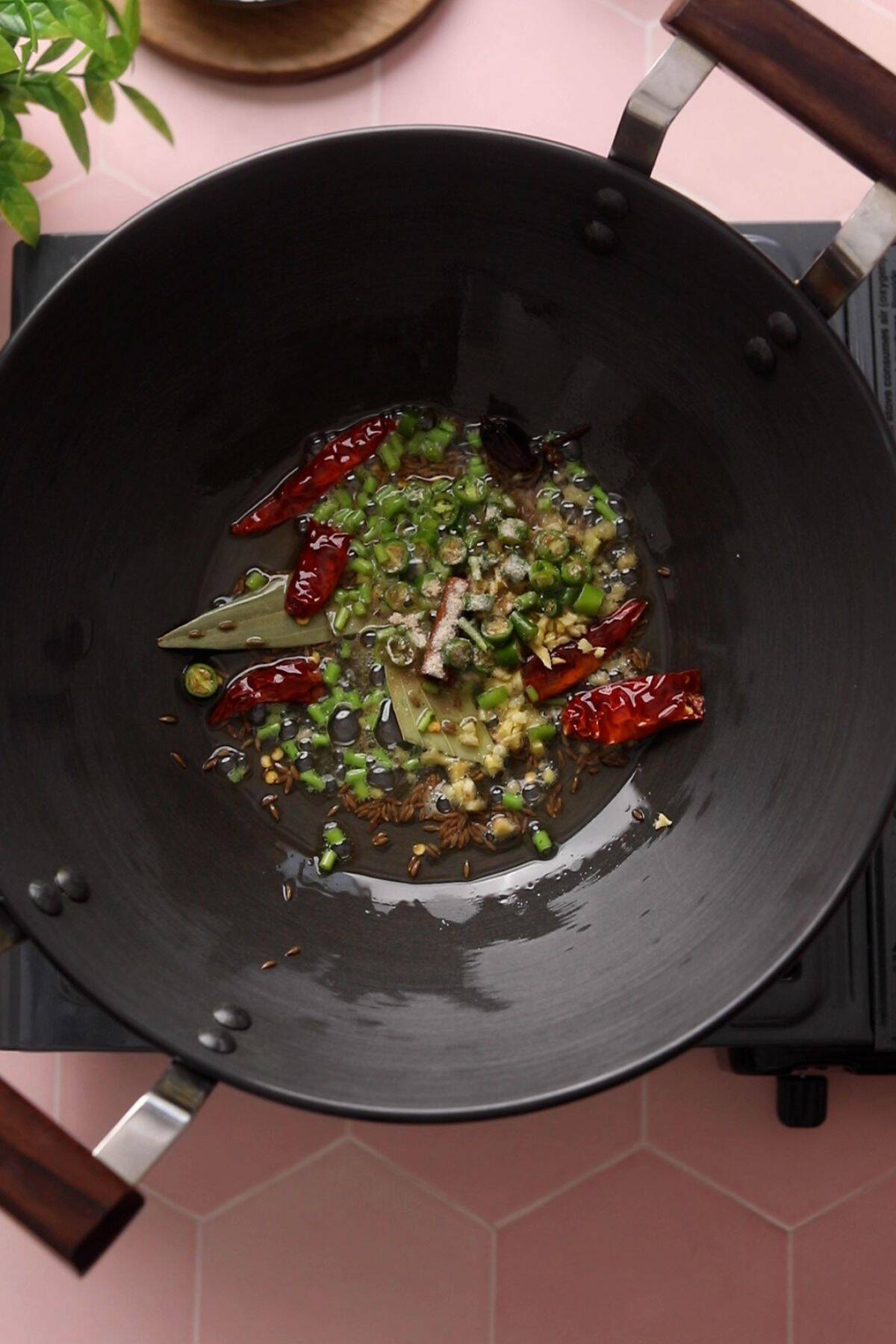
- Warm up ghee on low medium in a heavy-bottomed cooking pot/kadai. Temper the ghee with whole spices and dried red chillies. Fry the spices in ghee for 5-7 seconds taking care not to burn.
- Add hing, chopped cilantro stems, ginger and green chillies next. Again saute for 5-7 seconds.
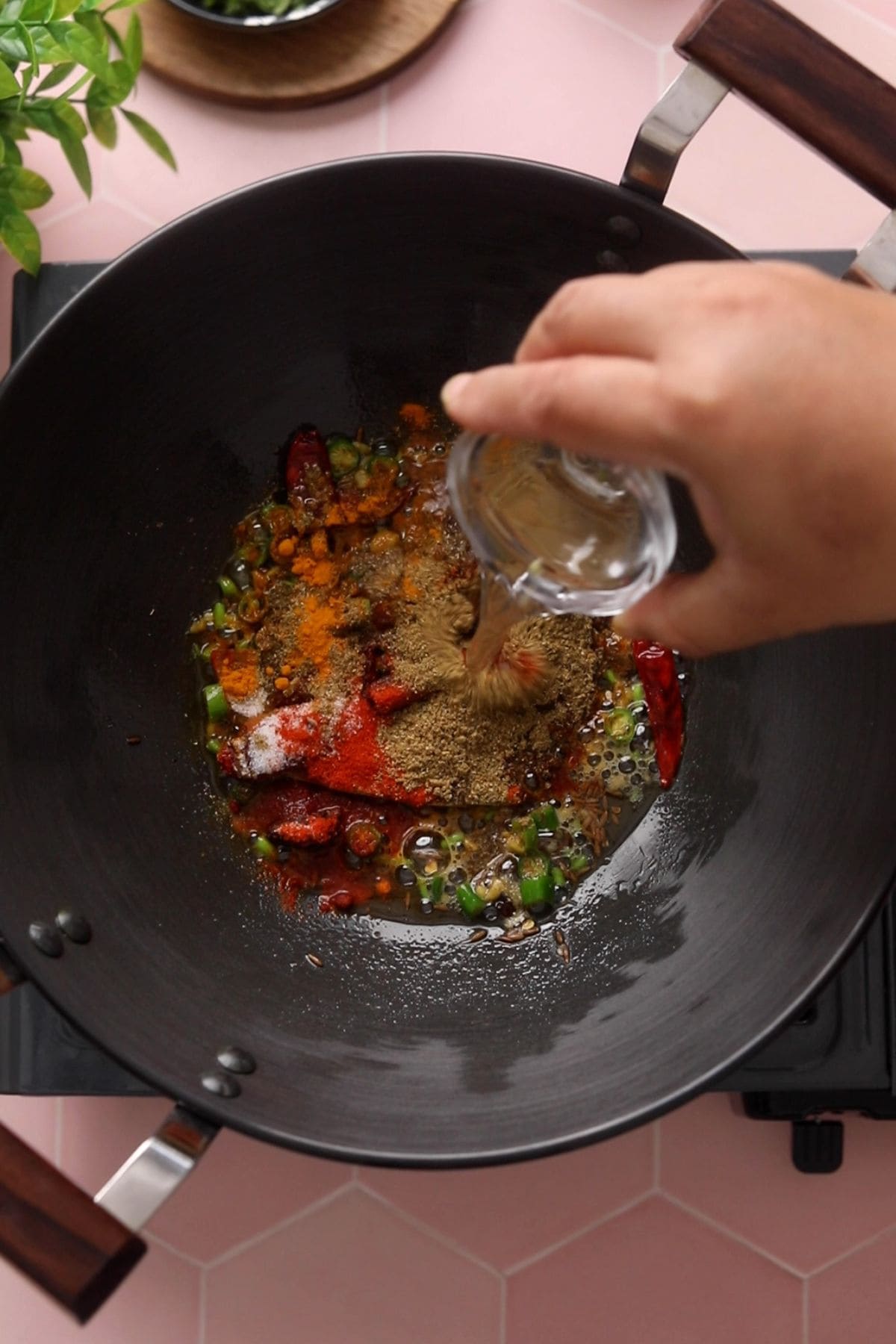
- Next, add all the spice powders (except amchur & garam masala). Add ¼ cup water so that the spice powders don't burn. Fry for 15-20 seconds on low medium heat or so untill you smell a nice aroma. You will see ghee separating.
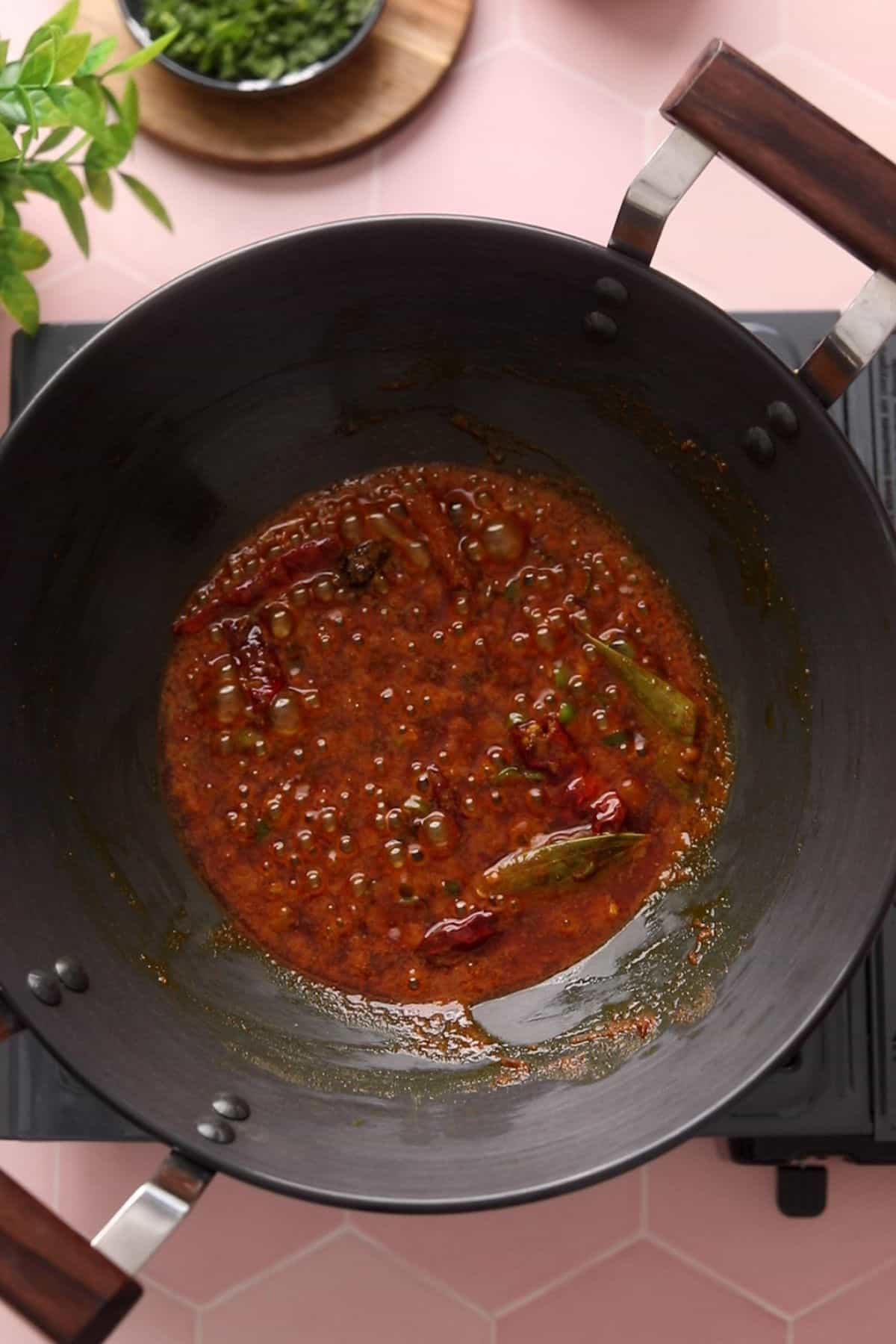
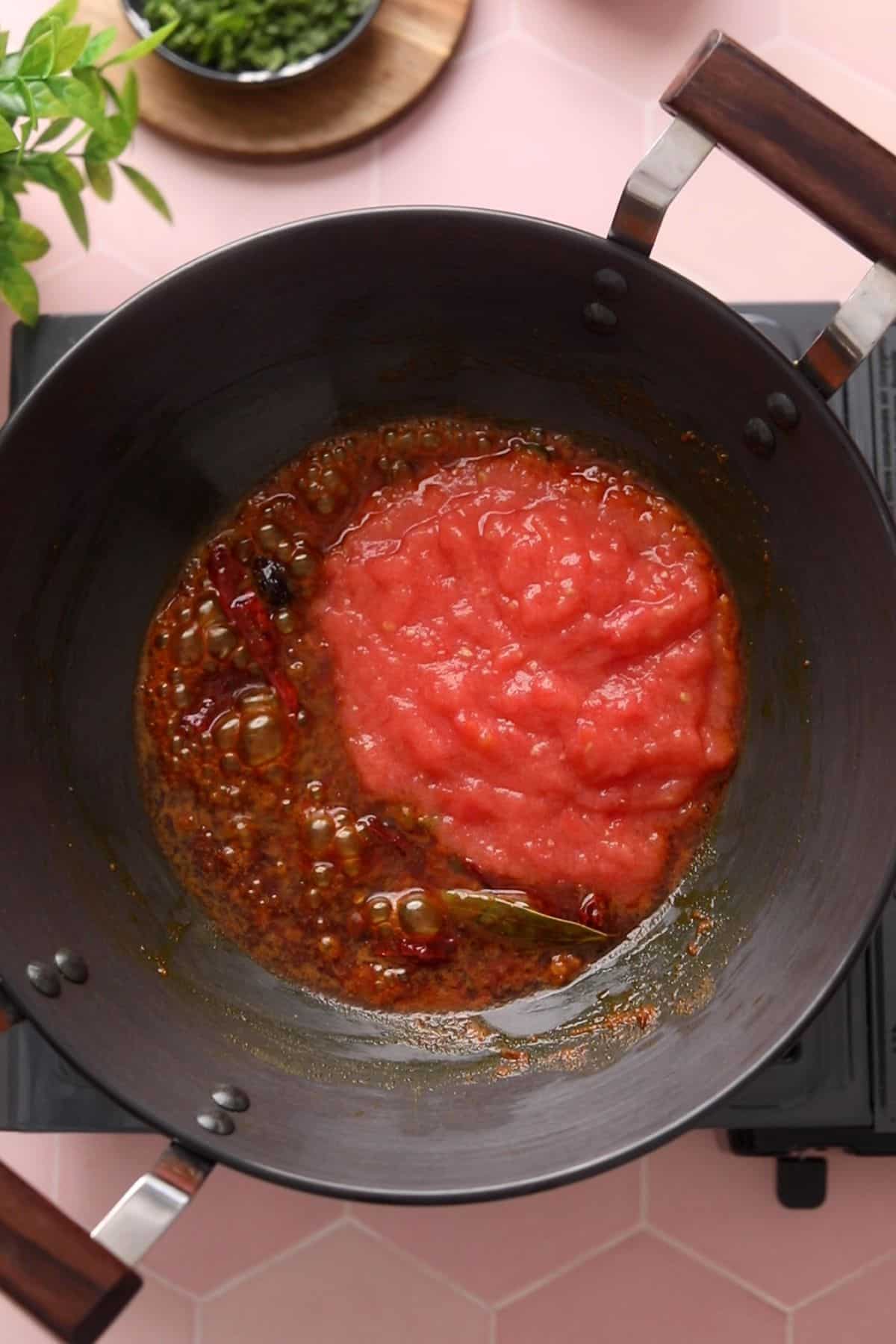
- Add the crushed tomatoes now. Cook the tomatoes for 2-4 minutes or until you see ghee starting to separate on the sides of the pot.
- Add in the boiled potatoes, sprinkle salt. Mix well and cook the potatoes for 2-4 minutes along with tomato and spices.
- Pour 1-1.5 cup hot water next, mix well and let the curry come to a boil.
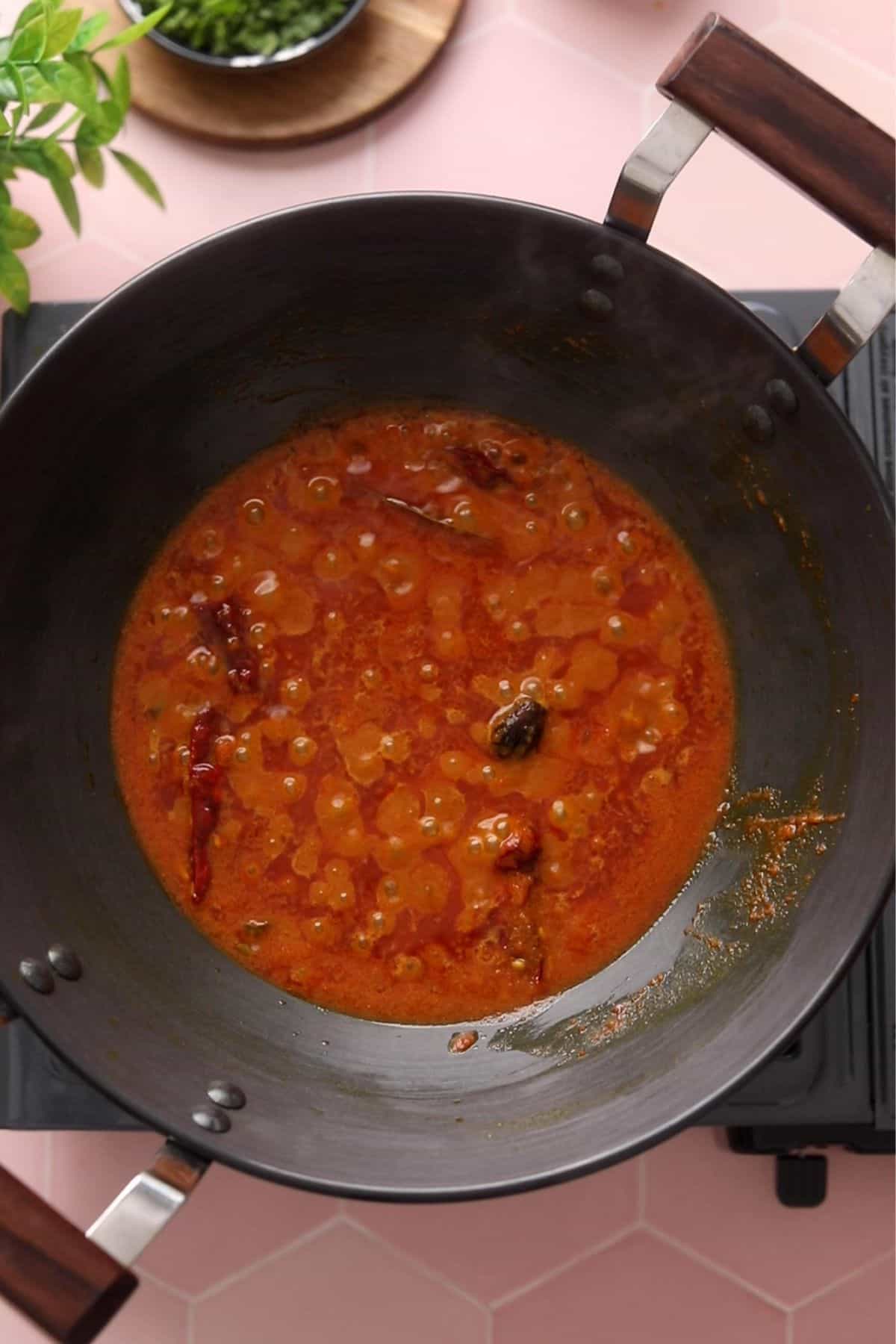
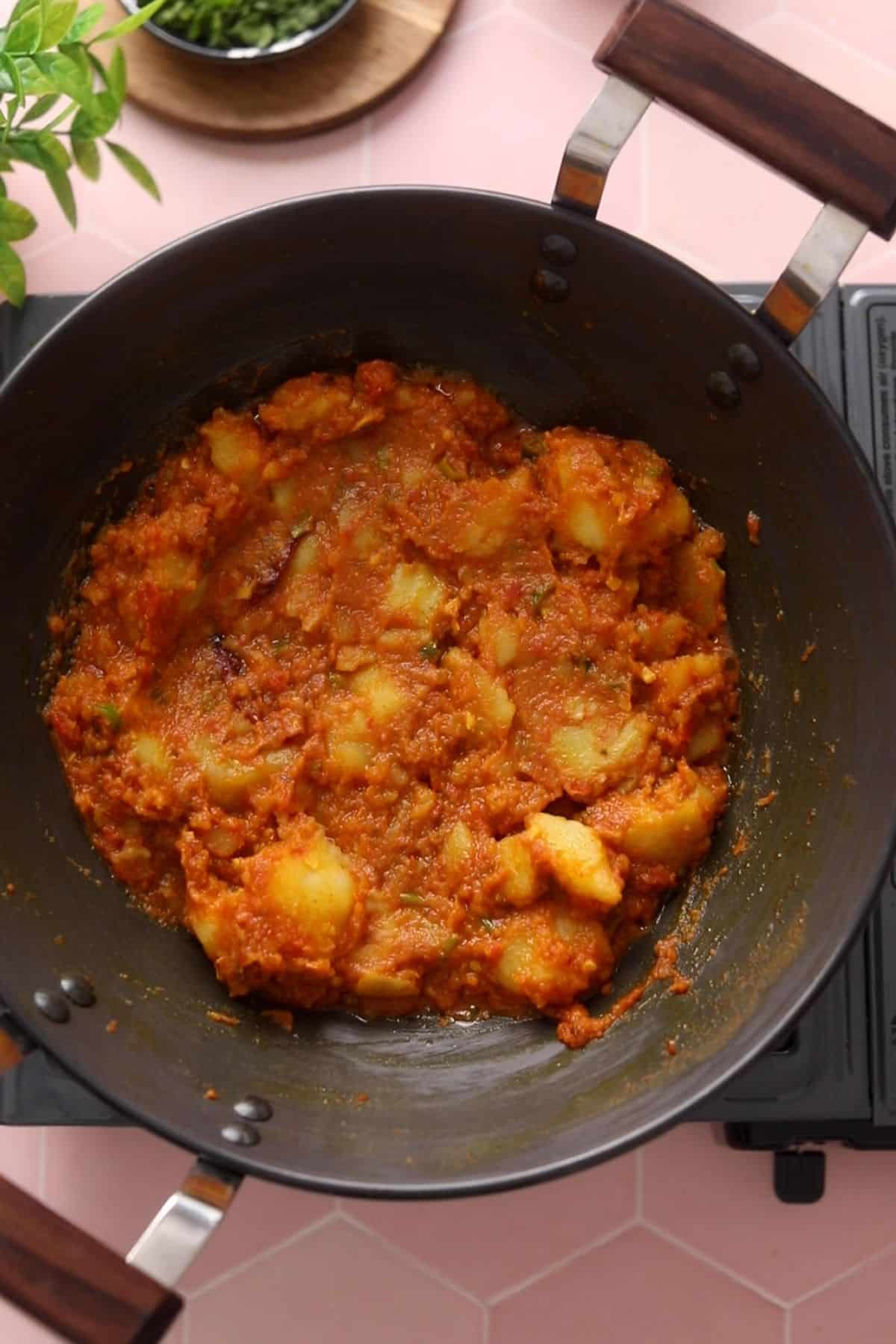
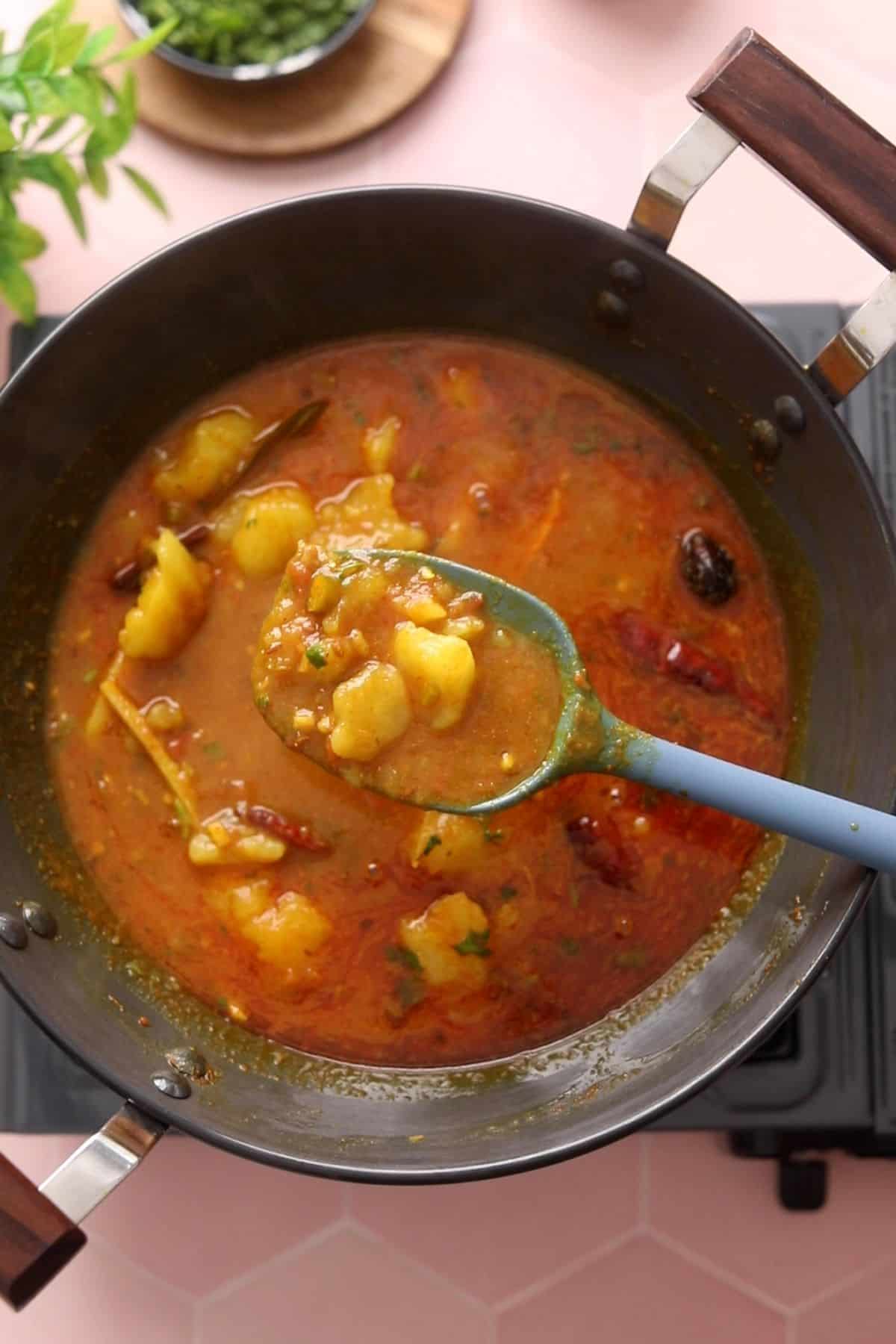
- Once boiling, reduce heat to low, cover the pot and let simmer for 10-12 minutes on low heat. Halfway, check for water and adjust if needed or as per desired consistency. You can mash a few potatoes using back of the spoon at this time, this helps in thickening the curry. You can make the curry thin or thick as you prefer.
- Switch off the stove and add the amchur powder, kasuri methi and garam masala powder. I also add in a teaspoon of ghee for finishing. Mix well, cover and let rest while you make pooris. Reheat if needed and garnish with chopped cilantro before serving.
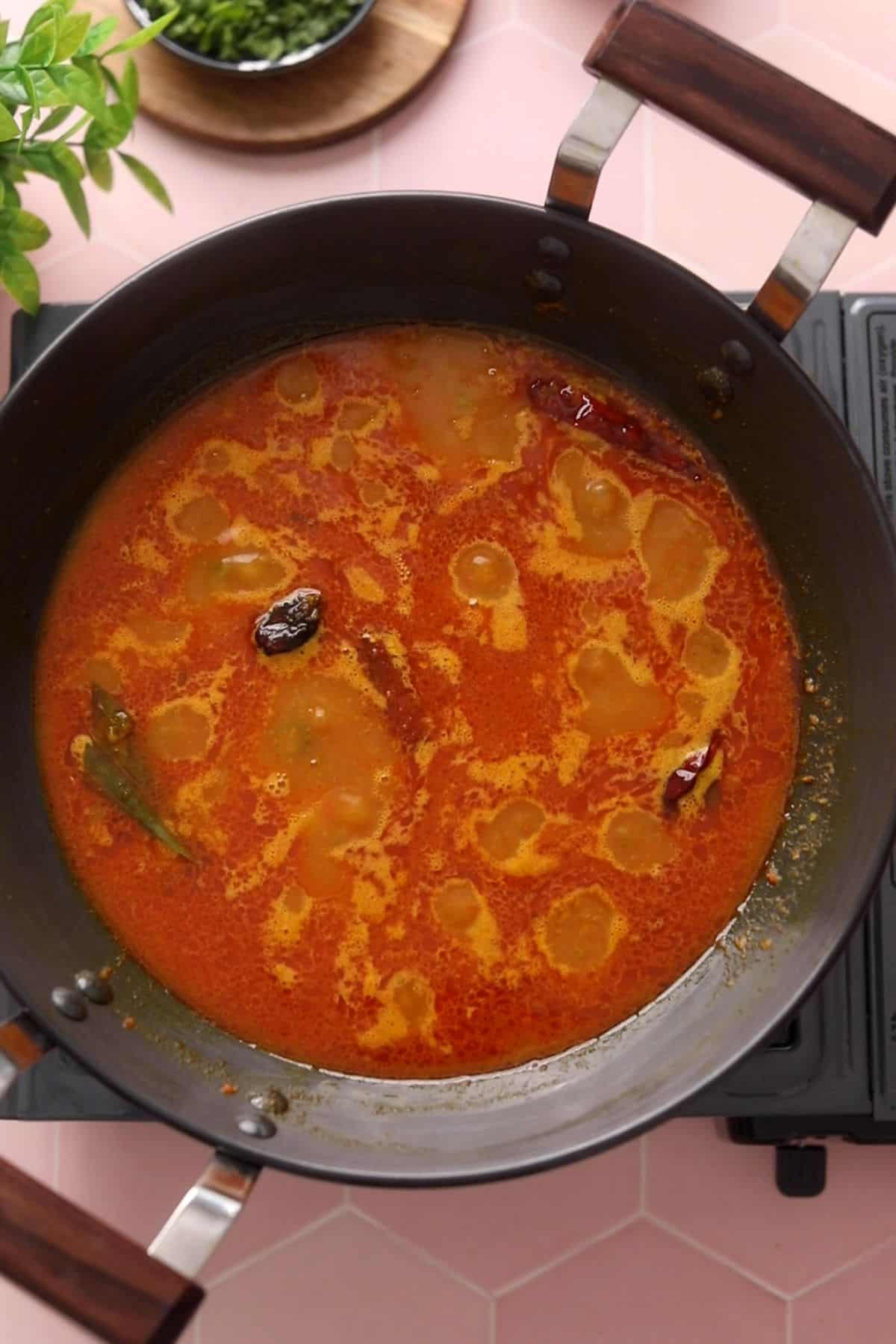
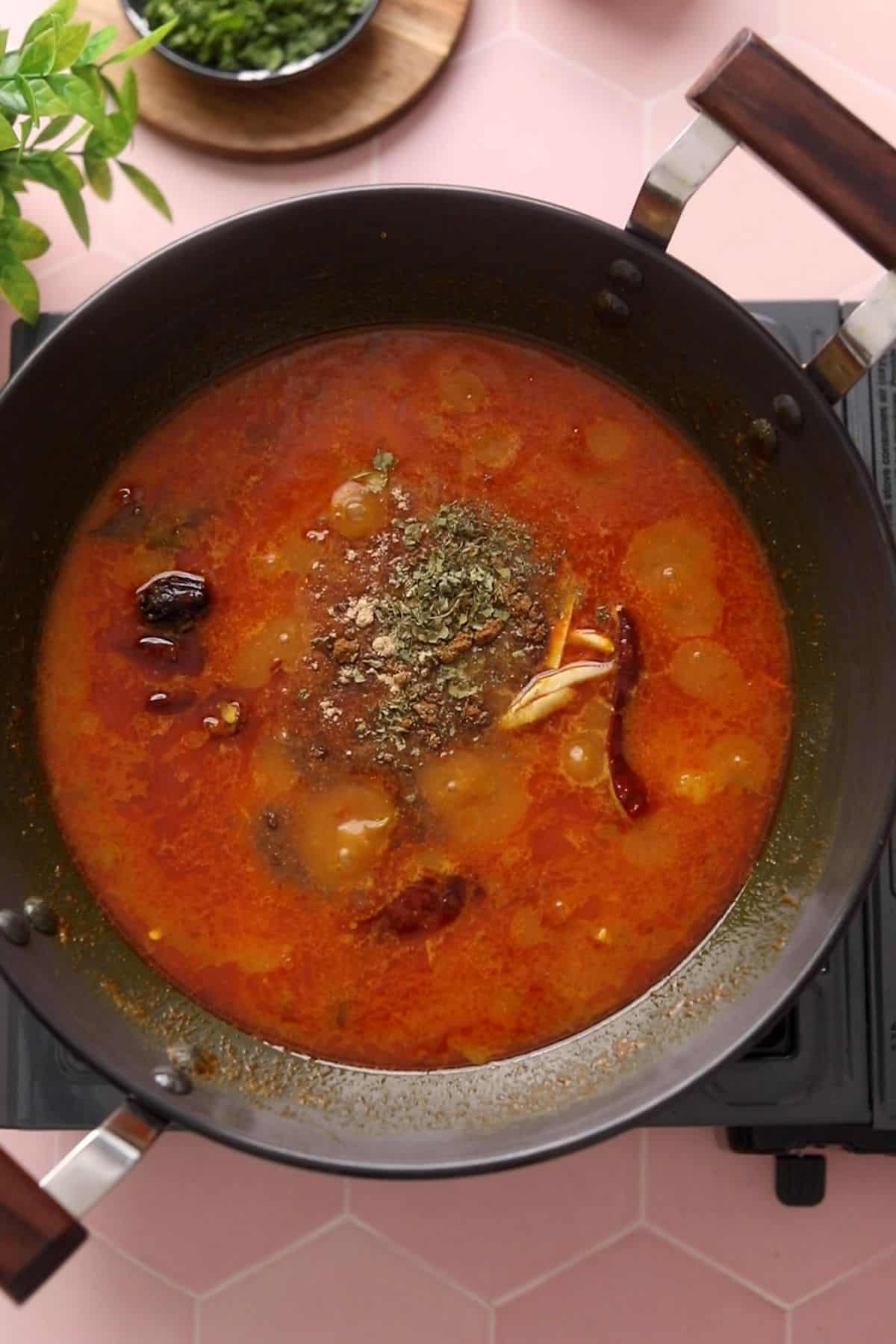
How To Make Poori
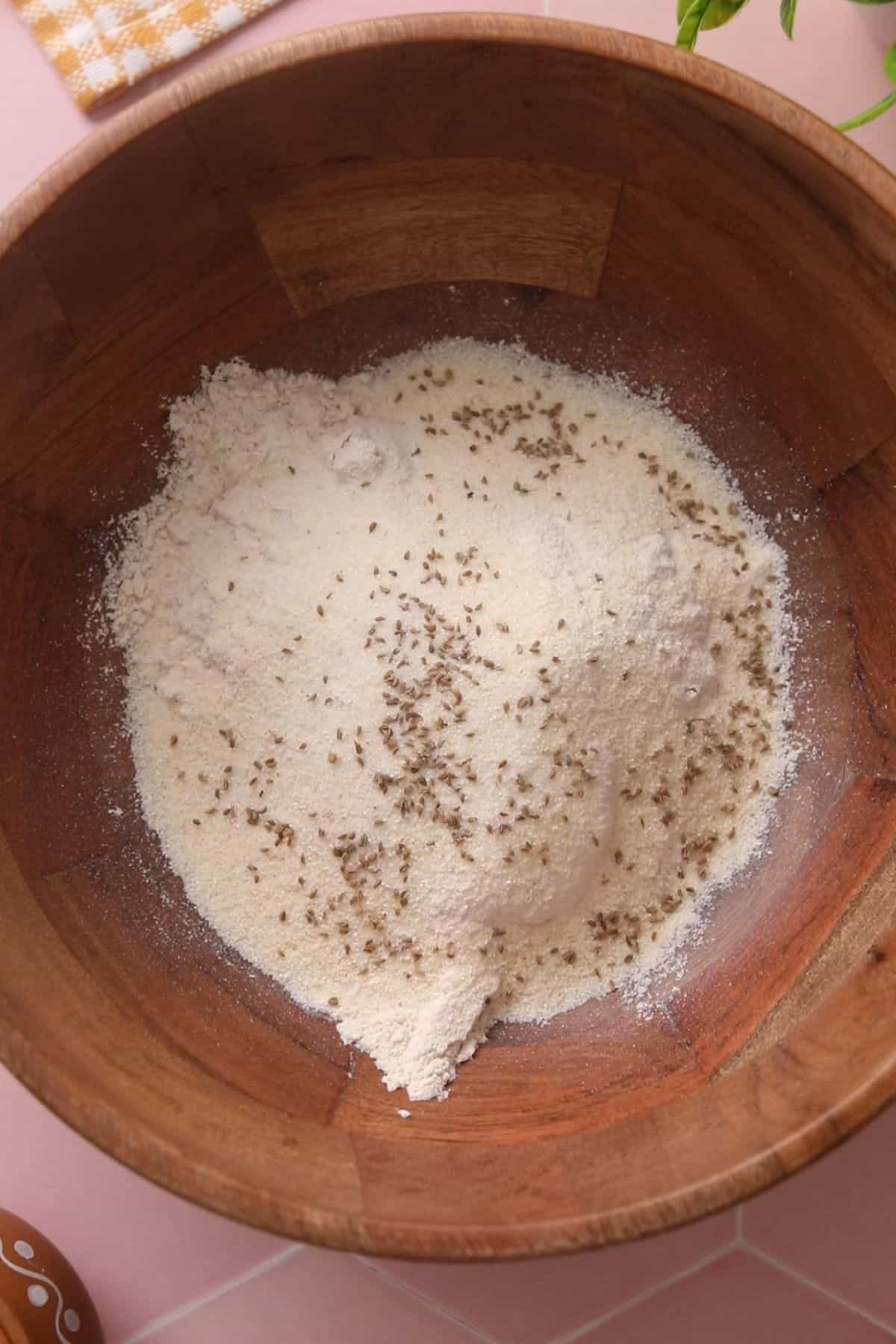
- In a wide dish or a large mixing bowl, mix together whole wheat flour (atta), suji (semolina)salt, and ajwain. Mix well using your fingers to combine.
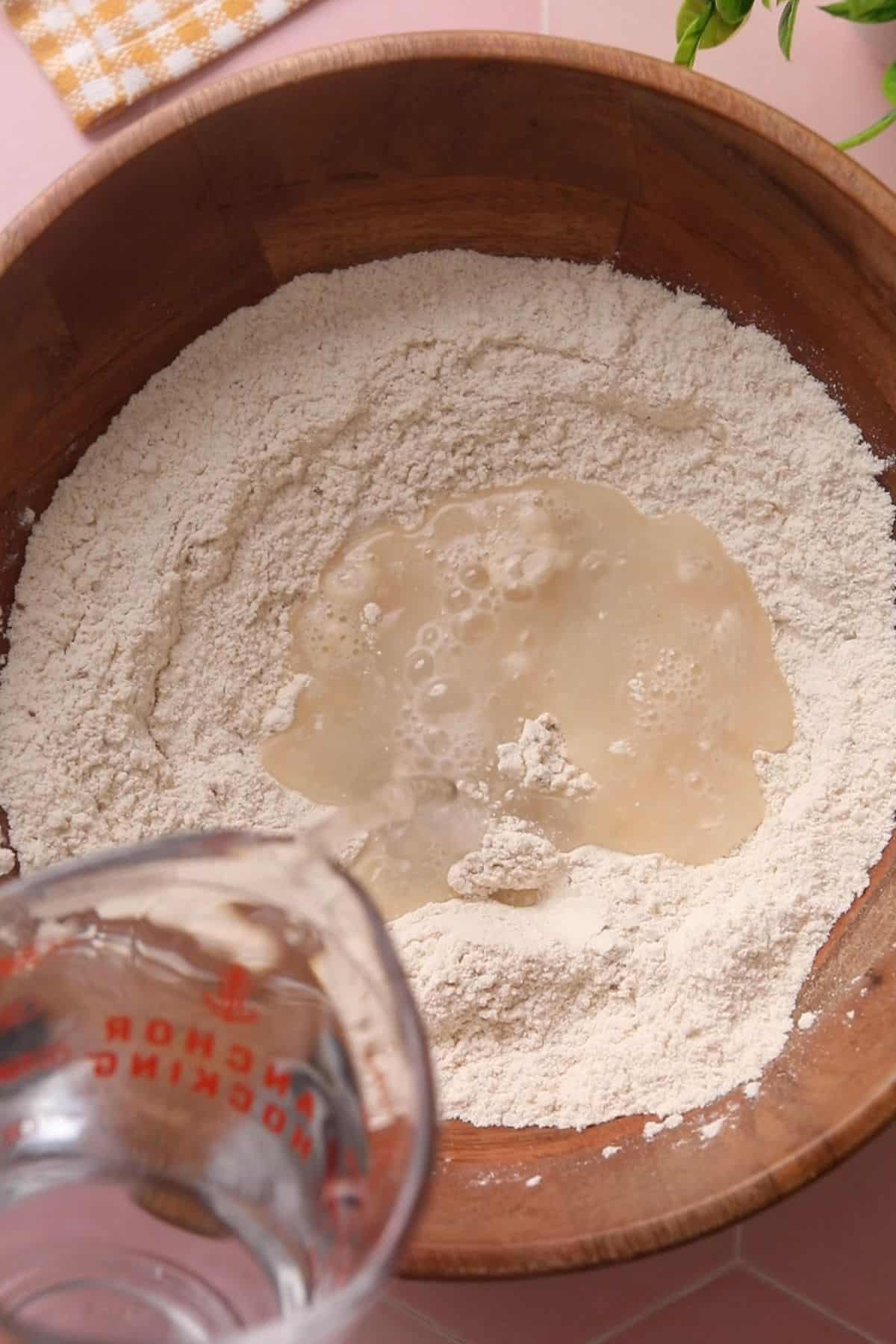
- Use room temperature water. Add a little water at a time and start bringing the flour together. Continue adding water gradually until no dry flour remains.
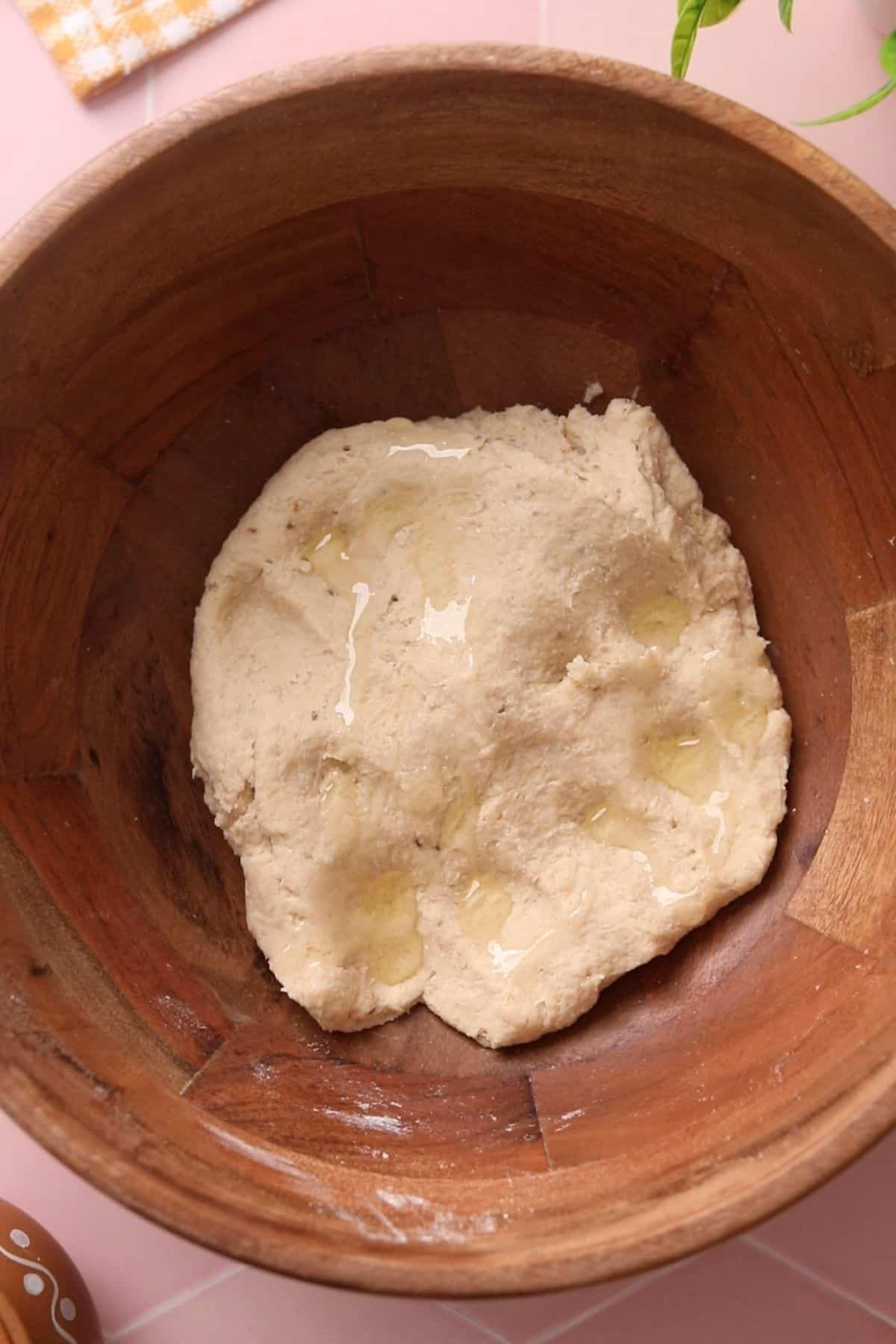
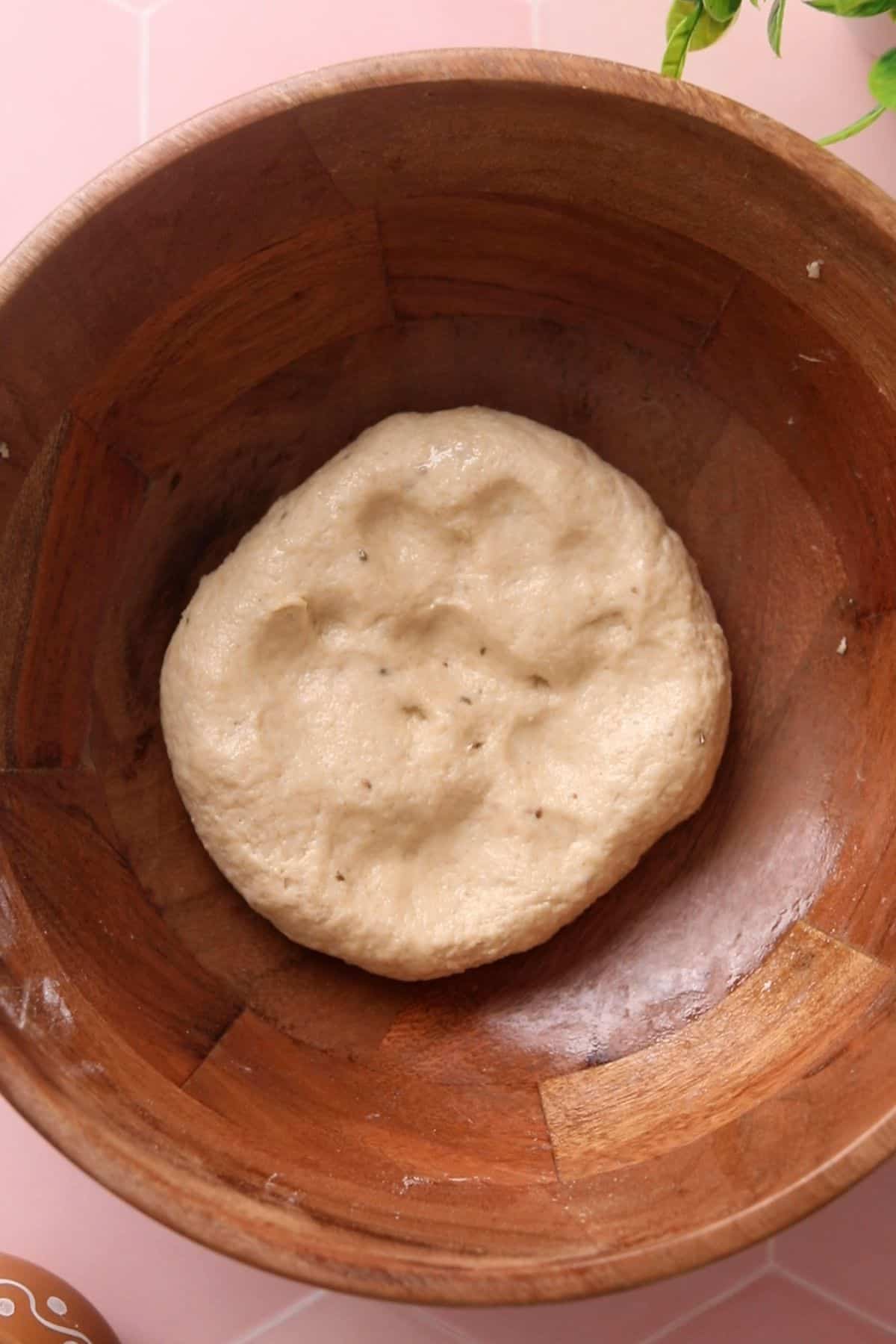
- Knead the dough for 6-8 minutes until it becomes smooth and firm. Add 1-2 teaspoons of oil while kneading to smoothen the dough. The dough should be stiff but not dry. It should not be soft.
- Cover with cloth and let the dough rest for 5 minutes.
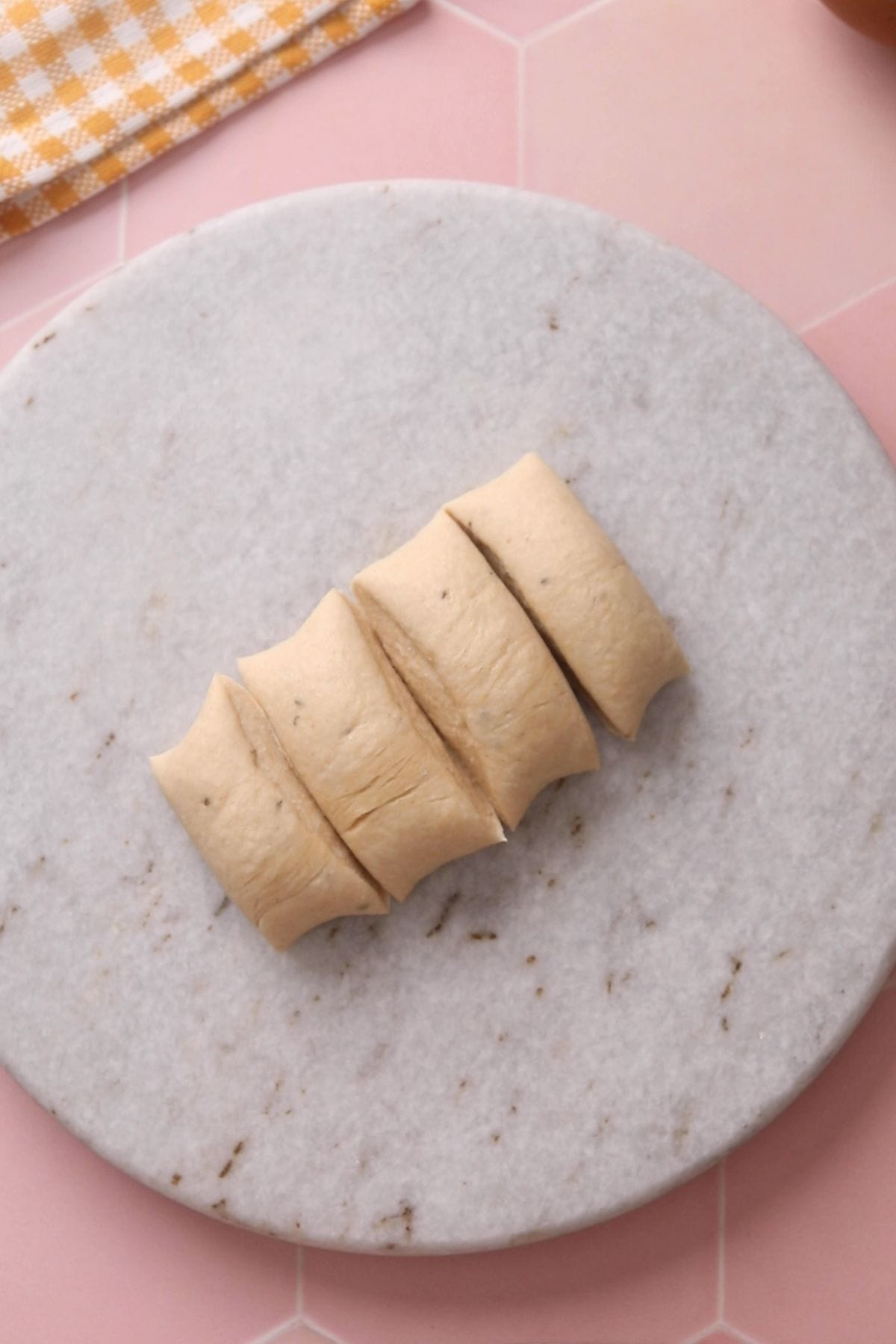
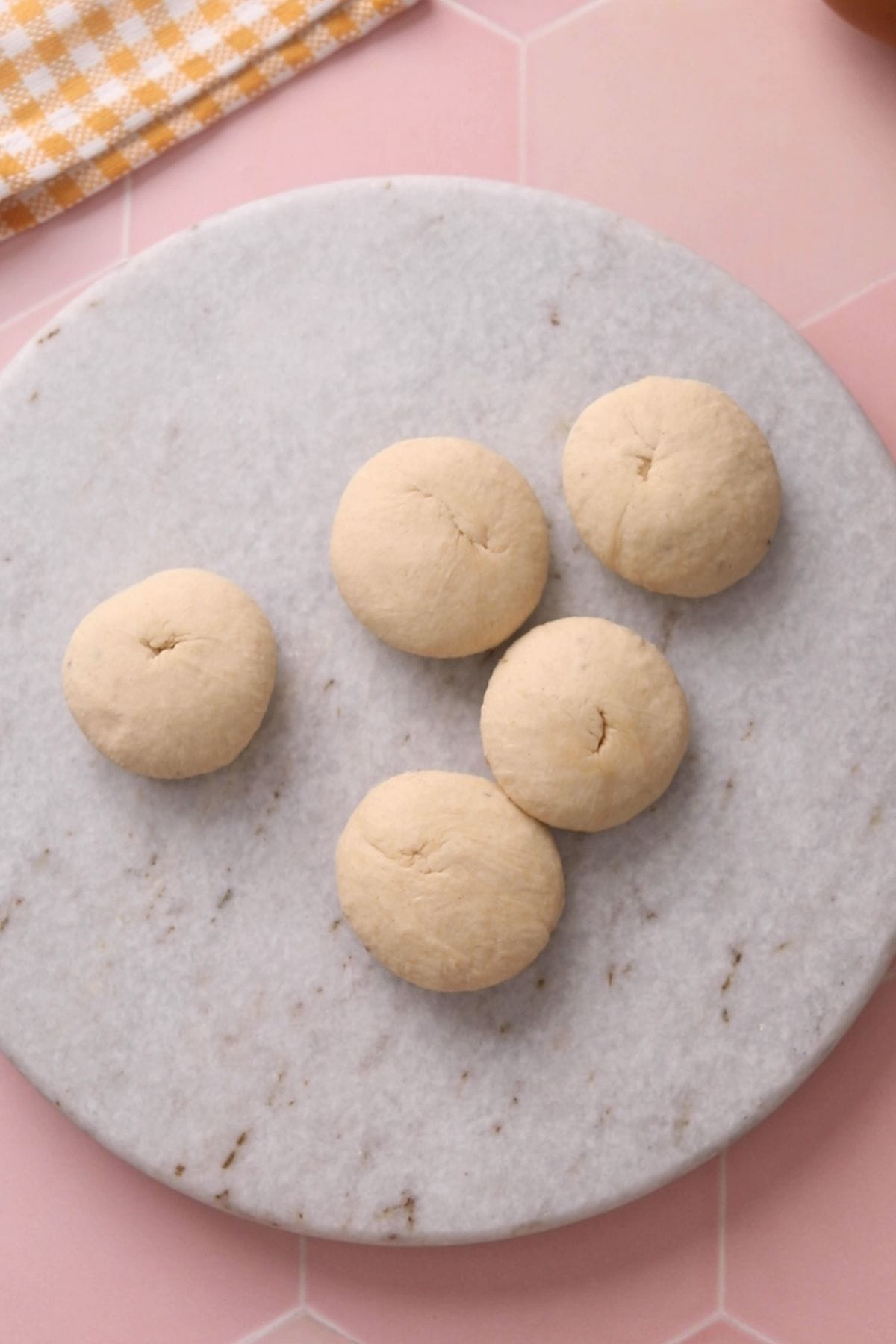
- Divide the rested dough into equal portions. Roll each portion between palms to make small balls( size of a small lime).
- Set about 2 inches of oil for deep frying to heat up in a kadhai(an iron kadahi or works best for texture). Use a concave shaped utensil for deep frying else you will need a large quantity of oil.
- Start with 1 dough ball at a time flatten it lightly on the rolling board and with the help of a rolling pin, roll into a 3" or 4" circle. If your dough is well kneaded, you won't need even oil and the pooris will roll easily. You could spread oil as needed if dough sticks. Don't use dry flour.
Pooris are meant to be smaller in diameter than roti. My grandmother used to say that a poori should be rolled out in just 4-6 movements of the rolling pin. That's something to keep in mind.If it takes you more than that, you're probably making them too big.
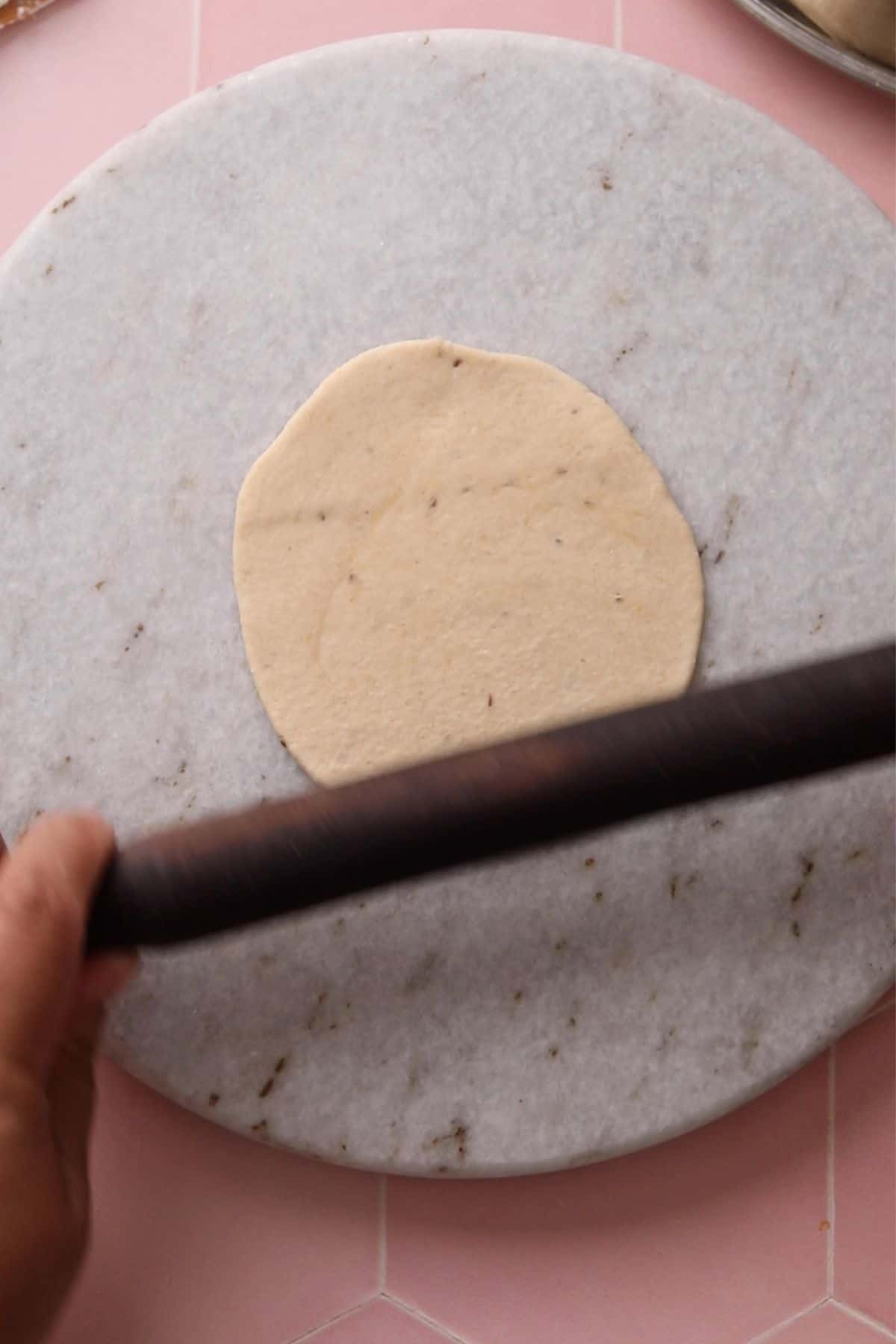
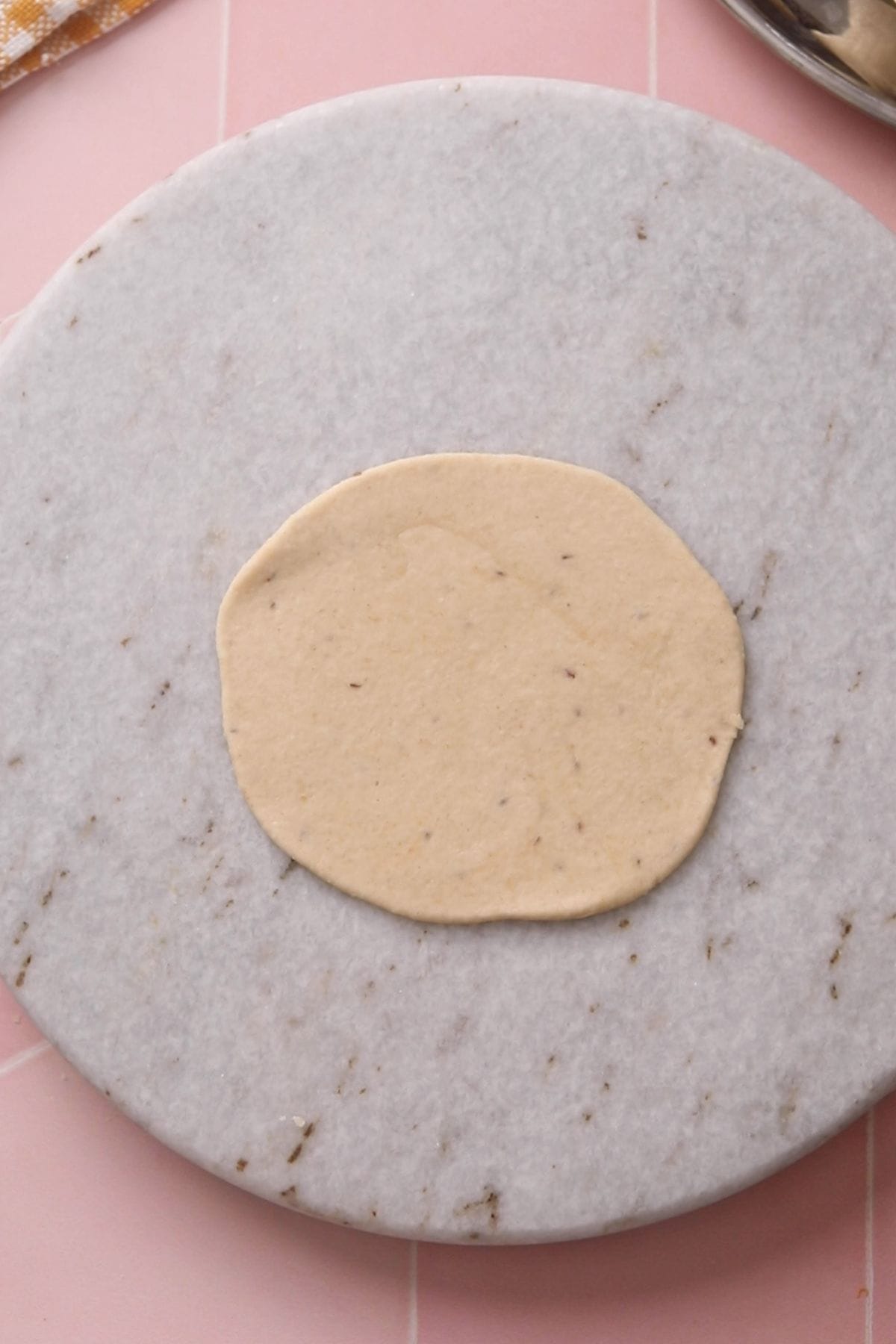
I prefer rolling all poori in one go and then deep frying in one go. After rolling, place the raw poori without stacking or touching each other else they stick and when you try to pick them, they will deform. Keep them covered with a cloth.
- To check the temperature of the oil, pinch a small portion of dough and add it to the oil, it should quickly rise to the top without changing color. If the dough rises slowly or remains at the bottom, wait for the oil to heat up more.
- The oil should be hot, but not smoking. Carefully slide the rolled poori into the hot oil. It will start puffing up quickly. The oil will be bubbling. Gently press the poori with a slotted spoon to help it puff up fully(watch the video for better understanding). It won't puff properly if you don't press. Fry until it's golden brown on both sides.
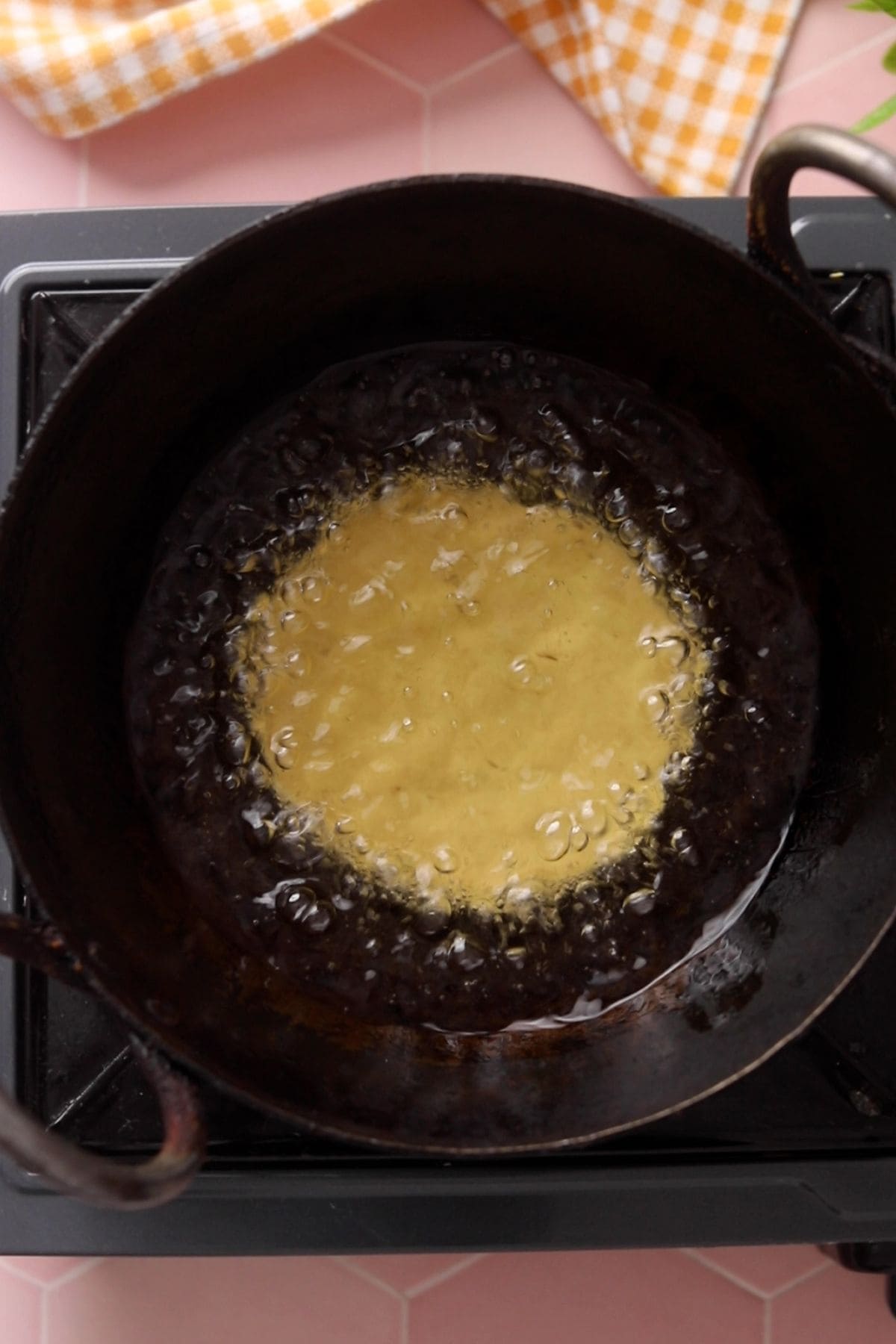
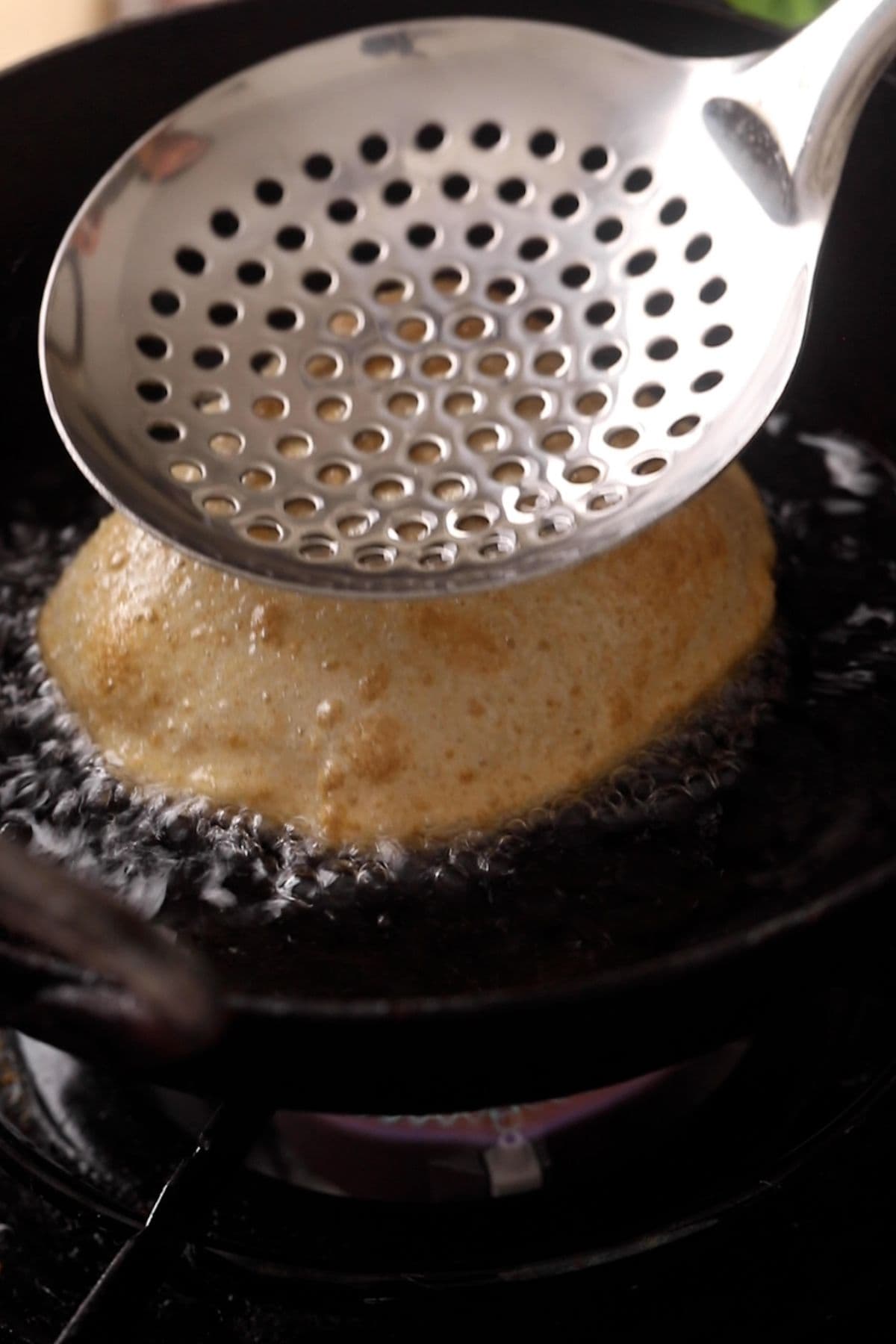
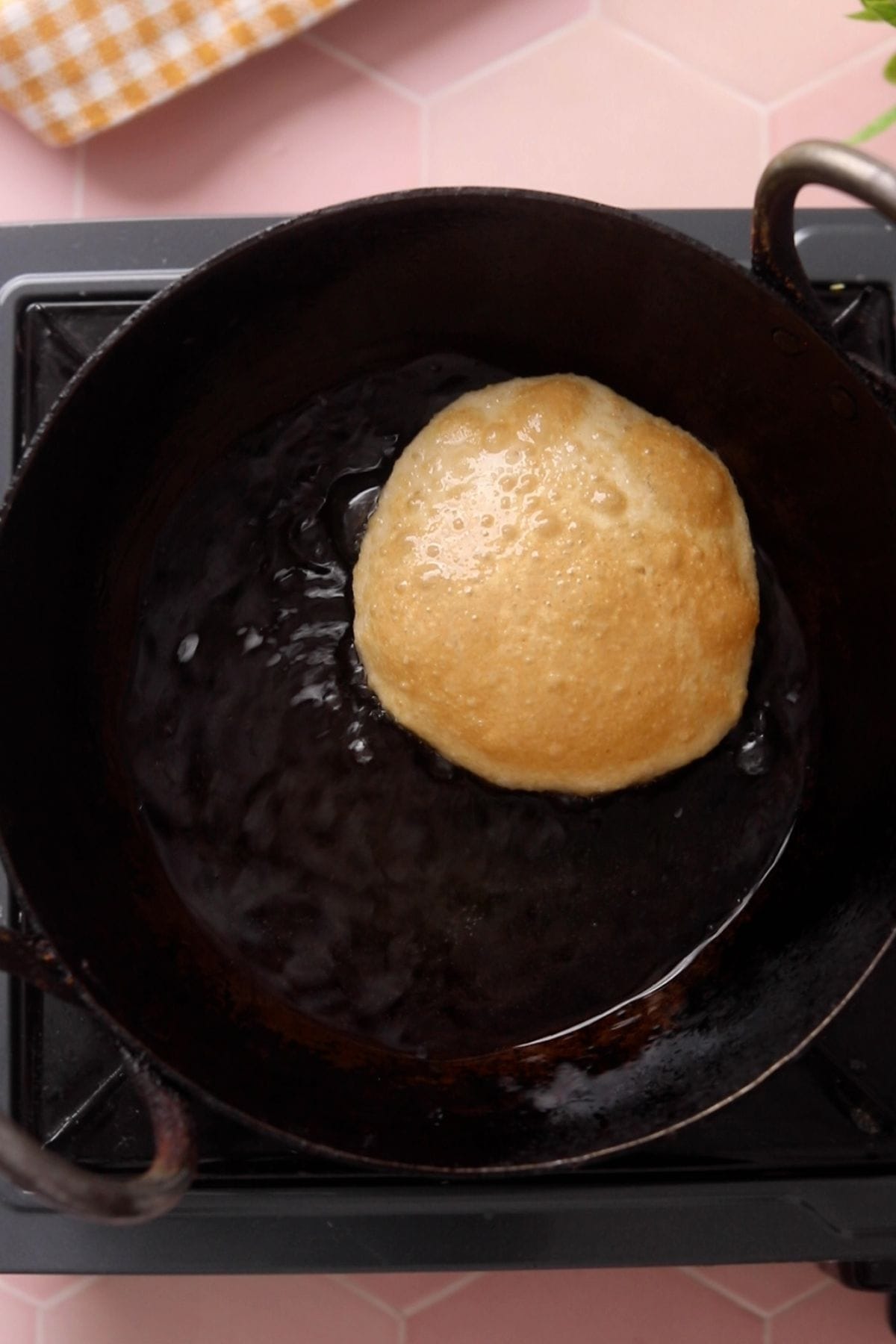
- Drain the puri using a slotted spoon to remove the excess oil. Place on a paper towel. Fry all the poori in a similar manner. Serve with aloo sabzi that we prepared earlier.Enjoy!
Aloo Poori (No Onion Garlic)
Ingredients
For Poori
- 1 cup (165g) atta whole wheat flour
- 1 tablespoon (10g) fine sooji fine semolina
- ¼ teaspoon salt
- ¼ teaspoon ajwain carrom seeds
- ½ room temperature water or as needed
- ½ tablespoon oil used while kneading
- Oil for deep frying
For Aloo Sabzi
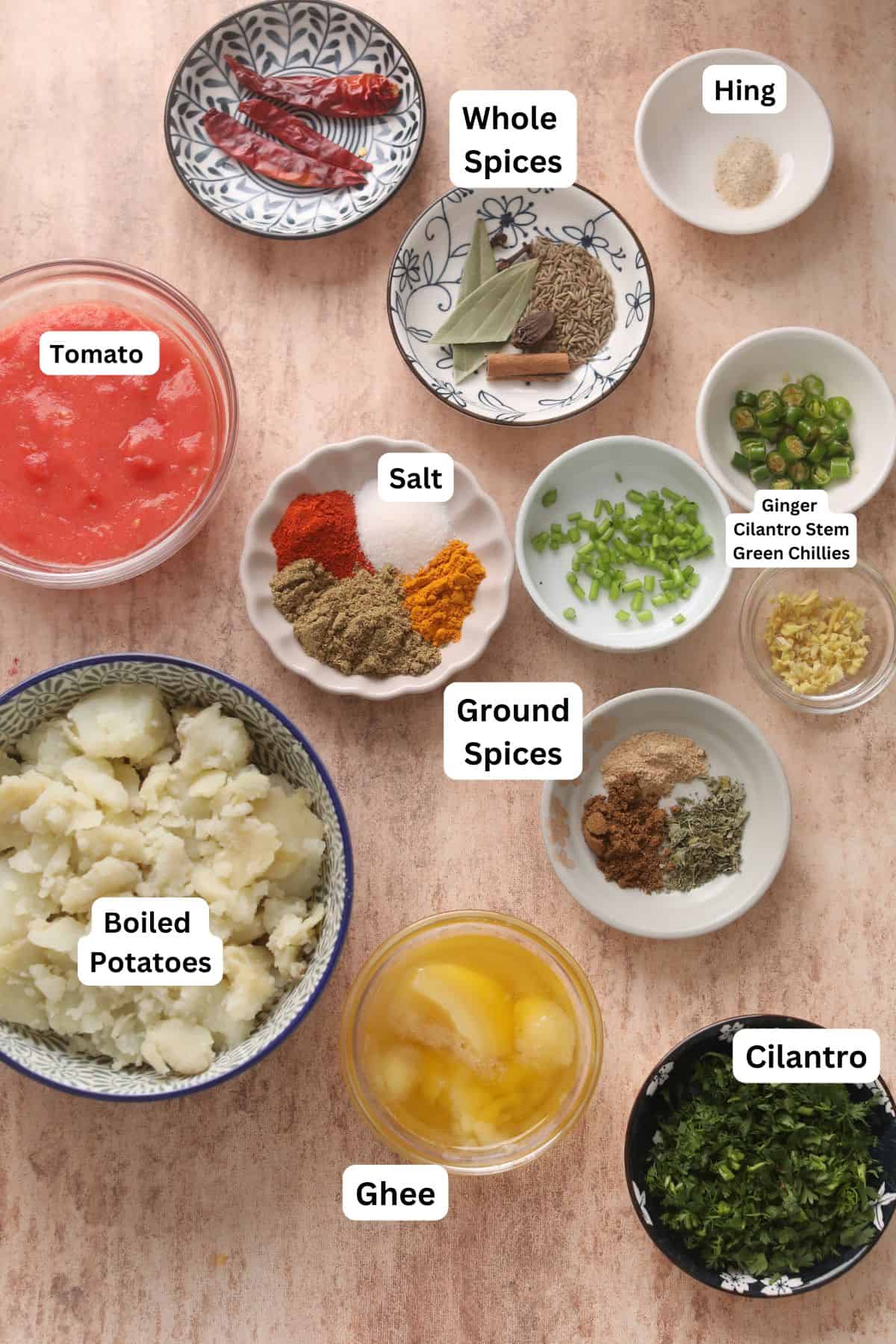
- 400 g potatoes boiled, peeled and crumbled into big and small pieces (don't mash) I measure the potatoes after peeling
- 4 tablespoon ghee or cooking oil
- 1 inch ginger chopped
- ½ teaspoon hing powder
- 1 tablespoon indian green chilies (hot), chopped or slit adjust to taste
- 1 tablespoon cilantro stems
- 3 medium tomatoes pureed in a blender
- 1.5 teaspoon salt adjust to taste
- 1.5 to 2.5 cup hot water or as needed
- chopped cilantro for garnish
- 1 teaspoon ghee optional, for finishing
Whole Spices
- 2-3 whole dried chilies broken into pieces if too long, or use red chilli flakes to taste
- 1 teaspoon cumin seeds
- 1 small black cardamom
- 2-3 green cardamom
- 2 cloves
- 1 medium bay leaf
- ½ inch cinnamon stick
Ground Spices
- 1 +¼ teaspoon red chili powder (hot), adjust to taste
- 1 tablespoon coriander powder
- ¾ teaspoon turmeric powder
- ½ teaspoon amchur dry mango powder, adjust quantity depending on how sour your tomatoes are
- 1 teaspoon garam masala powder start with ½ teaspoon and then adjust after tasting
- 1 teaspoon kasuri methi crushed
Instructions
Make Aloo Curry
- Warm up ghee on low medium in a cooking pot/kadai. Temper the ghee with whole spices. Fry for 5-7 seconds taking care not to burn.
- Add hing, cilantro stems, ginger and green chillies next. Again fry for 5-7 seconds to perfume the ghee.
- Next add all the spice powders (except amchur & garam masala). Add ¼ cup water so that the spice powders don't burn. Fry the spices hwile stirring for 15-20 seconds on low medium heat or so untill you smell a nice aroma.
- Add the crushed tomatoes now. Cook the tomatoes for 2-4 minutes or until you see ghee starting to separate on the sides of the pot. Don't dry out the tomatoes too much.
- Add in the boiled potatoes, sprinkle salt. Mix well and cook the potatoes for 2-4 minutes with tomato and spices. Avoid stirring too much else the potatoes will start breaking. Don't skip this step, it gives chance to potato to absorb the flavors of spices.
- Pour 1.5 cup hot water to begin with, mix well and let the curry come to a boil.
- Once boiling, reduce heat to low, cover and let simmer for 10-12 minutes on low heat. Halfway, check for water and adjust if as per desired consistency. You can mash a few big pieces of potatoes using back of the spoon at this time, this helps in thickening the curry. Make the curry as thin or thick as you like.
- Switch off the stove, taste and adjust the salt if needed and mix in the amchur powder, kasuri methi and garam masala powder. I also add in a teaspoon of ghee for finishing. Combine and let the aloo sabzi rest while you make pooris.
- Reheat if needed and garnish with chopped cilantro before serving.
Make Pooris
- In a wide dish or a large mix bowl, mix together whole wheat flour (atta), suji (semolina)salt, and ajwain. Mix well using your fingers to combine.
- Adding little water at a time, start mixing the flour and water. I used about ½ cup of water. Different atta brands need different water quanity. Add water slowly until there is no dry flour and then bring together and knead using your knuckles and fingers until smooth for about 6-8 minutes.While you are kneading, use 1-2 teaspoon oil to smoothen the dough. We want a smooth but not a soft dough. Make a stiff dough ( it should not be dry).
- Rub oil on the kneaded dough to prevent it from drying. Cover and let rest for 5 minutes.
- Divide the rested dough into equal portions(about 10-11). Roll each dogh portion between palms to smoothen and make small balls(about the size of a lime). Keep covered as you roll them one by one.
- Set about 2 inches of oil for deep frying to heat up in an iron kadhai(indian wok).
- Start with 1 dough ball at a time flatten it lightly on the rolling board and with the help of a rolling pin, roll into a 3" or 4" circle, ¼ inch thick. If your dough is well kneaded, you won't need oil and the pooris will roll easily. You could spread oil as needed if dough sticks. Don't use dry flour.Note 1 - It takes practice to get the shape. Even if you do not get perfect rounds its okay, doesn't affect the taste. When you are rolling the dough you can lift it and move it around to get a round of uniform thickness.Note -2 Pooris are meant to be smaller in diameter than roti. My grandmother used to say that a poori should be rolled out fully in just 4-6 movements of the rolling pin. That's something to keep in mind.If it takes you more than that, you're probably making them too big.
- I usually roll poori all at once. Roll them and place them side by side without overlapping or stacking else they stick. When you try to pick them, they will deform and you have to roll again (double work!)
- To check the temperature of the oil, pinch a small portion of dough and add it to the oil, it should quickly rise to the top without changing color. If the dough rises slowly or remains at the bottom,wait for the oil to heat up more.
- The oil should be hot, but not smoking. Carefully slide the rolled poori into the hot oil. It should puff up quickly. Gently press the poori with a slotted spoon to help it puff up fully. Fry until it's golden brown on both sides. If its browing too quickly, reduce the heat and wait. You can adjust frying time as needed. For extra crisp poori, fry them longer to have more browning.
- Drain the puri using a slotted spoon to remove the excess oil. Place on a wire rack or a colander. Fry all the poori in a similar manner. Serve with aloo sabzi.
- You can store rolled pooris for 2-3 days. They do start getting hard by 3rd day but not spoiled.
Video
Notes
- Make sure the dough for poori is smooth and firm. If it is too soft, the pooris will lose their shape during frying and will not turn out as crisp.
- Allow the dough to rest for about 5 minutes only. Else pooris turn out soft and not crispy.
- Keep the dough covered at all times to prevent it from drying. A skin forms on uncovered dough dur to air drying. Dried dough skin will give your pooris uneven texture.
- Don't use dry flour while rolling pooris as it will seperate while deep frying and your pooris will have black specks. If needed, use oil while rolling.
- Getting the oil temperature right takes some practice. So don't worry too much. The first few pooris may not puff up, but by the third or fourth one you will have a better sense of the heat level that you need to continue on.
- If oil temperature it is too low, the pooris will turn out greasy and soggy. If it is too hot, they may not puff up properly.
- You can adjust the frying time depending on whether you like the pooris soft and light color or crispier with deep golden spots.
- Lastly, after frying 5-6 pooris, the oil becomes quite hot so in that case, reduce the heat and wait for a few minutes before frying the next batches.
- Always use completely cooled, boiled potatoes. If they're warm, they'll break apart and turn mushy in the hot masala.
- Don't mash the potatoes too much; a mix of crumbled bits and chunky pieces gives the sabzi the best texture.
- Don't make a mild aloo curry. This aloo curry is supposed to be spicy and will taste bland if you tame down the heat.
- I highly recommend cooking the curry in ghee. Give the curry a LOT of flavor. You are welcome!
- Ghee + whole spices lend a strong aromatic base to the curry. Start by slow frying to infuse the sabzi with a deep flavor.
I'd Love to Hear from You!