

Mango pickle is a lip smacking tangy and spicy condiment made with unripe mangoes, spices, salt and mustard oil. Pickles are a huge part of indian cuisine and this sun fermented raw mango pickle, also called aam ka achar is one of the most popular indian pickle usually preserved during summer time.In this post I am sharing my family's recipe of north indian (punjabi) aam ka achar.
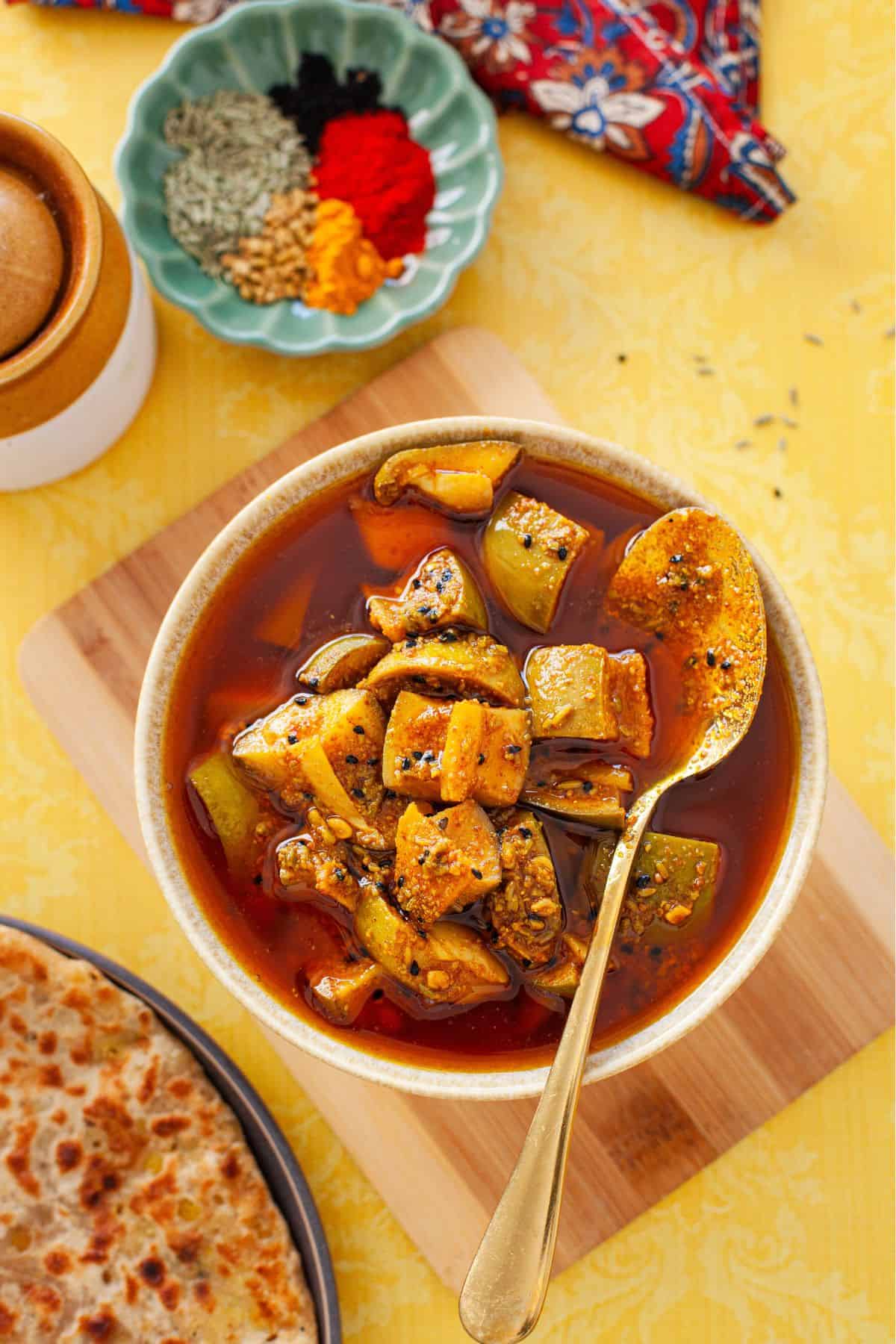
In her kitchen, my grandmother stocked a variety of pickles that changed with the seasons. She would pickle root vegetables during winter months (gajar gobhi shalgam achaar), spring time was for green and red chili pickle (lal mirch ka achar) along with garlic achar, while sumer months were reserved for for limes (nimbu ka achar) and, of course, raw mangoes!
About Mango Pickle
Mango pickle, also known as "aam ka achaar" in Hindi is made with chopped unripe mangoes (kacche aam), mustard oil and spices such as nigella seeds, fennel seeds, mustard seeds, fenugreek seeds, turmeric powder and red chilli powder. It has a unique taste with sour, savory and spicy notes and pairs wonderfully with all sorts of indian meals.
Kairi or unripe raw magoes hit the indian markets at the start of mango season. These unripe mangoes are green skinned, small in size & immensely tart. They are cut into small pieces or strips before preserving with spices and most commonly, mustard oil.
I found aam kairi (small tart, indian variety green mangoes) a couple of weeks back at our local indian store. It's the first time in years of living here and I cannot describe my happiness! I reserved a few to make aam panna and with the rest, a batch of mango achar happened.
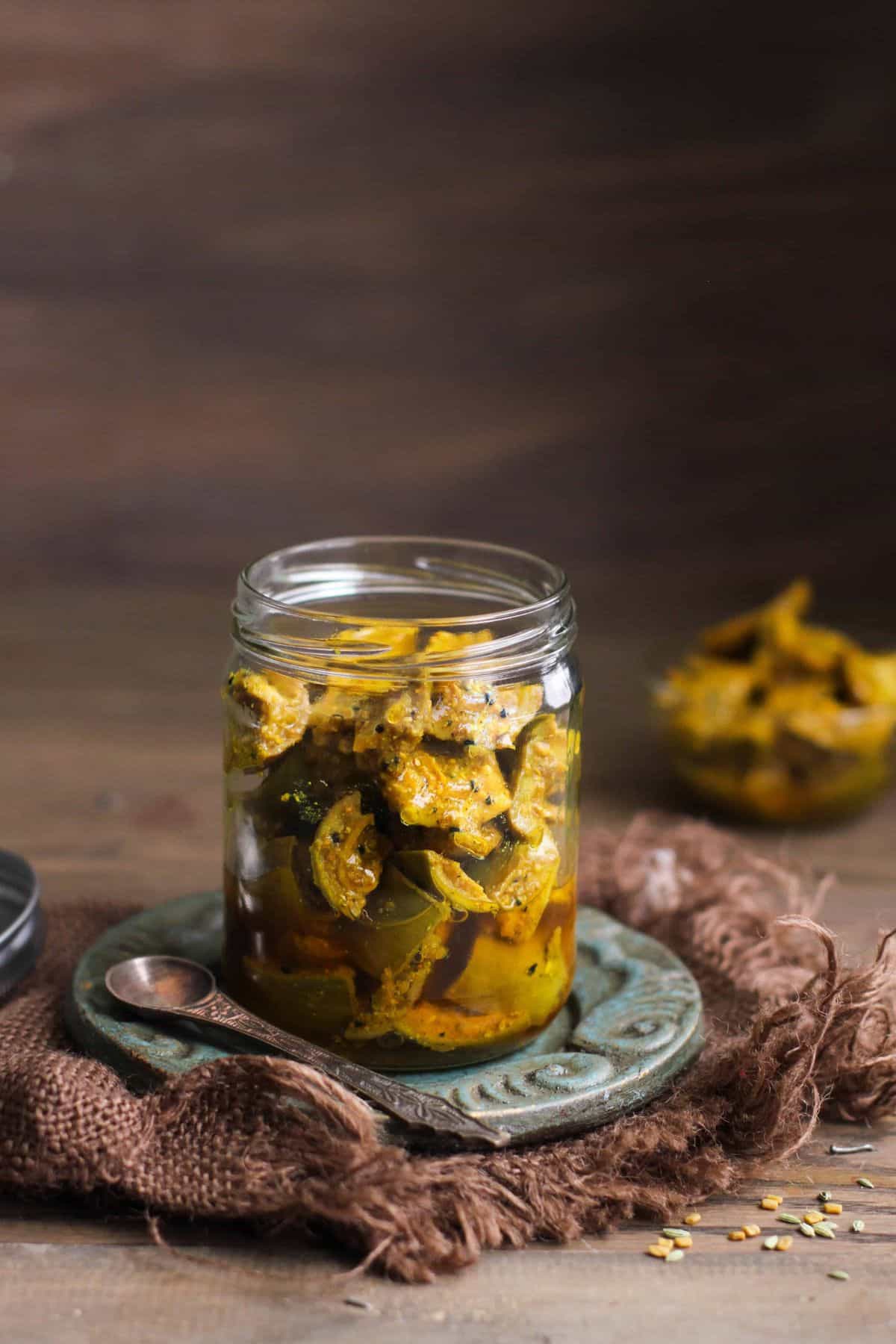
My grandmother used to make kilos and kilo of achar. After sun drying the salted mango pieces in sun for a few days, she would prepare achar masala (pickle spice blend) which was added to semi dry mangoes along with oil.
She would use large glass jars with lid (called "bot" in Hindi) during the sun fermentation process and then preserve the achar year long in barni (tall, opaque ceramic jar meant to store pickles). This mango achar has a long shelf life and if you double or triple the recipe, it could last for upto a year. Quite obviously, the mangoes become soft as months progress, however the flavor of the masala and oil just intensifies.
My Recipe
- For that authentic punjabi mango pickle taste that reminds you of your grandmother, you need sarson ka tel or pure mustard oil. There is no substitue unfortunately. You can easily find a bottle in indian grocery stores and if the labels confuse you, I highly recommend reading the truth behind it.
- This is not an instant mango pickle recipe. Once mixed, the pickle needs to stand in sun for fermentation process to develop flavors and acquire a tangy taste. We are blessed with sunny days all year round where I live and it took about 8-10 days for the flavors to develop. Depending on where you live, it could take longer for pickle to ferment.
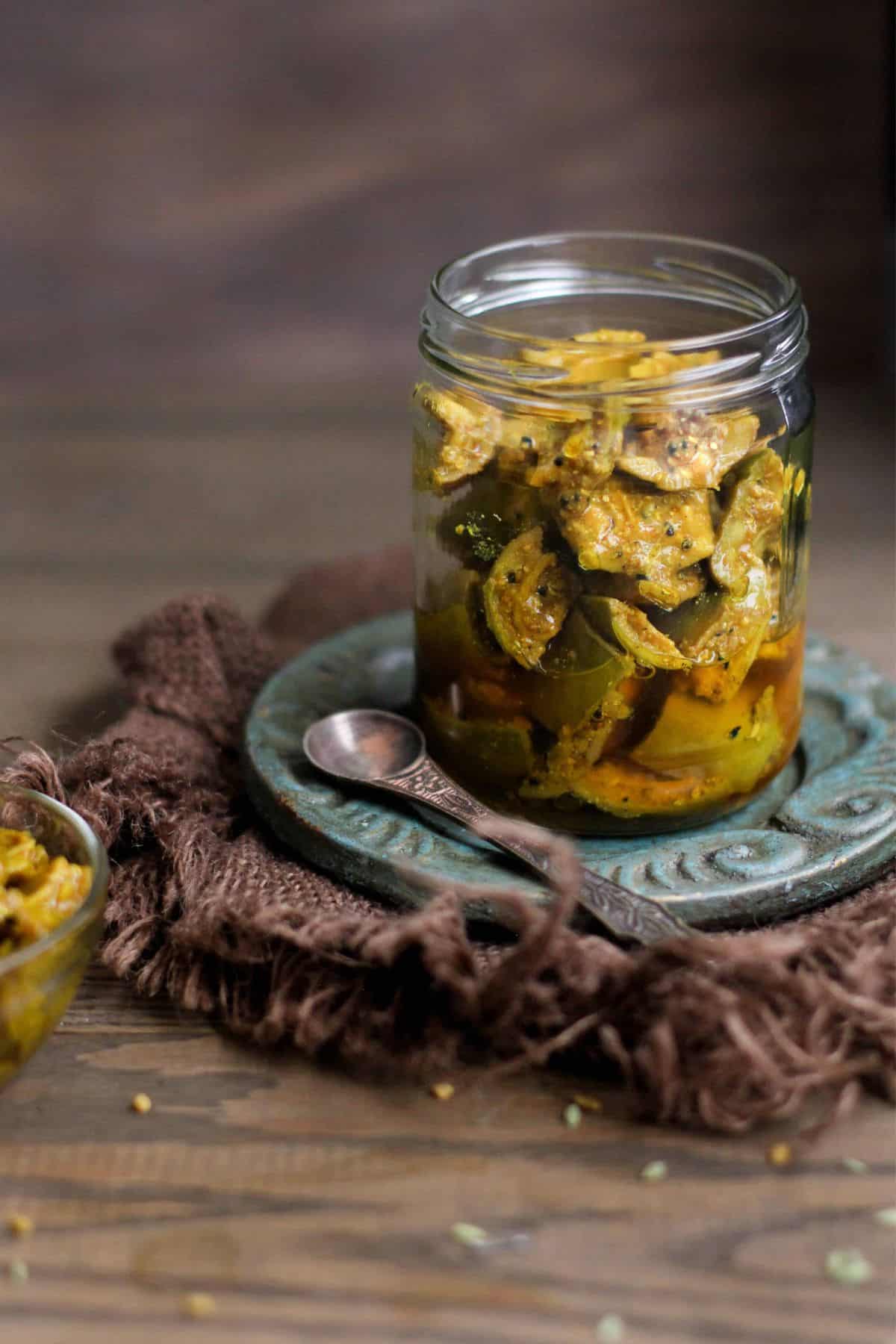
- My recipe isn't overwhelmed with spices, but it bursts with flavor nonetheless. I love the few whole spices that clings to the mangoes providing a bite and the savory oil pooling at the base. It strikes a perfect balance between the mango chunks and the seasoning.
Ingredients
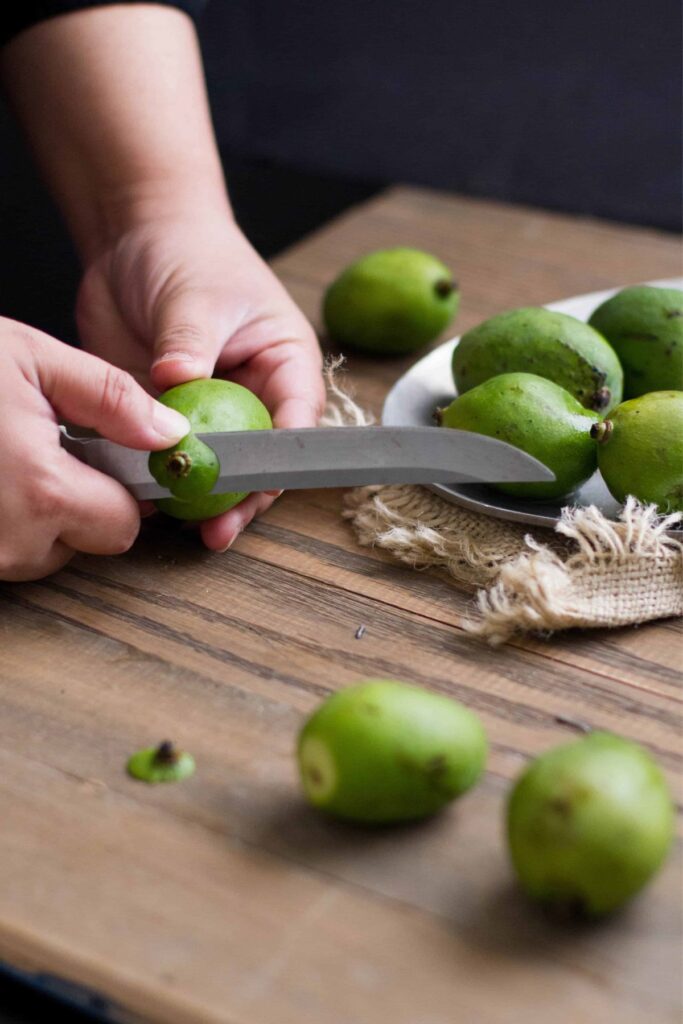
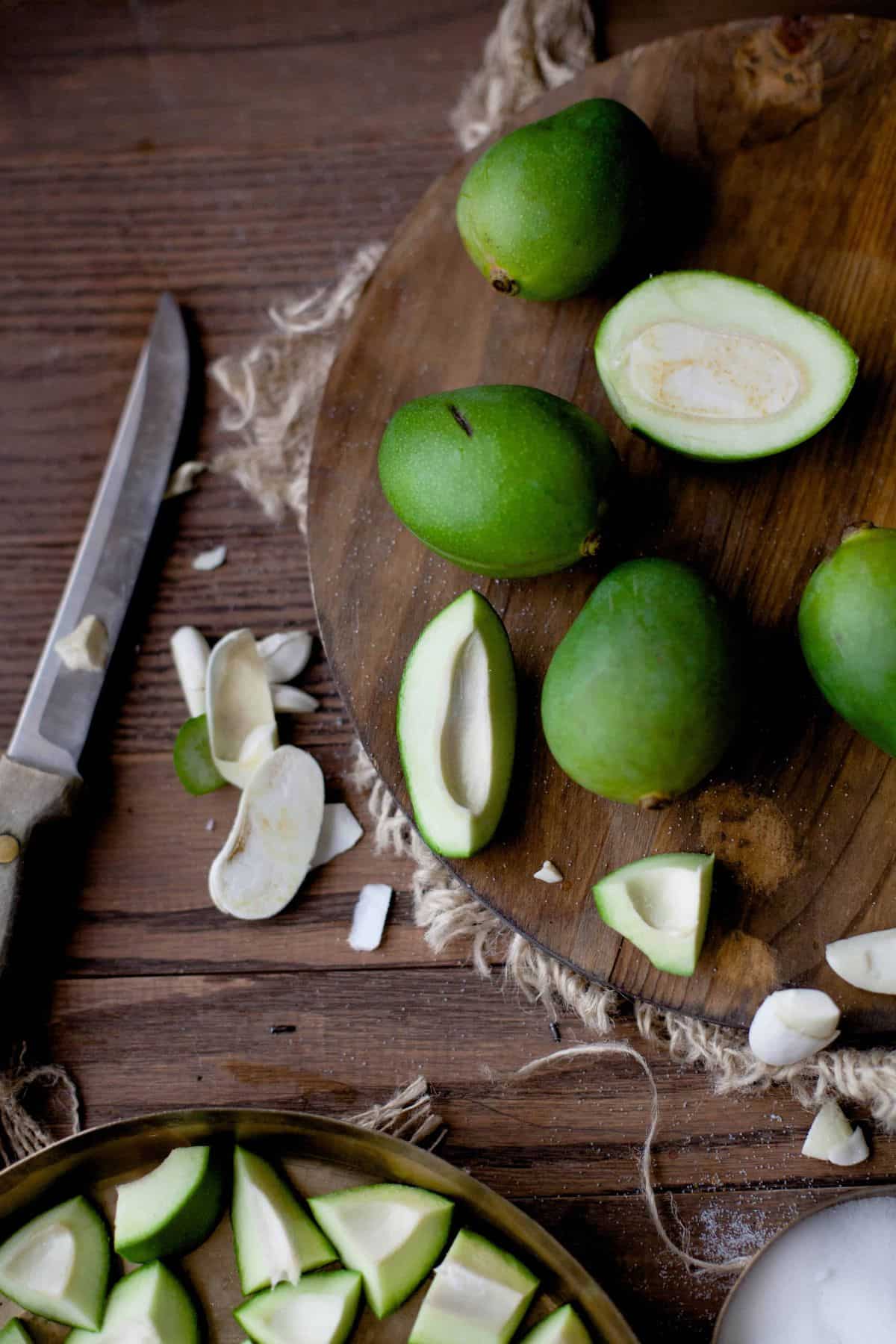
- Unripe Mangoes - You can easily find green raw mangoes in indian grocery stores. Pick ones that are firm to touch(not pulpy) and have shiny, spot free skins. Usually smaller the mangoes, the seed is softer and hence they are easy to chop. Here in US, I dont have any choice available, however, if you can find "ladwa" variety of raw mangoes, those are the best for making this pickle.
- Oil - Mustard Oil is a must. I haven't tested this recipe with any other kind of oil so cannot say how the taste is in absence of mustard oil.
Pickle Spices (Achar ke Masale)
- Mustard Seeds - I use brown mustard seeds(rai). If you have black mustard seeds at home, you can use those. Grind the mustard seeds to a fine powder.
- Fennel Seeds (Saunf) - Coarsely grind the fennel seeds in a dry spice grinder.
- Nigella Seeds (Kalonji) - Nigella seeds or kalonji lend a unique flavor to the achar. A must spice if you ask me. Unfortunately, there is no substitute. Leave them whole else your achar will acquire a black color.
- Fenugreek Seeds (Methidana) - Leave them whole for intense flavor and mild piquancy post fermentation. If you grind, they will make the achar quite bitter.
- Ground Spices - red chili powder (I use hot variety for taste),kashmiri chili powder (for color, skip if you do not have), turmeric powder, hing (asafoetida), salt
These days premixed achar masala or pickle masala is also available in indian stores,if you don't feel like gatherinh different spices and grinding them, you can give it a try.
How To Make Mango Pickle
Prepare Mangoes
- Wash the unripe mangoes and then soak them whole in a large pot of water for a few hours. This gets rid of any residues or dirt on the skins. Additionally, this soaking process also helps to remove some of the astringency in the raw mangoes.
- Pat the mangoes dry completely. Make sure your hands are clean and dry before you start cutting them.My grandmother used to say that water is the biggest energy of pickle. From this step onwards, you will have to be careful that your hands are dry as well as all the utensils and canning jars that come in contact with the pickle.
- Cut and discard the top stem and then cut the mangoes into half. Remove and discard the innermost seed & membrane surrounding it. Cut each half into 1 inch cubes. Do not wash mangoes after cutting.
- In a large bowl, add the chopped mangoes and sprinkle 1 tablespoon of salt. Using a wooden spoon or with clean, dry hands mix well to coat the mangoes. I prefer wearing a food safe gloves so as to avoid contamination.
- Layer the salted mangoes on a large glass plate or tray (any non reactive material is good). I usually line the bowl or tray with a paper towel but it is optional.
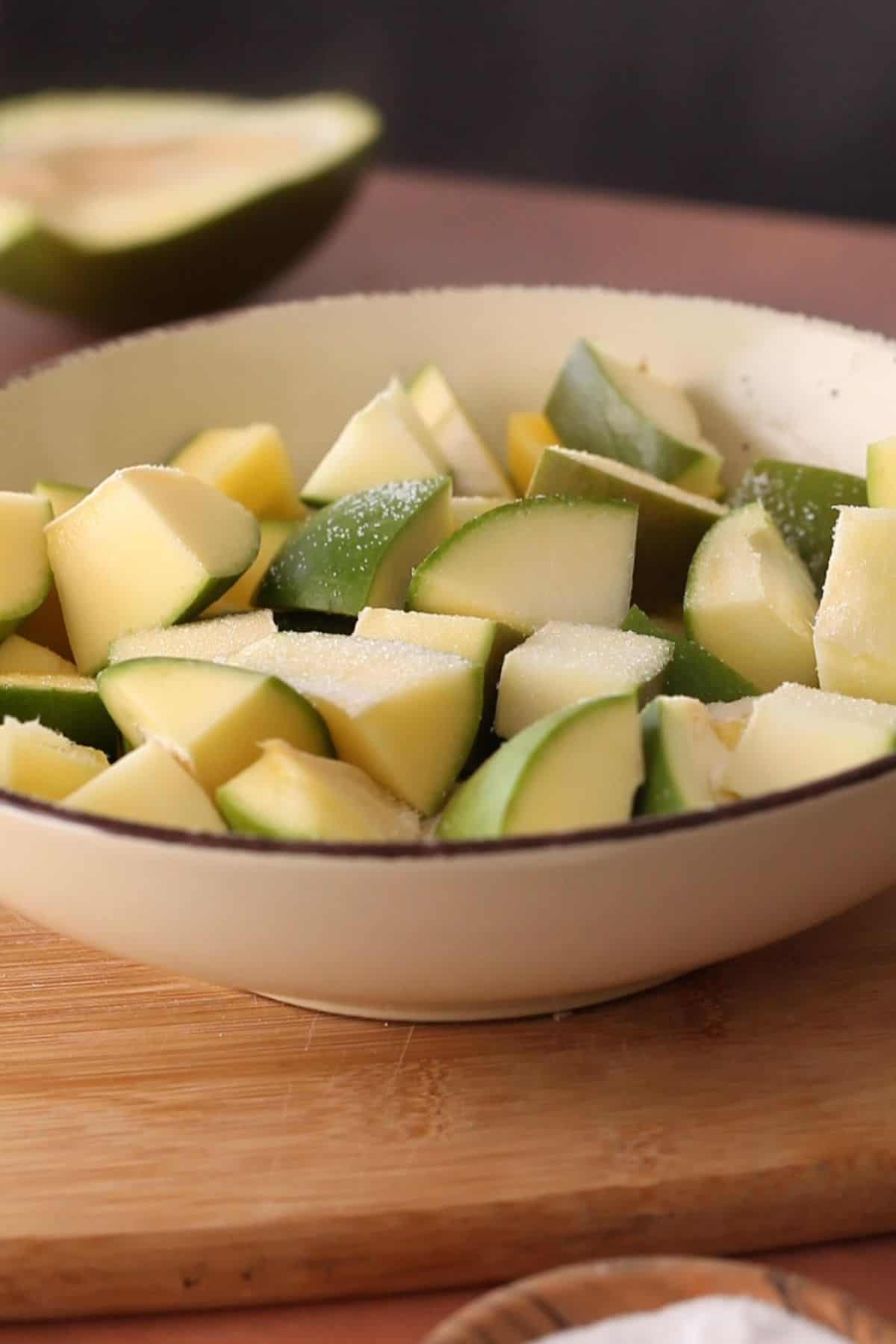
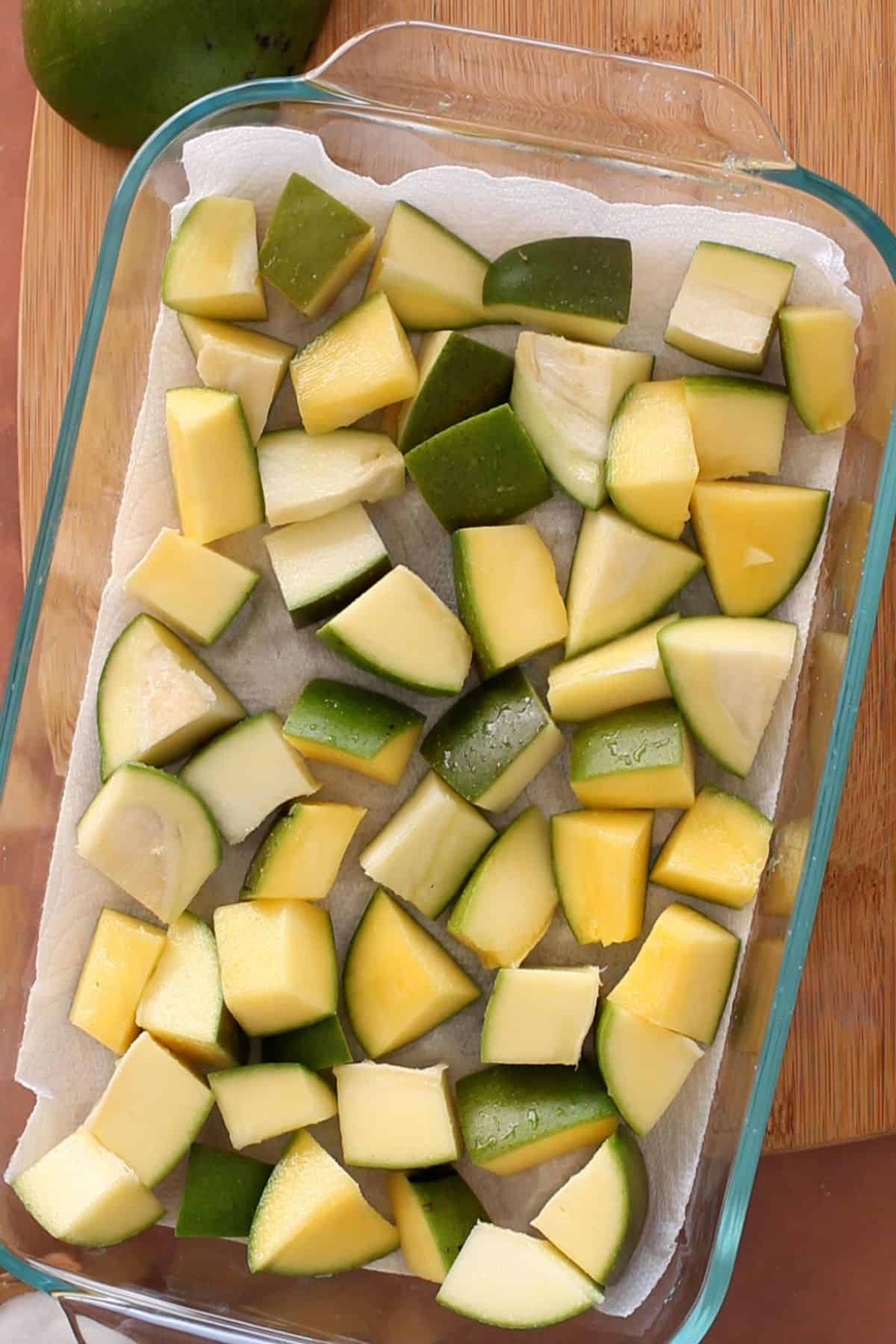
- Let sit in sun for 1-2 days or until mango skins starts to dry on edges and turning pale green. We want to remove moisture from the mangoes and concentrate their sourness before we add the spices & oil.
Make Mango Achar
- On third day, place sun dried mango pieces in a large bowl (I use a stainless steel mixing bowl). Avoid using a glass bowl for safety since we are going to pour hot oil later.
- Sprinkle the salt, red chilli powder, turmeric powder, fennel powder and mustard powder.
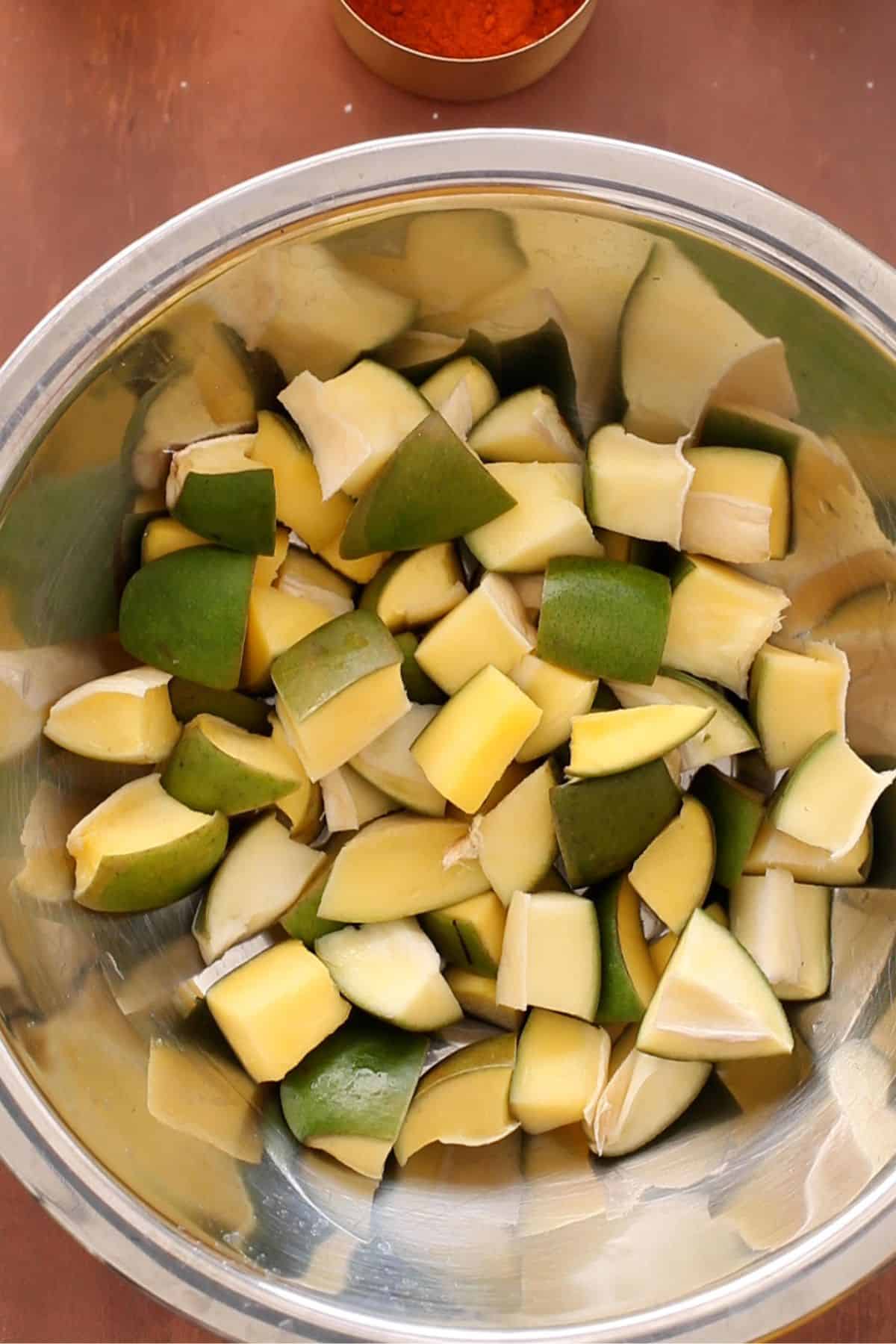
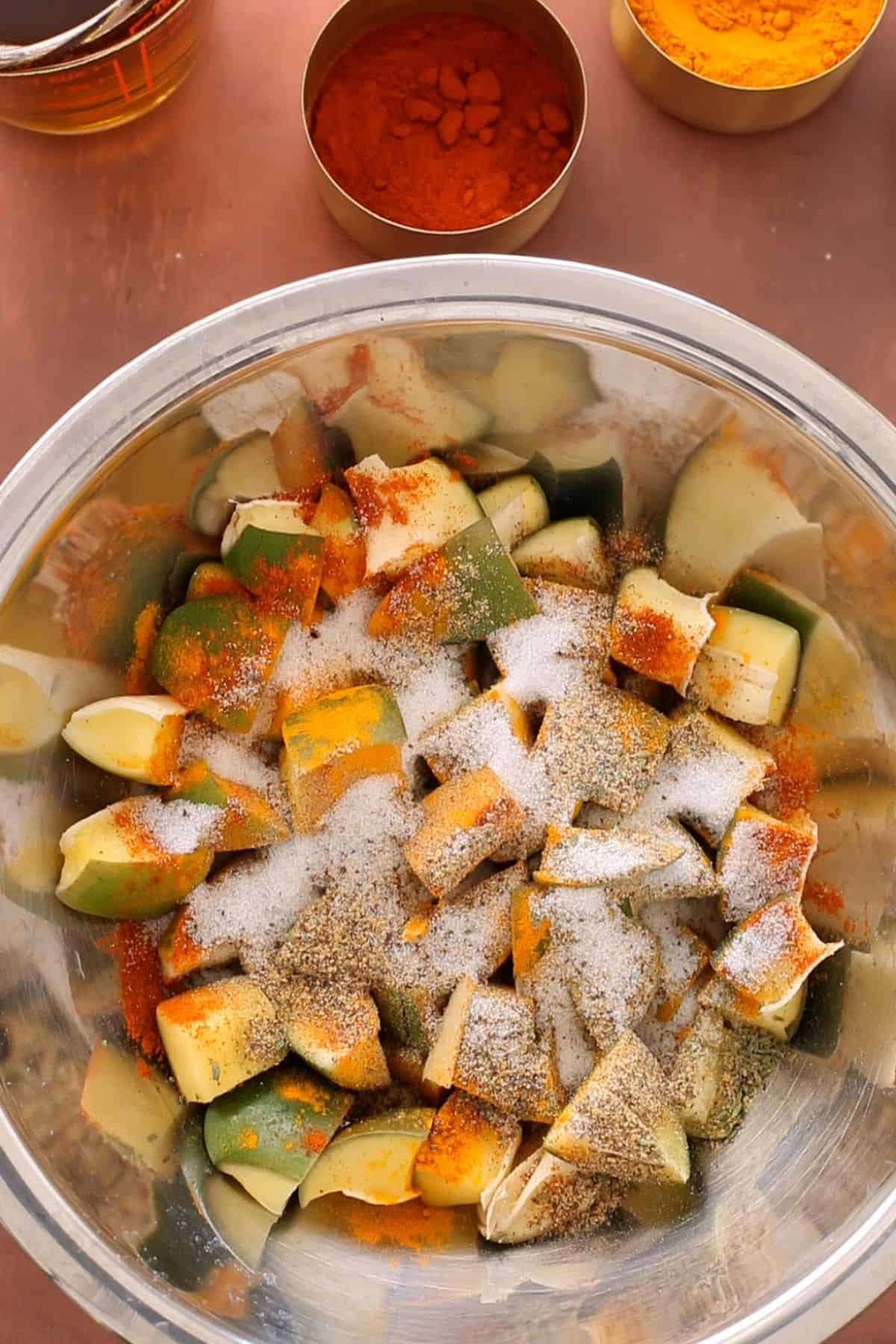
- Next, add mustard oil to a sauce pan and warm it up on low heat.
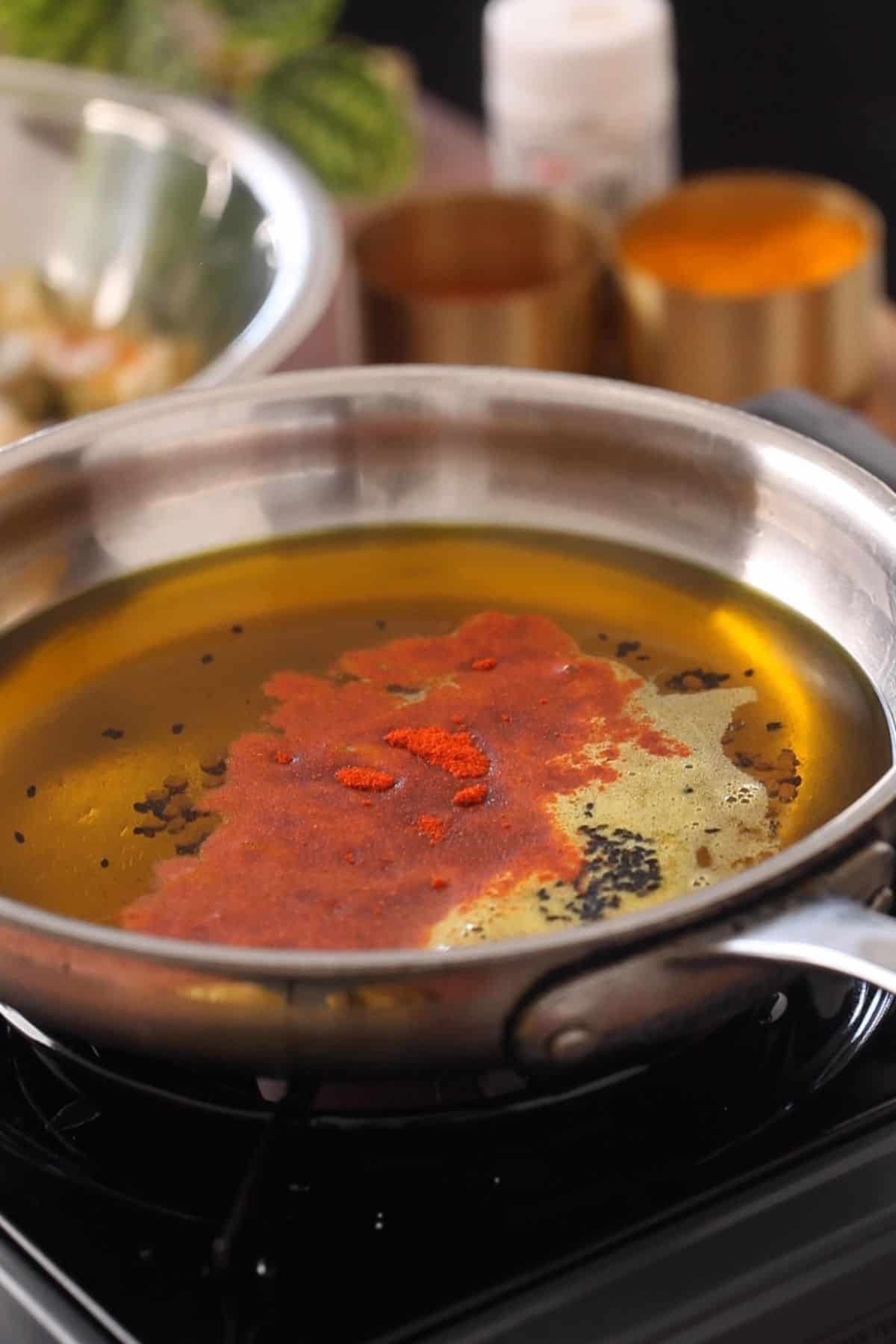
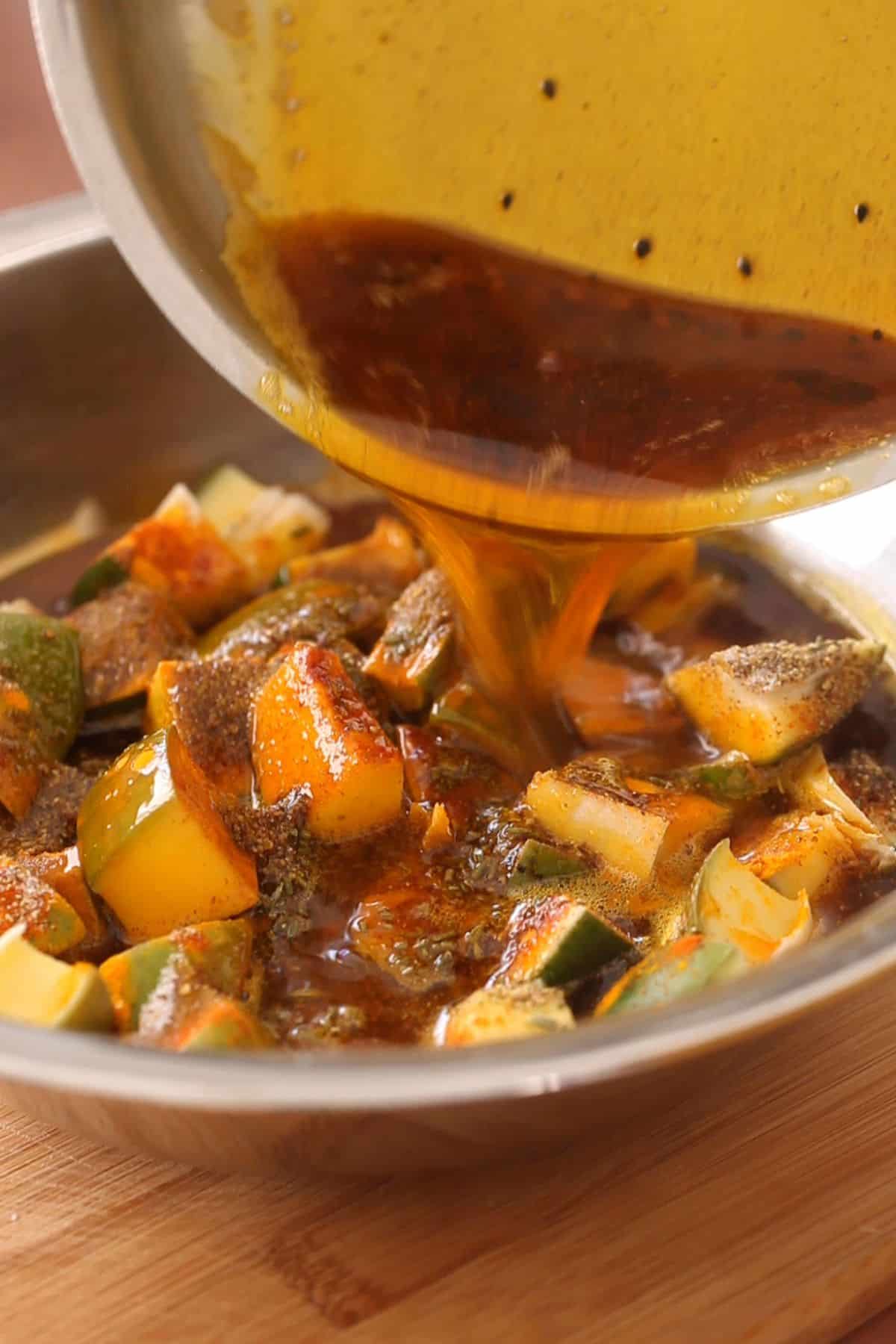
- Take off the heat and to the warm oil, add hing powder, kashmiri chili powder and the whole spices (nigella seeds & fenugreek seeds). Give a stir and immediately pour it over the mangoes.
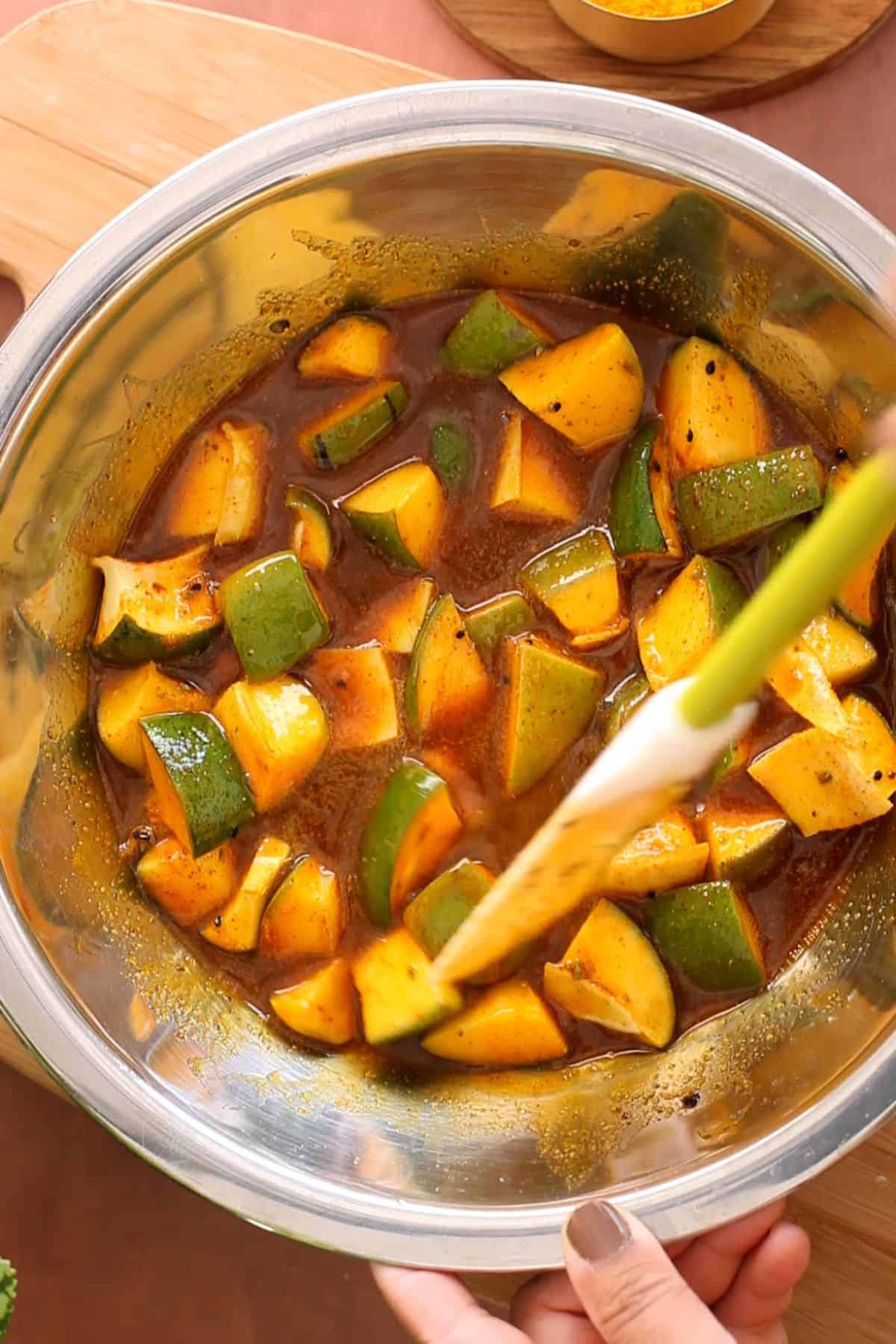
- Using a spoon, mix very well so that all the mangoes are coated in oil and spices. Right now, the achaar has a very strong smell and the masala is bitter too but that's expected. At this point you will also feel that the oil is extra but as the pickle will cook in sun, the spice powders that we added are going to absorb the oil and swell. Additionally, the mangoes need to be coated in oil at all times during fermentation to avoid bacterial formation.
- Pour the mango achar in a tall glass jar leaving 2 inches space from the mouth of the jar. Tie a muslin cloth, malmal or a cheesecloth on the mouth of lid. Don't put the lid since we want the moisture of mangoes to escape during fermentation. If you will put the lid, the moisture trying to escape as the pickle heats up in sunlight will get trapped inside. Hence, your achar won't get to breathe and this will lead to mold formation.
- Allow the achar to stand in full sun for next 8-12 days( this time will depend on the strength of sun in the area you live). Shake or stir the achar once or twice a day using a clean, dry spoon. Don't use hands.
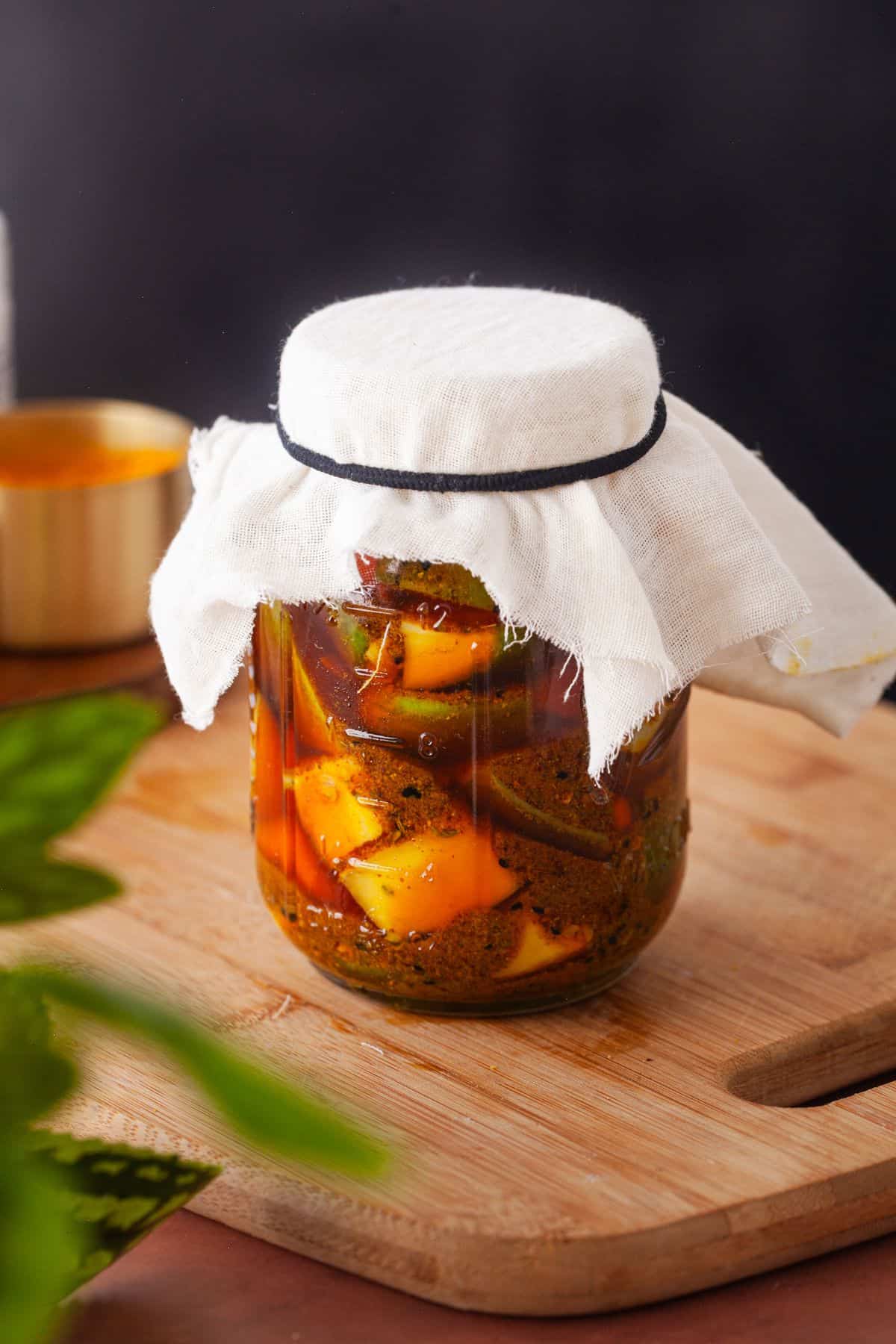
- At the end of sun fermentation, the skins of the mangoes would be brownish and the strong, bitter taste of spices will go away. The mangoes will be soft and pulpy. It won't be pungent, rather will have a tangy and spicy flavor. Your mango pickle is ready.
Storing Mango Pickle
Store mango pickle at room temperature for up to 10-12 months in a dark, cool dry place . The concentration of salt, oil and spices act as a natural preservative and you don't need anything else to enhance its shelf life post fermentation. It is perfectly fine to store mango achar at room temperature. Always use a clean spoon to serve the pickle.
How To Serve Mango Pickle
- Mango pickle pairs deliciously with indian flatbreads such as plain parathas, stuffed aloo methi paratha or paneer paratha, deep fried aloo kachori or soft naan.
- Serve it with dal rice or dal khichdi and rice pulao dishes like methi pulao or soya pulao.
- You can use the pickle masala in marinades for dishes such as achari paneer tikka.
- I love to serve it alongside indian style breakfasts such a besan toast or bedmi poori or aloo puri.
- Indian snacks like atta mathri and methi puri are extra delicous with mango achar.
Recipe Tips
- Never under salt the pickle. Salt draws out moisture of raw mangoes that evaporates during the fermentation process. If salt is less, mold formation can occur because there will be moisture build up in the pickle.
- Do not use less oil while making mango pickle, or in fact any kind of pickle.
- If you do not like the strong aroma of mustard oil, heat it up to smoky to do away the smell, let cool slightly and then use.
- I prefer to make a small batch and finish off in a few months since we do not like very soft mangoes. You could double this recipe for a larger batch.
I originally published this recipe in May 2014 and updated the post from archives in April 2024 by adding new images, detailed instructions and step pictures.
Raw Mango Pickle (Aam Ka Achar)
Ingredients
- 1 kg unripe mangoes raw mangoes
- 50 g fennel seeds coarsely ground
- 40 g brown mustard seeds finely ground
- 25 g turmeric powder
- 75-90 g salt or more if needed
- 600 ml virgin mustard oil
- 25 g red chilli powder hot, adjust to taste
- 2 teaspoon hing powder asafoetida
- 40 g fenugreek seeds leave whole
- 20 g nigella seeds leave whole
- 25 g kashmiri chilli powder for color
Instructions
PREPARE MANGOES
- Wash the unripe mangoes and then soak them whole in a large pot of water for a few hours. This gets rid of any residues or dirt on the skins. Additionally, this soaking process also helps to remove some of the astringency in the raw mangoes.
- Pat the mangoes dry completely. Make sure your hands are clean and dry before you start cutting them.My grandmother used to say that water is the biggest energy of pickle. From this step onwards, you will have to be careful that your hands are dry as well as all the utensils and canning jars that come in contact with the pickle.
- Cut and discard the top stem and then cut the mangoes into half. Remove and discard the innermost seed & membrane surrounding it. Cut each half into 1 inch cubes. Do not wash mangoes after cutting.
- In a large bowl, add the chopped mangoes and sprinkle 1 tablespoon of salt. Using a wooden spoon or with clean, dry hands mix well to coat the mangoes. I prefer wearing a food safe gloves so as to avoid contamination.
- Layer the salted mangoes on a large glass plate or tray (any non reactive material is good). I usually line the bowl or tray with a paper towel but it is optional.
- Let sit in sun for 1-2 days or until mango skins starts to dry on edges and turning pale green. We want to remove moisture from the mangoes and concentrate their sourness before we add the spices & oil.
MAKE MANGO ACHAR
- On third day, place sun dried mango pieces in a large bowl (I use a stainless steel mixing bowl). Avoid using a glass bowl for safety since we are going to pour hot oil later. Sprinkle the salt, red chilli powder, turmeric powder, fennel powder and mustard powder.
- Next, add mustard oil to a sauce pan and warm it up on low heat.Take off the heat and to the warm oil, add hing powder, kashmiri chili powder and the whole spices (nigella seeds & fenugreek seeds). Give a stir and immediately pour it over the mangoes.
- Using a spoon, mix very well such that all the mangoes are coated in oil and spices. The achaar will have a very strong smell and the masala will have a bitter taste right now but that's expected. At this point you will also feel that the oil is extra but as the pickle will cook in sun, the spice powders that we added are going to absorb the oil and swell. Also the mangoes need to be coated in oil at all times during fermentation to avoid bacterial formation.
- Pour the mango achar in a tall glass jar leaving 2 inches space from the mouth of the jar. Tie a muslin cloth, malmal or a cheesecloth on the mouth of lid. Don't put the lid since we want the moisture of mangoes to escape during fermentation. If you will put the lid, the moisture trying to escape as the pickle heats up in sunlight will be trapped inside. Hence, your achar won't get to breathe and this will lead to mold formation.
- Allow the achar to stand in full sun for next 8-12 days( this time will depend on the strength of sun in the area you live). Shake or stir the achar once or twice a day using a clean, dry spoon. Don't use hands.
- At the end of sun fermentation, the skins of the mangoes would be brownish and the strong, bitter taste of spices will go away. The mangoes will be soft and pulpy. It won't be pungent, rather will have a tangy and spicy flavor. Your mango pickle is ready.
Storing Mango Pickle
- Store mango pickle at room temperature for up to 10-12 months in a dark, cool dry place . The concentration of salt, oil and spices act as a natural preservative and you don't need anything else to enhance its shelf life post fermentation. It is perfectly fine to store mango achar at room temperature. Always use a clean spoon to serve the pickle.
Notes
-
- Never under salt the pickle. Salt draws out moisture of raw mangoes that evaporates during the fermentation process. If salt is less, mold formation can occur because there will be moisture build up in the pickle.
-
- Do not use less oil while making mango pickle, or in fact any kind of pickle.
-
- If you do not like the strong aroma of mustard oil, heat it up to smoky to do away the smell, let cool slightly and then use.
-
- I prefer to make a small batch and finish off in a few months since we do not like very soft mangoes. You could double this recipe for a larger batch.
- Mango pickle pairs deliciously with indian flatbreads such as plain parathas, stuffed aloo methi parathaor paneer paratha, deep fried aloo kachori or soft naan.
- Serve it with dal rice or dal khichdi and rice pulao dishes like methi pulao or soya pulao.
- You can use the pickle masala in marinades for dishes such as achari paneer tikka.
- I love to serve it alongside indian style breakfasts such a besan toast or bedmi poori or aloo puri.
- Indian snacks like atta mathri and methi puri are extra delicous with mango achar.

Jem says
Hi Tanvi,
Well, there is Sun of course but since i live in an apartment which does not have a patio or a balcony, there is no way to sun dry the mangoes. Thanks for the tips. I understand that the shelf life will be shorter. Will try the pickle and will let you know. Thank You
elephantsncoconuttrees says
Hi Tanvi,
It would be really ungrateful if I did not come over and say a big thank you for posting the winter pickle recipe. I happen to see ur pic in fb feed and suddenly had the craving to have it. I went ahead and made it. It took 10 days to get ready in this harsh East coast snow.The moment I opened the jar the sharp aromaaa simply brought back a flood of memories. Omg I had no idea mustard oil brought that stench in the classroom.I always thought thats how cool athletic people smelt Lol ...(The no body deo days ). Till I read this post I also thought that I was the only weirdo who went to lengths of making mom mad by holding a piece of aam ka achar till I reached home so she could know how it tasted exactly. Great post Tanvi, please keep the pre-gadget era stuff coming it add a real kick to the food:).
Regards,
Meena
Sujishnu Adhya says
Hi!
For drying the mango pieces before moving on to the further process of pickle preparation, can we heat them at low temperature on gas? Please suggest.
Tanvi Srivastava says
I havent tried gas method ever. If sunlight is a problem, just rub the mango pieces with salt and keep covered on kitchen counter for 12-18 hours. There will be juices collected at the bottom of the bowl. Get rid of those and dry the mangoes with a cloth or paper towel before adding spices and oil. Hope this helps.