

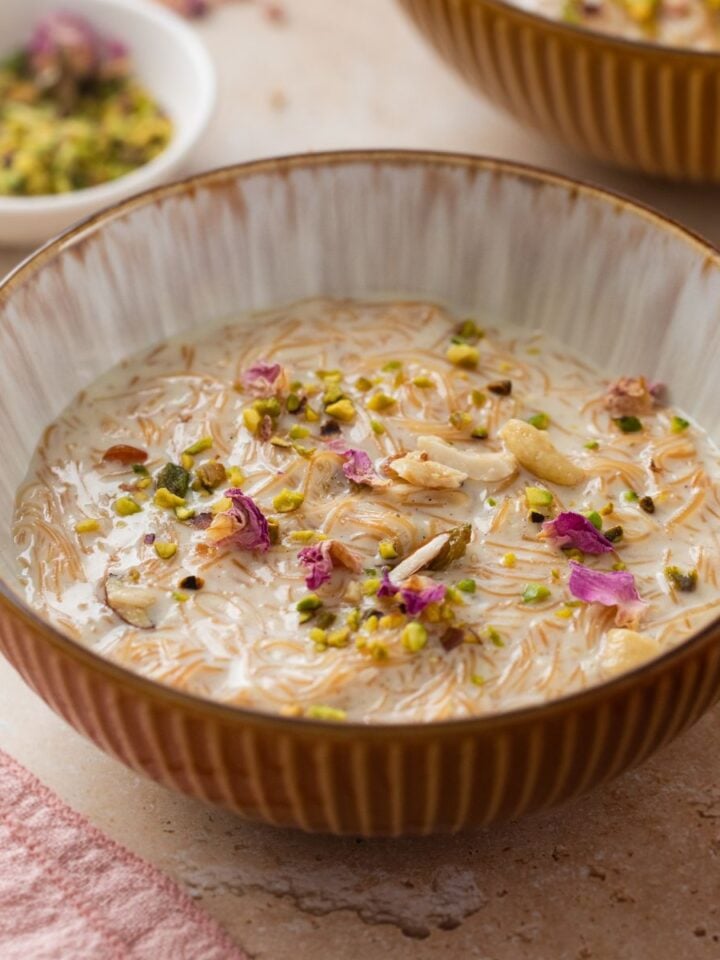
No need to toil over rabdi for hours and hours now. To make this simple & easy rabdi recipe, all you need is fine grated paneer, full fat milk, nuts, condensed milk and about 25-30 minutes.
This creamy instant rabri recipe will entice everyone's tastebuds at your next party without anyone guessing that you didn't slog for hours. Read on!
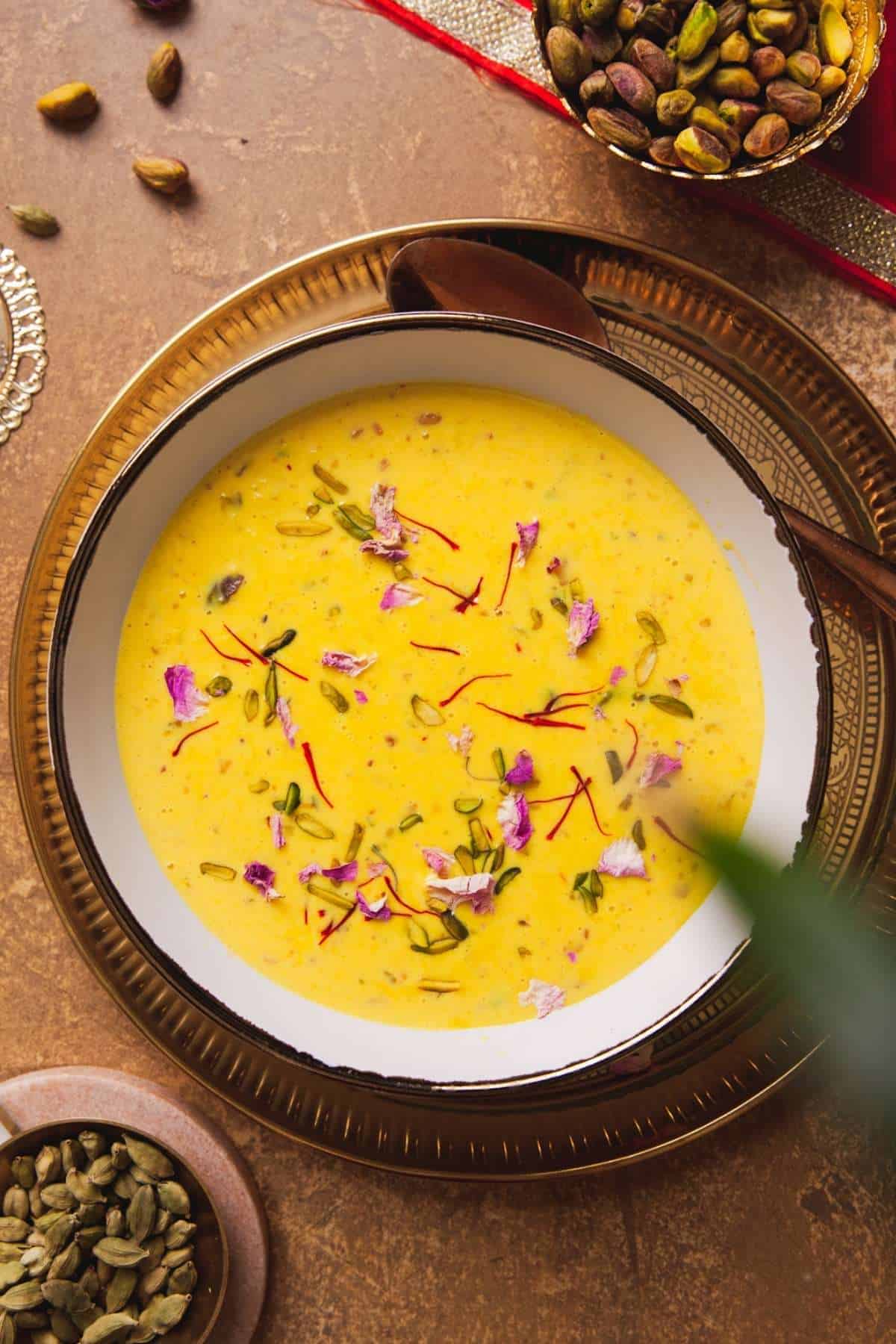
Lacey rabdi from the streets of Old Delhi used to be my favorite. It was made in the back of small sweet shops in huge kadais, by sweet artists patiently stirring milk with long ladles.
IIn India, rabdi is enjoyed on its own or served with sweets with many mithai like jalebi, gulab jamun, topped over falooda or kulfi. I have made traditional rabdi many times, but a few years ago I came up with a quicker version using condensed milk and paneer. Ever since, this instant rabdi has been my go-to recipe. It still tastes delicious and has great texture.
A Note :- Even when I change the traditional way of cooking to make recipes easier for both of us, I always try to keep the true essence of our old Indian recipes without compromising on taste or texture. I hope you'll enjoy the same fresh, milky flavor and lacey texture when you try this quick rabdi recipe.
Traditional Versus Instant Rabdi
Traditionally, rabdi is made by slowly boiling milk until most of the liquid evaporates, leaving behind thick milk solids. It takes a lot of stirring, scraping, and patience.
This quick version is an easy shortcut that gives you the same taste and texture in about 30 minutes using basic ingredients. While it can't fully match the traditional method, the result is still delicious and satisfying.
Why You Will Love This Recipe
- Simple ingredients. Most indian homes have paneer, milk and a can of milkmaid (condensed milk) stashed in the fridge or in the pantry. That's all we need for this recipe! No special ingredients and hardly any trips to the store.
- Takes about 30 minutes to make. We start with full-fat milk and reduce it to bring out the authentic rabdi flavor. The result is rich, fresh, and perfectly milky.
- Small batch recipe. However you can double or triple it easily to suit your needs.
- Sometimes I just want to eat rabdi by itself and since we dont have a mithai shop here in Las Vegas, I resort to this recipe to quickly satisfy my cravings. It is so easy that you can start working on it while you brew your morning tea or coffee to serve it over toast for breakfast, just sayin!
- Perfect texture. I use finely grated paneer, which gives the rabdi a grainy texture, or daanedaar as we call it in Hindi. If you've had real rabdi before, you'll recognize exactly what I mean.
- This recipe is perfect for busy days of entertaining or during festival time when you have your hands full with hundreds of things in the kitchen.
- Lastly, its plain deliciousness. You would want to eat it all in a sitting!
Ingredients You will Need
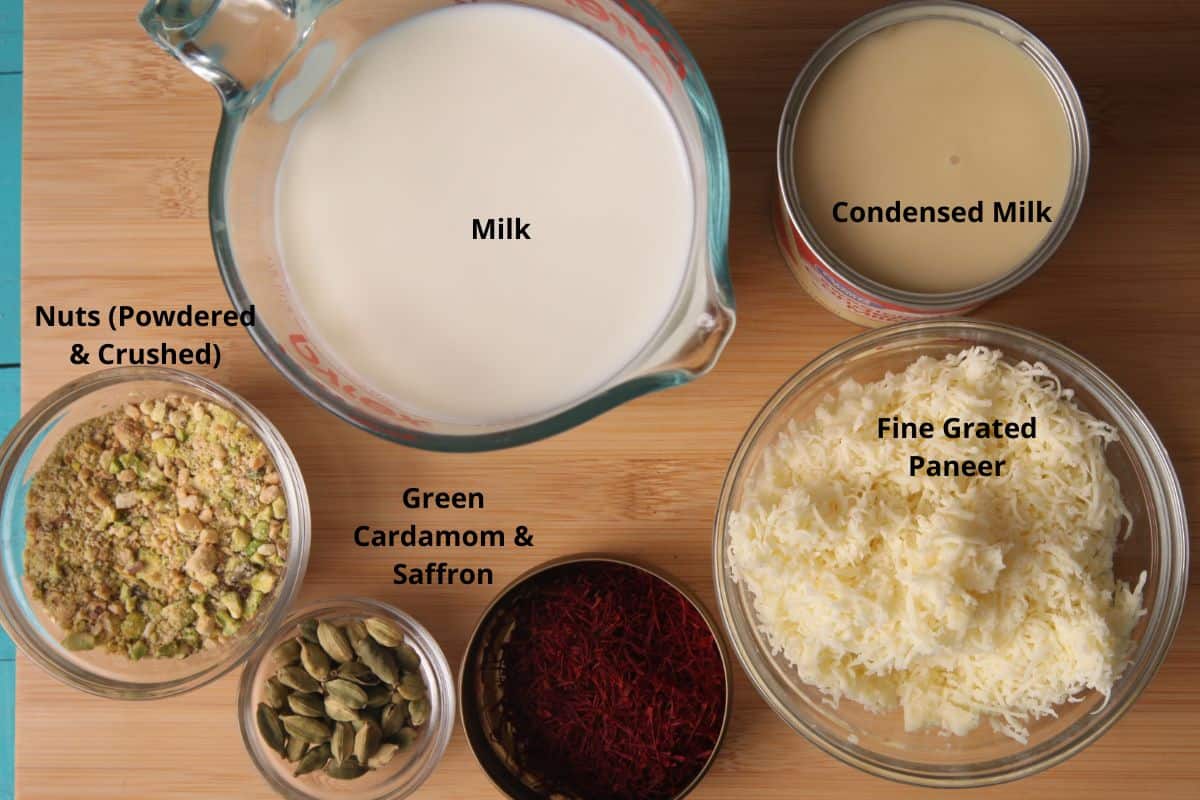
- Whole Milk - Full fat milk tastes fresh and creamy. We are going to reduce it similar to how its done in traditional rabdi, however trust me, no slogging needed.
- Malai Paneer - Get your hands on a creamy block of paneer from store or make your own at home. I leave it to you. Store bought works just fine!
- Sweetened Condensed Milk- Sugar won't work unfortunately because condensed milk contributes in the thickening & creaminess of rabdi.
- Nuts - We are going to use nuts(cashews, almonds & pistachios) two ways. I powder ¼ cup nuts and keep ⅓ cup coarsely chopped. Powdered nuts help thicken the rabdi. You can add any nuts of choice.
- Flavors- Saffron & Green cardamom are traditional rabdi flavorings and I use both.
Instructions (Step Pictures)
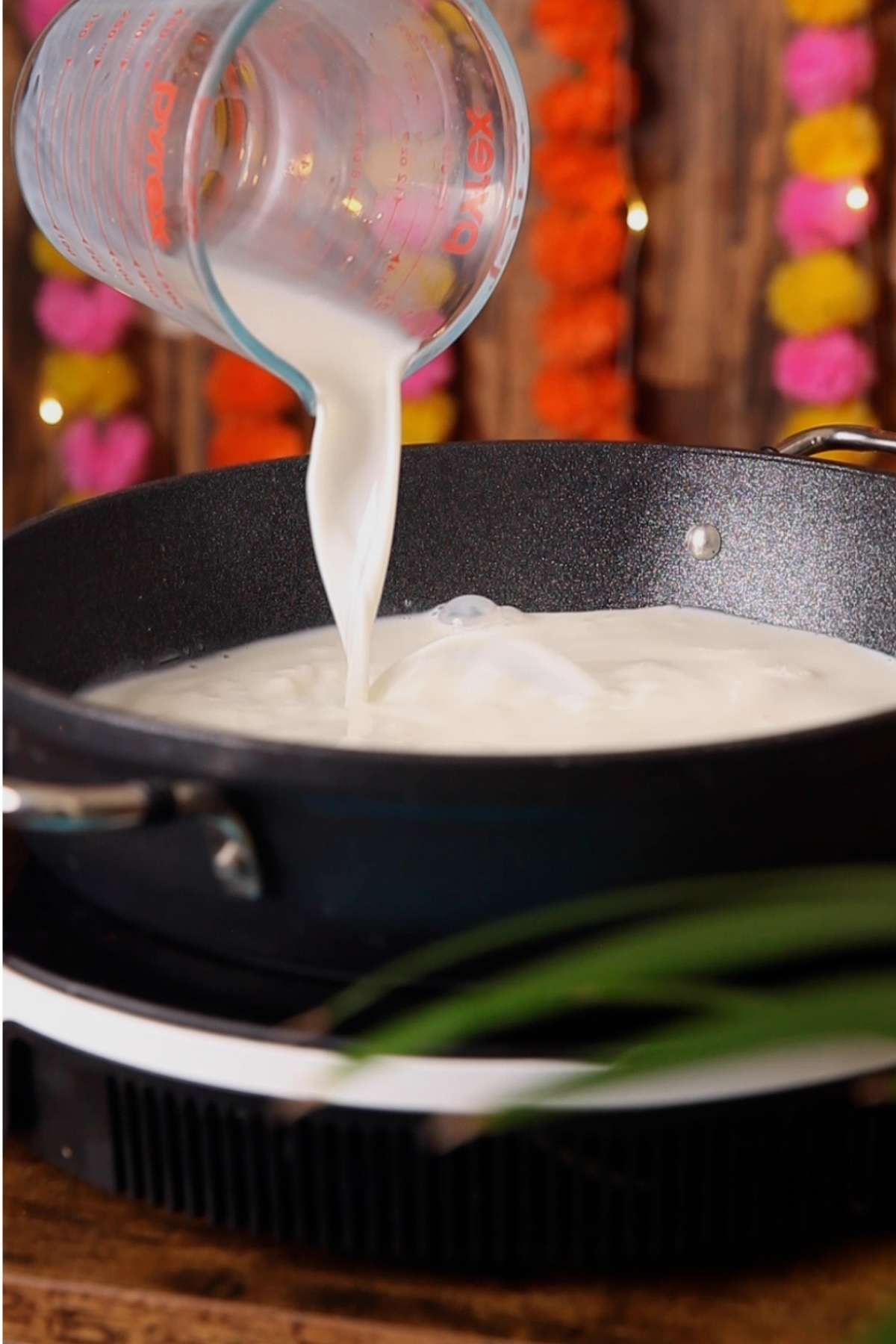
- Rinse a wide pot or shallow pan with water and without wiping, add milk to it. Set to boil on stove. Once boiling, reduce to low medium and intermittently stir the milk. Using a spatula, scrape the sides and mix back with the milk.
Choosing Cooking Utensil - Using a wide mouthed cooking pot or pan really quickens the process of thickening the milk, I highly recommend it. Avoid non stick cookware since the laccha would not form. Laccha are the milk layers on the sides of the pot while you are reducing milk. Avoid using cast iron pots for making rabdi. Due to high heat conduction properties of cast iron, the milk can burn easily.
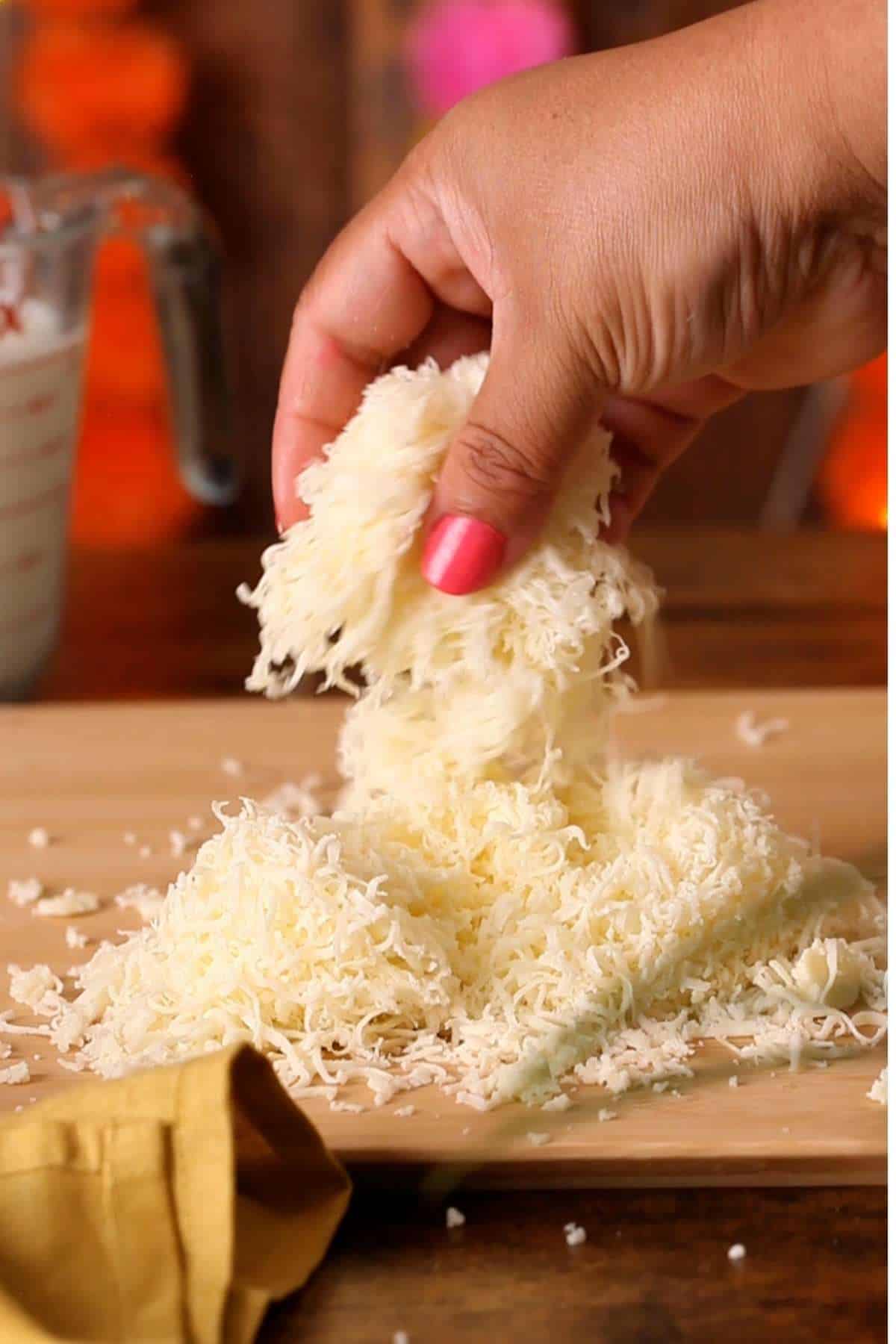
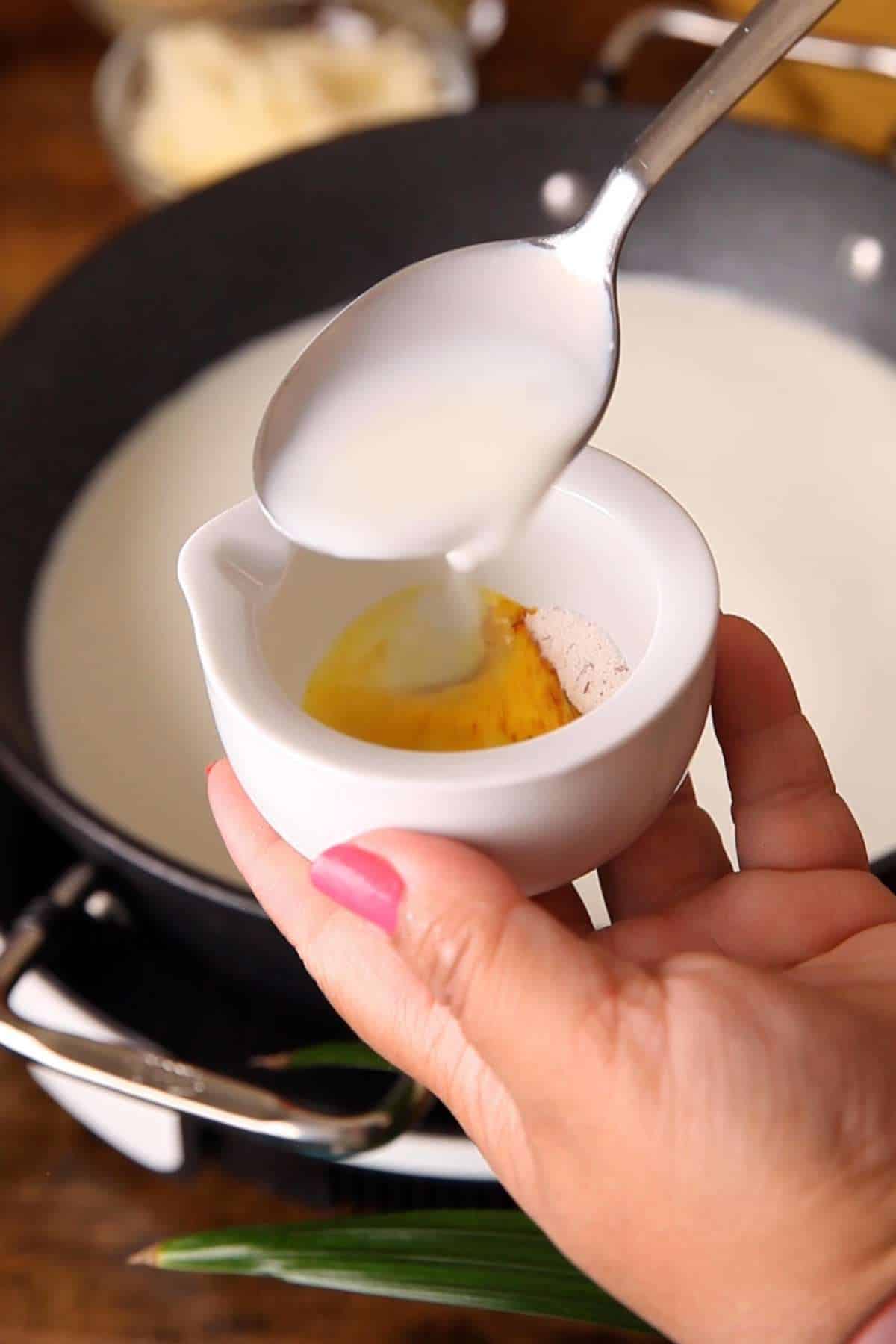
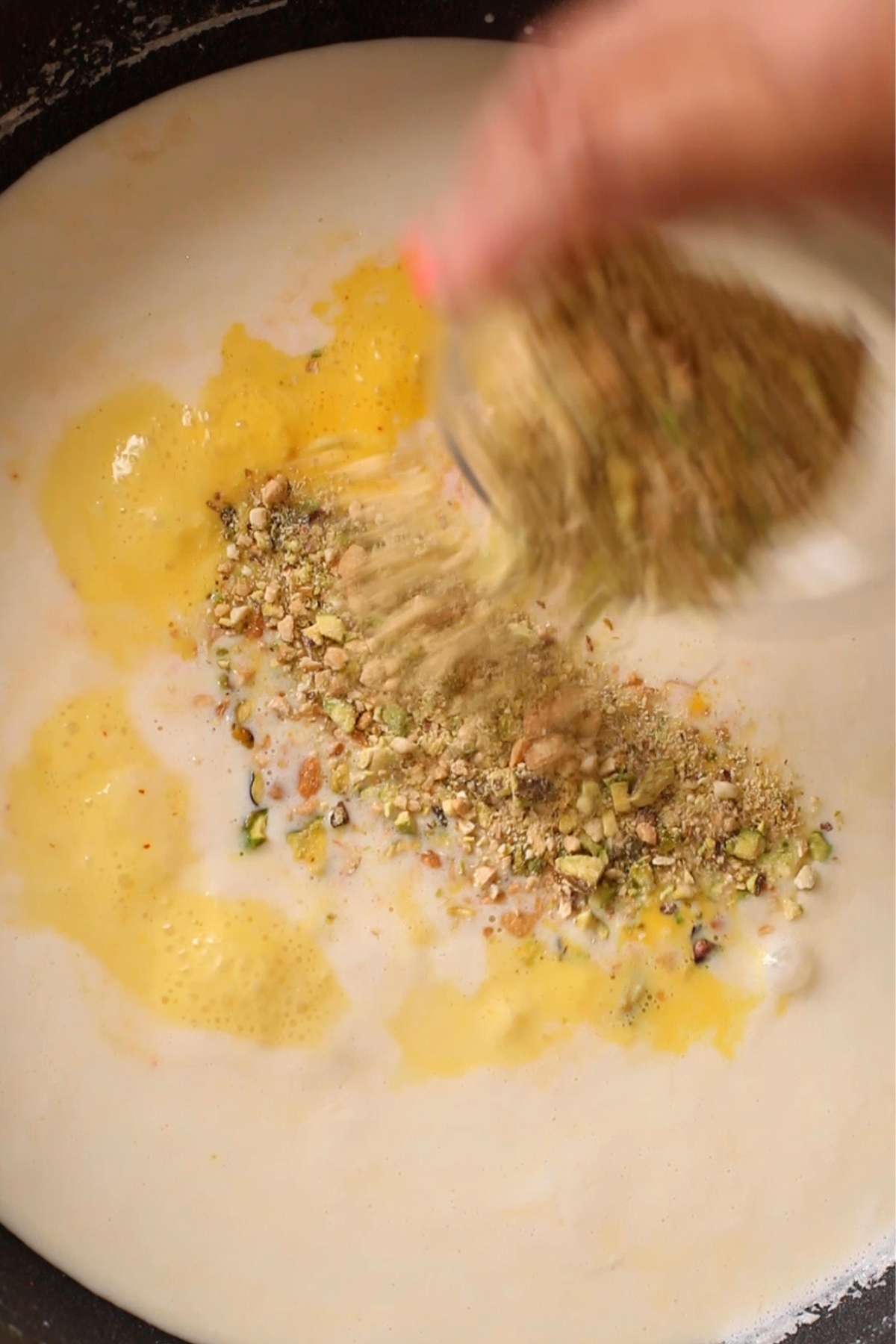
- Mewnwhile, do these 3 steps. 1) Take a few tablespoons of warm milk from the pot and soak saffron in it. 2)Using fine side of a box grater, grate the paneer. 3) In a small grinder, powder the nuts (I used cashews & pistachios) to get 4-5 tablespoon nut powder. Coarsely chop ⅓ cup nuts to add to rabri.
Tip :- If you are using seeds from green cardamom pod, add it to the grinder with nuts.
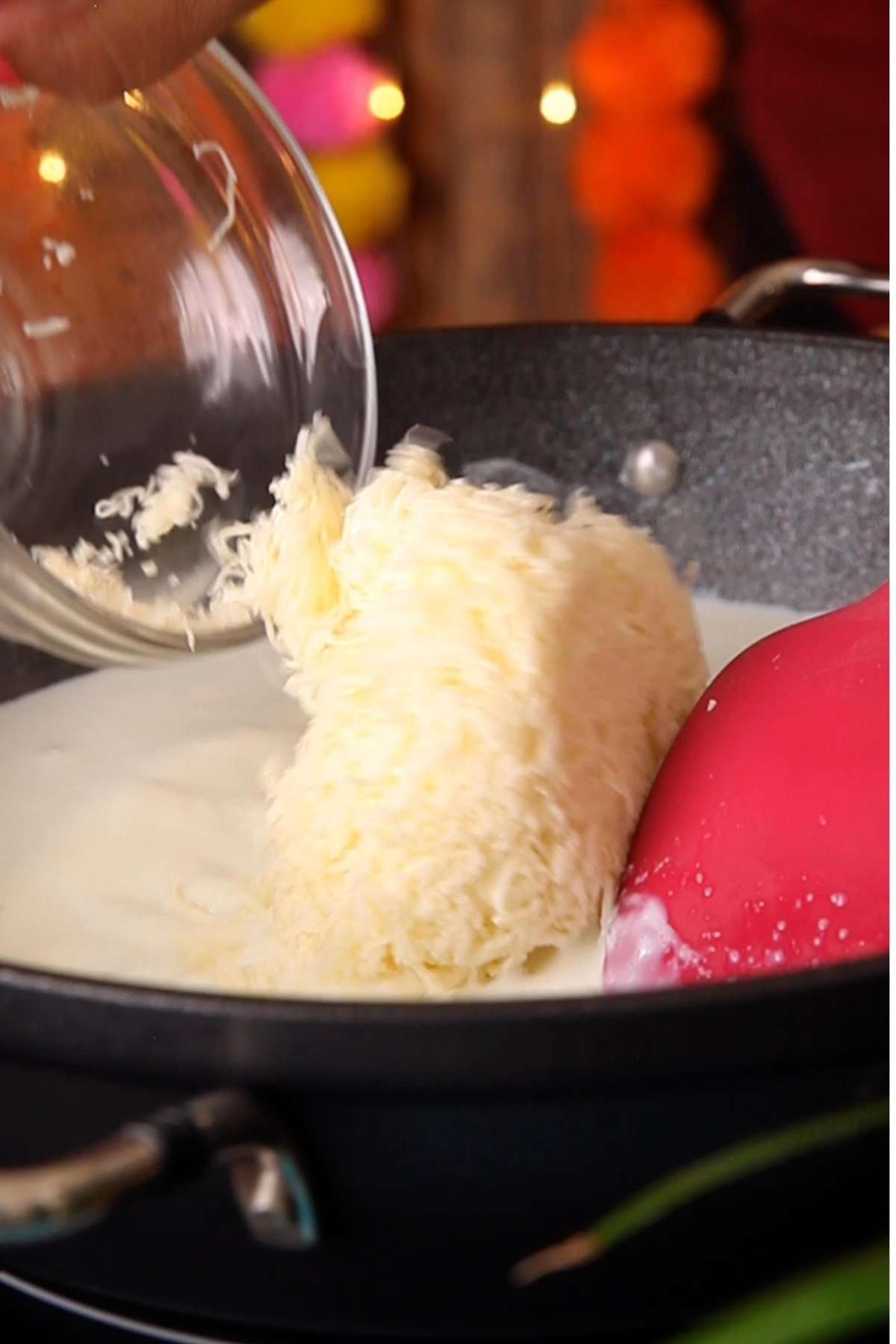
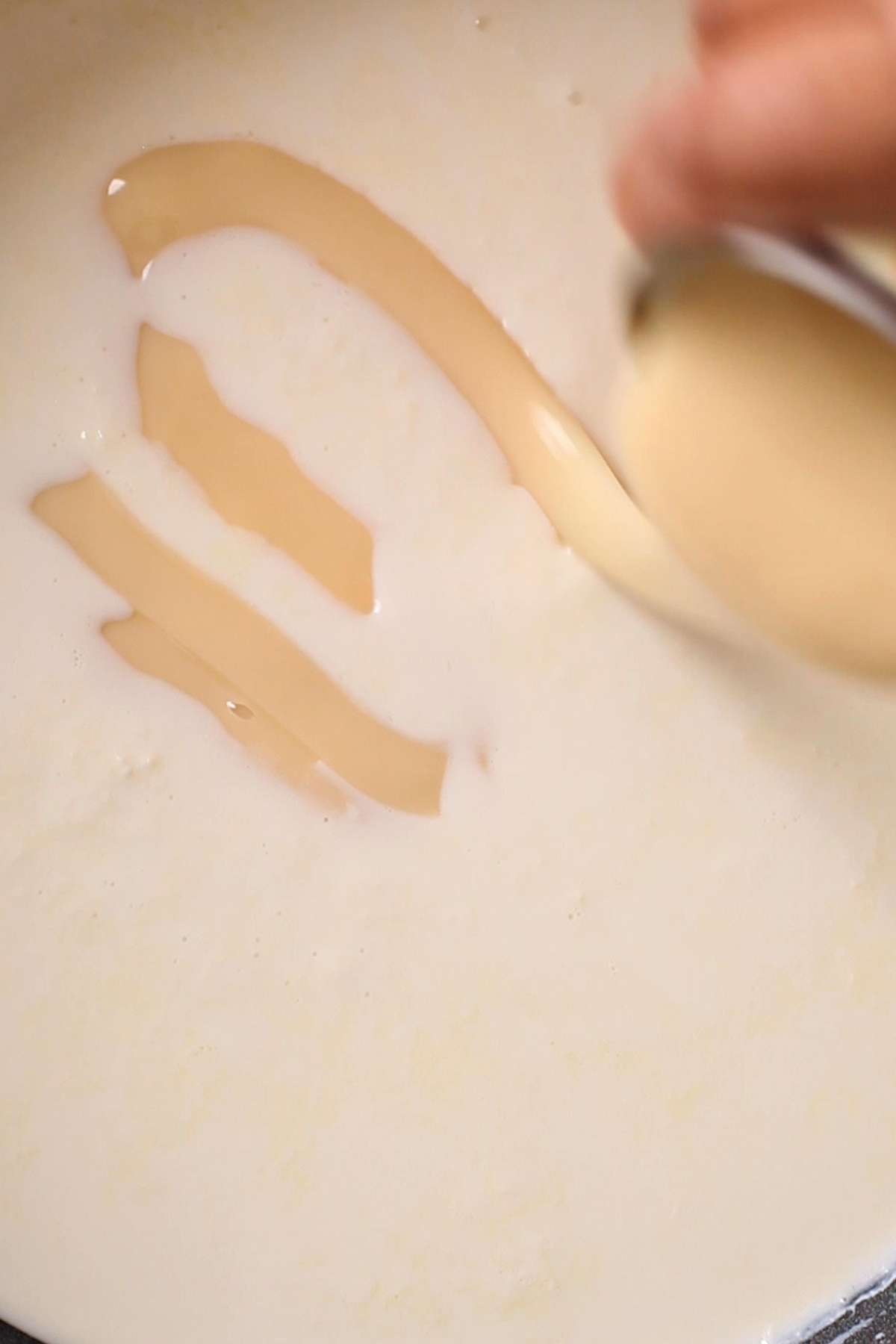
- Once the milk is reduced by one third (takes about 12 minutes), add the grated paneer, condensed milk and nut powder to it. Mix and let cook for 10 minutes. You will see after 3-4 minutes that the milk starts thickening up and you will be able to notice the typical grainy texture.
Dont over sweeten the rabdi. Such milky preparations can taste very heavy if they are too sweet. Sweeten wisely especially if you plan to serve it with mithai (indian sweets).
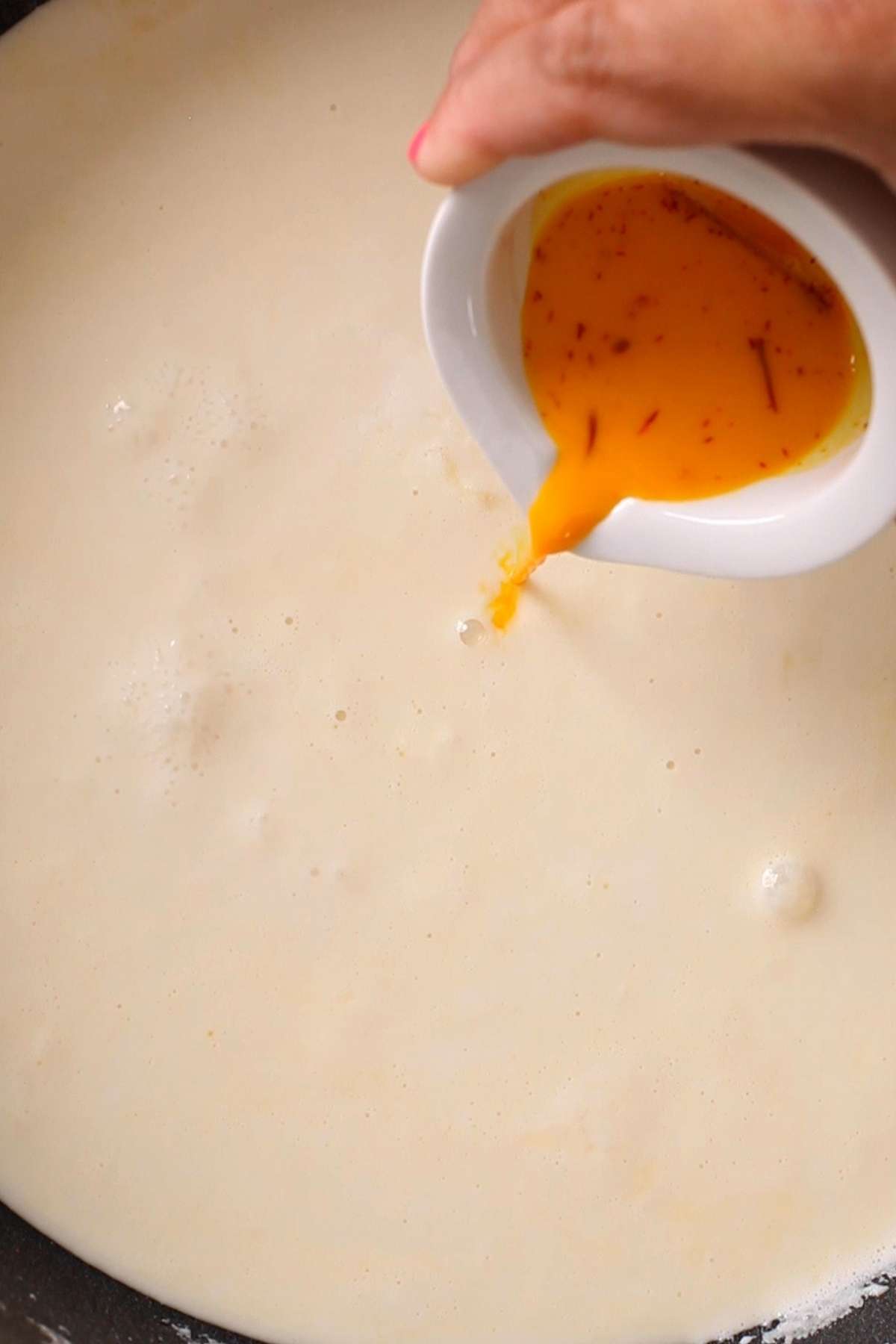
- At this point add the saffron, cardamom powder and chopped nuts. Cook for 1-2 minutes and switch off the flame.
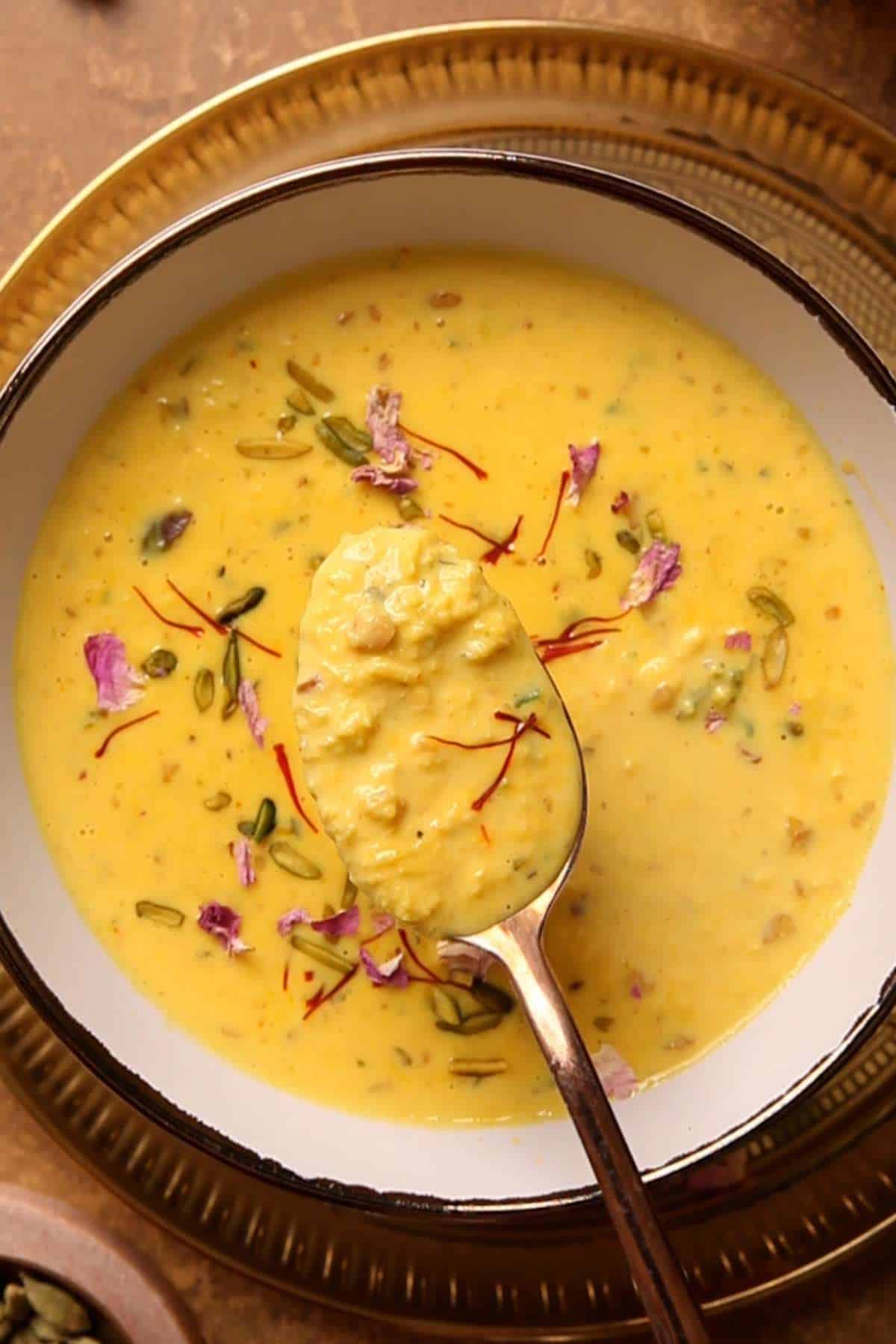
- Dish out, cover and let cool. You will notice a thick film of cream forming on top as it cools down, dont worry just use a spoon to mix it back in. Chill in the fridge for 5-6 hours before using.
Don't over thicken the rabri while cooking. It thickens substantially while it chills. Make sure that you dont overcook it. Ideally, it should have a thick sauce consistency when you turn off the flame.
Storage
Store rabdi refrigerated for 2-4 days. Instead of serving it straight out of the fridge, I set it out 15-20 minutes earlier so that its a saucy consistency when serving.
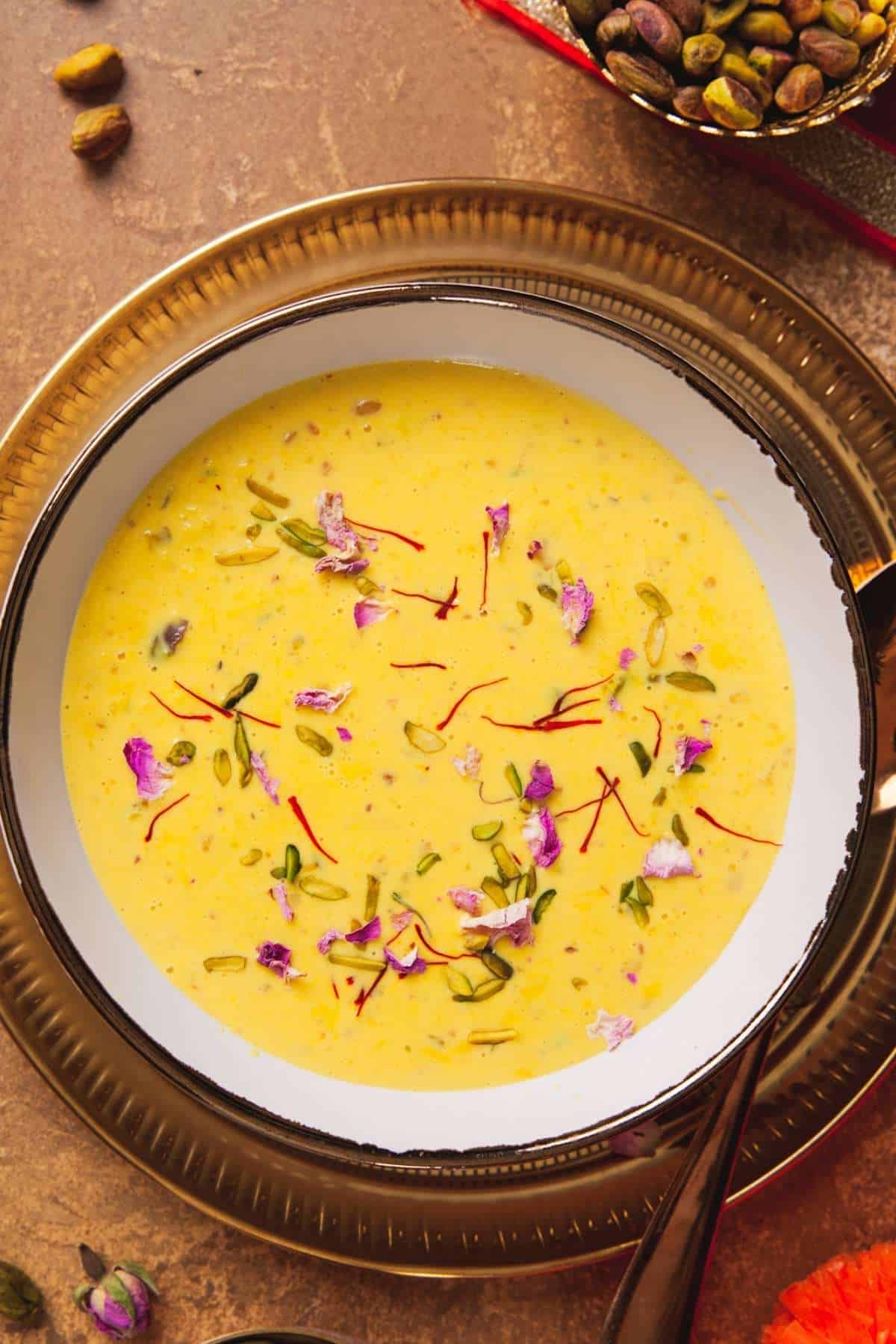

30-Minute Rabdi Recipe (Using Paneer)
Ingredients
- 3 cup milk full fat
- 1 cup fine grated paneer use malai or high fat paneer
- 5 tablespoon nut powder I use cashews & almonds
- ½ cup condensed milk can go upto 10 tablespoon
- ½ teaspoon cardamom powder
- 10-12 saffron strands
- ⅓ cup silvered nuts to add & garnish
Instructions
- Rinse a wide pot or shallow pan with water and without wiping, add milk to it. Place on a stove, bring to a boil, reduce the stove to low medium and let the milk simmer for 15 minutes. Pro Tip:- Using a wide mouthed utensil really quickens the process of thickening the milk, I highly highly recommend it.
- Stir periodically to make sure that milk doesn't stick to the bottom of the pot. The milk will almost reduce by ⅓ rd of its volume and start getting thick. Scrape the sides of the pot every now and then and add back the malai scrappings to the milk.
- Meanwhile, soak a few saffron strands in 1-2 tablespoon warm milk from the pot.
- Using fine side of the box grater, grate the paneer.
- Make nut powder by adding nuts to a grinder. We need 4-5 tablespoon nut powder. coarsely chop the rest of the nuts. Tip :- If you are using seeds from green cardamom pod, add it to the grinder with nuts.
- Once the milk has reduced a bit, add the paneer, ground nuts and condensed mil, mix well and cook stirring often. Stirring often makes the rabdi creamy and also breaks down the paneer for the right (slightly grainy) texture of rabdi. Cook for about 8-10 minutes .
- Taste and if you feel you can add 1-2 tablespoon of sugar if you feel that the rabdi isn't sweet enough. I like to keep in lightly sweet else it tastes quite heavy.
- When the rabdi has thickned, add the cardamom and soaked saffron along with chopped/silvered nuts. Mix well. Cook for 2 more minutes.
- Avoid overcooking or thickening the rabdi too much. Take off the stove, cover and let sit covered till cold. Pro Tip :- Don't over thicken the rabri while cooking. Remember that it will thicken as it cools down or while you store it in the fridge. Ideally, rabri should have a thick sauce consistency.
- You will notice a thick film of cream forming on top as it cools down, dont worry just use a spoon to mix it back in. Chill rabdi in the fridge for 5-6 hours before serving.
Notes
- Nutrition Information is an estimation only.
- Use full fat milk. Skim milk or 2 percent milk will not yield a good taste.
- Both paneer and condensed milk contribute to the thickening process, don't substitute.
- Use ready to use fine almond flour from the store instead of grinding nuts. I use it all the time.
- Use a heavy bottom, wide mouthed pot or pan. I usually prefer stainless steel or hybrid cookware to make sweets with milk. Plain reason being that cleaning is easier.
- Avoid non stick cookware since the laccha would not form. Laccha is the milk layers on the sides of the pot while you are reducing milk.
- Avoid using cast iron pots for making rabdi. Due to high heat conduction properties of cast iron, the milk can burn easily.
- Rabdi thickens substantially while it chills. Make sure that you dont overcook it.
- You can add rose water or any flavorings of choice to the rabdi.
- For a nut free version - Simply skip all the nuts and cook the rabdi extra 5-6 minutes to achieve the consistency.
- Dont over sweeten the rabdi. Such milky preparations can taste very heavy if they are too sweet. Sweeten wisely especially if you plan to serve it with mithai (indian sweets).
- If your rabdi thickens after chilling, not to worry! Just thin it out with little warm milk. Do keep in mind that it will again thicken while you store it and that okay.

Rims says
I made paneer at home. Can I use that? It’s more watery than regular store bought paneer.
Tanvi Srivastava says
Yes you can use homemade paneer,, Squeeze water as much as you can and use
Rims says
Hi Tanvi, I made this for a Diwali party last night with homemade paneer and it turned out amazing! Thank you
Tanvi Srivastava says
Glad that you enjoyed the recipe. Thank you so much for your feedback.