

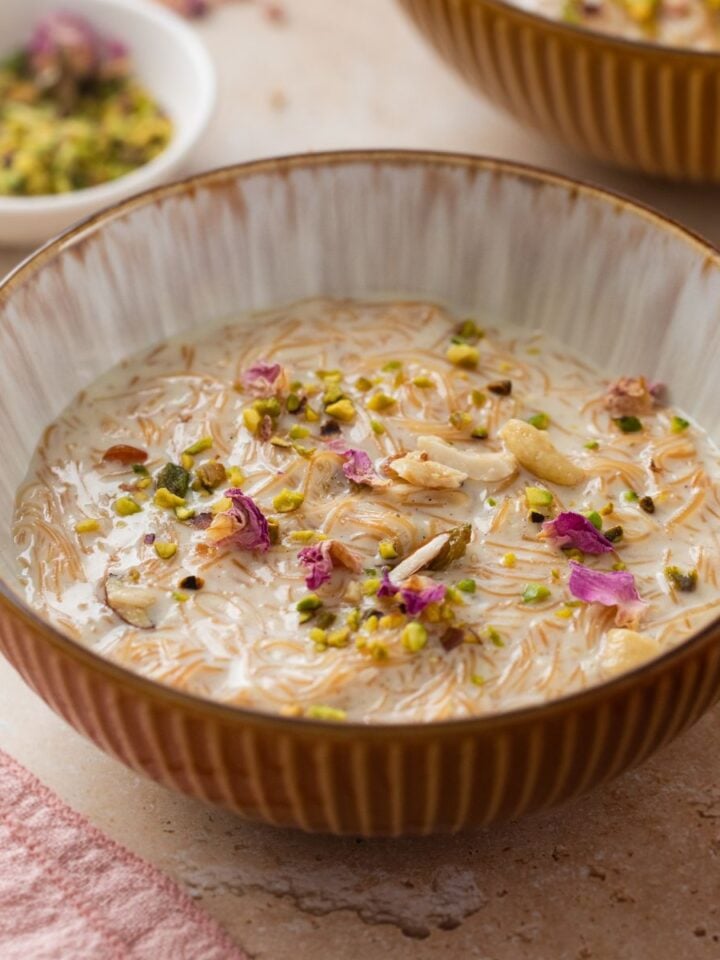
This one pot, slow-cooked rice kheer is a sweet dessert that wraps you in a warm, sweet hug. It's made with just a few ingredients such as short grain rice, whole milk, condensed milk, and a hint of cardamom. Incredibly easy to make, one pot and so comforting! You can enjoy this indian rice pudding warm or chilled.
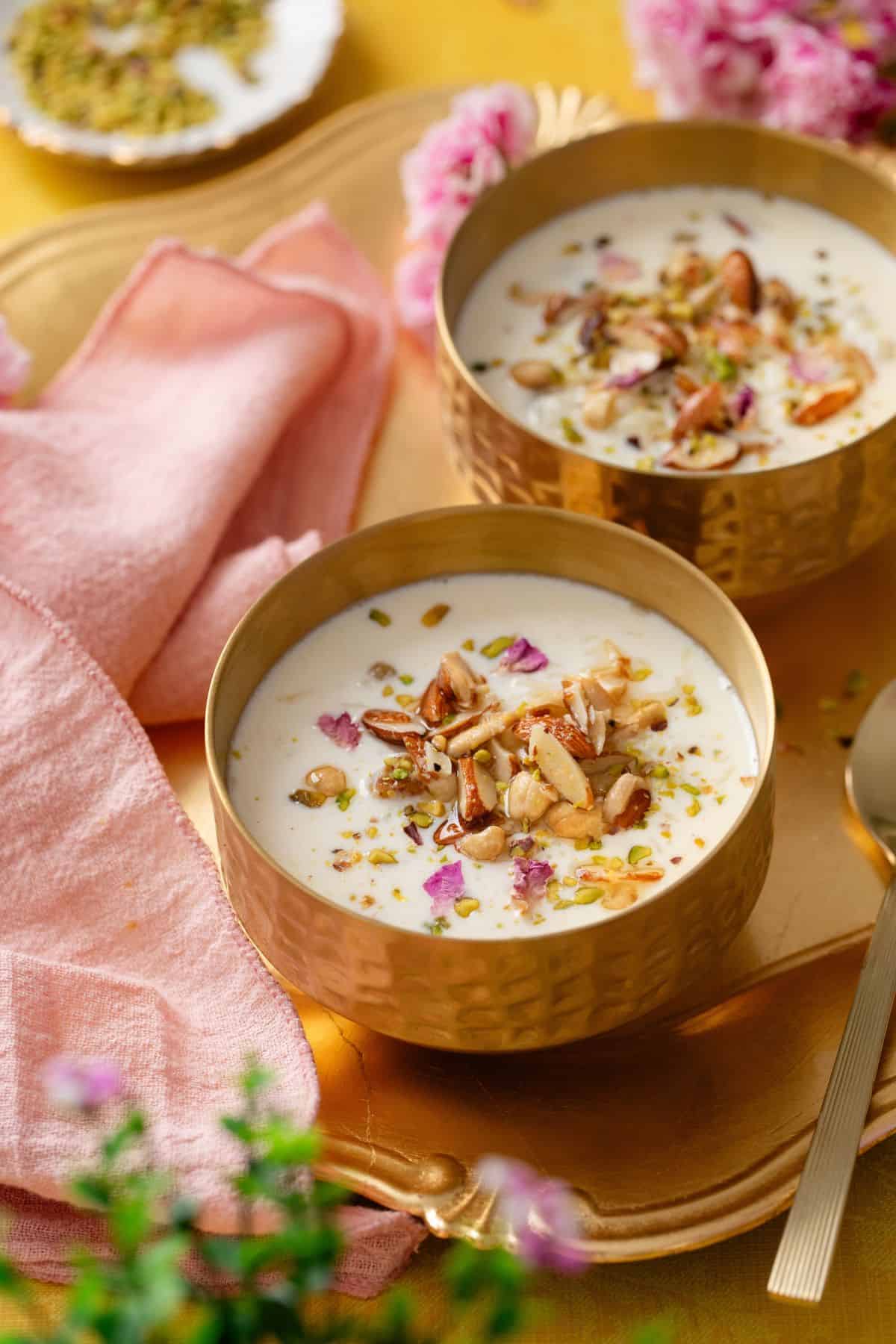
Sooji halwa and kheer are two Indian desserts I grew up with, both made from easy pantry staples. I love making them in my own kitchen now, as they bring back so many memories. In Indian homes, kheer is cooked for festivals, celebrations, or sometimes just for no reason at all.
What is Kheer
In Indian cuisine, kheer is an umbrella term for pudding like desserts made with milk. You could prepare kheer with different kinds of flours, vegetables (lauki kheer) or ingredients such as tapioca pearls (sabudana kheer) and lotus seeds (makhana kheer) or vermicelli (seviyan). It's simple to make, comforting, creamy and rich and needs few basic ingredients.
Now, the best part about making kheer is that, even if you are a beginner, you cannot go wrong. If it turns too runny, cook it longer. If it's too thick, add more milk. I mean it's not at all complicated to make. But a good luscious kheer needs your time and patience.
The idea is to slowly cook the rice in milk, and as the rice cooks, the grains break down and the rice starches get released which combine with boiling milk. Unlike rice puddings in other cultures, indian kheer is egg-free, meaning pure vegetarian.
Now, the best apart Kheer is that, even if you are a beginner, you cannot go wrong. If it turns too runny, cook it longer. If its too thick, add some milk. I mean it's not hard at all.
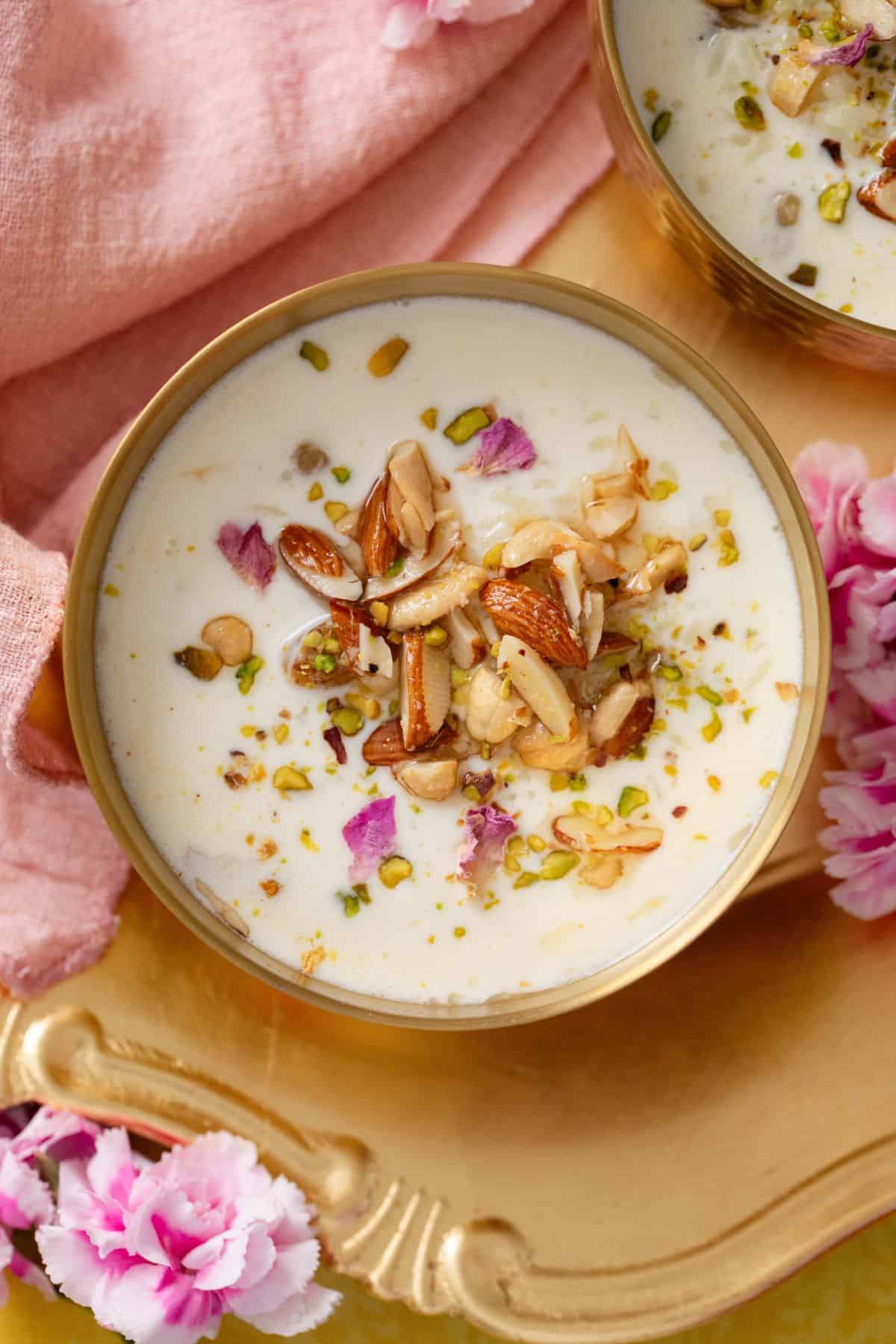
My Kheer Recipe
- Lots of people like to make kheer in a pressure cooker or Instant Pot, but I still love slow cooking it on the stovetop in a good old pot. Growing up, whenever kheer was made at home, I was the sous chef with the all-important job of stirring. It does take a fair bit of stirring, but the whole process feels so comforting and rewarding.
- I like to take a little deviation from traditional kheer recipe and use condensed milk instead of sugar. It makes the kheer extra creamy and gives it a rich, luscious texture that I just love. You could say it's my secret ingredient that makes every spoonful feel more special.
- My grandmother always added kishmish (raisins) to rice kheer, so for me they're a must. That little pop of sweetness in each creamy bite is just irresistible. Of course, you can skip the raisins if you like.
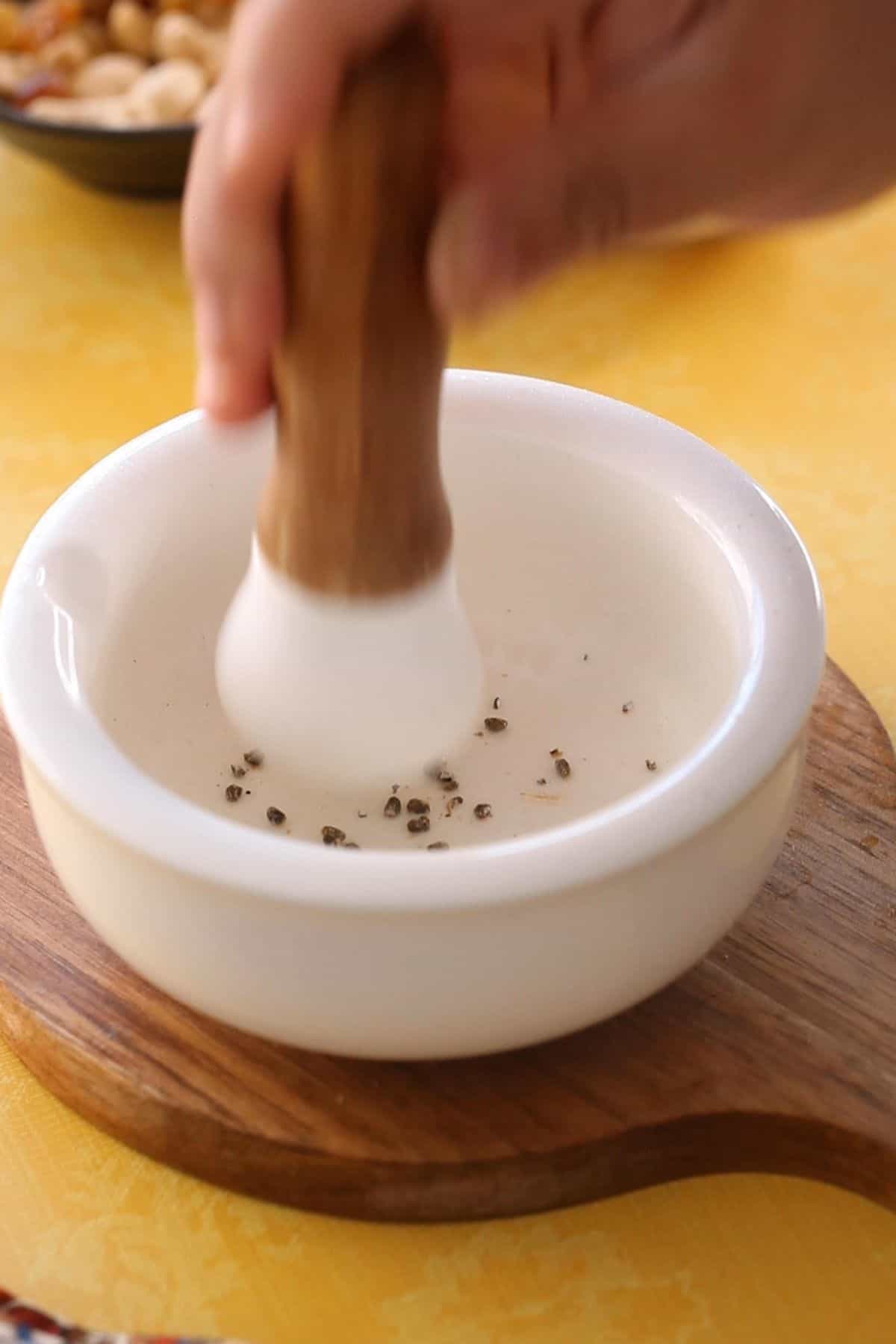
- Lastly, I always grind fresh green cardamom for kheer. It only takes a couple of minutes but makes such a big difference. The sweet, soothing flavor and aroma are so much better than store-bought powder, and it even keeps the kheer looking beautifully white and creamy.
Ingredients
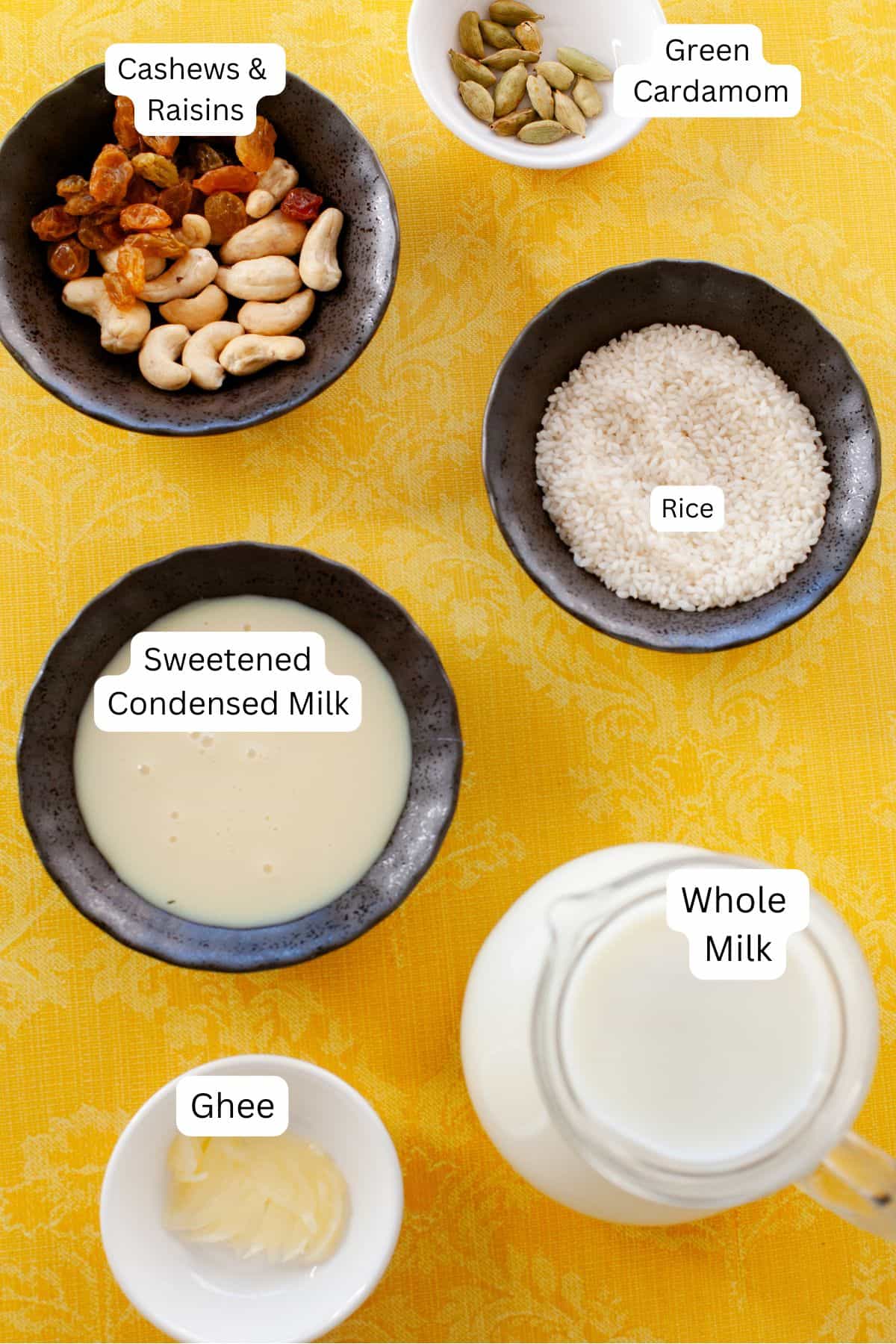
- White Rice - I use gobindbhog rice (non-affilate link) which is an aromatic rice variety cultivated in West Bengal. You could use any fragrant short grain white rice. Jasmine rice works beautifully too. The reason short-grain rice works best is that we don't want the grains to stay long and fluffy after cooking. Instead, we want them to break down, turn soft and gooey, and release their starch into the milk. If you'd like to use white basmati rice, like my grandmother did, just pulse the grains a few times in a dry blender to break them slightly (just be careful not to turn them into powder).
- Whole Milk - Full-fat milk is the best choice for creamy kheer. Since we're not adding khoya or evaporated milk, whole milk works beautifully. It slowly reduces as it cooks, and the rice starch combined with the milk fat gives you that thick, rich consistency. But if you're making kheer and only have 2% or skimmed milk on hand, don't worry. It will still work because the condensed milk adds plenty of creaminess on its own.
How To Make Indian Rice Pudding
- Place the rice in a bowl and wash it 2-4 times under running water or until the water runs clear. Add enough water to cover the rice and let it soak for 30 minutes.
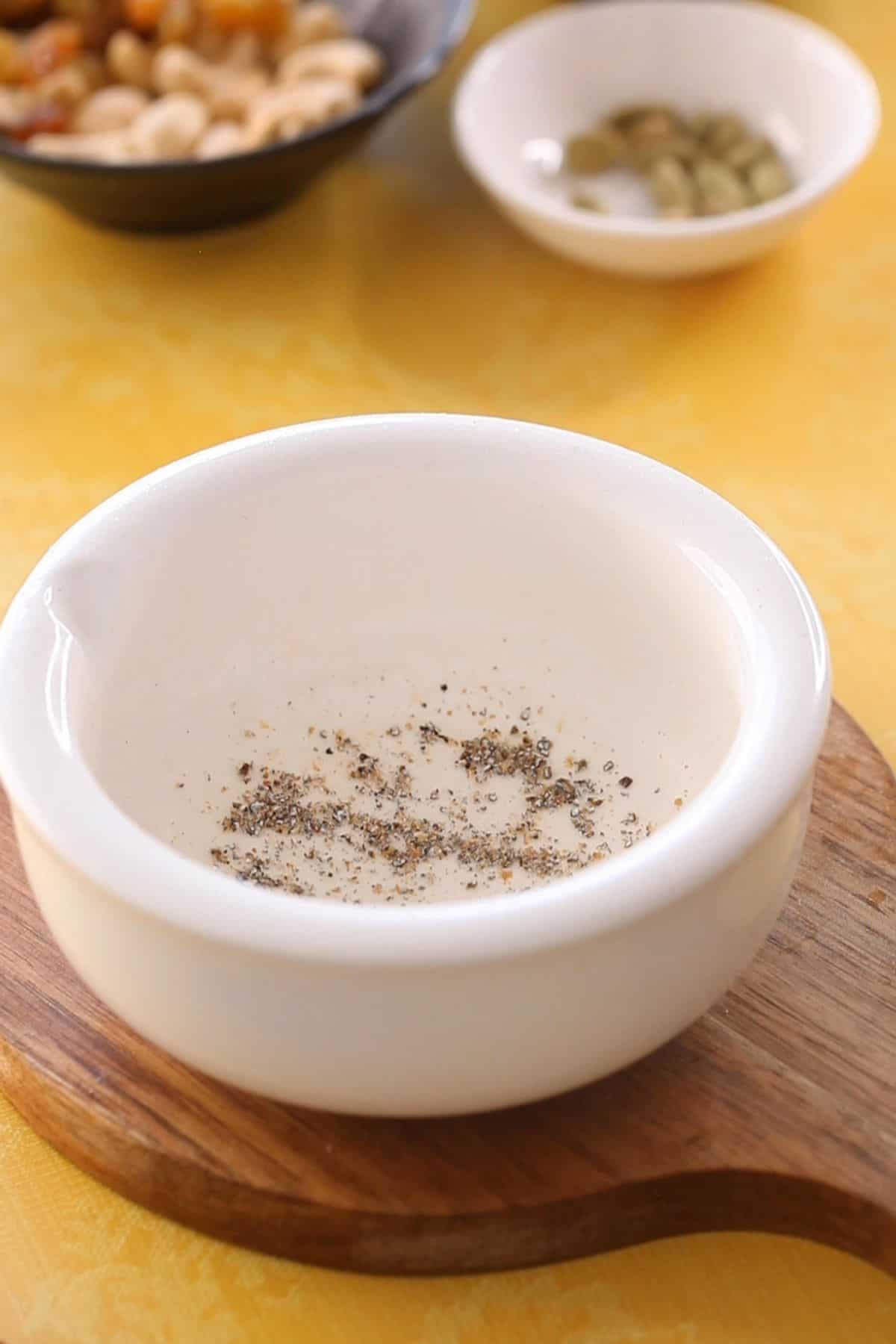
- Open 2 green cardamom pods, remove the seeds, and grind them into a fine powder using a small mortar and pestle. Set aside.
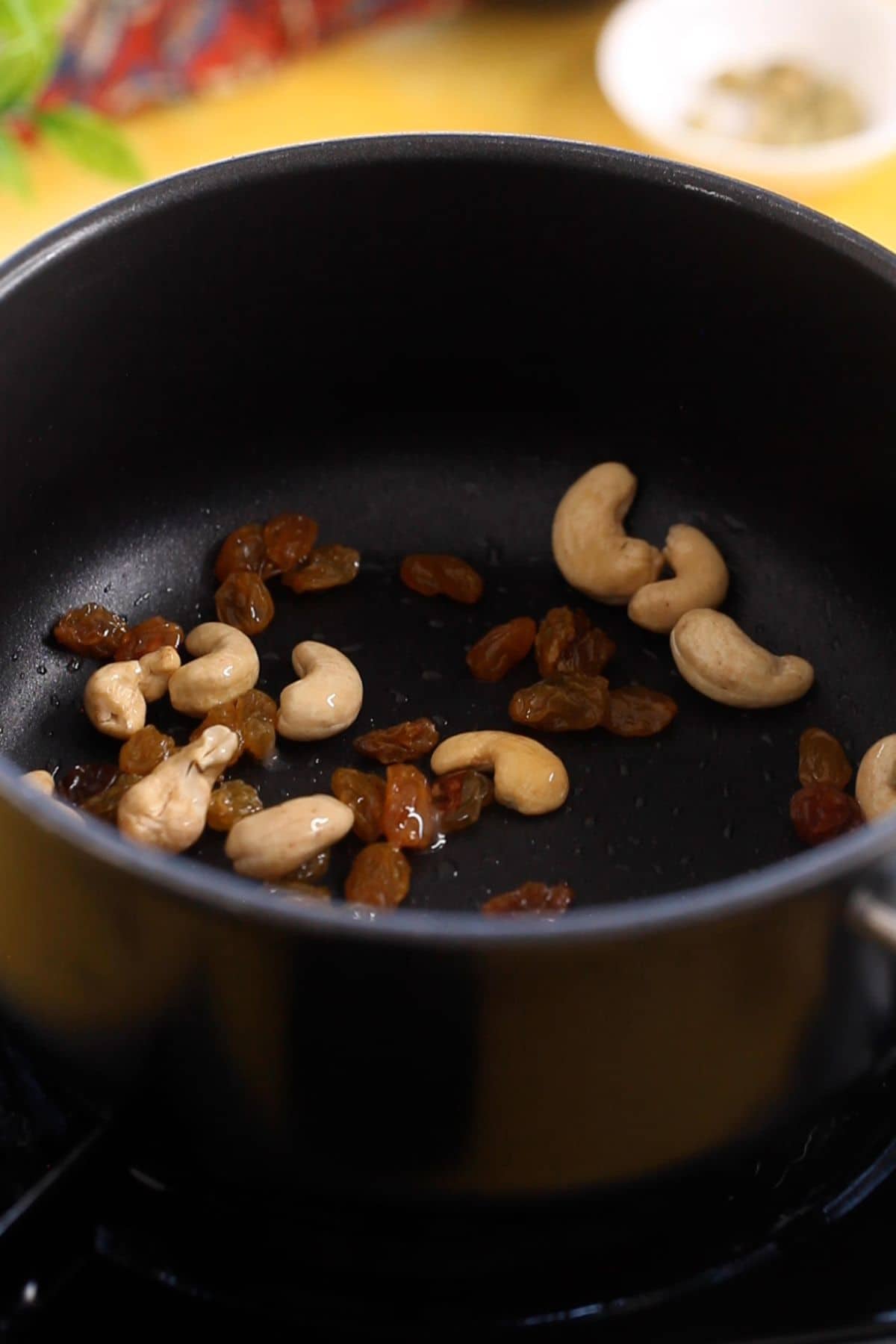
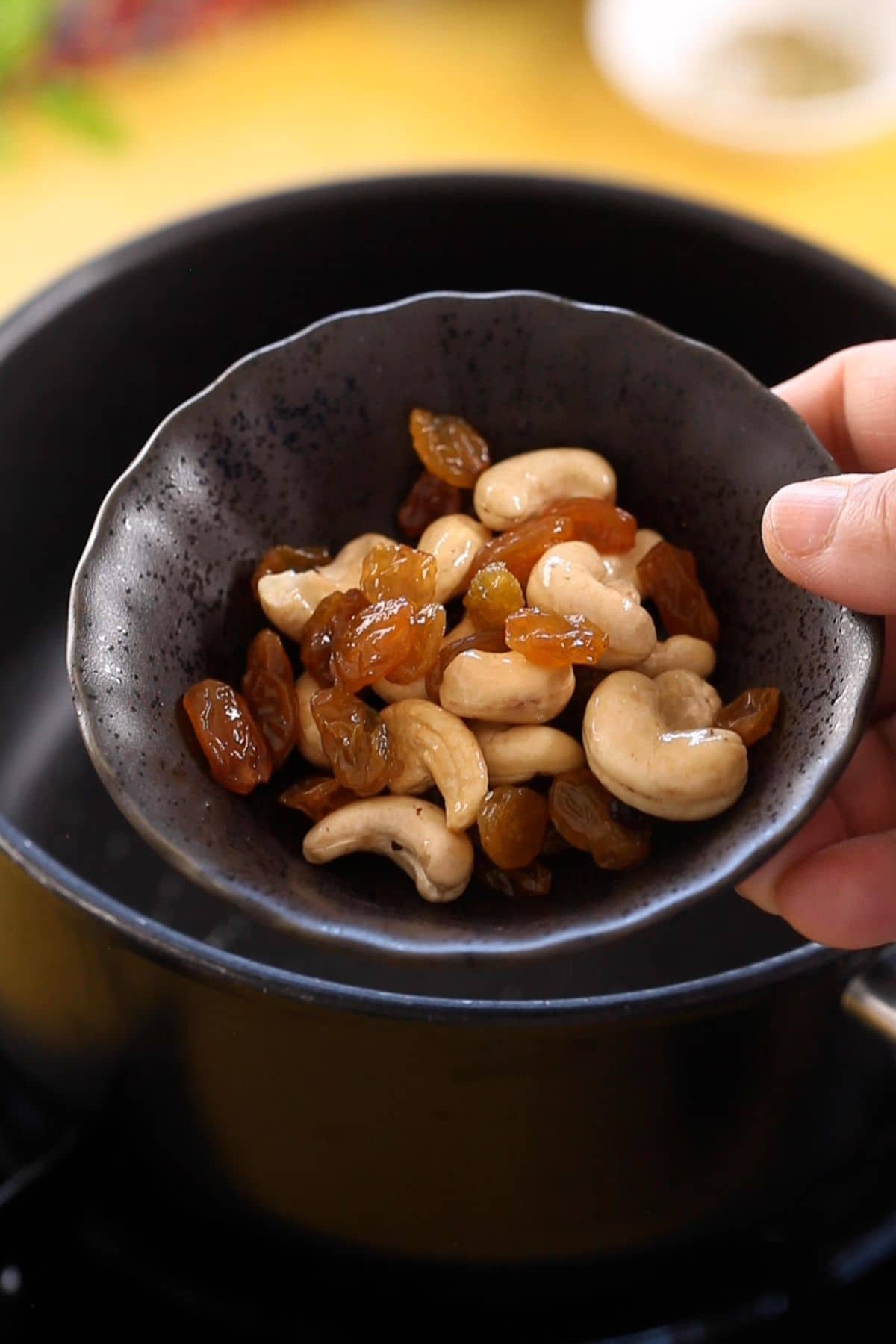
- In a wide, heavy pot (I use a 3-quart sauce pot), heat up 1 teaspoon of ghee over low flame. Add the cashews and raisins (whole or chopped nuts, which ever you are feeling, both work) Stirring continuously, toast until the raisins swell slightly and the cashews turn a light golden color. Remove with a spoon and transfer to a plate. Set aside. You can chop the cashews if you prefer once they cool down.
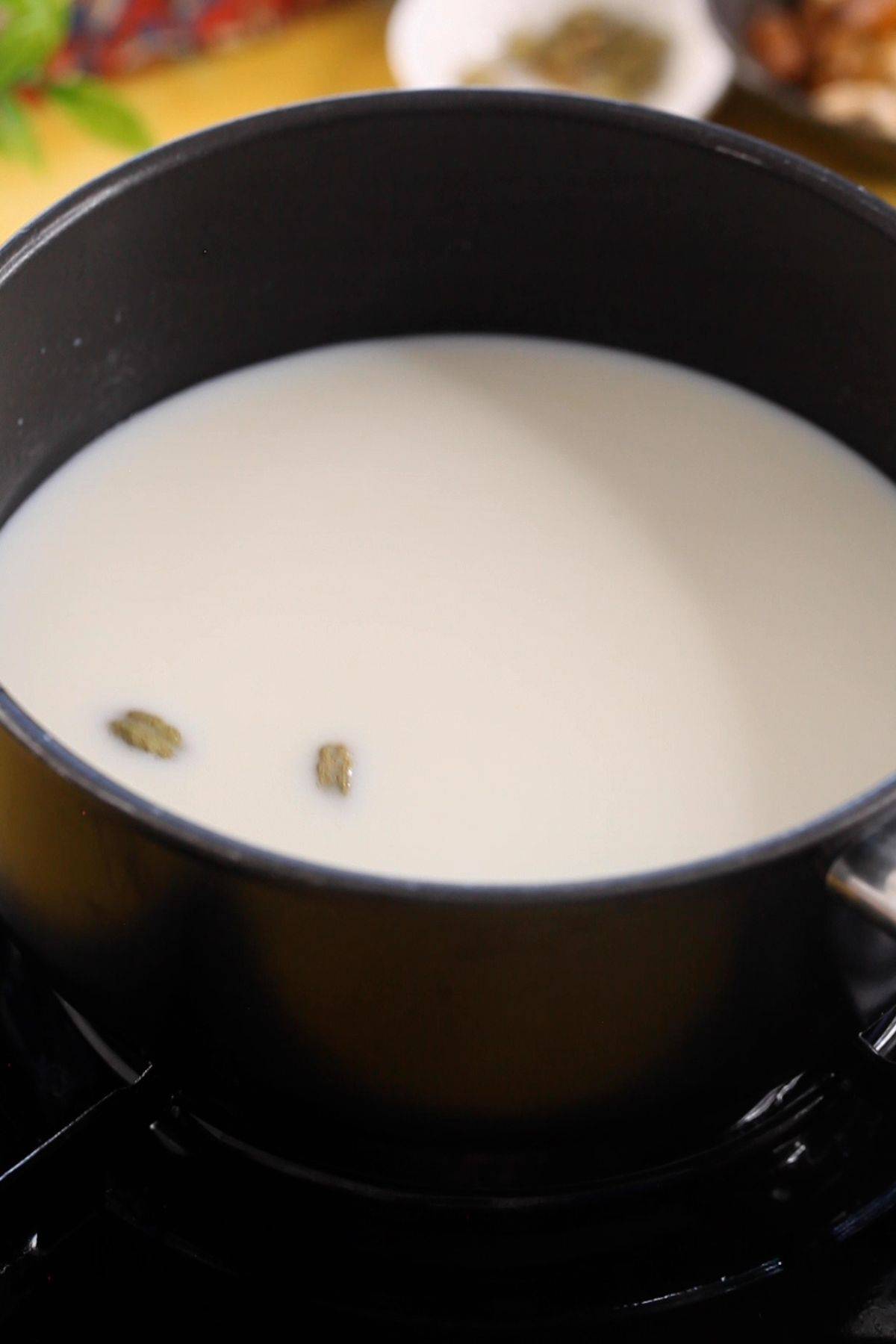
- Without washing the pot, pour in the whole milk. Optionally, add 2 whole green cardamom pods. Set the pot on a low-medium heat to bring the milk to a slow boil.
- Once the milk starts to boil, add the drained, soaked rice. Stir immediately to prevent the rice from sticking to the bottom of the pot.
- Let the rice cook in the milk for 25-30 minutes on low heat. Don't cover the pot. Stir the milk regularly to avoid sticking to bottom of pot , while scraping the sides of the pot and mixing the residue back into the milk. As the rice cooks, it will soften, and the starches will thicken the kheer.
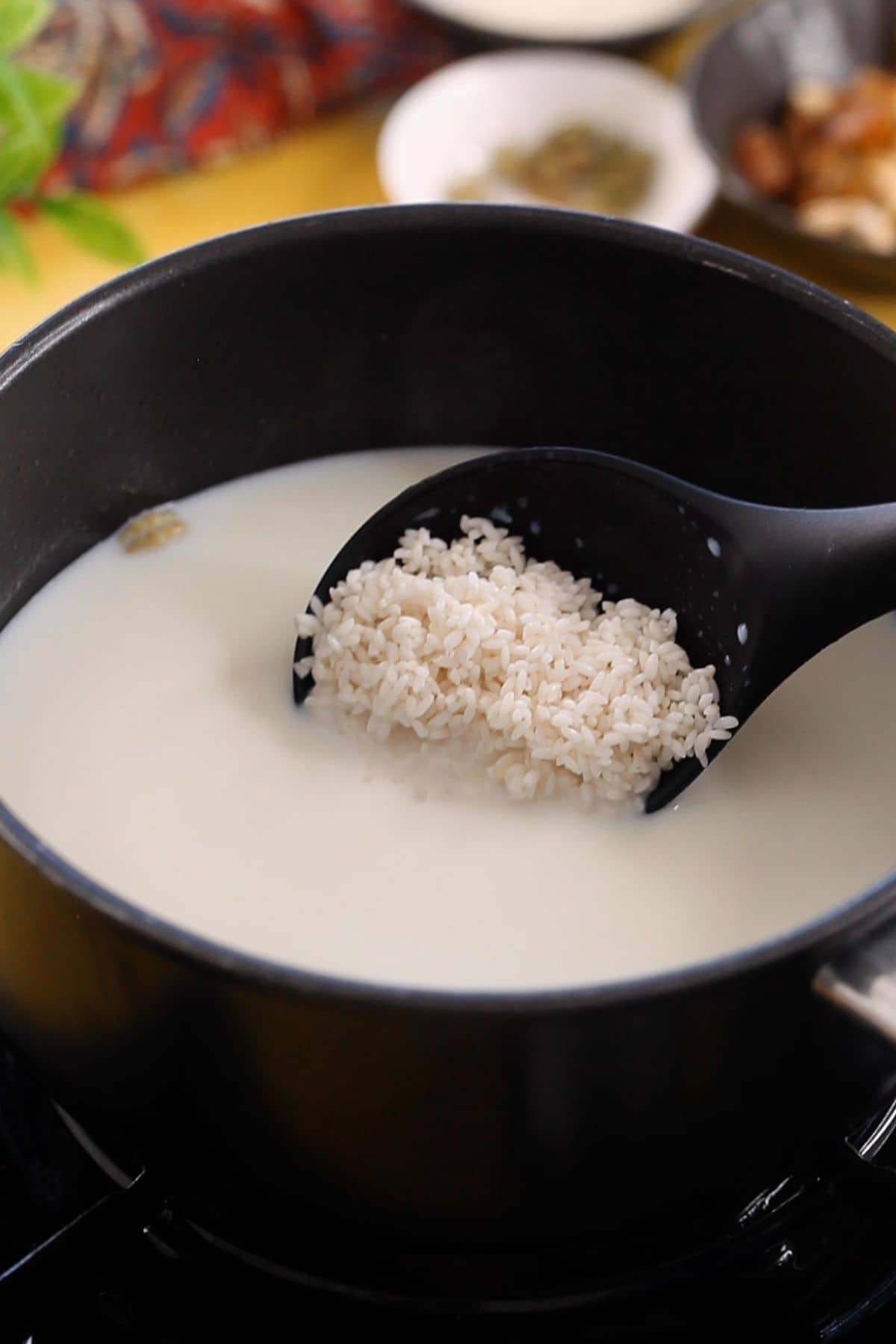
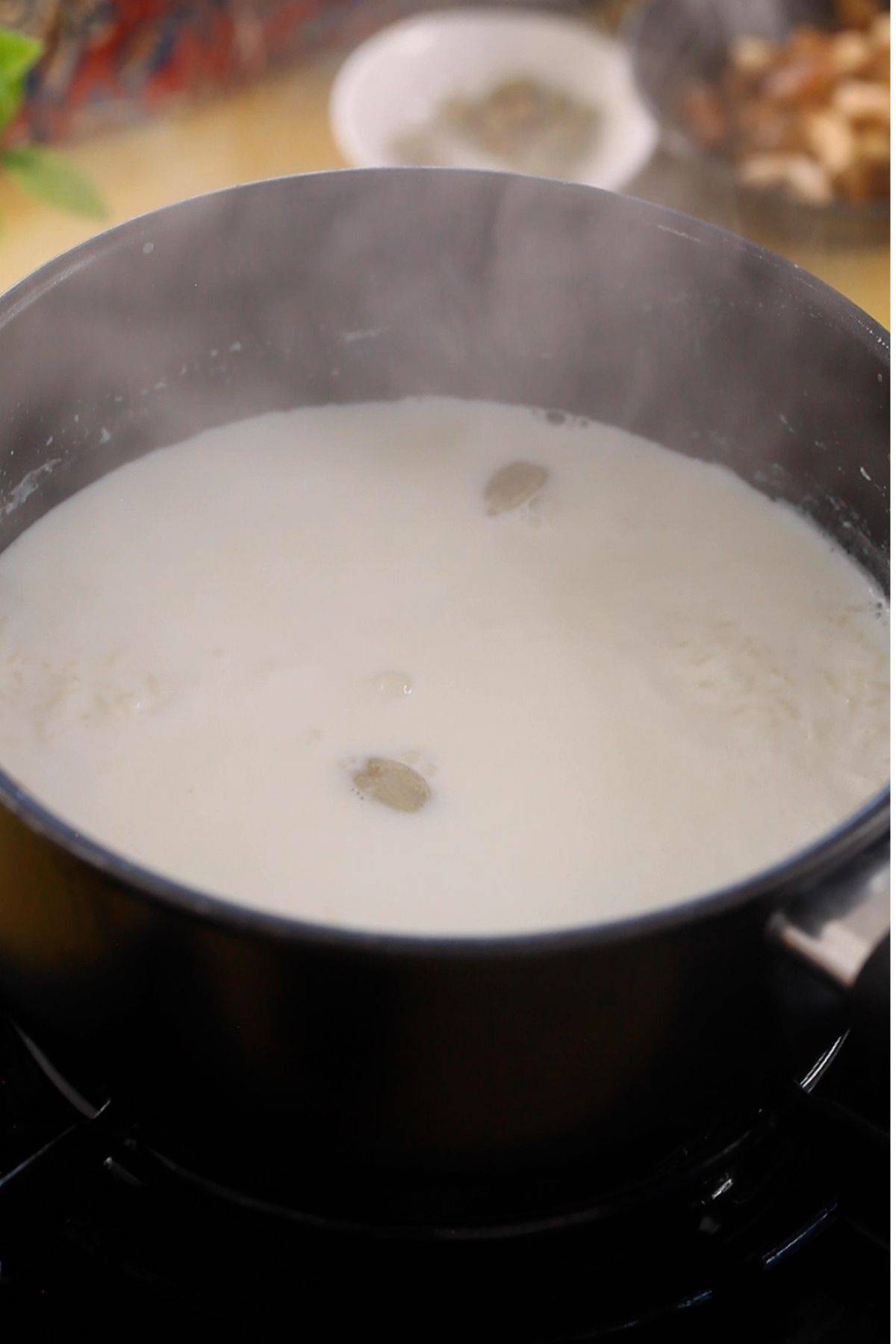
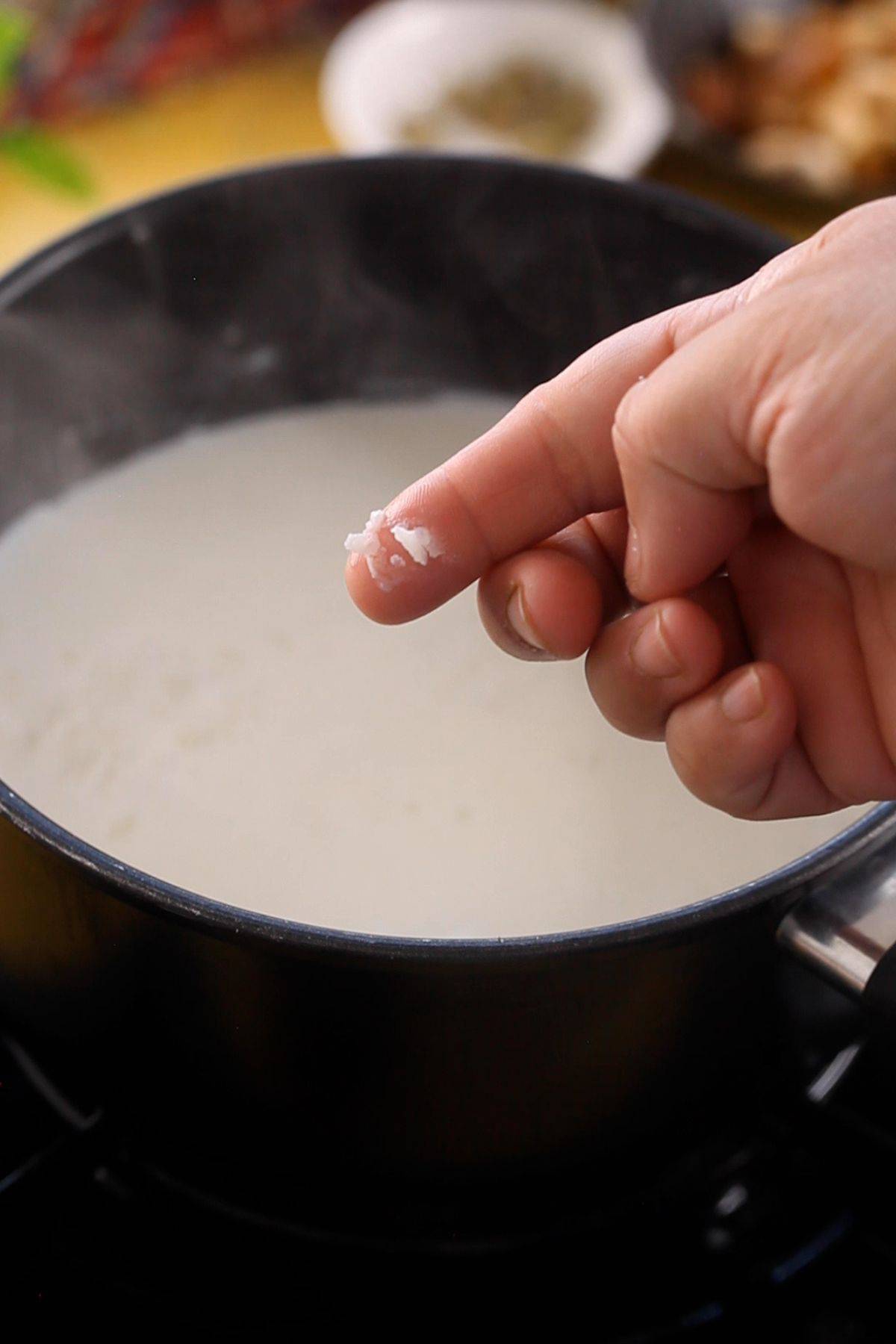
- After 30-35 minutes the kheer should be thick, with the rice well cooked and well combined with milk. To check, take a single grain of rice and smush it between your thumb and index finger- it will be soft.
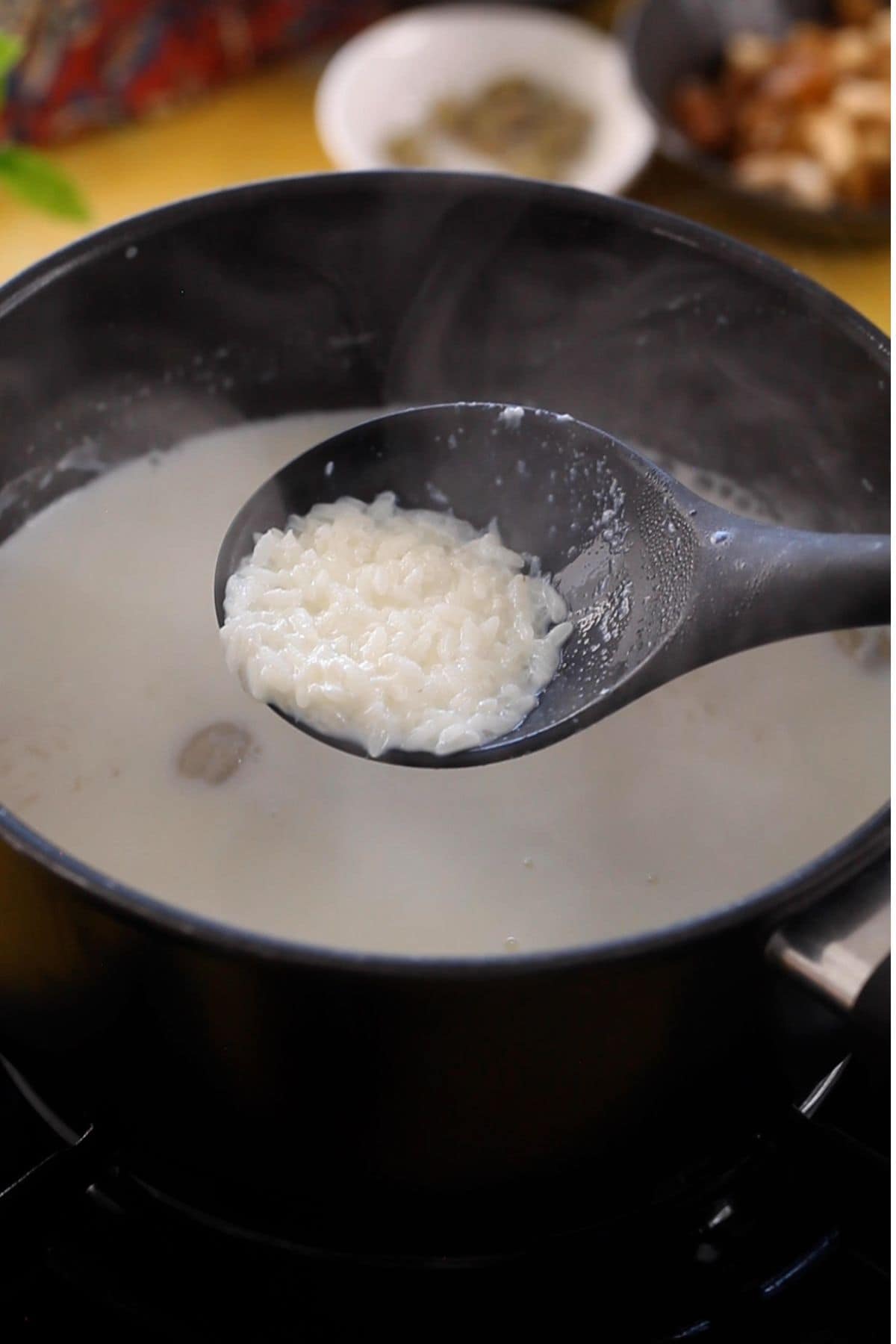
- Add the condensed milk and mix well. The kheer will become runny again. Continue to cook for an additional 5-10 minutes or until it reaches your desired consistency. Remember that the kheer will thicken further as it cools.
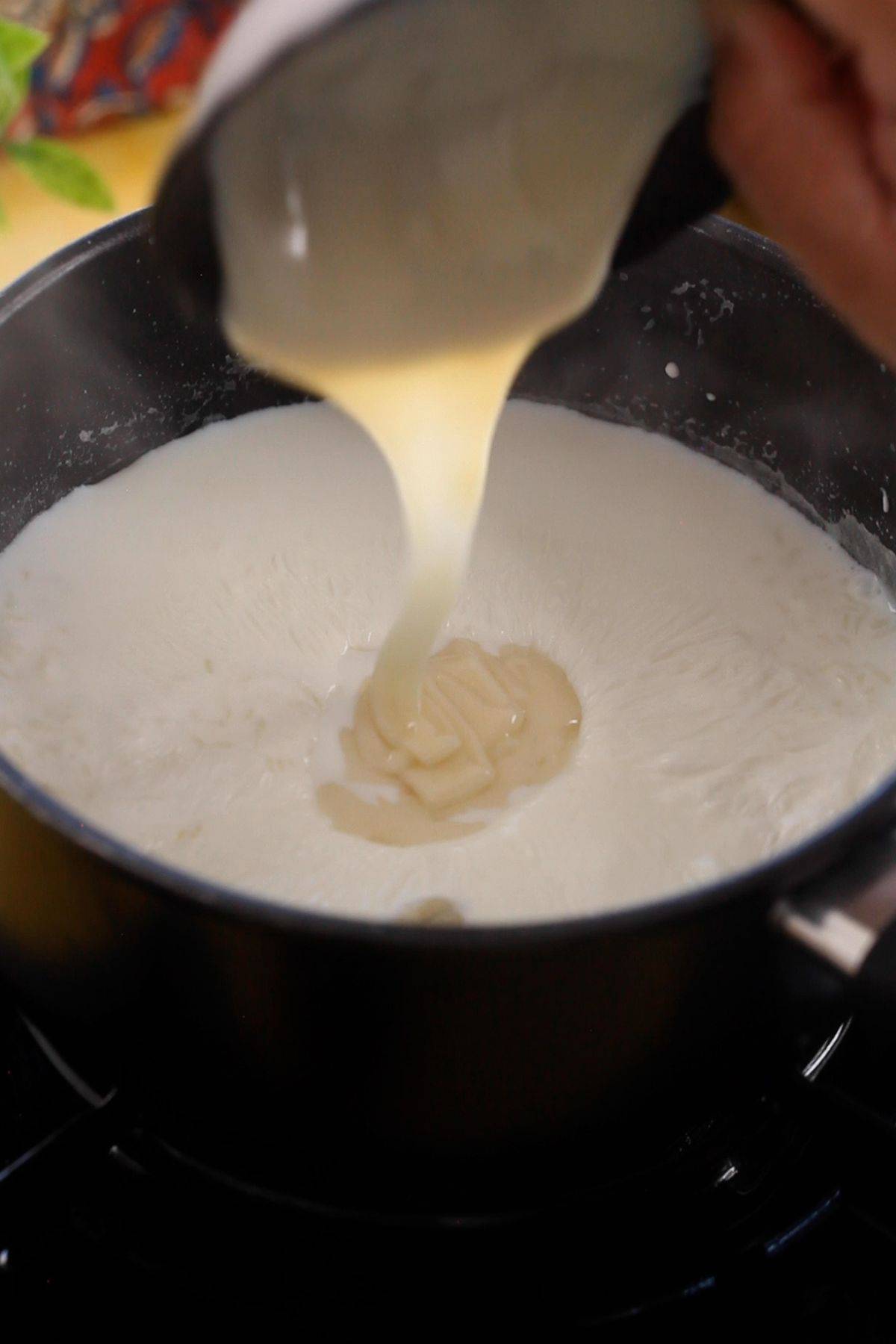
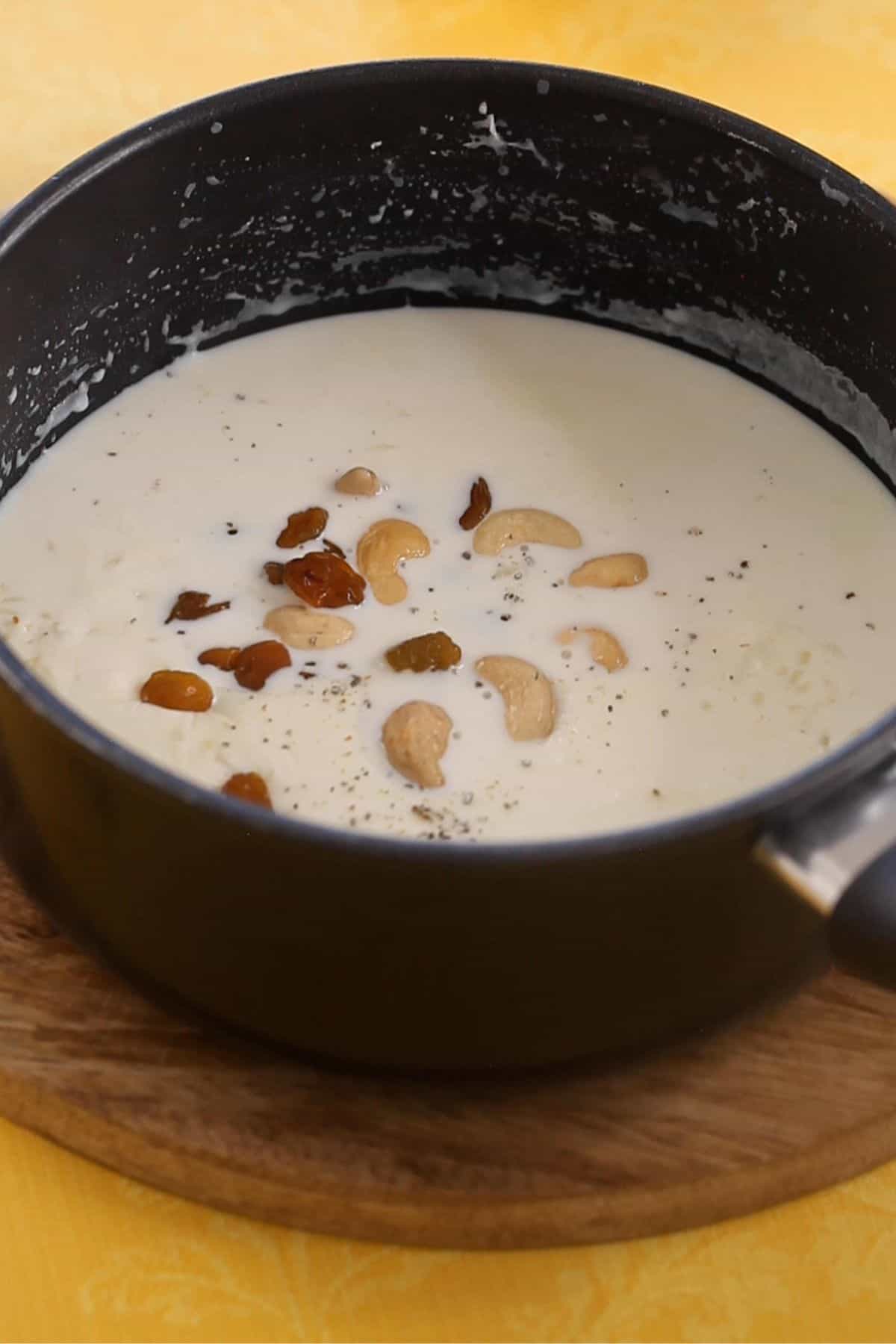
- Remove the pot from the heat and discard the whole cardamom pods. Mix in the freshly ground cardamom powder, cashews and raisins.
Serving & Storage
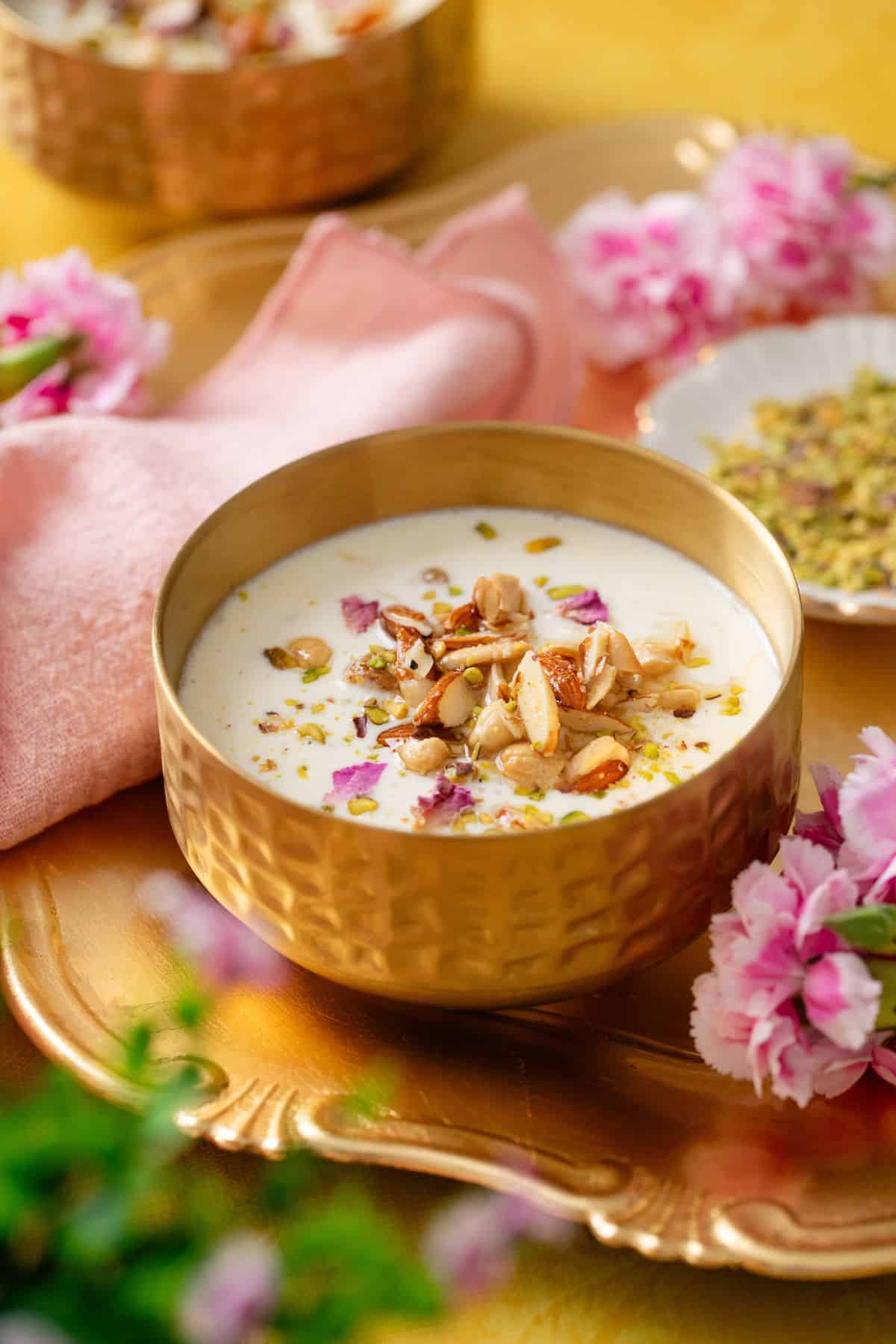
Remove the pot from the heat. Pick, and discard the whole cardamom pods. Mix in the freshly ground cardamom powder, nuts and raisins. Serve rightaway in small bowls or chill for a few hours before serving.
As the kheer cools down to room temperature, a skin will form on top. Mix it back in. Once cooled completely, chill the kheer in the refrigerator for a few hours before serving. Serve garnished with extra nuts, rose petal dust or saffron strands. You could also serve cold kheer with warm gulab jamun (delish!).
Rice pudding keeps good for 2-4 days in the fridge. You can reheat on a stove or microwave before serving. I don't prefer freezing kheer (texture & creaminess is off) and won't recommend.
Tips for Best Rice Kheer
- Rice to Milk Ratio - Rule of thumb is that for every cup of milk, you use 1 tablespoon of rice for perfect creamy texture.
- Cooking Pot - Always choose a heavy bottom pot. A heavy pot ensures that the milk heats evenly and doesn't scorch at the bottom. You can use a stainless steel pot or an enameled Dutch oven.
- Soak The Rice - Always soak the rice before cooking. This helps in a softer rice texture as well as even cooking of rice grains.
- Sweetneer -You can sweeten kheer with granulated sugar, raw sugar, jaggery, coconut sugar, or even maple syrup. Each one will give the kheer a slightly different taste and color. Just remember to adjust the cooking time to get the thickness you like. If you're using jaggery, don't plan on reheating later-make sure the kheer is cooked down to a rich, thick consistency before you add it.
- Adjust The Slow Cooking Time - It is simple. Cook the kheer longer if you want to thicken it. We like creamy, thick kheer so the cooking times indicated in the recipe are accordingly. Cook a little less longer if you like a runny kheer.
Homemade Rice Kheer (With Condensed Milk)
Ingredients
- 1.5 teaspoon ghee
- ¼ cup chopped nuts I use cashews, almonds and pistachios
- 12-15 raisins I use golden raisins
- ⅓ cup white rice I use gobind bhog rice (preferably use a short grain, aromatic white rice variety)
- 6 cup whole milk full fat milk (use 5 cups for thicker kheer)
- 2 whole green cardamom pods
- ½ cup sweetened condensed milk quantity can be increased to ¾ cup
Instructions
- Place the rice in a bowl and wash it 2-4 times under running water or until the water runs clear. Add enough water to cover the rice and let it soak for 30 minutes.
- While the rice is soaking, open 2 green cardamom pods, remove the seeds, and grind them into a fine powder using a small mortar and pestle. Set aside.
- In a wide, heavy pot (I use a 3-quart sauce pot), heat up 1 teaspoon of ghee over low flame. Add the cashews and raisins. Stirring continuously, toast until the raisins swell slightly and the cashews turn a light golden color. Remove with a spoon and transfer to a plate. Set aside. You can chop the cashews if you prefer once they cool down.
- Without washing the pot, pour in the whole milk. Optionally, add 2 whole green cardamom pods. Set the pot on a low-medium heat to bring the milk to a slow boil.
- Once the milk starts to boil, add the drained, soaked rice. Stir immediately to prevent the rice from sticking to the bottom of the pot.Don't cover the pot.
- Let the rice cook in the milk for 25-30 minutes, keeping the heat on low-medium. Stir the milk intermittently, scraping the sides of the pot and mixing the residue back into the milk. As the rice cooks, it will soften, and the starches will thicken the kheer.
- After 30-35 minutes the kheer should be thick, with the rice well cooked and well combined with milk. To check, take a single grain of rice and smush it between your thumb and index finger- it will be soft.
- Add the condensed milk and mix well. The kheer will become runny again. Continue to cook for an additional 5-10 minutes or until it reaches your desired consistency. Remember that the kheer will thicken further as it cools.
- Remove the pot from the heat, pick and discard the whole cardamom pods. Mix in the freshly ground cardamom powder, nuts and raisins. Serve warm or chill for a few hours. As the kheer cools down, a skin will form on top of kheer. Mix it back in. Once cooled completely, chill the kheer for a few hours before serving.
Video
Notes
-
- Rice to Milk Ratio - Rule of thumb is that for every cup of milk, you use 1 tablespoon of rice for perfect creamy texture.
- Cooking Pot - Always choose a heavy pot with a wide mouth. A heavy pot ensures that the milk heats evenly and doesn't burn, keeping the temperature just right. You can use a stainless steel pot or an enameled Dutch oven.
- Soak The Rice - Always soak the rice before cooking. This helps in a softer rice texture as well as even cooking of rice grains.
- Sweetener - Use granurated sugar, raw sugar, jaggery, coconut sugar or maple syrup to sweeten your kheer if you wish. The taste & color of the kheer will be different depending on the sweetener you will use. Please adjust the cooking time to achieve desired thickness. If you're using jaggery, reheating is not an option. So, ensure that the kheer is cooked to a rich, thick consistency before you add the jaggery.
- Adjust The Slow Cooking Time - It is simple. Cook the kheer longer if you want to thicken it. We like creamy, thick kheer so the cooking times indicated in the recipe are accordingly. Cook a little less longer if you like a runny kheer.
- Storage:- Rice pudding keeps good for 2-4 days in the fridge. You can reheat on a stove or microwave before serving. I don't prefer freezing kheer (texture & creaminess is off) and won't recommend.
- Vegan Kheer - Yes you can make vegan kheer using this recipe. Use vegan butter for toasting the cashews and raisins. Instead of milk, use almond milk. In place of condensed milk, use sugar. Adjust cooking time until it is thick to your liking. You could add a tablespoon or two of almond flour for extra flavor and richness.
I'd Love to Hear from You!